
PVC Foam Core in Real Build Scenarios: Matching Thickness to Marine, Wind, Rail and RV Needs
PVC Foam Core in Real Build Scenarios: Matching Thickness to Marine, Wind, Rail and RV Needs
Core specification rarely fails because a buyer chose the wrong polymer. It fails because a thickness was carried over from a previous boat, blade or panel into a part with different spans, different skins and different process conditions. PVC foam core is a closed-cell polyvinyl chloride structural foam that CINON supplies in thicknesses from 1 mm to 80 mm, at densities of 45, 50, 60, 80, 100, 130, 200, 250 and 300 kg/m³. Across that range, thickness is the variable that connects the material to an actual build: a yacht hull shell, a wind turbine blade shell, a rail interior panel, an RV roof.

Transportation panel production is one of the build scenarios where core thickness, panel flatness and process cycle are set together.
The material itself is well defined. CINON's PVC foam core is a rigid structural foam with a closed-cell structure, described by the manufacturer as a Divinycell alternative and intended for marine and yacht building, wind energy, transportation, rail vehicles, RV and caravan manufacturing, industrial composites, construction panels and defense applications. What is not fixed is how it should be specified part by part — and that is a thickness question before it is a density question.
Why thickness is usually settled before density
In a sandwich laminate, the core's role is to hold the two skins apart. Increasing core thickness raises the bending stiffness of the panel for a given skin schedule, while increasing core density raises the core's own shear and compressive contribution. Those are two different levers, and they are not interchangeable. A 20 mm section of a low-density grade and a 10 mm section of a high-density grade occupy the same panel in different ways: one buys separation, the other buys local strength.
Four practical consequences follow for a buyer.
- Conformability. Thin sections drape and follow curvature more easily than thick ones. On a hull shell or a shaped panel, a core that resists the mould adds bagging time and bridging risk.
- Build height. Core thickness sets laminate thickness. That propagates into mould depth, insert length, fastener grip, window and hatch rebates, and the space available inside a wall or roof assembly.
- Process behaviour. CINON offers plain, grooved, perforated and scrim-backed surfaces, and lists vacuum infusion, RTM, hand lay-up, prepreg and VARTM as processing methods. Surface option and thickness have to be chosen together, because a thick core with a surface intended for one process can be a poor match for another.
- Weight and flatness. Thickness adds volume, and density converts that volume into mass. On large flat panels — RV walls, rail interiors, truck bodies — the same stiffness target can be reached with a thinner, denser core or a thicker, lighter one, and the second choice usually shows up as a flatness or print-through issue rather than a strength issue.
The decision therefore starts with the part, not with the data sheet. The working conditions recorded for each application — salt water and humidity in marine work, fatigue and continuous load in wind, thermal gradients and internal impact in transport, thermal cycling and vibration in RV construction — are what tell a specifier which end of the 1–80 mm range is even plausible.
The material baseline: what CINON PVC foam core covers
CINON Composites is a Guangzhou-based manufacturer of fiberglass reinforcements and lightweight core materials, founded in 2022 and operating a 40,000 m² facility with a stated annual output capacity of 1,200,000 m². Its PVC foam core is the closed-cell structural foam in that portfolio; the published specification is narrow enough to summarise in full.
| Parameter | Published range |
|---|---|
| Material | Polyvinyl chloride, closed-cell structural foam |
| Thickness | 1–80 mm |
| Density | 45, 50, 60, 80, 100, 130, 200, 250, 300 kg/m³ |
| Surface options | Plain, grooved, perforated, scrim-backed |
| Processing methods | Vacuum infusion, RTM, hand lay-up, prepreg, VARTM |
| Listed applications | Marine and yacht building, wind energy, transportation, rail vehicles, RV and caravan manufacturing, industrial composites, construction panels, defense applications |
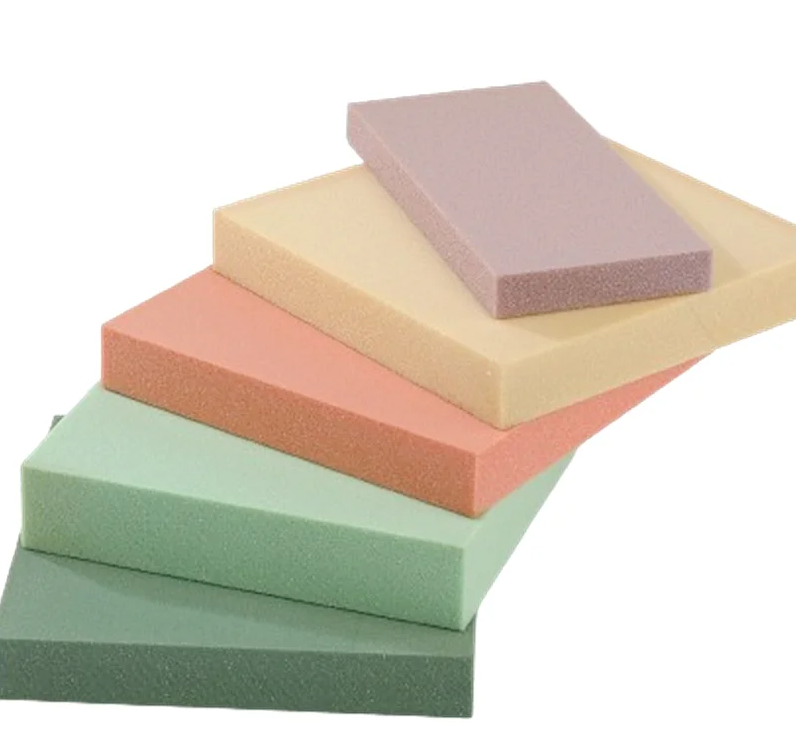
The closed-cell structure is the property that carries across every scenario; thickness and density are the variables that change.
The manufacturer's stated characteristics for the grade follow directly from that structure: closed-cell construction, low water absorption, high shear strength, fatigue resistance, thermal insulation and corrosion resistance, with weight reduction and structural stiffness improvement as the intended functions in service. None of these is scenario-specific. They are the raw material properties a specifier translates into a thickness and density for a particular part.
Marine and yacht building: curvature, water exposure and resin flow
Marine work is the scenario where moisture exposure decides more of the specification than anything else. The working conditions recorded for boat and yacht building are salt water, high humidity, dynamic loading and corrosion exposure, with low water absorption, salt-water corrosion resistance and good resin flow listed as the special requirements. The parts involved are hulls, decks, bulkheads, superstructures and marine panels, produced by vacuum infusion, resin infusion, hand lay-up or RTM.
On that basis, the thickness decision usually splits along the part rather than the vessel.
- Hulls and curved shells. Here the constraint is conformity to the mould. A thinner core with a scrim-backed surface is easier to hold in place during bagging, and the 1 mm floor of the range exists precisely so that thin, curved sections remain available. Where the laminate sits in a high-slamming area, density usually rises before thickness does.
- Decks and superstructures. These are flatter, more highly loaded in bending and more visible. Thickness does the stiffness work; a thicker, lighter core is often the route to a stiff deck without adding mass, while density is reserved for local load points.
- Bulkheads and internal panels. Less exposed to immersion, more exposed to attachment loads and vibration. Thickness must be sufficient to carry inserts, and the surface option should match whether the panel is infused in place or bonded afterwards.
Two qualifications matter. First, small craft hulls and structures up to 24 m are addressed by EN ISO 12215-2:2018, which specifies requirements for core materials for structural use and for materials embedded in sandwich construction. A supplier's stated application coverage is not evidence of conformity with that standard; the scrim, thickness and density combination has to be assessed against the standard for the specific design. Second, "good resin flow" is a process requirement, not a material guarantee — it depends on the surface option, the infusion layout and the resin system together.
Wind energy: fatigue, blade shells and nacelle structures
Wind is the scenario where the core is asked to survive repetition rather than immersion. The recorded working conditions are high and low temperature, high pressure, corrosive environment, long-term static and dynamic load, and 24/7 continuous operation; fatigue resistance, weight reduction, structural performance and long service life are the stated functions, with high fatigue resistance, lightweight structure and dimensional stability named as the special requirements. The parts are wind turbine blades, blade shells and nacelle structures.
PVC foam is one of the established core families in this segment rather than an emerging option. A 2026 CompositesWorld review of core materials in wind energy identifies end-grain balsa, SAN foam, PVC foam and PET foam as the four types most widely used in wind applications. That framing is useful for a buyer because it makes the real question comparative — not whether PVC foam can be used, but which of these families suits a given blade design.
Within a blade shell, thickness and density are read together. Thickness contributes to the sandwich's separation and therefore to shell stiffness; density governs the core's shear contribution and its behaviour under repeated load. Because a blade shell is a very large moulded part, thickness also has process consequences: a thicker core changes the infusion path, the volume of resin the laminate draws, and the dimensional stability of a part whose shape has to hold through a long cure.
The boundary here is qualification. Whether a particular PVC grade is approved for a specific blade design is a question the blade OEM and its qualification programme own. A manufacturer's listed application coverage demonstrates that the material family is used in the segment; it does not substitute for blade-specific qualification evidence.
Rail vehicles and transportation: flat panels, payload and thermal gradients
Transportation is the scenario where thickness is most tightly coupled to the production line. Recorded working conditions are dynamic road loads, extreme thermal gradients, internal impact, corrosive exposure and frequent cycling. The parts are truck bodies, bus panels and rail interiors, with weight reduction framed as payload optimisation and thermal efficiency as a stated requirement. Production runs on high-cycle moulding and automated lines using large panel presses and high-pressure PUR injection machines.
Three thickness effects dominate.
- Payload. Every millimetre of core in a large side panel is multiplied by the panel area. Thickness is chosen to reach a stiffness target, then density is trimmed to keep mass out of the vehicle.
- Thermal performance. The core's thermal insulation matters in refrigerated bodies and in passenger compartments. A thicker core improves insulation but consumes interior space, so the trade is a packaging decision as much as a materials one.
- Impact and attachment. Doors, hinges, seat rails and equipment mounts all land on the panel. Local thickness and density at those points often differ from the field of the panel.
Rail interiors carry an additional constraint that sits outside the core's data sheet: fire, smoke and toxicity requirements are set by the rail operator or the applicable standard for the vehicle. A general-purpose PVC foam specification is not evidence of meeting them, and this should be confirmed with the supplier as a separate qualification item rather than assumed from the product's inclusion in a rail application list.
RV and caravan manufacturing: flatness, delamination and vibration
RV construction is the scenario where appearance and long-term flatness carry as much weight as structural performance. The recorded conditions are thermal cycling, dynamic vibration, UV radiation and high humidity; the parts are RV panels, caravan walls, floors and roofs, produced by vacuum bonding, continuous lamination or wet lay-up and infusion, on large-format vacuum presses, 5-axis CNC routers and roll coating machines. The special requirements are lightweighting, anti-delamination, flatness tolerance, acoustic insulation and impact resistance.
Because the four assemblies behave differently, one thickness across a whole vehicle is rarely the right answer.
- Walls. Large, visible and penetrated by windows, doors and awnings. Thickness is set by handling stiffness and by the depth available for attachment, with flatness tolerance driving the choice as much as strength.
- Floors. Point loads from furniture, appliances and foot traffic. Density usually rises here, and thickness has to accommodate the fixings that pass through the sandwich.
- Roofs. Weight-critical and exposed to UV and thermal cycling. A lighter, thicker core buys stiffness, but the panel must stay flat through temperature swings — which is where anti-delamination and flatness tolerance meet the core specification directly.
UV exposure deserves a note of its own. The core sits inside the sandwich, so the UV-facing surface is normally the skin or a coating, not the foam. Where a panel is cut and the core edge is exposed, edge sealing becomes part of the specification rather than an afterthought.
Industrial composites and construction panels: chemistry before geometry
Industrial work is the scenario where the core's chemical environment decides the specification. Recorded conditions include corrosive environments, extreme outdoor weather, high temperature and fire risk, acoustic stress and hygiene requirements; the parts are industrial covers, FRP panels and machine enclosures, produced by hand lay-up or spray-up on continuous panel lamination lines and pultrusion machines, with chemical compatibility as the special requirement.
Thickness still matters — a continuous laminated panel needs enough separation to reach its stiffness target at line speed — but it is secondary to whether the resin system, the core and the service environment are compatible. A core that performs well in a marine hull is not automatically the right choice inside a chemical processing enclosure, and the compatibility question should be answered before thickness is fixed.
A scenario-to-thickness matching framework
The table below converts the recorded scenario data into a working checklist. It does not prescribe a thickness for any part — that number belongs to the design — but it shows what moves the decision in each build scenario and what should be confirmed before the thickness is written into a specification.
| Build scenario | What moves the thickness decision | Confirm before fixing thickness |
|---|---|---|
| Marine and yacht (hulls, decks, bulkheads, superstructures) | Curvature and conformability; immersion and humidity; deck bending stiffness; insert and fitting depth | Surface option versus infusion method; low-water-absorption requirement; standard scope for the craft size |
| Wind energy (blade shells, nacelle structures) | Fatigue duty; shell stiffness; dimensional stability through cure; infusion volume in a large mould | Blade-specific qualification route; comparable density options; process window for the resin system |
| Transportation and rail (truck bodies, bus panels, rail interiors) | Payload target; thermal efficiency; internal impact; attachment points in the panel field | Fire, smoke and toxicity requirements for rail interiors; press cycle and panel size limits |
| RV and caravan (walls, floors, roofs) | Flatness tolerance; anti-delamination; acoustic target; point loads on floors; attachment depth on walls | Bonding method and press format; edge sealing; thermal cycling behaviour of the complete panel |
| Industrial composites and construction panels | Chemical environment; fire risk; continuous line speed; stiffness target for FRP panels and enclosures | Resin and core compatibility; hygiene requirements; pultrusion or lamination process limits |
Where PVC foam core is not the automatic answer
A material reference that only explains fit is not much use to a buyer. Three boundaries are worth stating plainly.
Aerospace and UAV structures sit outside the listed PVC application set. CINON's PVC foam core is listed for marine, wind, transportation, rail, RV, industrial composites, construction panels and defense applications. For aerospace and UAV work, the portfolio offers PMI foam core and aramid honeycomb instead. A buyer who needs a core for a UAV wing should not assume the PVC grade is the intended answer simply because it is the most widely discussed foam in the range.
Thin infusion flow cores are a different product, not a thinner PVC foam. CINON's CX, CS, CT and CM core materials are polyester nonwoven cores in the 1.5–6 mm range, positioned as alternatives to Soric LRC, Soric SF and Soric XF for resin flow and surface quality in vacuum infusion. They solve a flow problem; the PVC foam solves a structural separation problem. Confusing the two leads to specifications that look similar on paper and behave nothing alike in the mould.
PET foam is a live alternative in the same scenarios. CINON lists a recyclable PET foam core at densities from 80 to 320 kg/m³ for the same broad industry set, including marine, wind, transportation, rail and RV work. Where recyclability or a different balance of properties is a programme requirement, PET deserves to be assessed alongside PVC on the same part, with the same skin schedule and the same process, rather than compared on a data sheet alone.
What to check before the thickness is written into an order
Thickness is easy to change on a drawing and expensive to change after tooling exists. Five checks reduce that risk.
- Test the actual stack-up, not the foam alone. A core sample confirms density and cell structure; a panel sample confirms whether the chosen thickness, surface option and skin schedule infuse, bond and finish as intended.
- Match the surface option to the process. Plain, grooved, perforated and scrim-backed surfaces behave differently in infusion, bonding and hand lay-up. The surface is part of the thickness decision, not a separate line item.
- Confirm the supply parameters early. CINON's published capability data lists a 1,000 m² minimum order quantity, a 15–30 day lead time, 100% testing and ODM customisation, with a monthly capacity of 100,000 m² and an annual output of 1,200,000 m². Those numbers should be checked against the programme's ramp, not assumed from a sample order.
- Ask for the qualification route in writing. For marine work this means the applicable standard scope; for rail interiors it means fire, smoke and toxicity evidence; for wind it means the blade OEM's qualification path. CINON's technical support covers material selection, composite process optimisation, vacuum infusion guidance and sample evaluation, which is where these questions normally get resolved.
- Check the exit, not only the entry. Cutting, machining and edge sealing of a thick core require different tooling from a thin one, and an unsealed edge in a wet environment undermines the low water absorption of the closed cells.
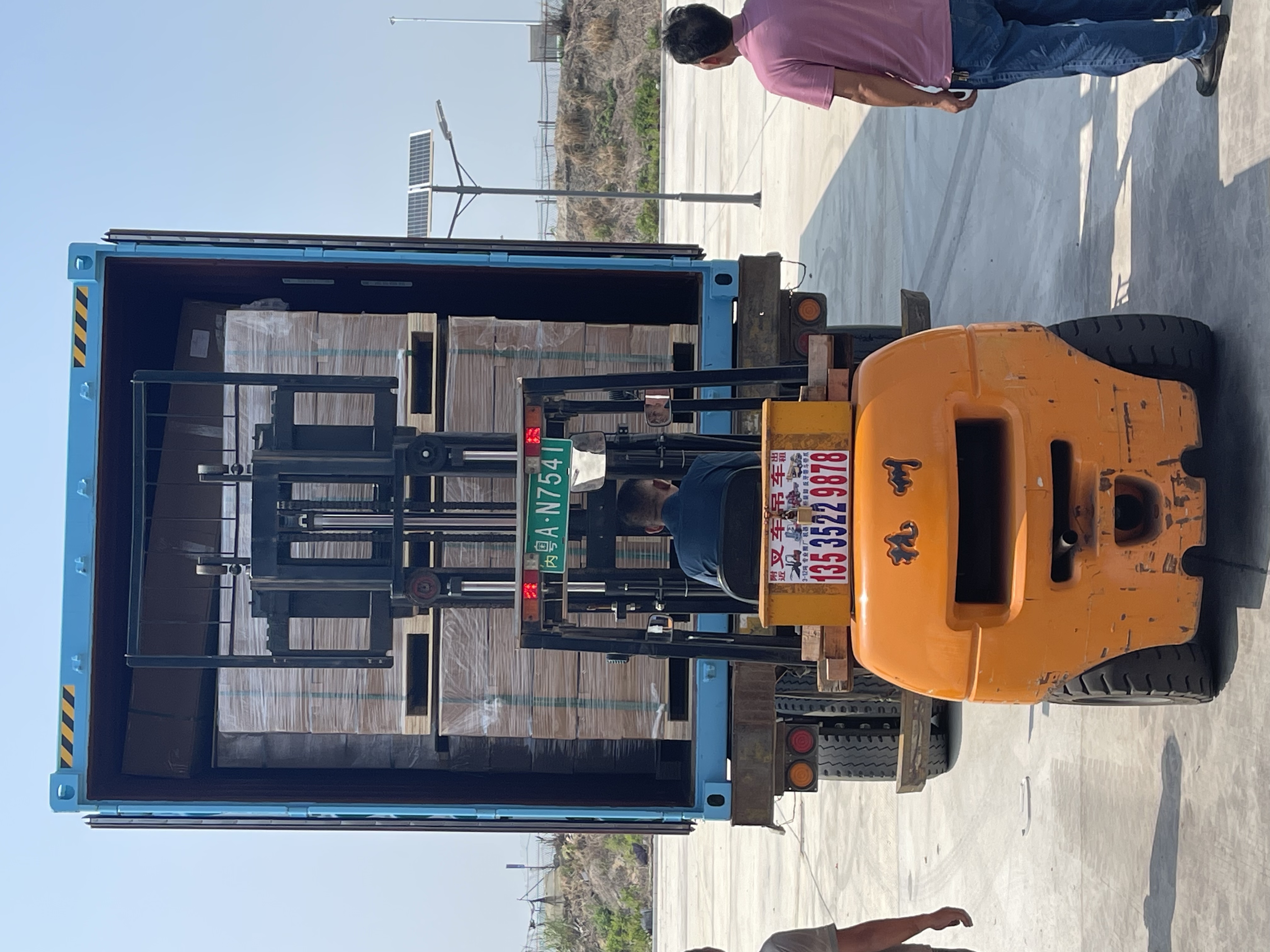
Order quantity, lead time and export handling are part of the specification once a thickness is locked.
Outlook: thickness as a programme decision
The direction of travel in all four scenarios points the same way — weight targets tighten, panel counts grow, and the core specification moves from a line on a bill of materials to a decision owned by the programme. A marine yard that standardises on one thickness across hull, deck and bulkhead is trading design freedom for inventory simplicity. A rail or RV builder that standardises on one panel build is trading mass for the same convenience. Neither is wrong, but both should be deliberate.
For buyers in the research and evaluation stage, the practical conclusion is modest and useful: fix the scenario first, then the part, then the thickness, and only then compare grades. A PVC foam core range that spans 1–80 mm and 45–300 kg/m³ can serve marine, wind, rail, RV and industrial builds — but not with a single specification, and not without confirming the standard, process and qualification requirements that sit outside the data sheet.
FAQ
What thickness of PVC foam core is used in boat building?
CINON supplies PVC foam core in thicknesses from 1 mm to 80 mm, and there is no single thickness that applies across a boat. Hull shells, decks, bulkheads and superstructures are loaded and moulded differently: curved shells favour thinner, conformable sections, while flat decks usually need more separation to reach their stiffness target. The thickness should be set from the part design, skin schedule and the applicable standard for the craft, then matched to an available density.
Is PVC foam core used in wind turbine blades?
PVC foam is one of the core families commonly used in wind energy composites. A 2026 CompositesWorld review lists end-grain balsa, SAN foam, PVC foam and PET foam as the four types most widely used in wind applications. CINON lists wind turbine blades, blade shells and nacelle structures among the applications for its PVC foam core. Whether a specific grade is approved for a specific blade remains a matter for the blade manufacturer's own qualification process.
How does rail interior use differ from RV panel use?
Both use flat sandwich panels, but the demands differ. Rail interiors are recorded with dynamic road loads, extreme thermal gradients, internal impact, corrosive exposure and frequent cycling, and are produced on high-cycle moulding lines; fire, smoke and toxicity requirements are set separately by the operator or vehicle standard. RV panels face thermal cycling, vibration, UV radiation and humidity, with flatness tolerance, anti-delamination and acoustic insulation named as the special requirements. Thickness in rail work tends to follow press cycle and impact needs; in RV work it follows flatness and attachment depth.
Can one PVC foam core thickness serve marine, wind, rail and RV builds?
Not usefully. The four scenarios differ in working conditions and in what the core has to deliver: water resistance and resin flow in marine work, fatigue resistance and dimensional stability in wind, payload and thermal efficiency in transport, and flatness with anti-delamination in RV panels. A single thickness would either overbuild the lightly loaded parts or under-serve the demanding ones. The 1–80 mm range exists so that each part can be specified on its own terms.
What should a buyer verify before ordering PVC foam core for a specific project?
Four things. First, that the surface option — plain, grooved, perforated or scrim-backed — matches the intended process, whether that is vacuum infusion, RTM, hand lay-up, prepreg or VARTM. Second, that the thickness and density combination has been evaluated in a panel sample with the actual skins and resin. Third, that any standard, class or fire requirement applying to the part has been checked as a separate qualification item rather than inferred from the supplier's application list. Fourth, that minimum order quantity, lead time and capacity fit the programme; CINON publishes a 1,000 m² MOQ, a 15–30 day lead time and a monthly capacity of 100,000 m².
Product catalogue (PDF, publicly accessible): CINON Composites catalogue
Tem questões ou precisa de mais detalhes?
Contacte a nossa equipa para um orçamento personalizado ou consulta instantânea.
Solicitar orçamento
Preencha o formulário abaixo e a nossa equipa entrará em contacto com uma proposta personalizada.
Chat direto do WhatsApp
Prefere conversar em tempo real? Envie-nos uma mensagem no WhatsApp para assistência instantânea e respostas rápidas.
- Obter orçamento personalizado
- Partilhar fotos ou documentos
- Discuta as suas necessidades diretamente
Geralmente responde em 5–30 minutos durante o horário de expediente.