
PVC Panel Compliance: Verifying Waterproof & Fire-Resistant Claims
PVC Panel Compliance: Verifying Waterproof & Fire-Resistant Claims
A compliance-focused industry reference for importers, distributors and project buyers who need to separate documented PVC panel performance from unverified marketing language.
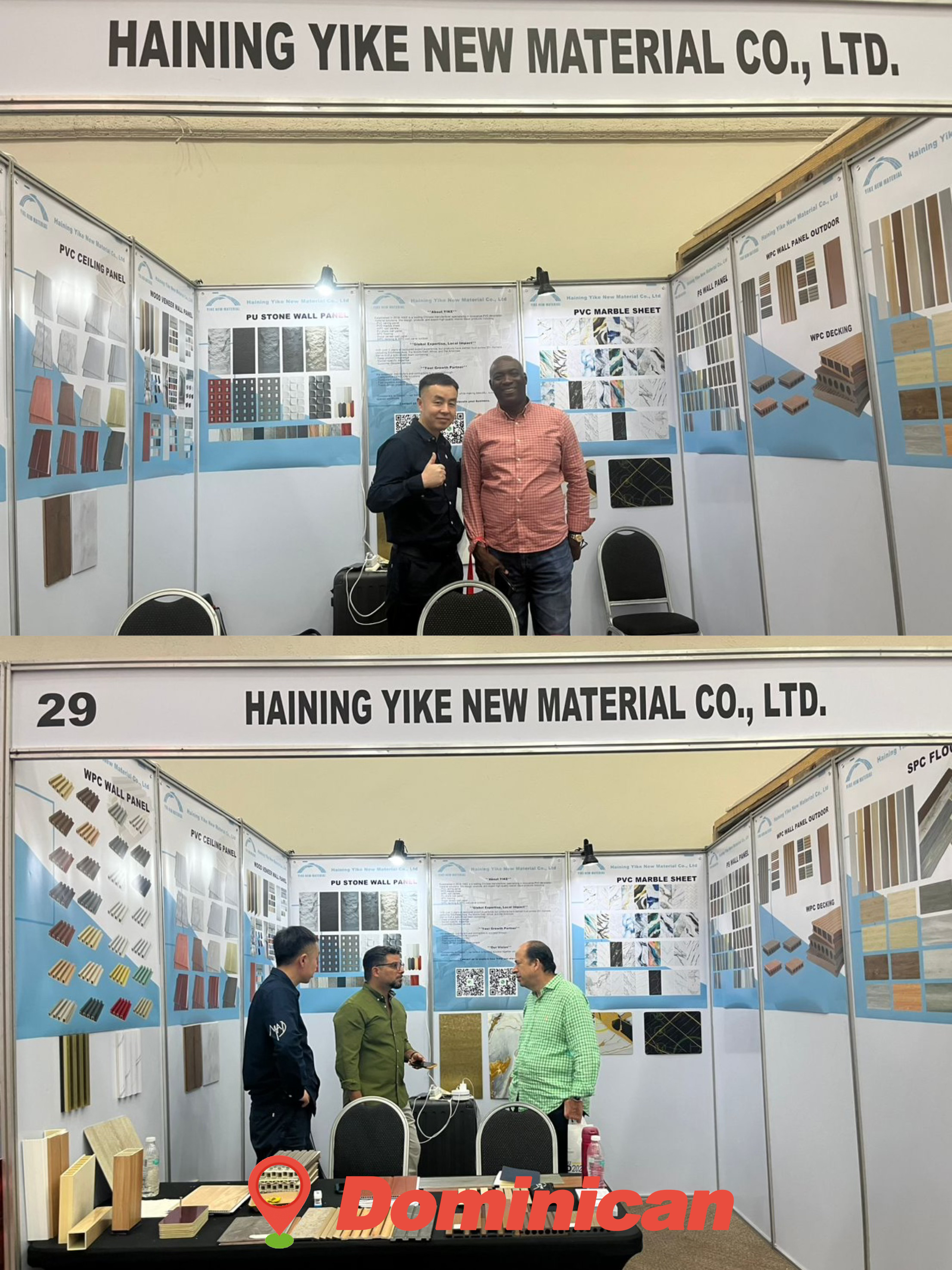
Compliance evaluation typically happens at the same point as sample review: distribution channels, sourcing fairs and factory visits, where buyers compare panel samples against the documents behind them.
The global PVC panels market reached a valuation of USD 14.8 billion in 2025, and PVC wall panels accounted for 42.5% of that market by product type, according to Dataintelo. Growth at that scale changes what buyers ask for. Once PVC panel, PVC ceiling panel and WPC wall panel move from decorative add-ons into mainstream construction specifications, procurement stops being a comparison of appearance and price alone and becomes a question of evidence: which performance claim is testable, which standard applies, and what the supplier can produce in writing.
Waterproof and fire-resistant are the two claims most frequently repeated in panel listings, and the two most frequently left unqualified. This article explains what those terms mean inside a construction specification, which benchmarks buyers should name when requesting documentation, what material composition data should accompany a quotation, and where the documented performance of PVC and WPC panels ends.
The documentation gap behind a fast-growing category
PVC and WPC decorative panels are normally sold on visual and economic strengths: realistic marble or wood finishes, light weight, fast installation and low maintenance. Those strengths are genuine, and they are comparatively easy to demonstrate with a sample. Compliance attributes work differently. They depend on formulation, on the exact build being quoted, and on documents that are often held at the factory rather than attached to the offer.
The gap becomes commercially visible at three moments. During tendering, a contractor may need to submit a material declaration before a panel is approved for the project. At import, an authority, insurer or end client may ask for evidence that the declared material matches the shipped product. After installation, a statement about moisture behaviour or flame behaviour becomes the reference point in any dispute. In each situation the practical question is identical: what can the supplier send, in writing, that refers to the panel actually purchased?
The opportunity for buyers is that most of this information can be obtained before an order is placed, provided it is requested in a structured way. What follows sets out the benchmarks worth naming in a quotation, the composition data that underpins performance claims, and the boundaries that no PVC or WPC panel should be asked to cross.
What waterproof and fire-resistant mean in a construction specification
Water, moisture and light stability
Water behaviour in PVC and composite panels is usually discussed through two measurements. Water absorption is tested under ASTM D570 or ISO 62, the standard methods used to determine water absorption rates for PVC and composite panels. Surface colour stability under light exposure is tested under ISO 105-B02, the standard for colour fastness of decorative panels to artificial light using a xenon arc fading lamp. For PVC marble sheet, PVC wall panel and PVC ceiling panel installed in kitchens, bathrooms or other humid interiors, these two tests cover the majority of realistic service conditions, and both are referenced to a specimen rather than to a product family.
Fire performance
In North America, ASTM E84, also published as UL 723, is the primary fire test standard for interior wall and ceiling finishes, and a Class A rating requires a Flame Spread Index of 0 to 25. In the European Union, reaction-to-fire classification follows EN 13501-1, where PVC panels frequently target Class B-s1, d0 for commercial applications. The two systems use different test methods and different classification scales, so a result from one does not convert directly into the other.
One consequence deserves emphasis: fire classification belongs to a build, not to a product family. A panel with a different formulation, coating or thickness can carry a different classification even when the visible surface pattern is identical.
Compound quality underneath both claims
Underneath water and fire claims sits the PVC compound itself. ASTM D1784 specifies cell classification for rigid PVC compounds, and common building panels utilise Cell Class 12454 for a balance of impact and tensile strength. A supplier that can state the compound class, or at least the resin grade and the filler ratio, is describing raw material rather than market position.
| Claim type | Relevant benchmark | What it measures | Documentation to request |
|---|---|---|---|
| Water resistance | ASTM D570 / ISO 62 | Water absorption of PVC and composite panels | Test reference plus composition statement for the quoted build |
| Fire performance, North America | ASTM E84 (UL 723) | Flame spread and smoke behaviour of interior wall and ceiling finishes; Class A requires FSI 0 to 25 | Classification document naming the panel build tested |
| Fire performance, EU | EN 13501-1 | Reaction-to-fire classification; PVC panels often target B-s1, d0 for commercial use | Classification report for the destination market |
| Colour and surface stability | ISO 105-B02 | Colour fastness to artificial light on decorative surfaces | Light-fastness result for printed or laminated finishes |
| Raw material quality | ASTM D1784 | Cell classification of rigid PVC compounds; Cell Class 12454 is common in building panels | Compound or resin grade statement |
The composition data that anchors every performance claim
Composition data is the least expensive form of compliance evidence a buyer can request, and the most discriminating. YIKE publishes a material line for its decorative panels in which PVC ceiling panels, PVC wall panels and PVC marble sheets are described as PVC resin plus calcium carbonate plus additives, interior WPC wall panels as PVC/PE plus wood fibre plus additives, and Outdoor WPC Wall Panels as wood fibre plus HDPE plus additives.
For PVC ceiling panels, the published PVC content range is 35% to 50%, with customization available. That figure is worth understanding. The resin-to-filler ratio influences toughness, weight and how a panel responds to temperature, while calcium carbonate contributes stiffness and cost efficiency. Additives carry functions such as UV stabilization, anti-yellowing and fire retardant performance. A buyer who asks for the ratio, the additive package and the reference build is asking a question that cannot be answered with adjectives.
The same logic runs across the wider range. PVC Self-Adhesive Wall Sticker is published as a PVC product at 2.5 mm thickness, in 600 mm and 1200 mm widths with a 3 m roll length and a stated indoor service life of five to ten years, described as waterproof and moisture resistant. PVC Marble Sheet is published as 100% waterproof, in thicknesses from 2.0 mm to 3 mm, with high gloss, matte or embossed finishes and a UV-coated, scratch-resistant surface. Outdoor WPC Wall Panel is published with a 15 to 25 year service life, UV resistance and termite proofing.
Composition data also exposes mismatches. If a quotation describes a panel as waterproof while the composition statement omits the additive package and gives no filler ratio, the buyer has no way to understand what the waterproof claim rests on.
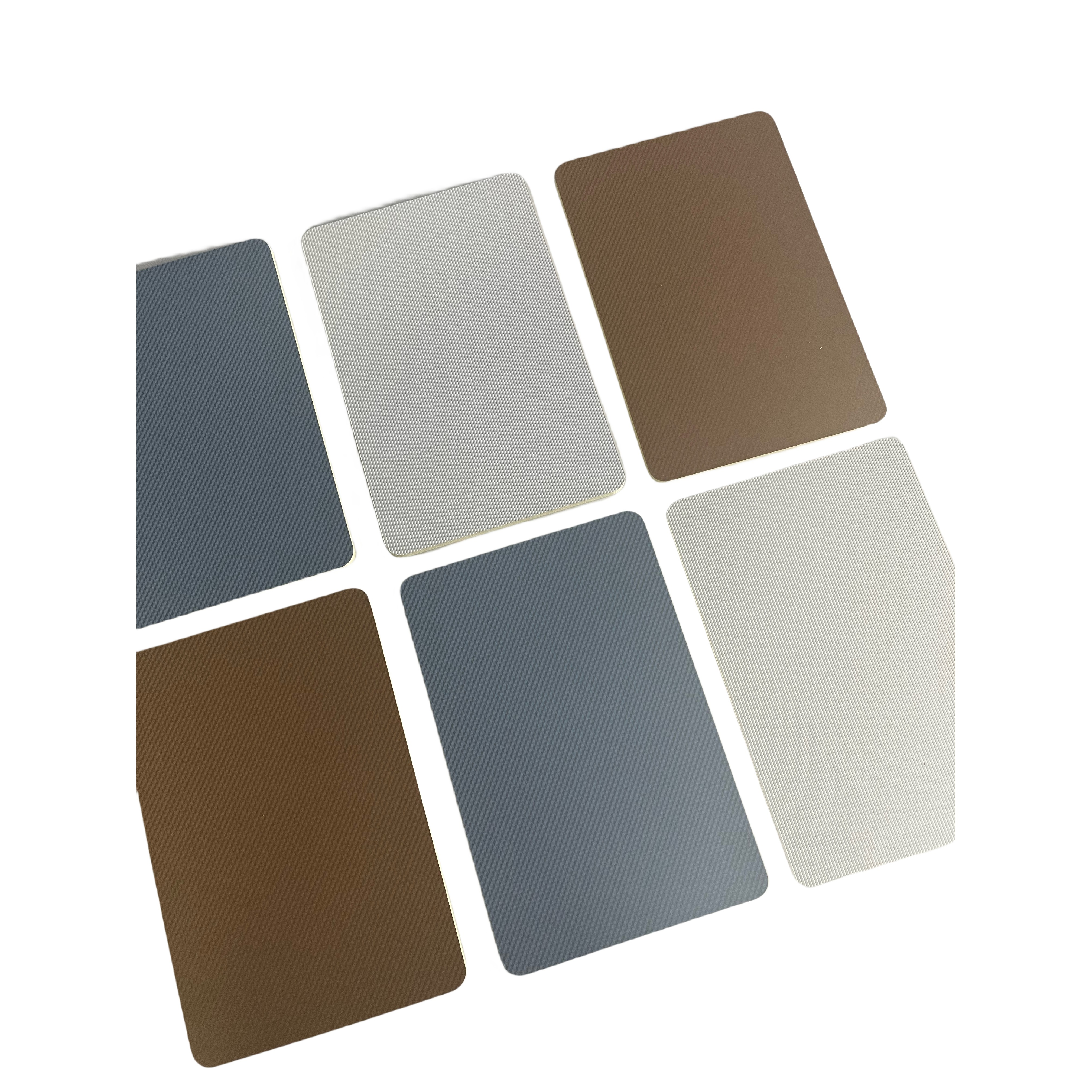
Material composition statements and finish specifications describe the build being quoted: PVC resin, calcium carbonate and additives for PVC panels; wood fibre, HDPE or PVC/PE and additives for WPC systems.
How YIKE NEW MATERIAL documents its panel range
YIKE (Haining Yike New Material Co., Ltd.) is a China-based manufacturer and exporter of PVC and WPC decorative building materials, founded in 2019 and operating from Haining, Zhejiang. The company describes a 10,000 m2 factory, 50 employees, a 10-engineer R&D team and an annual output of 5,000,000 m2, with 100% of production exported to Central America, South America, Southeast Asia, the Middle East and Africa.
| Product | Published composition | Published performance attributes | Specification range |
|---|---|---|---|
| PVC Ceiling Panel | PVC resin + calcium carbonate + additives | Waterproof, high toughness, aging resistance, lightweight, easy to clean | Widths 200 to 600 mm; thickness 6 to 10 mm; PVC content 35% to 50% |
| PVC Wall Panel | PVC + calcium carbonate + additives | Waterproof and moisture resistant, fire retardant options, scratch resistant surface | 1220 x 2440 mm and 1220 x 2800 mm; 5 mm and 8 mm thickness |
| PVC Marble Sheet / UV Marble Sheet | PVC resin + calcium carbonate + additives | 100% waterproof, mould and mildew resistant, scratch resistant UV surface | 2.0 to 3 mm; high gloss, matte or embossed |
| Interior WPC Fluted Wall Panel | PVC/PE + wood fibre + additives | Waterproof and moisture resistant, termite and insect resistant | Models from 150 x 10 mm to 200 x 20 mm, 2900 mm length |
| Outdoor WPC Wall Panel | Wood fibre + HDPE + additives | Waterproof, UV resistant, termite proof, no painting required | Widths 140 to 219 mm; 13 to 26 mm thickness; 15 to 25 year service life |
| PVC Self-Adhesive Wall Sticker | PVC | Waterproof and moisture resistant, oil and stain resistant, removable without damaging walls | 2.5 mm; 600 mm and 1200 mm width; 3 m roll; 5 to 10 year indoor service life |
Several commercial parameters matter to compliance planning. OEM and ODM services are available across the range; packaging is offered in PE film or carton with customized options; the stated MOQ is one 20-foot container with four to six colours from the E-catalogue, with alternatives of 500 sqm per colour from stock colours or 1,000 sqm from the E-catalogue; lead time is stated at 14 to 30 days. Quality control is described as 100% pre-shipment testing with third-party inspection (SGS).
Fire-related statements in the company's published material are deliberately limited. Fire retardant options are available for the panel range, and the published product FAQ notes that partial models reach B1 flame retardant grade. Specific certificate numbers are not disclosed in the publicly available material reviewed for this article.
That distinction should be read as a procurement instruction rather than a weakness. Where a project requires a named classification, whether an ASTM E84 Class A result, an EN 13501-1 classification or a B1 statement for a specific market, the buyer should request the document that carries it together with the panel build it applies to, instead of assuming that a general fire retardant option satisfies the specification.
Where each panel type fits, and where it does not
Published application scenarios separate the range by service environment, which is itself useful compliance information, because a claim that is valid in one environment can be misleading in another.
Indoor wall and ceiling systems
PVC ceiling panels are described for humid indoor interiors such as kitchen and bathroom ceilings, hotel bathrooms, and supermarket or retail ceilings, where the stated requirements are moisture and mildew prevention, anti-aging behaviour, colour fastness and easy cleaning. PVC wall panels and interior WPC fluted panels are described for residential and commercial interiors including hotel guest rooms, office fit-outs and shopping mall interiors, where project specifications commonly call for a flame retardant grade, formaldehyde-free environmental performance and dimensional stability when installed on a keel system with clips, screws or adhesive.
Dry-area self-adhesive applications
PVC Self-Adhesive Wall Sticker is positioned for flat, clean, dry indoor walls in living areas, rental refurbishment and retail fit-out, with published instructions covering wall preparation, cutting, bubble removal and edge trimming. The published FAQ limits the product explicitly: it is not recommended for shower zones with continuous water contact, because prolonged immersion causes edge warping and peeling, and the substrate must be flat, clean and dry before application. That is a boundary statement, and it is more useful to a buyer than a general waterproof claim.
Exterior and facade systems
Outdoor WPC Wall Panels are described for building facades, villa exteriors, commercial building exteriors and landscape construction, with requirements covering UV resistance, weather resistance, waterproofing, anti-fading, anti-crack performance and wind pressure resistance, installed on anti-rust metal keels with dedicated outdoor fasteners and sealing strips. Interior WPC panels are explicitly not suitable for open-air exposure.
Market trend: compliance is becoming a purchasing variable
The compliance question is becoming commercially significant because the categories it applies to are being specified at greater volume. The global wood plastic composite market was estimated at USD 8.97 billion in 2025 by SNS Insider, with one industry forecast projecting an 11.6% compound annual growth rate to 2030. Synthetic marble, the segment that includes PVC marble sheets, is projected to grow at 6.8% annually from 2025 to 2032 according to Metastat Insights, while the ceiling tiles market, which includes PVC ceiling systems, was valued at USD 8.03 billion in 2024 with a double-digit growth projection reported by Cognitive Market Insights.
Supply-side movement is equally visible. China's total PVC exports reached approximately 3.82 million tonnes in 2025, a 46% increase over 2024, according to the General Administration of Customs of the PRC, with India taking roughly 39% of that volume. Asia-Pacific accounted for 38.4% of global PVC panel revenue in 2025. Market reports also identify Palram Industries Ltd. and Dumaplast NV among the leading global competitors in the PVC panels sector, which suggests that competition is moving across both price and specification.
Two cautions apply when reading these figures. First, published market sizes for the PVC wall panel segment vary by scope: one source places wall panels alone at USD 5.84 billion in 2025, while the broader PVC panels category is valued at USD 14.8 billion. Second, none of these figures indicates whether a specific panel meets a specific fire or water standard. Category growth explains why documentation is requested more often; it does not replace documentation.
Comparison with traditional solutions, and the limits of the comparison
Documented performance is easiest to judge in comparison with the finishes PVC and WPC panels most often replace.
| Consideration | PVC and WPC decorative panels | Ceramic tile | Natural stone | Treated timber cladding |
|---|---|---|---|---|
| Weight and handling | Lightweight, transportable in large panel sizes | Heavier, more demanding on handling and substrate | Heaviest option; structural considerations apply | Moderate weight, natural variation between pieces |
| Installation | Glue, clip, aluminium profile or hidden fixing on keel systems | Wet trades, adhesive and grouting | Wet trades, cutting on site, sealing in some applications | Mechanical fixing, on-site cutting |
| Water and moisture | Waterproof and moisture resistant statements published per product type | Dimensionally stable in wet areas when correctly installed | Resistant but porous in some types; needs care | Requires protection and periodic maintenance |
| Fire documentation | Depends on formulation and build; must be requested per product and market | Governed by body composition and tested under the same reaction-to-fire frameworks | Governed by mineral composition | Organic material; documentation depends on treatment |
| Exterior suitability | Only outdoor-grade WPC is intended for facade exposure | Commonly used externally with correct fixing and drainage | Widely used externally | Used externally with treatment cycles |
| Maintenance | Low; smooth surfaces wipe clean | Grout line cleaning | Sealing and stain management | Refinishing and pest protection |
The limitations are as relevant as the advantages. PVC marble sheet is an interior decorative panel and is not recommended for long-term outdoor use, because UV exposure causes surface fading and aging. Interior WPC wall panels are not suitable for open-air exposure and will fade and crack outdoors, which is why exterior work requires the outdoor-grade wood fibre and HDPE formulation. PVC Self-Adhesive Wall Sticker is not recommended for continuous water contact, and its published indoor service life is five to ten years, after which surface yellowing or reduced adhesion may occur. Panel performance also depends on installation: keel spacing, adhesive selection and expansion allowance all affect whether a documented claim survives on site. Finally, because specific certificate numbers are not published for the example supplier's range, a buyer who needs a named classification must request it, rather than infer it from the product description.
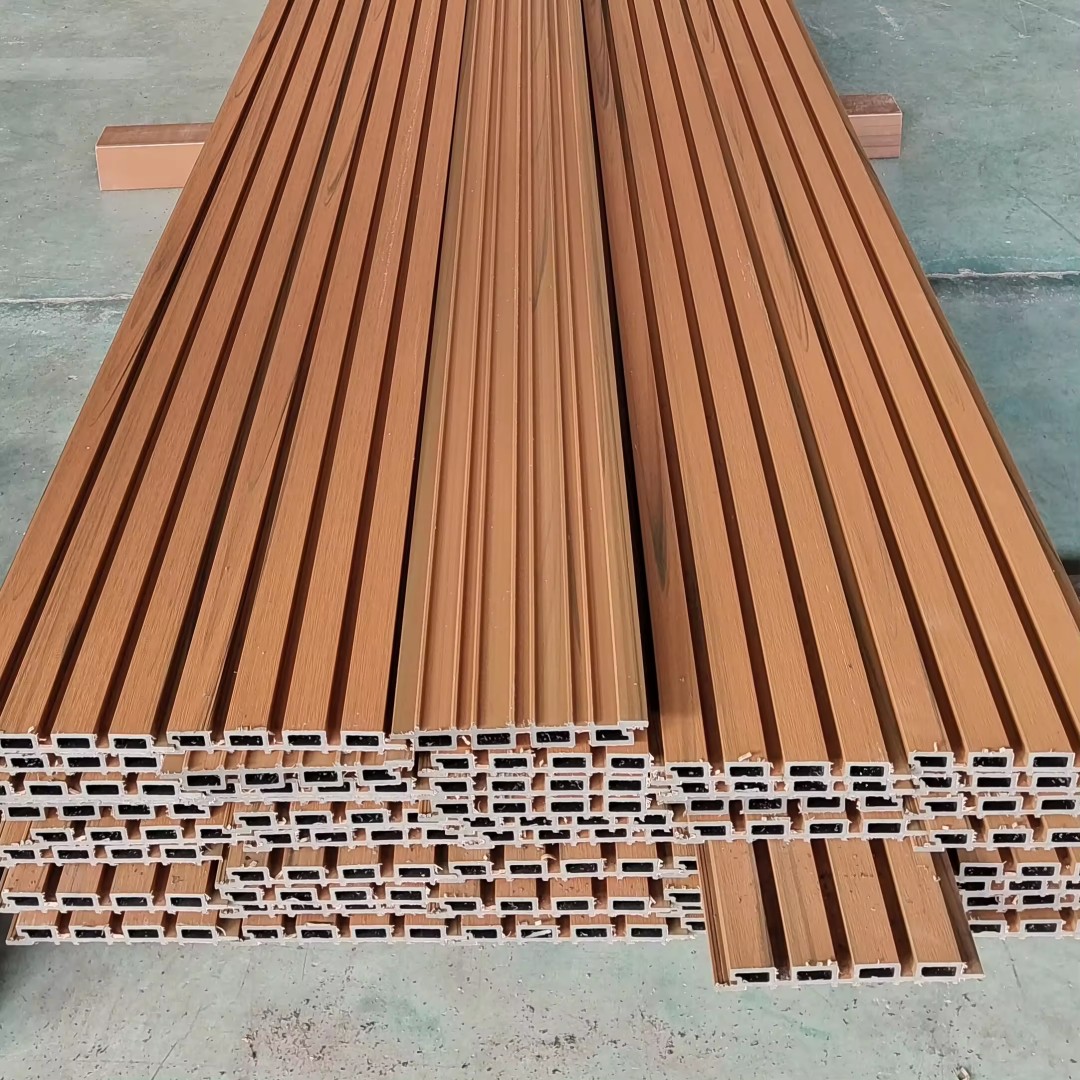
Exterior systems carry the strictest evidence requirement: UV resistance, weather resistance and long-term aging performance apply to the outdoor-grade WPC formulation, and not to interior panels used in the same location.
A documentation request list before confirming an order
- Composition statement naming the resin type, filler and additive functions for the exact build quoted, not for the product category.
- Service environment in writing: interior dry, interior humid, wet area or exterior facade, with the boundaries stated.
- Water and light test references, such as ASTM D570 or ISO 62 for water absorption and ISO 105-B02 where printed or laminated surfaces are involved.
- Fire documentation matched to the destination market: ASTM E84 or UL 723 results for North America, EN 13501-1 classification for the EU.
- Compound data where available, for example an ASTM D1784 cell class statement.
- Sample plus batch consistency confirmation, so that mass production can be compared against the approved sample.
- Inspection arrangements, including pre-shipment testing and any third-party inspection scope.
- Commercial parameters: MOQ per colour, lead time, packaging specification, and container loading method.
- Installation instructions covering substrate preparation, fixing method and expansion allowance.
Future outlook
Compliance documentation is shifting from an exception to a standard line item in PVC panel procurement. As projects in hotels, retail, offices and residential refurbishment increasingly require declarations before approval, buyers are beginning to treat composition data, service-environment statements and market-matched test references as part of the quotation rather than as post-order requests. Suppliers able to answer those questions across a full range, from ceiling and wall panels to marble sheets, interior and exterior WPC, and self-adhesive products, are better positioned to hold specification-driven accounts than suppliers competing on price alone.
The next stage is likely to be standardised documentation packs per product family and per market, with the tested build identified inside them. Until that becomes routine, the practical advantage sits with buyers who ask structured questions early, and with suppliers who can answer them without adding caveats after the order.
FAQ
What certifications should a buyer request when sourcing PVC panels for construction projects?
The request should start with the destination market rather than the product name. For interior wall and ceiling finishes in North America, the relevant fire test standard is ASTM E84, also published as UL 723, where Class A requires a Flame Spread Index of 0 to 25. In the European Union, reaction-to-fire performance follows EN 13501-1, and PVC panels frequently target Class B-s1, d0 for commercial use. Water behaviour is normally addressed through ASTM D570 or ISO 62 for water absorption, and through ISO 105-B02 for colour fastness to artificial light where printed or laminated surfaces are involved. In each case the buyer should ask for the document that carries the result, together with the panel build it applies to.
How can a buyer verify a waterproof claim for PVC wall panels or ceiling panels?
Verification is a question of scope and evidence rather than the wording of the claim. A buyer should request a composition statement identifying PVC resin, calcium carbonate and the additive package for the build quoted, then ask how water resistance is assessed and what the intended service environment is. In published product data, PVC marble sheets are stated as 100% waterproof, PVC wall panels as waterproof and moisture resistant, and PVC ceiling panels as waterproof with a PVC content range of 35% to 50%. These statements become meaningful when they can be connected to a defined composition and a defined application.
What material composition data should accompany a PVC panel quotation?
The minimum is the resin type, the filler and the functions of the additive package. YIKE publishes PVC ceiling panels, PVC wall panels and PVC marble sheets as PVC resin plus calcium carbonate plus additives; interior WPC wall panels as PVC/PE plus wood fibre plus additives; and Outdoor WPC Wall Panels as wood fibre plus HDPE plus additives. For PVC ceiling panels the published PVC content range is 35% to 50%, with customization available. Additives govern functions such as UV stabilization, anti-yellowing and fire retardant performance, so a composition statement that omits them leaves those claims without a basis. The quoted thickness, width and finish should also be named, because performance data belongs to a specific build.
How do fire performance standards differ between North America and the EU?
The two systems use different test methods and different classification scales, so a result from one does not convert directly into the other. ASTM E84, also published as UL 723, is the primary fire test standard for interior wall and ceiling finishes in North America, and a Class A rating requires a Flame Spread Index between 0 and 25. In the European Union, EN 13501-1 covers reaction-to-fire classification, and PVC panels often target Class B-s1, d0 for commercial use. A general statement that fire retardant options are available is a starting point; the classification document for the specific panel build is the deliverable.
What documentation should be requested before confirming a bulk PVC panel order?
Practical items include a composition statement for the exact build; the intended service environment in writing; test references relevant to the destination market; a sample for later comparison against mass production; inspection arrangements, which YIKE describes as 100% pre-shipment testing with third-party inspection (SGS); packaging specification, offered as PE film or carton with customized options; MOQ and lead time, published as one 20-foot container with four to six colours from the E-catalogue, or 500 sqm per colour from stock colours, or 1,000 sqm from the E-catalogue, with 14 to 30 days lead time; and installation instructions covering the fixing method, whether glue, clip, aluminium profile or hidden fixing.
What are the practical limits of PVC and WPC panel performance claims?
Several limits are documented. PVC marble sheet is an interior decorative panel and is not recommended for long-term outdoor use, because UV exposure causes surface fading and aging. Interior WPC wall panels are not suitable for open-air exposure and will fade and crack outdoors, whereas Outdoor WPC Wall Panels are formulated for exterior service with a published 15 to 25 year service life. PVC Self-Adhesive Wall Sticker is not recommended for shower zones with continuous water contact, and its published indoor service life is five to ten years, after which surface yellowing or reduced adhesion may occur. Fire performance also depends on formulation and build, which is why a named test reference is more useful than a general description.
Standards referenced: ASTM International (ASTM E84 / UL 723, ASTM D570, ASTM D1784), European Committee for Standardization (EN 13501-1), International Organization for Standardization (ISO 62, ISO 105-B02). Market data: Dataintelo, SNS Insider, Metastat Insights, Cognitive Market Insights, General Administration of Customs of the PRC. Company information: YIKE New Material capability, product and application documentation. The YIKE New Material company brochure is available for download: YIKE New Material brochure (PDF). Company website: www.merchandise-eco.com.