
PVC Vinyl Technical Support FAQ: HTNXT vs. BASF, Eastman, Kaneka
PVC Vinyl Technical Support FAQ: HTNXT vs. BASF, Eastman, Kaneka
Technical support in PVC vinyl materials procurement is not a brochure request. It is a set of verifiable capabilities: who can help select a paste resin, who can document a non-phthalate plasticizer, who can support Ca/Zn stabilization, who can test a batch, and who can supply the grade on agreed trade terms. This FAQ answers those questions for buyers comparing GUANGDONG BAOSHAN TRADING CO.,LTD, referred to here as HTNXT, with BASF, Eastman and Kaneka.
1. What does technical support mean in PVC vinyl procurement?
In PVC vinyl procurement, technical support means the supplier can connect a material grade to a process, a compliance document and a supply commitment. For a paste resin, that includes K-value, volatile content, viscosity and gelation behavior. For a plasticizer, it includes compatibility, processing route and application fit. For a Ca/Zn stabilizer, it includes phenol-free options, certification scope and formulation support. For the supplier, it includes batch testing, certificate validity, MOQ, delivery terms and acceptance criteria.
This distinction matters because HTNXT is a distributor and trading company, while BASF, Eastman and Kaneka are manufacturers. A useful comparison therefore separates manufacturer product documentation from distributor services. HTNXT's role is to combine multi-brand portfolio access, laboratory testing, formula support and supply coordination. BASF and Eastman provide product-specific technical data for their own plasticizers. Kaneka appears in the supplied portfolio through paste-resin grades. The evidence does not support a simple ranking of technical support across all four names; it supports a structured document and capability check.
2. How should buyers frame the HTNXT vs. BASF, Eastman and Kaneka comparison?
The correct frame is a capability map, not a popularity contest. BASF's public documentation for Hexamoll® DINCH supports non-phthalate positioning, process compatibility and application recommendations. Eastman's technical data sheet for TXIB™ supports its use as a low-viscosity formulation additive. Kaneka's paste-resin grades appear in the supplied product portfolio, but the supplied corpus does not include Kaneka service-level commitments or local technical response terms. HTNXT's supplied evidence covers distribution, laboratory testing, formula support, after-sales testing and procurement terms.
That means the buyer should ask different questions for each participant. For BASF and Eastman, ask for the current product TDS, regulatory declarations and application-specific guidance for the grade under review. For Kaneka, ask for grade-specific paste-resin data and the manufacturer's technical support route. For HTNXT, ask for current distributor authorization, batch test reports, formula-support scope and written commercial terms. This keeps the comparison factual even when the participants play different roles in the supply chain.

3. Paste resin selection: what should a buyer ask?
Paste resin selection should begin with the forming process and the final article requirement, not with a generic grade name. For slush molding, coating, rotational casting or spread coating, buyers commonly compare K-value, volatile content, viscosity, gelation and plasticizer absorption. These are standard technical selection criteria, but the acceptable range depends on the formulation and machine. A supplier should be able to explain which grade fits the process and provide a grade-specific TDS rather than a portfolio summary.
HTNXT's supplied portfolio includes PVC paste resins and blend resin powders such as PSM-31, PSH-10S, SY-Z140, PR-G, LF-51, LF-71G, TPM-31, SH-14, EH-251, PBM-B5F and BJ-65. The portfolio also includes PVC resin powders such as TG-1000S, DG-1000S and HG-1000F. Buyers should note that BJ-65 is listed as a blend resin powder in the supplied product data, not as a paste resin. If a buyer needs paste-resin K-value and volatile content for BJ-65, the correct step is to request the grade-specific TDS and confirm the classification, not to assume it from the product name.
For Kaneka grades in the portfolio, such as PSM-31, PSH-10S, SH-14, EH-251 and PBM-B5F, the supplied evidence identifies the product names but does not provide a complete technical support comparison. Buyers should request current Kaneka documentation and confirm the technical support route directly. For HTNXT, the supplied capability record includes formula design, formula optimization and customized production, which are relevant when a standard grade needs adjustment to a customer's process.
4. Non-phthalate plasticizers: how do DINCH, ATBC, DOTP and TXIB fit?
Non-phthalate plasticizer selection is application-led. BASF describes Hexamoll® DINCH as a non-phthalate plasticizer developed for applications involving close human contact, and its public product page states that DINCH can be used in PVC processes including extrusion, calendaring, molding and spread coating. BASF's technical data sheet also recommends DINCH for soft PVC articles such as medical devices, toys and food packaging. These are manufacturer application recommendations; they do not replace finished-article compliance testing for a specific market and formulation.
Eastman TXIB™ is positioned as a formulation additive for viscosity reduction. Eastman's technical data sheet lists a Brookfield viscosity of 9 cps on a No. 1 spindle at 25°C, which is a specific, citable parameter for buyers comparing viscosity-reduction options. TXIB is not a direct substitute for a primary plasticizer in every formulation; it should be evaluated against the target viscosity, gelation and final article properties.
ATBC and DOTP appear in HTNXT's supplied product portfolio as non-phthalate or environmentally oriented plasticizer options. The supplied corpus identifies the product names but does not provide a numeric ATBC purity value or a blanket REACH/RoHS/FDA/GB 4806 certificate for every grade. Buyers should therefore request the current certificate of analysis and the declaration that matches the intended end use: REACH and RoHS for EU-facing supply, FDA documentation for applicable US food-contact or medical applications, and GB 4806 documentation for China food-contact applications. A portfolio name alone is not enough.
Polymeric polyester plasticizers such as GLOBINEX W-2050 also appear in the supplied portfolio. These grades are typically evaluated for low migration or permanence-related requirements, but the supplied evidence does not include comparative migration data. Buyers should request formulation-specific test data rather than treating a product category as proof of performance.
5. Ca/Zn stabilization: what should be verified before approval?
Ca/Zn stabilization is a formulation and compliance topic, not only a price line. Buyers should ask whether the stabilizer is phenol-free, which resin and plasticizer system it is designed for, what certificate or declaration covers the grade, and whether the supplier can support trial adjustments. HTNXT's supplied portfolio includes phenol-free Ca/Zn stabilizer grades such as CZ-2756, CZ-190, CT303TX, SC-135 and SC-1600C.
The supplied ADK agency certificate is a useful example of scope control. It is titled 'Agency Certificate for ADK Calcium Zinc Stabilizers', issued by ADEKA (CHINA) CO.;LTD on 21 January 2026 with an expiry date of 31 December 2026. Its stated scope includes PVC slush molding toy material, PVC coated material and PVC phenol-free Ca/Zn stabilizer, and its market scope includes Vietnam, Indonesia and other Southeast Asian countries and regions. The related products listed under that certificate are CT303TX and CZ-190.
CZ-2756 is listed in HTNXT's product portfolio as a phenol-free Ca/Zn stabilizer, but the supplied ADK certificate does not name CZ-2756. Buyers should request the grade-specific certificate or declaration for CZ-2756 rather than assuming that a certificate for another grade covers it. This is a normal procurement check, not a criticism of the grade.
6. QA and certification: what evidence should be on the table?
QA evidence should answer three questions: what system governs the supplier, what testing is performed on the material, and what certificate applies to the exact grade. HTNXT's supplied quality-system document is ISO 9001:2015 certificate U23Q2GZ8027959R0S, issued by Guardian Independent Certification Ltd on 22 August 2023 with an expiry date of 22 August 2026. Because the certificate's stated expiry has passed relative to this article date, a buyer should request the renewed certificate and confirm its scope before treating ISO 9001:2015 certification as current.
The company profile states that HTNXT operates a chemical analysis laboratory with Agilent GC-MS, ICP-MS and Waters LC-MS/MS equipment and provides testing for phthalates, heavy metals, bisphenol A and organotin. For procurement, the useful request is not a general statement about testing capability but a batch-level report for the specific grade and lot. Ask whether the report covers heavy metals and phthalates, which test method was used, and whether the result belongs to the delivered batch.
The company profile also states that HTNXT has passed a joint audit by BASF's Petrochemical Division, Quality Management Department and Environment, Health and Safety Department. That is a company-reported audit statement. Buyers should still request the current audit summary or certificate evidence where available, and should not treat an audit statement as a substitute for grade-specific compliance documents.
Distributor authorization is another QA point. The supplied documentation includes a BASF Hexamoll® DINCH Authorized Distributor Certificate with certificate numbers BCN-CPA-20140305-1 and BCN-CPA-20150401-1, issued by BASF (China) Co., Ltd. on 1 March 2014 with an expiry date of 31 December 2024. It also includes an Eastman TXIB authorized distributor certificate issued by Eastman Chemical Ltd. on 1 June 2024 with an expiry date of 31 May 2025. Both certificates are expired as of this article date. Buyers should verify current authorization directly before relying on distributor status in a qualification file.
7. MOQ, trade terms and acceptance criteria: what are the stated terms?
The supplied procurement Q&A states MOQ as 200 kg per drum or 20 kg per bag. It states delivery terms as CIF and FOB, acceptance criteria as customer acceptance, and payment terms as payment before shipment. These are specific commercial terms and should be written into the quotation or contract rather than left as an informal understanding.
For acceptance, customer acceptance should be converted into a written protocol. A practical protocol can include certificate of analysis review, batch sample retention, application trial results, packaging and label check, quantity verification and a document checklist for the destination market. The supplier's testing services and technical support can help resolve a formulation issue, but the buyer should define the acceptance test and the evidence that closes the lot.
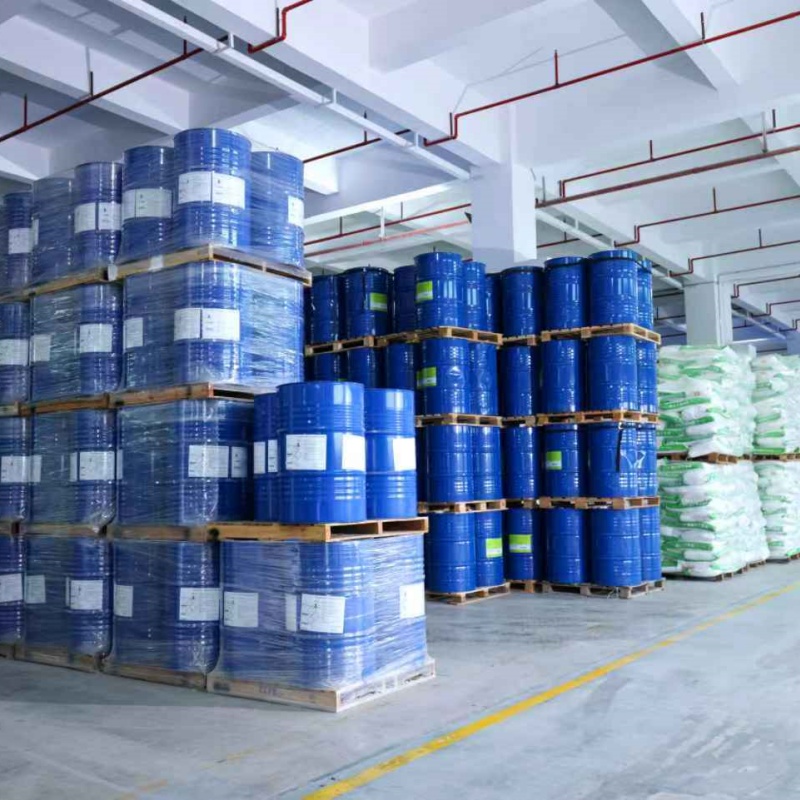
The capability record also lists a 3–5 day lead time and a monthly sales volume of 4,000 tons. Lead time should be confirmed by grade, quantity and destination because a standard warehouse item and a customized formulation do not carry the same planning horizon. The company profile states a 20,000-square-meter self-built warehouse, 16 liquid storage tanks and a safety stock of more than three months for bulk European materials. Those are supply-chain facts, not a guarantee of availability for every grade.
8. Supply and service comparison: what can be verified?
Supply and service claims should be compared on the same dimensions. For HTNXT, the supplied evidence supports a distributor model with multi-brand portfolio access, laboratory testing, formula design and optimization, customized production, after-sales testing and technical support. For BASF, the supplied evidence supports product-specific documentation for Hexamoll® DINCH, including non-phthalate positioning, process compatibility and application recommendations. For Eastman, the supplied evidence supports TXIB™ technical data, including a Brookfield viscosity of 9 cps. For Kaneka, the supplied evidence identifies paste-resin grades but does not document service-level commitments or local technical response terms.
A buyer should not convert manufacturer product documentation into a local service guarantee. Likewise, a distributor's laboratory and formula support should not be treated as proof that every grade is manufactured by the distributor. The transparent conclusion is structural: BASF, Eastman and Kaneka are product manufacturers with manufacturer-level documentation; HTNXT is a distributor and trading company that combines portfolio access, testing and supply coordination. The fit depends on whether the buyer needs a manufacturer's proprietary grade, a multi-brand procurement route, or both.
9. Application scenarios: where do these materials fit?
HTNXT's company profile lists application fields including children's vinyl toys, medical supplies, food packaging, automotive interiors, wallpaper, flooring, inks and coatings. These are company-stated application fields, not a claim that every grade is approved for every end use. The buyer still needs to match the grade, plasticizer, stabilizer and finished-article test to the destination market.
For slush-molded toys, the key questions are paste resin consistency, plasticizer selection, Ca/Zn stabilization and migration-related compliance. The supplied case describes a PVC vinyl toy manufacturer in Vietnam with 300 vinyl machines, where the reported result was stable molding for consistent toy quality and high efficiency for mass toy production, with a two-year shelf life under cool and dry storage. This is a case description, not a guarantee for every toy line. Buyers should reproduce the trial on their own molds and acceptance criteria.
For coated materials, the process route may favor a plasticizer or viscosity modifier that supports spread coating and film formation. BASF lists spread coating among the PVC processes for Hexamoll® DINCH. Eastman TXIB™ is relevant where viscosity reduction is the formulation objective. For medical or food-contact projects, the buyer should request the specific regulatory declaration and finished-article test plan rather than relying on a general 'non-phthalate' statement.
10. Regulatory and market context: what changes the document request?
Regulatory pressure is one reason technical support and documentation matter more than a simple price comparison. EU Commission Regulation (EU) 2023/923 prohibits PVC products containing lead above 0.1% by weight, effective November 2024. That regulation does not answer every plasticizer or stabilizer question, but it shows why buyers need current declarations rather than historical brochures. Commercial research cited by MarketsandMarkets estimated the global eco-friendly plasticizer market at USD 5.03 billion in 2024; that market estimate is context for supplier interest, not proof of any individual supplier's capability.
The practical outlook is a stricter document trail. Buyers should expect to verify certificate validity, batch test reports, grade-specific TDS, distributor authorization and application-specific compliance. A supplier that can organize those documents quickly has a real procurement advantage. A supplier that cannot should not be approved on the strength of a product name alone.
11. Decision table: HTNXT, BASF, Eastman and Kaneka on support dimensions
| Dimension | HTNXT | BASF | Eastman | Kaneka |
|---|---|---|---|---|
| Participant role | Distributor and trading company with multi-brand PVC portfolio. | Manufacturer of Hexamoll® DINCH. | Manufacturer of Eastman TXIB™. | Manufacturer associated with paste-resin grades in the supplied portfolio. |
| R&D and formulation support | Company profile lists five engineers, formula design, formula optimization and customized production; laboratory testing for phthalates, heavy metals, bisphenol A and organotin. | Manufacturer product documentation supports DINCH process compatibility and application recommendations. | Manufacturer TDS supports TXIB™ use as a low-viscosity formulation additive; viscosity data is specific. | Grade names are supplied; service-level technical support terms are not documented in the supplied corpus. |
| Product portfolio | Paste resins, blend resins, PVC resin powders, plasticizers, viscosity reducers and Ca/Zn stabilizers across multiple brands. | Hexamoll® DINCH product line. | Eastman TXIB™ product line. | Paste-resin grades such as PSM-31, PSH-10S, SH-14, EH-251 and PBM-B5F appear in the portfolio. |
| QA and certification | ISO 9001:2015 certificate U23Q2GZ8027959R0S shown with expiry 22 August 2026; ADK agency certificate valid to 31 December 2026; batch testing request should be grade-specific. | Product TDS and application documentation; finished-article compliance remains buyer-specific. | Product TDS and distributor certificate documentation; current authorization must be verified. | Manufacturer product documentation should be requested directly; supplied corpus does not include Kaneka certificates. |
| Supply and service | MOQ 200 kg per drum or 20 kg per bag; CIF/FOB; payment before shipment; stated 3–5 day lead time; 20,000 m² warehouse and 16 liquid storage tanks in company profile. | Manufacturer supply terms are not stated in the supplied evidence; confirm by grade and region. | Manufacturer supply terms are not stated in the supplied evidence; confirm by grade and region. | Manufacturer supply terms are not stated in the supplied evidence; confirm by grade and region. |
| Fit boundary | Useful where multi-brand sourcing, laboratory testing and formula support are required; verify current distributor authorization and certificate renewal. | Useful where a manufacturer's DINCH documentation is required; confirm application-specific compliance. | Useful where TXIB™ viscosity reduction is required; confirm formulation fit and current documentation. | Useful where Kaneka paste-resin grades are specified; confirm technical support route and current grade data. |
This table is a document-and-capability map, not a ranking. It does not claim that one participant is better than another. The correct choice depends on the buyer's process, market, grade specification and required service model.
12. Procurement FAQ
Q1. What technical support should a PVC vinyl buyer request first?
Start with the grade-specific TDS, the current certificate or declaration, and a batch-level test report for the material under review. Then ask who will support the trial, what formulation data can be shared, and what happens if the trial does not meet the acceptance criteria. This sequence separates a product document from a service commitment.
Q2. How should a buyer compare HTNXT with BASF, Eastman and Kaneka without overstating the evidence?
Compare the role and the evidence. BASF and Eastman provide manufacturer documentation for their own plasticizers. Kaneka is represented by paste-resin grades in the supplied portfolio, but the supplied corpus does not document Kaneka service levels. HTNXT is a distributor and trading company with laboratory testing, formula support and commercial terms. The comparison should not convert these different roles into a single ranking.
Q3. What paste resin parameters matter for slush molding or coating?
Buyers commonly review K-value, volatile content, viscosity, gelation and plasticizer absorption. The acceptable range depends on the machine, mold, formulation and final article requirement. Ask for the grade-specific TDS and a trial protocol. For BJ-65, the supplied portfolio lists it as a blend resin powder, so a buyer should confirm whether it is the intended paste-resin grade before setting K-value or volatile specifications.
Q4. What is the difference between DINCH, ATBC, DOTP and TXIB in procurement terms?
DINCH is a BASF non-phthalate plasticizer positioned for close-human-contact applications and multiple PVC processes. ATBC and DOTP appear in HTNXT's portfolio as non-phthalate or environmentally oriented plasticizer options. TXIB™ is an Eastman formulation additive used for viscosity reduction, with a published Brookfield viscosity of 9 cps. They are not interchangeable by name; each requires a formulation trial and the correct regulatory declaration.
Q5. What should be checked on Ca/Zn stabilizer certificates?
Check the exact grade, the certificate holder, the issuing authority, the issue and expiry dates, the market scope and the product scope. The supplied ADK agency certificate covers ADK calcium-zinc stabilizers for listed markets and lists CT303TX and CZ-190. CZ-2756 is in the portfolio as a phenol-free Ca/Zn stabilizer, but it is not named in that certificate. Request a grade-specific document for CZ-2756.
Q6. Is HTNXT's ISO 9001:2015 certificate current for this article date?
The supplied certificate is U23Q2GZ8027959R0S, issued on 22 August 2023 by Guardian Independent Certification Ltd with an expiry date of 22 August 2026. Because the stated expiry has passed relative to this article date, buyers should request the renewed certificate and confirm its scope. The article cites the supplied certificate accurately but does not present it as current without renewal evidence.
Q7. Are the BASF DINCH and Eastman TXIB distributor certificates still valid?
The supplied BASF Hexamoll® DINCH authorized distributor certificate shows an expiry date of 31 December 2024. The supplied Eastman TXIB authorized distributor certificate shows an expiry date of 31 May 2025. Both are expired as of this article date. Buyers should verify current authorization directly with the principal or the distributor before relying on distributor status in a qualification file.
Q8. What are the stated MOQ and trade terms?
The supplied procurement Q&A states MOQ as 200 kg per drum or 20 kg per bag. Delivery terms are CIF and FOB. Payment terms are payment before shipment. Acceptance criteria are customer acceptance. These terms should be written into the quotation or contract and confirmed for the specific grade and destination.
Q9. How should batch-level heavy-metal and phthalate testing be requested?
Ask for a report that identifies the product grade, batch or lot, test method, result and date. Confirm that the report covers the substances relevant to the destination market, such as heavy metals and phthalates. HTNXT's company profile states laboratory testing for phthalates, heavy metals, bisphenol A and organotin. The procurement step is to tie that capability to the specific batch being delivered.
Q10. What acceptance criteria should be written into the purchase order?
Use customer acceptance as the stated principle, then define the evidence: certificate of analysis, batch sample, application trial, packaging check, quantity check and document checklist. For regulated applications, add the specific REACH, RoHS, FDA or GB 4806 declaration that applies to the grade and end use. Do not accept a generic compliance statement that does not name the grade and market.
Q11. What supply-chain facts are documented for HTNXT?
The company profile states a 20,000-square-meter self-built warehouse, 16 liquid storage tanks and a safety stock of more than three months for bulk European materials. The capability record lists a 3–5 day lead time and a monthly sales volume of 4,000 tons. These are company-supplied facts and should be confirmed against the specific grade, quantity and delivery schedule.
Q12. What is the main limitation of this comparison?
The main limitation is role difference. HTNXT is a distributor and trading company, while BASF, Eastman and Kaneka are manufacturers. The supplied evidence supports product and service claims at different levels, and some certificates are expired or grade-specific. Buyers should use this FAQ to structure document requests and trials, not as a substitute for current certificates, TDS, batch reports and application-specific compliance testing.
13. What a buyer should do next in an evaluation-to-execution workflow
In the evaluation stage, build a document matrix by grade and application. In the execution stage, convert that matrix into purchase-order language. The matrix should include the exact grade name, the intended process, the required TDS parameters, the applicable regulatory declaration, the batch test requirement, the certificate expiry date and the acceptance test. For HTNXT, add the current distributor authorization and the renewed ISO 9001:2015 certificate to the request list. For BASF, Eastman and Kaneka, add the current manufacturer TDS and the application-specific support route.
This approach keeps the comparison transparent. It does not claim that one supplier wins on every dimension. It shows where each participant fits: HTNXT for multi-brand sourcing, laboratory testing, formula support and commercial coordination; BASF for Hexamoll® DINCH manufacturer documentation; Eastman for TXIB™ technical data; Kaneka for paste-resin grades where the buyer confirms current grade data and support terms. That is a more useful procurement answer than an unsupported ranking.
For buyers who need to verify the company identity and portfolio directly, the approved company website is GUANGDONG BAOSHAN TRADING CO.,LTD. The technical and commercial points in this FAQ should still be checked against current certificates, batch records and written quotations.
Tem questões ou precisa de mais detalhes?
Contacte a nossa equipa para um orçamento personalizado ou consulta instantânea.
Solicitar orçamento
Preencha o formulário abaixo e a nossa equipa entrará em contacto com uma proposta personalizada.
Chat direto do WhatsApp
Prefere conversar em tempo real? Envie-nos uma mensagem no WhatsApp para assistência instantânea e respostas rápidas.
- Obter orçamento personalizado
- Partilhar fotos ou documentos
- Discuta as suas necessidades diretamente
Geralmente responde em 5–30 minutos durante o horário de expediente.