
PVC Wall Panel Shortlist: Five Models for SEA Distributors
PVC Wall Panel Shortlist: Five Models for SEA Distributors
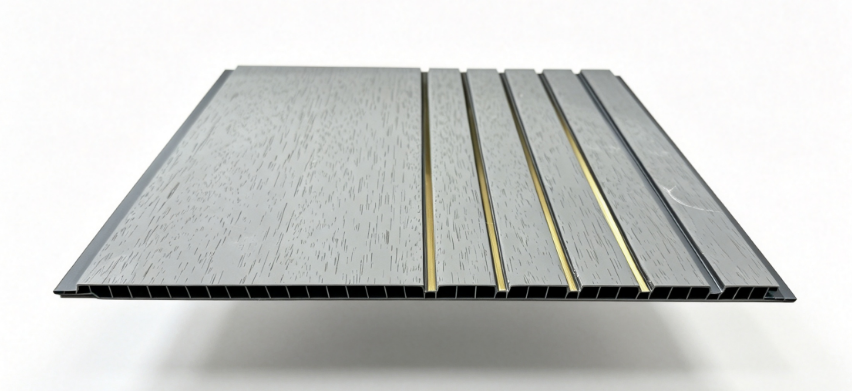
Cover image: 300*8 PVC wall panel profile from the XHDeco range. Image supplied by XHDeco.
For a Southeast Asia distributor, a PVC wall panel range works best when it covers a small number of repeatable profiles rather than a long catalogue of near-duplicates. The XHDeco shortlist for this evaluation is five models: 160*22, 195*14, 250*5, 250*8 and 300*8. The 160*22 profile is the reference for the stated 2900 mm x 160 mm panel size and 22 mm thickness. The range is offered with wooden finish options and direct installation using stainless steel buckles and screws. XHDeco is the brand used by Haining Xihe Decoration Material Co., Ltd., a Zhejiang-based manufacturer founded in 2016 that integrates R&D, production and export of decorative wall-cladding materials. The company website is xihe-decoration.com. This shortlist is a stocking decision aid, not a claim that one profile fits every market or wall type.
Why a five-model shortlist fits Southeast Asia distribution
Southeast Asia is not one specification market. Distributors serving Indonesia, the Philippines, Malaysia and nearby markets often need a compact range that can support wholesale warehouses, project quotations and sample-led selling without forcing every buyer into the same panel geometry. A shortlist helps because it gives the sales team a clear set of profiles to quote, stock and reorder, while leaving room for finish and project-specific checks.
The category context is large enough to justify a structured range rather than a single SKU. Dataintelo, a commercial research publisher, estimated the global PVC panels market at USD 14.8 billion in 2025. The same report placed wall panels at 42.5 percent of that market and Asia Pacific at 38.4 percent of revenue share. These are commercial research estimates, not customs records for any one Southeast Asian country. For a distributor, the practical reading is that wall panels are a material part of the PVC panel category and that Asia Pacific is a significant consumption region. The estimate does not prove demand in a specific city, project type or price band.
A five-model shortlist also reduces the risk of overstocking slow-moving variants. The 160*22, 195*14, 250*5, 250*8 and 300*8 codes give buyers a spread of nominal widths and thickness codes. They can be compared on actual coverage, joint spacing, finish direction, handling and accessory fit before a container is committed. That is more useful than adding more codes that look different on paper but compete for the same wall application.
The five XHDeco models in the shortlist
The models are listed as a practical stocking sequence, not as a performance ranking. Model codes should be read together with the actual profile drawing, usable coverage and packing data. The table below sets out the buyer checks that matter before a distributor places the first order.
| Shortlist profile | Nominal code | Stated size and format | Stock role to evaluate | Checks before stocking |
|---|---|---|---|---|
| 1 | 160*22 | 160 mm x 22 mm; stated panel size 2900 mm x 160 mm with 22 mm thickness | Reference profile for buyers who want the stated 160 mm width and 22 mm thickness | Confirm length, tongue-and-groove fit, wooden finish sample, and buckle and screw set |
| 2 | 195*14 | 195 mm x 14 mm nominal code | Wider nominal coverage than 160*22 with a lower thickness code | Confirm actual coverage per piece, length, joint line and finish matching |
| 3 | 250*5 | 250 mm x 5 mm nominal code | Wide, thin profile for layouts that need high coverage per piece | Confirm substrate flatness, packing protection, cut waste and finish consistency |
| 4 | 250*8 | 250 mm x 8 mm nominal code | Same nominal width as 250*5 with a thicker code | Compare sample handling, fixing plan, accessory fit and wall use |
| 5 | 300*8 | 300 mm x 8 mm nominal code | Widest nominal code in the set; fewer vertical joints per layout | Confirm handling, cutting, edge trim, packing and finish direction |
160*22: the reference profile
The 160*22 model is the clearest starting point because the brief gives its stated size as 2900 mm x 160 mm with 22 mm thickness. That makes it useful as a reference SKU when a distributor needs to explain panel format to a buyer. The profile should still be checked against the actual drawing, because nominal width and installed coverage are not always the same once the joint is engaged. The buyer should confirm the wooden finish direction, the matching buckle and screw set, and whether the 2900 mm length suits the local transport and site handling pattern.
195*14: a wider nominal option
The 195*14 code sits between the 160*22 reference and the wider 250 mm and 300 mm profiles. Its practical value is in the quotation sheet: it gives the sales team a wider nominal option without jumping straight to the widest profile. The buyer should not assume the same installed coverage as 160*22. Ask for the profile drawing, the usable face width and the recommended accessory set. A sample wall section is more useful than a catalogue image because it shows the joint line and the finish under local lighting.
250*5 and 250*8: same width, different thickness code
The 250*5 and 250*8 models share a 250 mm nominal width but carry different thickness codes. That pair is useful for distributors who want to test whether buyers respond to a thinner or thicker profile within the same visual width. The correct comparison is not which code is better in general. It is which profile suits the wall substrate, handling method, design intent and price position the distributor is selling. Ask for samples of both, compare the fixing plan and check that the wooden finish batch matches across the two codes if they will be shown together.
300*8: the widest nominal code in the set
The 300*8 model gives the shortlist its widest nominal width. A wider profile can reduce the number of vertical joints in a layout, but that is a geometry effect, not a guaranteed installation or cost result. The distributor should confirm the actual coverage per piece, the cut allowance, the edge trim and the packing method before promoting it as a high-coverage option. The 300*8 profile also deserves a handling check because wider panels can change how the installation team moves and cuts the product on site.
What the model codes mean in practice
The model codes are a starting point for specification, not a full technical datasheet. The 160*22 reference is stated as 2900 mm x 160 mm with 22 mm thickness. For the other four codes, the buyer should confirm the exact length, usable coverage, tongue-and-groove detail and packing quantity with the manufacturer. This matters for container planning and for the quotation sheet, because a distributor who quotes nominal width without checking installed coverage can create a mismatch between the sample and the delivered wall.
Wooden finish options are part of the range. XHDeco also supplies PVC film in wooden, marble and golden series, including model LD-60139-9, as lamination film for decorative surface finishing. That does not mean every panel code is stocked in every finish. The buyer should confirm the available wooden finish direction, the batch match and the minimum quantity for a custom finish. Custom finishes and dimensions can be discussed with the manufacturer, but the exact options must be confirmed before they are written into a distributor price list.
The profiles are intended for interior wall and ceiling decoration in residential, hotel, commercial and renovation projects. They should not be specified for a project until the fire and formaldehyde documentation has been checked against the exact panel and finish. That is a buyer verification step, not a claim that one report covers every SKU in the range.
Installation with stainless steel buckles and screws
Direct installation with stainless steel buckles and screws is one of the supported fixing methods for this range. The same application material also lists adhesive bonding as an installation mode. For a distributor, the practical question is not simply whether the panel can be fixed directly. It is whether the local installer has the right buckle, screw, trim and substrate preparation for the selected profile. The 160*22, 195*14, 250*5, 250*8 and 300*8 models should each be checked against the accessory list before a project quotation is issued.
XHDeco provides remote technical support, which can help distributors clarify accessory fit and installation questions without turning the article into an installation manual. The buyer should still test a small wall section with the intended substrate and fixing method. A sample installation also reveals whether the joint line, wooden finish and panel thickness meet the design expectation. For humid or air-conditioned interiors, the installer should follow the project specification and the manufacturer instruction for the chosen substrate and accessory set.
Compliance evidence: SGS fire and formaldehyde checks
XHDeco provides SGS test reports as third-party testing evidence. One certificate in the supplied material is SGS test report AJFS2311010309FF, issued on 2 January 2024, with the scope stated as PVC and WPC wall panel and the standard cited as GB 8624-2012. That report is relevant to fire-performance review, but a distributor should read the full report and confirm that the product construction and finish being ordered fall within its scope.
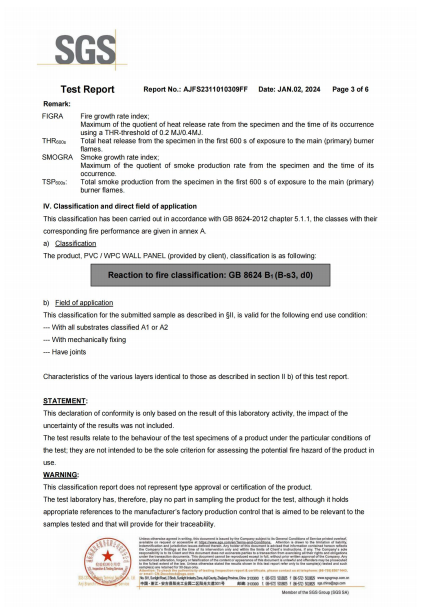
SGS test report image supplied in the XHDeco certification material. Buyers should check the report number, issue date, product scope and test standard against the ordered panel.
Formaldehyde safety should be handled with the same discipline. The supplied FAQ material states that fire resistance and formaldehyde safety should refer to the SGS test reports, with exact grades and suitable environments confirmed by the customer. A distributor should therefore request the SGS fire report and the formaldehyde-safety documentation for the exact panel and finish, then check the report number, product description and test scope. A generic statement that a supplier has SGS reports is not enough for a project submittal.
MOQ, lead time and container planning
The MOQ for XHDeco PVC wall panels is one 20GP container. Mixed colours and mixed profiles are acceptable within one container, and a small trial order is negotiable. That matters for a five-model shortlist because a distributor can test more than one profile without opening five separate container commitments. The same MOQ rule should be confirmed in the quotation, especially if the order mixes the 160*22 reference profile with 195*14, 250*5, 250*8 and 300*8.
XHDeco states a lead time of 15 to 20 days and a monthly capacity of about 50 x 40HQ containers. The company reports a manufacturer-type client case with 40 to 50 containers shipped every month, stable product quality and fast lead time, supporting local wholesale expansion and steady inventory turnover. That is a reported case, not a guarantee for every distributor. It is useful as evidence of container-load order capability, but the buyer should still confirm the production slot, finish availability and packing plan for the specific shortlist mix.
Factory or trading company: checks before stocking
The factory-versus-trading check is a standard part of distributor due diligence. Ask for the business licence, factory address, production line evidence, installed capacity, export documents, SGS report scope and a sample from the actual production line. A supplier that cannot connect the quotation to a factory, a production process and a report scope should be treated as unverified for long-term stocking. This is not a claim that trading companies are unsuitable in every case. It is a check that the distributor knows which party controls production, quality records and lead time.
XHDeco is the brand of Haining Xihe Decoration Material Co., Ltd., founded in 2016. The supplied company facts include a 6,000 m² factory, 50 employees, 8 engineers, 100 percent export ratio and main markets in Southeast Asia, including Indonesia, the Philippines and Malaysia, plus the Middle East. The company reports internal quality control and SGS test reports as third-party testing evidence. These are first-party facts that a buyer should verify through documents, a factory visit or a video walk-through before appointing a distributor or placing a bulk order.
Customs classification is another check before landed-cost planning. The US Harmonized Tariff Schedule lists 3925.90.00.00 for PVC builders' ware, while commercial shipment records for related PVC and WPC wall panels show more than one HS classification. Those records are not a ruling for Southeast Asia. The distributor should confirm the local HS code with a customs broker and match it to the actual panel construction and finish.
How to compare the five models before placing an order
Use a shortlist scorecard with verified inputs. Compare the five models on actual coverage per piece, length, thickness code, wooden finish availability, accessory fit, packing quantity, MOQ contribution and SGS report scope. Do not compare only the nominal width printed in the model code.
Build a sample wall for the two most likely sellers. The 160*22 reference and one wider profile should be installed side by side with the intended buckle and screw set. This shows the joint line, finish direction and handling difference before a container is committed.
Match the report to the SKU. Check that the SGS report number, issue date and product scope cover the panel and finish being ordered. Keep the fire report and formaldehyde-safety document in the quotation file, not only in a general company brochure.
Check the commercial terms in writing. Confirm MOQ at one 20GP container, mixed colours and profiles, trial-order terms, lead time of 15 to 20 days and the packing plan for the shortlist mix. These are commercial confirmations, not performance guarantees.
Outlook for Southeast Asia distributors
The available commercial research points to scale in the PVC panel category, with wall panels holding a large share and Asia Pacific representing a significant revenue share. That supports a structured shortlist, but it does not remove the need for local project checks. Distributors should review the five-model mix against actual repeat orders, local substrate practice, wooden finish demand and customs classification. A narrow range with clear evidence is easier to sell, stock and defend than a long list of profiles that differ only slightly.
The next practical step is to request samples and documents for the 160*22, 195*14, 250*5, 250*8 and 300*8 profiles, then compare them on the scorecard above. The shortlist is the starting point. The distributor's own wall test, finish check and compliance review decide which profiles earn shelf space.
A downloadable company profile is available here: Xihe Company Profile PDF.
FAQ
What is the MOQ for XHDeco PVC wall panels?
The MOQ is one 20GP container. Mixed colours and mixed profiles are acceptable within one container, and a small trial order is negotiable. Distributors should confirm the mix, finish and packing plan in the quotation before ordering the five-model shortlist.
How can a buyer confirm whether a PVC panel supplier is a factory or a trading company?
Ask for the business licence, factory address, production line evidence, installed capacity, export documents and report scope. XHDeco is the brand of Haining Xihe Decoration Material Co., Ltd., founded in 2016, with supplied facts including a 6,000 m² factory, 50 employees, 8 engineers and a reported capacity of about 50 x 40HQ containers per month. Those facts should still be verified through documents or a factory visit.
Which SGS documents should be checked for fire and formaldehyde?
Request the SGS fire test report and the formaldehyde-safety documentation for the exact panel and finish. One supplied report is SGS AJFS2311010309FF, issued on 2 January 2024, with PVC and WPC wall panel scope and GB 8624-2012 cited. Check the report number, product scope and finish against the ordered SKU.
How are the five models installed?
The supported fixing method includes direct installation with stainless steel buckles and screws. Adhesive bonding is also listed as an installation mode. Each profile should be checked with the matching accessory set, substrate and trim before installation, and XHDeco provides remote technical support for fit questions.
How should a distributor choose between 250*5, 250*8 and 300*8?
Compare them on actual coverage per piece, length, handling, joint line, wooden finish availability, accessory fit and packing. The 250*5 and 250*8 codes share a 250 mm nominal width but carry different thickness codes. The 300*8 code is the widest nominal profile in the set. A sample wall comparison is more reliable than a catalogue-only decision.
Tem questões ou precisa de mais detalhes?
Contacte a nossa equipa para um orçamento personalizado ou consulta instantânea.
Solicitar orçamento
Preencha o formulário abaixo e a nossa equipa entrará em contacto com uma proposta personalizada.
Chat direto do WhatsApp
Prefere conversar em tempo real? Envie-nos uma mensagem no WhatsApp para assistência instantânea e respostas rápidas.
- Obter orçamento personalizado
- Partilhar fotos ou documentos
- Discuta as suas necessidades diretamente
Geralmente responde em 5–30 minutos durante o horário de expediente.