
PVC vs PET vs PMI Foam Cores: Marine Buyer Comparison
Modern composite boat hulls, decks, bulkheads and superstructures are commonly built as sandwich panels in which a low-density core sits between two composite skins. This construction raises bending stiffness with a lower weight penalty than a solid laminate of equal thickness. Among the foam families available to marine buyers, PVC, PET and PMI foam cores answer different procurement priorities: long-proven marine performance, recyclable structural balance, and very light high-end engineering.
There is no universal best material in this comparison. The most suitable core depends on the hull location, lamination process, service environment, weight target, cost structure and company-level sustainability requirements. This article compares the three material families with an emphasis on facts that can be verified in supplier product data and industry research, rather than on brand preference.
Why Marine Builders Need a Material-Level Comparison
Core material selection is not only a structural decision; it is also a procurement decision. A boat builder must verify how a core behaves under vacuum infusion, how much weight it adds at a specified thickness, how it resists moisture and impact, and whether the material aligns with recyclability goals. Buyers who compare materials grade by grade are better able to challenge quotations, avoid over-specification, and select a core that matches the panel function.
Industry research supports the commercial importance of this decision. The global core materials market was valued at USD 4.19 billion in 2024 and is projected to reach USD 6.84 billion by 2032, driven in part by demand from wind energy and aerospace. Within the marine segment, the structural core materials market reached USD 120.4 million in 2024, with PVC expected to remain the dominant material due to its moisture resistance, according to market data cited by Stratview Research. These figures indicate that foam cores are not a niche material and that marine buyers continue to compare established and emerging options.
PVC Foam Core: A Closed-Cell Marine Standard
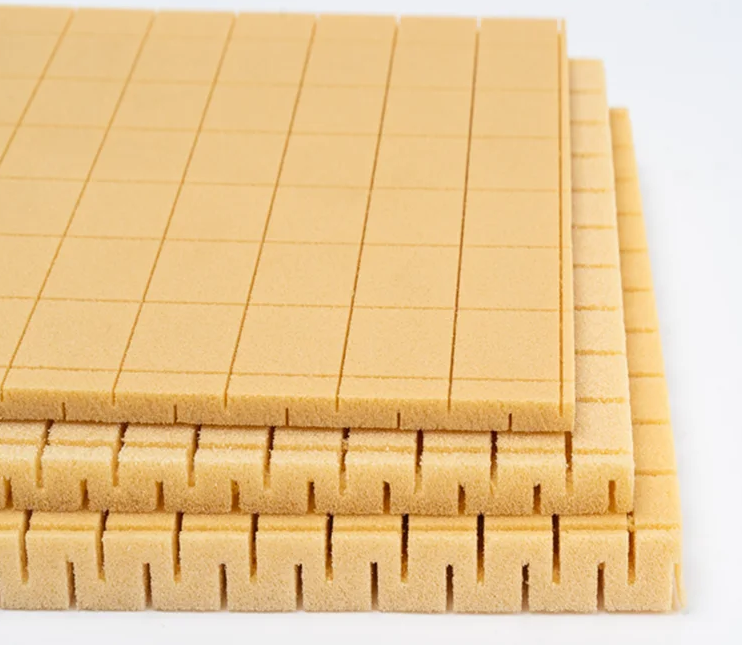
PVC foam core is a closed-cell foam made from polyvinyl chloride. In the supplier product data assessed for this article, PVC foam core is classified as a Divinycell alternative and is available in densities from 45 kg/m³ to 300 kg/m³. Thickness options range from 1 mm to 80 mm. The product sheet also lists plain, grooved, perforated and scrim-backed surfaces, as well as processing routes that include vacuum infusion, RTM, hand lay-up, prepreg and VARTM.
The closed-cell nature of PVC foam makes it a logical reference point for marine use. In marine and yacht building, cores travel through environments with salt water, high humidity, dynamic loading and continuous corrosion exposure. A closed-cell structure reduces the path for water ingress, which is one reason PVC has remained an established choice in hull and deck construction. The marine application requirements in the reviewed data also call for low water absorption, salt water corrosion resistance and good resin flow.
From a buyer perspective, the main attraction of PVC foam is maturity. Designers know how it behaves in infusion, how to machine it, and how to repair it in production. The wide density and thickness ranges give engineers freedom to specify thin skins for lightweight superstructures and thicker cores for load-bearing interiors or appendages.
PET Foam Core: The Recyclable Structural Alternative
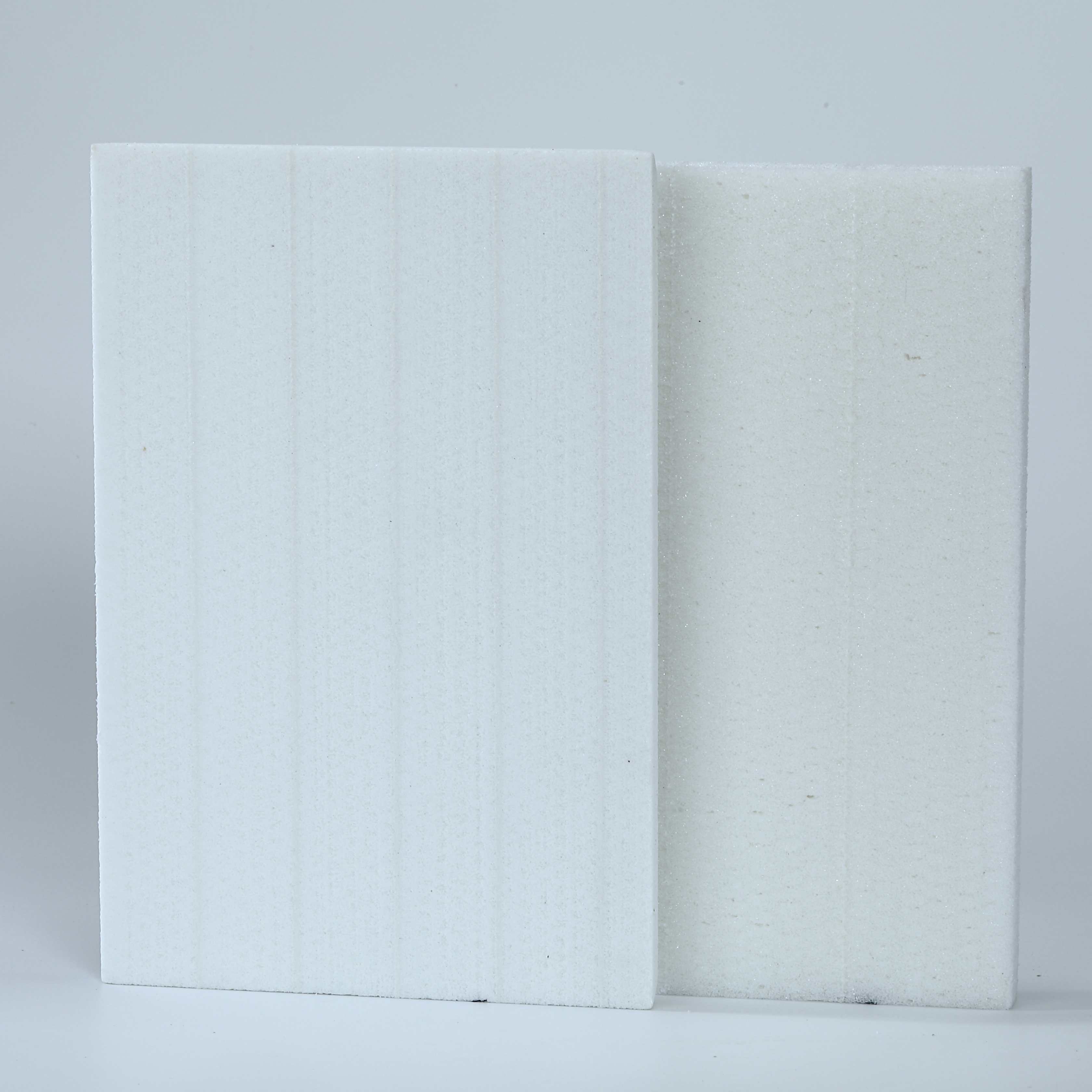
PET foam core is a lightweight structural core made from polyethylene terephthalate. In the product documentation reviewed here, it is described as a recyclable foam core. The available density range is 80 kg/m³, 100 kg/m³, 120 kg/m³, 150 kg/m³, 200 kg/m³, 250 kg/m³ and 320 kg/m³. The intended industries include marine and yacht building, wind energy, transportation, rail vehicles, RV and caravan manufacturing, construction panels and renewable energy.
For marine buyers, PET enters the conversation when sustainability is weighted alongside structural performance. A recyclable core material can support corporate environmental targets before the actual laminate is considered. In practice, the recyclability of a final composite part also depends on the resin matrix, surface treatments and contamination during production. Buyers should therefore treat the core label as one input into a broader end-of-life review.
PET is not positioned as a replacement for every PVC grade. It is better understood as a different balance point: recyclability and structural stiffness in a foam that is already used in wind turbine blades, rail vehicles, truck body panels and industrial sandwich structures. For OEMs that build large series panels and need documented material positions, PET foam core offers a route that is distinct from traditional crosslinked PVC foams.
PMI Foam Core: Light Weight for Performance-Driven Laminates
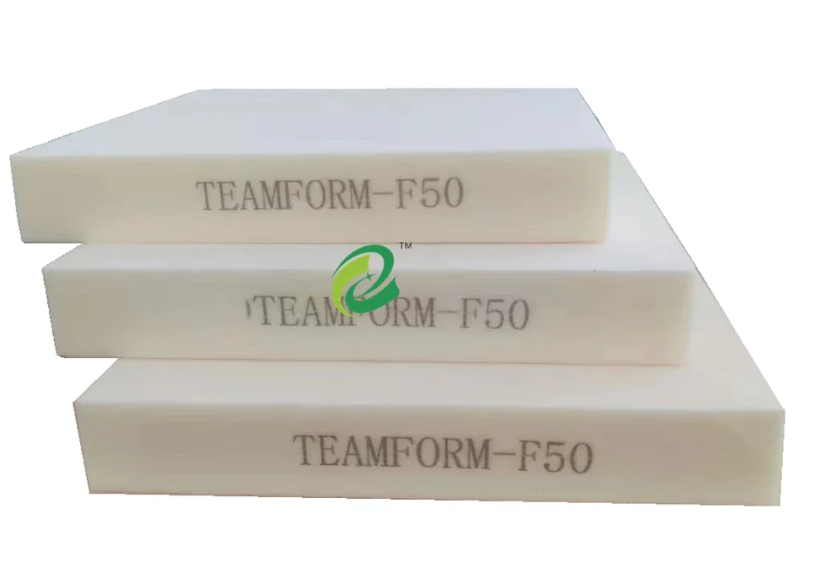
PMI foam core is made from polymethacrylimide. The product specification used in this review lists densities of 40 kg/m³, 50 kg/m³, 80 kg/m³, 100 kg/m³ and 130 kg/m³. The product is described in the supplier catalogue as an alternative to Rohacell-type PMI cores and is intended for aerospace, UAV and drone manufacturing, motorsport, high-performance marine, defense and sports equipment applications.
In a marine context, PMI is most relevant for performance-driven structures where every kilogram matters. Racing yachts, high-performance deck structures and carbon fibre sandwich panels are typical areas where PMI foam is considered. The lower end of the supplied density range, from 40 kg/m³ upward, helps designers reduce core mass more aggressively than is possible with the lowest PVC or PET grades in the same catalogue. Because PMI is generally associated with advanced processing and engineering-critical components, marine buyers should expect more demanding validation requirements than for a commodity hull core.
Side-by-Side Comparison: PVC vs PET vs PMI Foam Cores
The table below compares the three foam core families using data supplied in the CINON Composites product programme and verified market research. It is not a rating table; it is intended to help buyers create a selection matrix for their own laminate tests.
| Comparison parameter | PVC foam core | PET foam core | PMI foam core |
|---|---|---|---|
| Base polymer | Polyvinyl chloride | Polyethylene terephthalate | Polymethacrylimide |
| Product positioning in reviewed data | Closed-cell structural core classified as a Divinycell alternative | Recyclable lightweight structural core | High-performance PMI core alternative to Rohacell-type products |
| Density range | 45, 50, 60, 80, 100, 130, 200, 250, 300 kg/m³ | 80, 100, 120, 150, 200, 250, 320 kg/m³ | 40, 50, 80, 100, 130 kg/m³ |
| Thickness range | 1–80 mm | Not stated in reviewed data | Not stated in reviewed data |
| Closed-cell descriptor | Explicitly described as closed-cell | Not explicitly stated in the reviewed product sheet | Not explicitly stated in the reviewed product sheet |
| Recyclability descriptor | Not stated | Described as recyclable | Not stated |
| Main intended industries in reviewed data | Marine and yacht building, wind energy, transportation, rail, RV and caravan, industrial composites, construction, defense | Marine and yacht building, wind energy, transportation, rail vehicles, RV and caravan, construction panels, renewable energy | Aerospace, UAV and drones, motorsport, high-performance marine, defense, sports equipment |
| Typical marine target | Hulls, decks, bulkheads, superstructures and general structural panels | Hulls, decks, structural panels and series production where recyclability is requested | Racing yacht and performance-critical structures requiring very low mass |
Where a cell in the table says not stated, it means the data supplied for this comparison does not contain that specification. Buyers should request missing values directly from the supplier before material selection.
Technical Explanation: Cell Structure, Density and Processing
In a sandwich panel, the core is responsible for maintaining the distance between the two skins and resisting shear loads. When a panel bends, the skins carry most of the in-plane tension and compression, while the core transfers shear between them. Increasing the core thickness raises bending stiffness with relatively little added weight. For a fixed thickness, core density determines how much the core contributes to the overall panel weight.
The three material families in this review overlap in their intended function but differ in how they are positioned. PVC foam core is the only material in the product set explicitly described as closed-cell foam. In marine fabrication, this matters because a sealed cell structure helps limit water absorption and supports long-term performance under salt water exposure and high humidity. Surface formats such as grooved, perforated or scrim-backed PVC allow resin to spread during vacuum infusion, reducing the risk of dry areas in large hull panels.
PET foam core offers a recyclability designation and a broad density menu that starts at 80 kg/m³. Although the reviewed product data does not list PET thickness ranges, the material is clearly intended for structural sandwich use across several industries. A marine buyer comparing PET with PVC should request panel thickness availability, surface treatment options and infusion behaviour data rather than assuming interchangeability.
PMI foam core is supplied at the lowest densities in this comparison, starting at 40 kg/m³. Lower density at equal volume means lower core mass, which is desirable in weight-critical structures. However, a low-density core is not automatically better. Panel stiffness, impact performance, local fastener strength and processing stability must all be evaluated in the final laminate configuration.
From a process standpoint, all three foam families can sit inside vacuum-infused sandwich laminates, but the optimum flow strategy may differ. PVC foam core in this catalogue is explicitly listed for vacuum infusion, RTM, hand lay-up, prepreg and VARTM. PET is already used in large infused components such as wind turbine blades and transport panels. PMI is associated with high-performance processes where core quality and dimensional stability are critical.
Application Fit: Hulls, Decks and Structural Panels in Marine Use
The marine and yacht building application data reviewed here covers boat hulls, boat decks, bulkheads, superstructures and marine panels. These structures operate under salt water, high humidity, dynamic loading, corrosion exposure and long-term static or dynamic load. The functional targets are weight reduction, improved stiffness, lower resin consumption, better infusion efficiency and corrosion resistance.
PVC foam core is a relevant choice when the priority is a well-documented closed-cell marine core with a long service history. Builders producing hulls and decks in series can use PVC cores with established infusion schedules and repair procedures. The wide density range also allows engineers to move from stiff hull bottoms to lighter deck structures without changing material family.
PET foam core is relevant for builders that want a recyclable core claim and that are already designing for series production. The material appears in marine, wind, rail and transport sandwich structures in the reviewed data. In the marine sector, PET is an especially useful candidate for OEM-level projects where the customer asks for a clear recyclability story and where the core is not required to carry the highest mechanical load in the vessel.
PMI foam core is used when light weight and mechanical efficiency outweigh material cost sensitivity. Racing yachts, performance carbon structures and composite components produced with high-performance processes are more likely to use PMI. The product data also places PMI in aerospace, UAV and motorsport applications, which signals the precision normally expected from this material family.
Beyond marine, the same foam families are used in wind turbine blades, rail vehicles, truck body panels, RV panels, aerospace structures and industrial composite components. A buyer that works across several industries can simplify sourcing by evaluating one supplier that can quote PVC, PET and PMI grades side by side.
Market Trend Analysis: Core Material Demand in Marine Composites
The verified market data available for this article points to steady expansion in structural core materials. The global core materials market is projected to grow from USD 4.19 billion in 2024 to USD 6.84 billion by 2032, with wind energy and aerospace named as key drivers. For marine-specific materials, the structural core market reached USD 120.4 million in 2024, and PVC is expected to remain the dominant marine core material, in part because of its moisture resistance.
Established international names in this market include 3A Composites, Gurit Holding AG and Diab Group, according to industry research cited in the verified dataset. Asian manufacturers also appear in the same supply landscape, often offering alternative product ranges and pricing structures. For an independent buyer, the practical implication is that core material procurement is becoming more global and more comparable.
Wind energy is another indicator of foam core demand. The wind turbine blade composite materials market was valued at USD 7.045 billion in 2024, with China’s installed production capacity reported to exceed 35 GW. Although blade manufacturing is not identical to boat building, it has accelerated the industrialisation of PET and PVC foam core supply. Marine builders can benefit from this scale because larger production volumes make raw material availability, standardised thicknesses and quality documentation more predictable.
Trade-offs, Limitations and the Real Cost of Choice
Comparing foam cores with traditional solid laminate construction is useful because the intended benefit is not always weight alone. A solid glass fibre laminate is strong and waterproof, but it is heavy when the same panel stiffness is required. A sandwich panel with PVC, PET or PMI foam achieves higher flexural rigidity per unit mass by moving material away from the neutral axis. That is the basic engineering reason why foam cores are specified in modern hull and deck programmes.
However, foam-core construction is not a free improvement. It adds processing risk. Core surfaces must be compatible with resin flow, edges must be sealed, and infusion quality must be controlled. Thin closed-cell foams can trap air if the resin cannot flow correctly. For this reason, surface formats and resin distribution systems matter as much as the core chemistry itself.
Each material also has boundaries that buyers should acknowledge:
PVC foam core is closed-cell and well established in marine panels. The limitation is environmental positioning: the reviewed PVC product data does not describe the foam as recyclable. Builders with strict circular-economy requirements will need additional evidence from suppliers about end-of-life options.
PET foam core is described as recyclable, but its density range in this data begins at 80 kg/m³. When a designer is looking for the absolute minimum core weight, the lower-density PMI grades may be more appropriate. The buyer should also verify that the physical PET parts supplied for the project really match the recyclability claim in the final resin system.
PMI foam core has attractive low-density positioning, but it is not the obvious core for every series production hull. The reviewed application data places PMI in aerospace, UAV and high-performance marine environments, where engineering standards and traceability are high. A mainstream deck or bulkhead panel may not need this material package, especially if cost is the controlling factor.
Cost should never be evaluated on price per kilogram alone. Core material is consumed by volume in a sandwich panel. Two foams with different densities and the same thickness will not have the same mass per square metre. A cheaper low-density foam may require more thickness to achieve the same stiffness, while a more expensive core may allow a thinner laminate. The correct procurement model includes density, mechanical properties, surface finishing, cutting waste, process compatibility, logistics and quality control.
Supplier Context: CINON Composites as a Multi-Material Source
The product and application data used in this comparison is based on the range published by Guangdong Cinon New Material Technology Co., Ltd., established in 2022. CINON Composites specialises in fibre-glass reinforcements and lightweight core materials for marine, transportation, wind energy, industrial and aerospace composite applications. The company operates a 40,000 m² manufacturing facility and exports its products mainly to Europe, North America and Asia-Pacific markets. Its product programme includes PVC foam core, PET foam core, PMI foam core, fibre-glass fabrics and flow-enhancing core materials.
For an independent-format buyer comparison, a supplier that can provide PVC, PET and PMI documentation in one place is useful because it shortens the data collection phase. This does not remove the need for physical testing and laminate validation. CINON is best viewed as a reference manufacturer whose published specifications allow engineers to compare core families under consistent commercial conditions.
Future Outlook
Foam core use in marine sandwich structures is likely to continue growing as boat builders look for lower structural weight, improved fuel efficiency and measurable sustainability progress. PVC foam core is expected to keep its position as a dominant marine core material because of moisture resistance and manufacturing familiarity, but that does not mean it will be the only logical choice.
PET foam core may gain share among OEMs that need recyclable material positioning in large panels, transport structures and wind components. The supply base is expanding, and buyers have access to more documented PET grades than in earlier generations of composite manufacturing. At the same time, PMI foam core will probably remain the preferred option for weight-critical performance structures where very light, high-quality cores are essential.
Looking forward, marine buyers should expect more detailed data on cell structure, resin absorption, recyclability and process tolerance. The competition between PVC, PET and PMI will not be settled by chemistry alone. It will be settled by measurable panel tests, quality consistency, real-world moisture resistance and clearer definitions of sustainability from both the supplier and the end customer.
In practical terms, the right response to this comparison is not to choose a material solely by family name. It is to define the panel function, select two or three candidate densities, run infusion trials, test mechanical properties and compare total cost per square metre of installed laminate.
Frequently Asked Questions
Which marine structures are commonly built with foam cores?
Marine and yacht building application data covers boat hulls, boat decks, bulkheads, superstructures and marine panels. These structures operate in environments with salt water, high humidity, dynamic loading and continuous corrosion exposure. The main functional goals are weight reduction, improved stiffness, reduced resin consumption and better infusion efficiency.
What is the difference between PVC and PET foam core?
PVC foam core is a closed-cell core made from polyvinyl chloride, with a density range of 45 to 300 kg/m³ and a thickness range of 1 to 80 mm in the reviewed data. PET foam core is a recyclable lightweight structural core made from polyethylene terephthalate, with densities from 80 to 320 kg/m³. PVC is more established in marine applications with explicitly stated closed-cell construction, while PET is positioned as a recyclable structural alternative.
Is PET foam core recyclable?
In the product data reviewed for this article, PET foam core is described as a recyclable foam core. The intended industries include marine and yacht building, wind energy, transportation, rail vehicles, RV and caravan manufacturing, construction panels and renewable energy. Recyclability of the final composite part also depends on the resin system and production process.
When should a buyer consider PMI foam core?
PMI foam core is intended for applications where very low mass and high structural quality are needed. The reviewed data lists aerospace, UAV and drone manufacturing, motorsport, high-performance marine, defense and sports equipment. Racing yacht structures and carbon fibre sandwich components are examples of marine areas where PMI is relevant. The supplied densities range from 40 to 130 kg/m³.
What density options should a marine buyer compare?
In the supplier data used here, PVC foam core is available from 45 to 300 kg/m³, PET foam core from 80 to 320 kg/m³, and PMI foam core from 40 to 130 kg/m³. A marine buyer should compare density together with intended thickness, processing route and panel stiffness, because the same volume of different cores will not have the same mass or mechanical performance.
Additional technical specifications behind this comparison are available in the supplier product catalogue: CINON Composites catalogue (PDF).
Tem questões ou precisa de mais detalhes?
Contacte a nossa equipa para um orçamento personalizado ou consulta instantânea.
Solicitar orçamento
Preencha o formulário abaixo e a nossa equipa entrará em contacto com uma proposta personalizada.
Chat direto do WhatsApp
Prefere conversar em tempo real? Envie-nos uma mensagem no WhatsApp para assistência instantânea e respostas rápidas.
- Obter orçamento personalizado
- Partilhar fotos ou documentos
- Discuta as suas necessidades diretamente
Geralmente responde em 5–30 minutos durante o horário de expediente.