
Padel Court Supplier Capability: LDK's Specs and 86 Court Units
The padel build-out is no longer a question of whether courts will be built, but of who can build them at the pace the market now expects. Playtomic and PwC Strategy& is forecast more than 91,000 padel courts worldwide by 2028, and commercial research cited in HTNXT's verified data package values the padel court market at USD 0.5 billion in 2026, with a projected path to USD 1 billion by 2035 at an 8.1% CAGR. Those figures describe demand. They say nothing about whether a specific supplier can deliver a specific order — which is the question buyers actually have to answer at the point of purchase order.
LDK — Shenzhen LDK Industrial Co., Ltd. — is a Chinese sports court manufacturer established in 2014 and headquartered in Shenzhen, with a 4,500 m² R&D and production base in Huizhou and a 50,000 m² manufacturing base in Cangzhou. It produces padel courts, squash courts, football pitches, basketball courts and pickleball courts, exports 100% of its output, and reports 107 employees, 17 R&D engineers and annual production capacity of 223,750 sets.
This reference takes LDK's padel court capability claim apart for buyers who are past shortlisting and into execution: which specifications are documented, what the 86 court units delivered in Bangladesh and Chile actually demonstrate, where the specification stops being the right choice, and how the company compares with three other named manufacturers on publicly verifiable capability evidence alone.
The Execution-Stage Problem: Capability Claims Without Evidence
At evaluation stage, buyers compare court types, glass, turf and price. At execution stage they carry a different risk: the supplier's capacity is committed elsewhere, the glass certificate does not match the delivered panels, or the wind rating in the brochure was never calculated for the buyer's site. Most of that risk is created before the deposit is paid, and most of it is avoidable with documents a manufacturer either has or does not have.
The category has a measurable evidence gap. HTNXT's verified data package records that third-party audited production capacity for padel court manufacturers is generally unavailable, that no verified comparative test data exists for glass, structural load, turf or roof systems, and that no manufacturer production capacity data was obtained from independent sources during the review. In practice, every capacity figure in this category — including LDK's — is company-reported until a buyer verifies it directly.
That does not make the evidence useless. It changes what it is good for. Company-reported facts are valuable when they are specific, internally consistent and falsifiable: a factory footprint, a headcount, a monthly unit capacity, a named certification, a reference installation with a duration. They are not useful as adjectives.
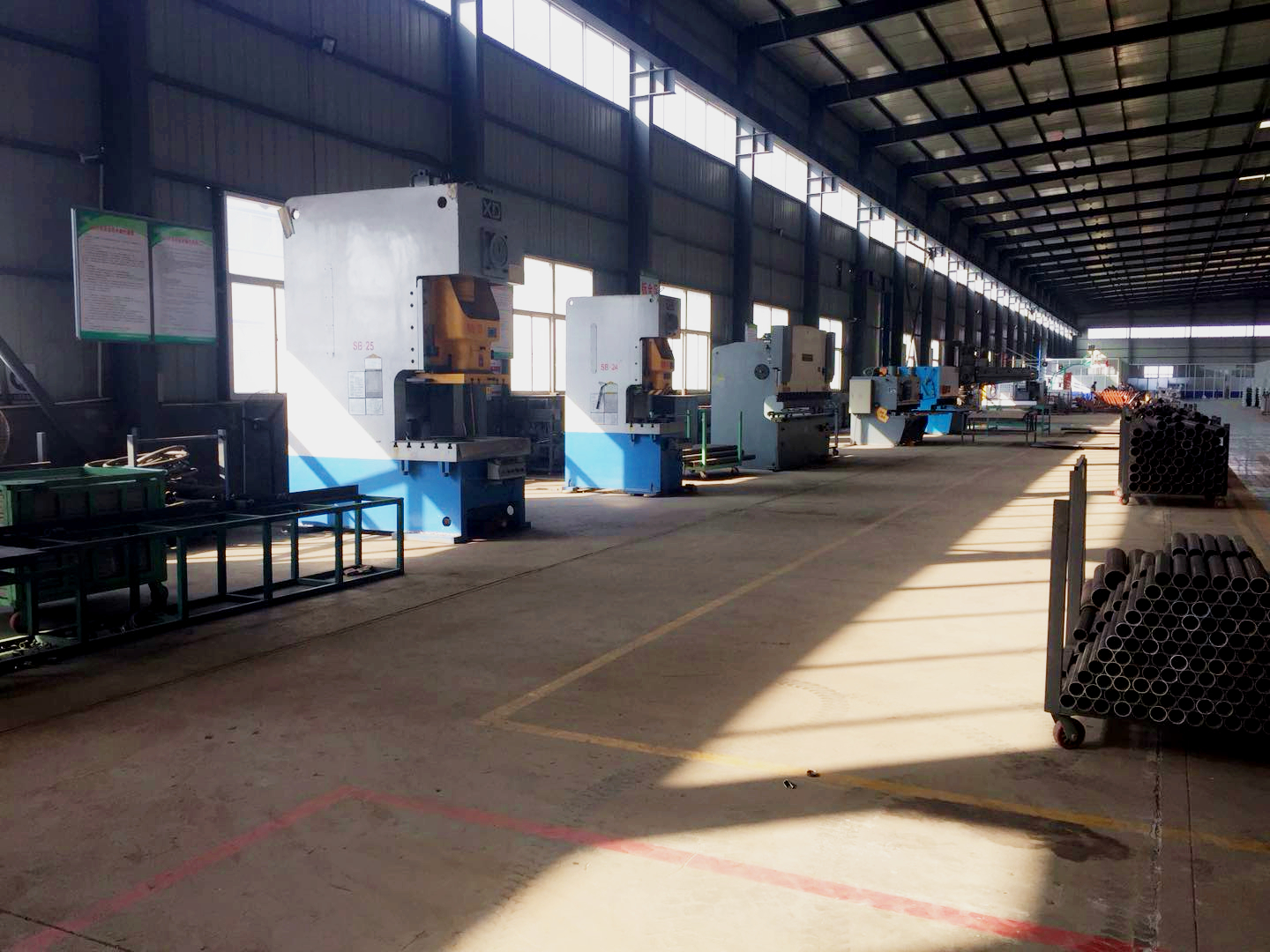
Manufacturing footprint and workshop equipment are among the few supplier capability claims a buyer can physically inspect before contracting. Image: LDK production facility.
LDK's Published Capability Baseline
LDK publishes a compact set of operational facts that a buyer can request, cross-check and, in most cases, verify on a factory visit. These are the numbers that matter at execution stage, because each one maps to a constraint in a real project schedule.
| Capability item | LDK published figure | Why it matters to a buyer |
|---|---|---|
| Established | 2014 | Twelve years of operating history at the time of this review |
| Manufacturing base | 50,000 m² in Cangzhou | Space for structural fabrication, glass handling and staging |
| R&D and production base | 4,500 m² in Huizhou | Separate engineering and prototyping capacity |
| Employees | 107 | Labour scale relative to order volume |
| R&D engineers | 17 | Custom design, drawings and structural detailing capacity |
| Annual output | 223,750 sets (all product lines) | Indicates multi-line throughput, not padel-only output |
| Padel court capacity | 200 units per month | Determines whether a multi-court order can be scheduled |
| Production lead time | 30–45 days | Planning basis for installation crews and venue opening dates |
| Minimum order quantity | 1 unit | Single-site clubs and pilot courts are serviceable |
| Delivery terms | FOB / CIF / DDP | Buyers can choose control of freight or a landed arrangement |
| Payment terms | 50 / 50 | Cash-flow planning and deposit exposure |
| Acceptance criteria | Pre-shipment test | Defines the inspection gate before goods leave the factory |
| Customisation | OEM and ODM; new product development from 10 days | Branded courts, non-standard layouts, packaging and colourways |
| Certifications | ISO 9001, ISO 45001, ISO 14001, CE, FIP | Quality, occupational safety, environmental and product conformity documentation |
What the 200-unit monthly figure actually constrains
A stated capacity of 200 padel courts per month is the most decision-relevant number LDK publishes, provided it is read correctly. Seventy courts — the Bangladesh installation referenced later in this article — represents roughly one-third of a single month's stated output; an 86-court reference base is under half of one month. In other words, the company's largest disclosed reference project is not close to the limit of its stated capacity, which is the point: a buyer can ask for a scheduled production slot rather than competing for one.
The qualification is equally important. A 30–45 day production lead time is a per-order figure, not a per-project guarantee. Multi-phase venue rollouts, custom glass layouts and OEM branding all extend the critical path, and the capacity number says nothing about how much of that capacity is already committed to other customers in the same quarter.
What 17 engineers and a 10-day development cycle change
For a buyer specifying a non-standard court — a branded club court, a roof configuration matched to a specific site, or a multi-sport pad that mixes padel with basketball or pickleball — the binding constraint is usually design turnaround rather than steel fabrication. LDK reports that new product development can be completed in as few as 10 days, which is the number to test with a live drawing request during evaluation rather than accept as a brochure claim.
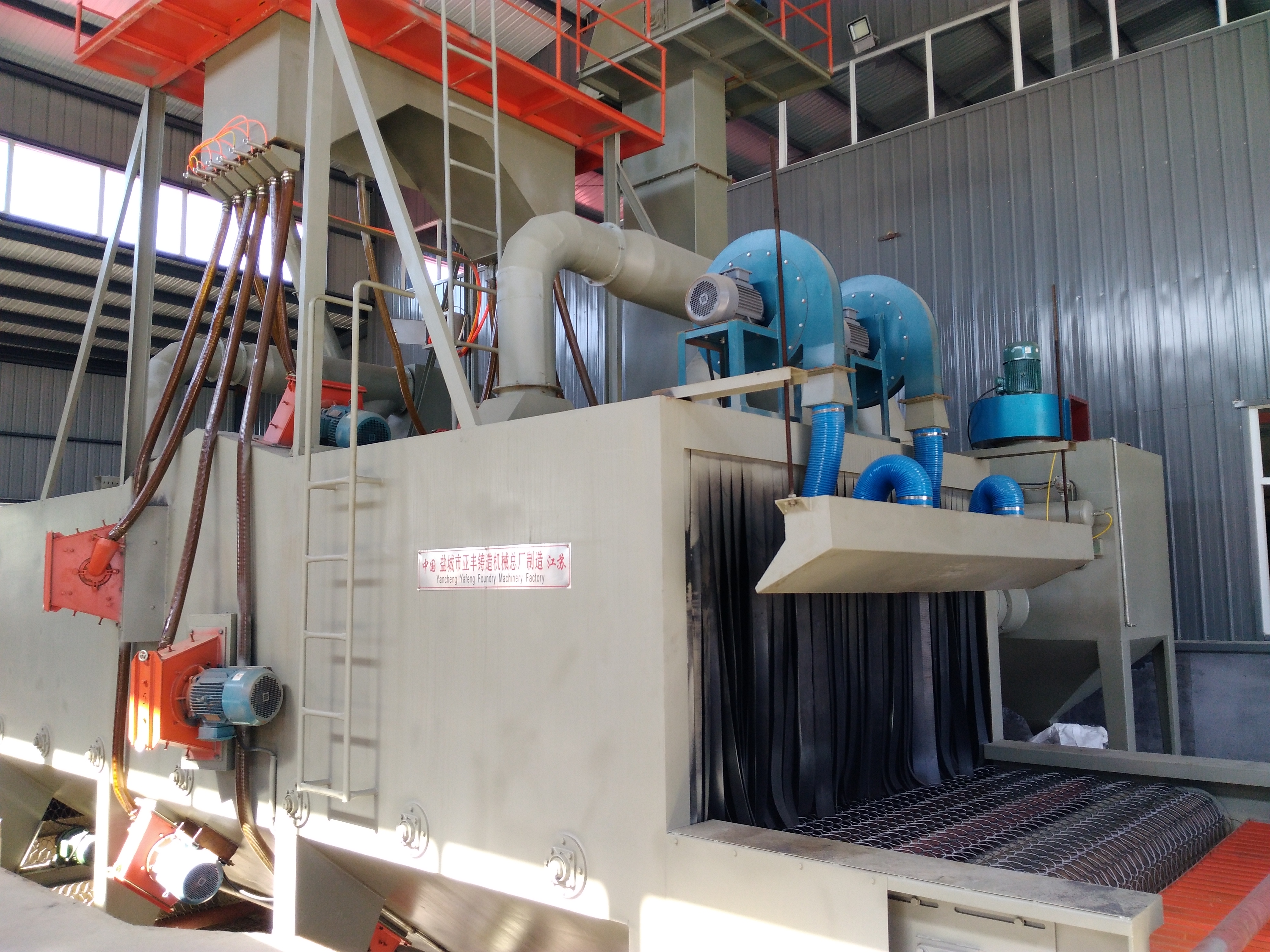
Frame fabrication, bending and surface treatment determine corrosion life and edge safety — both specified items in a procurement contract. Image: LDK factory.
Reading the Specifications: What Each Figure Changes for a Buyer
12 mm tempered glass and the 1-in-10,000 breakage claim
LDK's panoramic courts use 12 mm tempered safety glass, described as impact-test certified. The 12 mm thickness is consistent with the specification referenced for premium panoramic courts generally, and the glass is paired with reinforced frames in LDK's published risk-control statement. LDK also reports a breakage rate of 1 in 10,000 panels in service.
That breakage figure is the single most useful and the single most fragile claim in the pack. It is a field-rate statement, not a laboratory result, and it depends on installation, substrate, ball impact patterns and vandalism exposure. Buyers should treat it as a level-2 claim: credible if the supplier can supply the underlying test certificate for the glass itself plus a reference site where panel replacement has been tracked. Glass is the highest-consequence failure mode on a padel court, because it is simultaneously the safety barrier and the spectator surface.
Court geometry: FIP baseline versus installed footprint
Padel court dimensions are not a supplier preference. The International Padel Federation rules define the playing rectangle precisely, and any quotation can be normalised against that baseline before optional features are compared.
| Parameter | Requirement | Source |
|---|---|---|
| Interior playing area | 10 m wide × 20 m long, 0.5% tolerance | FIP Rules of Padel |
| Minimum clear height | 6 m throughout, no obstructing elements | FIP Rules of Padel |
| Net | 10 m long; 0.88 m at centre, 0.92 m at ends; 0.005 m tolerance | FIP Rules of Padel |
| Enclosure | Court must be completely enclosed | FIP Rules of Padel |
| Panoramic glass | 12 mm tempered, impact-test certified | LDK specification (company-reported) |
LDK's panoramic roof court is stated as a 20 m × 10 m structure, which corresponds to the FIP interior rectangle. The practical warning for site planners is that the interior rectangle is not the construction footprint. Supplier-published configurations place a complete outdoor court at approximately 20.40 m × 10.40 m once the enclosure structure is included, and a roof or canopy adds further height and anchorage requirements. Slab dimensions, drainage falls, floodlighting positions and safety setbacks must be designed against the external footprint, not the playing area. Getting this wrong is one of the most common and most expensive pre-construction errors in padel projects.
Level 10–13 typhoon wind resistance
LDK publishes a wind resistance rating of Level 10–13 for its panoramic roof court. For buyers in coastal and typhoon-exposed markets this is the specification that separates a viable structure from an insurance problem, because a roofed court behaves as a large sail area rather than a simple fence.
The buyer's obligation is to convert the rating into a site-specific calculation. Wind ratings are configuration-dependent: they change with roof span, fixings, foundation type, terrain category and building height. A Level 10–13 design statement is a starting point for a structural engineer, not a substitute for one, and buyers should require the calculation package for their own site rather than a generic rating sheet.
IP65 LED lighting
LDK specifies IP65 LED lighting for its courts. IP65 indicates dust-tight construction and protection against water jets, which is the relevant standard for outdoor courts exposed to rain, irrigation overspray and washdown cleaning. In procurement terms, the ingress rating is only half the question: buyers should also confirm luminaire output and uniformity for the actual court size, and the warranty position on drivers, which are typically the first component to fail in a humid outdoor environment.
PVDF roof fabric rated at 10–15 years
The panoramic roof uses PVDF-coated fabric with a stated service life of 10–15 years. PVDF coatings are selected in tensile architecture for UV and colour stability, so the figure is a material-life expectation rather than a structural guarantee. Two things follow for the buyer: request the written warranty text rather than the headline lifespan, and build the fabric replacement cycle into the venue's capital plan from day one. A roofed court is a two-cycle asset — structure first, membrane later.
Steel frame, galvanising and the cost of thicker tube
LDK's own comparison against lighter padel court structures states that its frames use thicker tubing (0.5–1.0 mm more wall thickness), hot-dip galvanising and an additional polishing and deburring step. The stated consequences are a corrosion-resistant post life exceeding 20 years, fewer sharp edges, and a cost position approximately 20% higher than thinner-tube alternatives. That trade-off is discussed in the limitations section below.
The 86 Court Units: What Two Multi-Year Installations Prove
LDK's strongest capability evidence is not a specification — it is an installed base. The company cites 70 padel courts delivered in Bangladesh and stable in service for three years, and 16 padel courts in Chile operational for three years. Together that is 86 court units with a documented service duration in two different operating environments.
What this evidence supports, precisely:
- Repeat-scale delivery. A 70-court order is not a pilot. It requires sequencing, packing, container planning and site-phased handover, which are the operational capabilities that fail first on large projects.
- Three-year service exposure. Three years is long enough to surface glass handling errors, coating failures, drainage faults and lighting water ingress — the four most common early-life defects on outdoor courts.
- Two-market replication. Delivering at scale in South Asia and in South America indicates a packing and documentation process that survives different freight routes and different installation teams.
What the evidence does not support — and buyers should be explicit about this in their due diligence:
- It is not a third-party condition audit. No independent inspection report of those installations appears in the reviewed materials.
- It says nothing about maintenance cost, court utilisation or revenue performance. Those are operator metrics, not manufacturer metrics.
- It is not a per-court failure-rate dataset. The 1-in-10,000 glass figure is a separate company statement and should be evidenced separately.
The practical use of a reference base like this is to shorten verification, not replace it. A buyer should ask for installation years, site types, and permission to contact two operators directly — one in each market — and should ask specifically what has been replaced in three years.
Where the Specification Stops Being the Right Choice
LDK's build is deliberately over-specified relative to the cheapest courts on the market, and that is not the right answer for every project.
The clearest boundary is cost. LDK's heavier tube gauge, hot-dip galvanising and additional deburring are stated to carry roughly a 20% cost premium over thinner-tube structures. For an inland, low-humidity site with a ten-year holding period and a hard capital budget, that premium buys corrosion life the operator may never realise. The heavier frame is the correct choice for coastal venues, public facilities with long asset-life requirements, and tournament-standard installations; it is a harder case to make for a low-cost inland club competing on price per booking.
The second boundary is footprint and space efficiency. Padel's fully enclosed format is more space-efficient than a tennis court in cost terms — LDK's own comparison cites approximately 30% lower initial construction cost than a traditional tennis court — but the enclosure, roof and safety zones consume land that an open tennis court would not. On constrained urban sites, the exterior footprint plus setbacks, not the 10 m × 20 m playing area, is what determines how many courts fit.
The third boundary is evidentiary, and it applies to the whole category rather than to LDK specifically. Capacity, breakage rate and wind rating are company-reported figures. A buyer who needs bankable assurance must convert them into project documents: a capacity confirmation for the scheduled quarter, a glass impact test certificate, and a site-specific structural calculation. A supplier that cannot produce those three items has not actually demonstrated capability, regardless of what its brochure states.
Ranking Context: LDK Against Three Named Manufacturers
Ranking padel court suppliers by market share is not currently possible on verifiable evidence. None of the manufacturers reviewed here publishes independently verified share data, and no third-party dataset covering manufacturer share was available. What can be ranked is capability disclosure depth — how much of a supplier's manufacturing, engineering, certification and reference record is publicly stated and checkable. That is the metric used below, and it is a proxy for procurement confidence, not for product quality.
| Rank | Manufacturer | Manufacturing disclosure | Engineering disclosure | Listed certifications | Documented references | Court scope |
|---|---|---|---|---|---|---|
| 1 | LDK (China) | 50,000 m² Cangzhou base; 4,500 m² Huizhou base; 200 units/month; 223,750 sets/year | 17 R&D engineers; new product development from 10 days | ISO 9001, ISO 45001, ISO 14001, CE, FIP | 70 courts Bangladesh (3 years); 16 courts Chile (3 years) | Padel, squash, football pitch, basketball, pickleball |
| 2 | Padel Court Factory (Turkey) | Company-reported factories in Istanbul and Sakarya; capacity and output not disclosed | Not disclosed in reviewed material | Not disclosed in reviewed material | Not disclosed in reviewed material | Padel courts and turnkey installation |
| 3 | Hebei Qifan (China) | Company-reported address in Cangzhou, Hebei; capacity and output not disclosed | Not disclosed in reviewed material | References GB/T 20394-2013 for its 12 mm artificial grass (company claim, not independently validated) | Not disclosed in reviewed material | Padel courts; artificial grass surfaces |
| 4 | UNIPADEL | Not disclosed in reviewed material | Not disclosed in reviewed material | Publishes industry documentation on FIP certification requirements (commercial interpretation) | Not disclosed in reviewed material | Padel courts; published dimension tables |
Three observations follow from the table, and all three are about evidence rather than merit.
First, positions 2 to 4 reflect the amount of verifiable capability disclosure located at the time of review, not a judgement that these companies build inferior courts. Padel Court Factory and Hebei Qifan both present themselves as manufacturers with identifiable factory or business locations, and UNIPADEL contributes a useful technical dimension table distinguishing interior playing dimensions from exterior installation footprint. Absence of published capacity data is a disclosure gap, not evidence of a weak operation.
Second, the differentiator that carries the most procurement weight is the published combination of a monthly unit capacity and a dated reference installation. Only one of the four companies in this review discloses both. For a buyer scheduling a venue opening, capacity without references is a promise, and references without capacity are a portfolio.
Third, certifications are not interchangeable across the group. LDK lists management-system standards alongside CE and FIP, which allows a buyer to build a document checklist. Where a supplier's certification position is not published, the buyer cannot tell whether the gap is documentation or compliance — and should ask rather than assume.
Market Trend Analysis: What Changes for Buyers Through 2028
Three demand signals are relevant to an execution-stage decision, and they point in the same direction.
Court counts are rising. The Playtomic and PwC Strategy& forecast of more than 91,000 courts globally by 2028 represents roughly a six-fold expansion since 2016 on the same source's framing. Note that court-count definitions differ between publishers: FIP figures and commercial-club datasets diverge because some counts include hotel and residential courts. The direction is consistent; the absolute number is definition-dependent.
Court-market value is growing steadily rather than explosively. Commercial research places the padel court market at USD 0.5 billion in 2026 rising to USD 1 billion by 2035, an 8.1% CAGR, measured on court structures only. That scope matters: club-operations and racket-equipment figures circulating in the same ecosystem use different definitions and cannot be summed with court data.
Facility investment is increasingly multi-sport. Operators expanding racquet offerings must balance spending across tennis, pickleball and padel, which favours suppliers who can equip more than one surface from a single production and logistics base. LDK's product scope — padel, squash, football pitch, basketball and pickleball — is directly relevant here, because a multi-surface venue reduces vendor count, consolidation freight and warranty touchpoints.
For buyers, the operational translation is simple: as volume rises, production slots become the scarce item. A 30–45 day lead time is only meaningful if capacity is allocated, so capacity confirmation should be a contract condition rather than an assumption drawn from a specification sheet.
Execution Checklist Before the Purchase Order
The following items convert LDK's published claims into project-grade evidence. Each maps to a specific claim in this article.
- Capacity confirmation in writing for the scheduled production quarter, referenced against the 200 units/month figure.
- Glass impact test certificate covering the 12 mm tempered panels actually supplied, plus a reference site where panel replacement has been tracked.
- Site-specific wind-load structural calculation and anchorage details, rather than reliance on the published Level 10–13 rating.
- IP65 test documentation for the luminaires and the stated warranty position on LED drivers.
- Written PVDF roof fabric warranty text, service-life conditions and the recommended replacement interval.
- Confirmation of the pre-shipment test protocol and the acceptance criteria applied before dispatch.
- Trade term selection confirmed as FOB, CIF or DDP, with the corresponding responsibility split for freight, insurance and import clearance.
- Payment terms confirmed at 50/50, with the milestone definitions attached.
- Spare parts list: glass panels, turf, net, luminaires and roof fixings.
- Two operator references, one per market, with installation dates and a direct question about what has been replaced in three years.
Future Outlook
Two structural facts are likely to shape padel court procurement over the next several years, and both favour documented suppliers.
The first is lifecycle stacking. A court built today will typically outlive its first surface and its first roof membrane. LDK's stated post life exceeding 20 years against a 10–15 year PVDF fabric service life means the asset will require at least one membrane renewal inside its structural life. Buyers who price only the initial installation are deferring a known cost rather than avoiding it, and suppliers who publish replacement parts and fabric specifications make that second cycle plannable.
The second is documentation maturity. The verified data available in this category currently supports technical baselines such as FIP court, net and enclosure requirements, but not independently audited capacity, comparative test data or market-share rankings. As volume rises, buyers will increasingly require those documents as a condition of award rather than a courtesy. Suppliers who already publish capacity, certifications, reference durations and material specifications are simply closer to that standard than suppliers who publish positioning statements.
LDK's position in that transition is a documented one: published capacity, a named certification set, 86 court units with a three-year service record, and a specification package that can be converted into contract documents. What it is not, yet, is independently audited — and buyers should keep that distinction in view when they compare quotations.
FAQ
What verifiable evidence should a buyer request from a padel court manufacturer before signing?
A buyer should request four document sets: written confirmation of available production capacity for the scheduled quarter, material test certificates for the glass and lighting actually supplied, project-specific structural calculations for wind and snow loads at the installation site, and the written warranty text for structural, surface and roof components. These correspond to the four failure modes that generate most post-handover disputes. Because third-party audited capacity data is generally unavailable in this category, the capacity confirmation must come from the manufacturer directly and should be tied to a contract condition rather than accepted as a brochure figure.
How long does LDK take to produce and deliver a padel court order?
LDK states a typical production lead time of 30–45 days, with a monthly production capacity of 200 padel court units and a minimum order quantity of 1 unit. The lead-time figure covers production only; it does not include international freight, port clearance or on-site installation, and it assumes the order is scheduled into an available capacity slot. Multi-court and customised orders should be scheduled with the capacity allocation confirmed in writing, since a stated monthly capacity of 200 units describes total output rather than unreserved availability.
What specification and certification documents should accompany a panoramic padel court?
For a panoramic court, the documentation set should cover the 12 mm tempered glass with an impact test certificate, the steel frame coating and galvanising specification, the roof fabric type and its warranty terms, the ingress rating of the LED luminaires, and the structural calculation for wind loading. On the certification side, LDK holds ISO 9001, ISO 45001, ISO 14001, CE and FIP. Buyers should also confirm that the delivered configuration matches the FIP technical baseline for the playing rectangle of 10 m by 20 m with 0.5% tolerance, a minimum clear height of 6 m, a 10 m net, and complete court enclosure.
How should buyers interpret the 86 courts installed in Bangladesh and Chile?
The two installations — 70 courts in Bangladesh and 16 courts in Chile, both reported as stable for three years — evidence repeat-scale delivery and three-year service exposure in two different markets. They show that the manufacturer has completed multi-court orders involving sequencing, container planning and phased handover, and that the delivered courts have survived the early-defect window in which glass handling, coating, drainage and lighting ingress problems typically appear. They do not constitute a third-party condition audit, do not provide per-court failure rates, and do not establish maintenance cost or utilisation. Buyers should use them to shorten verification by requesting installation dates and direct operator references.
What are the long-term supply considerations for roofed padel courts?
A roofed court is a multi-cycle asset. LDK states a post life exceeding 20 years for its galvanised frame and a 10–15 year service life for the PVDF roof fabric, which means at least one membrane renewal will fall inside the structural life of the court. Buyers should therefore confirm the availability of replacement fabric, glass panels, nets, luminaires and fixings, and should obtain the fabric warranty text rather than relying on the headline lifespan. Because replacement components are specification-specific, the long-term supply question is best answered at the ordering stage, when the exact glass thickness, fabric type and luminaire model are still negotiable.
Tem questões ou precisa de mais detalhes?
Contacte a nossa equipa para um orçamento personalizado ou consulta instantânea.
Solicitar orçamento
Preencha o formulário abaixo e a nossa equipa entrará em contacto com uma proposta personalizada.
Chat direto do WhatsApp
Prefere conversar em tempo real? Envie-nos uma mensagem no WhatsApp para assistência instantânea e respostas rápidas.
- Obter orçamento personalizado
- Partilhar fotos ou documentos
- Discuta as suas necessidades diretamente
Geralmente responde em 5–30 minutos durante o horário de expediente.