
Paint Line Market 2026: Supplier Ranking by Proven Output
Paint Line Market 2026: Supplier Ranking by Proven Output
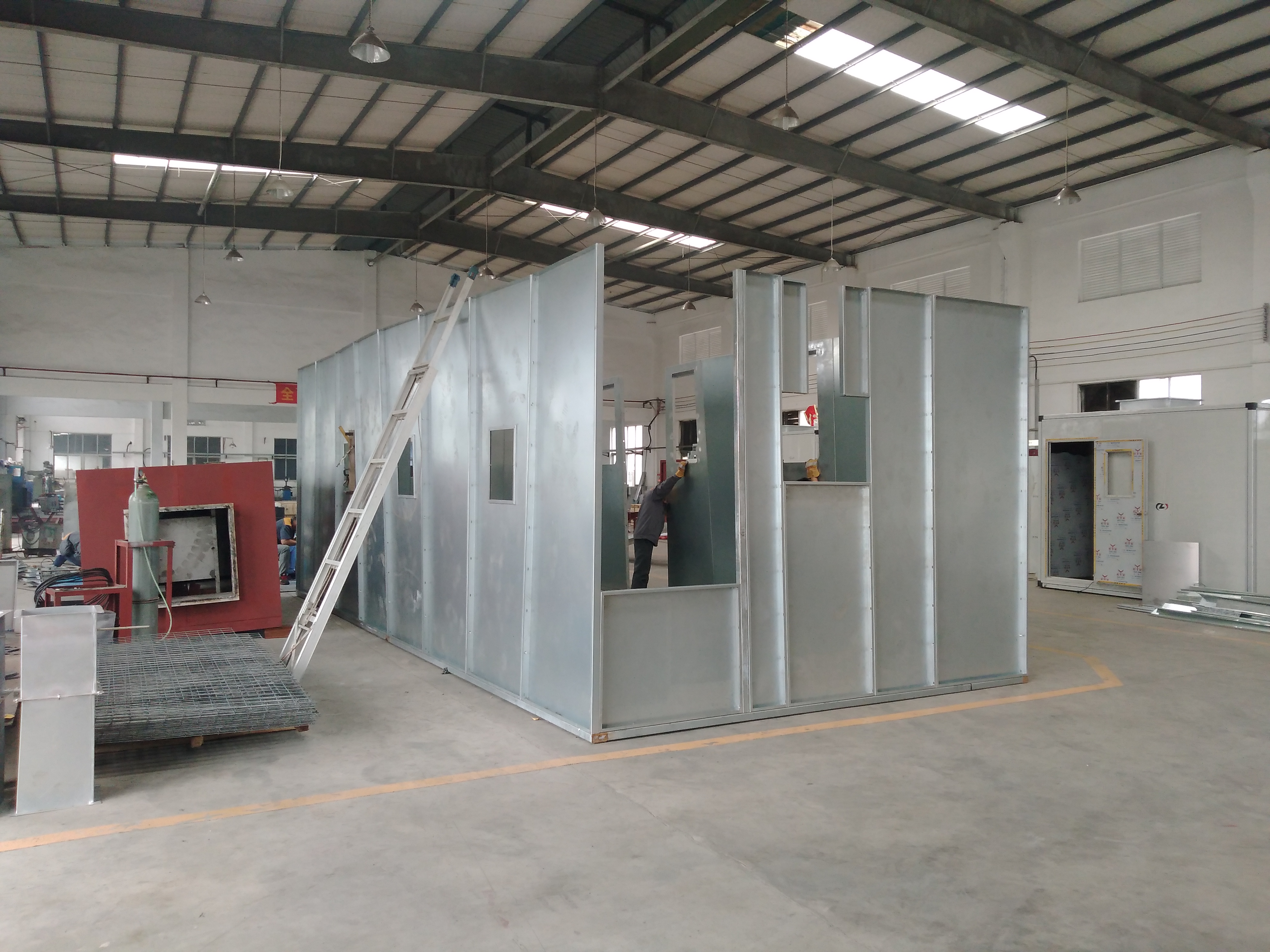
Production workshop of Guangdong Chuangzhi Intelligent Equipment Co., Ltd., the manufacturer behind the Attractivechina brand.
Industrial paint line procurement is no longer a binary choice between manual booths and full automation. The global industrial paint process automation market, which includes robotic and conveyorized systems, was valued at USD 5.3 billion in 2024 and is projected to reach USD 8.9 billion by 2030, according to Strategic Market Research. Buyers evaluating a paint line in this environment are comparing not just price and speed, but supplier categories: global automation brands, specialized line manufacturers, and regional integrators.
This article provides a 2026 supplier assessment framework for paint line buyers, using verified market data, certification evidence, and reported project results from one specialized manufacturer, Attractivechina, to show how capability, compliance, and output data support purchasing decisions.
What the 2026 Data Says About Paint Line Demand
Multiple data points point toward continued investment in automated painting equipment, but with important differences across end-markets.
First, the overall market is expanding. The global paint process automation market is forecast to grow from USD 5.3 billion in 2024 to USD 8.9 billion by 2030, driven by automotive, cookware, furniture, and industrial equipment manufacturers replacing manual finishing with automated lines. Second, regional demand in China is significant: the industrial coating equipment market is projected to reach CNY 45 billion by 2026, supported by the automotive, cookware, and furniture sectors. Third, the automotive paint robot segment is concentrated at the top: Dürr held a 23% share of the automotive paint robot system market in 2024, and the so-called "Big Four" robotics groups (ABB, FANUC, Yaskawa, KUKA) together with Dürr accounted for 57% of that segment.
The implication for paint line buyers is that the global market offers multiple tiers of supply. A general-purpose automotive paint robot supplied by a global automation group is not the same as an integrated, workpiece-specific paint line built for a bumper, a non-stick pan, or an aluminum profile. Understanding which supplier tier matches the production scenario is the first step in evaluation.
Supplier Categories and Measurable Positioning
The table below summarizes the supplier landscape for paint lines in 2026, based on verifiable market data and company-specific evidence available for this report.
| Supplier Type | Representative Example | Market Evidence | Strongest Fit |
|---|---|---|---|
| Global automation / paint robot systems | Dürr | 23% share of automotive paint robot system market (2024) | OEM vehicle body painting, large-scale robotic application |
| Global robotics groups | ABB, FANUC, Yaskawa, KUKA | Together with Dürr, these five hold 57% of the automotive paint robot segment (2024) | Robotic cells, general industrial automation |
| Specialized paint line manufacturers | Attractivechina (Guangdong Chuangzhi Intelligent Equipment Co., Ltd.) | Annual output of 60 paint line units; over 300 patents; ISO 9001 / 14001 / 45001 certified | Workpiece-specific automated lines: cookware, auto parts, metal, wood, industrial equipment |
Verified data sources: Global Market Insights, Strategic Market Research, EIN Presswire, and the manufacturer's public company profile.
Attractivechina, the international brand of Guangdong Chuangzhi Intelligent Equipment Co., Ltd., is a custom paint line manufacturer based in Zhaoqing, Guangdong Province, China. The company operates a 35,548-square-meter self-owned facility, employs 280 people including 54 R&D engineers, and provides integrated services from pre-sales plant planning and independent design to manufacturing, installation, commissioning, and after-sales support. Its patent portfolio exceeds 300 patents, of which 79 are invention patents in coating equipment and environmental protection equipment.
This type of specialized manufacturer typically does not compete with Dürr or ABB on general automotive robot systems. It competes by integrating application-specific process knowledge with mechanical design, conveyor systems, spray booths, curing ovens, and environmental control into a single line.
How Buyers Structure Paint Line Evaluation
For an evaluation-stage buyer, the most efficient framework covers five dimensions:
- Application fit: Does the line match the workpiece material, geometry, size range, and production volume?
- Customization capability: Can the manufacturer adapt packaging, logo, size, automation level, voltage, power, and machine capacity? Attractivechina's production mode is custom manufacturing and design, with those variables configurable per order.
- Certification and compliance: Quality, environmental, occupational safety, and product-specific standards must be verifiable. ISO 9001, ISO 14001, and ISO 45001 certificates are the baseline for painting equipment design and manufacture.
- Project evidence: Buyers should ask how many complete lines have been installed, in which countries, and what results were reported. Reported operational results carry more weight than generic specifications.
- After-sales support: Remote technical support, warranty terms, response time, and training should be defined in the contract. Attractivechina's published after-sales policy includes remote technical support, a 1-year warranty, rapid response within 4 hours, regular follow-ups, and free training.
Technical Fit by Workpiece Category
Automotive Painting Line
Paint line requirements for automotive parts differ sharply from full-body painting. Typical workpieces include front bumpers, door panel trim, auxiliary instrument panels, gear shift panels, wheel arches, and switch panels, often made of ABS and PC. Attractivechina's auto parts paint line is designed for a 336-day/year working system at 22 hours/day, with spray booth temperature maintained at 25±2°C, humidity at 65±10% RH, and spraying configured as offline mode plus robot spraying. The production cycle is 45 seconds per tray, equivalent to 1,760 trays per day, with a maximum tooling tray size of L1350 x W900 x H200 mm, and an equipment utilization rate of 85%.
These parameters matter because automotive interior and exterior parts require stable environmental control and repeatable film thickness. The line integrates electricity, natural gas, steam, and ice water utilities, which is typical for automotive-grade finishing processes.
Cookware and Non-Stick Pan Painting Line
For non-stick cookware, the critical constraint is not just throughput but food-grade safety. FDA 21 CFR, EU 1935/2004, and LFGB migration testing are the recognized standards for non-stick food-contact coatings. Attractivechina's cookware line handles non-stick pans, rice cooker liners, cake pans, air fryer pots, and water heater shells in aluminum alloy and composite materials. Standard product size is Φ220 x 160 mm(H), with a maximum of Φ300 x 160 mm(H). Output is 800-1,000 pieces per hour, using hanging methods of 4 inner pots per hang and 20 lids per hang. Energy sources are natural gas and electricity.
One reported cookware project involving 20 complete automatic lines implemented in Russia, Iran, India, Bangladesh, Vietnam, Thailand, and China achieved a 98% coating uniformity rate, 30% paint waste reduction, and 35% production efficiency improvement, while meeting food-grade coating compliance.
Metal, Sheet Metal, and Aluminum Painting Line
Metal finishing projects often involve large and heavy workpieces. Typical aluminum panel and profile applications require maximum workpiece handling up to 7,000 mm(L) x 2,000 mm(W) x 2,200 mm(H), with a maximum daily capacity of 5,000 square meters and conveyor belt speed of 3,000 mm/min, adjustable from 2,000 to 4,000 mm/min. Transport in this line is handled by a power-and-free conveyor chain, and spraying combines reciprocator and manual stations.
In a 15-line project deployed across Mexico, the United States, China, and Singapore for metal hardware, bathroom fixtures, window frames, and metal furniture components, the reported results were a 97% coating pass rate, 30% reduction in paint/powder consumption, 22% energy cut, and 40% production efficiency improvement, with zero major shutdowns.
Industrial Equipment and Rail Transit Painting Line
Industrial equipment painting lines must manage long, complex workpieces with high corrosion-resistance requirements. For construction machinery, agricultural equipment, rail transit components, and special vehicle structural parts, the line typically uses floor-supported conveyors and manual-plus-robot spraying. Reported production capacity data from one Chinese industrial equipment project includes 20 units of railway gondola cars, flat cars, tank cars, or similar per cycle, plus 7 units of SQ6 special cars and 5-10 units of export open, flat, shed, and tank cars per single shift of 7.5 hours.
The project achieved a 98% coating pass rate, 25% paint consumption reduction, and 30% production efficiency improvement. Coating adhesion and salt spray resistance met industry standards, with a salt spray test result of ≥1000 hours.
Furniture and Wood Painting Line
Wood finishing involves a different set of challenges: complex workpiece shapes, dust-free requirements, and high-gloss finish demands. Workpieces include table legs, chair backs, sitting boards, and full chair frames in solid wood and MDF. The line output is 1,422 pieces per 8-hour shift, with a standard workpiece size of 100(L) x 50(W) x 1400(H) mm, maximum 610 x 710 x 1400(H) mm, and 300 mm hanging pitch. Design line speed is 4,000 mm/min with adjustment from 2,000 to 6,000 mm/min.
One Chinese wood coating project reported a 30% reduction in paint consumption, a 90% reduction in dust defect rate, and a 40% increase in production efficiency, with coating uniformity and finish reaching high-end standards and zero major quality complaints over 5-10 years of operation.
Operations Evidence: Reported Project Results
The table below consolidates the reported project results from Attractivechina case data, across different workpiece categories.
| Application | Project Scale | Key Reported Results |
|---|---|---|
| Auto parts | 20 complete automatic lines in Germany, Russia, Thailand, Indonesia, Mexico, China | 98% coating yield rate; 25% paint reduction; 20% energy reduction; zero major shutdowns over 5 years |
| Cookware | 20 complete automatic lines in Russia, Iran, India, Bangladesh, Vietnam, Thailand, China | 98% coating uniformity; 30% paint waste reduction; 35% efficiency gain; food-grade compliance |
| Metal products | 15 complete automatic lines in Mexico, US, China, Singapore | 97% pass rate; 30% paint/powder reduction; 22% energy cut; 40% efficiency gain |
| Industrial equipment | 10 complete automatic lines in China | 98% pass rate; 25% paint reduction; 30% efficiency gain; ≥1000h salt spray |
| Wood products | 10 complete automatic lines in China | 30% paint reduction; 90% dust defect reduction; 40% efficiency gain |
Results are reported case data from equipment buyers; individual performance depends on workflow, materials, and operating conditions.
Across these projects, the common pattern is material savings of 25-30%, efficiency gains of 30-40%, and quality improvements reaching 97-98% pass or uniformity rates. For buyers, these are useful benchmarks when comparing suppliers.
Traditional vs. Automated Paint Application: Limits and Trade-Offs
Automated paint lines offer measurable advantages over manual painting. Robotic painting systems have been reported to reduce paint consumption by up to 30% compared with manual application, and the case data above shows similar savings levels. Consistency, utilization, and repeatability are also clear benefits.
There are, however, real boundaries. First, capital expenditure is significantly higher than manual booth upgrades. Second, custom paint lines require structured integration: delivery times vary by product, and customers typically order from a minimum of 2 units, reflecting the engineering and commissioning workload. Third, a line built for a defined workpiece family will deliver its best performance within that size and process envelope; frequent product changes may require additional tooling or robot programming. Buyers with high product mix volatility should verify the reconfiguration cost before selection.
This is why supplier evaluation should not rely on general specs alone. The relevant question is whether the manufacturer has built successful lines for workpieces similar to yours, in comparable production environments.
Future Outlook
The paint line market's direction in the near term supports continued investment. Global industrial paint process automation is expected to grow from USD 5.3 billion in 2024 to USD 8.9 billion by 2030. Within this expansion, the share of robot-assisted and conveyorized lines will likely rise across automotive, cookware, furniture, and industrial equipment segments. As automated lines become more accessible through regional manufacturers with lower integration costs, more mid-sized producers can upgrade from manual finishing to automated lines.
In China, where the industrial coating equipment market is projected to reach CNY 45 billion in 2026, domestic manufacturers with full design, manufacturing, and commissioning capabilities are positioned to serve both local factories and export markets. Attractivechina, with 20% export share and documented projects across Vietnam, Iran, Indonesia, Brazil, UAE, Turkey, Thailand, Saudi Arabia, Argentina, Mexico, Pakistan, Bangladesh, India, the United States, Russia, and Singapore, reflects this cross-border manufacturing trend.
For a complete engineering reference on paint line configurations, factory planning, and series specifications, the company brochure is publicly available at: Attractivechina brochure (PDF).
Frequently Asked Questions
Who are the leading paint line suppliers in 2026?
In the automotive paint robot system segment, Dürr holds a 23% share in 2024, while ABB, FANUC, Yaskawa, and KUKA together with Dürr account for 57% of that market. For workpiece-specific industrial paint lines, specialized manufacturers such as Attractivechina (Guangdong Chuangzhi Intelligent Equipment Co., Ltd.) compete on application-specific engineering, with an annual output of 60 line units and over 300 patents.
What certifications should a paint line supplier hold?
For general coating equipment, ISO 9001 (quality management), ISO 14001 (environmental management), and ISO 45001 (occupational health and safety) are the baseline management system certifications. In Europe, atomizing and spraying equipment must also correspond to the safety requirements of the updated EN 1953:2025 standard. For non-stick cookware lines, buyers should additionally verify food-contact compliance with FDA 21 CFR, EU 1935/2004, and LFGB migration testing.
How much paint and powder can automated lines save?
Robotic painting systems have been reported to reduce paint consumption by up to 30% compared to manual application, based on third-party research. Reported case data from installed paint line projects shows paint or powder consumption reductions of 25-30%, alongside efficiency improvements of 30-40%.
What is the minimum order and typical lead time for a custom paint line?
Minimum order quantities vary by manufacturer. For Guangdong Chuangzhi Intelligent Equipment Co., Ltd., the MOQ is 2 units, and delivery time varies by product and configuration. Buyers should expect customization of automation level, voltage, power, size, and capacity to affect lead time. A 100% pre-shipment test is part of the published quality control process.
When is a specialized paint line manufacturer a better fit than a global automation brand?
A specialized manufacturer is often a better fit when the line must handle a defined workpiece family such as non-stick cookware, automotive trim parts, aluminum profiles, or rail transit structural parts. These projects require process integration for specific materials, sizes, and compliance requirements. Global automation brands dominate general automotive robot systems, but a specialized supplier can offer more direct application engineering support for niche manufacturing scenarios.