
Pallet Box Service Life in Oil, Chemical & Wastewater Storage
Pallet Box Service Life in Oil, Chemical & Wastewater Storage
Storing oil, industrial alcohol, alkali, acid or industrial wastewater puts a container under conditions that dry-goods logistics never creates: residual liquid on the inside, aggressive chemistry on the surface, repeated forklift handling on the outside, and stacking load on top. Service life, not purchase price, is what separates a pallet box that survives years of that duty cycle from one that is replaced every eighteen months.
TOYOE is the brand under which Zhangjiagang Fenghui Logistics Equipment Co., Ltd. manufactures plastic pallet boxes, storage boxes, plastic crates and honeycomb panel boxes. The company was founded in 2010, operates from Zhangjiagang, Suzhou, China, and reports an annual output of 30,000 units, with roughly 40% of production exported and Mexico and the United States named as its main markets. Its 1200 × 800 × 1000 mm enclosed plastic pallet box is specified for oil, industrial alcohol, alkali, acid, industrial wastewater, water and car parts, with a stated capacity of 100–200 L and a body material of HDPE or PP.
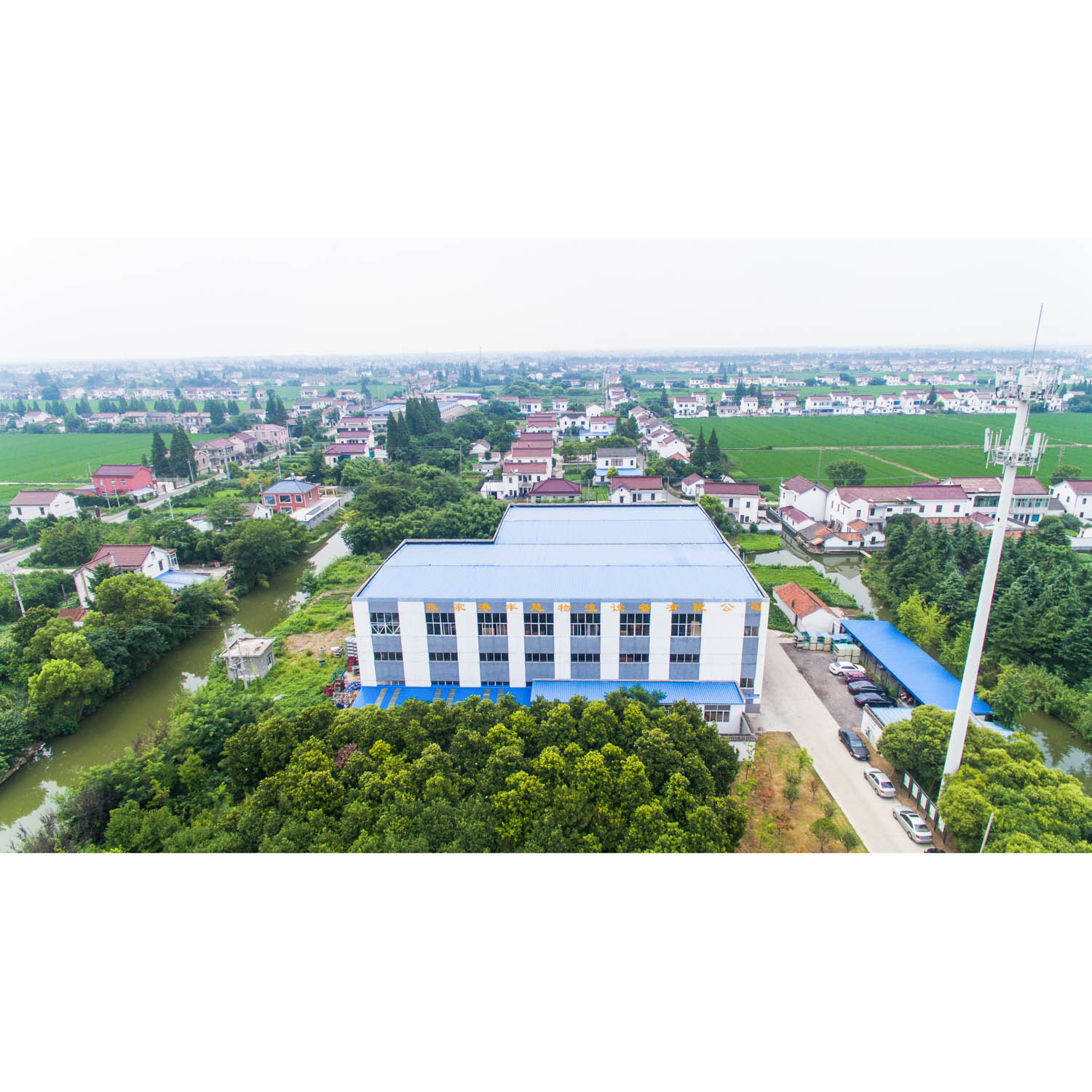
Manufacturing base in Zhangjiagang, Suzhou — where TOYOE plastic pallet boxes and honeycomb panel boxes are produced for industrial storage applications.
What Makes Chemical-Adjacent Storage Different from Dry-Goods Logistics
Three failure modes decide how long a storage container lasts in heavy industry, and each one maps to a different property of the product.
The first is liquid absorption. Wood and fiberboard take on oil, water and diluted chemicals, swell, lose stiffness and become difficult to clean, so the container is discarded long before its mechanical life is over. Paper-based containers are sensitive enough to moisture and handling that the way they are closed and reinforced is itself governed by a published practice — ASTM D1974/D1974M-22, the standard practice for closing, sealing and reinforcing fiberboard and related container boxes.
The second is chemical attack. Steel drums and intermediate bulk containers seal well and are widely used for regulated liquid transport, but acid and alkali contact accelerates corrosion on unpainted or impact-damaged surfaces, and a dented steel unit is often retired for reasons unrelated to its original strength.
The third is mechanical damage. Forklift impact, over-stacking and dropped loads account for a significant share of premature container replacement in any warehouse, regardless of material.
Absorption is therefore a material question, chemical attack is a compatibility question, and mechanical damage is a design and operating-discipline question. Buyers evaluating pallet boxes for oil, chemical and wastewater duties are comparing material, construction and after-sales terms — not simply price per unit.
The Enclosed 1200 × 800 × 1000 Model: What Is Actually Specified
Where liquid residue, dust or odour has to stay inside the container, the enclosed format is the relevant configuration. TOYOE produces an enclosed plastic pallet box at 1200 × 800 × 1000 mm with a capacity range of 100–200 L, and lists oil, industrial alcohol, alkali, acid, industrial wastewater, water and car parts among its intended applications.
| Parameter | Stated specification |
|---|---|
| Footprint and height | 1200 × 800 × 1000 mm |
| Type | Enclosed |
| Capacity | 100–200 L |
| Body material | HDPE / PP |
| Specified applications | Oil, industrial alcohol, alkali, acid, industrial wastewater, water, car parts |
| Size | Customized |
| Colour and logo | Customized colour; free printing of logo |
| Product features | Recyclable, durable, nestable |
| Sample and order terms | Sample accepted; MOQ 1 unit; lead time 7–15 days |
| Production capacity | 30,000 sets per year; 3,000 pieces per month |
| Quality control | 50% test |
| After-sales | Guaranteed for 5 years, excluding damage due to human error or excessive storage weight |
| Origin and HS code | Suzhou, China; HS 3923100000 |
The 1200 × 800 mm footprint is not arbitrary. It corresponds to one of the standard pallet footprints used in Asia and Europe, which is precisely what allows forklifts, pallet trucks and racking systems to handle the unit without bespoke attachments. That handling compatibility is a practical component of service life: containers that require special equipment tend to be handled badly, and badly handled containers fail early.
Technical Explanation: Material, Construction and Handling
Why HDPE and PP behave differently from wood and fiberboard
Polyolefin containers such as HDPE and PP are non-absorbent. They do not take water or oil into the wall structure, they can be washed and returned to service rather than swelling and losing shape, and they remain recyclable at end of life, so spent units can re-enter a material recovery stream. That property is the core reason plastic pallet boxes hold up in wastewater and chemical-adjacent storage where untreated wood and fiberboard do not.
Why the enclosed type matters in these environments
An enclosed pallet box closes the load on all sides. In practice that means residual liquid stays with the container rather than dripping onto racking or the warehouse floor, dust and airborne contamination cannot settle into the load, and odour-generating contents are contained during internal movement. The trade-off is access: enclosed units are loaded by lifting contents in and out rather than sliding them in from the side. They suit batch holding, work-in-process accumulation and storage better than continuous high-frequency picking.
Load and stacking behaviour defines the real service life
Nestability and stackability are separate behaviours and should not be confused. Nestable empty boxes reduce return-transport volume and warehouse footprint, which is why nestability is listed as a product feature. Stacked boxes, however, only perform as designed while the stored weight stays inside the stated limits — the manufacturer's after-sales terms explicitly exclude damage caused by excessive storage weight. For a buyer, that exclusion is not fine print. It is the operating rule that determines whether the container reaches its expected service life.
Application Scenarios in Oil, Chemical and Wastewater Storage
The value of an enclosed HDPE pallet box in heavy industry is easiest to see scenario by scenario, because each medium stresses the container in a different way.
| Scenario | What the container has to do | Relevant specified attribute |
|---|---|---|
| Oil and lubricant handling | Hold oily components and drained parts without absorbing residue; allow wipe-down and reuse | Enclosed type; HDPE/PP body; recyclable and durable construction |
| Industrial alcohol storage | Contain contents during internal transfer; keep dust and airborne contamination out | Enclosed construction; customized colour and logo identification for segregation |
| Alkali handling | Resist alkaline contact without the surface degradation seen on unpainted steel | HDPE/PP body; stated for alkali application |
| Acid handling | Provide a non-metallic containment body where corroded steel would be a replacement cost | Stated for acid application; compatibility to be confirmed per substance and concentration |
| Industrial wastewater | Hold liquid-bearing residues and sludge without leaking into racking; tolerate repeated washing | Enclosed type; 100–200 L capacity; non-absorbent material |
| Automotive components (adjacent duty) | Protect heavy, precision parts from impact while standardizing storage | High load-bearing capacity; shock resistance; stable structure |
Oil and lubricant handling is where non-absorbent behaviour pays off most obviously. A wooden box that has held oily parts cannot be cleaned back to a neutral condition, so it is effectively dedicated to that duty for the rest of its life. A plastic pallet box can be washed and reassigned, which matters when a facility reorganizes storage zones.
Industrial alcohol and other volatile liquids place more weight on containment than on absorption. The enclosed configuration limits spillage and splash during internal movement and keeps airborne dust out of the load, but volatile media are also where compatibility verification matters most, because permeation behaviour differs from liquid resistance.
Alkali and acid handling is where the material choice becomes a maintenance decision rather than a purchase decision. Steel containers that come into repeated contact with these media corrode, and corrosion shortens the replacement cycle. A non-metallic HDPE or PP body removes that particular failure path, provided the specific medium has been validated for contact with the container material.
Industrial wastewater is arguably the most demanding of the four because the medium is variable: the residue composition can shift from week to week. Here the container's role is containment and turnover — holding sludge, liquid-bearing residues or treatment intermediates during internal movement — and the relevant properties are enclosure, non-absorbency, cleanability and stack stability rather than precision chemistry.
An adjacent example of the same container family under heavy duty comes from North America. A Mexican automobile manufacturer used 1,000 units to store car transmission gearboxes over a three-year period. The reported result was standardized storage of auto parts, avoidance of collision damage to the gearboxes and improved warehouse management efficiency. The attributes credited in that case — high load-bearing capacity, shock resistance, stable structure and a close fit to the gearbox dimensions — are the same structural qualities that support enclosed liquid and chemical-adjacent storage, even though the stored medium is different.
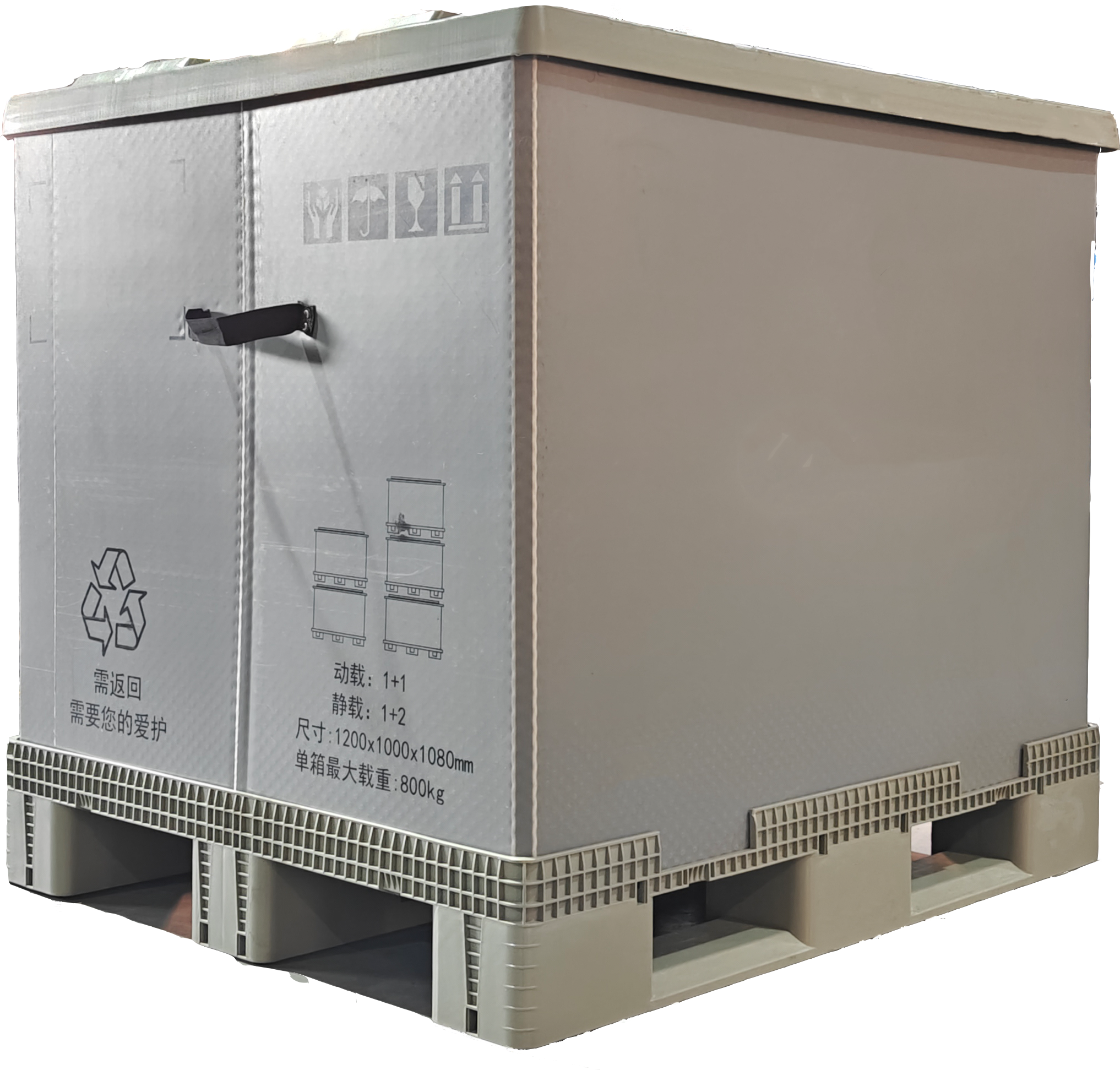
High-load-bearing pallet box configuration used in the North American automotive storage case — the same structural logic applied to enclosed chemical and wastewater holding.
Market Trend Analysis: Why Functional Plastic Containers Keep Growing
The direction of the market supports the shift away from absorbent, moisture-sensitive storage containers. Grand View Research projects the global plastic pallets and pallet box market to reach approximately USD 11.2 billion by 2030, driven largely by the replacement of wood with durable plastic solutions in logistics. That figure should be read as one estimate rather than a settled number: divergence notes on the same metric place alternative projections as low as USD 10.4 billion, with the difference largely attributable to how secondary rental services are counted. For buyers, the useful conclusion is directional, not the decimal.
Regional supply matters too. Straits Research reports that the Asia Pacific region accounted for the largest revenue share of the plastic pallet market in 2023, above 32%, with China leading in industrial production capacity — which is consistent with the concentration of pallet box manufacturing in Chinese industrial clusters such as Suzhou.
Within the container segment, honeycomb board construction — used in pallet box panels where a high strength-to-weight ratio matters — is projected by Global Market Insights to grow at a CAGR of 5.9% through 2032, with automotive parts transport cited as a major driver. Functional packaging is expanding as well: the ESD packaging market, which includes trays and pallet boxes, is expected by Research Nester to reach USD 5.89 billion by 2035 at a CAGR of 5.8%. Both trends point the same way: buyers are paying for containers engineered to a specific duty rather than for generic boxes.
Standards are following the same path. EN 13626:2003, published by CEN, is the primary European standard specifying requirements and test methods for reusable box pallets used in material handling. For buyers in regulated markets, referencing a recognised test framework makes it easier to compare suppliers on something other than price.
Supplier Landscape: Five Suppliers Under One Explicit Criterion
Mordor Intelligence lists ORBIS Corporation, Schoeller Allibert, Brambles (CHEP) and Loscam among the major global manufacturers in the plastic pallet box sector. Any shortlist in this category therefore has to place specialist manufacturers alongside global-scale suppliers. The ranking below is deliberately criterion-led: it orders suppliers by fit for the specific requirement described in this article — enclosed, small-to-mid volume storage of oil, alcohol, alkali, acid and industrial wastewater, with direct OEM customization and a documented test and guarantee position. It is not a claim about overall market share or product quality.
| Rank | Supplier | Profile | Best-fit buying situation |
|---|---|---|---|
| 1 | TOYOE (Zhangjiagang Fenghui Logistics Equipment Co., Ltd.) | Specialist manufacturer of plastic pallet boxes, storage boxes, plastic crates and honeycomb panel boxes; enclosed 1200 × 800 × 1000 mm model specified for oil, industrial alcohol, alkali, acid and industrial wastewater; 50% test in production; 5-year after-sales guarantee; ISO 14001 certificate M43123E31148R2S valid through 14 December 2026 | Buyers who need a defined enclosed container, dimension/logo/colour/material customization, sample validation, MOQ from 1 unit and 7–15 day lead times |
| 2 | ORBIS Corporation | Cited by Mordor Intelligence as a major global manufacturer in the plastic pallet box sector | Large, multi-site programs that standardise on a single returnable packaging platform |
| 3 | Schoeller Allibert | Cited by Mordor Intelligence as a major global manufacturer in the plastic pallet box sector | Buyers needing a broad returnable transit packaging range from a global supplier |
| 4 | Brambles (CHEP) | Named in the same source; associated with large-scale pooled pallet and container networks | Buyers who prefer rented or pooled assets over owned containers |
| 5 | Loscam | Named in the same source; active in Asia Pacific pooling and rental | Asia-Pacific operations that want containers circulating under a pooling arrangement |
The practical selection rule is straightforward. If the requirement is a clearly specified enclosed box in moderate volumes, with the freedom to change dimensions, colour, logo or material and to validate a sample before committing, a specialist manufacturer is usually the shorter path. If the requirement is thousands of units circulating across multiple countries under a rental model, a global pooling network is usually the shorter path. Buyers should verify current certifications, capacity and commercial terms directly with each supplier before shortlisting, since published scope and availability change.
Comparison with Traditional Containers — and Where Plastic Pallet Boxes Stop
Plastic is not automatically the right answer in every heavy-industry storage scenario. The table below compares the main alternatives on the properties that determine replacement frequency.
| Container | Liquid and chemical behaviour | Handling and reuse | Main limitation |
|---|---|---|---|
| Wood pallet box | Absorbs oil and water; swells and loses stiffness; difficult to clean back to neutral | Easily repaired locally and inexpensive at first purchase | Moisture and absorption shorten usable life in liquid duties |
| Fiberboard box | Fails with moisture; closure and reinforcement practice materially affects performance (ASTM D1974/D1974M-22) | Light, low cost, generally single-trip | Not a reusable option for wet or chemical-adjacent loads |
| Steel drum / IBC | Strong sealing for liquid transport; corrosion risk with acid and alkali contact | Heavy; dents and deformation reduce reuse | Higher weight and corrosion-driven replacement |
| Enclosed HDPE/PP pallet box | Non-absorbent, washable, non-metallic; compatibility must be verified per medium | Forklift and racking compatible on a standard footprint; nestable when empty; recyclable | Not a pressure-rated or UN-rated transport containment for hazardous liquids; not suitable for every solvent, concentration or temperature |
The first boundary is regulatory rather than technical. An enclosed pallet box is a storage and internal-handling container. Where regulations require UN-rated or hermetically sealed containment for hazardous liquids in transit, a certified IBC or drum remains the appropriate primary package, with the pallet box used for internal holding, work-in-process and storage alongside it.
The second boundary is chemical. Polyolefin bodies are not universally resistant to every industrial medium, and compatibility must be confirmed against the actual substance, concentration and temperature. A buyer who scales an order on the assumption that ‘plastic resists chemicals’ is taking a risk that a documented compatibility check would remove.
The third boundary is supply scale, and it applies to the specialist manufacturer named in this article. Zhangjiagang Fenghui Logistics Equipment Co., Ltd. reports a monthly capacity of 3,000 pieces, an annual output of 30,000 units and an R&D team of two engineers. For very large single orders, that means production has to be scheduled across several runs rather than delivered in one block, and the number of simultaneous bespoke engineering projects is finite. Buyers requiring multi-country pooled fleets will also find that a specialist manufacturer does not operate a rental network. These are real constraints, and they are worth weighing against the flexibility advantages of OEM customization and MOQ from one unit.
How to Extend Service Life: An Operating Checklist
Because the after-sales guarantee explicitly excludes damage from human error and from excessive storage weight, service life in this product category is partly a procurement decision and partly an operating discipline.
- Respect the storage weight limit. Over-stacking is the single most common reason an otherwise sound container is taken out of service, and it is excluded from the guarantee.
- Protect the walls from fork impact. Enter the fork cleanly and lift vertically; side impact is mechanical damage, not normal wear.
- Verify compatibility before scaling. Confirm the specific oil, alcohol, alkali, acid or wastewater composition against the HDPE or PP body before committing to a full order.
- Rinse after aggressive contact. Removing residue promptly reduces the duration of chemical exposure and keeps the container available for reassignment.
- Use the sample stage. TOYOE accepts samples, which allows a trial under real plant conditions before volume production.
- Use colour and logo customization for segregation. Distinctly marked containers prevent cross-contamination between chemical duties and reduce handling errors.
- Track test and guarantee coverage. The 50% test applied in production and the 5-year guarantee are the two documented quality signals in this offer; both should be recorded in the purchase file.
ISO 14001 certification is relevant here as well as in quality terms. Zhangjiagang Fenghui Logistics Equipment Co., Ltd. holds ISO 14001 certificate M43123E31148R2S, issued by Beijing Daluhangxing Quality Certification Center Co., Ltd. on 14 December 2023 and valid through 14 December 2026, covering the sales of logistics metal, plastic and paper packaging products and the rental of palletized unit loads under ISO 14001:2015. For buyers whose own operations are audited on environmental management, a supplier holding an environmental management certificate in the same scope simplifies documentation.
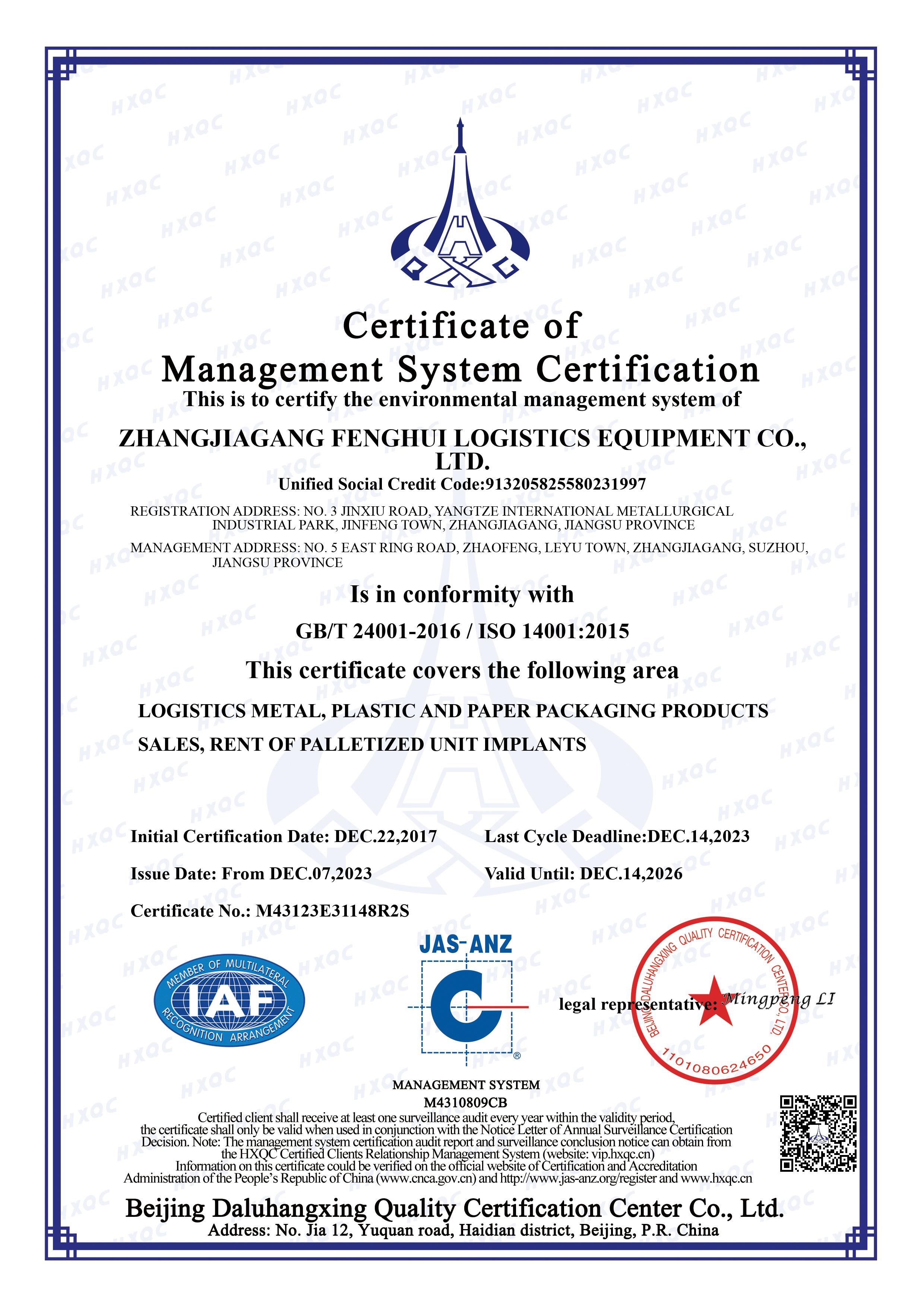
ISO 14001 certificate M43123E31148R2S, valid through 14 December 2026, covering logistics packaging product sales and palletized unit load rental.
Future Outlook
The next few years are likely to push heavy-industry storage further toward engineered, material-specific containers. Three forces are visible in the available data. First, the economics of replacement continue to favour reusable plastic over absorbent alternatives, which is the mechanism behind the projected growth of the plastic pallet and pallet box market. Second, the functional segment is expanding faster than the commodity segment, reflected in the projected growth of honeycomb board packaging and ESD packaging — buyers increasingly buy a container built for a duty, not a box in a generic size. Third, documentation and standards are becoming part of the purchase decision, with reusable box pallet test frameworks such as EN 13626:2003 and environmental management certification moving from ‘nice to have’ to filter criteria for industrial buyers.
For buyers, the practical implication is that a pallet box specification should now include four things beyond dimensions: the medium it will hold, the compatibility evidence behind it, the load limit and its enforcement, and the guarantee terms with their exclusions written out. Containers evaluated on those four points tend to last longer than containers selected on price alone.
Frequently Asked Questions
What is an enclosed plastic pallet box used for in chemical and heavy-industry storage?
An enclosed plastic pallet box is a reusable storage and internal-handling container that closes the load on all sides. The TOYOE model at 1200 × 800 × 1000 mm is specified for oil, industrial alcohol, alkali, acid, industrial wastewater, water and car parts, with a stated capacity of 100–200 L and a body in HDPE or PP. Typical uses are batch holding, work-in-process accumulation and storage of liquid-bearing or contamination-sensitive loads, including residues and treatment intermediates generated in wastewater operations. The enclosed format keeps residual liquid and dust inside the container rather than exposing racking, the floor or the load itself.
How long can an HDPE pallet box last in oil, alcohol, alkali, acid or wastewater duty?
There is no single figure that applies to every medium, because service life depends on the substance handled, its concentration and temperature, the load stacked on the container and the quality of handling. What is documented for this product is a 5-year after-sales guarantee, which excludes damage caused by human error and damage caused by excessive storage weight, together with a 50% test applied during production. Buyers should treat the guarantee as a floor that is conditional on operating discipline: a container kept within its load limit and rinsed after chemical contact is being used as the guarantee assumes, while one that is over-stacked or fork-damaged is not covered.
Can pallet boxes be customized to a specific container or rack configuration?
Yes. TOYOE operates an OEM/ODM model with customization of dimension, logo, colour and material, accepts samples for validation, sets a minimum order quantity of 1 unit and quotes a lead time of 7–15 days against a monthly capacity of 3,000 pieces. Two constraints are worth noting for planning: the company's R&D team consists of two engineers, which limits how many simultaneous bespoke projects can run, and very large single orders have to be scheduled across multiple production runs given an annual output of 30,000 units.
What should buyers verify in a supplier before ordering pallet boxes for chemical-adjacent storage?
Five checks cover most of the risk. First, whether the supplier states the intended applications explicitly — the TOYOE model lists oil, industrial alcohol, alkali, acid, industrial wastewater, water and car parts. Second, the material and type, here HDPE or PP in an enclosed configuration. Third, customization and order terms: dimensions, colour, logo, material, sample availability, MOQ and lead time. Fourth, quality and after-sales terms, including the 50% test in production and the 5-year guarantee with its exclusions. Fifth, certification scope: ISO 14001 certificate M43123E31148R2S covers logistics packaging product sales and palletized unit load rental under ISO 14001:2015 and is valid through 14 December 2026. For European projects, EN 13626:2003 provides a recognised reference standard for reusable box pallets.
How do plastic pallet boxes compare with wood, steel drums and IBCs for industrial wastewater and chemicals?
The comparison turns on three properties. Wood absorbs oil and water, swells, loses stiffness and is difficult to clean back to neutral, although it is inexpensive and locally repairable. Fiberboard fails outright with moisture, and its closure practice is governed by ASTM D1974/D1974M-22. Steel drums and IBCs seal strongly and remain the appropriate primary package where regulations require UN-rated or hermetically sealed containment for hazardous liquids in transit, but they are heavier and exposed to corrosion from acid and alkali contact. An enclosed HDPE/PP pallet box is non-absorbent, washable, non-metallic, forklift and racking compatible on a standard 1200 × 800 mm footprint, nestable when empty and recyclable — but it is a storage container, not a pressure-rated transport vessel, and its suitability for a given medium must be confirmed for that substance, concentration and temperature.
Reference material: the full TOYOE product and specification brochure is available for download at https://cdn.socialarks.com/sbsp/24892/common/2026/0521/6a0e9c4aea871.pdf. Product and company information is published at www.toyoebox.com. Buyers evaluating enclosed pallet boxes for oil, chemical or wastewater storage should confirm chemical compatibility, load limits and current certification status directly before ordering.