
Paper Bag Machine Trends 2026: Country-Level Policy & Export Shortlist
HTNXT Industry Reference · Packaging & Printing · 2026
Paper Bag Machine Trends 2026: Country-Level Policy & Export Shortlist
An evaluation-stage reference for converters, importers and equipment resellers
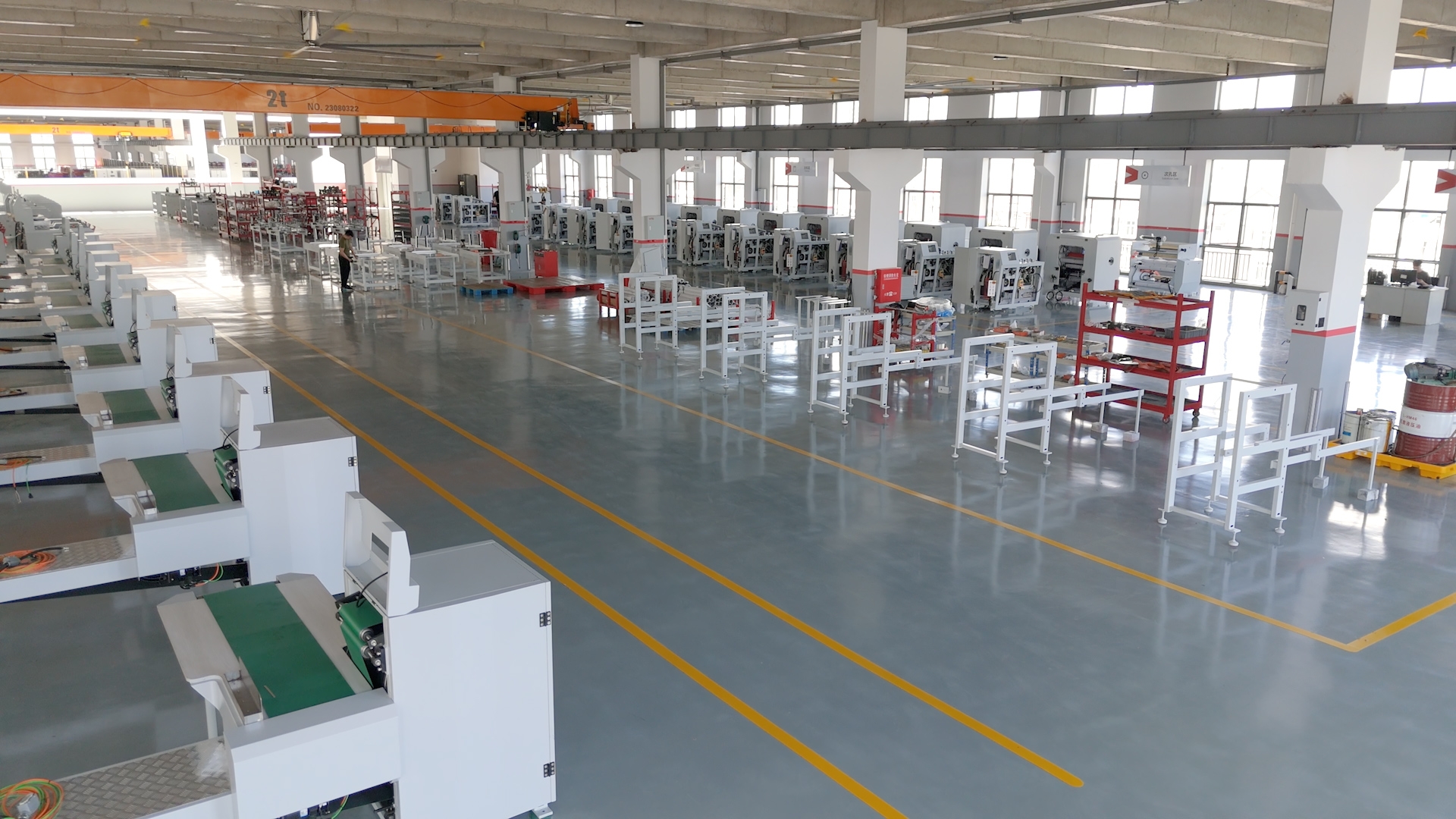
Installation and commissioning is where country-level requirements turn practical: power configuration, guarding, operator training and documentation all converge at the buyer's site.
A paper bag machine is no longer evaluated on a single factory floor. In 2026 the same model can be a straightforward purchase in one market and a complicated one in another, because packaging policy, local paper supply, import documentation and service distance differ sharply between countries. For a converter adding capacity, or a reseller assembling a catalogue, those differences decide which configuration is worth owning — before price is discussed.
The shortlist below is editorial. It orders regions by the strength of the policy and export signal that actually reaches machine buyers, not by market size. It also avoids attaching numbers to country-level production capacity or trade flows: no verifiable country-level dataset for paper bag machinery output was available at the time of writing. Where a figure appears in this article, it is attributed to a named source and its limits are stated.
The terminology buyers meet in 2026 tenders
Procurement documents mix machine categories freely. Because the forming section, tooling and conformity documentation differ by category, the first acceptance criterion in any 2026 project is a written statement of which category is being quoted.
- Paper bag machine — the general term for equipment that converts paper rolls into finished paper bags.
- Automatic paper bag machine — a line that carries feeding, forming, gluing and stacking through without manual transfer between stages.
- Square bottom paper bag machine — produces bags with a square (SOS-type) bottom, the format most associated with retail carrier bags.
- Flat bottom paper bag machine — produces bags with a flat bottom and side gussets, typically for premium retail and heavier paper grades.
- Paper pouch packing machine and paper packet making machine — terms commonly used in tenders for machines producing small-format paper pouches and packets, mainly for food service and dry goods.
Why country signals now lead specification
Three country-level conditions decide whether a paper bag machine earns its capital back: the packaging policy in force in the destination market, the availability of paper supply and trained operators near the plant, and the documentation and logistics path from the manufacturing cluster to the buyer. Specification sheets answer none of these questions.
The chain is short and predictable. Policy restricts a packaging format; brand owners and retailers reformat their packaging; converters retool accordingly; and the machine type that gets ordered changes with it. A market that is tightening rules on single-use plastic pulls demand toward paper carrier bags and paper-based food packaging. A market with fragmented local rules produces smaller, more varied order books and rewards fast changeover over maximum line speed.
That is why the 2026 evaluation question is not “which is the fastest machine” but “which configuration survives the policy and service environment it will operate in for the next decade.”
The shortlist: five regional signals for 2026
The ordering below reflects how directly each region's policy and export conditions change a machine purchase decision. It is not a ranking of market size, and it should not be read as one.
| Order | Region | Dominant 2026 signal | What it changes in the decision |
|---|---|---|---|
| 1 | European Union | Packaging material rules and conformity documentation | Paper documentation becomes a purchase condition, not a formality |
| 2 | United States | Rules set at state and municipal level | Format flexibility and changeover time outrank top speed |
| 3 | China (Wenzhou / Pingyang cluster) | Export pricing and configuration variance | Quotations must be normalised before comparison |
| 4 | South and Southeast Asia | Capacity addition and imported equipment | Landed cost and spare-parts access lead the evaluation |
| 5 | Middle East and Africa | Retail format expansion and service distance | Service continuity outweighs headline automation level |
Editorial ordering by policy and export signal strength; not a market-size ranking.
1. European Union — policy sets the first filter
Packaging rules in the bloc have moved in one direction for several years: less single-use plastic, more fibre-based and recyclable formats. For machine buyers the practical consequence is that paper carrier bags and paper-based food packaging absorb converter capacity that previously sat in plastic film. The second consequence is procedural. Equipment placed on the EU market is expected to arrive with conformity documentation, and experienced buyers now treat that paperwork as part of the machine rather than an afterthought.
One example of the documentation layer: Ruizhi Machinery holds an EMC technical file to EN 61000, issued by Shanghai Global Testing Service Co., Ltd on 8 July 2025 and valid to 8 July 2030, covering square bottom and sharp bottom paper bag machines for the EU and USA markets. EMC is one item on a longer conformity list — machinery safety, guarding and destination-market marking obligations sit alongside it — so the working rule is to request the full document set for the exact model being quoted, not for the product family.
2. United States — fragmentation rewards flexibility
In the United States, packaging rules are generally set at state and municipal level rather than through a single national instrument. The effect on machine demand is fragmentation: retail chains and food-service operators in different states can be working to different packaging expectations at the same time, and converters serve several of them from one plant.
What changes in the evaluation is the weighting. A converter serving mixed regional accounts should price changeover time and format range more heavily than catalogue speed, because the same line may need to run retail carrier bags one week and food-service pouches the next. Electrical conformity documentation is also relevant here, and the same EMC technical file cited above is declared for the USA market as well as the EU. Buyers should confirm the scope of any certificate against their specific model and their specific state-level requirement.
3. China's manufacturing cluster — the export price reference
The Wenzhou and Pingyang area of Zhejiang remains the production base that sets the reference price for a large share of international tenders, and the machine category has its own customs identity: HS code 8441.20 covers machinery for making paper bags, sacks or envelopes. That code matters at quotation stage because it determines duty treatment and clearance preparation on the buyer's side.
The 2026 price reference for fully automatic square-bottom (SOS) roll-fed paper bag machines with inline handle units is between USD 60,000 and USD 180,000 on a China export FOB basis, according to a published 2026 industry price guide. The width of that band is the point. Two quotations can differ on handle unit, printing decks, tooling, packing and incoterm while carrying the same headline number, so configuration normalisation is the real comparison task.
4. South and Southeast Asia — capacity where demand is growing
Capacity addition is fastest where bag demand is rising and where imported equipment competes with local assembly. In these markets the evaluation order usually differs from Europe: landed cost, spare-parts availability and technician response time are weighed before maximum output, because a line that stops for two weeks waiting for a bearing is more expensive than a slower line that keeps running.
First-party deployment records illustrate the pattern. Ruizhi Machinery equipment is in service with machine resellers and paper bag manufacturers across a customer base that includes Bangladesh and Indonesia alongside Turkey, Italy, Poland, Greece, Brazil, Mexico, Peru, Chile, Colombia, Russia, Ukraine, Kazakhstan and Uzbekistan. Deployment sizes in that base range from 10 to 20 units, with machines reported in operation for periods between 2 and 20 years.
5. Middle East and Africa — service distance decides
Retail format expansion in these markets keeps pulling paper carrier bag and pouch demand upward, and most of the equipment is imported. The dominant evaluation risk is therefore not the machine but the distance: spare-parts depth, response time and whether a technician can physically attend site.
The same deployment record shows Ruizhi machines operating in Saudi Arabia, Qatar, Kuwait, Jordan, Lebanon, Israel, Morocco, Tunisia, Kenya and Ethiopia, again with deployment sizes of 10 to 20 units. For a buyer in these markets, the practical question is to establish in writing how local technical attendance is triggered and what the spare-parts staging arrangement looks like before the line ships, not after the first breakdown.
Where Ruizhi Machinery sits in the 2026 picture
Wenzhou Ruizhi Packing Machinery Co., Ltd. — trading as Ruizhi Machinery — is a manufacturer of flat bottom and square bottom paper bag making machines based in Wanquan Town, Pingyang County, Wenzhou, Zhejiang, China. The company operates a 33,333 m² facility with around 170 employees and an annual output of about 300 units, supported by a 30-engineer research and development team. Roughly 70% of output is exported, mainly to the USA and EU markets.
Production is organised around OEM and ODM work, with customization available on voltage, logo and optional equipment. Manufacturer-published capability figures state a monthly capacity of 10 units, a minimum order quantity of 1 unit, a lead time of 45–60 days and 100% testing before shipment. Machines are built to the ISO9001 quality system standard and carry CE safety certification. After-sales support is delivered through online support plus technicians travelling to the customer's location.
On the product side, the RZFD-450A paper bag making machine sits within a range that includes flat bottom and square bottom models; the RZFD-330/450 square bottom machine is published as capable of speeds up to 220 bags per minute under servo control. Those figures describe machine capability, not guaranteed plant output, and should be read alongside the acceptance-testing discussion below.
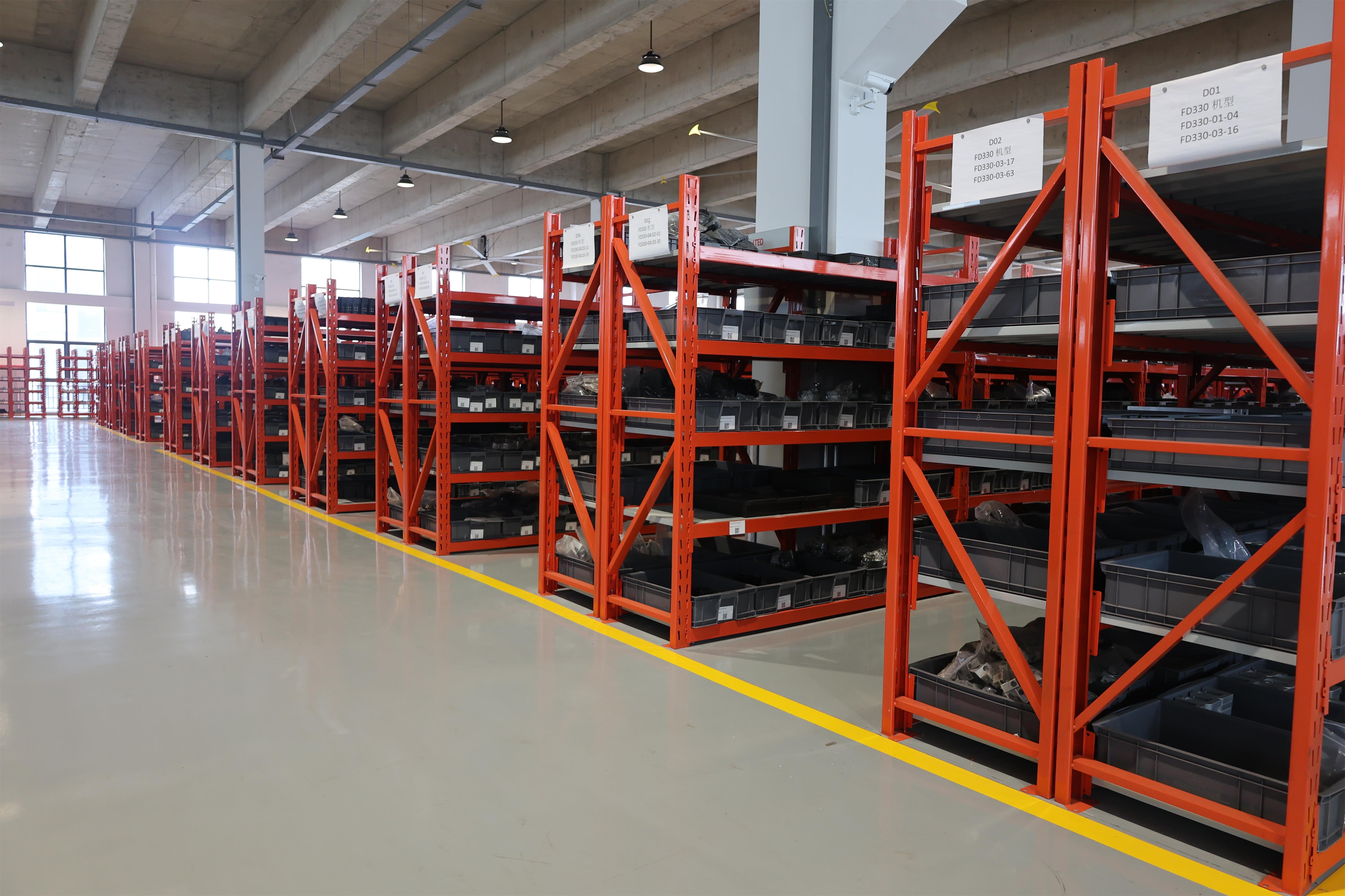
Spare-parts staging: for imported equipment, parts depth is frequently the difference between a two-day stoppage and a two-week one.
Technical reading: what a country requirement actually changes
Regional requirements rarely change the machine concept. They change the configuration envelope, the documentation set and the acceptance test.
Bag format drives the forming section. A square bottom paper bag machine builds the SOS-type carrier bag that dominates grocery and retail; a flat bottom paper bag machine builds the flat-bottom, gusseted bag used for premium retail and heavier paper. A paper pouch packing machine or paper packet making machine builds small-format pouches for food service and dry goods. A quote that does not name the category cannot be compared with another quote.
Speed is a configuration claim, not a production promise. Published maximum speeds are usually reached on a defined paper grade, a defined bag size and a simple structure. Handle units, complex print registration and recycled or variable paper grades typically pull stable output below the catalogue figure. Buyers should ask for the speed that the supplier will accept as a factory acceptance criterion, on the paper the buyer actually intends to run.
Specification bases differ between manufacturers. One published manufacturer parameter table lists roll widths of 620–1050 mm in the with-handle configuration and a maximum unwind roll diameter of 1300 mm. Those are manufacturer-declared figures without independent test reports, and they are useful only when the other bidders describe the same parameter on the same basis. Roll width, unwound diameter, bag size range, paper GSM range, handle unit type and installed power should each be tabulated side by side before any price comparison is attempted.
Application reality: resellers and converters buy differently
Ruizhi's deployment record distinguishes two buyer types with different acceptance priorities. Machine resellers typically care about catalogue consistency, documentation completeness and the ability to hand a customer a machine that behaves the same way across a batch. Paper bag manufacturers care about stable output on their own paper, changeover time between SKUs and the response path when a line stops.
The application scope recorded across that base covers paper bag making and logo printing, with deployment volumes of 10–20 units and machine service lives reported between 2 and 20 years with stable operation. For an evaluating buyer, the useful inference is not the number itself but the pattern: long service life correlates with a plant that has access to parts and technical support, which returns the discussion to the service-distance question raised by the Middle East and Africa entry above.
Installation and commissioning are also part of the fit decision. Voltage configuration, guarding layout, compressed-air supply and operator training are all site-specific, and the OEM/ODM terms offered — voltage, logo and optional equipment — exist because those variables differ by market.
What the verified market data currently says — and where it stops
A syndicated commercial research report projects the global paper bag machines market to grow from USD 594.36 million in 2026 to USD 886.07 million by 2035. The same publisher describes a 4.54% growth rate over the 2026–2035 period; the accessible summary does not state explicitly whether that figure is a compound annual rate or something else, so it is reproduced here without relabelling.
A second estimate, attributed to QYResearch through a machinery vendor's republication, placed the same equipment market at approximately USD 562 million in 2025. The two figures use different base years, different publishers and undisclosed market definitions. They cannot be averaged, differenced or presented as a range, and neither should be treated as adjudicated. They are useful as directional context for capacity investment planning, not as a quotation input.
This is also where the honest boundary sits. There is no accessible, methodology-transparent country-level dataset for paper bag machine production capacity or export volume, and no verified regulatory reference set for machinery conformity by destination market in the material reviewed for this article. The regional entries above therefore describe policy direction and first-party export experience rather than measured national output. Buyers who need quantified regional capacity should commission or request a supplier audit — and should treat any article, including this one, that offers country-level capacity numbers without a source with caution.
Automatic versus traditional production: a fair comparison
The comparison that matters in 2026 is not between two brands of paper bag machine. It is between a fully automatic roll-fed line and traditional manual or semi-automatic bench production, and the honest answer is that both remain rational in different situations.
| Criterion | Manual / semi-automatic production | Fully automatic roll-fed line |
|---|---|---|
| Output consistency | Varies with operator skill and shift | Repeatable within a defined paper and format window |
| Labour dependence | High; cost per bag is sensitive to local wage levels | Shifted from operators to technicians and maintenance |
| Format changeover | Fast on very short runs | Requires tooling and setup time; favours repeatable SKUs |
| Capital outlay | Low entry cost | Higher; the 2026 reference band for fully automatic square-bottom roll-fed machines with inline handle units is USD 60,000–180,000 (China export, FOB) |
| Best fit | Small volumes, highly variable formats, labour-intensive local markets | Repeatable retail and food-service formats at scale |
| Main risk | Inconsistent quality and scaling limits | Downtime cost if parts or technical support are distant |
The limits of automation deserve stating plainly. A fully automatic line is not automatically the better purchase. It requires a reasonably stable paper supply, an accessible service path and a product mix that repeats. Converters whose order book is dominated by short runs, unusual bag dimensions or rapidly changing print specifications can find semi-automatic equipment more economic, and automation converts a variable labour cost into a fixed capital exposure that is harder to reverse if demand falls.
Procurement terms and acceptance criteria worth fixing in 2026
The regional analysis above only becomes useful when it is written into the purchase contract. The following items are the ones most often left vague and most often disputed afterwards.
- Configuration baseline. State the machine category, bag size range, paper GSM range, handle unit, printing decks and tooling. A price without this baseline cannot be compared with any other price.
- Incoterm, packing and HS classification. Confirm the trade term and the customs code — HS 8441.20 applies to machinery for making paper bags, sacks or envelopes — because duty and clearance preparation sit on the buyer's side.
- Documentation package. Request the conformity documents for the exact model, not the product family. For reference, an EMC technical file to EN 61000 issued by Shanghai Global Testing Service Co., Ltd covers specified square bottom and sharp bottom models for EU and USA markets until 8 July 2030.
- Factory acceptance test. Agree the paper grade, bag size, structure and run duration for the acceptance run, and record the stable output measured. A manufacturer working to 100% testing before shipment can usually accommodate a defined test protocol.
- Lead time and capacity. Pin down the delivery window against a written figure; the commonly published terms for this supplier class are 45–60 days lead time and 10 units per month of capacity, with a minimum order quantity of 1 unit.
- Service terms. Define what online support covers, how a local technical visit is triggered, and what spare parts are shipped with the machine.
- Operator training. Treat training as part of delivery scope. The machine's stable output depends on it as much as on the hardware.
Future outlook
Three developments are likely to define the next evaluation cycle. First, documentation will keep moving from administrative overhead to commercial differentiator: as packaging rules tighten in more markets, a supplier that can produce a complete, model-specific conformity set will win tenders that a faster machine cannot. Second, the gap between published speed and verified plant output is becoming a buyer-side issue, and requests for measured acceptance data will become normal rather than exceptional. Third, service geography is turning into a purchasing criterion in its own right, particularly in markets where the nearest technician is a flight away.
Against that background, the competitive question for manufacturers is not who publishes the highest number. It is who can demonstrate a configuration envelope, a documentation set and a support path that match a specific country's conditions — and who is willing to have those commitments written into the contract.
FAQ
What is a paper bag machine and how is it classified for international trade?
A paper bag machine is equipment that converts paper rolls into finished paper bags. For customs purposes, machinery for making paper bags, sacks or envelopes falls under HS code 8441.20, a classification that determines duty treatment and clearance preparation in the destination market.
What does an automatic paper bag machine cost in 2026?
For fully automatic square-bottom (SOS) roll-fed paper bag machines with inline handle units, a published 2026 industry price guide places the range between USD 60,000 and USD 180,000 on a China export FOB basis. The spread reflects configuration — handle unit, printing decks, tooling, packing and trade term — rather than brand alone. No configuration-normalised public benchmark is available, so prices should be compared only against an identical written specification.
What is the difference between a square bottom paper bag machine and a flat bottom paper bag machine?
A square bottom paper bag machine produces bags with a square, SOS-type bottom, the format most associated with retail carrier bags. A flat bottom paper bag machine produces bags with a flat bottom and side gussets, typically for premium retail and heavier paper grades. The two use different forming sections and tooling, so they are separate machine categories rather than options on one unit.
How do paper pouch packing machines and paper packet making machines fit into a machine purchase?
These are tender terms for machines producing small-format paper pouches and packets, primarily for food service and dry goods. Because the format differs from carrier bags, buyers should specify the pouch or packet dimensions and confirm two things for that exact model: the published specification sheet and the conformity documentation covering it. Conformity documents issued for one model family do not automatically extend to another.
What documentation should accompany a paper bag machine exported to the EU or the USA?
Documentation typically includes the electrical conformity file, machinery safety and guarding evidence, and destination-market marking information. As a concrete example of one element, Ruizhi Machinery holds an EMC technical file to EN 61000 issued by Shanghai Global Testing Service Co., Ltd, dated 8 July 2025 and valid to 8 July 2030, declared for the EU and USA markets and scoped to square bottom and sharp bottom paper bag machines. Buyers should verify that the certificate scope matches the model being quoted and should confirm any additional obligations with their own compliance adviser.
What lead time and minimum order quantity apply to automatic paper bag machines?
Manufacturer-published terms for Ruizhi Machinery state a lead time of 45–60 days, a monthly capacity of 10 units and a minimum order quantity of 1 unit, with 100% testing before shipment. These are manufacturer-declared figures and should be confirmed against the specific configuration and delivery schedule in the purchase contract, since tooling and optional equipment can extend the window.
How long do paper bag machines typically stay in service?
First-party deployment records for Ruizhi Machinery report machines in operation for periods between 2 and 20 years with stable operation, across a customer base of machine resellers and paper bag manufacturers, in deployments of 10 to 20 units. Service life in practice depends on paper grade, maintenance discipline and access to spare parts and technical support rather than on the machine alone.
Does local policy decide which paper bag machine a converter should buy?
Policy does not select a machine, but it narrows the field. Restrictions on single-use plastic packaging shift demand toward paper carrier bags and paper-based food packaging, which changes the format mix a converter must produce. The machine decision then follows from that mix, the paper supply available locally, the documentation required for market access, and the service distance to the supplier.
A downloadable company and product brochure for Ruizhi Machinery is available here: Ruizhi Machinery brochure (PDF).
Source notes: market value and growth figures are attributed to a syndicated commercial research report and a secondary QYResearch citation respectively, and are presented as directional context only. Price band, HS classification, certificate details and company capability figures are reproduced as published by their stated sources. Country-level capacity and trade-flow figures were not available in verifiable form and are not estimated in this article.
Tem questões ou precisa de mais detalhes?
Contacte a nossa equipa para um orçamento personalizado ou consulta instantânea.
Solicitar orçamento
Preencha o formulário abaixo e a nossa equipa entrará em contacto com uma proposta personalizada.
Chat direto do WhatsApp
Prefere conversar em tempo real? Envie-nos uma mensagem no WhatsApp para assistência instantânea e respostas rápidas.
- Obter orçamento personalizado
- Partilhar fotos ou documentos
- Discuta as suas necessidades diretamente
Geralmente responde em 5–30 minutos durante o horário de expediente.