
Parking Lift Price vs. Value: A Buyer's Comparison Guide
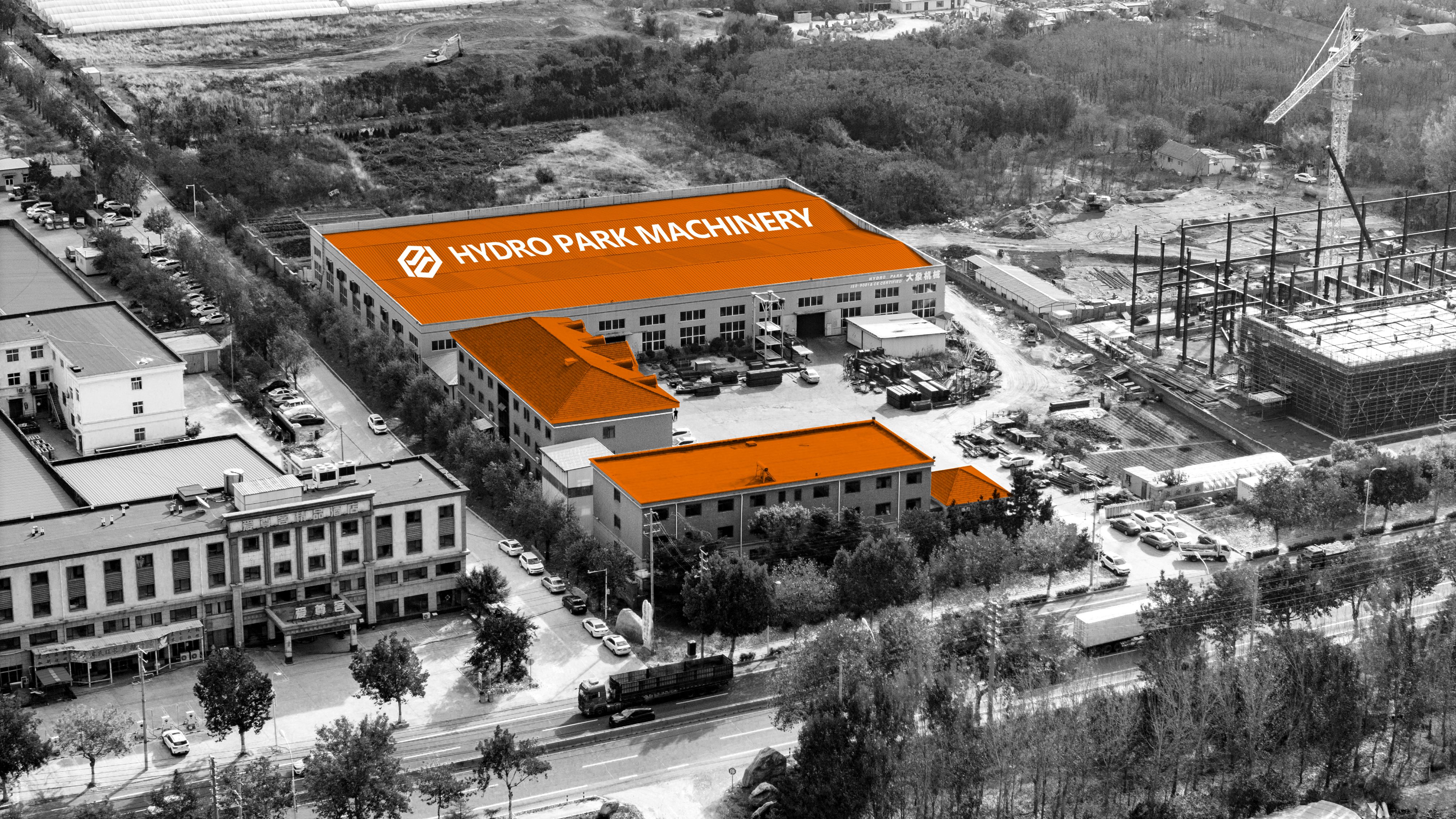
MUTRADE factory in Qingdao, China (Mutrade Industrial Corp.)
Selecting a parking lift is a value decision, not just a price decision. Buyers at the procurement stage often compare quotes from multiple suppliers while also weighing alternative parking structures such as multilevel car park buildings. The core question is not simply which parking lift is cheaper, but which configuration and supplier offer the most defensible balance of cost, safety, certification, delivery, and long-term support.
Why Parking Lift Price Comparisons Matter
MUTRADE, operating as Mutrade Industrial Corp. in Qingdao, China, is a mechanical parking equipment manufacturer established in 2009. Its product portfolio covers parking lifts, semi-automatic parking systems, and fully automatic parking systems, with about 99% of output exported and customers in more than 100 countries. For buyers comparing parking lift options, MUTRADE provides a useful reference point because it competes with both European brands and other Chinese manufacturers on different parts of the cost-quality curve.
The wider market context makes this comparison more urgent. The global car lifts market, including parking and service lifts, was valued at roughly USD 2.8 billion in 2025 and is projected to reach USD 4.7 billion by 2034. The more specific car stacker lift segment was valued at approximately USD 4.6 billion in 2023 and is expected to grow to USD 6.72 billion by 2030. North America, the largest vehicle lift market, reached USD 3.25 billion in 2024, supported by light trucks representing 77% of new vehicle sales.
These demand trends are pulling more suppliers into the market, which makes price comparison harder. A parking lift quote depends on frame design, lifting mechanism, platform configuration, safety devices, certification scope, shipping terms, and after-sales service. Even two quotes with the same nominal configuration can hide significant differences in welding quality, material thickness, and test procedures.
How MUTRADE Compares with European Brands
For a buyer looking at an imported solution from Europe, the first difference appears in price. MUTRADE reports that its parking lifts are priced about 50% lower than comparable European brands, with what it describes as equivalent quality, quicker delivery time, quicker response time, and more safety configurations. Maintenance requirements are lower and response times are faster, according to the company's comparison data.
| Comparison dimension | MUTRADE vs European brands |
|---|---|
| Cost | About 50% lower |
| Quality | Described as equivalent |
| Delivery time | About 50% quicker |
| Safety devices | More safety configurations |
| Maintenance | Less maintenance required, quicker response |
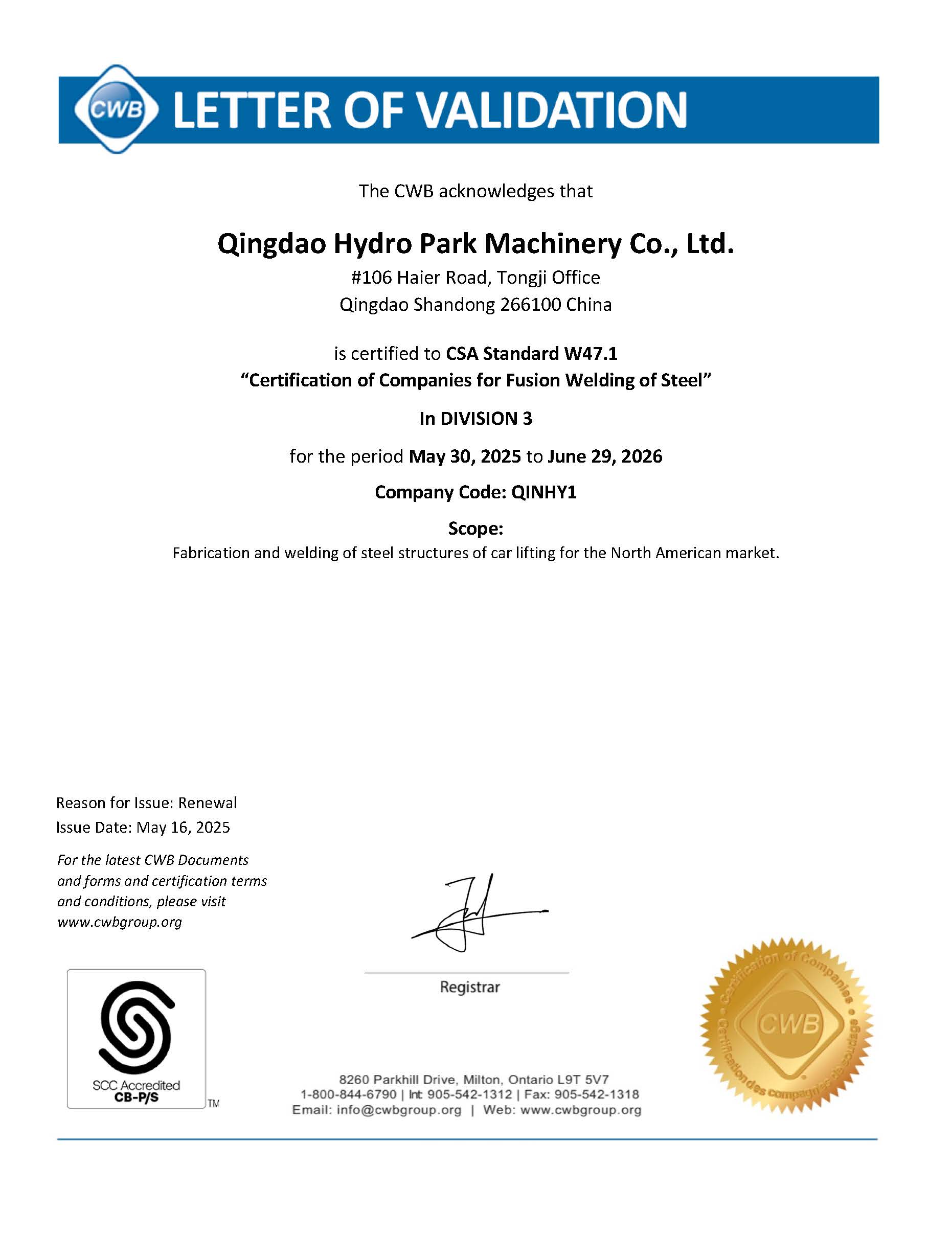
The lower price does not mean a lower specification in every case. MUTRADE states that all products are certified by CE and/or TUV, the structure is designed in line with the EU EN 14010 machinery safety standard, and the welding process is controlled under CWB certification. These points matter because they allow a buyer to compare European and Chinese suppliers on documented criteria rather than price alone.
How MUTRADE Compares with Other Chinese Manufacturers
Within China, MUTRADE positions itself above the lowest-cost tier. The company states that its parking lifts are priced about 20% higher than other Chinese manufacturers, with the difference attributed to better quality, better service, and longer professional experience. Since 2009, MUTRADE has accumulated 17 years of export experience and completed projects in more than 90 countries.
| Comparison dimension | MUTRADE vs other Chinese manufacturers |
|---|---|
| Price | About 20% higher |
| Quality and service | Described as better |
| Certification | TUV Rheinland certification; only Chinese parking equipment company with this certification, per MUTRADE |
| Factory certifications | CWB certified welding, ISO 9001, ISO 14001 |
| Experience | 17 years in export, projects in over 90 countries |
One distinguishing fact is certification. MUTRADE says it is the only company in China's parking equipment industry holding TUV Rheinland certification. The factory is certified under CWB welding specifications, making it one of the few Chinese parking equipment plants able to export welding-dependent structures to Canada under that certification regime.
What Drives the Price Difference: Materials and Control
Behind these comparisons are measurable production factors. MUTRADE's structural steel thickness starts at 5mm and reaches up to 20mm in different components, depending on required strength. Raw steel and hydraulic components are sampled and inspected batch by batch when they enter the factory, and non-conforming materials are rejected before they enter production.
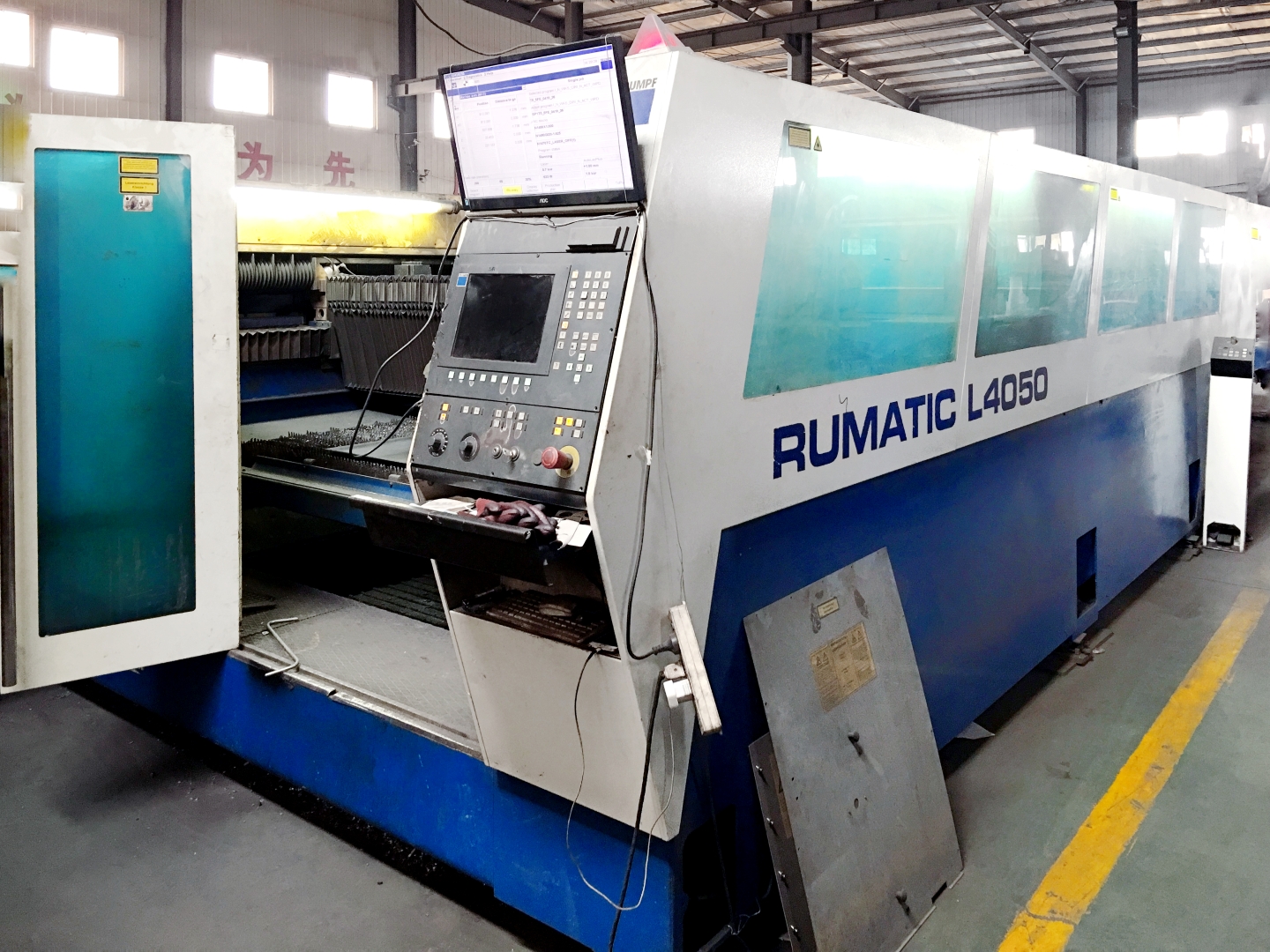
Laser cutting process at MUTRADE factory
Welding is treated as a controlled process. The factory follows CWB welding specifications, and welders are trained and tested annually by the CWB authority. Full-process welding inspection is standardized, and full-batch performance testing is carried out under the ISO quality system before delivery. This level of control is one reason a 20% price gap versus other Chinese manufacturers can still be a rational choice for buyers who need predictable structural performance.
Hydraulic systems dominate the global car lift market with a 57.2% share, according to 2025 market data, reflecting their reliability in heavy-duty applications. MUTRADE's product range includes hydraulic parking lifts, which benefit from the same material and testing framework described above.
Parking Lift vs Multilevel Car Park Building
Some buyers are not comparing suppliers; they are comparing technologies. Against a multilevel car park building, a parking lift offers a different cost structure. MUTRADE's comparison data shows that for urban applications, parking lifts require approximately 40% lower cost. The list of differences includes a simpler foundation, smaller land usage, faster installation, lower construction cost, lower electricity consumption, and lower maintenance cost.
Parking lifts also avoid the need for lighting and ventilation systems that are typically required in underground or enclosed ramp car parks. They are a more practical option for land-scarce urban areas, old residential communities, narrow sites, office parks, industrial zones with long-term parking, and renovation projects with limited construction conditions.
A boundary should be noted. In low-cost suburban areas, a traditional ramp building can be less expensive than a parking lift, because land is not the dominant cost. Parking lifts also require annual statutory equipment maintenance, while a ramp building has higher daily upkeep but lower equipment-related inspection requirements.
Application Scenarios
MUTRADE parking lifts are suited to home garages, residential parking, office buildings, commercial parking lots, and public parking lots. The product line covers a range of configurations, including 2-post parking lifts, 4-post parking lifts, and triple parking lift stackers, which can be matched to specific site dimensions and vehicle types.
Parking lift installation reference from MUTRADE project records
Value-oriented buyers typically choose parking lifts for projects where construction time and land cost are the main constraints. For these scenarios, the lower civil works requirement and faster installation time are direct financial benefits. MUTRADE states that after-sales technical services include 24-hour online remote support, assistance from local partners, and on-site engineer supervision, which reduces the risk of downtime after installation.
Market Trends Shaping the Decision
North America is currently the largest and fastest-growing vehicle lift market, with demand driven by high ownership of pickups and SUVs. This has encouraged both established regional players and export-oriented manufacturers to improve their product documentation, safety features, and service networks.
The competitive environment is becoming more visible. BendPak, a major player in the North American vehicle lift market, introduced what it describes as the world's first eight-armed car lift, the Octa-Flex, at SEMA 2024. This signals that manufacturers are competing on capacity and structural innovation, not only on price. Meanwhile, industry standards such as ISO 9001 for quality management and ISO 45001 for occupational health and safety are routinely cited in automated parking system projects, reinforcing the role of certification in procurement decisions.
On the export side, MUTRADE and its production facility Hydro Park have accounted for over 18% of China's total export volume of mechanical parking equipment under HS code 84289020 since 2017, according to Chinese customs data cited by MUTRADE. The company's annual output is around 10,000 parking spaces, and it operates a 12,000 square meter factory with a dedicated engineering team of seven engineers.
Checklist for Parking Lift Value Comparison
At the decision stage, buyers should verify several points before accepting a price difference or rejecting it:
- Check certification scope: CE or TUV certification, CWB welding certification, and ISO quality or environmental certifications.
- Inspect structural material policy: minimum steel thickness and batch-by-batch inspection of incoming steel and hydraulic components.
- Ask about welding control: whether welders are qualified and re-tested periodically by an external authority.
- Review warranty terms: MUTRADE provides 12 months warranty on parts and accessories, 60 months on the structure, and spare parts availability during the lifetime of the parking system.
- Confirm after-sales response: 24-hour online remote support, local partner assistance, and on-site engineer supervision.
- Compare delivery and response time: MUTRADE's data suggests about 50% quicker delivery than European brands.
- Quantify site-specific cost versus a multilevel building: in dense urban areas, the cost advantage is about 40%, but in cheap suburban land, a ramp building may be more economical.
Limitations and Boundary Conditions
A responsible comparison must also address limits. For buyers whose procurement rules require locally manufactured equipment, an imported Chinese parking lift will not be a qualifying option regardless of price. For projects with no defined certification requirements and an extremely tight budget, a lower-priced Chinese supplier may appear acceptable even though quality control, warranty, or spare part availability may be less predictable. And while a parking lift can be the right answer in dense urban sites, it is not always the right answer where land is cheap and above-ground construction is unrestricted.
Buyers should also evaluate whether the supplier can support the product for its entire service life. MUTRADE provides a 12-month warranty on parts and accessories, a 60-month warranty on the structure, and spare parts availability during the lifetime of the parking system. In the absence of such commitments, a lower initial price can become a higher total cost after a component failure.
Future Outlook
The parking lift market is moving toward total cost of ownership thinking. Initial price remains important, but certification evidence, structural warranty, after-sales response, and spare parts policy are becoming standard parts of the evaluation process for buyers at the decision stage.
MUTRADE's position is a logic of balanced value: higher quality control and service depth than low-cost Chinese alternatives, while maintaining a significant cost advantage and delivery advantage over European brands. For buyers, the practical implication is that parking lift comparison should be structured around verifiable criteria, not only the quote.
Readers evaluating parking lift suppliers can download MUTRADE's company profile for additional background on manufacturing and product scope.
FAQ
How does a parking lift compare in cost to a multilevel car park building?
For urban applications, parking lifts require approximately 40% lower cost than multilevel car park buildings, according to MUTRADE's comparison data. They also need a simpler foundation, smaller land usage, faster installation, lower electricity consumption, and lower maintenance costs, with no lighting or ventilation systems required. In low-cost suburban areas, a ramp building can be more economical.
What is the price difference between MUTRADE parking lifts and European brands?
MUTRADE reports that its parking lifts are priced about 50% lower than comparable European brands while maintaining equivalent quality, quicker delivery and response times, and more safety configurations.
Why do MUTRADE parking lifts cost more than some other Chinese manufacturers?
MUTRADE's prices are around 20% higher than other Chinese manufacturers, which the company attributes to stronger quality control, service capability, and longer export experience. MUTRADE states that it is the only Chinese parking equipment company with TUV Rheinland certification.
What certifications support MUTRADE parking lifts?
MUTRADE parking lifts carry CE and/or TUV certification. The factory is certified under CWB welding specifications and holds ISO 9001 and ISO 14001 certifications. Product design follows the EU EN 14010 machinery safety standard.
What after-sales support does MUTRADE provide?
After-sales technical services include 24-hour online remote support, assistance from local partners, and on-site engineer supervision. MUTRADE provides a 12-month warranty on parts and accessories, a 60-month warranty on the structure, and spare parts availability during the lifetime of the parking system.
For which projects are MUTRADE parking lifts best suited?
MUTRADE parking lifts are designed for home garages, residential parking, office buildings, commercial parking lots, and public parking lots. They are also suited to land-scarce urban areas, old residential communities, narrow sites, and renovation projects with limited construction conditions.