
Parking Lift Procurement: Building a Long-Term Supply Chain
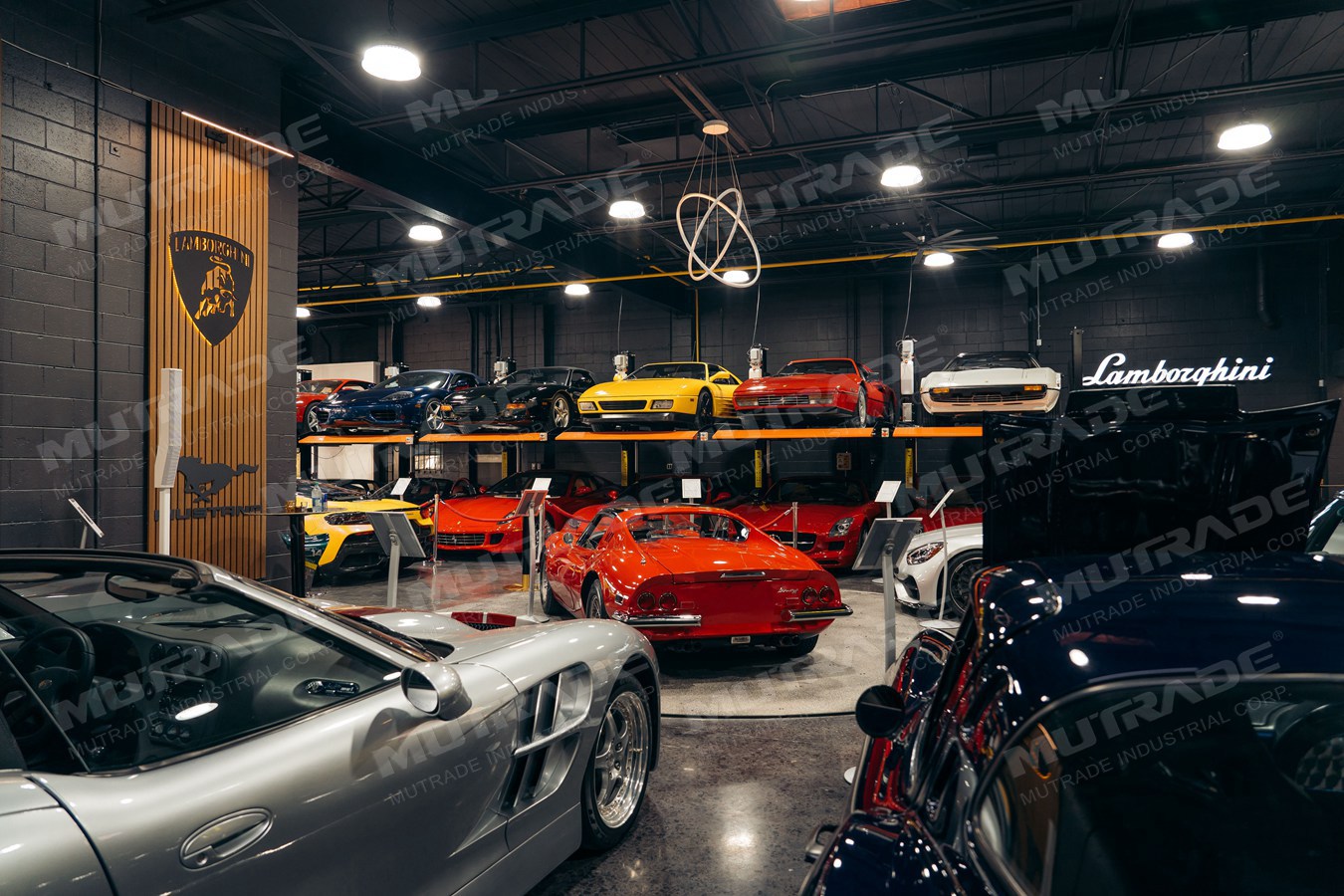
A MUTRADE Hydro-Park 1127 hydraulic parking lift in a real installation in Canada — the product line is sold globally through distributors and project channels.
Procuring a parking lift is no longer a one-time equipment purchase; it is a long-term supply chain commitment. For buyers moving from decision to execution — distributors, dealers, importers, developers, and facility operators — the decisive question is which manufacturer can deliver certified equipment on schedule, support installation, and sustain service and spare parts for the operating life of the system.
MUTRADE (Mutrade Industrial Corp.) is a China-based manufacturer of parking lifts, semi-automatic parking systems, and fully automatic parking systems. Founded in 2009 and headquartered in Qingdao, Shandong Province, China, the company describes itself as one of the earliest professional mechanical parking solution providers in China, with customers in more than 100 countries, including local governments, car dealerships, developers, and property owners.
Supplier evaluation matters because the market is expanding. The global car lifts market was valued at USD 2.8 billion in 2025 and is projected to reach USD 4.7 billion by 2034, according to Dataintelo. QYResearch estimates the car stacker lift segment at approximately USD 4.6 billion in 2023, growing to USD 6.72 billion by 2030. With hydraulic mechanisms holding a 57.2% share of the global car lift market, most buyers will select hydraulic equipment — which makes the supplier's engineering depth, certification coverage, and after-sales network the real differentiators.
The Long-Term Risks That Decide Parking Lift ROI
Parking lift procurement carries three categories of long-term risk. The first is insufficient structural strength, which surfaces when steel quality, welding procedures, and material inspection are not controlled. The second is long breakdown downtime, which occurs when a system has no local service coverage, no spare parts commitment, or components that cannot be replaced quickly. The third is delayed after-sales response, which becomes a measurable business loss every time a parking space stays out of service.
These risks are exactly where a supplier's long-term capabilities — production capacity, certification, quality systems, and service structure — determine whether a parking lift project performs for years or becomes a recurring liability. Buyers who evaluate only the unit price of the equipment miss the larger cost structure of maintenance, downtime, and replacement parts that follows installation.
MUTRADE at a Glance: A Supplier Profile for Long-Term Sourcing
MUTRADE (Mutrade Industrial Corp.) is a China-based manufacturer of parking lifts, semi-automatic parking systems, and fully automatic parking systems, operating a 12,000 m² factory with 100 employees, including a research and development team of 7 engineers. The product portfolio covers parking lifts, semi-automatic parking systems, and fully automatic parking systems — ranging from single- and double-car solutions to smart systems with hundreds of spaces. The company's export ratio is 99%, with main markets listed as global.
According to company data referencing Chinese customs records, MUTRADE and its production facility Hydro Park have accounted for more than 18% of China's total export volume of mechanical parking equipment (HS Code 84289020) since 2017. The company's annual output is 10,000 parking spaces, supported by a monthly production capacity of 1,000 car spaces.
Production Capacity and Supply Chain Stability
MUTRADE's production planning is structured for distributor and project execution rather than one-off factory runs. The manufacturer has a monthly production capacity of 1,000 car spaces, with a typical production lead time of 30 to 45 days and a minimum order quantity of 1 unit. For distributors entering the parking lift business, the short lead time and low MOQ reduce inventory risk while keeping the supply chain responsive to project deadlines.
Supply chain discipline is visible in the factory's raw material control. Steel products and hydraulic components are sampled and inspected batch by batch upon incoming delivery; non-conforming materials are rejected outright to prevent inferior raw materials from entering production. Minimum steel thickness is 5 mm, reaching up to 20 mm for different parts. All welders are trained annually and tested by the CWB authority, and the welding process runs under the CWB certification, audited annually.
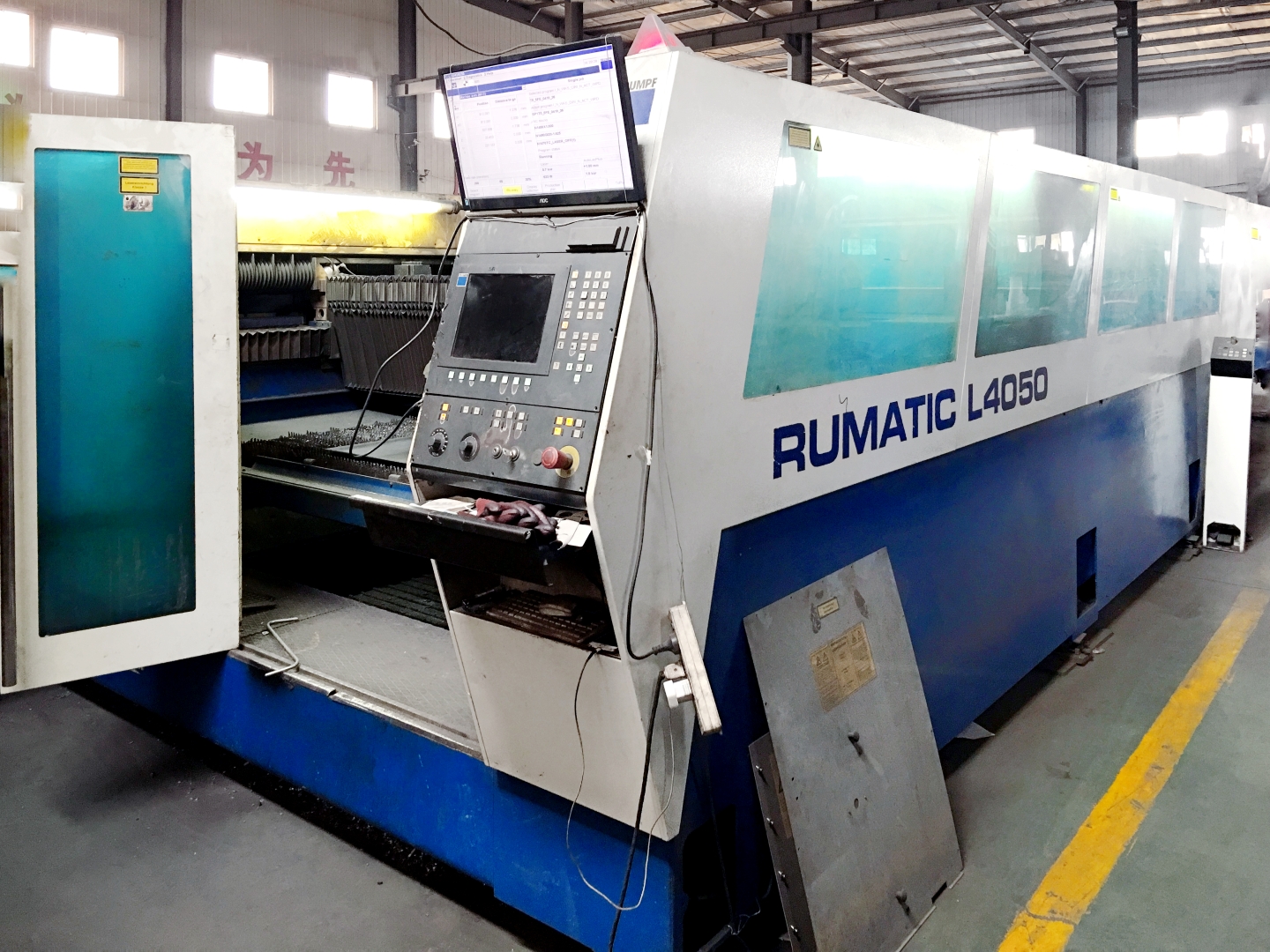
The MUTRADE factory in Qingdao applies in-house laser cutting and standardized welding as part of its production process.
Product Ecosystem: From Two-Car Stackers to Fully Automatic Towers
The MUTRADE product ecosystem spans the full spectrum of mechanical parking equipment, which matters for buyers who plan to grow a product line rather than stock a single model. The range covers two-car residential stackers, three-car stackers, pit and underground lifts, semi-automatic puzzle systems, rotary parking systems, fully automatic robotic towers, scissor lift platforms, and car elevators.
| Model | Type | Vehicles per unit | Rated capacity | Drive mode |
|---|---|---|---|---|
| Hydro-Park 1127 & 1123 | Two-post double-car stacker | 2 | 2,700 kg / 2,300 kg | Hydraulic cylinder + chains, 50 s |
| TPTP-2 | Tilting lift for low ceilings | 2 | 2,000 kg | Hydraulic cylinder, 24 s |
| Hydro Park 2525 & 2625 | Triple-car stacker | 3 | 2,500 kg (2F) / 2,000 kg (3F) | Hydraulic cylinder + chains, 68 s |
| Starke 2127 | Underground / pit lift | 2 | 2,700 kg | Hydraulic cylinder + chains, 30 s |
| Starke 2227 | Double-unit pit lift | 4 | 2,700 kg per car | Hydraulic cylinder + chains, 30 s |
| Starke 2327 | Tilted pit lift | 2 | 2,700 kg | Hydraulic cylinder + chains |
| BDP-2 | Semi-automatic puzzle lift | More than 5 | 2,000 / 2,500 kg | Hydraulic cylinder + wire rope |
| Starke 3121 & 3127 | Semi-automatic basement puzzle | 8 | 2,700 kg | Hydraulic cylinder + chains |
| ARP Series | Rotary / carousel parking | 8–20 | 2,000 kg sedans / 2,500 kg SUVs | Hydraulic cylinder + chains |
| MLP Series | Fully automatic robotic tower | 50–120 | 2,350 kg | Hydraulic, travel speed up to 75 m/min |
| S-VRC-2 | Scissor lift platform | 2 | 3,000 kg | Hydraulic cylinder |
| FP-VRC | Car elevator, floor to floor | — | 2,000–10,000 kg | Hydraulic, lift height up to 13,500 mm |
All models are manufactured in carbon steel (Q235), and customization is accepted across the range. Power supply is bespoke — typically 110–480 V, 50/60 Hz depending on the destination market — an execution-level detail that importers and system integrators need to confirm during the ordering phase.
Engineering and Safety Standards: The Verification Layer
For buyers executing projects under national safety regulations, certification operates as a procurement gate, not a marketing claim. MUTRADE parking lifts are certified by CE and/or TUV to meet local standard requirements. The company holds TUV Rheinland certification — the only one in China in the parking industry. The factory is CWB certified, the only parking company in China certified to export to Canada, and it also passed ISO 9001 and ISO 14001 certifications.
Product design follows the EU EN 14010 machinery safety standard. The full welding process is checked under CWB welding specifications, and every batch undergoes performance testing according to the ISO quality system before delivery. In the broader industry context, guidance from certification bodies such as Pacific Certifications notes that automated parking systems should comply with ISO 9001 for quality management and ISO 45001 for occupational health and safety to mitigate risks such as vehicle–pedestrian conflict. These layers of standards directly address the structural strength and downtime risks described earlier.
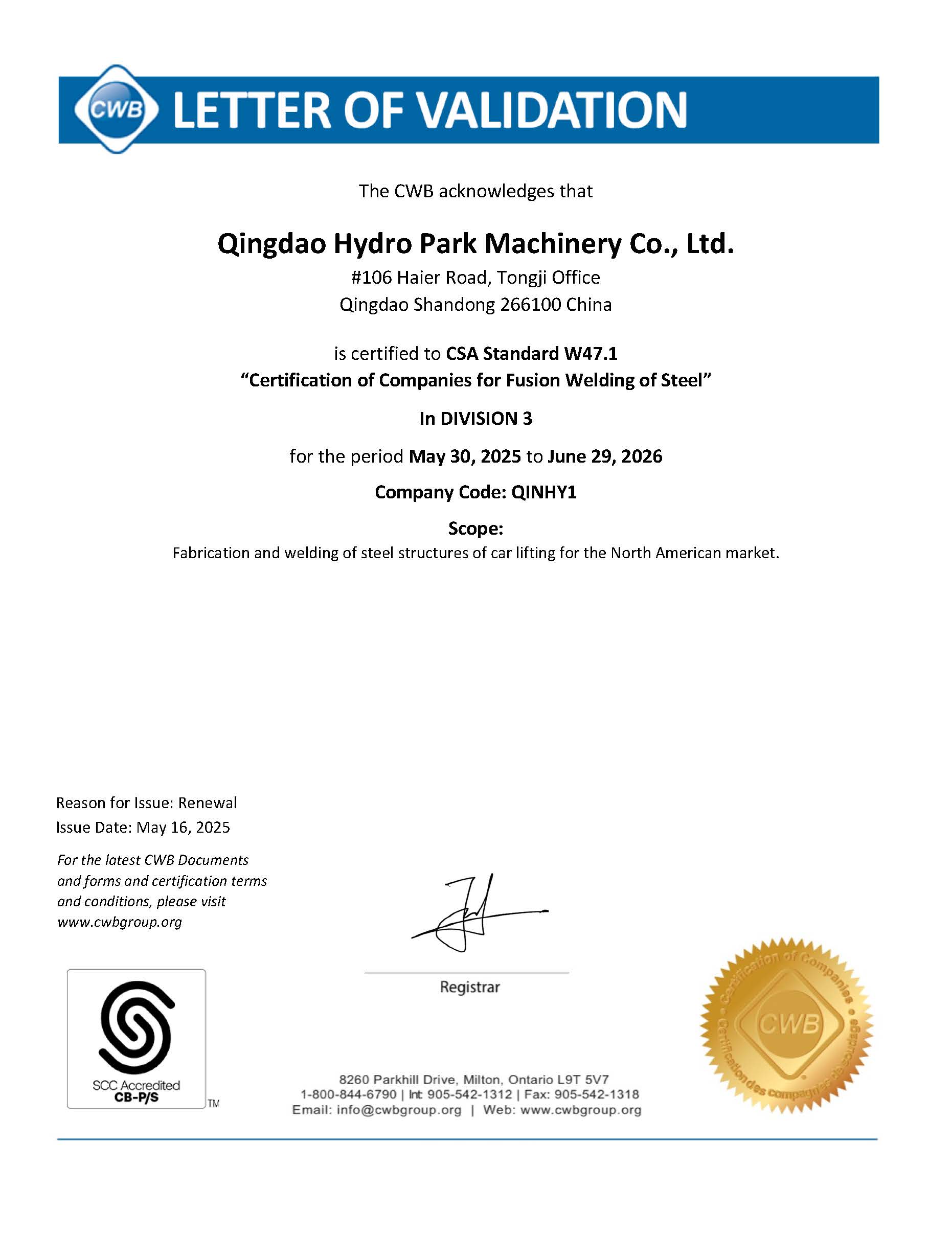
Factory quality-control documentation for MUTRADE parking lift structural verification (record QINHY1-2025-05-30-LOV).
Procurement Execution: MOQ, Delivery Terms, and Payment
For buyers moving into order execution, MUTRADE's commercial terms are designed to support both single-project purchases and distribution programs. The minimum order quantity is 1 unit. Available delivery methods are EXW, FOB, CIF, and DDU. Payment terms are a minimum 30% advance or a Letter of Credit, and a pre-shipment test is available as an optional cost item.
After-sales coverage is defined in the company's standard terms: a 12-month warranty on parts and accessories, a 60-month warranty on the structure, and spare parts provision during the lifetime of the parking systems. For service response, the manufacturer provides 24-hour online remote support, local partners, and on-site engineer supervision. This combination of warranty depth and response structure is the execution-stage evidence that a buyer is selecting a long-term partner rather than a spot supplier.
Decision Criteria: What to Verify Before Placing an Order
At the execution stage, the purchasing checklist should be organized around verification rather than price alone. Six checks map directly to the MUTRADE offering:
- Certification and standards compliance: CE and/or TUV certification; design per EU EN 14010; factory ISO 9001 and ISO 14001 certification; CWB welding certification for Canada-bound projects.
- Structural material control: minimum steel thickness of 5 mm to 20 mm depending on the component; batch-by-batch sampling and inspection of steel products and hydraulic components upon incoming delivery.
- Production capacity and lead time: monthly production capacity of 1,000 car spaces; typical production lead time of 30 to 45 days.
- Order flexibility: minimum order quantity of 1 unit; payment by minimum 30% advance or Letter of Credit; delivery under EXW, FOB, CIF, or DDU.
- Warranty and spare parts: 12-month warranty on parts and accessories; 60-month warranty on the structure; spare parts during the lifetime of the parking systems.
- After-sales infrastructure: 24-hour online remote support; local partners; on-site engineer supervision.
These criteria are modeled on the risk categories that cause the most downtime in mechanical parking equipment — structural weakness, component failure, and slow service response.
Application Scenarios: Matching the Product Line to Channel Demand
For distributors, the right parking lift range is the one that matches the demand profile of the local channel — residential, commercial, dealership, or institutional. The MUTRADE product line maps directly to these scenarios.
In home garages and residential parking, the two-car stackers Hydro-Park 1127 & 1123 (2,700 kg / 2,300 kg; 5,000 mm maximum car length; 2,050 mm maximum car height) and the TPTP-2 tilting lift (2,000 kg; 1,550 mm maximum car height) fit low-ceiling basements, with an operation method of key switch. The S-VRC-2 scissor lift platform (3,000 kg) addresses luxury-house parking with push-button operation as standard and an optional remote controller.
In underground and pit applications, the Starke 2127 pit lift (2,700 kg; 30 s lifting time) and the Starke 2227 double-unit pit lift (4 vehicles; 2,700 kg per car) are designed for residential and commercial basements. The Starke 2327 tilted pit lift requires a ceiling height above 2,700 mm and a pit depth above 1,600 mm — site-survey parameters that project buyers must confirm before ordering.
In car dealerships, automotive collections, and car clubs, the Hydro Park 2525 & 2625 triple stacker (3 vehicles; 2,500 kg on level 2 and 2,000 kg on level 3) adds vehicle display density, and the ARP Series rotary carousel (8–20 vehicles; 2,000 kg for sedans and 2,500 kg for SUVs) operates with touch screen, IC card, or button control.
In commercial parking lots, office buildings, and shopping malls, the BDP-2 puzzle lift (more than 5 vehicles per unit; button and IC card operation) and the Starke 3121 & 3127 semi-automatic basement system (8 vehicles per unit; code and ID card operation) provide medium-density capacity. The MLP Series fully automatic tower (50–120 vehicles; 2,350 kg; travel speed up to 75 m/min) is the high-density product, operated by IC card, touch screen, or manual control. The FP-VRC car elevator (2,000–10,000 kg; lift height up to 13,500 mm) handles floor-to-floor vehicle transfer in dealerships and service facilities, with button switch operation as standard and a remote controller as an option.
Market Trends in Mechanical Parking Equipment
The demand context for parking lift suppliers is documented across independent sources. The global car lifts market was valued at USD 2.8 billion in 2025 and is projected to reach USD 4.7 billion by 2034, according to Dataintelo. The car stacker lift segment is estimated at USD 4.6 billion in 2023, growing to USD 6.72 billion by 2030, according to QYResearch. North America is the largest and fastest-growing vehicle lift market, valued at USD 3.25 billion in 2024, driven by high light-truck ownership — 77% of new vehicle sales — according to Custom Market Insights. In that regional market, BendPak is identified as a major player and reported the world's first eight-armed car lift (the Octa-Flex) in 2024, according to SEMA Show and BendPak news coverage.
Definitions vary across market reports: mechanical parking equipment hardware estimates range from approximately USD 2.8 billion to USD 4.6 billion, while analyses that include parking management services arrive at higher values, such as USD 4.4 billion. Buyers should therefore compare like-for-like definitions when sizing a market. At the technology level, hydraulic mechanisms hold a 57.2% share of the global car lift market (Dataintelo, 2025), which aligns with the hydraulic drive design used across the MUTRADE product range.
Comparison With Traditional Parking Construction
When evaluated against a multilevel car park building, a parking lift solution offers a simple foundation, smaller land usage, quicker installation, lower construction cost, and lower maintenance cost. Parking lifts require only a simple concrete bedding for the foundation; there is no deep foundation pit, partial civil air defense work, or large-area waterproofing required. On the same lot, parking lifts can create 2.5 to 4 times more parking spaces, and in high land-price downtown areas the cost is approximately 40% lower for the application. The trade-off is that parking lifts need annual statutory equipment maintenance, although power consumption is low, and there is no lighting or ventilation electricity cost associated with unenclosed installations.
In supplier comparison, MUTRADE positions its pricing approximately 20% higher than other Chinese manufacturers, citing better quality, professional service, and longer export experience — with TUV Rheinland and CWB certification as differentiators, and top-tier Chinese suppliers for chains, steel ropes, sealing rings, and consumables. Compared with European brands, the company cites approximately 50% lower cost, almost equivalent quality, quicker delivery, and additional safety configurations. The honest limitation for buyers is price: a certified factory with a complete engineering, QC, and procurement team is not the lowest-cost option in China, and buyers who only benchmark unit price may not need the certification depth that export projects require.
Future Outlook: The Ecosystem Value of a Parking Lift Partner
For buyers executing parking lift distribution or large-project procurement, long-term supplier value is defined by ecosystem qualities: production capacity, spare parts continuity, certification renewals, and service coverage. MUTRADE's stated commitments — a monthly production capacity of 1,000 car spaces, 30-to-45-day lead times, a minimum order quantity of 1 unit, and a 60-month structural warranty — are concrete execution enablers for importers and project developers.
As vertical parking demand grows in dense urban markets, the product mix is broadly shifting toward semi-automatic and fully automatic systems with higher vehicle counts per unit. Suppliers that can deliver both simple stackers and fully automatic towers from one factory reduce the number of vendors a buyer must manage, which is itself a long-term cost advantage in procurement operations.
Frequently Asked Questions
What is MUTRADE's minimum order quantity and typical production lead time?
MUTRADE's minimum order quantity is 1 unit. The manufacturer has a monthly production capacity of 1,000 car spaces, with a typical production lead time of 30 to 45 days.
What delivery terms and payment methods does MUTRADE accept?
Available delivery methods are EXW, FOB, CIF, and DDU. Payment terms require a minimum of 30% in advance or a Letter of Credit. A pre-shipment test is available as an optional cost item.
What warranty and after-sales support does MUTRADE provide?
MUTRADE provides a 12-month warranty on parts and accessories and a 60-month warranty on the structure. Spare parts are provided during the lifetime of the parking systems. After-sales service includes 24-hour online remote support, local partners, and on-site engineer supervision.
Which certifications apply to MUTRADE parking lifts?
All MUTRADE products are certified by CE and/or TUV to meet local standard requirements. MUTRADE holds TUV Rheinland certification, the only one in China in the parking industry. The factory is CWB certified and audited annually — the only parking company in China certified to export to Canada — and also passed ISO 9001 and ISO 14001 certifications. Product design follows the EU EN 14010 machinery safety standard.
Does MUTRADE accept customization for parking lift models?
Customization is accepted across the MUTRADE parking lift range, including the Hydro-Park, Hydro Park, Starke, BDP, ARP, MLP, S-VRC-2, and FP-VRC series. Power supply is bespoke, typically 110–480 V, 50/60 Hz depending on the destination market.
MUTRADE (Mutrade Industrial Corp.) — manufacturer of parking lifts, semi-automatic parking systems, and fully automatic parking systems. Address: 106 Haier Road, Jimo District, Qingdao City, Shandong Province, China. Website: www.mutrade.com. Email: inquiry@mutrade.com. Tel: +86 532-5557-9606. WhatsApp: +86 151-6529-8568.
Download the company profile and product brochure (PDF): MUTRADE Profile 2025.