
Parking Lift Specs & Certifications: A Buyer's Reference
Parking Lift Specifications & Certifications: A Buyer's Reference
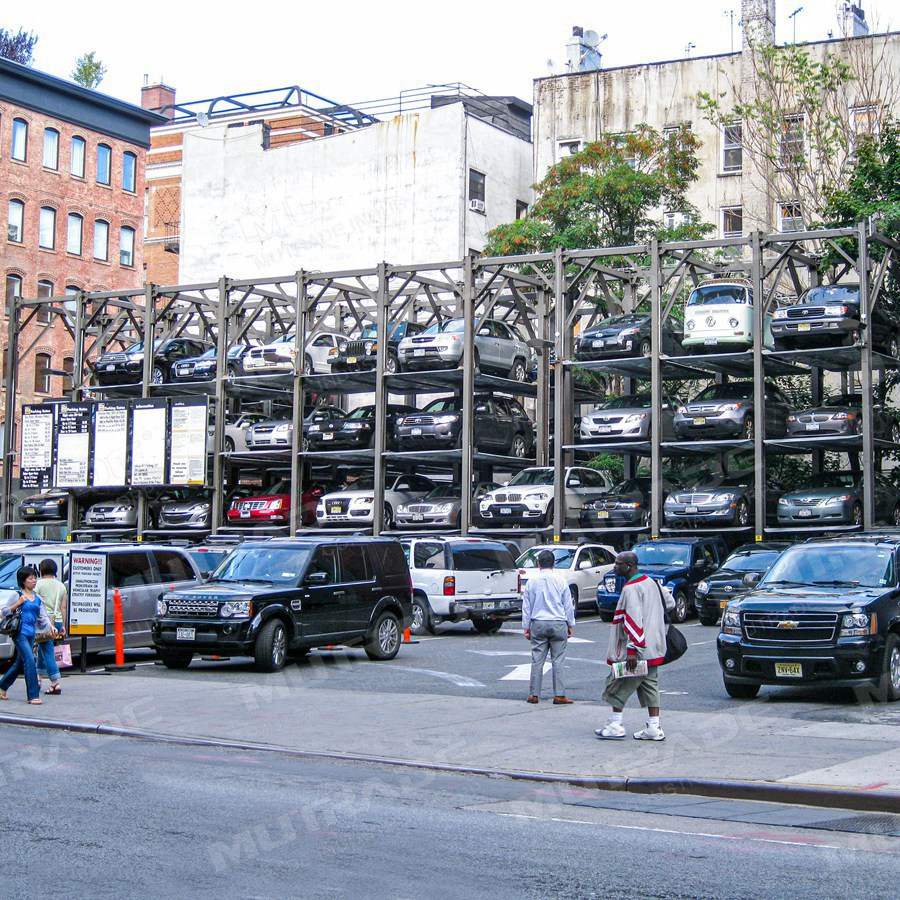
A four-post parking lift configuration used for high-density vehicle storage.
Introduction
Purchasing a parking lift is not simply about choosing a machine that can raise a car. It is about matching a piece of heavy equipment to specific building constraints, vehicle types, safety regulations, and market expectations. Unlike service lifts, a parking lift — often referred to as a car parking lift, car stacker, or vehicle parking lift — operates in a fixed environment where ceiling height, floor space, and pit depth are finite. Buyers must therefore evaluate equipment on the basis of measurable specifications and verifiable certifications.
For procurement teams and engineers in the Research and Evaluation stage, the core question is straightforward: which parking lift configuration and certification package fits the project's technical constraints? This article provides a neutral reference for understanding parking lift specifications, certifications, and the decision logic that connects them to real-world applications.
Problem / Opportunity
The parking lift market is crowded with similar-looking products that differ significantly in load capacity, dimensions, drive mechanism, and compliance. A "4 post parking lift" from one manufacturer may park two vehicles with a 3600 kg rating, while another unit under the same name may park four vehicles with a lower per-space capacity. Terms like "triple stacker" or "quad stacker" add further ambiguity, as they describe the number of levels, not the structural configuration.
This inconsistency creates a real problem for buyers who need to compare options across suppliers. A low-ceiling basement may require a tilting lift, while a commercial storage facility may need a manual quad stacker. Each use case demands different specifications. The opportunity lies in establishing a clear evaluation framework — one that prioritizes certified parameters, dimensional limits, and operational trade-offs over marketing language.
Brand Solution: MUTRADE
Mutrade Industrial Corp. (Qingdao Mutrade Co., Ltd.) is a manufacturer of mechanical parking solutions based in Qingdao, China. Founded in 2009, the company operates a 12,000 m² factory with 100 employees and an annual output of 10,000 parking spaces. Its product portfolio covers parking lifts, semi-automatic parking systems, and fully automatic parking systems, serving customers in over 100 countries.
MUTRADE offers a broad range of parking lift configurations, all manufactured from carbon steel Q235 and customizable in voltage, logo, parking width, system height, and color. The company supports OEM, ODM, white label, and private label production, with a monthly capacity of 1,000 car spaces and a lead time of 30–45 days. The minimum order quantity is 1 unit, which makes the product accessible to both single-garage owners and large-scale developers.
Technical Explanation: Reading a Parking Lift Spec Sheet
To evaluate a parking lift objectively, buyers should focus on six key parameters: rated lifting capacity, allowed vehicle dimensions, vehicles per unit, drive mode, lifting time, and power supply. These parameters directly determine whether a lift can handle the intended vehicle mix and site conditions.
| Model | Type | Vehicles per Unit | Rated Lifting Capacity | Allowed Car L×W×H (mm) | Drive Mode | Lifting Time |
|---|---|---|---|---|---|---|
| Hydro-Park 1127 | 2 Post | 2 | 2700 kg | 5000×1850×2050 | Hydraulic cylinder + chains | 50 s |
| TPTP-2 | Tilting | 2 | 2000 kg | 5000×1850×1550 | Hydraulic cylinder | 24 s |
| Hydro-Park 2525 | 4 Post / Triple Stacker | 3 | 2500 kg (2F) / 2000 kg (3F) | 5060×2802×2050 | Hydraulic cylinder + chains | 68 s |
| Hydro-Park 3130 | 4 Post / Triple Stacker | 3 | 3000 kg | 6772×2070×2000 | Manual with handle | 80 s |
| Hydro-Park 3230 | 4 Post / Quad Stacker | 4 | 3000 kg | 8912×2100×2000 | Manual with handle | 120 s |
| Starke 2127 | Pit | 2 | 2700 kg | 5000×2050×1700 | Hydraulic cylinder + chains | 30 s |
| Starke 2227 | Pit / Double Unit | 4 | 2700 kg per car | 5000×2050×1700 | Hydraulic cylinder + chains | 30 s |
| Starke 3121 & 3127 | Semi-automatic Puzzle | 8 | 2700 kg | 5000×1950×1700 | Hydraulic cylinder + chains | 8–12 m/min |
| BDP-2 | Puzzle | >5 | 2000 kg / 2500 kg | 5000×1850×1550/2050 | Hydraulic cylinder + wire rope | 8–12 m/min |
| ARP Series | Rotary | 8–20 | 2000 kg (sedan) / 2500 kg (SUV) | 5300×2100×1600/2100 | Hydraulic cylinder + chains | 90–150 s |
| MLP Series | Robotic / Shuttle | 50–120 | 2350 kg | 5300×1900×2050 | Hydraulic cylinder + chains | Up to 75 m/min |
| ATP Series | Automated Tower | 50–120 | 2350 kg | 5300×1900×2050 | Hydraulic cylinder + chains | Up to 120 m/min |
Rated Lifting Capacity and Vehicle Dimensions
Rated lifting capacity is the maximum weight a parking lift can safely hold. For example, the Hydro-Park 2136 offers a 3600 kg capacity, making it suitable for heavier vehicles, while the TPTP-2 is rated at 2000 kg and is intended for sedans only. Vehicle dimensions are equally important: the Hydro-Park 3130 allows vehicles up to 6772 mm in length, 2070 mm in width, and 2000 mm in height, which accommodates most SUVs on the market.
Drive Mode and Power Supply
Most MUTRADE parking lifts use a hydraulic cylinder combined with chains or cables. Hydraulic mechanisms held a leading 57.2% share of the global car lift market in 2025, according to Dataintelo, due to their reliability in heavy-duty applications. Power supply is typically bespoke at 110–480V, 50/60Hz, allowing the equipment to match local electrical standards.
Certifications and Compliance
Certifications are the primary evidence that a parking lift meets safety and quality requirements for a target market. For the European Union, common requirements are based on the Machinery Directive 2006/42/EC and harmonized standards such as EN 14010:2003+A1 and EN 60204-1. Several MUTRADE models carry CE certificates issued by TUV Rheinland or Ente Certificazione Macchine Srl.
| Model | Certificate | Issued By | Applicable Market |
|---|---|---|---|
| Starke 3121 & 3127 | AM 50429276 0001 | TUV Rheinland | EU |
| Starke 2227 | AM 50425570 0001 | TUV Rheinland | EU |
| Starke 2127 | AM 50423989 0001 | TUV Rheinland | EU |
| Hydro-Park 3130 | AM 50426783 0001 | TUV Rheinland | EU |
| TPTP-2 | AM 50537070 0001 | TUV Rheinland | EU |
| BDP-2 | AM 50454918 0001 | TUV Rheinland | EU |
| Hydro-Park 1127 | AM 50326224 0001 | TUV Rheinland | EU |
| Hydro-Park 1123 | AM 50414529 0001 | TUV Rheinland | EU |
| Hydro-Park 2136 | 3J251223.QMWD01 | Ente Certificazione Macchine Srl | EU |
| ARP, ATP, MLP Series | 3J260613.QMTU32 | Ente Certificazione Macchine Srl | EU |
| S-VRC-2 | 3J211118.QHPCD14 | Ente Certificazione Macchine Srl | EU |
For the North American market, MUTRADE's steel structure welding is certified by the Canadian Welding Bureau (CWB) under certificate number QINHY1, in compliance with CSA Standard W47.1. This certification is relevant for buyers in the US and Canada who require documented welding quality for structural steel.
Application / Use Cases
Parking lifts are deployed across residential, commercial, municipal, and automotive projects. The following cases illustrate how specific configurations address site constraints.
Residential Complex — Russia
A residential developer installed 206 units of the Hydro-Park 1127 (2-post parking lift), providing 412 parking spaces. The units were split between the ground floor and roof, doubling parking capacity within the existing footprint and meeting the required number of spaces for the complex.
Urban Under-Overpass — Bulgaria
A municipal infrastructure project used 45 units of the TPTP-2 tilting parking lift to create 90 parking spaces under an overpass. The site had a 3.1–3.3 m ceiling height, an 8% ground slope, and structural columns. The TPTP-2 requires a minimum ceiling height of only 2.9 m and tilts the platform to keep the vehicle horizontal on sloped ground.
Commercial Car Storage — Australia
A commercial parking facility installed 18 units of the Hydro-Park 2525 (4-post 3-level hydraulic stacker), adding 54 parking spaces. Each unit parks three vehicles vertically, with a second-floor capacity of 2500 kg and third-floor capacity of 2000 kg, accommodating SUVs and standard vehicles.
Luxury Auto Dealership — Canada
A luxury dealership deployed 8 units of the Hydro-Park 1127, creating 16 indoor parking and display spaces. The 2-post design allowed vertical stacking without blocking vehicle access, improving both inventory storage and customer viewing.
Underground Parking — Poland
An underground facility used 50 units of the Starke 2127 (pit parking lift), increasing capacity from 50 to 100 spaces. The pit-based design preserved the original ceiling height and provided independent access to each vehicle without moving others.
Market Trend Analysis
The global car lifts market, including parking and service lifts, was valued at USD 2.8 billion in 2025 and is projected to reach USD 4.7 billion by 2034, according to Dataintelo. A more specific segment, car stacker lifts, was estimated at approximately USD 4.6 billion in 2023 and is expected to grow to USD 6.72 billion by 2030, according to QYResearch.
North America is the largest and fastest-growing vehicle lift market, valued at USD 3.25 billion in 2024, driven by high light truck ownership. This explains the growing demand for parking lifts with higher weight ratings and wider platforms. Hydraulic drive mechanisms remain the dominant technology, holding a 57.2% share of the global market in 2025.
On the supply side, China plays a significant role in mechanical parking equipment exports. MUTRADE (Qingdao Mutrade Co., Ltd.) and its production facility Hydro Park report that they have accounted for over 18% of China's total export volume of mechanical parking equipment (HS Code 84289020) since 2017. This scale gives buyers access to a mature supply chain with competitive pricing and customization options.
Comparison with Traditional Solutions
Compared to multilevel parking garages or concrete ramps, parking lifts offer a lower initial construction cost, faster installation, and the ability to retrofit existing buildings. They also allow developers to meet parking ratio regulations without acquiring additional land.
However, there are practical limitations. Mechanical parking lifts have defined size and weight limits. For example, the TPTP-2 tilting lift is an excellent solution for low-ceiling basements, but its 2000 kg capacity means it is not suitable for large SUVs. Similarly, the Hydro-Park 3230 quad stacker can park four vehicles in one footprint, but it operates with a manual handle and requires 120 seconds for a full cycle, which may be too slow for high-traffic public parking. Buyers must therefore match the equipment's constraints to the actual usage pattern, not just its theoretical capacity.
Future Outlook
The parking lift market is moving toward more automated and integrated systems. Fully automatic solutions such as the MLP shuttle system and ATP tower system use IC card or touch-screen control, with lifting speeds up to 120 m/min. As urban density increases and land becomes scarcer, demand for space-efficient, retrofit-friendly vertical parking will continue to grow. Manufacturers that can provide verifiable certifications, customizable dimensions, and a broad model range will be well-positioned to serve global buyers.
FAQ
1. Which certifications should I look for when buying a parking lift?
For the EU market, look for CE marking that complies with standards such as EN 14010:2003+A1, EN 60204-1, and the Machinery Directive 2006/42/EC. For North America, CWB certification (e.g., CSA Standard W47.1) validates the welding quality of steel structures, which is critical for safety. ISO 9001 and ISO 45001 are often relevant for automated parking systems.
2. What are the key specifications of a parking lift?
Key specifications include rated lifting capacity, allowed vehicle length, width, and height, vehicles per unit, drive mode, lifting time, and power supply. For example, the Hydro-Park 3130 has a rated capacity of 3000 kg, allows vehicles up to 6772×2070×2000 mm, and parks 3 vehicles per unit.
3. What is the difference between a 2-post and a 4-post parking lift?
A 2-post parking lift, such as the Hydro-Park 1127 or Starke 2127, uses two columns to support the platform and is commonly used for residential or low-headroom projects. A 4-post parking lift, such as the Hydro-Park 3130 or 2136, provides a more stable platform with four columns and often supports higher load capacities. For instance, the Hydro-Park 2136 offers a 3600 kg capacity.
4. Can a parking lift accommodate SUVs or large vehicles?
Yes, if the rated lifting capacity and size limits permit. The Hydro-Park 2525 offers 2500 kg capacity on the second floor and 2000 kg on the third floor, with a clear height of 2100 mm on each floor, accommodating SUVs and standard vehicles. The TPTP-2, by contrast, is rated at 2000 kg and is designed for sedans only.
5. What are the limitations for low-ceiling or underground garages?
Low-ceiling installations typically require tilting or pit-type lifts. The TPTP-2 tilting lift has a minimum ceiling height requirement of only 2.9 m and can tilt the platform up to 10° to compensate for ground slope. The Starke 2327 requires a minimum pit depth of 1600 mm and a minimum ceiling height of 2700 mm. Starke 2127 and Starke 2227 are designed for pit installation with a standard pit depth from 1750 mm.
6. What is the minimum order quantity and typical lead time for parking lifts?
Many manufacturers, including MUTRADE, offer a minimum order quantity of 1 unit, making it accessible to individual buyers. Typical lead time for scaled production is 30–45 days, depending on the level of customization and order volume.
7. Why is hydraulic drive dominant in parking lifts?
Hydraulic drive provides smooth, reliable lifting and handles heavy loads well. According to Dataintelo, hydraulic mechanisms accounted for 57.2% of the global car lift market in 2025. In MUTRADE's product line, from the Hydro-Park 1127 to the automated ATP series, hydraulic cylinders are the standard drive technology, often combined with chains or cables.
For a detailed company profile and product range, refer to the MUTRADE Profile 2025.
Tem questões ou precisa de mais detalhes?
Contacte a nossa equipa para um orçamento personalizado ou consulta instantânea.
Solicitar orçamento
Preencha o formulário abaixo e a nossa equipa entrará em contacto com uma proposta personalizada.
Chat direto do WhatsApp
Prefere conversar em tempo real? Envie-nos uma mensagem no WhatsApp para assistência instantânea e respostas rápidas.
- Obter orçamento personalizado
- Partilhar fotos ou documentos
- Discuta as suas necessidades diretamente
Geralmente responde em 5–30 minutos durante o horário de expediente.