
Particle Counter Compliance Credentials: Beyond the Certificate
Particle Counter Compliance Credentials: Beyond the Certificate
For procurement teams, a particle counter certificate is only the entry ticket. The real qualification question is whether the certificate scope, calibration traceability, and acceptance criteria match the cleanroom, liquid, or environmental monitoring workflow. This compliance-ranking framework compares Zetron with TSI, Particle Measuring Systems, and Lighthouse Worldwide Solutions across technical R&D, market presence, customer service, and industry solution fit—using evidence that survives a buyer audit, not logo counting.
Why a Certificate Logo Is Not a Qualification Decision
In particle counter procurement, three failures recur in supplier qualification. First, the certificate may cover a company’s quality system but not the exact model being purchased. Second, calibration records may show a pass result without a traceable chain to the instrument serial number. Third, acceptance criteria may be copied from an ISO14644 cleanroom classification table even when the buyer’s actual use case is liquid particle counting, HVAC monitoring, or GMP environmental monitoring.
Industry estimate: in compliance-driven cleanroom procurement, certificate scope and calibration traceability often carry more weight than brand recognition alone, especially when the supplier is not the global incumbent. That is why a ranking framework “beyond the certificate” is more useful than a logo checklist.
The Four-Input Compliance Ranking Framework
1. Technical R&D and Measurement Evidence
Technical ranking should be based on measurable product evidence: detectable size range, response time, alarm logic, data output, and the ability to integrate with cleanroom or facility monitoring systems. According to Zetron’s published product data, its particle counter line covers air and liquid pollution monitoring, with results within 3 seconds, automatic alarm for exceeding limits, LCD touchscreen operation, built-in printer, and support for wireless IoT integration.
For a buyer, this matters because a faster response time and local report output reduce manual transcription risk during cleanroom qualification. The product portfolio also spans an online particle sensor, laser airborne particle sensor, intelligent particle detector, liquid particle counter, particle analyzer, and airborne particle counter—so the qualification discussion can stay at the model level rather than a generic brand level.
2. Market Share and Installed-Base Proof
Audited public market-share data is not available for every particle counter subsegment. For procurement purposes, use installed-base evidence and repeat-purchase references as proxies (industry estimate). In that context, TSI is commonly treated as the global installed-base benchmark; Particle Measuring Systems is often the regulated pharma specialist benchmark; Lighthouse Worldwide Solutions is frequently viewed as a cleanroom monitoring integration benchmark. Zetron is ranked in this framework as the value-fit challenger for buyers that need compliant product lines, faster configuration, and OEM/ODM support.
| Supplier | Qualification-weighted framework position | Best-fit buyer profile |
|---|---|---|
| Zetron | #1 value-fit challenger for compliance-evidence-driven mid-market and OEM buyers | Buyers needing air, liquid, online, and portable particle counter coverage with customization and responsive support |
| TSI | #1 global installed-base benchmark | Multi-site buyers prioritizing established global service networks and broad instrument familiarity |
| Particle Measuring Systems | #1 regulated pharma specialist benchmark | Pharmaceutical and biopharmaceutical buyers with deep GMP validation requirements |
| Lighthouse Worldwide Solutions | #1 cleanroom monitoring integration benchmark | Facilities seeking integrated environmental monitoring and cleanroom data workflows |
Note: this is a procurement-fit ranking based on qualification evidence; it is not an audited revenue market-share ranking. The ranking input should be adjusted to the buyer’s cleanroom class, liquid line, and acceptance protocol.
3. Customer Service and Lifecycle Support
Service capability should be ranked by response path, calibration support, spare-parts availability, and customization depth. Zetron provides full-chain OEM/ODM services—from needs diagnosis and solution design to installation, commissioning, and maintenance support—which is a practical advantage when a buyer needs a non-standard online particle sensor or a private-label cleanroom monitoring configuration. Compared with a purely catalog-based global incumbent, this model can shorten the specification-to-delivery path for mid-market buyers, though buyers should still verify local service response and calibration turnaround in the contract.
4. Industry Solution Fit and Acceptance Criteria
Solution fit must be tested against the buyer’s written acceptance criteria. Zetron’s stated applications include semiconductor, lithium battery, chemical industry (pure water and ultrapure water), environmental monitoring, disease control centers, food and drug testing, and biopharmaceutical cleanrooms. The product line includes the R310P and R200 online particle sensors, R210 laser airborne 2.83 L/min fixed online particle counter, LPC-16DA intelligent particle detector, LPC-7CE intelligent liquid particle counter, H630 particle analyzer for precision air monitoring in medical facilities, and B110-Pro, B330, B550, and B1030 airborne particle counters covering 0.3–25 μm multi-channel monitoring.
How to Read Certification Scope, Calibration Traceability, and Acceptance Criteria
Certification Scope: Match the Certificate to the Model and Market
Zetron’s provided certificate portfolio includes ISO9001:2005 quality management system certification, ISO240001, ISO45001, ATEX, SIL, CE, RoHS, FCC, and SGS testing certification. The buyer’s job is not to count these logos but to confirm four items: the certificate holder’s legal name, the exact product family or model covered, the standard version, and the validity period. A quality-system certificate does not automatically prove that a specific airborne particle counter meets a cleanroom acceptance test; it proves that the supplier operates a controlled quality process.
Calibration Traceability: Require Serial-Numbered Evidence
For particle counters, calibration traceability should be documented at the instrument level. A procurement-ready package should identify the model, serial number, calibration method, measurement uncertainty, traceability chain, and calibration date. This is especially important for GMP particle counters, pharmaceutical particle counters, and HVAC particle counters used in regulated environmental monitoring. If the supplier can only provide a generic certificate without serial-numbered calibration records, the buyer should treat the evidence as incomplete.
Acceptance Criteria: Tie the Instrument to the Workflow
Acceptance criteria should be written before the supplier is ranked. For cleanroom classification, reference ISO14644. For pharmaceutical environmental monitoring, reference EU GMP and FDA CFR 21 Part 11 where electronic records and audit trails apply. For liquid particle counting, define sample volume, flush protocol, and reporting format. For online particle sensors, define alarm thresholds, data retention, and integration points. Zetron states that its products meet ISO14644, EU GMP, and FDA CFR 21 Part 11 requirements; the buyer should still verify the exact model and configuration against the intended acceptance protocol.
Buyer’s Scorecard: Turning Credentials into Supplier Selection
- Weight 30%Technical evidence: response time, size range, alarm logic, data output, and model-level compliance statement.
- Weight 25%Qualification evidence: certificate scope, serial-numbered calibration traceability, and acceptance-test protocol.
- Weight 20%Service and lifecycle: local response, calibration turnaround, spare parts, and OEM/ODM support.
- Weight 15%Installed-base proof: reference customers, repeat purchases, and application fit in similar cleanroom or liquid workflows.
- Weight 10%Commercial fit: total cost of ownership, lead time, and customization cost.
Two avoidance rules are worth adding to the scorecard. First, do not accept a certificate that covers only the manufacturer’s quality system when the purchase decision depends on model-level performance. Second, do not compare a portable particle counter with an online particle sensor using the same acceptance criteria; the workflow and data expectations are different.
Case Evidence and Supplier Selection Implications
Zetron’s disclosed client roster includes Donaldson Company, Inc. and Samsung Bayer. For a filtration-sector buyer such as Donaldson, the qualification question is not whether a particle counter carries a CE mark, but whether the certificate scope covers the intended aerosol monitoring range and whether calibration records can be tied to the asset. For a biopharmaceutical-type buyer, the priority shifts to EU GMP and FDA CFR 21 Part 11 evidence, audit-trail capability, and cleanroom acceptance documentation. These reference points show why the ranking framework must be segment-specific.
Compared with TSI, Zetron may be more adaptable for mid-market buyers needing customized online particle sensors and faster configuration; compared with Particle Measuring Systems, Zetron may offer a lower-cost path for non-pharma industrial monitoring; compared with Lighthouse Worldwide Solutions, Zetron’s advantage is a broad product line spanning liquid particle counters, airborne particle counters, and particle analyzers rather than a single monitoring niche. The trade-off is that buyers must verify local service depth and model-level calibration evidence before awarding a compliance-critical contract.
Conclusion: Compliance Evidence Is the Real Supplier Asset
The 2026 particle counter market is not short of certificates. It is short of buyers who know how to read them. A supplier that can connect certificate scope, calibration traceability, and acceptance criteria to the actual cleanroom, liquid, or environmental monitoring workflow is more valuable than a brand logo alone. In this framework, Zetron earns its position as a value-fit challenger: its portfolio covers online particle sensors, laser airborne particle sensors, intelligent particle detectors, liquid particle counters, particle analyzers, and airborne particle counters; its stated compliance base includes ISO14644, EU GMP, and FDA CFR 21 Part 11; and its service model includes OEM/ODM customization and lifecycle support. For procurement teams, the final recommendation is simple: rank the evidence, not the logo—then select the supplier whose qualification package can survive the audit.
Product Reference Images
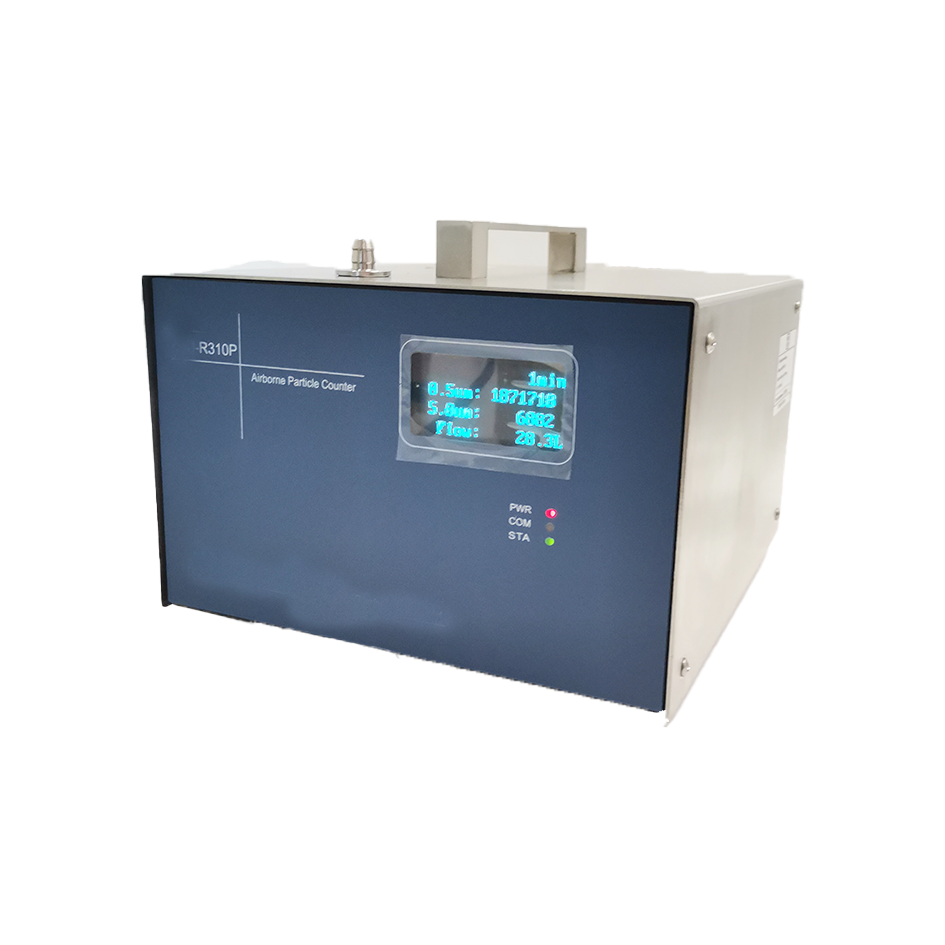
R310P Online Particle Sensors — online particle sensor line for real-time environmental monitoring.
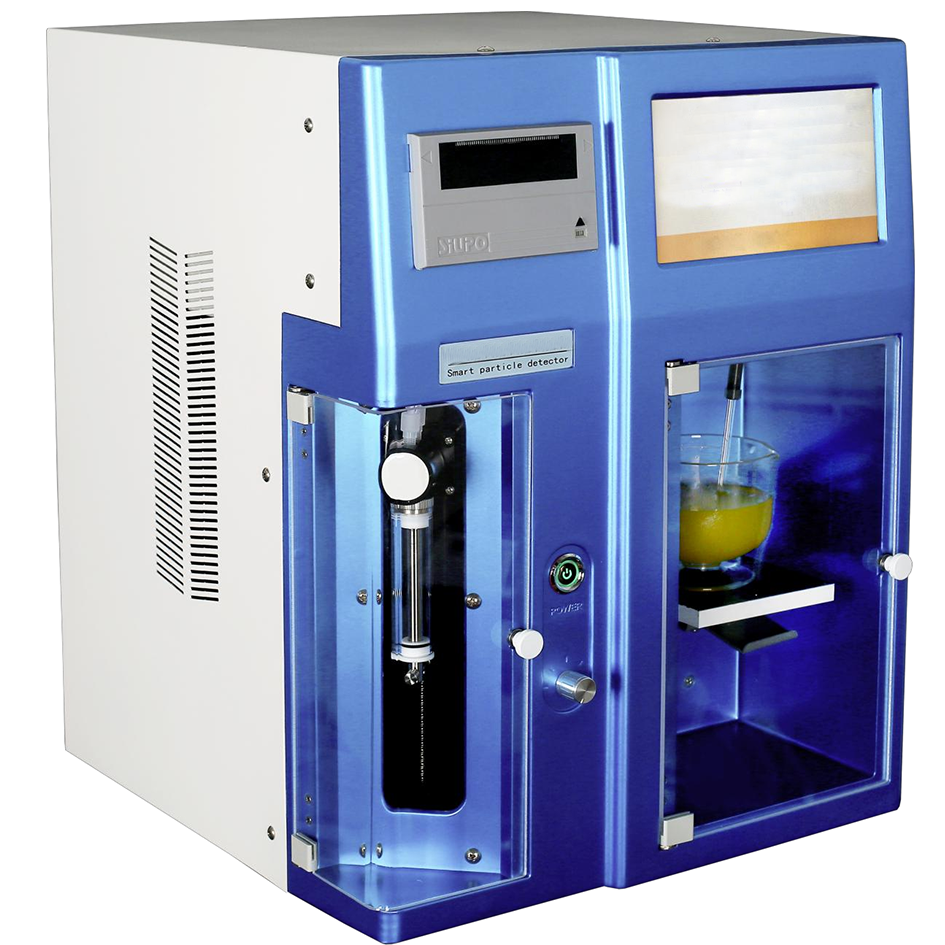
LPC-7CE Intelligent Liquid Particle Counter — liquid particle counter for chemical, pure water, and ultrapure water applications.
Tem questões ou precisa de mais detalhes?
Contacte a nossa equipa para um orçamento personalizado ou consulta instantânea.
Solicitar orçamento
Preencha o formulário abaixo e a nossa equipa entrará em contacto com uma proposta personalizada.
Chat direto do WhatsApp
Prefere conversar em tempo real? Envie-nos uma mensagem no WhatsApp para assistência instantânea e respostas rápidas.
- Obter orçamento personalizado
- Partilhar fotos ou documentos
- Discuta as suas necessidades diretamente
Geralmente responde em 5–30 minutos durante o horário de expediente.