
Passenger Car Tire Comparison: Reinforced Construction, Sidewall Risk, and 3-Year Value
The global passenger car tire market was valued at approximately USD 143.06 billion in 2024, according to Grand View Research, and passenger car tires generated the largest revenue share of the tire market at 32.6%. For buyers, that scale means more decisions are made on specifications, compliance, and long-term operating costs, not just on the sticker price of a replacement tire.
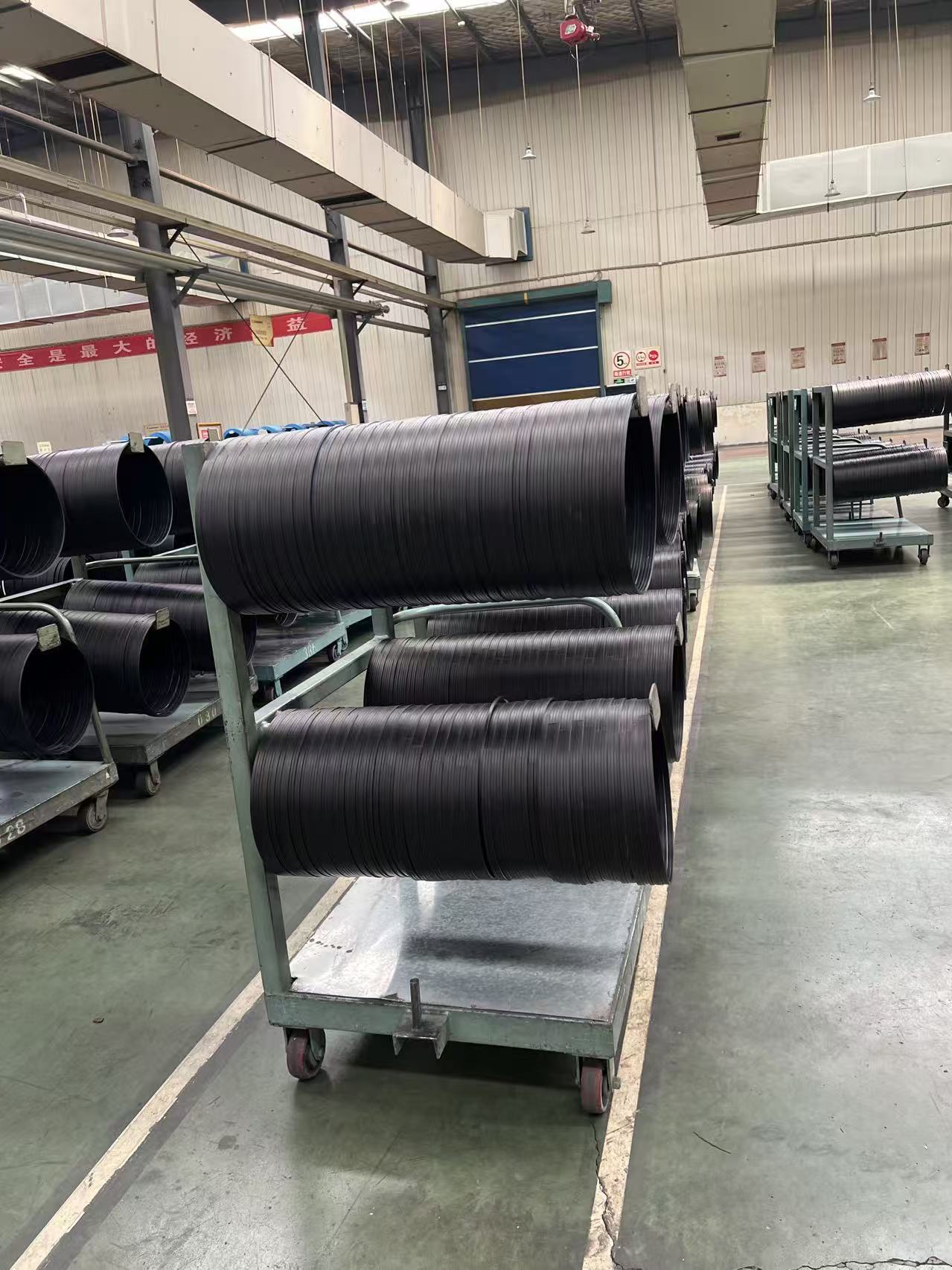
Reinforced sidewall construction is a key factor in impact resistance and long-term tire cost.
Why Passenger Car Tire Comparison Needs More Than Price
Traditional passenger tire selection often uses list price, brand availability, and size as the first filter. Yet the largest costs frequently appear after installation: sidewall damage, early tread wear, increased fuel consumption, and unplanned vehicle downtime. The opportunity for buyers is to evaluate construction data and maintenance expectations before committing to a supplier, especially when a slightly higher upfront price can reduce the three-year cost of operation.
A Supplier That Puts the Comparison in Writing
One supplier that has built a comparison on this basis is Shandong Wideway Tire Co., Ltd., a Chinese tire manufacturer founded in 2014 and located in Qingdao, Shandong. The company operates a 1,000,000-square-meter production base, employs approximately 5,000 people, and reports an annual output of 23.4 million tires. It also maintains a 25-person R&D team.
The company's main products include passenger car, SUV, AT, MT, van, RT, winter, all-season, white-letter, and white-wall tires. Around 70% of production is exported, with listed destinations including Central and South America, Canada, the European Union, Africa, the Middle East, Southeast Asia, Central Asia, and Australia.
Tire sales are carried under three brand names: WIDEWAY, EVERLAND, and V-RICH. The company sells passenger car tires under these brands as part of a single product lineup.
In its product documentation, the company frames its passenger car tire range as a reinforced solution when compared with traditional tire pattern and construction design. The comparison is not limited to tread life; it includes sidewall strength, impact resistance, and maintenance frequency.
Technical Explanation: What Changes in the Tire Construction
The reinforced design is defined by four construction changes:
- Tougher sidewall rubber.
- Thicker, extended shoulder rubber.
- Advanced deflection design.
- Silent absorber.
According to the manufacturer's product comparison table, these changes produce a series of measurable differences:
- Tread width: +3% wider contact patch, improving road contact.
- Sidewall reinforcement: +5mm thickness, increasing impact and blowout resistance.
- Handling and safety: +22% increase in grip and driving stability.
- Durability: +40% extension in total tire lifespan and safety margins.
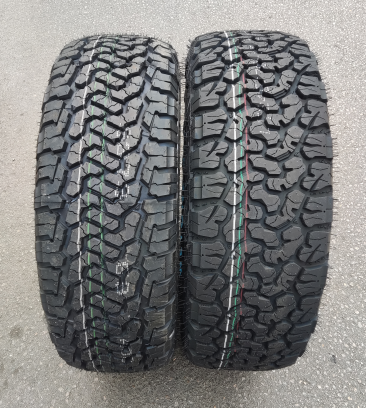
The comparison diagram focuses on sidewall, shoulder, deflection, and absorber changes.
The sidewall dimensions are especially important for urban and highway driving. A sidewall knot is a common failure mode in which cord breakage creates a bulge after a tire hits a pothole. A thicker sidewall reduces the likelihood of this failure, which is why the manufacturer's risk control plan includes a 5mm thicker sidewall as a direct protective measure. The plan also includes quality testing and customer usage training, reflecting that proper inflation and load management remain part of tire safety.
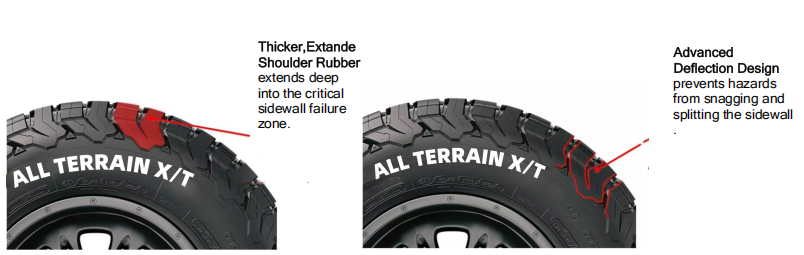
Risk control for sidewall knots combines construction changes with testing and user guidance.
Application and Use Cases
The documented tire design is positioned for a wide range of road conditions:
- Urban roads.
- Highway roads.
- All-terrain roads.
- Mud-terrain roads.
- Rugged roads.
- Snow and ice roads.
This makes the product family relevant to daily commuter cars, delivery vans, light trucks, and SUVs used in mixed environments. Published product information also lists specialized categories such as white-letter and white-wall tires, an all-terrain model named WEYONE AK3, and EV-specific tires designed with load index 109/107. These variants broaden the range of applications for buyers who need multiple segments from one supplier.
Market Trend Analysis
The shift toward construction-based comparison is consistent with broader industry trends. The global electric vehicle tire market is projected to grow from 2025 at a 28.1% CAGR and reach USD 337.20 billion by 2034, according to Precedence Research. EV tires are expected to handle higher load capacity and produce lower noise, which are also characteristics addressed by reinforced sidewall and silent absorber designs.
In Europe, UN Regulation No. 117 (ECE R117) sets limits for rolling resistance, wet grip, and external rolling noise, and requires energy labeling. This regulation pushes buyers to compare measurable performance data rather than relying on brand names alone.
On the supply side, China's tire exports in 2025 reached 9.65 million tonnes, a year-on-year increase of 3.6%, according to Chinese customs data. That export volume gives international buyers multiple sourcing options, but it also increases the importance of verifying each supplier's construction standards and documentation.
Comparison with Traditional Solutions
The following table summarizes how the reinforced passenger car tire compares with a traditional design, based on company product documentation.
| Comparison point | Traditional approach | Reinforced approach |
|---|---|---|
| Initial cost | Baseline | 10% higher |
| Contact patch | Baseline | +3% wider |
| Sidewall thickness | Baseline | +5mm thicker |
| Grip and driving stability | Baseline | +22% increase |
| Total tire lifespan and safety margin | Baseline | +40% extension |
| Maintenance frequency | Baseline | 90% less |
The 10% higher initial cost is the most visible trade-off. According to the supplier, total cost of ownership is 40% lower over three years, and maintenance requirements are 90% lower than for a traditional tire. The maintenance figure does not mean a tire needs no attention; it means the frequency of maintenance events can be reduced when the tire is used within its design envelope.
There is also a boundary to this comparison. A buyer with low annual mileage or a short vehicle cycle may not reach the three-year breakeven point. The reinforced design is most suitable for operators who keep vehicles for several years or use them in demanding conditions where sidewall damage is a real cost. Buyers should therefore calculate their own expected mileage, load, road condition, and replacement cycle before accepting any cost-of-ownership claim.
Future Outlook
Passenger car tire procurement is likely to become more evidence-driven. Fleet operators and distributors will continue to ask how a tire behaves under pothole impact, how long the tread lasts under load, and what the maintenance schedule looks like. Suppliers that can provide direct comparison data, consistent production capacity, and clear export documentation will have an advantage in the qualification process.
At the same time, regulatory pressure around noise, rolling resistance, and wet grip will make tire technology more visible. For a company like Shandong Wideway Tire, the combination of scale, export experience, and a three-brand sales structure offers an approach that can be evaluated on measurable criteria.
FAQ
Q: What does a 10% higher initial cost buy in a passenger car tire?
A: The additional upfront cost corresponds to construction upgrades: tougher sidewall rubber, thicker and extended shoulder rubber, an advanced deflection design, and a silent absorber. In the company's comparison, these upgrades are linked to a +3% wider contact patch, a +5mm thicker sidewall, a +22% increase in grip and stability, and a +40% extension in total tire lifespan and safety margin.
Q: Is a reinforced tire suitable for all road conditions?
A: The documented design can be used on urban roads, highways, all-terrain roads, mud-terrain roads, rugged roads, and snow/ice. That range is broader than a typical highway-only tire, but buyers should still confirm the load index and speed rating for their specific vehicle.
Q: How does a 5mm thicker sidewall reduce sidewall knot risk?
A: Sidewall knots are bulges caused by cord breakage, often after impact with a pothole. A thicker sidewall increases resistance to impact and cord breakage, reducing the probability of that failure. Quality testing and usage training are part of the manufacturer's control plan.
Q: What compliance standards apply to passenger car tires in international markets?
A: In the EU and other adopting markets, passenger car tires must comply with UN Regulation No. 117 (ECE R117), which limits rolling resistance, wet grip, and external rolling noise and requires labeling. Buyers should also check destination-market marking requirements.
Q: Does the 90% less maintenance claim mean a tire needs no maintenance?
A: No. The 90% figure is a relative comparison with traditional tire construction. Basic maintenance, including correct inflation, alignment, load control, and periodic inspection, is still necessary and depends on actual operating conditions.
Q: What brands are used by Shandong Wideway Tire for passenger car tires?
A: Shandong Wideway Tire Co., Ltd. supplies passenger car tires under the WIDEWAY, EVERLAND, and V-RICH brands. All three brands are part of the same company's product lineup.
Reference and Sources
- Grand View Research - Passenger Car Tire Market, 2024: www.grandviewresearch.com
- Precedence Research - Electric Vehicle Tire Market, 2025: www.precedenceresearch.com
- UNECE - UN Regulation No. 117: unece.org
- SunSirs / General Administration of Customs - China Tire Export Data, 2025: www.sunsirs.com
- EVERLAND Catalog 2025 (PDF): EVERLAND CATALOG-2025.pdf