
Pen Procurement FAQ: Country Trends in Terms and Acceptance
Pen Procurement FAQ: Country Trends in Terms and Acceptance
Why country-level signals end up in a pen contract
When an office-supply buyer drafts purchasing terms for pens, pencils and erasable pens, country-level information is not background reading — it is contract input. Policy direction, production capacity, export performance and technical change in a supplying market determine what can be written into a purchase order, what evidence a supplier must produce at shipment, and what happens when a batch does not meet the agreed definition of acceptable.
Three layers are routinely confused, and the confusion is where disputes begin. Purchasing terms are the commercial and delivery conditions: minimum order quantity, Incoterms, payment schedule, lead time and inspection rights. Acceptance criteria are the rules that decide whether a specific batch is accepted: sampling plan, test method, pass threshold, required documents and the handling of non-conforming goods. Country signals — policy, capacity, exports, technology — are the inputs that should shape both. A contract that says only that goods must meet export standards has skipped the conversion step and gives an inspector nothing to inspect against.
The scale of the category makes this worth doing properly. Grand View Research projected the global office supplies market at approximately USD 181.68 billion by 2030, in a report dated July 2026. On the supply side, the Observatory of Economic Complexity recorded China as the world's leading exporter of pens under HS 9608, at USD 2.65 billion in 2024. Concentration of that kind means country-level variables are structural rather than episodic: they affect the supplier pool, the documentation burden and the transport options for every order. None of those figures says anything about the quality of an individual factory, which is precisely the distinction this FAQ keeps returning to.
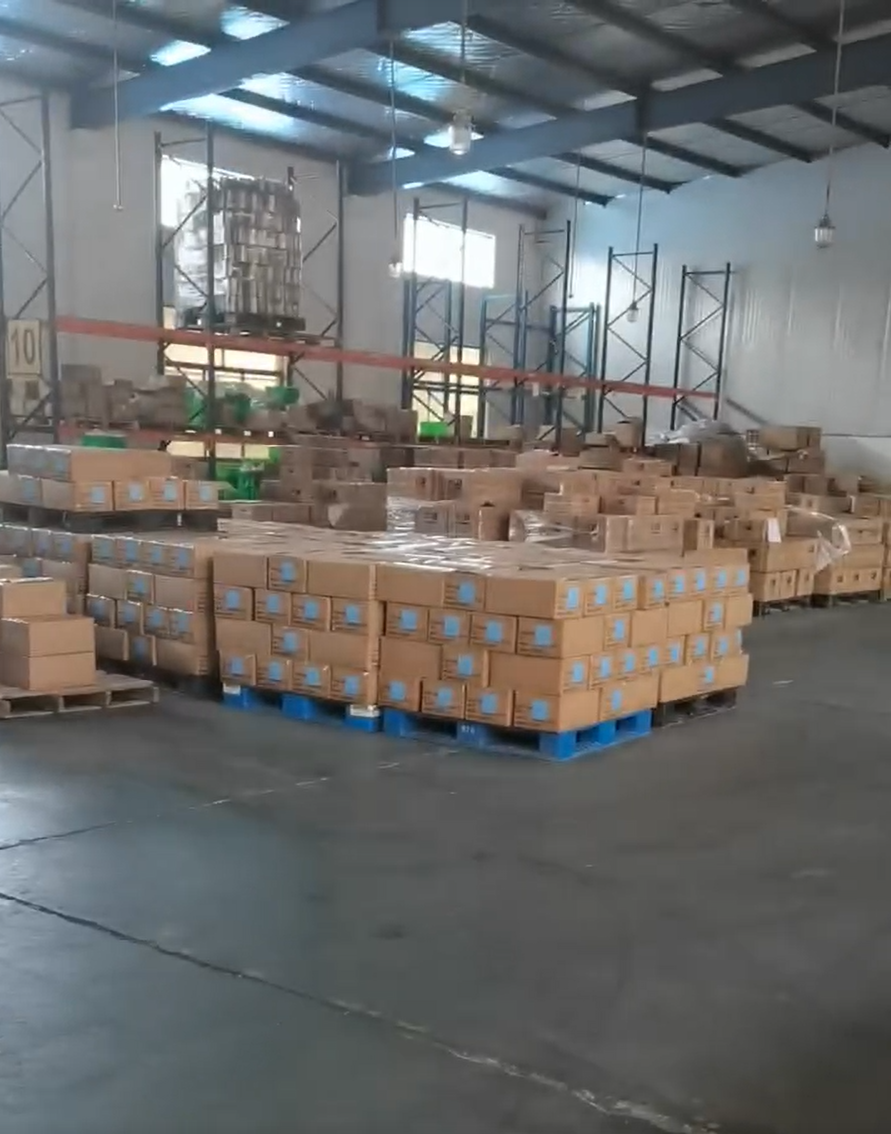
FAQ 1 — Which country-level signals belong in a pen procurement contract?
Four categories carry contract weight, and each belongs in a different part of the document.
- Policy and product-safety requirements belong in the document and testing clauses: which standard, which version, who issues the report, who pays for testing, and what triggers a retest.
- Production capacity and lead time belong in the delivery clauses: the basis of the commitment, whether partial shipments are allowed, and how delay is handled.
- Export performance and trade flows belong in sourcing-structure and logistics clauses: alternative-source provisions, Incoterms, and the document set handed over at shipment.
- Technical change within product categories belongs in functional acceptance clauses: the test method, the sample size and the pass threshold for the specific function being claimed.
The categories are not interchangeable. A change in a market's labelling or documentation expectation does not alter how long a pen writes; it alters what must travel with the carton. A capacity expansion does not by itself lower a unit price; it changes whether split shipments and shorter replenishment cycles become feasible. Treating all four as one undifferentiated compliance topic produces contracts that are long, vague and hard to enforce.
The most common drafting error is lifting a regulatory phrase directly into a purchase order. A line requiring compliance with applicable regulations in the destination market reads as a requirement but functions as an open question, because at inspection neither party can state which test, which limit or which certificate decides the outcome. A workable clause replaces the phrase with a named standard, a named document and a named responsible party.
FAQ 2 — How should policy signals be translated into acceptance criteria?
Only policy content that can be documented or tested should enter the acceptance section. Everything else belongs in a notification obligation rather than a specification.
Documentable items become a delivery document list: declarations of conformity, test reports, material declarations, label and language requirements. Each line should specify the issuer, the version or date, and whether the document must reference the actual production batch.
Testable items become functional criteria: material safety, mechanical performance, ink behaviour. Each needs a method, a sample size, a threshold and a rule for retesting. Where AQL sampling is used, the standard reference, inspection level and AQL value should all appear in the contract rather than being assumed from habit.
Non-documentable policy direction — regulatory intent, forthcoming revisions, market-level expectations — should not be written as a specification at all. It belongs in a change-notification clause: the supplier must notify the buyer in writing before changing materials, formulation, country of origin or production process, and the buyer retains the right to reconfirm acceptance. This single clause absorbs more policy uncertainty than any amount of added test language.
Supplier documentation is easier to assess when the categories are visible. Greenwill's published quality-control scope, for example, lists EN71-1/2/3/9, REACH, PAHS, SVHC and ASTM-D-4236 alongside ISO 9001, ISO 14001 and ISO 45001 certification. That is a useful illustration of what a document list looks like in practice, and equally a reminder to read the scope rather than the logo.
Scope reading matters more than certificate counting. One of the certificates held by Greenwill — ISO 9001, number 00124Q32003R4M/3600, issued by CQC and valid from 15 March 2024 to 19 March 2027 — states its scope as production of eco eraser and stationery items. A buyer sourcing a specific pen or pencil model should confirm that the scope wording covers that product family and process, then record the certificate number and expiry date in the supplier file for recheck. The same discipline applies to ISO 14001 (00124E31027R4M/3600) and ISO 45001 (00124S30827K4M/3600), both issued by CQC with the same validity period.
The boundary is straightforward: current requirements for a specific destination market must be confirmed by the buyer or its compliance adviser for that market. A supplier declaration, however well documented, is an input to that confirmation, not a substitute for it.
FAQ 3 — How do you convert a production capacity claim into enforceable delivery terms?
By rewriting the claim as a question about your order: how many units, in which batches, counted from which start date, and against which consequence if the date is missed. A daily capacity figure answers none of those on its own.
Three gaps appear repeatedly.
The nominal-versus-available gap. A line described as capable of a given daily output is serving several customers and several projects at once. Greenwill's published capability, for instance, states pen capacity at 100,000 pieces per day and eraser capacity at 20 tonnes per day. That is a statement about the plant, not about the share of it available to a new order in a given month.
The unit gap. Capacity is quoted in pieces per day; orders are placed in colours and designs. Greenwill's published minimum order quantity is 20,000 pieces per colour per design — the qualifier is the important part, because a six-colour programme is not one minimum, it is six. Buyers assembling multi-SKU ranges should expect the effective entry volume to be the sum of the individual minima, and should ask explicitly whether the MOQ applies per SKU or per order.
The start-date gap. Greenwill's published lead time is 30–45 days, which is typical of the category but incomplete as a contractual commitment until the trigger event is named. Order confirmation, sample approval, deposit receipt and material arrival produce materially different delivery dates from the same nominal lead time.
A delivery clause that survives contact with production therefore specifies the delivery basis (ex-works date, FOB shipment date or arrival date), whether partial shipment is permitted, the notification obligation when a date is at risk, and the remedy path. Acceptance testing supplies the other half: on-time delivery needs a document, and complete delivery needs a packing count with an agreed short-shipment and over-shipment tolerance.
Capacity and lead-time statements are self-reported figures and should be cross-checked with a trial order, a capacity audit or batch records from previous seasons. For niche formats such as no-sharpen pencils, factory-level capacity data is rarely published at all, which raises rather than lowers the value of a trial run.
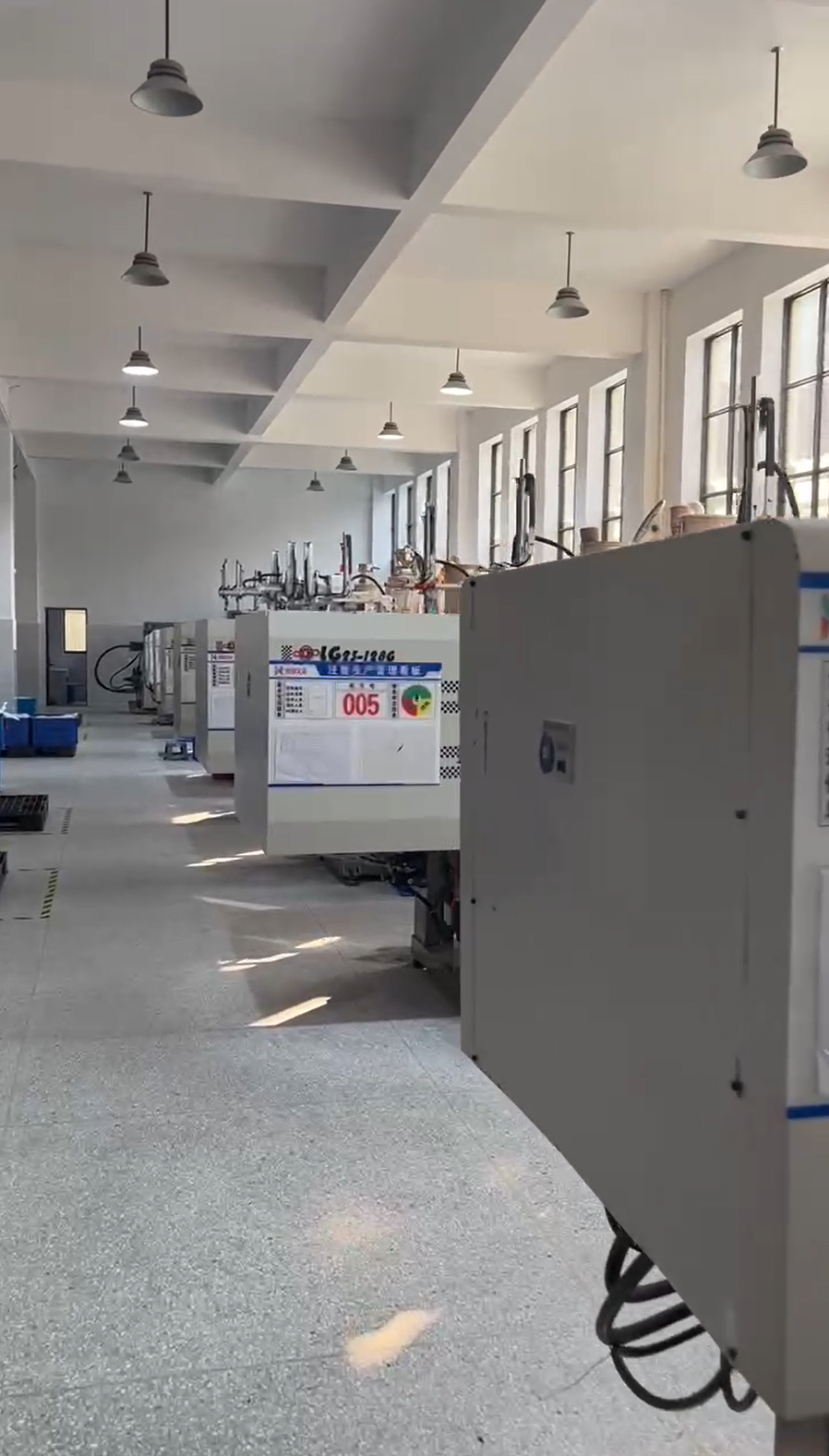
FAQ 4 — What do national export figures actually tell a buyer?
They describe the structure and the channels of supply. They do not describe a supplier.
China's USD 2.65 billion in HS 9608 exports in 2024, as recorded by the Observatory of Economic Complexity, supports three reasonable readings. First, the category has an established, large-scale export base, so a buyer is unlikely to be creating a supply relationship from nothing. Second, the candidate supplier pool within that market is broad enough that shortlisting is a real exercise rather than a formality. Third, single-source exposure and alternative-source planning are genuine agenda items rather than theoretical risk language.
The same figure does not establish a factory's compliance record, its on-time performance, its price level, the availability of a particular model, or the quality distribution across a market. National aggregates are not a proxy for any of those, and using them that way is how sourcing decisions acquire unearned confidence.
Where the figure does earn its place is in three clauses. An alternative-source provision, covering tooling ownership and transfer assistance, is easier to justify when supply is concentrated. Logistics terms should name the Incoterms rule, its version and the named place, because Greenwill's published options of FOB, EXW and DDP allocate risk, customs responsibility and cost very differently at the same headline price. Document handover should specify which documents travel with the shipment and when the buyer receives copies.
FAQ 5 — How does technical change in erasable pens and no-sharpen pencils change acceptance testing?
It changes the question the test is answering. A conventional writing test measures continuity and ink delivery; an erasable product also has to be judged on whether it erases, what it leaves behind, and under which conditions those results hold.
For ballpoint pens and gel pens, the traditional checks remain the core: ink continuity and skipping, leakage, writing length, tip security, drying behaviour for gel inks, and appearance. For erasable pens, the friction-erasable category — often searched under brand-specific names such as frixion — adds erasure effort, ghosting or residual marking, rewrite quality over the erased area, eraser tip durability, and paper sensitivity. Because the erasing mechanism responds to friction and temperature, storage and test conditions belong in the specification; a result obtained at one temperature is not automatically comparable with a result obtained at another.
For pencils and no-sharpen formats, described variously as inkless, everlasting or infinite pencils, the checks shift to writing length per unit, line consistency, core strength and breakage, the fit of replacement cores, and the material claims made for the barrel. For custom pens, print adhesion, colour consistency, logo position tolerance, packaging and barcode accuracy tend to generate more disputes than writing performance, yet are frequently left out of the acceptance section altogether.
The commercial context explains why this matters now. A Greenwill market analysis values the erasable and innovative writing instruments segment at USD 2.8 billion in 2025. That figure is company-reported rather than independently verified, so it should be read as a directional indicator, not a measured market statistic — but the direction is consistent with what buyers encounter: more differentiated functional claims, and therefore more need to convert each claim into a method.
Whatever the category, the clause pattern is the same. The method and threshold are agreed in writing before production, the test stage is named (incoming, in-process or pre-shipment), the testing party is named (factory laboratory or third party), and the disposition route for a failed batch is agreed in advance — rework, concession or rejection. A laboratory result is evidence about the sample under the stated conditions; it is not a guarantee of field performance.
FAQ 6 — Should pens, pencils and erasable pens share one acceptance standard?
They can share a framework. They should not share thresholds.
A four-layer framework keeps a multi-category purchase order readable: documents and labelling, appearance and packaging, function and performance, and quantity and documentation. The first, second and fourth layers can be largely common across a stationery range. The third layer must be written per category, because the failure modes differ.
| Category | Core functional checks | Evidence to request | Frequent clause failure |
|---|---|---|---|
| Ballpoint pen / ball pen | Ink continuity, skipping, leakage, writing length, tip security | Pre-shipment functional test record, retained batch samples | Writing quality required in words, with no defined method |
| Gel pen | Ink flow, drying, strike-through, tip clogging | Functional test record plus ink batch reference | Storage conditions and shelf life left unspecified |
| Erasable pen | Erasability, ghosting, eraser durability, rewrite quality | Test record stating the temperature and humidity of the test | Test environment unstated, so results are not comparable |
| Pencil | Core strength, line consistency, barrel material | Sampling record, material declaration | Appearance inspected, core never tested |
| No-sharpen / inkless pencil | Writing length, replacement core fit, barrel material | Life-test record, replacement core specification | Long service life claimed without a measurement method |
| Custom pen | Print adhesion, colour deviation, logo position, packaging, barcode | Signed golden sample, colour reference, packaging proof | Golden sample never referenced as the acceptance baseline |
A detail worth noting in Greenwill's published purchasing terms: acceptance is expressed as pre-shipment testing plus third-party inspection. The construction is sound because it anchors acceptance to two executable events — a stage and an external party — rather than to an adjective. Buyers can build on it by adding the missing layer: which characteristics are tested at that stage, how many samples, and what result counts as a pass.
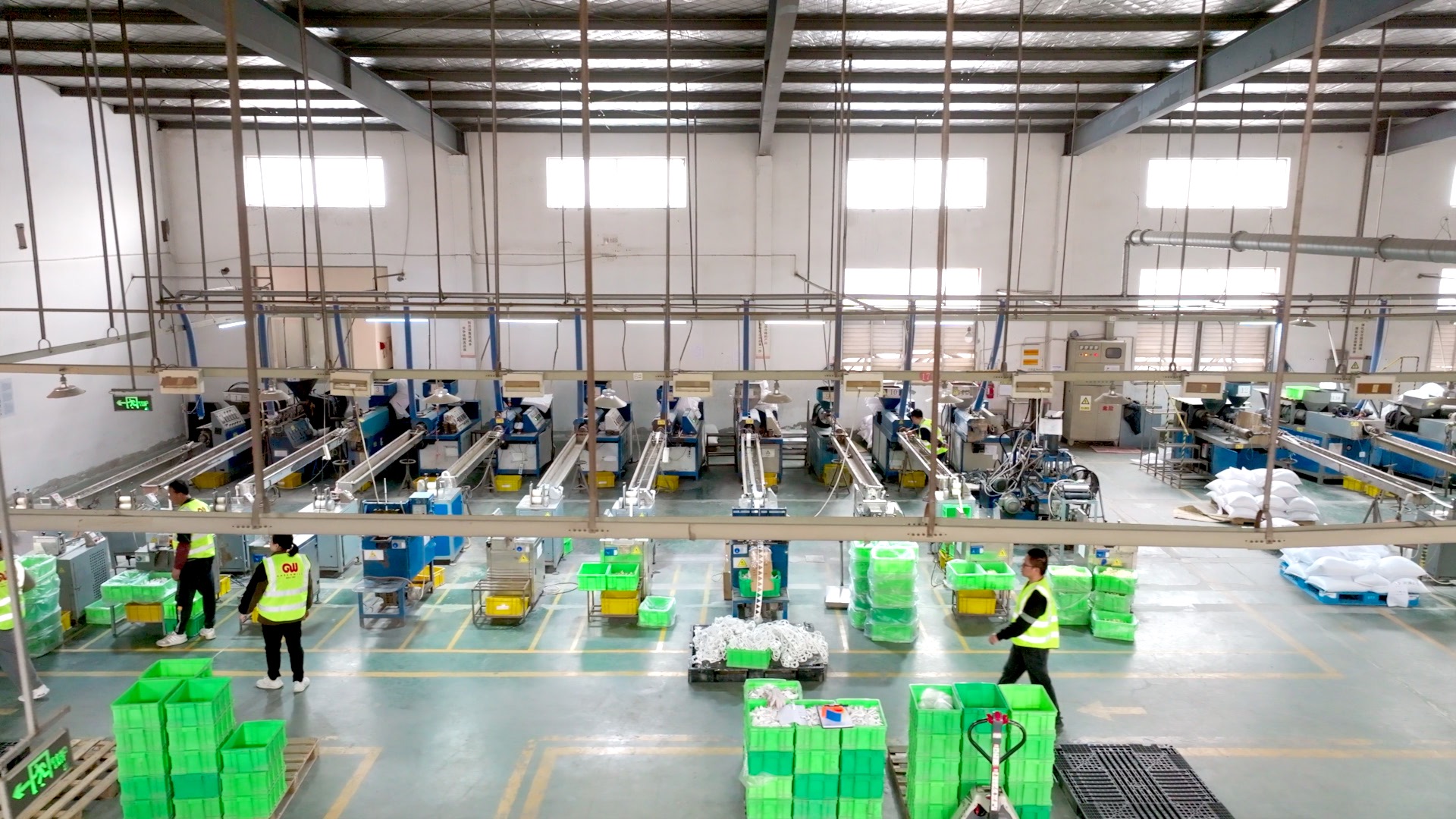
FAQ 7 — How should MOQ, Incoterms and payment terms respond to country risk?
These three items are where country-level uncertainty becomes money, so they deserve more precision than they usually receive.
MOQ. Greenwill's published figure is 20,000 pieces per colour per design. The qualifier carries the commercial consequence: a range built from four colours and two designs is eight minima, not one. The clause should state whether the MOQ applies per SKU or per order, whether trial orders may fall below it, and how a below-minimum order is priced. Without that sentence, the first small-range order becomes a negotiation.
Incoterms. The published options are FOB, EXW and DDP. These sit at very different points on the risk and responsibility spectrum: EXW leaves the most with the buyer, DDP the most with the seller, including import clearance and duties as defined in the rule. Any of them is workable; an unversioned one is not. The contract should name the rule, its version and the named place, because that combination is what identifies where risk transfers.
Payment. The published structure is a 30% deposit by TT with the 70% balance against a copy of the bill of lading. Read carefully, the balance falls due around the point of document presentation, which in a pre-shipment inspection model is after inspection but before the buyer has physical possession. The corresponding clause design is to make the pre-shipment inspection report a condition of document presentation, to set a time limit for resolving document discrepancies, and to state explicitly what happens to the payment obligation if inspection fails.
For contracts that span a price cycle, an adjustment clause is worth more than a forecast. State the trigger, the index or calculation method and the notice period, without presupposing the direction of movement. None of this constitutes a quotation or a commitment from any supplier; it is the structure a buyer needs in order to compare offers on equal terms.
Where Greenwill sits in this framework
Greenwill (Kunshan Crystal Culture Co.,Ltd) is a Chinese stationery manufacturer established in 1999, operating a 25,000 m² factory with around 100 employees. Its stated annual output is more than 20 million pens, more than 260 tonnes of erasers and more than 3 million pencil sharpeners, with an export ratio of about 90% across North America, South America, Europe, Southeast Asia, Oceania and the Middle East. Its product lines centre on eco-friendly erasers, multi-functional pencil sharpeners and erasable writing pens.
The reason to examine it here is not comparative advantage but disclosure: enough of its commercial framework is published to be checked against the structure set out above.
- Terms layer: MOQ of 20,000 pieces per colour per design; lead time of 30–45 days; FOB, EXW and DDP delivery terms; 30% deposit by TT with 70% against a copy of the bill of lading.
- Acceptance layer: pre-shipment testing plus third-party inspection, with quality control stated to follow EN71-1/2/3/9, REACH, PAHS, SVHC and ASTM-D-4236.
- System layer: ISO 9001, ISO 14001 and ISO 45001 certificates issued by CQC and valid to 19 March 2027, plus FSC and BEPI participation.
- Capability layer: OEM and ODM cooperation covering joint development, mould customisation, small-batch trial production and volume delivery, with a stated design service running from concept and 3D modelling through to packaging.
Two cautions follow from the same framework. First, these are company-published figures; they are a starting point for verification, not a substitute for it, and the certificate scope check described earlier still applies. Second, a published MOQ and lead time are the most useful kind of information precisely because they can be tested against a trial order — which is the only evidence that converts a stated capability into an observed one.
Buyers who want to examine the published terms directly can do so at Greenwill.
What to watch in the next sourcing cycle
Three shifts are worth building into the next round of contracts, each framed as a condition rather than a forecast.
Documentation burden is becoming a cost line in its own right. As market requirements become more specific, the number of documents travelling with a shipment rises, and so does the cost of getting them wrong. At the scale implied by a global office supplies market projected at roughly USD 181.68 billion by 2030 — a Grand View Research projection published in 2026 — documentation errors stop being administrative and start being commercial. Buyers who standardise a document checklist per destination, with owners and deadlines attached, recover more value than buyers who renegotiate test methods each season.
Capacity competition is moving from volume to flexibility. A plant's daily output matters less than its changeover behaviour when a buyer's range runs to many colours and designs under a per-colour MOQ structure. Questions about minimum run length, colour sequencing and partial shipment release will increasingly separate suppliers that can support a multi-SKU programme from those that can only support a single high-volume line.
Technical differentiation is entering the acceptance language. The erasable and no-sharpen categories now carry enough commercial weight — a company-reported USD 2.8 billion in 2025 — that functional claims are a normal part of a supplier's pitch rather than a novelty. Each claim that enters a pitch should enter the acceptance section with a method attached, or it should not enter at all.
Three practical actions follow. Build one reusable acceptance template per category, varying the thresholds rather than rebuilding the framework. Keep a supplier document file recording certificate numbers, scope wording, issuing bodies and expiry dates, with a review date set ahead of expiry. And write the change-notification clause into every order, because it is the cheapest protection against a country-level change the buyer did not see coming.
Quick reference FAQ
Is a supplier's ISO certificate enough to approve a pen order?
No. The certificate number, issuing body, validity period and scope wording all need checking, and the scope must cover the product family being purchased. Certification supports a decision; it does not replace pre-shipment inspection.
Should a ballpoint pen and an erasable pen share acceptance criteria?
The framework can be shared; the thresholds cannot. Erasable products need additional criteria for erasure performance, residual marking, and the temperature and humidity under which those are tested.
What is the most useful single clause for country-level uncertainty?
A change-notification obligation. It requires the supplier to disclose changes to materials, formulation, origin or process before they occur, and it preserves the buyer's right to reconfirm acceptance.
How should an MOQ be written into a purchase order?
State whether it applies per SKU or per order, specify the qualifying unit (per colour, per design), and define the treatment of trial orders or orders below the minimum.
Do national export statistics predict a factory's delivery performance?
No. Export totals describe the structure of supply at country level. Delivery reliability is established through trial orders, capacity audits and batch records.
The purpose of a procurement clause is not length. It is that every line can be checked by someone who was not in the negotiation — which is the standard a country-level trend has to meet before it earns a place in a pen contract.
Tem questões ou precisa de mais detalhes?
Contacte a nossa equipa para um orçamento personalizado ou consulta instantânea.
Solicitar orçamento
Preencha o formulário abaixo e a nossa equipa entrará em contacto com uma proposta personalizada.
Chat direto do WhatsApp
Prefere conversar em tempo real? Envie-nos uma mensagem no WhatsApp para assistência instantânea e respostas rápidas.
- Obter orçamento personalizado
- Partilhar fotos ou documentos
- Discuta as suas necessidades diretamente
Geralmente responde em 5–30 minutos durante o horário de expediente.