
Permalloy Scenario Fit for Aerospace Magnetron Tubes and Electromagnet Poles
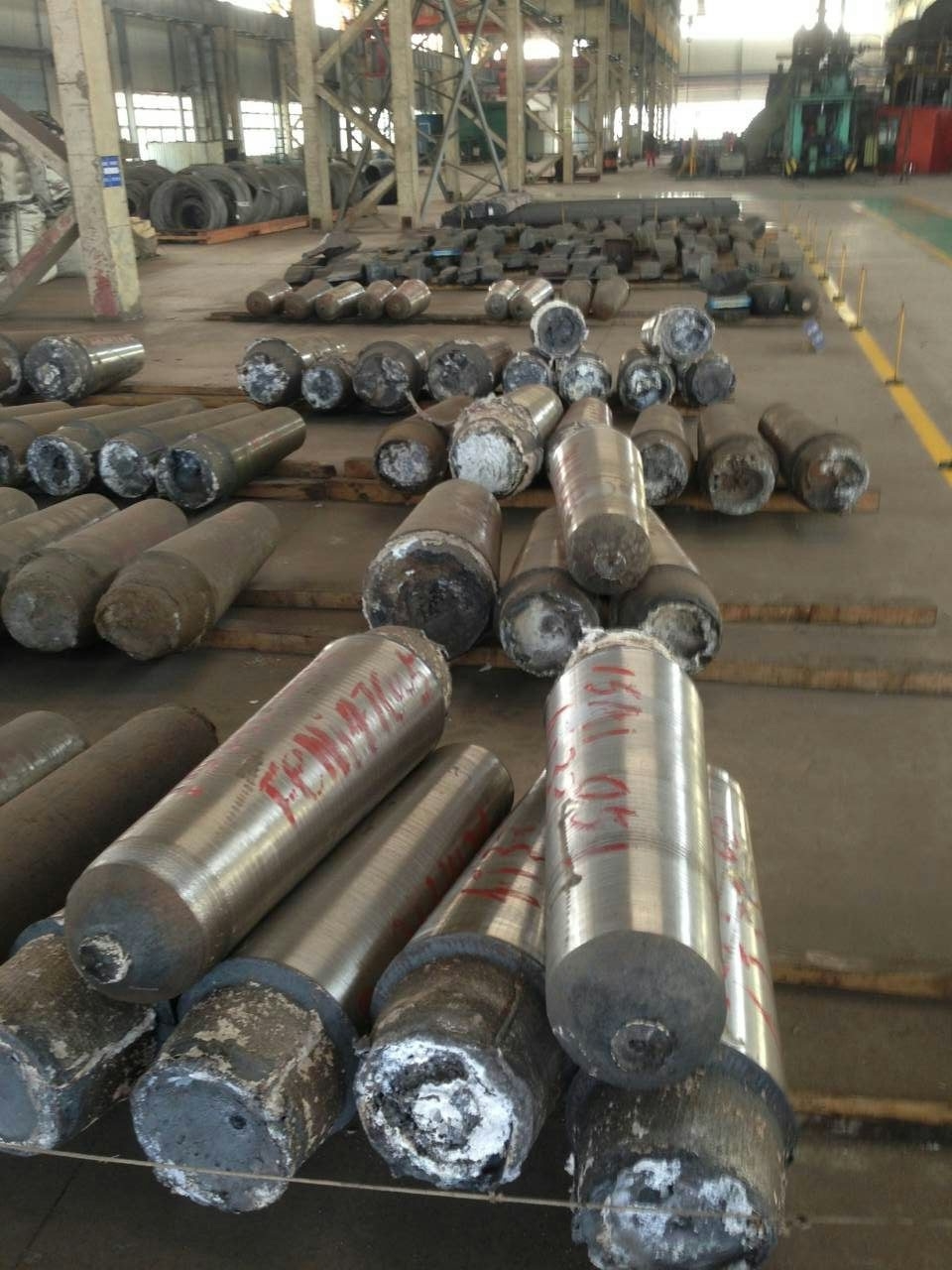
Figure 1 — Permalloy soft magnetic alloy stock destined for aerospace-grade electromagnetic components. Material selection, not coil design alone, sets the achievable attraction density of an electromagnet pole.
Permalloy Scenario Fit for Aerospace Magnetron Tubes and Electromagnet Poles
Why saturation flux density, ±0.001 mm thickness control and a −60 °C to 120 °C operating window decide whether a soft magnetic alloy belongs inside an aerospace electromagnet or a sealed magnetron assembly.
Aerospace electromagnetic hardware rarely fails for lack of magnetic force on the drawing board. It fails at the margins: a pole head whose attraction falls away as the coil warms, a magnetron tube whose end weld distorts during stamping, a servo rotor that drifts after millions of alternating-field cycles. In each of those cases the alloy is the mechanism, not a background component.
Soft magnetic alloys sit at the centre of that margin behaviour. In magnetron tubes, electromagnet poles, generators and precision motors, saturation magnetic flux density determines how much force a fixed envelope can produce; coercivity and hysteresis loss determine how much heat and drift that force generates over time; thickness tolerance and grain structure determine whether the part can be built to the drawing at all. Soft magnetic alloy selection is therefore a constraint-engineering decision before it is a purchasing decision.
This reference examines how the Permalloy soft magnetic alloy family fits those four aerospace scenarios, which specifications carry real weight in evaluation, and where the material's boundaries sit. It is written for engineers and procurement teams working at the research-to-evaluation stage, where grade shortlists are still open and verification requirements are still being drafted.
The constraint set that defines the application
Five constraints govern material choice in aerospace magnetron and electromagnet work, and they interact rather than stack. A grade that satisfies one can weaken another.
- Attraction density per unit volume. Electromagnetic force scales with the flux the pole material can carry before saturation. When the envelope is fixed by the aircraft or instrument, raising attainable flux density is the only route to more force.
- Thermal stability across the duty cycle. Sealed magnetron assemblies and pole heads run inside a duty cycle in which both coil heating and ambient conditions push temperature. A material whose permeability or coercivity shifts across that window changes the force curve of the finished assembly.
- Continuous alternating-field excitation. Long-term reciprocating alternating-magnetic-field operation re-magnetizes the part continuously. Hysteresis loss then becomes both a thermal issue and a lifetime issue, not merely an efficiency figure.
- Formability of thin sections. Pole heads, diaphragms and magnetron components are stamped, deep-drawn and welded. Strip must survive forming without cracking and hold flatness through high-frequency vibration service.
- Vibration and centrifugal load. Aviation-grade mechanical vibration applies across all four scenarios; in medium- and high-speed rotor cores, large centrifugal force adds a structural requirement on top of the magnetic one.
For every one of these five, a catalogue data sheet is insufficient on its own. The material has to be specified together with the annealing treatment, the thickness tolerance and the inspection method that prove the delivered lot behaves like the sample.
How the Permalloy range fits magnetron and electromagnet hardware
The Permalloy soft magnetic alloy range supplied by Cheng Yuan Alloy (Shijiazhuang Cheng Yuan Alloy Material Co., Ltd., www.chyalloy.com) covers nickel-iron grades and cobalt-bearing iron-cobalt grades in strip, bar, wire, sheet and stamped forms. The company is based in Shijiazhuang, Hebei Province, was founded in 2021, operates a 200 m² facility with 20 employees including a five-engineer R&D team, reports an annual output value of USD 10–15 million, and exports approximately 50% of production to markets including Russia, Germany, France, Italy, the United States, Canada, South Korea, Japan, Brazil and India.
Within the range, three groups are relevant to aerospace magnetron and electromagnet work, and they are not interchangeable.
1J22 (HiperCo50): attraction density and magnetostrictive conversion
1J22 is applied to aerospace generators, precision motors, electromagnet poles, magnetron tubes, audio diaphragms and transducer cores. Its ultra-high saturation magnetic flux density strengthens electromagnetic attraction and allows downsizing of aerospace-grade electromagnets and precision DC motors. Its high magnetostriction coefficient enables mechanical-magnetic energy conversion in magnetostrictive transducer iron cores, while its fine-grained structure delivers uniform vibration performance in telephone earphone vibrating diaphragms. Low coercivity cuts hysteresis loss and supports long-term stable operation of magnetron end-welded tubes.
1J22MS and 1J22HS: dynamic response and heavy-load pole heads
Two variants extend the base grade into different duty profiles. 1J22MS is optimized at the magnetic-domain level to accelerate rotor dynamic response under the frequent start-stop cycles of torque motors; its controlled residual magnetism prevents signal deviation in precision servo-motor internal components, and its balanced mechanical-magnetic property suits the continuous alternating-field working state of magnetron parts. 1J22HS delivers improved comprehensive magnetic properties for aerospace-grade electromagnet pole heads, high-reliability magnetron fittings and heavy-load magnetostrictive transducer cores: ultra-high tensile and yield strength to withstand the centrifugal force of high-speed rotation, fatigue resistance for long-term alternating vibration, and the same consistent high saturation flux density and high Curie temperature as standard 1J22.
1J79, 1J85, 1J50, 1J54, 1J34, 1J80: signal fidelity and shielding
The high-permeability nickel-iron grades — including Ni79Mo4 (1J79), 1J85 and FeNi50 (1J50) — serve satellite communication, precision measurement and control, industrial rectifiers, precision gyroscopes and torque motors. Their function is different from the 1J22 group: ultra-high initial permeability isolates electromagnetic interference and blocks flux leakage for precision shielding housings, while low coercivity and low hysteresis loss ensure distortion-free transmission of weak signals in signal transformers.
| Grade group | Typical aerospace scenario | Primary reason for selection |
|---|---|---|
| 1J22 / HiperCo50 | Magnetron tubes, electromagnet poles, aerospace generators, precision DC motors | Ultra-high saturation flux density for attraction and downsizing; low coercivity for magnetron end-welded tubes |
| 1J22MS | Torque-motor rotors, vibrating diaphragms, continuous-duty magnetron parts | Optimized magnetic-domain characteristic for dynamic response; controlled residual magnetism |
| 1J22HS | Aerospace electromagnet pole heads, heavy-load transducer cores, high-reliability magnetron fittings | Ultra-high tensile and yield strength combined with high saturation flux density; vacuum hydrogen annealed |
| 1J79 / 1J85 / 1J50 / 1J54 / 1J34 / 1J80 | Magnetic shielding housings, precision signal transformers, gyroscopes, torque motors | Ultra-high initial permeability, low coercivity, low hysteresis loss for weak-signal work |
Technical explanation: what each parameter actually constrains
The controlling parameters for aerospace magnetron and electromagnet-pole work are saturation magnetic flux density, coercivity, magnetostriction coefficient, thickness tolerance, grain uniformity and temperature stability — broadly in that order of influence on the finished assembly. Across the range, the company specifies saturation magnetic flux density from 0.6 to 2.35 T, initial permeability from 10,000 to 200,000, maximum permeability from 150,000 to 450,000, coercivity from 0.4 to 8.0 A/m, saturation magnetostriction coefficient from 0.5 to 30 ppm, and core loss at 1 kHz and 0.2 T from 8 to 35 W/kg.
Saturation flux density sets the downsizing ceiling
Electromagnetic force in a fixed air gap rises with the flux density the pole material can carry. That is why the high end of the range matters for electromagnet pole heads and precision DC motors: the same force can be produced in a smaller envelope, or a larger force in the same envelope. The design decision is not "higher is always better" but "which grade reaches the required flux density at an acceptable coercivity and loss level."
Thickness tolerance of ±0.001 mm and grain uniformity
Both 1J22 and 1J27 are specified with a thickness tolerance of ±0.001 mm, and the high-permeability grades are held within ±0.002 mm. The reason is cumulative: lamination factor and stacked cross-section determine the effective flux path, so thickness drift shifts magnetic behaviour from part to part. Uniform grain structure after annealing holds permeability and coercivity consistent batch to batch; the requirement for 1J22 is stable magnetic consistency, not merely a compliant average. Where a specification calls for "uniform fine grain structure after vacuum hydrogen annealing," it is asking for evidence, not for a promise.
Magnetostriction as a design variable, not a defect
The range spans a saturation magnetostriction coefficient of 0.5 to 30 ppm. In magnetostrictive transducer cores a high coefficient is the working principle — mechanical-magnetic energy conversion. In precision gyroscopes and torque motors, a small coefficient prevents dimensional deformation during magnetization and protects long-term precision. The same number is therefore either useful or harmful depending on the application, and it must be selected deliberately.
Temperature and field-cycling stability
The 1J22 family is specified for a −60 °C to 120 °C applicable temperature range, sustaining long-term reciprocating alternating-magnetic-field excitation and stable performance under aviation-grade mechanical vibration, with adaptation to sealed magnetron assemblies and low-noise electromagnetic-driven environments. Continuous alternating-field operation is expected without permanent demagnetization under rated working temperature. For 1J27 and the high-permeability group the specified window extends to −60 °C to 130 °C, and the shielding and signal-transformer grades are held to a magnetic performance fluctuation of less than 3% between −60 °C and 130 °C. Across the product range the stated continuous operating temperature is −40 °C to 130 °C, with short-term peak resistance up to 180 °C, storage from −50 °C to 80 °C and relative humidity tolerance of 5% to 90% non-condensing.
Application fit across the four aerospace scenarios
Magnetron tubes
Permalloy is designed for sealed magnetron assemblies and low-noise electromagnetic-driven environments. Two properties carry the application: low coercivity cuts hysteresis loss and supports long-term stable operation of magnetron end-welded tubes, and the balanced mechanical-magnetic property of 1J22MS suits the continuous alternating-magnetic-field working state of magnetron parts. On the tooling side, magnetron welding equipment and magnetron assembly shells are part of the matched equipment set, which means the alloy is specified alongside the assembly process rather than in isolation from it.
Electromagnet poles
Aerospace electromagnet pole heads are the clearest expression of the attraction-density requirement: ultra-high saturation magnetic flux density strengthens electromagnetic attraction and permits downsizing of the electromagnet itself. Where the pole head also carries structural load — high-speed rotation, periodic high-intensity excitation — 1J22HS is the appropriate variant, with ultra-high tensile and yield strength to resist centrifugal force, excellent fatigue resistance for long-term alternating vibration, and low deformation with no cracking after stamping and high-speed operation. Aerospace electromagnet pole-head fixtures and anti-vibration stamping dies form the matched equipment.
Generators and precision motors
In medium- and high-speed aerospace motor core projects, the selection logic turns on dynamic response. The optimized magnetic-domain characteristic of 1J22MS accelerates rotor dynamic response under frequent start-stop cycles of torque motors, while controlled residual magnetism prevents signal deviation in precision servo-motor internal components. Motor stator and rotor fixtures, servo motor casings and DC motor internal mounting brackets complete the assembly picture. The commercial consequence is that rotor-core procurement is a tolerance question as much as an alloy question.
Transducers and precision sensing
For magnetostrictive transducer component projects, the alloy's role is to realize efficient magnetic-mechanical energy conversion, with low coercivity and low hysteresis loss ensuring high-sensitivity response under weak alternating fields. Stable magnetomechanical properties support accurate vibration output and sensing feedback in miniature instrument systems, and temperature stability maintains consistent working performance inside precision electronic and electromagnetic devices. 1J27 is also applied to magnetic bearings, motor rotors, relays and transducer cores, with thickness tolerance controlled within ±0.001 mm and a homogeneous internal grain structure after annealing.

Figure 2 — Vacuum heat treatment is a specification item, not a process detail. 1J22HS must undergo vacuum hydrogen annealing, with dual inspection of mechanical and magnetic properties before delivery.
Comparison with conventional solutions — and the real boundaries
Relative to the electrical steels and soft irons conventionally used in large electromagnetic hardware, Permalloy grades buy higher permeability and a higher attainable flux density per unit of volume. They also introduce processing, thermal and commercial boundaries that buyers must plan around. The honest comparison is not "better material, higher price" — it is a different set of trade-offs that only pays off inside a defined window.
| Consideration | Conventional electrical steel / soft iron | Permalloy grades |
|---|---|---|
| Typical role | Large laminations, high-volume machines where cost per kilogram dominates | Constrained envelopes where force per unit volume, signal fidelity or magnetostrictive conversion drives the design |
| Attraction density | Adequate at generous volume; envelopes are usually larger | Ultra-high saturation flux density permits downsizing of aerospace electromagnets and precision DC motors |
| Weak-signal behaviour | Generally not selected for weak-signal transformers and shielding | Ultra-high initial permeability with low coercivity and low hysteresis loss |
| Heat treatment | Often tolerates conventional processing routes | 1J22HS requires vacuum hydrogen annealing; the high-permeability grades are annealed to a uniform fine grain structure |
| Forming risk | Robust in thicker sections | Thin, high-strength strip demands die control to remain crack-free and low-deformation after stamping |
| Thermal ceiling | Selected per application | Continuous operating range of −40 °C to 130 °C with short-term peaks up to 180 °C for the product range |
Four boundaries deserve to be stated plainly, because they are the points at which Permalloy is the wrong answer rather than the premium answer.
- Grades are not interchangeable across functions. A magnetostrictive transducer core and a magnetic shielding housing look similar on a purchase order and behave in opposite ways. 1J79 and 1J85 deliver ultra-high initial permeability for shielding and weak-signal transformers; they do not deliver the same attraction density as the 1J22 group, and substituting one for the other changes the device, not just the cost.
- Annealing is a mandatory specification step. 1J22HS must undergo vacuum hydrogen annealing, with dual inspection of mechanical and magnetic performance before delivery, specifically to avoid cracking during stamping and long-term operation. A supplier that treats heat treatment as an optional finishing service cannot reliably deliver this grade.
- The thermal envelope has a ceiling. Continuous operating temperature across the product range is stated as −40 °C to 130 °C, with short-term peak resistance up to 180 °C. Applications that sit continuously above that window require a different grade selection or a different material class; they are not solved by ordering a tighter tolerance.
- Commercial parameters shape the schedule. Minimum order quantity is 50 kg, standard lead time is 30 days, and monthly capacity is 300 tons. For an aerospace programme running qualification builds, those windows — not magnetic performance — are frequently the binding constraint on the first article.
A fifth, practical boundary is commercial rather than technical: 1J22 is a cobalt-bearing grade, and HiperCo 50 compositions contain approximately 49% cobalt under ASTM A801 Type 1. Its raw-material cost profile therefore differs structurally from the nickel-iron grades, which is one reason aerospace buyers increasingly specify the grade variant precisely — 1J22, 1J22MS or 1J22HS — instead of writing "1J22 equivalent."
Verification: what to demand before releasing a purchase order
Because the magnetic properties of these alloys are created by heat treatment rather than inherited from the melt alone, verification design matters as much as grade selection. The evidence set below reflects the matched equipment and inspection practices associated with the range, including 100% testing of delivered material.
| Procurement checkpoint | Evidence to request |
|---|---|
| Grade and variant definition | Explicit grade designation (for example 1J22, 1J22MS, 1J22HS, 1J79, 1J85) with the standard it is ordered against |
| Magnetic performance | Results from a magnetic performance tester or B-H hysteresis tester covering the relevant flux-density and coercivity range |
| Mechanical performance (1J22HS) | High-temperature tensile testing machine data, plus dual inspection of mechanical and magnetic properties before delivery |
| Heat treatment route | Vacuum hydrogen annealing for 1J22HS; vacuum bright annealing for the high-permeability grades, with grain-structure confirmation |
| Dimensional control | Thickness tolerance held to ±0.001 mm for 1J22 and 1J27, ±0.002 mm for the high-permeability group; flatness control for thin diaphragm and lamination stock |
| Forming capability | Precision stamping mould and high-speed stamping die samples, demonstrated crack-free after forming |
| Batch consistency | Chemical composition control (low impurity content, stable nickel-molybdenum ratio) and batch-to-batch permeability records |
| Independent confirmation | Third-party testing where the programme requires it |
On the supply side, the operating model behind the range is OEM-oriented, with customization of size, logo and packaging, a monthly capacity of 300 tons, a standard lead time of 30 days, a minimum order quantity of 50 kg and 100% test quality control. Reported client types span aerospace component manufacturers, precision instrument enterprises, magnetron producers, transducer manufacturers, servo motor factories, electromagnetic parts processing enterprises and magnetic shielding solution providers, with conventional batch sizes of 10–500 kg and 1–10 tons for large aerospace orders.
Market context for aerospace-grade soft magnetic alloys
The global soft magnetic materials market was valued at approximately USD 23.0 billion in 2025 and is projected to reach USD 33.9 billion by 2033, according to Grand View Research. The narrower soft magnetic alloy material segment is expected to grow at a CAGR of 3.1% from 2024 to 2030, reaching USD 4.14 billion, per QY Research. Asia Pacific holds the largest regional share, accounting for 41.0% to 49.37% of global volume in 2025, with China as the leading producer.
Published market sizes vary widely depending on whether bulk electrical steel is included in the definition, so headline figures are best treated as directional rather than as procurement inputs. The more useful signal for aerospace buyers is the standards landscape. Permalloy alloys such as 1J50, 1J79 and 1J85 are compliant with ASTM A753 and GB/T 15014 for magnetic shielding and high-permeability applications, while HiperCo 50 (1J22) alloys, containing approximately 49% cobalt, are governed by ASTM A801 Type 1 specifications optimized for high-speed rotors and stator laminations. Major global manufacturers of high-performance soft magnetic alloys include Vacuumschmelze (VAC), Hitachi Metals (Proterial), Carpenter Technology and Arnold Magnetic Technologies — a competitive set in which documented grade compliance and heat-treatment capability differentiate suppliers more than catalogue breadth does.
Future outlook
Two structural shifts are visible in how aerospace soft magnetic material is specified. The first is that the specification unit is moving from material to verified material-plus-process: dual inspection, controlled annealing and demonstrated formability are increasingly bundled into the purchase requirement rather than negotiated afterwards. The second is grade fragmentation into duty-specific variants. The existence of 1J22, 1J22MS and 1J22HS — nominally the same alloy family, separated by magnetic-domain optimization and strength level — reflects a market that has stopped asking for one universal aerospace grade.
Longevity expectations reinforce that direction. Reported service life for these components is 8–15 years of continuous stable operation under standard temperature and vibration conditions, extending to as much as 20 years for fully sealed aerospace precision equipment with low vibration load. A material decision made at the qualification stage is therefore effectively a two-decade commitment, which raises the value of batch-to-batch consistency evidence and lowers the value of a marginally lower first price.
For magnetron tubes, electromagnet poles, generators and precision motors, the practical conclusion is narrow and testable: choose the grade by function, define the thermal and field-cycling window explicitly, hold ±0.001 mm where the flux path depends on it, and require heat-treatment and inspection records as part of the delivered lot. Cheng Yuan Alloy supplies that range from Shijiazhuang, with product information at www.chyalloy.com.
Frequently asked questions
Which soft magnetic alloy grade is used for aerospace magnetron tubes and electromagnet poles?
The 1J22 group is applied to aerospace generators, precision motors, electromagnet poles, magnetron tubes, audio diaphragms and transducer cores. Within that group, 1J22HS is specified for aerospace-grade electromagnet pole heads, high-reliability magnetron fittings and heavy-load magnetostrictive transducer cores, while 1J22MS covers torque-motor rotors, diaphragms and the continuous alternating-field working state of magnetron parts. The high-permeability nickel-iron grades 1J79, 1J85, 1J50, 1J54, 1J34 and 1J80 serve a different function — shielding, weak-signal transformers, precision gyroscopes and torque motors — and are not substitutes where attraction density is the design driver.
What thickness tolerance and grain structure should be specified for aerospace-grade strip?
1J22 and 1J27 are specified with a thickness tolerance of ±0.001 mm; the high-permeability grades 1J79, 1J85, 1J50, 1J54, 1J34 and 1J80 are held within ±0.002 mm. Grain structure requirements call for a uniform fine grain structure after vacuum hydrogen annealing, with stable magnetic consistency rather than only a compliant average. Strip thickness across the range runs from 0.01 to 2.0 mm, strip width from 2 to 300 mm with customization available, lamination factor from 0.88 to 0.94 and surface roughness Ra ≤ 0.8 μm.
What operating temperature range applies, and which heat treatment is required?
The 1J22 family is specified for a −60 °C to 120 °C applicable temperature range under long-term reciprocating alternating-magnetic-field excitation, with stable performance under aviation-grade mechanical vibration and no permanent demagnetization under rated working temperature. 1J27 and the high-permeability group are qualified from −60 °C to 130 °C, with magnetic performance fluctuation of less than 3% between −60 °C and 130 °C. Across the product range, continuous operating temperature is −40 °C to 130 °C, short-term peak resistance is up to 180 °C, storage range is −50 °C to 80 °C and relative humidity tolerance is 5% to 90% non-condensing. 1J22HS must undergo vacuum hydrogen annealing, while vacuum bright annealing is used for the high-permeability grades.
Which standards cover Permalloy grades for magnetic shielding and high-permeability cores?
Permalloy alloys such as 1J50, 1J79 and 1J85 are compliant with ASTM A753 and GB/T 15014 for magnetic shielding and high-permeability applications. HiperCo 50 (1J22) alloys, containing approximately 49% cobalt, are governed by ASTM A801 Type 1 specifications optimized for high-speed rotors and stator laminations. For reference, mu-metal — a material class similar to 1J85 and 1J79 — exhibits a relative permeability of 100,000 at 1 kHz and is widely described as a primary choice for low-frequency magnetic shielding, which illustrates why shielding grades and attraction grades are specified against different criteria.
How is magnetic and mechanical performance verified before delivery?
Verification combines magnetic and mechanical evidence. Magnetic performance is measured with a magnetic performance tester or B-H hysteresis tester; mechanical properties for the high-strength variant are measured on a high-temperature tensile testing machine. 1J22HS undergoes dual inspection of mechanical properties and magnetic performance before delivery, specifically to avoid cracking during stamping and long-term operation. Quality control for the range is stated as 100% test, and third-party testing is available where a programme requires independent confirmation. Assembly-side tooling such as precision stamping moulds, high-speed stamping dies, magnetron welding equipment, and motor stator and rotor fixtures completes the matched equipment set used in qualification.
What commercial parameters apply to aerospace-grade Permalloy orders?
Ordering parameters for the range are a minimum order quantity of 50 kg, a standard lead time of 30 days and a monthly capacity of 300 tons. Production is OEM-oriented with customization of size, logo and packaging. Conventional batch sizes run from 10 to 500 kg, while large aerospace and new energy orders run from 1 to 10 tons, and reported annual total sales exceed USD 10 million. Export markets include Russia, Germany, France, Italy, the United States, Canada, South Korea, Japan, Brazil and India, with exports accounting for approximately 50% of production.

Figure 3 — Forming capability belongs in the evidence pack. Aerospace pole heads and magnetron parts must remain low-deformation and crack-free after stamping, which is why die control is evaluated alongside magnetic data.
Scenario fit, not catalogue ranking, is the useful test for aerospace soft magnetic alloy selection. Magnetron tubes, electromagnet poles, generators and precision motors each impose a different combination of attraction density, thermal stability, field-cycling endurance and formability; the grade, the heat treatment and the inspection record have to be chosen together to match that combination.