
Pharma Intermediates Compared: Haohong Quality, Cost, Delivery
Pharma Intermediates Compared: Haohong Quality, Cost, Delivery
Pharmaceutical intermediate buyers at the decision stage need measurable quality, regulatory documentation, and predictable supply, not just product availability. Haohong (Qihe) Pharmaceutical Technology Co., Ltd. (Haohong Pharmaceutical) is a China-based developer and producer of active pharmaceutical ingredients (APIs) and pharmaceutical intermediates, operating from the High-tech Zone of Qihe County, Shandong Province.
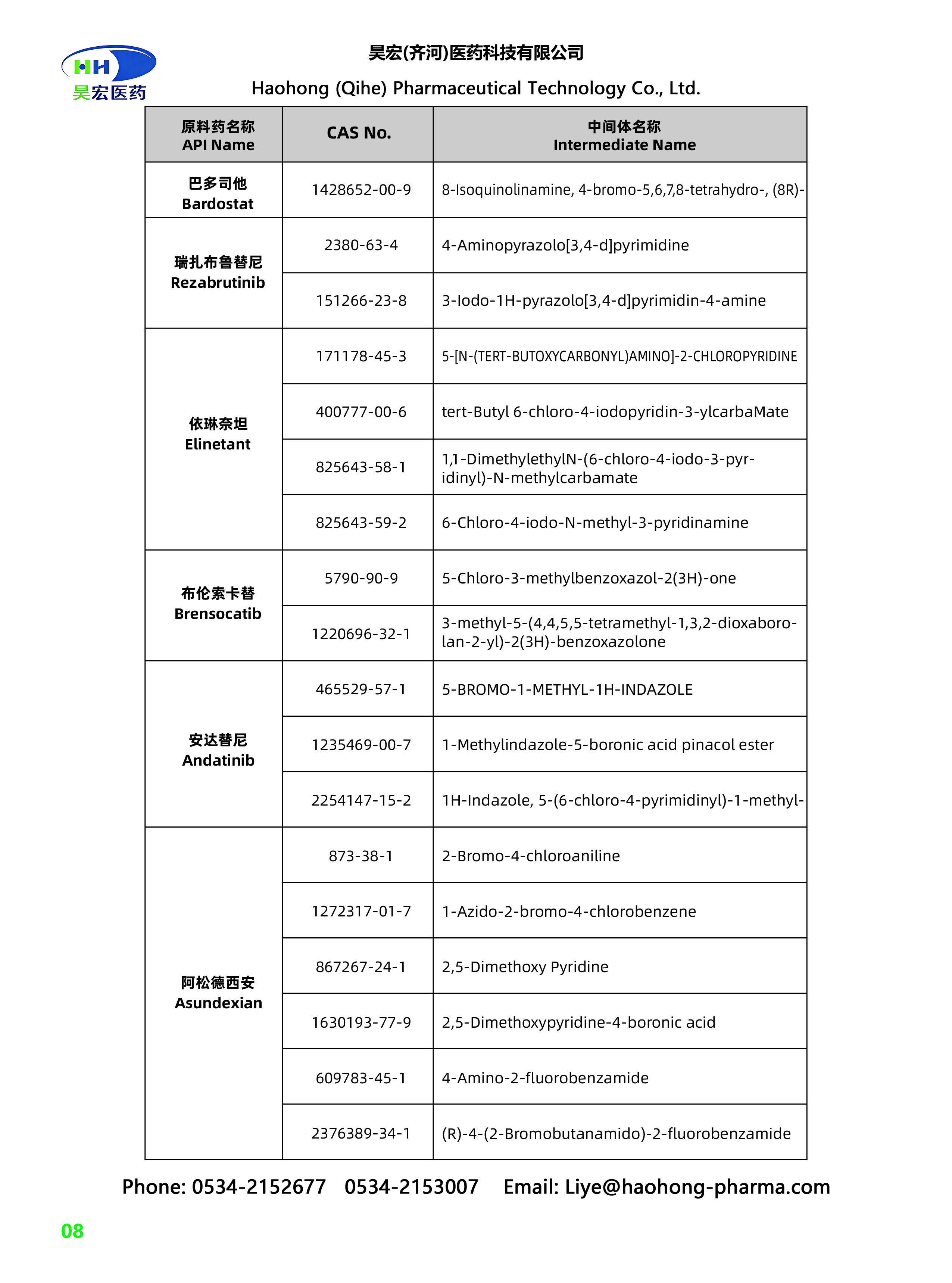
Haohong Pharmaceutical high-purity pharmaceutical intermediate product range.
Founded in 2021, the company has built a 3,000-square-meter facility in Qihe County and operates a production base in Liaocheng equipped with 30 reactors in the 3,000 to 5,000 liter class. It employs 75 people, including 30 R&D engineers, and maintains an annual production capacity of 1,000 tons. About 40% of output is exported to markets including the United States, Europe, Japan, India, and Bangladesh.
This article is written for procurement, quality, and R&D teams comparing pharmaceutical intermediate suppliers before committing to a manufacturer. It examines Haohong Pharmaceutical through the criteria that matter at the decision stage: purity, batch stability, technical documentation, cost position, delivery reliability, and scope flexibility.
Pharmaceutical Intermediates: A High-Stakes Sourcing Category
Pharmaceutical intermediates are chemical compounds produced during the synthesis of an active pharmaceutical ingredient or a more advanced intermediate. Because they carry molecular structure forward into the final API, their purity and consistency affect downstream yields, impurity profiles, and regulatory outcomes. The category includes chiral building blocks, steroid intermediates, antibiotic intermediates, peptide intermediates, and high-purity oncology drug intermediates, among others.
Third-party estimates put the global pharmaceutical intermediates market at approximately USD 37.04 billion in 2025, according to Precedence Research. Another research firm, Coherent Market Insights, estimates the same market at USD 47.30 billion, so absolute market sizing should be treated as directional. What is clearer is that the market is becoming more specialized: oncology drug intermediates generated 37.20% of total industry revenue in 2025, according to a Grand View Research industry analysis, driven in part by complex antibody-drug conjugates. Generic drug manufacturers held a dominant 53.82% share of the market in 2024, according to Mordor Intelligence and BioSpace, and North America represented 42.23% of global market value in the same year.
The Decision-Stage Problem: Inconsistent Quality, Delayed Delivery, and Documentation Gaps
For procurement teams, the difficulty in buying pharmaceutical intermediates is not finding a supplier; it is finding a supplier that can repeatedly meet specification, deliver on time, and provide the documentation needed for audits. One widely seen risk in the sector is delayed delivery. When multiple batches are delayed, downstream drug development timelines slip and project costs rise.
Quality variability is another issue. A single high-purity batch does not guarantee that the next batch will match it. Batch-to-batch stability is therefore a central criterion in pharmaceutical intermediate supplier evaluation. Documentation gaps create further friction. Buyers need analytical data, process information, and regulatory support to qualify an intermediate for use in API synthesis, especially when the final product is intended for GMP-grade pharmaceutical manufacturing.
These risks also create the opportunity for a supplier that can demonstrate consistent quality, structured inventory management, and complete technical documentation. Haohong Pharmaceutical is positioned as a specialist in this segment, with a portfolio focused on high-grade intermediates for anti-cancer, anti-hepatitis C, and anti-diabetic therapies.
Haohong Pharmaceutical's Solution: High-Purity Intermediates with Documented Consistency
Haohong Pharmaceutical specializes in the R&D and custom production of innovative APIs and pharmaceutical intermediates. The company states that its products provide distinct advantages over conventional counterparts, including 0.02 higher purity than industry peers and batch quality stability 10% above the industry average. These figures are presented in company-provided comparison data, and they point to the two metrics most often cited in pharmaceutical intermediate supplier evaluations: purity and consistency.
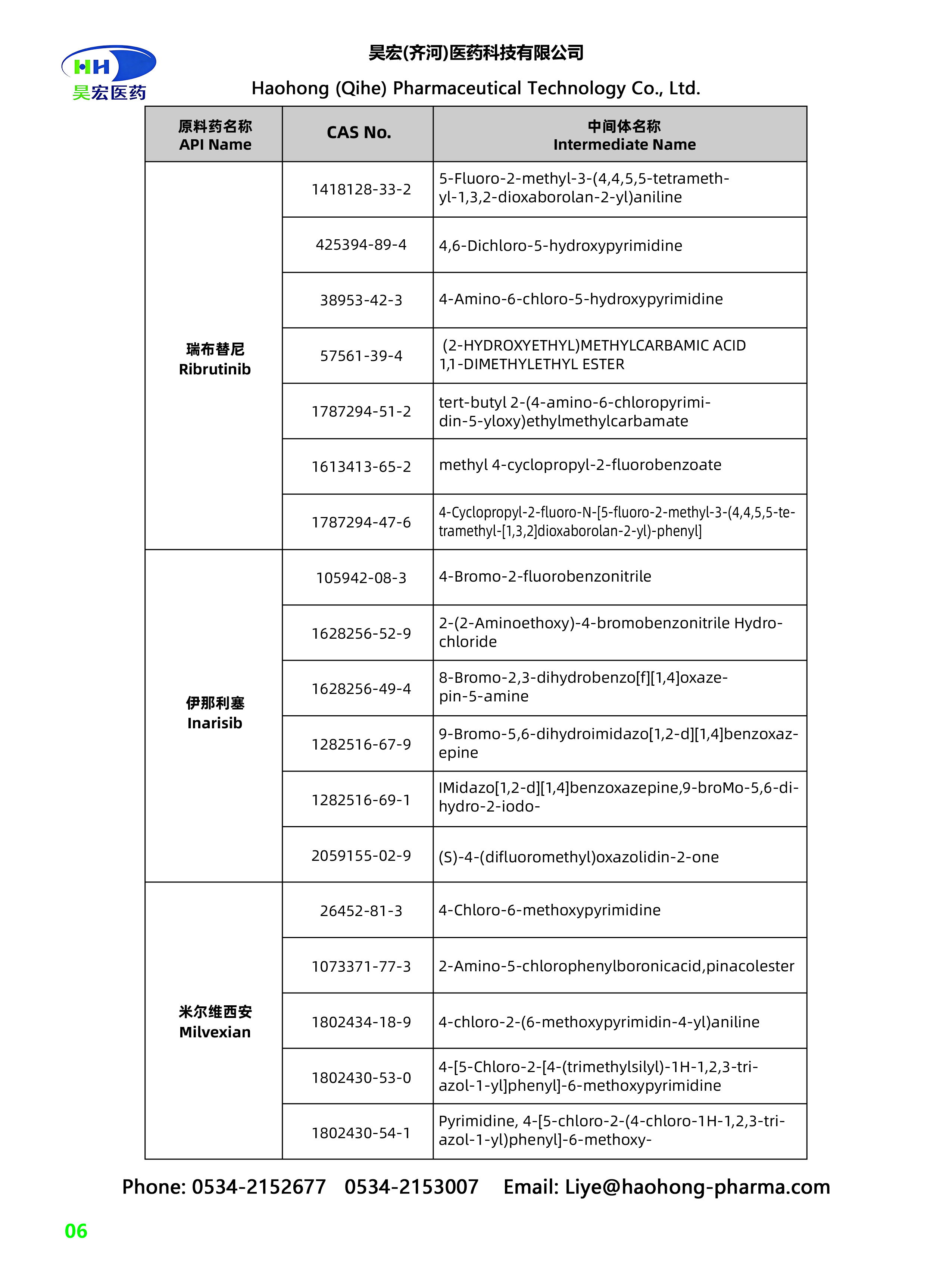
Pharmaceutical intermediate product catalogue used in downstream API synthesis scenarios.
The company currently has dozens of high-grade intermediates available for commercial production. Its main product lines include Apalutamide intermediates, Abemaciclib intermediates, and Alectinib intermediates, and its broader catalog covers intermediates for Bicalutamide, Enzalutamide, Darolutamide, Venetoclax, Macitentan, Empagliflozin, Larotrectinib, Apixaban, Rivaroxaban, Ibrutinib, Ceritinib, Pomalidomide, Lenalidomide, Ivacaftor, Tofacitinib, and Cabozantinib, among others.
In addition to commercial-scale supply, Haohong provides custom pharmaceutical intermediate synthesis services ranging from gram scale to hundreds of kilograms. This makes it relevant for both early-stage drug development projects and larger production needs where a high-purity intermediate is required.
| Comparison point | Haohong data |
|---|---|
| Purity | 0.02 higher than industry peers |
| Batch quality stability | 10% above the industry average |
| Technical documentation | Complete set, fully compliant |
| Client specifications | Full adherence to client-specified index values |
| Cost position | Lower than market average due to in-depth R&D and self-owned factories |
| Delivery risk control | Sufficient stock, timely restocking, real-time inventory monitoring, optimized production scheduling |
These comparison points come from company-provided information about Haohong Pharmaceutical's products and should be reviewed alongside the supplier's analytical data and quality agreements during formal qualification.
Inside the Comparison: Purity, Stability, Cost, and Documentation
Purity and batch stability
Haohong's products provide 0.02 higher purity and batch quality stability 10% above the industry average. In pharmaceutical intermediate supply, small purity improvements can affect downstream API yields, impurity profiles, and regulatory status. Stable batch quality reduces rework and compliance risk during drug development, which is one of the more practical advantages for an API manufacturer.
Cost structure
The cost advantage cited by the company is attributed to in-depth R&D and self-owned factories, resulting in lower costs compared with the market average. Ownership of synthesis routes and production assets can reduce dependence on third-party toll manufacturers and make the total cost structure more predictable.
Technical documentation
Haohong supports its products with a full set of technical documents that fully comply with regulatory expectations and adhere to client-specified index values. For buyers, this simplifies regulatory audits and shortens the evaluation process because the necessary documentation is already part of the supply package.
Synthesis efficiency
Optimized synthetic routes are cited by Haohong as a source of production efficiency and reduced solvent consumption. For downstream buyers, this can translate into shorter production timelines and a lower environmental burden across the supply chain.
Application Scenarios for Haohong Pharmaceutical Intermediates
The most direct applications for Haohong Pharmaceutical's high-purity intermediates are anti-cancer drug API synthesis, targeted drug development, high-purity fine chemical production, and custom R&D projects. The company's product focus on anti-cancer, anti-hepatitis C, and anti-diabetic therapies aligns with the therapeutic areas where intermediate complexity is high and purity requirements are strict.
Oncology drug intermediates are particularly relevant. Because oncology APIs often contain multiple chiral centers and sensitive functional groups, the intermediate supplied at each stage must be pure and reproducible. Haohong's emphasis on high-purity oncology intermediates supports this requirement. Its custom synthesis service, extending from gram scale to hundreds of kilograms, also fits research-stage projects where the route is still being optimized.
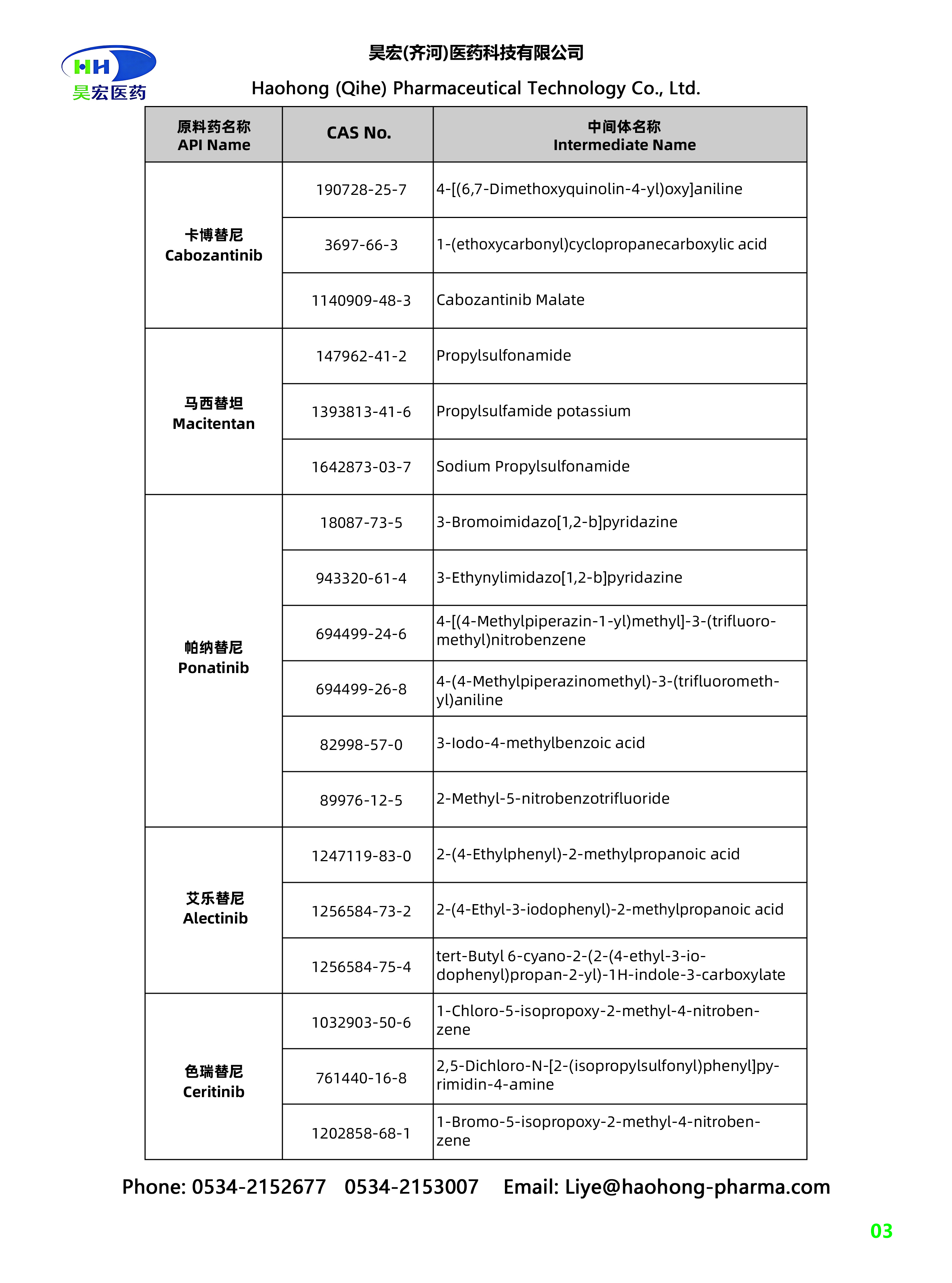
Haohong Pharmaceutical high-purity intermediate for custom synthesis projects.
For API manufacturers and pharma companies, the practical use cases include qualifying an alternative intermediate source for an approved route, sourcing a custom intermediate for a development-stage molecule, and scaling up from grams to pilot or commercial quantities. In each case, the buyer benefits from documented purity, consistent batch quality, and support during regulatory review.
Market Trends Supporting the Shift Toward Specialist Intermediates
Industry data points to growing complexity in pharmaceutical intermediate sourcing. Oncology drug intermediates generated 37.20% of total industry revenue in 2025, according to a Grand View Research industry analysis. Generic drug manufacturers held a dominant 53.82% share of the pharmaceutical intermediates market in 2024, according to Mordor Intelligence and BioSpace. North America represented 42.23% of global market value in 2024, while China's pharmaceutical industry total exports were reported at USD 22.53 billion as of December 2024, according to CEIC and OECD data.
Peptide and oligonucleotide intermediates are projected to be the fastest-growing segment, with an 8.12% CAGR through 2030, according to Mordor Intelligence. For buyers, this means that custom synthesis capability and high-purity manufacturing will become more important as the industry moves toward more complex molecular formats.
Haohong's focus on high-purity oncology intermediates and custom synthesis services places it in the segment of the market where documentation, purity, and stability matter most. That is not a claim that it is the only supplier in this space; rather, it is a positioning that matches the direction of demand.
Comparison with Conventional Pharmaceutical Intermediate Suppliers
Conventional suppliers may compete on volume and price, but procurement teams often face variability in batch quality, limited documentation, and delivery delays. Haohong's comparison data points to advantages in several specific areas: higher purity, better batch stability, full technical documents, compliance with client-specified index values, and a cost position supported by in-depth R&D and self-owned factories.
An honest limitation should also be considered. Haohong Pharmaceutical is a specialist rather than a full-line catalog manufacturer. Its portfolio is concentrated in oncology, antiviral, and metabolic therapeutic areas, with an emphasis on high-grade intermediates. Buyers sourcing intermediates outside these segments, or requiring a broad range of unrelated products, should evaluate whether the available catalog matches their full needs or whether a custom synthesis engagement is the better path.
The company's production base in Liaocheng gives it an annual capacity of 1,000 tons, which supports bulk pharmaceutical intermediates supply. For buyers with very large continuous manufacturing requirements beyond that capacity, scale-up timelines should be discussed directly with the supplier before final selection.
A Practical Comparison Framework for Buyers
For a decision-stage evaluation, buyers should compare at least five dimensions when assessing a pharmaceutical intermediate supplier. First, purity verified by analytical data. Second, batch-to-batch stability over multiple lots. Third, technical documentation and regulatory alignment. Fourth, delivery reliability and inventory controls. Fifth, total cost, including rework, audits, and logistics.
Haohong Pharmaceutical's data set can be mapped onto this framework: purity 0.02 higher than industry peers, batch quality stability 10% above the industry average, a complete technical document package, full adherence to client-specified index values, stable inventory management, and lower costs attributed to in-depth R&D and self-owned factories. Buyers should still request batch analysis reports and conduct a supplier audit before making a final decision.
Future Outlook: From Commodity Supply to Documented Quality
The global pharmaceutical intermediates market is moving from commodity-style supply toward documented, quality-controlled sourcing. Market estimates, while divergent on absolute size, consistently point to oncology and complex molecule intermediates as the most dynamic segments. Suppliers that can combine custom synthesis, high-purity production, and compliance documentation are likely to be more relevant to drug developers and generic API manufacturers.
For Haohong Pharmaceutical, the combination of in-house R&D, owned factories, high-purity oncology intermediates, and batch consistency is well aligned with this direction. The company's ISO 9001:2015 quality management system certification, its 2024 recognition as a Technology-based Small and Medium-sized Enterprise, and its 2025 recognition as an Innovative Small and Medium-sized Enterprise of Shandong Province support its position as a credible specialist supplier in the pharmaceutical intermediates supply chain.
Frequently Asked Questions
What should buyers compare when selecting a pharmaceutical intermediate supplier?
Buyers should compare purity, batch-to-batch stability, technical documentation, compliance alignment, delivery reliability, cost, and the supplier's ability to support custom synthesis. These criteria directly affect downstream API quality and regulatory acceptance.
How does Haohong Pharmaceutical's purity compare with industry peers?
According to company-provided comparison data, Haohong Pharmaceutical products show 0.02 higher purity than industry peers and batch quality stability 10% above the industry average. Buyers should confirm these statements with the supplier's analytical documentation before qualification.
What role does batch quality stability play in pharmaceutical intermediate selection?
Batch quality stability reduces the risk of rework and compliance issues in downstream API synthesis. Consistent batches also simplify regulatory audits because the supplier can demonstrate that the product meets the same specification repeatedly.
What standards apply to GMP grade pharmaceutical intermediates?
FDA ICH Q7 provides the primary Good Manufacturing Practice guidance specifically for active pharmaceutical ingredients and their intermediates. In the European Union, pharmaceutical intermediates imported above one tonne per year may also need REACH registration even though APIs are exempt.
How does Haohong Pharmaceutical manage delivery risk?
Haohong Pharmaceutical reports that it maintains sufficient regular stock, carries out timely restocking, uses digitalized product management, and monitors inventory in real time. It also optimizes production scheduling to reduce the risk of delayed delivery.
Does Haohong Pharmaceutical provide custom pharmaceutical intermediate synthesis?
Yes. Haohong provides custom synthesis services ranging from gram scale to hundreds of kilograms, and it currently has dozens of high-grade intermediates available for commercial production.
Company and Resource Information
Haohong (Qihe) Pharmaceutical Technology Co., Ltd.
Contact name: Xu Tianxia
Email: Xutx@haohong-pharma.com
Tel / WhatsApp: +86 180-6854-1569
Address: Block B, Building 3, Accelerator, High-Tech Zone, Qihe County, Dezhou City, Shandong Province, China
Website: www.haohong-pharma.com
For the full company profile, download the brochure: Haohong Pharmaceutical Brochure (PDF)