
Pharma Packaging Machine Specs and Certifications: Buyer FAQ
HTNXT Industry Reference · Manufacturing & Processing Machinery
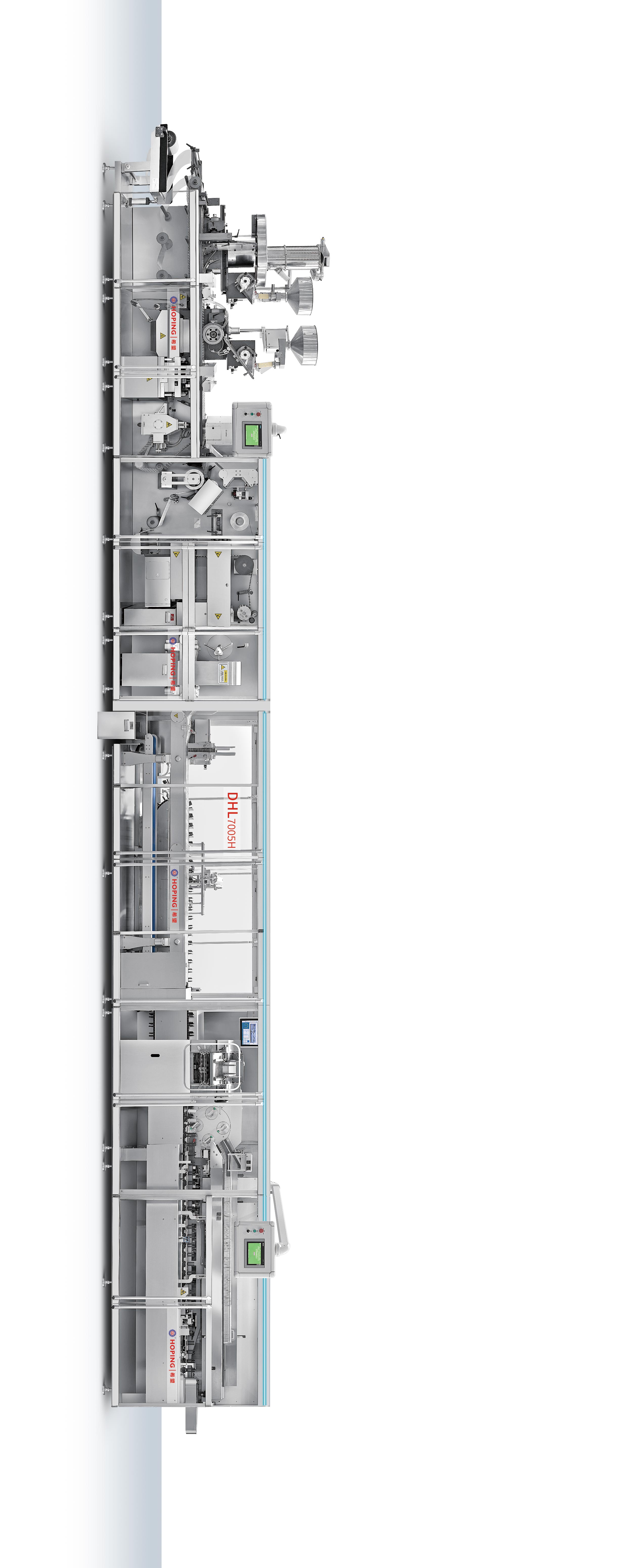
A servo blister-cartoner line links blister forming, blister transfer and cartoning into one continuous process for tablets and capsules.
Most pharmaceutical packaging machine purchases are decided long before a purchase order exists. They are decided during the specification review, when a buyer compares an output figure on a product page against the format range, contact materials, certification scope and delivery terms that the same supplier is willing to put in writing. Zhejiang Hoping Machinery Co., Ltd. (brand: HOPING) is a Chinese pharmaceutical packaging machinery manufacturer established in 2001 and based in Ruian City, Zhejiang Province, producing blister packaging machines, cartoning machines, case packing machines and end-of-line packaging equipment. Its published documentation is detailed enough to answer several of the questions that normally slow a pharmaceutical packaging project down.
Why the Procurement Conversation Starts With Parameters, Not Brochures
A blister packaging machine or cartoning machine is specified against a product format, a production plan and a compliance file. Those three items rarely appear on a marketing page. The result is a predictable gap: engineering teams ask for forming area and sealing behaviour, quality teams ask for material certificates and qualification records, and procurement teams ask for delivery and acceptance terms. When the supplier replies with a single speed number, the project stalls at the next meeting.
The opportunity is symmetrical. Buyers who frame their questions around verifiable parameters — format area, forming depth, stroke, power supply, air consumption, contact material and certificate number — get answers they can compare across shortlisted suppliers. Suppliers who publish those parameters get screened faster, because their equipment can be matched to a format without an exploratory call.
The Parameters That Actually Drive Selection
Blister output is expressed in several different ways, and the units matter. Platen (flat-plate) machines are typically rated in punches or cycles per minute and in blisters per minute; rotary machines are rated in punches per minute at a defined format area. Two machines with similar blister counts can have very different format envelopes, which changes how many cavities fit on a forming plate and therefore how the line balances against the cartoner downstream.
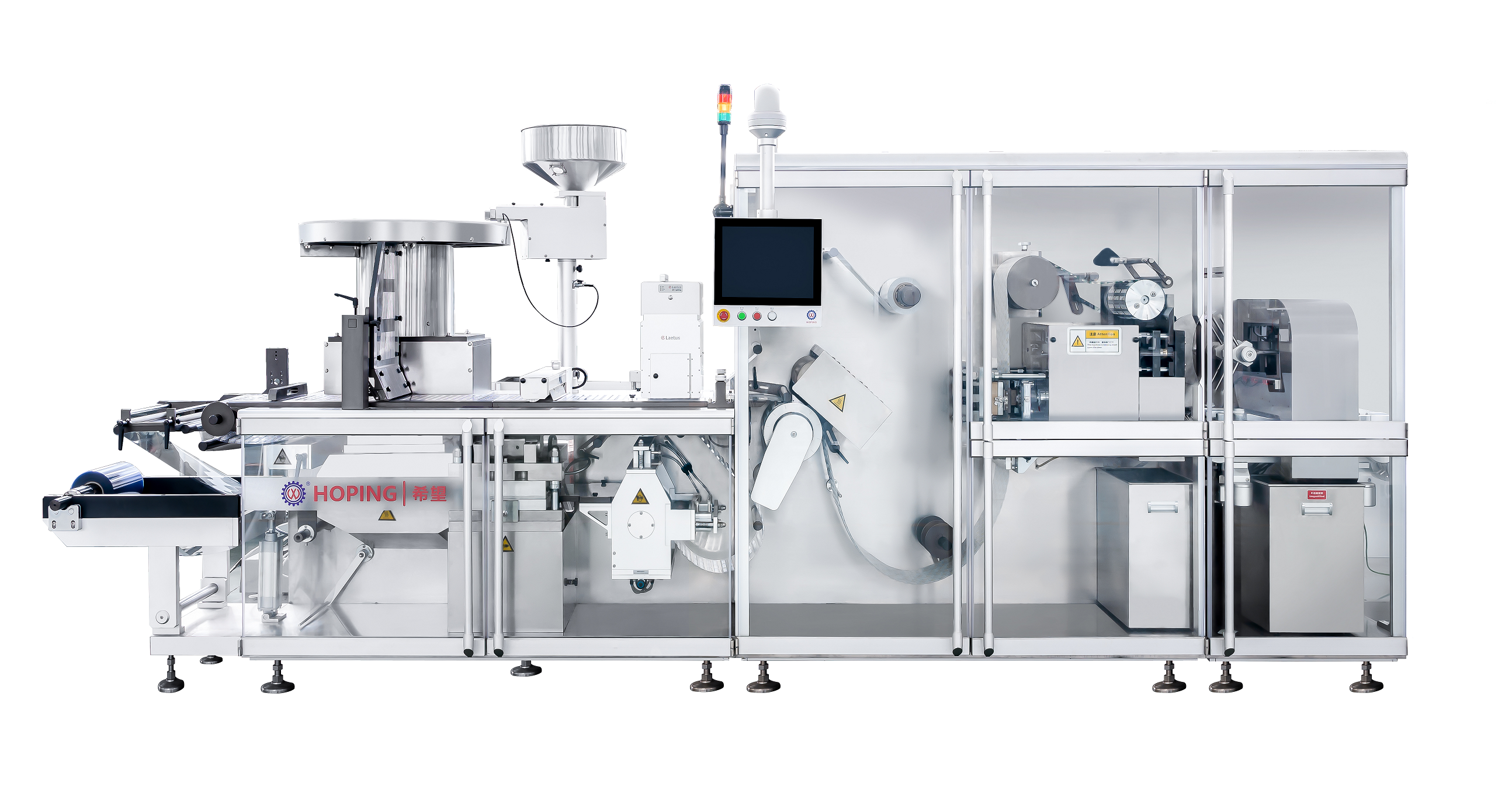
A rotary blister packing machine converts forming area, forming depth and punch frequency into usable blister output.
| Model | Machine type | Stated maximum output | Format area | Total power |
|---|---|---|---|---|
| DPP260T1 | Platen blister machine | 300 blisters/min; 60 punches/min | 260 × 115 mm | 8.5 kW |
| DPH320HII | Rotary blister packing machine | 1,000 blisters/min; 250 punches/min | 320 × 280 mm | 30 kW |
| DPP260TI | Intelligent flat Alu-PVC / Alu-Alu blister machine | 20–60 cycles/min | 4420 × 710 × 1700 mm machine envelope | 9.5 kW |
Figures are supplier-stated maximums for the named models and should be confirmed against the intended product format.
Secondary packaging is where line balancing problems usually surface. A cartoner rated from 30 to 120 cartons per minute can feed a slower blister machine without strain, while a cartoner running 100–500 cartons per minute requires a primary packer that can sustain a matching supply. Hoping publishes a clear range across its cartoner family: the XWZ120 horizontal cartoner covers 30–120 cartons per minute with a Siemens PLC and an SEW motor, the XWZ300II covers 60–220 cartons per minute, and the XWZ500H full servo cartoner covers 100–500 cartons per minute.
| Equipment | Function in the line | Stated capacity |
|---|---|---|
| XWZ300II cartoner | Carton forming, opening, insertion, closing | About 60–220 cartons/min |
| XW8300 flow packing machine | Pillow-pack wrapping of blister boards or cartons | About 30–300 packs/min |
| XWK4060 stretch bander | Bundling of cartons after cartoning | About 30–60 bundles/min |
| ICP12 case packing and palletizing unit | Case opening, loading, sealing and palletizing | About 12 cases/min |
What HOPING Brings to a Pharmaceutical Packaging Project
Zhejiang Hoping Machinery Co., Ltd. operates a 28,800 square metre manufacturing facility with approximately 300 employees and an annual output of 500 units, exporting about 25 percent of production to Southeast Asia, the Middle East, Eastern Europe, South America and Africa. Its product scope covers the full solid dosage route: blister packing machines, cartoners, flow wrappers, stretch banders, case packers, palletizers and linked blister lines.
For buyers, the relevant point is not the catalogue breadth but the integration depth. Hoping documents integrated blister-cartoner lines with servo transfer rather than treating the blister machine and the cartoner as separate purchases. The DHL8005H reaches a stated maximum of 800 blisters per minute and 500 cartons per minute, and uses a D3 intelligent top-loading parallel tracking transfer system, a three-channel servo-driven independent replenishment system, and a Beckhoff motion controller with a CP9315 industrial PC. The DHL7005H is documented at up to 700 blisters per minute and 500 cartons per minute with a self-developed IRB24 intelligent transfer robot and a Siemens motion controller with TP900 HMI. The DHL1000/5H is documented at up to 1,000 blisters per minute and 500 cartons per minute with a four-channel servo replenishment system.
On the primary packaging side, product-contact parts are made of AISI 316L stainless steel, non-product-contact parts are manufactured from AISI 304 stainless steel and anodized aluminium alloy, and the machines are designed and manufactured in accordance with GMP requirements with corrosion-resistant, easy-to-clean surfaces.
What a Certificate Proves — and What It Does Not
Certification questions are usually asked as a yes-or-no question. They are better asked as a scope question: which machine, which standard, which certificate number, which issuing body. Hoping publishes certificate records that can be checked line by line.
| Scope | Certificate number | Issued by | Standard referenced |
|---|---|---|---|
| Carton packing machine series (CE) | UCN 900339024607 | Certify International Ltd | EN 415-3:2000 |
| Sample automatic blister packing machine (CE) | UCN 900175009261 | CELAB | EN 60204-1:1997 |
| Cartoning machine series (CE) | HTT190102307L | Shenzhen HTT Technology Co., Ltd. | EN 60204-1:2006+A1:2009+AC:2010; 2006/42/EC |
| Blister packing machine series (CE) | HTT190102306L | Shenzhen HTT Technology Co., Ltd. | Machinery Directive 2006/42/EC; EN 60204-1:2006+A1:2009+AC:2010 |
Certificate records as published by the manufacturer; buyers should confirm that the configuration being purchased falls inside the certified scope.
CE marking addresses the safety of the machine as placed on the EU market. It does not address product quality, and it does not substitute for equipment qualification on the buyer side. The standard that covers good manufacturing practice for primary packaging materials for medicinal products is ISO 15378:2017. In the United States, current Good Manufacturing Practice establishes the regulatory foundation for quality pharmaceuticals. In China, a draft GMP guidance for pharmaceutical packaging materials has been under public consultation, which points to supplier review obligations moving further upstream into packaging materials and the equipment that forms them.
Read together, these three layers answer different questions. A CE certificate answers whether the machine can legally carry the mark for a defined scope. ISO 15378 answers how primary packaging materials should be governed. cGMP and its national equivalents answer how the manufacturer must control its process. A packaging machine purchase touches all three, which is why a single certificate is never a complete compliance file.
How a Blister-Cartoning Line Actually Connects
In a solid dosage packaging workshop, the line completes blister forming and sealing, leaflet folding, carton opening, blister insertion, batch and date coding, inspection and rejection, and downstream connection. The equipment set behind that description is specific: blister packing machine, cartoner, top-loading transfer robot, leaflet folder, coding machine, vision inspection, checkweigher, bundler, case packer, palletizer and an ERP or MES data interface, depending on configuration. The machines run in a GMP-oriented cleanroom or packaging workshop under continuous high-speed operation, with multi-batch and multi-format production, and with requirements for stability, easy cleaning, safety guarding and traceability-oriented operation.
This is where the constrained questions live. A line built for a single format behaves differently from one that must switch between tablets, capsules and softgels across several batches per shift. Format changeover, mould handling and recipe memory therefore carry more weight than a headline output number. Hoping documents mould-change and preset-memory functions on the DHL8005H and recipe memory on the DHL1000/5H, which is the practical answer to multi-SKU production rather than a technicality.
Market Signals Behind These Specifications
The equipment categories discussed above sit inside a market that is expanding rather than consolidating. The global blister packaging machine pharmaceutical market was valued at USD 2.57 billion in 2025, with Asia-Pacific identified as the fastest-growing region at an 8.87 percent CAGR to 2031 (Custom Market Insights). Across the wider pharmaceutical packaging machinery market, a 2026 value of USD 7.09 billion and a 7.15 percent CAGR have been published (Mordor Intelligence).
Within cartoning specifically, horizontal cartoning systems held 70.12 percent of market share in 2024 (Mordor Intelligence). That figure explains why horizontal cartoners such as the XWZ120, XWZ300II and XWZ500H dominate supplier catalogues, and why the integration question between blister machine and cartoner is asked so often. The directional signal from trade coverage is that manufacturers are turning towards digitised data collection and integrated solutions to meet regulatory expectations and improve visibility — a trend that shows up in specification requests for data interfaces rather than in machine mechanics alone.
Where Traditional and Alternative Approaches Reach Their Limits
The first limitation is definitional. Nominal maximum output is a screening figure, not a capacity guarantee. A stated 1,000 blisters per minute does not describe sustained validated output, overall equipment effectiveness, changeover time, reject rate or the operating conditions under which the figure was obtained. Procurement teams that treat the maximum as a planning number usually discover the difference during factory acceptance testing.
The second limitation concerns certification scope. The certificates listed by Hoping are issued for defined machine series or, in one case, a sample machine. They should not be read as permanent, configuration-independent approval of every unit built. A buyer specifying an unusual format, a non-standard contact material or a modified electrical configuration should confirm that the certified scope still applies.
The third limitation is the boundary between a GMP-oriented machine design and a qualified process. Designing contact parts in AISI 316L stainless steel and building the frame from stainless steel and anodised aluminium alloy supports cleanability and corrosion resistance, but qualification, calibration and documentation remain buyer-side obligations under the applicable GMP framework.
The fourth limitation is scope fit. Specialised formats such as freeze-dried powder, or Alu-Alu structures used for moisture-sensitive products, require dedicated tooling and configuration. Hoping lists a separate freeze-dried powder blister machine family (DP260K, DP260KD) rated at about 10–20 cycles per minute, which indicates that this is not a variation of a standard tablet line but a distinct machine family. Buyers should not assume that a standard blister machine can be re-tooled into it without an engineering review.
A Practical Checklist for Procurement and Engineering Teams
Before issuing an RFQ, define the product format, the required cavities per blister, the carton size, the leaflet format and the downstream connection. Then request the following from each shortlisted supplier: the format envelope and forming depth of the proposed model; the contact-material specification for product-contact and non-contact parts; the certificate number, issuing body and standard for every certificate claimed; factory acceptance testing and customer witness acceptance terms; the no-load and material trial run scope; the spare part and tooling list; and the training and commissioning scope. Hoping's published quality-control sequence follows this logic: incoming material inspection, key component inspection, assembly inspection, electrical safety check, no-load trial run, material trial, factory acceptance test, customer witness acceptance and pre-shipment inspection.
Commercial terms should be requested in the same structure. Hoping states a minimum order quantity of one set or one complete line, and a lead time typically between 60 and 120 days after technical confirmation, subject to model, configuration, project complexity and contract terms. Customisation scope covers blister size and materials, quantity per carton, carton specification, leaflet format, coding and inspection method, feeding method, downstream bundling, case packing and palletizing connection, interface language, electrical component brand and data interface.
Frequently Asked Questions
What does GMP-oriented design mean on a pharmaceutical packaging machine?
It describes the design baseline of the equipment. On Hoping machines, product-contact parts are made of AISI 316L stainless steel, non-product-contact parts are manufactured from AISI 304 stainless steel and anodised aluminium alloy, and the machine is designed and manufactured in accordance with GMP requirements with corrosion-resistant and easy-to-clean surfaces. It is a design statement, not a line qualification. Requirements for good manufacturing practice covering primary packaging materials for medicinal products are set out separately in ISO 15378:2017, and cGMP frameworks govern the manufacturing process itself, so buyers still need equipment qualification evidence for their own installation.
Which CE certificates apply to Hoping blister and cartoning equipment?
The published records include four relevant entries. The carton packing machine series is certified under UCN 900339024607, issued by Certify International Ltd against EN 415-3:2000. A sample automatic blister packing machine is certified under UCN 900175009261, issued by CELAB against EN 60204-1:1997. The cartoning machine series is certified under HTT190102307L, issued by Shenzhen HTT Technology Co., Ltd. against EN 60204-1:2006+A1:2009+AC:2010 and 2006/42/EC. The blister packing machine series is certified under HTT190102306L against Machinery Directive 2006/42/EC and EN 60204-1:2006+A1:2009+AC:2010. Because the certificates are scoped to a series or a sample machine, buyers should confirm that the configuration being ordered is covered.
Can a stated maximum speed be used directly for capacity planning?
It is useful for screening, not for planning. The DPH320HII is stated at a maximum of 1,000 blisters per minute and 250 punches per minute; the DHL8005H is stated at up to 800 blisters per minute and 500 cartons per minute; the XWZ500H cartoner is stated at 100–500 cartons per minute. Published specifications do not define sustained validated output, overall equipment effectiveness, changeover time or reject rate. Capacity planning should be based on measured acceptance results under the agreed product format and operating conditions.
Does Alu-Alu versus Alu-PVC change the machine selection?
Yes. Hoping lists intelligent flat Alu-PVC and Alu-Alu blister packing machines alongside roller-type Alu-PVC and Alu-Alu machines, indicating that forming and sealing stations are configured against the packaging material and blister design. Format envelope and output are linked: the DPP260T1 platen machine is rated at 300 blisters per minute with a maximum format area of 260 × 115 mm, while the DPH320HII rotary machine is rated at 1,000 blisters per minute with a maximum format area of 320 × 280 mm. Selection therefore has to be resolved against the actual material structure and cavity layout.
What are the typical MOQ and lead time?
Hoping states a minimum order quantity of one set or one complete line. Lead time is typically 60 to 120 days after technical confirmation, and is subject to model, configuration, project complexity and contract terms. These are commercial planning references rather than fixed commitments, and they should be confirmed against the specific configuration in the quotation.
Which documents should a buyer request before placing an order?
Request documents that are tied to the specific unit: certificate numbers, issuing bodies and standards matched to the proposed model; the contact-material declaration for product-contact and non-contact parts; the factory acceptance test and customer witness acceptance terms; the no-load and material trial run scope; the format part and tooling list; the spare part list; and the training, installation and commissioning scope. Hoping's published quality-control process covering incoming material inspection through pre-shipment inspection provides a reference structure for those requests.
Future Outlook
The next phase of pharmaceutical packaging equipment competition is likely to be decided on evidence rather than on specification sheets alone. Three forces point in the same direction. Regional growth in Asia-Pacific continues to pull capacity investment into solid dosage packaging. Regulatory review is extending from finished product back into packaging materials and the equipment that forms them, as the Chinese draft GMP for pharmaceutical packaging materials indicates. And the reported shift towards digitised data collection and integrated solutions is turning line-level data capture into a specification item rather than an afterthought.
For suppliers, that means the documentation behind a machine — certificate scope, material declarations, acceptance test scope, changeover and recipe management — becomes as commercially relevant as the machine itself. For buyers, it means the questions asked during technical review will determine how smoothly commissioning runs. Neither side gains from a conversation that stops at output figures.
Technical documentation referenced in this article, including the full equipment catalogue, is available here: Hoping Machinery Catalog (PDF).
Tem questões ou precisa de mais detalhes?
Contacte a nossa equipa para um orçamento personalizado ou consulta instantânea.
Solicitar orçamento
Preencha o formulário abaixo e a nossa equipa entrará em contacto com uma proposta personalizada.
Chat direto do WhatsApp
Prefere conversar em tempo real? Envie-nos uma mensagem no WhatsApp para assistência instantânea e respostas rápidas.
- Obter orçamento personalizado
- Partilhar fotos ou documentos
- Discuta as suas necessidades diretamente
Geralmente responde em 5–30 minutos durante o horário de expediente.