
Pharmacy Automation for Inventory Control: Buyer's Guide
In a busy hospital pharmacy, inventory control is not simply a stock-counting task. It is the point where medication safety, procurement cost, and pharmacist workload meet. When prescription volumes are high and medication types are many, knowing what is in stock, when it expires, and where it is located becomes a daily operational challenge. Pharmacy automation is increasingly used to manage this challenge by connecting storage, dispensing, and verification processes through one digital workflow.

The Inventory Problem in a High-Volume Pharmacy
Manual inventory management in hospital pharmacies typically depends on periodic counts, visual checks, and paper or spreadsheet records. These methods work, but they consume pharmacist time and are vulnerable to delays. Industry observers have pointed out that a large portion of pharmacist time is spent on non-clinical tasks; one estimate suggests that 75% of pharmacist time has traditionally gone to non-clinical work. At the same time, inventory mistakes carry real consequences: expired medications may remain on shelves, fast-moving items may run out during peak hours, and controlled substances may require extra reconciliation.
The market has been moving toward automation as a response. According to Insightace Analytic, the global pharmacy automation devices market was estimated at USD 6.7 billion in 2024. Grand View Research projects the pharmacy automation market to reach USD 11.6 billion by 2030, growing at a CAGR of 9.9%. These figures point to a clear direction: hospitals are not only buying dispensing machines, they are investing in systems that support medication storage, dispensing accuracy, verification, and inventory tracking as one connected operation.
What Pharmacy Automation Adds to Inventory Control
Pharmacy automation expands the meaning of inventory control. Instead of seeing stock as a number on a shelf, the pharmacy can treat each medication as an item with a barcode, a storage location, a batch, and an expiry date. The main inventory control functions include:
- Barcode scanning and medication identification to register products during receiving and replenishment.
- Automated dispensing records that update stock levels when a prescription is fulfilled.
- Expiration management through FIFO and FEFO stock rotation rules.
- Traceability from the point of loading to the point of dispensing.
- HIS integration to keep prescription data and inventory data aligned.
- Guided replenishment workflows supported by storage configuration and system records.
These functions shift inventory control from a separate, manual activity to a by-product of the normal dispensing workflow. Every scan and every dispensing step can create a record that helps the pharmacy understand what is actually moving.
Haier Biomedical: A Supplier with Inventory Control Capabilities
One supplier operating in this space is Haier Biomedical Technology (Suzhou) Co., Ltd, a healthcare technology company under Haier Group. The company's pharmacy automation business unit designs intelligent pharmacy automation solutions for hospitals, clinics, and healthcare organizations. Its scope covers medication storage, automated dispensing, medication verification, inventory management, IV compounding automation, and digital pharmacy workflow optimization. The solutions combine robotics, automation technology, AI-based recognition, and intelligent software platforms to support healthcare institutions in building smarter pharmacy systems.
For buyers evaluating capability, the production model also matters. Haier Biomedical's production services include OEM, ODM, and customizable modes. Customization can address equipment size, storage capacity, SKU quantity, robotic modules, software functions, HIS interface, and language. This is practical for inventory control projects because the system can be sized to the hospital's medication catalog and packaging types rather than forcing the pharmacy to adapt to a fixed machine. The manufacturer reports project-based production capacity, a standard lead time of 60–90 days depending on configuration, and an MOQ of 1 unit. Factory Acceptance Testing is supported before shipment.
How Inventory Control Works Inside an Automated Pharmacy
Automated inventory control starts with barcode scanning. When a medication is loaded into the system, the barcode is registered, linking the physical box to a digital record that contains product identity, storage location, batch, and expiry date. That record feeds the inventory count and supports medication identification. When a prescription arrives through the hospital information system, the automated dispensing machine selects the correct medication from a configured storage location. The dispensing event is recorded, and the stock level is updated accordingly.
Because the system can be integrated with HIS and EMR platforms, prescription information can be transferred directly into the pharmacy workflow, reducing repetitive manual data entry and improving process continuity. This integration is especially important for inventory accuracy: if the pharmacy system and hospital system use different sources of truth, stock records can drift.
Expiration management is handled through stock rotation rules such as FIFO and FEFO. In the Haier Robotic Arm Dispenser HOH-KF-Smart, for example, expiration management includes FIFO/FEFO support, and the system uses barcode recognition for full-chain traceability. The HOH-KF-Smart handles at least 1,500 medication types, stores more than 20,000 boxes, reaches a dispensing speed of 300 or more prescriptions per hour, and supports a replenishment speed of at least 700 boxes per hour.
The Chute Type Dispenser HOH-KF-1200 offers another configuration for high-volume pharmacies. It supports more than 1,100 medication types, stores more than 15,000 boxes, and reaches a replenishment speed of more than 2,400 boxes per hour. Its modular structure separates dispensing, storage, and loading units, which allows replenishment to happen without stopping the dispensing workflow.
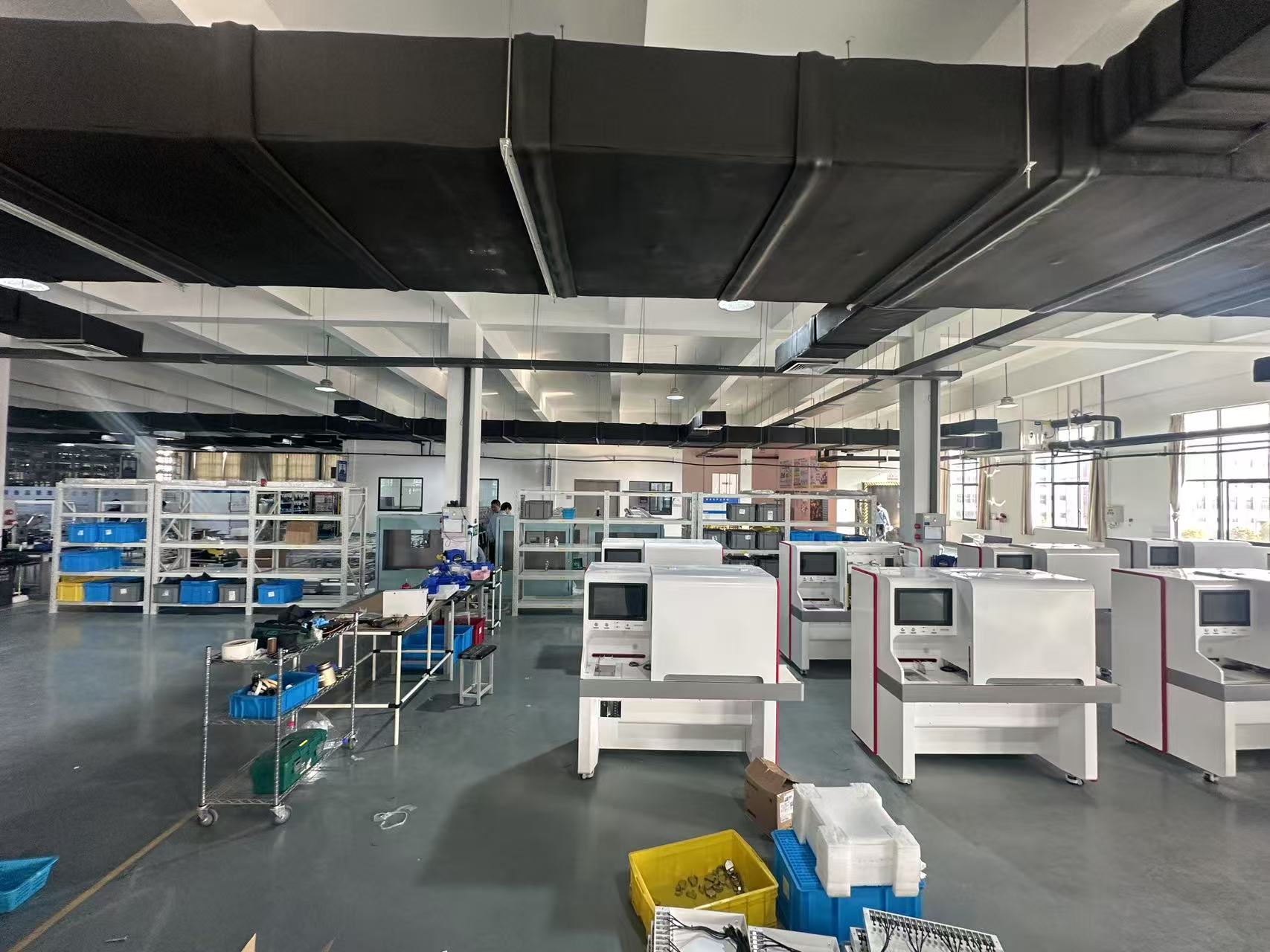
Verification machines add a second layer of control before medication leaves the pharmacy. The Automatic Sub-packaging and Verification Machine HOH-FB-D400-HD holds up to 400 medication boxes, packages at 40–60 packs per minute, and uses a 72-slot external output tray. By checking medication information automatically, the machine supports dispensed-dose accuracy and helps confirm that the right medication is associated with the right patient record.
Controlled drugs and high-risk medications require a different type of inventory control. The Intelligent Integrated Management Cabinet HOH-BQ-A and the Anesthetic Medication Dispensing Cabinet HOH-MJ-01 provide structured storage with touch-screen access. The HOH-MJ-01 offers 44 compartments across nine drawers, while the HOH-BQ-A provides 32 small pillboxes and 8 large pillboxes in a compact cabinet footprint. These products are relevant for hospital departments that need tighter control over medications used in anesthesiology and high-acuity care.
Application Evidence: Inventory Control in Hospital Pharmacies
In Southeast Asia, Haier Biomedical has delivered automation projects across different hospital types. A private hospital in Thailand used a customized universal dispenser system in its outpatient pharmacy. The system was developed specifically around local medication packaging characteristics, which made automated dispensing more stable. The hospital reported improved dispensing accuracy and reduced repetitive tasks for pharmacists. For inventory control, the practical effect was that medications could be stored and dispensed in formats compatible with the local market, reducing the need for manual handling.
A general hospital in Vietnam deployed one intelligent pharmacy automation system. The project was customized according to the hospital's pharmacy layout and workflow, and the system was integrated with the hospital information system. Reported outcomes included optimized dispensing workflows, improved medication management efficiency, reduced patient waiting time, and enhanced patient service experience. This case shows how a pharmacy automation project can serve both operational goals and the digital transformation strategy of a hospital.
Market Trends That Make Inventory Control a Priority
Pharmacy automation is increasingly seen as inventory infrastructure. Medication dispensing systems already account for the largest product segment, with a 32.5% share in 2025, according to Dataintelo. Hospital pharmacies have been the largest end-user segment because of high patient volumes and complex medication regimens. Meanwhile, software is expected to grow at the fastest rate among pharmacy automation components from 2024 to 2030, according to MarketsandMarkets. For inventory control, this means the value of a dispensing machine will be increasingly determined by the quality of the software connected to it.
The direction of clinical use supports the same conclusion. Haier Biomedical reported that its AI-powered automated pharmacy solutions increased direct dispensing rates to 80% in 2025. A high direct dispensing rate means that a larger share of prescriptions is handled without manual picking, which reduces the number of human touchpoints where inventory records can diverge from physical stock. Industry reporting also links automation with lower drug wastage; reductions of up to 90% have been reported in certain clinical settings. Buyers should treat such figures as context, not as a guarantee for every installation.
Automated Systems vs. Traditional Shelves: What Changes for Inventory
| Aspect | Traditional manual workflow | Automated pharmacy system |
|---|---|---|
| Stock tracking | Periodic manual counts and visual checks | Barcode-verified transactions linked to dispensing events |
| Expiry management | Relies on staff checking shelf labels | FIFO/FEFO rules applied through configured storage logic |
| Replenishment | Triggered by shelf observation | Guided by system records and storage position data |
| Traceability | Limited to paper or spreadsheet records | Barcode recognition with full-chain monitoring |
| Pharmacist time | Consumed by locating and counting medications | Redirected to verification, patient care, and professional tasks |
| Space use | High footprint, open shelves | Modular, high-density automated storage |
The main limitation is that automation must match the pharmacy's actual conditions. Pharmacy automation is not suitable for every hospital in the same form. The right configuration depends on prescription volume, medication types, pharmacy layout, workflow, available space, and investment requirements. For a hospital with a high volume of boxed medications, a robotic arm dispenser may be appropriate. For a pharmacy with extreme prescription throughput, a chute type dispenser can support simultaneous dispensing and replenishment. For smaller departments, management cabinets may be a more realistic starting point. A successful project therefore begins with workflow analysis, not with choosing a machine first.
Future Outlook: Inventory as a Data-Driven Function
In the next phase, inventory control will move from recording what is dispensed to predicting what will be needed. AI-based analysis can support medication demand forecasting, identification of slow-moving stock, and exception alerts for near-expiry products. The growing use of automated dispensing cabinets is also pushing inventory decision points closer to the point of care, which increases the need for a centralized digital record. For buyers, the practical implication is to look for systems with open integration, modular expansion, and strong data capture at every step.
Frequently Asked Questions
Is pharmacy automation suitable for every hospital?
No. Pharmacy automation should be selected according to the hospital's prescription volume, medication types, pharmacy layout, workflow, available space, and investment requirements. Suppliers can provide different automation solutions, including Robotic Arm Dispensers, Chute Type Dispensers, and High Speed Dispensers, for different pharmacy scenarios.
Can pharmacy automation systems integrate with a hospital HIS?
Yes. Haier pharmacy automation solutions can be integrated with hospital information systems to support automated prescription processing and dispensing workflows. Depending on project requirements, the system can connect with HIS/EMR platforms, allowing prescription information to be transferred to the pharmacy automation system for medication dispensing.
Can pharmacy automation reduce medication picking errors?
Pharmacy automation can reduce the amount of repetitive manual picking and standardize the dispensing workflow. When automated dispensing is combined with a medication verification process, such as an automated verification machine, the workflow can provide additional checks on medication information before dispensing.
How can an automated dispensing machine improve pharmacy efficiency?
Automated dispensing equipment can automate repetitive medication picking and dispensing processes, allowing pharmacists to spend less time on routine handling and more time on professional services. Products such as the Haier Robotic Arm Dispenser and Chute Type Dispenser can be configured according to different pharmacy workflows and dispensing requirements.
What types of hospitals are suitable for a Robotic Arm Dispenser?
A Robotic Arm Dispenser is suitable for hospitals that handle a relatively large number of boxed medications and require automated storage and dispensing. Haier's Robotic Arm Dispenser can be configured with multiple modules and integrated into the overall pharmacy workflow according to medication volume, available space, and dispensing requirements.
Reference: Haier Biomedical publishes a full-scenario intelligent pharmacy brochure with additional product and configuration context. The brochure is available at https://cdn.socialarks.com/sbsp/25125/common/2026/0805/Full-scenario%20Intelligent%20Pharmacy.pdf.