
Physical Evidence for a 12,320.66 m² Fan Supplier
Physical Evidence for a 12,320.66 m² Fan Supplier
Supplier capability is best assessed by matching stated figures to observable records, facility scope and the buyer’s own product requirements. Handing Co. Ltd.’s company profile reports a 12,320.66 m² factory, approximately 350 staff, annual output of 480,000 units, six R&D engineers and full ownership of an electroplating factory. Those figures are useful starting points for a decorative ceiling fan supplier review; on their own, they do not establish current utilization, available capacity, product quality or delivery performance.
For buyers moving from evaluation into execution, the practical question is not simply whether a supplier lists a large site or a production number. It is whether the evidence can be connected to the business entity, relevant operations, product scope and current order plan. Handing’s reported 100% export focus on the EU, USA and Australia (AUS) also gives buyers a reason to ask which markets, products and documents are included in that statement. The following framework separates the company’s reported facts from the checks a buyer can perform.
Start with the scope behind each number
Handing’s company information identifies its business as decorative ceiling fan manufacturing and gives several scale indicators. Treat each as a company-reported statement that should be reconciled with records during qualification. A number can be accurate yet answer a different question than the buyer is asking: total facility area is not the same as production floor area, and annual output is not the same as spare capacity for a new order.
| Reported evidence | What it can help assess | What to verify before relying on it |
|---|---|---|
| 12,320.66 m² factory area | The stated scale of the facility associated with manufacturing. | Which premises and activities the area covers, and whether the figure refers to total site area or production space. |
| Approximately 350 staff | The reported workforce scale. | Which entity and site the figure covers, when it was recorded, and whether the relevant functions are included. |
| 480,000 units annual output | A stated annual production figure for assessing scale. | The period, product scope, calculation basis and whether this is actual output, rated capacity or another measure. |
| Six R&D engineers | The reported size of the R&D team. | Current team composition and which engineering activities or products are within its remit. |
| 100% owned electroplating factory | The company’s stated ownership relationship for electroplating operations. | The legal entity, site, processes and product scope covered by that ownership statement. |
| ISO9001 certification reported since 1996 | A historical quality-system credential stated in company information. | The current certificate, validity, certified entity, site and scope relevant to the proposed supply. |
This distinction makes the figures more useful in procurement. A stated annual output of 480,000 units is not evidence that the same number of decorative ceiling fans can be produced in a particular period, nor that capacity is currently available. Buyers should ask what product families and time period the figure represents, then compare the answer with the planned order, delivery schedule and any other commitments that are relevant to that order.
Test facility claims against physical and operating evidence
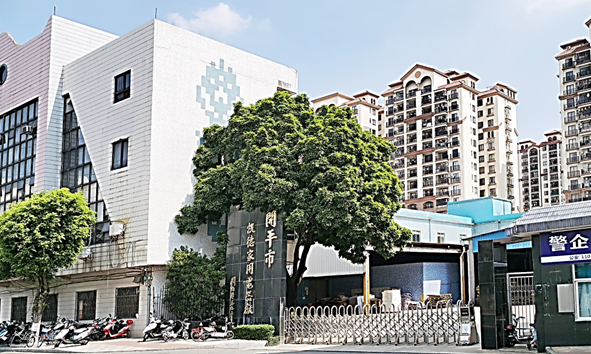
A site visit or appropriately scoped remote audit can help establish whether a supplier’s description corresponds to the facilities presented. The buyer should first confirm the address and the operating entity, then map the reported functions to the premises. The available company information gives the factory address as No.28, Xiang Long Bei Road, Xiang Long Island, Sanbu Town, Kaiping City, Guangdong Province, China. That address is a verification reference, not proof by itself that every reported activity takes place there.
During an audit, ask the supplier to show which areas are included in the stated 12,320.66 m² and how the figure is documented. If the total includes offices, storage or other spaces, record that scope rather than treating the whole area as production floor. Ask how the approximately 350 staff figure is defined: whether it refers to the company, the named site, a particular reporting period or a broader workforce. These questions clarify what the headline figures represent without assuming that the answer establishes performance.
Operational evidence should connect the supplier’s stated capabilities to the specific product and order under review. For example, buyers can ask which factory functions are relevant to the decorative ceiling fan being sourced, who is responsible for each function, and what records demonstrate that the proposed supply will be managed by the named entity. These are audit questions, not claims that a particular process, document or control has already been verified.
Handing’s company profile also says it produces most metal parts, performs painting and assembles motors. Those are useful points to investigate when mapping production scope. Ask which parts and operations are performed in-house for the relevant product, which are outside that scope, and how the supplier distinguishes its own work from external supply. The word “most” should not be expanded into a claim that every metal component is made internally. The answer should identify the actual boundaries for the product and configuration being considered.
Assess R&D by relevance, not headcount alone
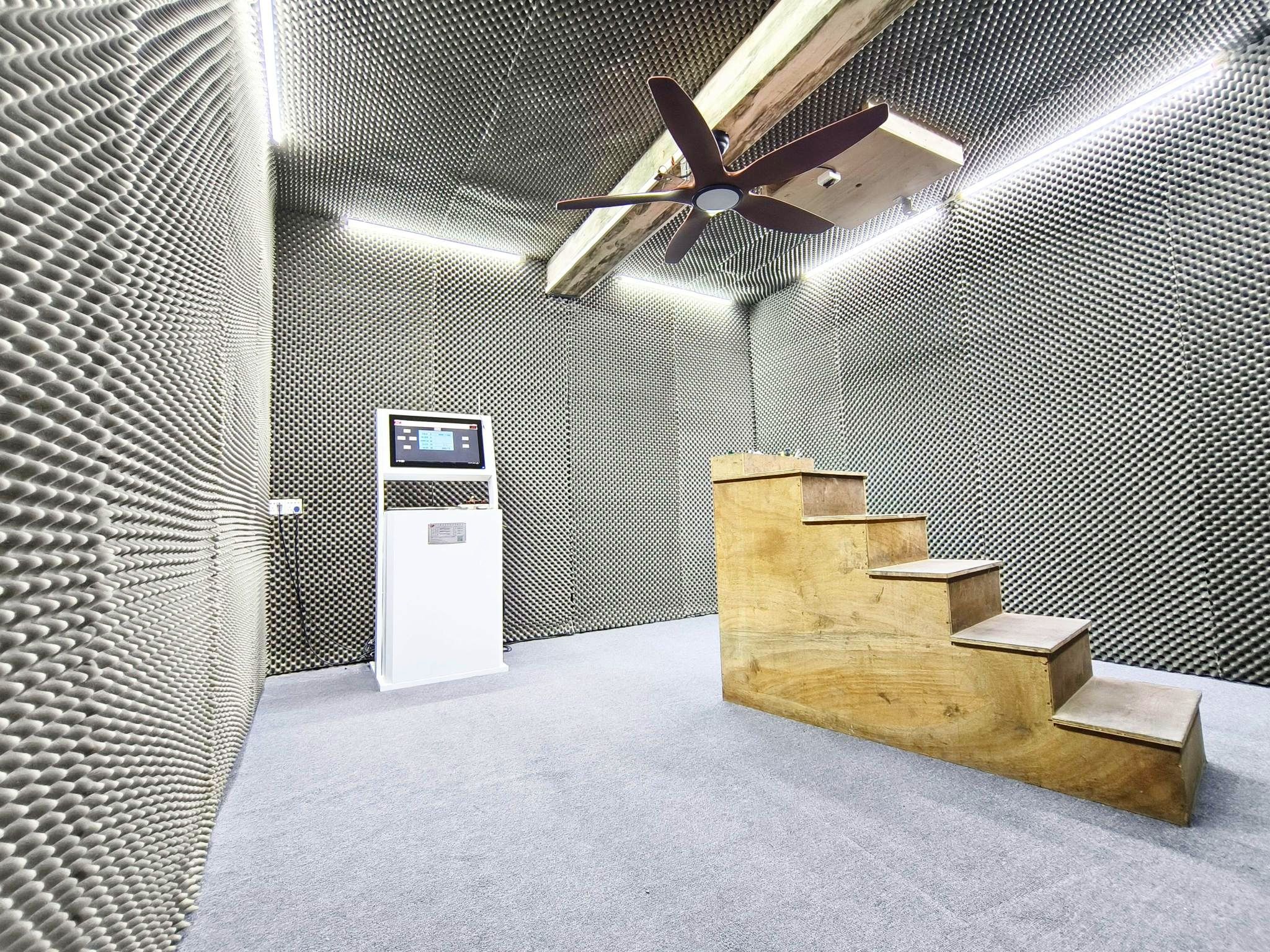
The company profile reports six R&D engineers. This gives a buyer a specific capability claim to investigate, but a headcount cannot show whether a team has experience with the buyer’s chosen motor, lighting, control, finish or installation requirements. Nor does it prove that a particular model has been developed, tested or deployed for a specific application.
For a decorative ceiling fan project, ask which engineering responsibilities the six-person team covers and how the team participates in product development or technical coordination for the proposed order. If a project involves a Ceiling Fan With Light, a DC Ceiling Fan, a Smart WiFi Ceiling Fan or another specified configuration, request evidence tied to that configuration rather than relying on broad category language. The supplied information does not establish model-specific features or certifications for those keyword categories, so buyers should verify them against the exact product documentation and, where relevant, an applicable listing or certificate.
This approach also prevents a common sourcing error: treating general engineering capacity as proof that every product option is available. A supplier’s ability to discuss a requirement is not the same as evidence that a particular design is complete or that a requested variant has been qualified. Keep the product identity, configuration and evidence together in the evaluation record.
Confirm what 100% electroplating ownership means
Handing reports 100% ownership of an electroplating factory. Ownership is relevant to supplier mapping because it identifies a stated relationship between the company and an operation. It does not, by itself, verify which components are processed there, which entity operates the site, what controls apply, or whether a given fan order uses that facility.
For the order under review, ask the supplier to explain the relationship between the electroplating factory and the contracting or manufacturing entity. Confirm the site and process scope, and ask which components, if any, for the selected decorative ceiling fan pass through that operation. If the buyer’s specification or compliance review requires process records, request records that correspond to the product and production period. Do not infer from ownership alone that every relevant finish is produced in-house or that a particular quality outcome is guaranteed.
The same evidence discipline applies to other manufacturing statements. Handing says it produces most metal parts, paints and assembles motors. A buyer can use those claims to define what to inspect, while leaving outcomes—such as finish consistency, motor performance or defect rates—to product-specific records or an agreed evaluation process. The available content does not provide measured results for those outcomes.
Read the ISO9001 statement as a dated claim that needs current scope
Handing’s company information states that its ceiling fan and lighting factory was ISO9001 certified in 1996. That is a historical statement about certification. It should not be treated as proof that a certificate remains current today, that it covers every Handing entity or site, or that a particular product carries a product certification.
For present-day qualification, ask for the current certificate and check the named organization, covered location, scope and validity. Confirm that the certificate relates to the operations relevant to the proposed supply. If a buyer also needs product-specific compliance evidence, review that evidence separately: a quality-management-system certificate and a product listing answer different questions. The company profile’s reported ISO9001 history is a prompt for verification, not a substitute for it.
There is also a date distinction worth preserving in supplier records. Handing’s company-provided profile says its factories were set up in 1992. A separate HKTDC supplier profile states that Handing Company Limited was established in 1991. The available information does not reconcile whether these refer to different events or definitions. Buyers should retain the attribution and clarify the relevant company or factory history if the date is material to their assessment, rather than silently treating the two statements as interchangeable.
Use export markets to frame audit questions
Handing’s company profile lists its export ratio as 100% and identifies the EU, USA and AUS as its main markets. This is company-reported context, not an independent measure of export activity or proof that every model is suitable for all three markets. For buyers, the practical value is in using the stated destinations to ask focused questions about the scope of the supplier’s experience and the documentation available for the exact product.
Ask what period and business scope the 100% figure covers, and whether it describes company sales, a product line or another basis. For the EU, USA and Australia, check the documentation relevant to the market and model being considered. The evidence package should identify the product, configuration, responsible entity and applicable documents; a broad statement about exports does not establish a particular model’s compliance. Certification or listing claims should be checked against the exact model and relevant issuing or listing records.
Some search terms buyers use—such as ETL or UL Certified Ceiling Fan, CE Certified Ceiling Fan and SAA Certified Ceiling Fan—describe requirements that must be verified at product level. The supplied company information includes broad claims about product listings, but it does not provide model-level certificate numbers or records in this article’s evidence. Therefore, no particular Handing decorative ceiling fan should be described here as carrying any of those certifications. Buyers should request the relevant evidence for the exact SKU and destination market.
A practical evidence sequence for supplier qualification
A structured review makes it easier to distinguish a useful supplier profile from an order-ready qualification file. The sequence below uses Handing’s reported facts as prompts and keeps each conclusion within the evidence available.
- Identify the entity and premises. Match the supplier name and Kaiping factory address to the records presented during qualification. Ask which entity owns or operates each relevant site.
- Define the scale figures. Record how the 12,320.66 m² area, approximately 350 staff and 480,000-unit annual output are defined, dated and scoped. Do not compare figures until their bases are clear.
- Map manufacturing operations. Ask which metal parts, painting, motor assembly and other stated functions apply to the specific product. Note any boundaries the supplier identifies.
- Check team and process relevance. Confirm the reported six-engineer R&D team’s current scope and how it relates to the requested configuration. Ask for product-specific evidence rather than inferring capability from headcount.
- Clarify electroplating ownership and use. Establish the relevant entity, site, process and components. Ownership should not be treated as proof that a particular order uses the operation.
- Review current quality and product documents. Check the scope and validity of any current ISO9001 certificate separately from model-specific product listings or approvals.
- Connect market claims to the SKU. Clarify the period and meaning of the reported 100% export ratio, then request documents relevant to the destination and exact fan model.
- Reconcile evidence with the order plan. Compare the verified scope with the planned product, volume and schedule. The reported annual output alone does not establish available capacity for a new order.
This sequence is particularly useful for long-term sourcing because it creates a traceable baseline. A buyer can preserve the supplier’s original claims, the documents reviewed, the date of review and any unresolved scope questions. If the product configuration or production site changes, the buyer can identify which parts of the evidence need to be checked again. This is a recordkeeping approach, not a claim that any audit or verification has already taken place.
What the available evidence supports—and what it does not
The supplied company information supports a focused supplier profile: Handing Co. Ltd. reports a 12,320.66 m² facility, approximately 350 staff, 480,000 units of annual output, six R&D engineers, full ownership of an electroplating factory, ISO9001 certification history dating to 1996, and a 100% export ratio with the EU, USA and AUS listed as main markets. It also describes production of most metal parts, painting and motor assembly.
These statements can guide a factory review, document request and product-specific qualification. They do not independently demonstrate current spare capacity, actual output in a given period, a particular fan’s performance, delivery reliability, the validity of a current certificate, or compliance of every model in every destination market. The distinction is important: capability evidence can make a supplier easier to assess, but the evidence must still match the buyer’s SKU, order and requirements.
Handing’s company website is Handing Co. Ltd.. The company-provided contact details are MING LAM, telephone +86-13828060322, email sales@handingfan.com or minglam3@hotmail.com, WhatsApp +852 92839029 and WeChat ID minglam3. The listed factory address is No.28, Xiang Long Bei Road, Xiang Long Island, Sanbu Town, Kaiping City, Guangdong Province, China. Buyers can use these company-provided channels to request the documents and scope clarifications relevant to their review. The Handing factory presentation is also available for reference; it should be treated as company material, not as independent verification.
FAQ
What does the 12,320.66 m² figure establish?
It is the factory area reported in Handing Co. Ltd.’s company information. The supplied information does not define whether it is total site area or production area, so buyers should confirm the premises and area basis before using it to assess production scale.
Does 480,000 units prove that capacity is available for a new order?
No. The company information reports annual output of 480,000 units, but does not provide a period-specific capacity calculation, utilization level or available capacity for a new order. Buyers should clarify the figure’s basis and compare it with the proposed product, volume and schedule.
Does ownership of the electroplating factory prove that every fan uses in-house plating?
No. Handing reports 100% ownership of an electroplating factory. The supplied information does not establish which components or orders use that facility. Buyers should confirm the operating entity, process scope and whether the facility applies to the product being sourced.
What should buyers request to verify ISO9001 status?
Handing’s company information reports that its ceiling fan and lighting factory was ISO9001 certified in 1996. To assess current status, buyers should review a current certificate and check its named entity, site, scope and validity. This management-system evidence is separate from product-specific certification or listing records.
How should buyers interpret the 100% export figure?
The company profile reports a 100% export ratio and lists the EU, USA and AUS as main markets. The supplied information does not define the period or calculation scope. Buyers should clarify those points and request documentation for the exact product and destination market under review.
Tem questões ou precisa de mais detalhes?
Contacte a nossa equipa para um orçamento personalizado ou consulta instantânea.
Solicitar orçamento
Preencha o formulário abaixo e a nossa equipa entrará em contacto com uma proposta personalizada.
Chat direto do WhatsApp
Prefere conversar em tempo real? Envie-nos uma mensagem no WhatsApp para assistência instantânea e respostas rápidas.
- Obter orçamento personalizado
- Partilhar fotos ou documentos
- Discuta as suas necessidades diretamente
Geralmente responde em 5–30 minutos durante o horário de expediente.