
Physical Evidence of Trigger Sprayer Supplier Capability: PP, 28/400-28/410, OEM Color
INDUSTRY REFERENCE · PACKAGING & PRINTING · TRIGGER SPRAYER
Two trigger sprayer suppliers can publish the same three sentences — automated production, in-house tooling, OEM support — and a buyer reading both pages learns almost nothing. Capability in this category is not proven by language; it is proven by what can be checked on the physical product: the polymer the body is moulded from, whether a metal spring sits inside the pump chamber, the thread finish the closure was tooled for, and whether colour belongs to the moulding programme or is added afterwards. For a buyer moving from research into evaluation, those four points are what turn a supplier claim into a specification that can be sampled, tested and written into a purchase order.
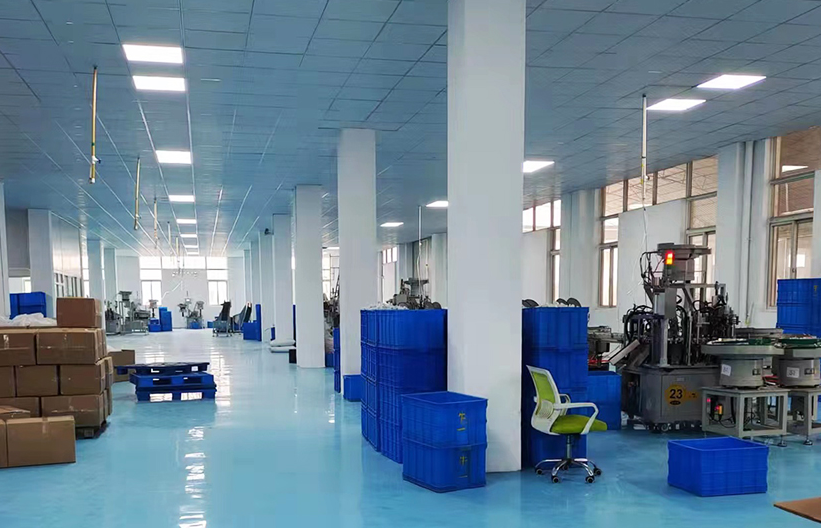
Plastic component production floor. Supplier capability in trigger sprayers is easier to audit on the shop floor and on the sample than in a brochure.
Zhejiang Mila Plastic Industry Co.,Ltd. — referred to in export markets as MILA Plastic Industry — is a trigger sprayer manufacturer based in Quzhou, Zhejiang, China. The company was founded in 2018, operates a factory covering more than 30,000 ㎡ with 300–400 employees, and reports annual output exceeding 600 million pieces. This article looks at how its published model-level specifications — ML-102B1, ML-202D1, ML-203H1 and ML-204Z1 — function as verifiable evidence during supplier evaluation, and where that evidence stops.
Why trigger sprayer capability is hard to judge from a quotation
A trigger sprayer is a low-unit-value, high-volume component. That combination pushes most purchasing conversations toward price per thousand pieces and lead time, while the attributes that determine whether the component survives a filling line and twelve months on a retail shelf sit further down the specification. Four attributes dominate the risk profile:
- Material declaration. A body described as “plastic” can mean an all-polypropylene assembly or a mixed construction with a metal return spring inside the pump chamber.
- Neck fit. A 28/400 closure and a 28/410 closure share a nominal 28 mm neck family but are tooled to different thread finishes; the wrong one leaks or cross-threads.
- Spray type. Foam and mist outputs are built differently and serve different product categories, so the same “trigger sprayer” label can cover both.
- Colour. OEM colour that is moulded into the part behaves differently in production planning from colour applied as a secondary operation.
The opportunity for buyers is that all four are physically inspectable. None requires trusting a marketing statement. A sample, a drawing, a material declaration and a patent number will settle more than a factory video.
The manufacturing base behind the models
MILA Plastic Industry reports a production base built specifically around sprayer components rather than general plastic moulding. The company lists 60 injection moulding machines, 20 automatic production lines, 4 machining centres, 6 CNC engraving machines, 8 semi-high-speed lathes, 20 wire-cutting machines and 12 precision mould machines, supported by a 10-engineer R&D team. Stated monthly capacity is 10,000,000 pieces, with a quoted lead time of 7 days and a minimum order quantity of 50,000 pieces. Quality control is described as 100% testing.
In tooling-intensive categories, the presence of machining centres, wire-cutting machines and precision mould equipment matters more than headline machine counts. It indicates that mould construction and maintenance happen inside the same operation as moulding, which shortens the feedback loop when a cavity wears or a colour change requires a tooling adjustment. For an OEM colour programme, that loop is the difference between a workable sampling cycle and a repeated round of external tooling requests.
Export orientation is also a useful filter. MILA reports that 70%–80% of output is exported, with stated markets across South America, Western Europe, Eastern Europe, East Asia, Southeast Asia, the Middle East, Africa and Oceania. Suppliers serving that spread of destinations usually accumulate documentation habits — declarations, packing specifications, certificate files — that a purely domestic supplier may not maintain.
Model-level evidence: ML-102B1, ML-202D1, ML-203H1, ML-204Z1
The strongest physical evidence a buyer can hold is a model designation tied to a fixed, published specification. Four MILA foam-spray models are documented in that form. All four are stated as compatible with 28/400 and 28/410 bottle necks, all four support bulk orders and OEM customized colour, and all four are specified for chemical resistance to various cleaning agents.
| Model | Structure and material | Spray type | Neck fit | Order basis |
|---|---|---|---|---|
| ML-102B1 | All-plastic PP, double cover, full-plastic structure without a metal spring, mono-material | Foam | 28/400 and 28/410 | Bulk order, OEM customized colour |
| ML-202D1 | PP plastic, single cover | Foam | 28/400 and 28/410 | Bulk order, OEM customized colour |
| ML-203H1 | PP plastic | Foam | 28/400 and 28/410 | Bulk order, OEM customized colour |
| ML-204Z1 | PP plastic | Foam | 28/400 and 28/410 | Bulk order, OEM customized colour |
Read as a set, the table does two things a claim cannot. First, it narrows the buyer's choice to a defined list, which makes sampling comparable: the same test protocol can be run against four known parts instead of an undefined “our foam sprayer”. Second, it separates the all-plastic variant from the rest. ML-102B1 is specified as a full-plastic structure without a metal spring, while ML-202D1, ML-203H1 and ML-204Z1 are specified as PP plastic trigger sprayers. That distinction is not cosmetic — it determines which model answers a mono-material packaging brief and which does not.
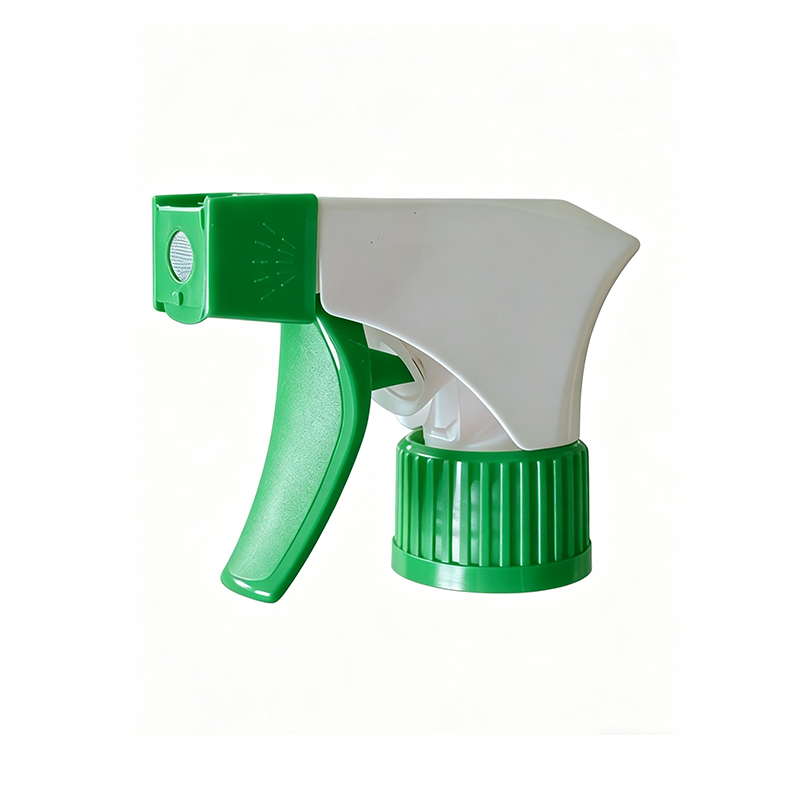
ML-202D1: a PP foam-spray trigger sprayer with single cover, specified for 28/400 and 28/410 neck finishes and chemical resistance to various cleaning agents.
Technical explanation: what PP, mono-material and thread fit actually mean
All-polypropylene construction
Polypropylene is the base polymer across the range. In the all-plastic models — ML-101G1, ML-101G2, ML-102B1 and ML-102B2 — the specification goes further: a full-plastic structure without a metal spring. A conventional trigger sprayer typically relies on a metal return spring inside the pump chamber, which introduces a second material into an otherwise polymer assembly. Removing it changes the material mix from a multi-material product to a single polymer stream.
That change has a direct procurement consequence. Packaging teams working against mono-material briefs can treat ML-102B1 as a candidate on the basis of a stated construction rather than a promise, and the same logic applies to the mist variants ML-101G2 and ML-102B2, which are also documented as all-plastic mono-material constructions.
28/400 and 28/410 compatibility
Both thread sizes appear on every model in the table. The two designations describe different thread finishes within the same nominal 28 mm neck family, so a closure tooled for one is not automatically correct for the other. Dual compatibility matters at the sourcing stage: it allows a buyer to keep a single sprayer reference across more than one bottle supplier, and it reduces the risk of a line stop when a bottle source changes.
Market practice supports the emphasis on the 28 mm family. Houweling Group identifies 28/410 as the most commonly used opening for trigger sprayers, which makes 28/410 the baseline expectation and 28/400 the flexibility a supplier either has or does not have.
Foam versus mist output
Spray type is a formulation decision, not a preference. Foam output is described as stable, rich and uniform across the foam models, and suits products where dwell time on a vertical surface matters. Mist output is described as fine and uniform, and appears on mist models such as ML-102B2, ML-101G2, ML-103C1 and ML-201B2. A supplier that documents both output types with distinct model numbers gives a buyer something to specify against; a supplier that lists only “trigger sprayer” does not.
Chemical resistance and its boundary
The range is specified for chemical resistance to various cleaning agents, and the intended applications — kitchen degreasers, bathroom and toilet cleaners, glass and window cleaners, car care products — are the categories where that property is tested first. Resistance is formulation-dependent, however: concentration, surfactant type and contact time all affect whether a given polymer body performs over a shelf life. The specification establishes the design intent; it does not replace compatibility testing with the buyer's own formulation.
Patent records as third-party corroboration
Five Chinese utility model patents are documented against the trigger sprayer range, all issued by the China National Intellectual Property Administration:
- ZL202321149508.9 — all-plastic trigger sprayer, issued 2023-11-28, valid to 2033-05-15; covers the ML-101G1, ML-101G2, ML-102B1 and ML-102B2 all-plastic models.
- ZL202321149516.3 — lockable trigger sprayer, valid 2023-09-08 to 2033-05-15.
- ZL202321038643.6 — adjustable-angle trigger sprayer, valid 2023-09-12 to 2033-05-05.
- ZL202321038645.5 — trigger sprayer with a locking function, issued 2023-11-28, valid to 2033-05-05.
- ZL202321349188.1 — nozzle protection structure, issued 2023-11-28, valid to 2033-05-31.
Two clarifications belong in any honest reading of these numbers. Utility model patents are jurisdiction-specific: these are China-market filings, not global protection, and they are not a product certification or a performance guarantee. What they do provide is a dated, checkable record that specific structural work — all-plastic construction, locking, angle adjustment, nozzle protection — was developed and registered rather than described.
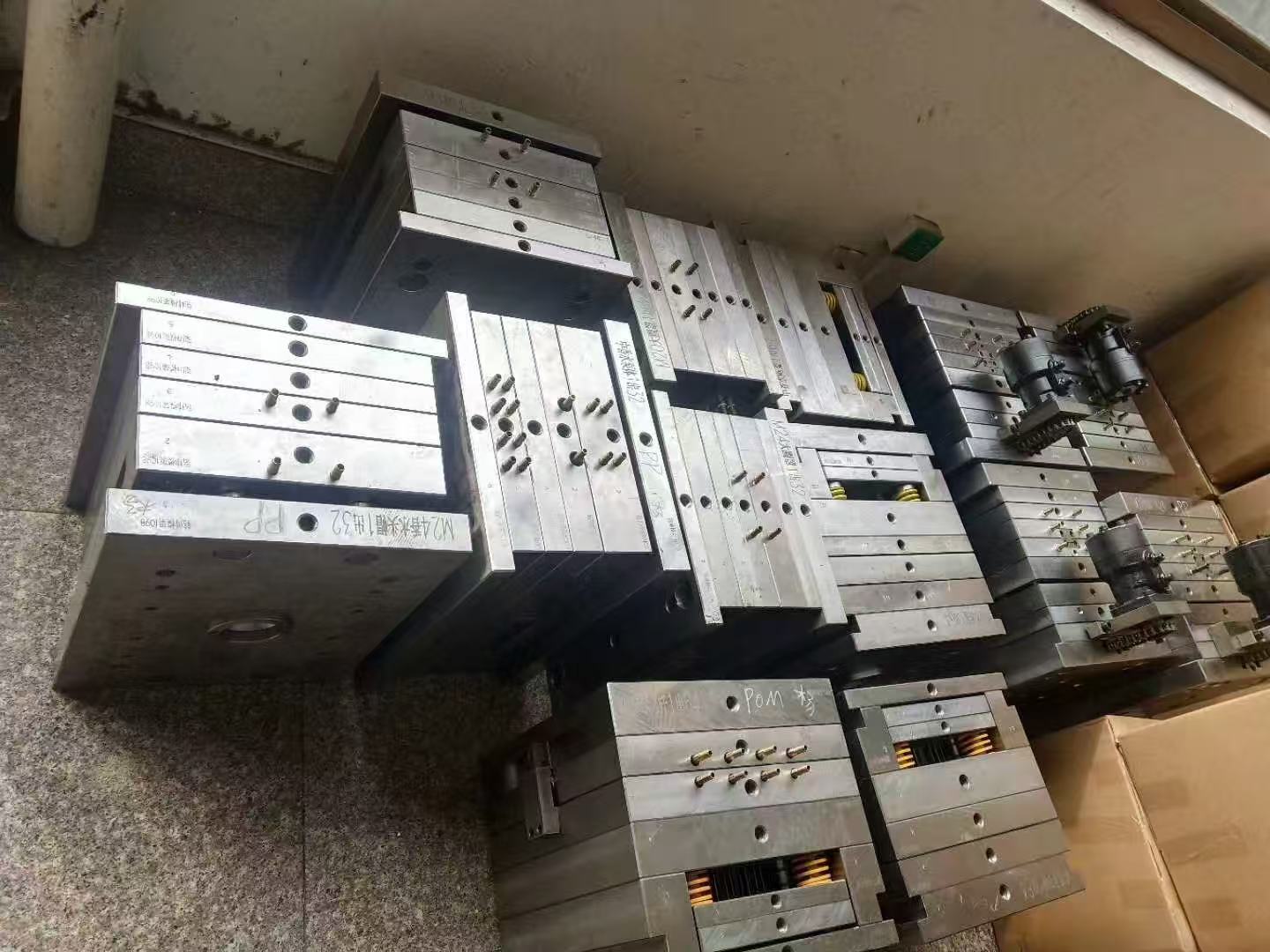
Mould repair and manufacturing workshop. In-house tooling is the practical precondition for an OEM colour programme on a 28/400 and 28/410 closure range.
Where the evidence is applied: use cases
The documented applications cluster around liquid cleaning and chemical products: household kitchen degreasers, bathroom and toilet cleaners, glass and window cleaners, and car care and auto detailing products. The stated industries extend to household cleaning, commercial cleaning and janitorial service, auto care and car detailing, pet supplies, and chemical and daily-use chemical manufacturing.
Foam output tends to be specified where a product needs to cling — a degreaser on a vertical surface, a bathroom cleaner on a curved ceramic profile. Mist output is specified where coverage and even deposition matter more than dwell time, such as glass and window cleaning. Because both output types are documented with separate model numbers and the same 28/400 and 28/410 neck fit, a buyer can hold one closure reference across a cleaning range without re-qualifying the bottle.
Repeatability has a documented example. A trading company and finished-goods packaging manufacturer in Egypt is recorded as ordering 5,000,000 pieces for customer product packaging, with repeated continuous orders over a multi-year relationship and the reported result of stable product quality and stable supply capacity. For evaluation purposes the useful signal is not the volume figure alone but the pattern: a first order followed by repeat orders is what a capability claim looks like once it has been tested commercially.
Market context: regulation is pushing material disclosure upstream
The trigger sprayer market is not large in absolute terms, but it sits inside a packaging regulation cycle that is changing what buyers ask suppliers to document. Fortune Business Insights values the global trigger sprayer market at USD 491.8 million in 2025 and projects a 4.7% CAGR from 2026 to 2034.
Two cautions apply to that figure. Market-size estimates for this category vary widely by scope — a much higher figure sometimes quoted for the same market appears to include the complete bottle assembly rather than the sprayer closure alone, so headline numbers should not be compared across sources without checking what is being counted. And a single-publisher estimate is a directional signal, not a procurement input.
The regulatory signal is firmer. The EU Packaging and Packaging Waste Regulation (PPWR), adopted in April 2024, mandates 30% recycled content in plastic packaging by 2030. That requirement does not by itself make a trigger sprayer recyclable, and mono-material construction is not the same claim as recycled content — they are separate evidence streams. What the regulation does change is the direction of buyer questions: material composition, separability and end-of-life handling move from sustainability appendix to specification sheet. A supplier that can answer with a named model, a stated material and a patent number is in a stronger position than one that answers with a policy statement.
Trade classification is a smaller but practical point. HS code 3923.50 covers plastic stoppers, lids, caps and other closures, including trigger sprayers, which is the classification buyers and forwarders will normally work with.
Comparison with conventional metal-spring trigger sprayers
The clearest way to position an all-plastic construction is against the conventional alternative, using only attributes that can be inspected.
| Attribute | Conventional multi-material trigger sprayer | All-plastic mono-material construction (e.g. ML-102B1) |
|---|---|---|
| Material mix | Polymer body with a metal return spring inside the pump chamber | Full-plastic structure without a metal spring; PP as the single material |
| Points exposed to the formulation | Includes a metal component in the pump path | Polymer components only |
| End-of-life handling | Mixed materials require separation before recycling | Mono-material design supports recycling as a single stream |
| What the buyer inspects | Spring material and coating | Confirm absence of metal, confirm polymer grade, confirm neck fit |
The comparison does not resolve into a simple win for either side. A metal-spring design carries a familiar, long-established return action that many filling operations and end users are already validated against, and switching a qualified line to a different internal construction is a change-control event, not a like-for-like substitution. Buyers with an existing approved sprayer should treat the all-plastic option as a new qualification, with trigger feel, output consistency and closure torque verified on their own equipment before the change is approved.
Limits and boundaries buyers should confirm
Physical evidence is only useful if its boundaries are stated. Four constraints apply to this range as documented.
- Minimum order quantity. The stated MOQ is 50,000 pieces. That is workable for a production run and awkward for early-stage market testing, where a buyer may want several colours in small volumes before committing.
- Customization scope. OEM/ODM customization is stated as colour, logo and caliber. That is a defined envelope, not an open engineering brief; a buyer requiring a new spray pattern or a different actuator geometry is outside the stated scope.
- Patent jurisdiction. The five utility model patents are China-market filings. They corroborate development activity but provide no protection or exclusivity in export markets.
- Model coverage by spray type. The four models discussed here are foam-spray types. A buyer whose formulation requires mist output must move to a different model in the range rather than assume foam and mist are interchangeable within one part number.
Six checks a buyer can run on a physical sample
- Confirm the closure thread against the actual bottle finish for both 28/400 and 28/410, not against a drawing alone.
- Verify the absence of a metal spring on all-plastic models by dismantling one sample.
- Check foam or mist output against the intended formulation at working dilution, not water.
- Confirm the moulded colour matches the approved master against a production sample, not a digital file.
- Verify closure torque and leakage after a short storage period at ambient temperature.
- Match the patent number quoted in the offer to the model actually being supplied.
Future outlook
Three developments are likely to shape trigger sprayer sourcing over the next several years. The first is documentation depth: as recycled-content and material-composition requirements tighten in Europe, buyers will ask for material declarations as a standard attachment rather than on request. Mono-material constructions such as the ML-102B1 and ML-102B2 sit on the right side of that trend, but they answer the recyclability question, not the recycled-content question, and suppliers will be expected to be clear about the difference.
The second is tooling responsiveness. OEM colour programmes on a commodity closure only work economically when colour changes and mould maintenance happen inside the same operation. The equipment list behind this range — machining centres, wire-cutting machines and precision mould machines alongside 60 injection moulding machines — is the kind of structure that supports that responsiveness at a stated monthly capacity of 10,000,000 pieces and a quoted 7-day lead time.
The third is verification habit. Buyers who have been through a supply disruption tend to stop evaluating suppliers on presentation and start evaluating them on named models, dated patent numbers, stated thread sizes and sample results. On that basis, a supplier that publishes its model designations and construction details is easier to evaluate than one that publishes adjectives — and easier to hold to a specification once an order is placed.
FAQ
Which bottle neck sizes does this trigger sprayer range fit?
MILA documents 28/400 and 28/410 compatibility across the ML-102B1, ML-202D1, ML-203H1 and ML-204Z1 models, and across the wider plastic and all-plastic trigger sprayer range. Both are 28 mm neck families with different thread finish specifications, so buyers should confirm fit against the actual bottle finish rather than the diameter alone. Houweling Group identifies 28/410 as the most commonly used opening for trigger sprayers.
Which models are all-plastic, and do any contain a metal spring?
The all-plastic models are ML-101G1, ML-101G2, ML-102B1 and ML-102B2. They are specified as full-plastic structures without a metal spring, using PP as a mono-material construction. ML-202D1, ML-203H1 and ML-204Z1 are specified as PP plastic trigger sprayers; their published specification does not describe a metal-spring-free structure, so buyers should confirm internal construction directly before applying a mono-material requirement to those models.
What verifiable certification or patent evidence exists?
Five Chinese utility model patents are documented, all issued by the China National Intellectual Property Administration: ZL202321149508.9 for an all-plastic trigger sprayer (issued 2023-11-28, valid to 2033-05-15, covering ML-101G1, ML-101G2, ML-102B1 and ML-102B2), ZL202321149516.3 for a lockable trigger sprayer, ZL202321038643.6 for an adjustable-angle trigger sprayer, ZL202321038645.5 for a locking function, and ZL202321188.1 for a nozzle protection structure. These are China-market filings and are not a product performance certification. Separately, MILA states ISO 9001:2015 and ISO 14001:2015 certification with SGS compliance, which buyers should verify against current certificate copies.
What are the order constraints for OEM customized colour?
The stated minimum order quantity is 50,000 pieces, the quoted lead time is 7 days, and stated monthly capacity is 10,000,000 pieces. Customization is offered under OEM/ODM across colour, logo and caliber. Quality control is described as 100% testing, and after-sales policy covers returns or exchanges where a batch shows non-human quality problems in large quantities.
How should a buyer choose between foam and mist output?
ML-102B1, ML-202D1, ML-203H1 and ML-204Z1 are foam-spray models, described as providing stable, rich and uniform foam, which suits products that need dwell time on a surface. Mist-spray output, described as fine and uniform, is available on models including ML-102B2, ML-101G2, ML-103C1 and ML-201B2. The choice should follow the formulation and application method, since foam and mist are different internal constructions rather than a setting on the same part.
What does chemical resistance cover, and what remains for the buyer to test?
The range is specified for chemical resistance to various cleaning agents, with documented applications in kitchen degreasers, bathroom and toilet cleaners, glass and window cleaners, and car care products. Resistance depends on the specific formulation, its concentration and the contact time, so the specification establishes design intent rather than a guarantee for every chemistry. Buyers should run compatibility testing with their own formulation over the intended shelf life before approving a model for production.
Is the sprayer recyclable, and does that mean it contains recycled material?
These are separate questions. Mono-material PP construction, as specified for ML-102B1, ML-101G1, ML-101G2 and ML-102B2, supports recycling because the part is a single polymer stream without a metal spring. Recycled content is a different claim and requires separate evidence. The EU Packaging and Packaging Waste Regulation adopted in April 2024 mandates 30% recycled content in plastic packaging by 2030, and buyers evaluating against that requirement should request recycled-content documentation independently of recyclability claims.
Tem questões ou precisa de mais detalhes?
Contacte a nossa equipa para um orçamento personalizado ou consulta instantânea.
Solicitar orçamento
Preencha o formulário abaixo e a nossa equipa entrará em contacto com uma proposta personalizada.
Chat direto do WhatsApp
Prefere conversar em tempo real? Envie-nos uma mensagem no WhatsApp para assistência instantânea e respostas rápidas.
- Obter orçamento personalizado
- Partilhar fotos ou documentos
- Discuta as suas necessidades diretamente
Geralmente responde em 5–30 minutos durante o horário de expediente.