
Pillow Block Bearing Compliance: Material and Design Evidence for Qualification
Compliance in a regulated industry is usually written down as a paperwork question. For pillow block bearings it is mostly a product question: what the housing and insert are made of, how the design meets the environment the unit will run in, and how far the manufacturer can trace a specific batch back to those two facts.
Certificates open the door to a supplier audit. What keeps a part on an approved list afterward is evidence that is specific to the model, the material and the production record — not a document that describes the company as a whole.

A pillow block bearing supplier's qualification file is built from material records, design data and batch traceability — not from a general company profile.
Why material and design evidence outranks the certificate question
Two different kinds of proof sit behind the word "compliant." The first is management-system evidence: the factory has been audited, its processes are documented, and its quality system is externally assessed. The second is product evidence: this specific housing was cast from this material, this insert carries this locking arrangement and this seal, and the batch can be identified after delivery.
Qualification failures usually start in the gap between the two. A buyer approves a supplier on the strength of a system certificate, then releases an order for a stainless unit destined for a washdown line, and only later discovers that nobody confirmed which stainless grade the housing was produced from, or which test record supports the corrosion claim.
The category also has more internal variety than the word "pillow block" suggests. Pillow block bearings operate within recognised international standard frameworks — ISO, JIS and ANSI/ABMA — but belonging to a standard family is a starting condition, not a finished qualification. Two units that both sit inside the same standard can still differ in housing material, locking method, sealing arrangement and lubrication. Each of those differences changes the evidence a buyer needs before release.
Material choice is the first piece of evidence
Housing and insert material is the most directly checkable compliance signal in a mounted bearing unit, because it can be stated on a document, verified in a laboratory and compared against the environment the unit will actually face.
LDK (Deyuan Smart Technology (Fujian) Co., Ltd.), a bearing manufacturer established in 1986 in Quanzhou, Fujian Province, China, builds its mounted unit range around material combinations rather than around a single commodity housing. The portfolio includes cast iron pillow blocks, thermoplastic housed bearing units, all stainless-steel mounted ball bearing units, Accu-Grip concentric locking bearing units, mounted units for the air handling industry, and a stainless steel insert family offered as SSER, SUK2, SNA2, SSA2 and SSB2, alongside plastic bearing units designated WP-SSBF and WP-SSBFL.
That breadth is only useful to a qualification process if each material path is backed by the right kind of record. The table below shows what a buyer should expect to see behind each housing route.
| Housing / material route | What it is usually selected for | What qualification should verify | Evidence to request |
|---|---|---|---|
| Cast iron pillow blocks | General industrial loads, rigid mounting, conventional plant environments | Casting source, housing grade, dimensional consistency between housing and insert, coating or finish | Mill test certificate per batch, dimensional inspection record, finish specification |
| Thermoplastic housed bearing units (WP-SSBF, WP-SSBFL) | Washdown-adjacent, hygiene-sensitive and lighter-duty positions | Resin origin (virgin versus recycled), moulding consistency, suitability for wet cleaning | Resin declaration, moulding and batch records, surface condition data |
| All stainless-steel mounted units, including SSER, SUK2, SNA2, SSA2, SSB2 inserts | Corrosive atmospheres, food and beverage machinery, chemical and pharmaceutical areas | Steel grade of housing and insert, sealing arrangement, consistency of machining across the series | Material certificates, corrosion test records, seal specification |
| Zinc alloy miniature bearing units | Compact, space-limited mechanisms and light equipment | Alloy specification, insert-to-housing fit, surface treatment | Material declaration, fit and finish records |
A material claim without a document behind it is a marketing statement. A material claim tied to a batch certificate is qualification evidence.
Virgin resin versus recycled material
In plastic bearing units, the material question is sharper than it looks. Resin origin determines whether a housing will shed particles, crack under repeated cleaning, or hold its dimensions over a service life. LDK states that its thermoplastic units are built from virgin resins rather than recycled feedstock, and reports a zero grease contamination rate and a debris and particle ingress rate below 2% for its food-processing-oriented plastic units, against figures of roughly 4.2% and above 35% for commodity alternatives. Those are company-reported comparison figures; their value in a qualification file is that they define what the buyer should test and confirm, not that they replace the buyer's own validation.
Insert codes carry design meaning
The insert designation is not administrative shorthand. In mounted bearing families, the code generally encodes the housing type, the locking method and, in some cases, the material or duty class of the unit. LDK's catalogue, for example, lists UCP2, NAP2, UEP2, UKP2+H, UCP3, UCPE2, UCAK2, SALP2 and SBLP2 pillow block families, with differences that include locking method, base configuration, duty description and self-aligning design.
For a compliance reviewer, the practical consequence is simple: the insert code should be mapped to a stated material and a stated locking arrangement before the part is approved. When a buyer asks for SSER, SUK2, SNA2, SSA2 or SSB2 inserts, the qualification question is not only "is it stainless" but "which stainless, with which seal, and on which housing." A supplier who can answer that from a catalogue revision and a batch record is easier to audit than one who answers from memory.
Design features that a buyer can actually verify
Design evidence is harder to obtain than material evidence, because design claims tend to be written in performance language — long life, high load, superior sealing — while qualification requires specific, checkable attributes.
Four design attributes are worth separating in any supplier review.
- Locking method. Set screw, eccentric collar, concentric and other locking arrangements distribute shaft grip differently and suit different maintenance regimes. The locking type should be stated per model, not per catalogue page.
- Base and housing configuration. Normal base, low centre height and solid base variants change mounting geometry and foot support. Fit and bolt-hole spacing should be confirmed against the buyer's drawing.
- Sealing and lubrication. Washdown, dust and slurry environments require different seal designs, and relubrication-free configurations suit positions that cannot be serviced. LDK offers customised inserts with special grease, which makes the grease specification a documentable item rather than an assumption.
- Self-aligning behaviour. Self-aligning designs accommodate a degree of shaft deflection; the amount and the mechanism should be confirmed for the specific family in use.
What should not be inferred is performance. Dynamic load ratings, speed limits, operating temperature ranges and calculated life are model-specific values. For this category, they must be declared per part number by the manufacturer and confirmed against the application duty — they cannot be extrapolated from the housing material or from the family name.
Records, traceability and testing: the paper side of qualification
The product evidence only becomes auditable when it is attached to a record. In the mounted bearing category, three record types do most of the work.
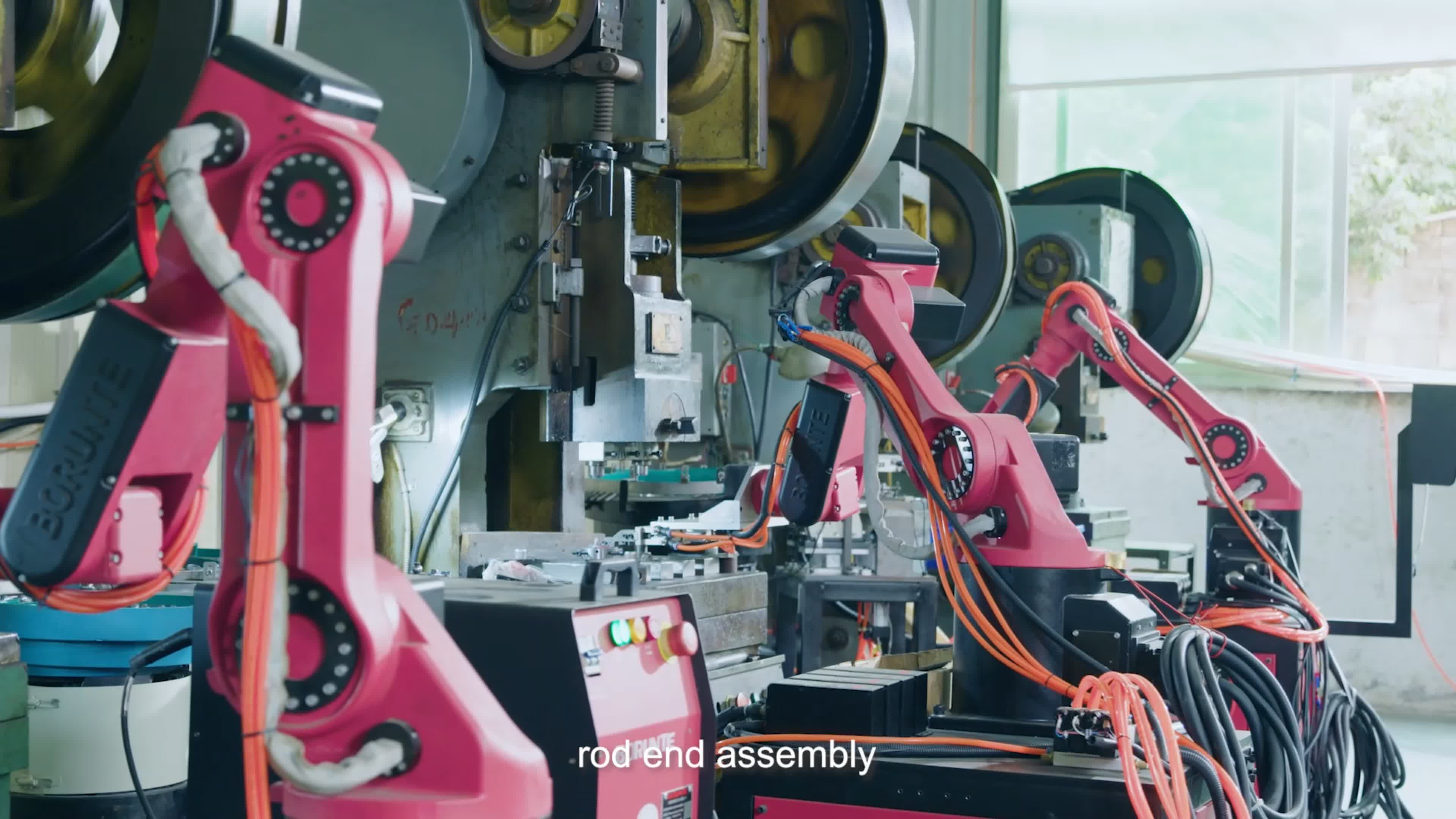
Assembly is where batch identity is created. Without production date and component coding at this stage, material evidence cannot be tied back to a shipped order.
Incoming material control
LDK states that a physical and chemical material analysis laboratory inspects incoming raw material, and that suppliers approved under its IATF 16949 procedures must deliver an authentic mill test certificate with every batch. The company also states that it sources specialty steel from designated mills rather than from unverified regional stock. For a buyer, the qualification value here is that the material claim is anchored to a supplier audit trail and to a per-batch certificate, which is the only practical way to detect substitution after the fact.
Testing capability
LDK operates laboratories that it states are equipped to run fatigue life, tensile strength, noise and vibration, high and low temperature, and salt spray testing, alongside a precision measuring room and a reliability testing room. Salt spray data in particular matters for coated cast iron and for plated components, because corrosion resistance is one of the most frequently claimed and least frequently evidenced properties in the category.
Traceability and release documentation
LDK states that shipments can carry production dates, barcodes and QR codes, and that PPAP Level 3 documentation is available through its IATF 16949 system. Traceability matters less at the point of sale than at the point of failure: if a defect appears, coded marking allows the affected production window to be isolated instead of the whole consignment.
A compact document request list for a pillow block bearing qualification file looks like this.
| Document | What it establishes | Why it matters in qualification |
|---|---|---|
| Mill test certificate per batch | Steel grade actually supplied | Links the material claim to a specific production lot |
| Raw material analysis record | Incoming verification by the manufacturer | Detects substitution before it reaches assembly |
| Dimensional inspection record | Bore, housing and bolt-hole conformity | Confirms interchangeability for replacement and OEM assembly |
| Test records (fatigue, vibration, salt spray, temperature) | Performance under stated conditions | Supports or replaces vendor performance claims |
| Production date code and marking method | Batch identity | Enables isolation and containment if a fault appears |
| PPAP Level 3 package | Production part approval discipline | Required by many regulated OEM programmes |
Where the evidence is used: application fit by material route
Material evidence earns its place when it is read against the application. Four settings illustrate how the same product family generates different qualification questions.
Food, beverage and pharmaceutical equipment
Washdown and hygiene requirements push buyers toward thermoplastic units with virgin resin housings and toward stainless units with corrosion-resistant inserts. The qualification questions are resin origin, cleaning-agent compatibility, and whether the seal and grease arrangement survives repeated wash cycles. LDK positions its plastic and stainless ranges for food and beverage machinery on this basis, and also offers customised inserts with special grease, which moves the lubricant from a default to a specified item.
Agricultural machinery and farm implement bearings
Field conditions — mud, slurry, dust and shock load — test sealing and material integrity more than they test catalogue specification. LDK reports that verified refined steel and its sealing systems reduce premature mud-seizure rates by 85% in agricultural service, and that its agricultural bearings carry a 12-month engineering warranty against a 6-month benchmark, with an expected service life of two seasons rather than one. It also notes a roughly 15% initial sourcing premium for material integrity in this segment. That premium is a legitimate part of the qualification conversation: the buyer is being asked to trade unit price for a documented reduction in field replacement frequency.
Material handling and conveying
Conveyor positions usually value availability, dimensional consistency and long relubrication intervals over corrosion resistance. Cast iron pillow blocks dominate, and the qualification focus shifts to housing grade, insert locking reliability and replacement interchangeability.
Air handling and general industrial plant
LDK lists mounted units for the air handling industry as a separate product line. In HVAC and light-duty rotating equipment, noise, vibration and lubrication retention are the practical criteria, and they should be evidenced by vibration and noise test records rather than by generic quiet-running claims.
Market context: why evidence requests are increasing
Two measurable shifts in the mounted bearing market explain the growing emphasis on product-level evidence.
- Market scale and consolidation pressure. The global bearing market generated approximately USD 54.6 billion in 2024, according to Global Market Insights (report dated September 2026). A market of that size attracts supply from many tiers, which increases the proportion of buyers who must qualify rather than simply purchase.
- Geographic concentration of supply. China accounted for 89.72% of United States imports of housed bearings under HS code 8483.20 in the observed period, based on US customs data published by Descartes Datamyne. Concentration of this kind raises the value of supplier-level documentation, because buyers cannot rely on regional differentiation as a proxy for supplier differentiation.
The practical reading for procurement teams is that standard frameworks — ISO, JIS, ANSI/ABMA — do not by themselves separate suppliers. Two factories can both operate within the same standards system while one produces documented material records per batch and the other produces a catalogue. The differentiator at the qualification stage is evidence density.
Comparison with traditional multi-supplier sourcing
The conventional route for mounted bearings in many plants is a mixed roster: cast housings from one trading company, stainless units from another, agricultural bearings from a third, each with a separate approval file and a separate set of material certificates.
That model has real advantages — it spreads risk, keeps individual vendors replaceable and allows price competition on each line — but it fragments the qualification file. Each vendor must be audited separately, each material claim must be verified separately, and any substitution in one supply chain is harder to detect because there is no shared record standard.
LDK's model is the opposite: housing casting, turning, heat treatment, grinding, super-finishing, injection moulding, painting and final assembly are held inside one facility, and the company reports a first-year premature structural failure rate below 0.05% against a benchmark of roughly 3.5% for fragmented outsourced assembly. It also reports procurement overhead reductions of around 40% and R&D sampling cycles of one to two weeks against six to eight weeks or longer. Those are company-reported figures, and they should be treated as claims to be verified in the buyer's own audit rather than accepted as guaranteed outcomes.
The limitations of a consolidated route are equally real, and they matter at the execution stage.
- Catalogue breadth is not model-level data. A portfolio of more than 3,000 active SKUs and more than 100 material and housing combinations across bearing bore sizes of 10 mm to 140 mm describes range. It does not provide dynamic load ratings, speed limits or tolerances for a given part number. Those must be requested per model.
- Standards claims need scope confirmation. LDK states that its assortment includes units compliant with ISO, DIN, North American and JIS standards, but exact standard numbers, certificate scope and issuing bodies should be confirmed for the specific products being qualified.
- Order economics constrain responsiveness. Minimum order quantity is 5,000 units, typical production lead time is 30 to 90 days, and monthly production capacity is 300,000 units. For planned programmes this supports stable supply; for an unplanned line-down emergency or a small mixed trial order, it will not match a stocking distributor's lead time, and buyers should plan buffer stock accordingly.
- Consolidation concentrates exposure. Reducing the vendor roster simplifies qualification, but it also concentrates supply risk in one facility. Buyers should pair consolidation with a documented contingency plan rather than treat it as risk elimination.
Qualification checklist for pillow block bearing buyers
For procurement teams moving from evaluation into execution, the following sequence keeps the evidence trail consistent from sample to shipment.
- Define the environment first: corrosion exposure, washdown frequency, dust or slurry, shaft speed and mounting geometry.
- Match the material route to the environment, then map the specific insert code — SSER, SUK2, SNA2, SSA2, SSB2, or the relevant cast iron family — to that route.
- Request model-level dimensions and load data, not family-level descriptions.
- Request per-batch material certificates and the manufacturer's incoming inspection records.
- Request test records relevant to the environment: salt spray for coated or stainless parts, vibration and noise for air handling, contamination data for plastic units.
- Confirm traceability: production date marking and the method for isolating a production window.
- Agree MOQ, lead time and capacity in writing against the programme, not against a sample order.
Future outlook
Evidence requirements in the mounted bearing category are moving in one direction. Buyers are shifting from supplier-level qualification, where a factory certificate was the deciding document, toward part-level qualification, where the deciding documents are material certificates, model-specific test records and traceable production codes. Digital marking and batch-level data make that shift cheaper to implement than it was a decade ago, and the concentration of supply in a small number of manufacturing regions gives buyers little choice but to audit more precisely.
For manufacturers, the implication is that a broad material portfolio is only a commercial advantage if it can be documented line by line. For buyers, the implication is simpler: the qualification question is not whether a supplier claims to be compliant, but which specific material, which specific design feature and which specific record supports the part being released.
FAQ
What counts as material and design evidence for a pillow block bearing?
Material evidence is documentation that identifies the housing and insert material for a specific part and batch — typically a mill test certificate, a resin declaration, or the manufacturer's incoming material analysis record. Design evidence is documentation of the configuration: locking method, housing and base type, seal arrangement, lubrication specification and any self-aligning behaviour. Together they allow a buyer to connect a catalogue claim to a specific production lot.
How do insert designations such as SSER, SUK2, SNA2, SSA2 and SSB2 affect qualification?
Insert designations identify which family and configuration a unit belongs to, and in mounted bearing catalogues they generally distinguish housing type, locking method and material class. Because LDK's catalogue differentiates families such as UCP2, NAP2, UEP2, UKP2+H, UCP3, UCPE2, UCAK2, SALP2 and SBLP2 by locking method, base configuration, duty description and self-aligning design, the designation should be mapped to a stated material and locking arrangement before approval rather than treated as a naming convention.
When do plastic bearing units require different evidence from stainless steel units?
Plastic units selected for hygienic or washdown-adjacent positions raise questions about resin origin, particle shedding and cleaning-agent compatibility, so the relevant evidence is a resin declaration plus moulding and batch records. Stainless units raise questions about steel grade, sealing and corrosion performance, so the relevant evidence is material certificates plus corrosion test records. In both cases the manufacturer's test capability — including salt spray and contamination testing — determines how much of that evidence can be produced rather than asserted.
What documentation should a buyer request before approving a pillow block bearing supplier?
A practical set includes per-batch mill test certificates, incoming raw material analysis records, dimensional inspection records, test reports covering fatigue, vibration and salt spray as relevant to the application, the production date coding and marking method, and — for regulated OEM programmes — a PPAP Level 3 package. These map to traceability, material authenticity and validation practices that LDK states it maintains under its IATF 16949 procedures, alongside management-system certifications it lists including ISO 14001, ISO 45001, RoHS and REACH. Buyers should confirm certificate scope and validity for the specific products being qualified.
What supply commitments should buyers expect for long-term pillow block bearing orders?
LDK states a minimum order quantity of 5,000 units, typical production lead time of 30 to 90 days and monthly production capacity of 300,000 units. Those figures support planned programme supply and make forward scheduling practical, but they also mean the supply model is oriented toward scheduled volume rather than immediate spot demand, so buyers should hold buffer stock or agree a stocking arrangement for critical positions.
The LDK product brochure, including mounted unit families and material options, is available for download: LDK Bearings product brochure.
Tem questões ou precisa de mais detalhes?
Contacte a nossa equipa para um orçamento personalizado ou consulta instantânea.
Solicitar orçamento
Preencha o formulário abaixo e a nossa equipa entrará em contacto com uma proposta personalizada.
Chat direto do WhatsApp
Prefere conversar em tempo real? Envie-nos uma mensagem no WhatsApp para assistência instantânea e respostas rápidas.
- Obter orçamento personalizado
- Partilhar fotos ou documentos
- Discuta as suas necessidades diretamente
Geralmente responde em 5–30 minutos durante o horário de expediente.