
Pillow Block Bearings: A Mounted Ball Bearing Unit Guide
A mounted ball bearing unit is an assembly rather than a single part: a sealed insert ball bearing is locked onto a shaft and carried inside a housing that bolts directly to a machine frame. Industrial catalogues usually index this family under the name of its most common housing — the pillow block bearing — even though the same insert bearing also appears in two-, three- and four-bolt flanges, flange cartridges, take-up frames, hanger units and split plummer blocks. For buyers working at the awareness and research stage, the difficulty is rarely finding a supplier. It is reading the range correctly, because housing material, locking method, sealing, lubrication regime and duty rating interact, and two units sharing the same shaft diameter can be specified for completely different operating environments.
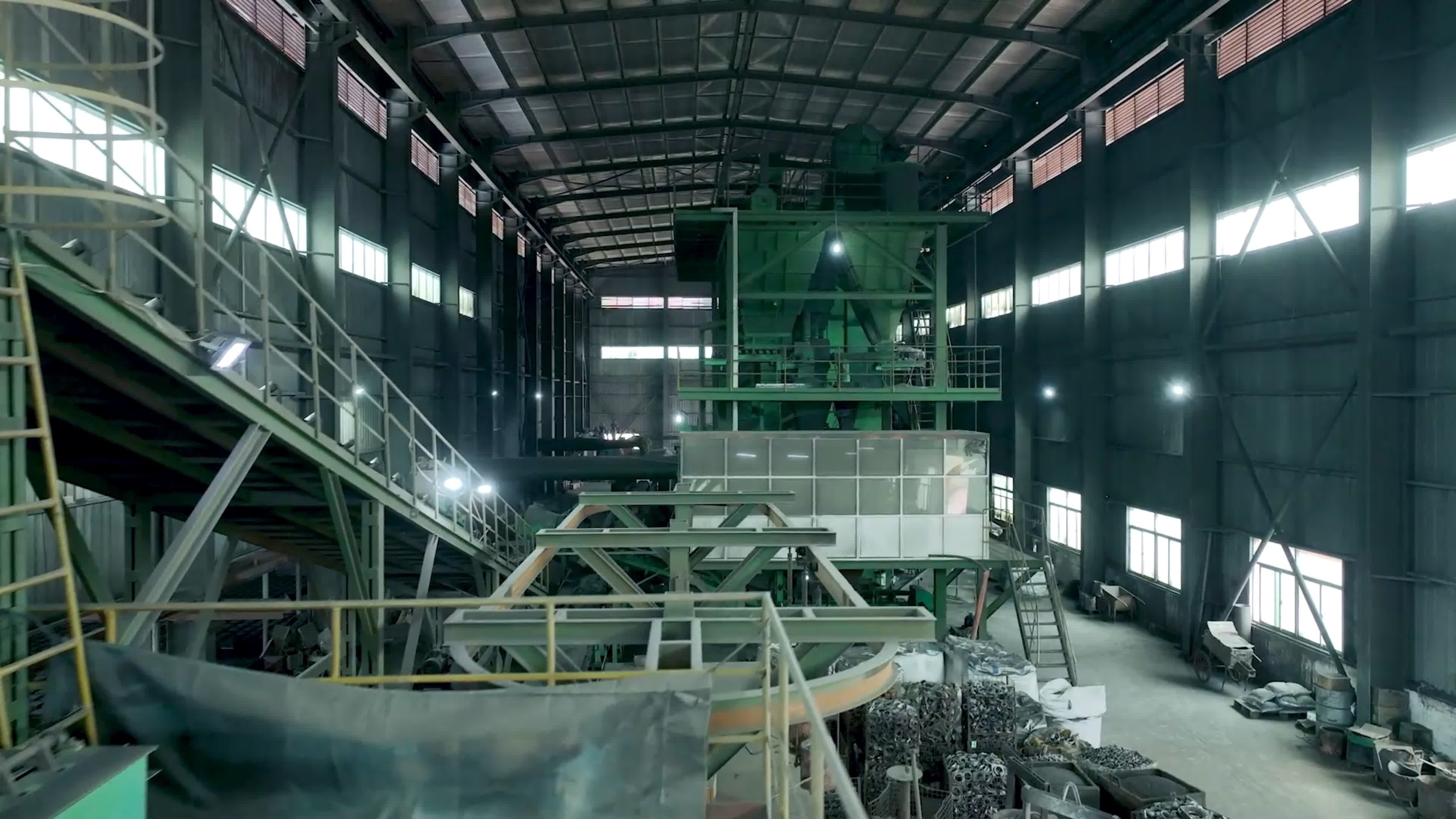
LDK is the bearing brand of Deyuan Smart Technology (Fujian) Co., Ltd., a mounted bearing and rod end manufacturer established in 1986 and based in Quanzhou, Fujian Province, China, which exports to Europe, North America, Latin America and Oceania. The company reports in-house production of both bearings and housings, insert bearing bore sizes from 10 mm to 140 mm, and more than 100 combinations of materials and housing types — a useful illustration of how broad the mounted ball bearing category has become.
How the Mounted Ball Bearing Family Is Organised
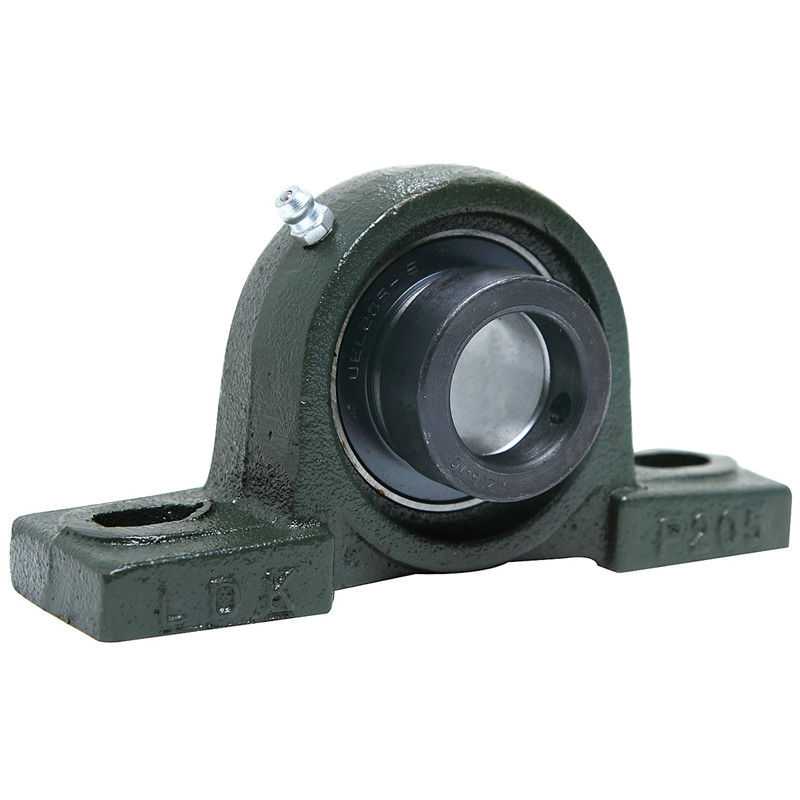
A mounted ball bearing unit is defined by its housing, not by the ball bearing inside it. The insert bearing carries the rotating load; the housing determines how the unit is fixed to the machine, how it resists contamination and what structural loads it can tolerate. In the LDK range, the mounted bearing category is presented as pillow block bearings, flange cartridge bearing units and cast iron housed ball bearing units. In practical terms, buyers will encounter the following housing conventions:
- Pillow block: a base-mounted block for shaft support along a line, typically with two bolt holes — for example the UCP2 and NAP2 series — or with tapped holes in the base, as with the UCPA2 tapped-base pillow block.
- Flange units: two-bolt (UCFL2), three-bolt (UCFB2/UEFB2 flange bracket), four-bolt (UCF2) and flange cartridge (UCFC2) housings that mount to a face rather than a base.
- Take-up units: a one-bolt frame that allows the shaft position to be adjusted along a track, as in the UCT2 series.
- Hanger units: a single-bolt suspension housing used where the shaft must hang below a structure, such as the UEHA204 to UEHA212 series.
- Split plummer blocks: two-piece heavy-duty housings (SN5, SNU5, SNG5, SAF5) in which the bearing can be inspected or replaced without dismantling the shaft line.
- Rubber mounted cartridge units: an insert bearing with an outer rubber ring (RSA2, RSB2, RCSA2, RCSB2) used for light-duty, low-noise positions.
A related but separate family is the loose bearing insert — UC2, UC3, UCX, NA2, UE2, UER2, SA2, SB2, UK2 and stainless steel equivalents — which is sold on its own for replacement or for fitting into housings already present on the machine. Adapter sleeves, lock nuts and lock washers for tapered-bore units are supplied as separate items, which matters when a metric shaft must be accommodated in an inch-based housing.
The Procurement Problem Mounted Units Solve
Mounted units move misalignment, contamination and wear out of the machine frame and into a replaceable, relatively low-cost part. Because the insert bearing is self-aligning and relubricable in most of the range, small shaft deflections and frame inaccuracies do not have to be engineered out at the frame itself, and because the housing is bolted through two, three or four fixing points — or a tapped base — replacement does not require re-machining the mounting pad. End covers are available on many series, which lets a maintenance team close off an open housing face without changing the bearing.
That maintenance logic sits inside a category that is still expanding. Dataintelo estimates the global pillow block bearings market at USD 2.8 billion in 2024, with a projected value of USD 4.7 billion by 2033 at a compound annual growth rate of 5.7%. Spherical Insights puts the wider mounted bearing market — ball and roller types combined — at approximately USD 1.48 billion in 2023, rising to about USD 2.55 billion by 2033. Fortune Business Insights reports that Asia Pacific held roughly 49.5% of mounted bearing revenue in 2025, driven by industrialisation in China and India, while OEC data shows China was the leading exporter of ball bearings under HS 8482 in 2024 at an export value of USD 6.53 billion.
The Housing Is the Product: Material Families and Their Working Limits
The housing material, not the ball bearing, usually decides where a unit can be installed. Six material families cover almost all industrial demand, and each carries its own shaft range and duty ceiling.
| Housing family | Typical material | Insert bearing | Typical shaft range | Where it fits |
|---|---|---|---|---|
| Cast iron pillow block, flange, take-up, cartridge | HT200 cast grey iron, dark green paint | Chrome steel GCr15 / AISI52100 | 12 mm to 140 mm depending on series | General industry, agriculture, HVAC, material handling, mining |
| Ductile iron housed unit (e.g. SBPFTD2) | Ductile iron, dark green paint | Chrome steel, narrow inner ring | 12 mm to 35 mm / 1/2 in to 1-7/16 in | Light-duty positions exposed to vibration |
| Stainless steel bearing unit (SSUCP2, SSUCF2, SSUEFL2 and related) | Stainless steel 304 housing | Stainless steel 440 | 20 mm to 60 mm / 3/4 in to 2-7/16 in | Food processing, chemical, pharmaceutical, marine, medical, sewage treatment |
| Thermoplastic bearing unit (TP-SUCP and related) | PBT thermoplastic, white / green / black | Stainless steel 440 | 12 mm to 60 mm / 1/2 in to 2-7/16 in | Washdown lines, food packaging, car wash, chemical and pharmaceutical machinery |
| Water-proof plastic unit (WP-SSBP, WP-SSBFL, WP-SSBF) | PA6 thermoplastic, black housing with orange cover | Stainless steel 440 | 20 mm to 40 mm / 3/4 in to 1-9/16 in | Sewage treatment, car wash, wet process areas |
| Stamped steel housed unit (SBPP2, SAPP2, SBPFL2, SAPFL2, SAPF2, SBPFT2) | Stamped zinc plated steel; stainless steel option | Chrome steel, narrow inner ring | 12 mm to 45 mm pillow block; 12 mm to 60 mm flange types | Agriculture machinery, HVAC, conveyors, gardening and light industry equipment |
| Zinc alloy miniature unit (Silver Series U000, UP000, KP000, UFL000, KFL000) | Zinc die-casting housing, corrosion resistant | Chrome steel, narrow inner ring | 10 mm to 30 mm | Medical equipment, pharmaceutical machinery, car wash |
| Split plummer block (SN5, SNU5, SNG5, SAF5) | High strength cast iron, cast steel or ductile iron | Split housing for roller or ball bearings | 20 mm to 140 mm; 3/4 in to 7-15/16 in for SAF5 | Mining, power generation, metal manufacturing, pulp and paper, water treatment |
Locking Methods: How Torque Reaches the Shaft
The locking method determines how the inner ring grips the shaft and, in practice, how much of the shaft range a given unit will cover. Four methods appear across the LDK mounted ball bearing range.
| Locking method | Mechanism | Representative series and shaft range |
|---|---|---|
| Set screw locking | One or more set screws in the inner ring extension bear directly on the shaft | UCP2 (12–100 mm); UCF2 and UCFL2 (12–90 mm); UCT2 (12–90 mm); UCPA2 (12–60 mm); UCPE2 (12–75 mm); UC2 and UCW200 inserts (12–90 mm); UC3 heavy duty inserts (25–140 mm); UCX medium duty inserts (25–75 mm) |
| Eccentric locking | A collar with an eccentric bore rotates against a matching inner ring extension and is secured by a set screw | NAP2 (12–75 mm / 1/2 in to 2-15/16 in); NAT2 (12–85 mm); NAFL2 and NAFLU2 (12–75 mm); NA2 inserts (20–75 mm); SAFW2 (12–40 mm); stamped steel SAPP2, SAPFL2, SAPF2, SAPFT2 (12–60 mm) |
| Concentric locking | A collar is tightened around the inner ring so that the shaft is gripped evenly around its circumference | UEP2 (20–60 mm); UEPA2 (20–60 mm); UEHA hanger units (20–60 mm); UE2 and UER2 inserts (20–60 mm); UEFB2 flange bracket (20–50 mm); stainless steel SSUEP2 and SSUEPA; plastic TP-SUEP and TP-SUEPA |
| Adapter sleeve locking (tapered bore) | A tapered bore inner ring is drawn onto a sleeve that is locked by a nut and washer | UKP2 and UKF2 (20–80 mm / 3/4 in to 3 in); UK2 inserts (20–80 mm); UK and UD series inserts (12–80 mm) |
A secondary variable is inner ring width. Narrow inner rings appear on the lighter stamped steel and Silver Series units, where the housing and shaft are smaller and the load is modest. Wider inner rings — used across the UCP2, UCF2, UCT2 and UCPA2 families — provide a longer shaft contact length. A third option, the tapered bore with adapter sleeve, is the usual answer when a metric bearing must be fitted to an inch shaft or when a shaft shoulder makes a collar type difficult to use; the corresponding H, HE, HA and HS series adapter sleeves are supplied separately in carbon steel with a lock nut and lock washer.
Sealing, Lubrication and Washdown Boundaries
Sealing and lubrication determine whether a unit can survive being cleaned. Standard cast iron housed units are self-aligning and relubricable, and an end cover is available on most series. Stainless steel and thermoplastic units go further: they are supplied with food grade grease and a silicone rubber seal, are relubricable, and are rated for an operating temperature range of −35 °C to 102 °C. The practical consequences of that specification are visible in the application list — food processing machinery, food packaging equipment, pharmaceutical machinery, chemical machinery, car wash and sewage treatment equipment.
Agricultural bearings follow a different logic. Square bore and round bore farm implement bearings use a triple lip seal and are pre-lubricated and non-relubricable, while hex bore versions are relubricable. Disc harrow bearings use a round or square bore with a triple lip seal, are relubricable, and are mounted inside two stampings. Independent industry sources describe disc harrow bearings in similar terms, noting that they commonly combine specialized triple-lip contact seals with black oxide coatings to resist contamination in harsh field conditions.
Split plummer blocks address sealing at the housing rather than the insert. The SN5 series uses an FS felt seal with a locating ring; SNU5 offers a U-lock or TSNG seal; SNG5 uses a TSNG seal with a locating ring; and the SAF5 series uses a TS seal with a locating ring. End covers are available across these families. At the light-duty end, the Silver Series zinc alloy units and the rubber mounted cartridge units are pre-lubricated and non-relubricable — a deliberate design choice for low-noise, selected-life positions rather than for long relubrication intervals.
Shaft Diameter Coverage and Duty Ratings
Duty class, not shaft size alone, is the more useful first filter. The table below summarises how the mounted ball bearing range steps up from light to heavy duty.
| Duty class | Representative series | Shaft diameter | Notes |
|---|---|---|---|
| Miniature / light | Silver Series U000, UP000, KP000, UFL000, KFL000 | 10 mm to 30 mm | Pre-lubricated, non-relubricable, corrosion resistant |
| Light | Stamped steel SBPP2, SAPP2, SBPFL2, SAPFL2, SAPF2, SBPFT2; rubber mounted cartridge RSA2, RSB2, RCSA2, RCSB2 | 12 mm to 45 mm housings; 12 mm to 30 mm cartridge | Narrow inner ring; cartridge types are low noise and non-relubricable |
| Standard | UCP2, UCF2, UCFL2, UCT2, UCPE2, UCPA2, UCPG2, UCAK2, UKP2, SSUCP2, TP-SUCP, WP-SSBP | 12 mm to 100 mm depending on series | Wider inner ring with set screw locking; relubricable; end cover available |
| Medium | UCPX, UCFX, UCTX, UCFCX, UCFLX | 25 mm to 100 mm / 13/16 in to 3-7/16 in | Heavier section housing for higher radial load |
| Heavy | UCF3, UCT3, UCFS3, UC3 inserts | 25 mm to 140 mm / 7/8 in to 4 in | UCFS3 uses four bolts with a pilot on the back of the housing |
| Heavy, split housing | SN5, SNU5, SNG5, SAF5 plummer blocks | 20 mm to 140 mm; 3/4 in to 7-15/16 in | Two-piece housing for inspection or replacement without shaft dismantling |
Dimensional interchange for split plummer block housings is standardised: ISO 113:2010 specifies boundary dimensions for two-bolt and four-bolt plummer block housings intended for rolling bearings. Buyers specifying across brands should confirm which dimensional convention a given housing follows rather than assuming bolt spacing is universal.
Application Fit by Working Condition
The most reliable way to choose a mounted ball bearing unit is to start from the working condition, not from the part number. The conditions below are drawn from published application profiles for the category.
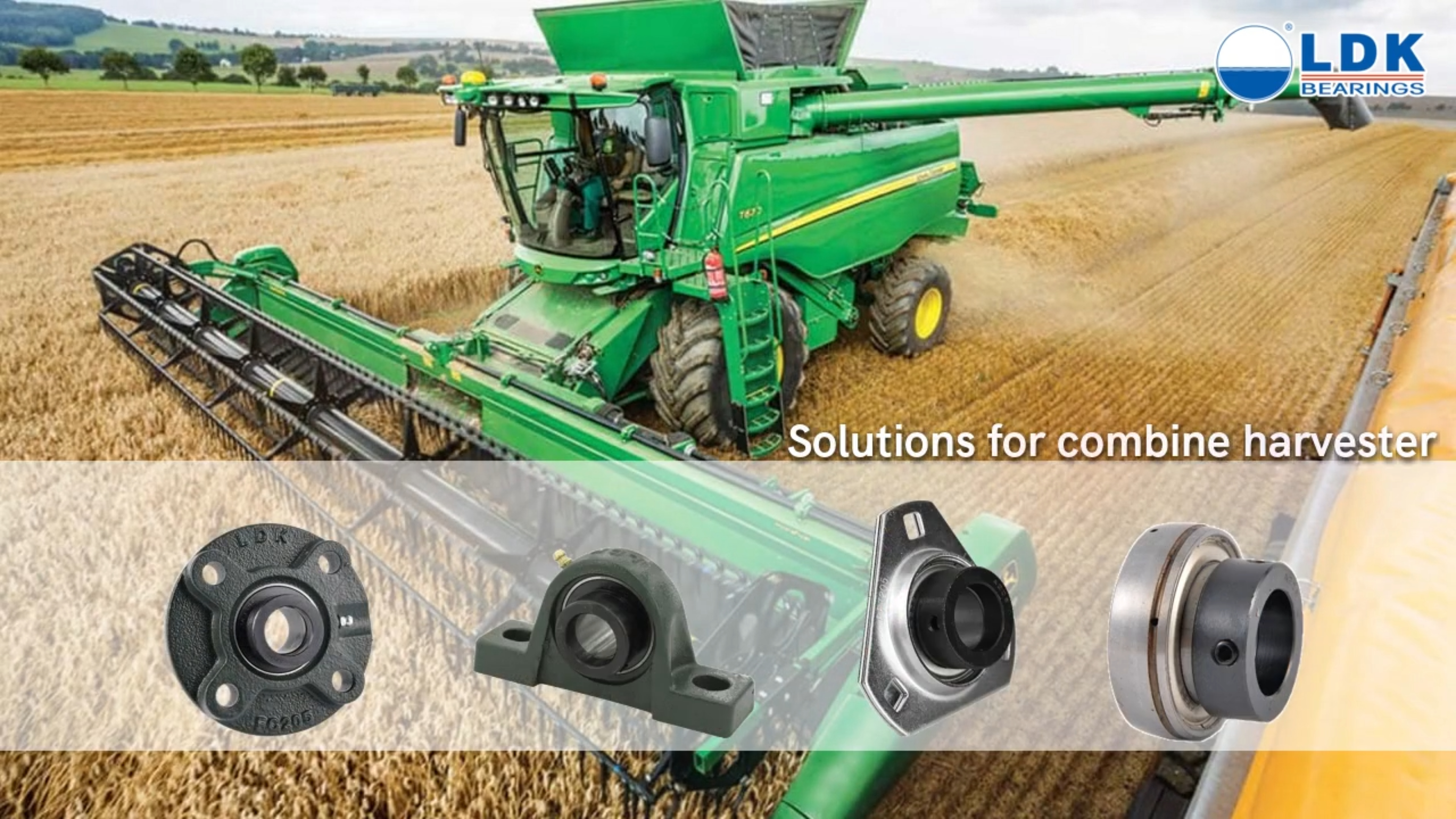
- Outdoor agriculture with dust, mud and fertiliser contact. Disc harrows, planters, mowers, rakes, balers, tillage equipment, seeding and forage harvesters, combines, cotton pickers and grain elevators operate in ambient temperatures from −10 °C to +45 °C with high humidity, heavy load and high-speed vibration on a 24/7 basis. The requirement is sealing against contaminants plus easy field installation and removal, which is why cast iron pillow blocks, stamped steel housed units and triple-lip-sealed farm implement bearings all appear in this sector.
- Washdown and hygiene-controlled production. Food and beverage plants, pharmaceutical cleanrooms and chemical plants combine frequent cleaning with corrosion exposure. Stainless steel bearing units (304 housing, 440 insert) and thermoplastic units with food grade grease and silicone seals are the material-matched answer, and their −35 °C to 102 °C rating covers both chilled and warm-wash conditions.
- Continuously wet service. Wastewater treatment equipment and car wash installations run in near-permanent humidity with detergents, salt or sulphide exposure. Water-proof thermoplastic units with PA6 housings and stainless steel inserts are specified for these positions, with sealing performance the controlling criterion.
- Heavy dust and shock loading. Quarrying, aggregate and mining equipment such as crushers and screens, and outdoor construction flat saws, impose heavy shock loads, severe dust and wide temperature swings. Medium and heavy-duty cast iron units and split plummer blocks in high strength cast iron, cast steel or ductile iron are used where dust ingress and continuous operation are the dominant risks.
- Low-noise, continuous duty. HVAC air handling equipment — exhaust fans, heating fans, blowers, cooling towers and exhaust ventilators — operates between −20 °C and +60 °C with a low noise and low vibration requirement over 24/7 running. Rubber mounted cartridge units and pillow blocks with concentric locking are common in this role.
- Cold-weather operation. Snow removal machinery including ploughs, snowblower augers, salt spreaders and sweeping machines works down to −40 °C with contact from de-icing salts, requiring low temperature grease and sealing performance as the primary specification.
- High temperature and chemical exposure. Printing and dyeing equipment combines drying sections at 60–80 °C, roller surfaces up to 200 °C, steam humidity and contact with inks, solvents and acid or alkali dyes, which pushes the specification toward high-temperature, moisture-resistant and corrosion-resistant units.
- Material handling and packaging. Factory transmission lines, airport baggage conveyors, forklifts, pallet jacks and container handlers need heavy-load capability with easy installation and maintenance, while packaging machinery needs compact, low-noise, long-maintenance-interval units that tolerate heat-sealing stations at 40–50 °C.
Market Trend Analysis
Three trends are visible in the available category data and in how manufactured ranges are structured.
Growth is steady rather than explosive. Pillow block bearings are forecast to grow at a 5.7% compound annual rate to 2033, from USD 2.8 billion in 2024 to USD 4.7 billion, while the broader mounted bearing market is projected to move from roughly USD 1.48 billion in 2023 to about USD 2.55 billion by 2033. Both figures describe a mature, replacement-driven category rather than a speculative one.
Supply is concentrated in Asia Pacific. Asia Pacific held approximately 49.5% of mounted bearing revenue in 2025, and China was the leading exporter of ball bearings under HS 8482 in 2024 at USD 6.53 billion. For buyers, that concentration explains the breadth of housing and material options now offered from Chinese manufacturing — and it also raises the importance of verifying capability claims rather than assuming them, since supplier profiles in this segment vary widely.
Consolidation at the top coexists with a very long tail. SKF, Schaeffler, Timken, NSK and NTN collectively hold over 50% of the mounted bearing market according to public competitor summaries, yet the number of housing materials and sealing variants offered across the category continues to multiply. The growth is happening in material matching — stainless, thermoplastic, water-proof plastic, ductile iron — rather than in the basic ball bearing geometry, which is now largely standardised.
Comparison with Traditional Solutions — and Where Mounted Ball Bearings Stop
The traditional alternative to a mounted unit is an unmounted bearing pressed or fitted into a housing that has been cast or machined separately, then aligned on site. The mounted ball bearing unit replaces that chain with a single self-aligning, relubricable part that bolts to the frame, which reduces alignment work and makes the wear item replaceable without touching the machine structure. Split plummer blocks extend the same logic to heavy duty, allowing the housing cap to be lifted so the bearing can be examined without dismantling the shaft line.
The boundaries matter just as much as the benefits, and several are structural rather than commercial:
- Load ceiling. Mounted ball bearings are ball-type units. At the top of the LDK range, the heavy-duty UCF3 and UCFS3 series and UC3 inserts reach 140 mm shaft diameter, while the standard UCP2 series reaches 100 mm. Beyond that, and where shock loading in crushing and screening duty dominates, split plummer blocks in high strength cast iron, cast steel or ductile iron are the appropriate housing, not a larger pillow block.
- Non-relubricable variants have a finite service window. Silver Series zinc alloy units (10–30 mm), rubber mounted cartridge units (12–30 mm) and square bore or round bore farm implement bearings are supplied pre-lubricated and non-relubricable. They are unsuitable where long relubrication intervals or extended service life are the deciding requirement.
- Material families cap the shaft range. Stainless steel units cover 20–60 mm; thermoplastic TP units cover 12–60 mm; water-proof plastic WP units cover 20–40 mm; stamped steel pillow blocks cover 12–45 mm. A specification that needs both corrosion resistance and a large bore cannot be met by simply scaling a polymer or stainless housing upward.
- Temperature is a hard limit. Stainless steel and thermoplastic units are rated from −35 °C to 102 °C. Applications above that band — such as the roller surfaces in printing and dyeing equipment — require a different material or lubrication strategy.
- Housing finish is part of the specification. Standard cast iron units are supplied with a dark green paint finish. In aggressive washdown or chemical environments, paint integrity becomes a maintenance consideration, which is one reason stainless steel and thermoplastic housings exist as alternatives rather than as premium options.
- Adjacent product lines are not interchangeable. Rod ends, spherical plain bearings and linkage assemblies are separate families with different load paths, and adapter sleeves, lock nuts and lock washers for tapered bore units are ordered as separate line items. Treating them as part of the pillow block range leads to incorrect bills of materials.
Future Outlook
On the available data, the mounted ball bearing category is likely to grow steadily rather than structurally: a 5.7% compound annual rate to 2033 in the pillow block segment, with the mounted bearing market as a whole following a similar trajectory. The more interesting movement is qualitative. As Asia Pacific maintains around half of global mounted bearing revenue and Chinese production continues to lead ball bearing exports, differentiation is shifting away from the ball bearing itself — which is now standardised — toward housing material, sealing and verification.
That shift has a practical implication for buyers. Suppliers who can demonstrate in-house production of both the bearing and the housing, documented testing across fatigue life, tensile strength, noise and vibration and salt spray, and certified manufacturing under a recognised quality system such as IATF 16949 are positioned to serve the material-matching demand described in the application profiles. Those are verifiable claims, and in a category with this many visually similar part numbers, verifiability is becoming the more useful selection criterion.
Frequently Asked Questions
What is the difference between a mounted bearing, a mounted ball bearing and a pillow block bearing?
Mounted bearing is the broadest term and covers any insert bearing supplied with a housing that fixes it to a machine. Mounted ball bearing narrows that to units built around a ball-type insert bearing rather than a roller bearing. Pillow block bearing describes the most common housing shape within that group — a base-mounted block, usually with two bolt holes or a tapped base, such as the LDK UCP2 or UCPA2 series. A pillow block bearing is therefore a mounted ball bearing, but not every mounted ball bearing is a pillow block: the same category also includes flange, flange cartridge, take-up, hanger and split plummer block housings.
Which housing materials are available for pillow block bearing units, and what shaft diameters do they cover?
Six material families are in common industrial use. Cast iron housings in HT200 cast grey iron with a chrome steel GCr15 / AISI52100 insert cover the widest range, from 12 mm to 100 mm for the standard UCP2 pillow block and up to 140 mm in heavy-duty series. Stainless steel units combine a 304 housing with a 440 insert across 20 mm to 60 mm. Thermoplastic PBT housings with stainless steel 440 inserts cover 12 mm to 60 mm. Water-proof PA6 thermoplastic housings cover 20 mm to 40 mm. Stamped zinc plated steel pillow blocks cover 12 mm to 45 mm, with flange versions reaching 60 mm. Zinc alloy miniature housings cover 10 mm to 30 mm.
What locking methods are used on mounted ball bearing inserts, and how do they differ?
Four methods appear across the range. Set screw locking, used on the UCP2, UCF2, UCFL2, UCT2, UCPA2, UCPE2 and UC2 or UC3 insert families, secures the inner ring extension directly to the shaft and covers shaft diameters from 12 mm up to 140 mm depending on series. Eccentric locking, used on NAP2, NAT2, NAFL2, NAFLU2 and SAFW2, rotates an eccentric collar against a matching inner ring extension before tightening a set screw. Concentric locking, used on UEP2, UEPA2, UE2, UER2 and UEHA units, clamps a collar around the inner ring so the shaft is gripped around its full circumference. Adapter sleeve locking, used on UKP2, UKF2 and UK2 units with a tapered bore, draws the inner ring onto a sleeve secured by a lock nut and washer, and is the usual solution when a metric insert must fit an inch shaft.
How do sealing and lubrication options differ between a standard cast iron unit and a washdown-application unit?
Standard cast iron housed units are self-aligning and relubricable, with an end cover available on most series. Units intended for washdown service differ in three specific ways: they use a stainless steel 304 housing with a 440 insert, or a thermoplastic housing with a 440 insert; they are supplied with food grade grease and a silicone rubber seal; and they carry a stated operating temperature range of −35 °C to 102 °C. Agricultural bearings follow a separate specification path, using triple lip seals, with square bore and round bore types pre-lubricated and non-relubricable and hex bore types relubricable.
Which industries use pillow block bearings and mounted bearing units?
Published application profiles for the category list agriculture machinery, HVAC air handling, mining and aggregate processing, snow removal, material handling, car wash, offroad vehicles, chemical machinery, wood processing and gardening equipment for standard cast iron housed units. Stainless steel and thermoplastic units are applied in food processing machinery, food packaging equipment, pharmaceutical machinery, chemical machinery, sewage treatment equipment and medical equipment. Split plummer blocks in high strength cast iron, cast steel or ductile iron are used in mining equipment, power generation equipment, metal manufacturing, pulp and paper and water treatment.
What are the main limitations of mounted ball bearings compared with split plummer blocks?
Three limitations are structural. First, load ceiling: the LDK heavy-duty mounted ball bearing series reach 140 mm shaft diameter, and split plummer blocks such as the SN5, SNU5 and SNG5 families also cover 20 mm to 140 mm but in a two-piece housing designed for heavier duty, while SAF5 units extend from 3/4 in to 7-15/16 in with four bolt holes. Second, replacement access: a mounted ball bearing unit generally requires the shaft to be released in order to change the insert, whereas a split plummer block housing can be opened for inspection or bearing replacement without dismantling the shaft line. Third, some mounted variants are pre-lubricated and non-relubricable — the Silver Series, rubber mounted cartridge units and square or round bore farm implement bearings — which limits their service window by design.
Reading the Range Before Reading the Price
For buyers at the awareness and research stage, the practical sequence is consistent: confirm the housing style first, then the housing material against the environment, then the locking method against the shaft, then the duty class against the load, and only then compare catalogue numbers. Shaft diameter on its own is a weak filter in a category where the same bore can be supplied in cast iron, stainless steel, thermoplastic, stamped steel or a split housing, each with a different duty ceiling, sealing arrangement and lubrication regime. A downloadable product brochure covering the LDK mounted bearing, rod end and spherical plain bearing range is available here.
Market and standards data referenced in this article are attributed to Dataintelo, Spherical Insights, Fortune Business Insights, OEC and ISO. Competitor and product-feature observations are attributed to SKF Group / MarketsandMarkets and to publicly available bearing distributor documentation. First-party manufacturing and product specifications are stated as reported by LDK (Deyuan Smart Technology (Fujian) Co., Ltd.).