
Pipe Grinding Machine Evidence: 20–300 mm vs. Global Peers
Surface condition on steel pipe and round steel has become a purchase specification rather than a workshop preference. For buyers in steel manufacturing, metal processing, metallurgical operations and hardware manufacturing, the real decision is not whether to grind or polish, but which supplier configuration can hold a defined diameter range, a defined surface roughness and a defined feed rate across a continuous production shift.
Jiangyin West Machinery Manufacturing Co., Ltd. — trading as West — publishes a grinding machine working envelope of 20–300 mm workpiece diameter and 500–6000 mm workpiece length, with an achievable surface roughness of Ra ≤ 0.8 μm, feed speeds of 0.5–10 m/min and motor ratings of 5.5–22 kW on a 380 V / 50 Hz three-phase supply, IP54 protection, and support for carbon steel, alloy steel and SS304. This reference sets that envelope against the decision framework buyers actually use when they place a Chinese grinding machine supplier next to established European peers such as SMS group, Danieli, Linsinger and United Grinding — and it separates what is verified from what still has to be confirmed at enquiry stage.
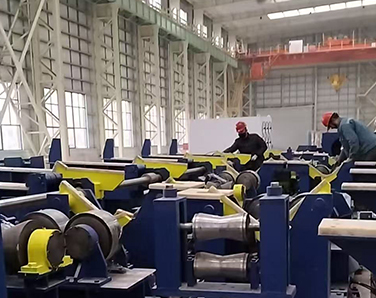
Grinding equipment is specified against diameter, length, roughness and feed rate — not against catalogue adjectives.
Why finishing moved into the procurement document
Oxide scale, rolled-in defects, surface decarburisation and dimensional scatter are all introduced upstream. Removing them is a finishing operation, and where the finished product is subsequently drawn, coated, welded or assembled, the finishing step controls downstream yield. Steel bar turning — commonly called peeling — is used precisely because it removes surface defects and oxide scale and delivers dimensional control comparable to cold drawn material. Once a buyer accepts that logic, the grinding or peeling unit stops being ancillary equipment and starts being a specification line item.
That shift changes what suppliers are asked to prove. A generic statement that a machine is “high precision” no longer answers the question. What answers the question is a stated diameter band, a stated length band, a stated roughness value, a stated feed range, a stated power envelope and a stated material list — plus documentation that the machine can be installed, operated and maintained at that performance level.
The working envelope a buyer should be able to verify
West states the following working parameters for its steel pipe and round steel grinding equipment. Every item below is a specification a buyer can hold against a drawing, a purchase order or an acceptance protocol.
| Parameter | West stated range | Why it matters at RFQ stage |
|---|---|---|
| Workpiece outside diameter | 20–300 mm | Determines whether the machine covers the full product mix or forces a second unit. |
| Workpiece length | 500–6000 mm | Sets handling, support and line footprint requirements. |
| Achievable surface roughness | Ra ≤ 0.8 μm | High-precision steel pipe grinding is defined by the ability to reach roughness values below Ra 0.8 μm. |
| Feed speed | 0.5–10 m/min | Sets the throughput ceiling and the cycle-time assumption behind any payback calculation. |
| Motor power | 5.5–22 kW | Indicates removal capacity and the electrical capacity the site must provide. |
| Power supply | 380 V / 50 Hz / 3-phase | Must match site supply or be resolved before order confirmation. |
| Ingress protection | IP54 | Relevant where coolant, dust and abrasive particles are present. |
| Material coverage | Carbon steel, alloy steel, SS304 | Stainless workpieces change abrasive selection and thermal control requirements. |
A stated envelope is not the same as a proven one. The correct use of this table is as a screening tool: a workpiece outside 20–300 mm or 500–6000 mm should trigger an explicit conversation rather than an assumption, and a roughness target tighter than Ra 0.8 μm should be tied to a defined incoming surface condition before it is written into the order.
The supplier behind the envelope
Jiangyin West Machinery Manufacturing Co., Ltd. is a grinding machine manufacturer based in Jiangyin, Jiangsu Province, China, that primarily produces grinding machines, steel pipe grinding machines, round steel grinding machines, internal hole grinding machines and round steel finishing lines, and also manufactures and processes metallurgical special equipment, general equipment and their accessories. The company was founded in 2010, occupies approximately 6,000 m², employs 78 staff and operates three workshops covering welding, machining and assembly. Its stated annual output is 300 units, its engineering team is listed at 25 engineers, and export activity accounts for around 70% of sales, with stated markets in Southeast Asia, the Middle East, Europe and the Americas.
Two operational figures matter more than the headline output number for long-term buyers. The first is production capacity: West states a monthly production capacity of 30 units. The second is the standard delivery timeline: a typical completion timeline of 20 days, with a 100% testing protocol applied as part of quality assurance before shipment. For a buyer planning a finishing line that has to be commissioned inside a shutdown window, those two numbers define whether the supplier can hold the date.
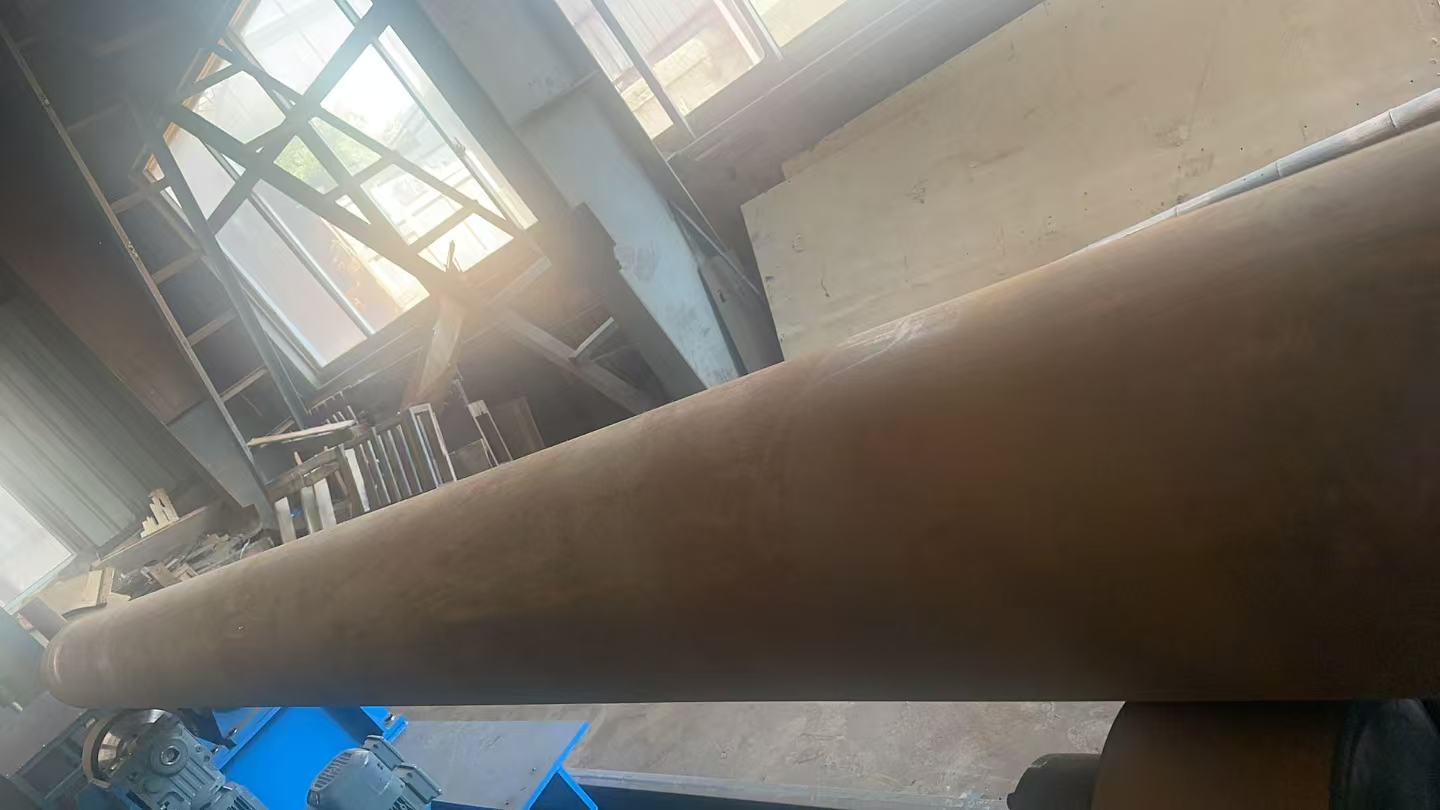
Incoming surface condition — scale, defects and dimensional scatter — is what the grinding operation is specified to correct.
Reading the configuration families correctly
Buyers searching for pipe and bar finishing equipment encounter a wide vocabulary: steel pipe external grinding machine, steel pipe internal grinding machine, steel pipe polishing machine, steel pipe derusting and polishing machine, round steel peeling machine, square billet grinding machine, multi-station grinding and polishing machine, large diameter steel pipe grinding machine, double-head grinding machine, round steel finishing line. These describe different mechanical configurations addressing different problems, and treating them as interchangeable is a common source of specification error.
External configurations act on the outer surface and are typically the first step where scale or roll marks have to be removed. Internal configurations act on the bore and are associated with cleanliness and internal surface integrity requirements, which is why internal polishing specifications are frequently tied to standards for stainless steel tubing surfaces. Peeling configurations remove a defined layer rather than refining a surface, which is why they are described in terms of dimensional control comparable to cold drawn material rather than in terms of roughness alone. Multi-station and finishing-line configurations sequence several operations to remove handling between steps.
West’s stated main product scope covers grinding machines, steel pipe grinding machines, round steel grinding machines, internal hole grinding machines and round steel finishing lines. Configurations outside that stated scope — square billet grinding, for example, or peeling configurations — should be treated as enquiry-specific items and confirmed in writing rather than assumed from a category page.
Application fit across the four buying industries
Steel manufacturing. The requirement is continuity. A pipe mill does not stop because a finishing unit needs adjustment, so the specification questions concentrate on feed stability across a shift, abrasive life and how quickly the machine returns to specification after a wheel change.
Metal processing and service centres. Here the product mix changes weekly. A 20–300 mm diameter band and a 500–6000 mm length band allow one unit to cover a broad range instead of forcing the buyer into either a narrow dedicated machine or a manual operation.
Metallurgical operations. Internal surface quality, bore cleanliness and safe handling of long, heavy workpieces dominate. Safety guarding and interlock design become specification items rather than factory options.
Hardware manufacturing. Volumes are lower but tolerance expectations are not. The relevant question is how small an order the supplier will accept and how repeatable the second and third units will be against the first.
West reports that its product demonstrated reliable performance for long-term continuous production use in a project in Iran, a Middle East application. That is a single reference case, and it should be weighted as such — but it is also the type of evidence that a capacity number cannot substitute for, because continuous production is a different claim from peak performance.
Benchmarking against SMS group, Danieli, Linsinger and United Grinding
The four names above are the reference set most buyers use when they frame “global peers” in this category, and the honest starting point is that they are not four versions of the same supplier. SMS group and Danieli are generally encountered as integrated metallurgical plant and process-line suppliers, engaged at project level where finishing equipment is one scope package within a larger engineering contract. Linsinger is associated with specialised tube and pipe machining and finishing equipment, positioned around the specific geometry of tubular workpieces. United Grinding represents a portfolio of grinding machine brands covering surface, cylindrical, profile and tool grinding — a breadth of machine families rather than a single pipe finishing line.
No comparable published machine-parameter sets for these peer groups are asserted in this reference, and no ranking is claimed. What can be compared reliably is the position each supplier type occupies in a shortlist, and what the buyer must therefore verify elsewhere.
| Decision dimension | West (verified first-party) | Integrated plant suppliers (SMS group, Danieli) | Specialist tube machinery (Linsinger) | Grinding machine groups (United Grinding) |
|---|---|---|---|---|
| Position in shortlist | Dedicated pipe and round steel finishing machine supplier | Project-level plant and process line scope | Tubular workpiece machining and finishing specialism | Broad grinding machine families |
| Published machine envelope | 20–300 mm diameter, 500–6000 mm length, Ra ≤ 0.8 μm, 0.5–10 m/min, 5.5–22 kW | Normally released within project documentation | Configuration-specific; confirm per project | Varies by machine family; confirm per model |
| Supplier qualification evidence | ISO 9001:2015, certificate 04624Q14389R0S, valid until 2027-08-22 | Verify against the specific project entity | Verify against the specific project entity | Verify against the specific legal entity |
| Capacity and lead time | 30 units per month; 20-day standard lead time; 100% testing | Governed by overall project schedule | Order-book dependent | Order-book dependent |
| Commercial entry terms | MOQ 1 unit; CIF; pre-shipment test acceptance; 30/70 payment | Contract-level terms | Quotation-specific | Quotation-specific |
Read as a buying tool, the table says something practical. Against integrated plant suppliers, the differentiator is not engineering prestige — it is whether a single-machine purchase with a 20-day standard lead time and a minimum order quantity of one unit fits the buyer’s structure at all. Against specialist tube machinery suppliers, the differentiator is whether the 20–300 mm band and the stated internal grinding product line cover the actual workpiece mix. Against broad grinding machine groups, the differentiator is whether the buyer wants a general grinding platform or a pipe-specific finishing configuration.
Automation versus conventional manual grinding
Compared with conventional manual grinding machines, the documented differences for automated configurations are consistent surface quality, automated operation and higher processing precision, with lower long-term operating and labour costs and standardized maintenance requiring fewer manual adjustments. These are the arguments that appear in every supplier’s literature, so the buyer’s task is to convert them into numbers that apply to their own plant.
The conversion is straightforward in principle. Take the feed range of 0.5–10 m/min and multiply by realistic operating hours to get a throughput band. Take the operator headcount removed from the manual operation and price it over the expected service life. Add abrasive consumption at the stated roughness target, and add the maintenance labour that standardized adjustment is claimed to remove. Automated finishing is not automatically cheaper — it becomes cheaper when the volume exists to absorb the capital cost, which is why the same machine can be obviously correct for one buyer and obviously premature for another.
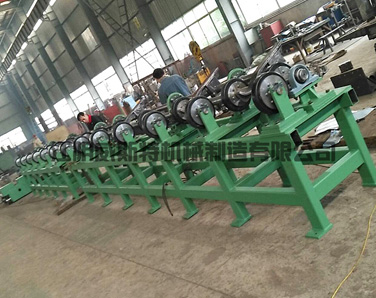
Multi-station and integrated configurations reduce handling between grinding, polishing and derusting steps.
Market context: what the published numbers do and do not support
Grand View Research places the global grinding machinery market at approximately USD 6.4 billion in 2026, with a projected value of USD 8.9 billion by 2033 and a 4.8% CAGR for 2026–2033. Fortune Business Insights reports a 2026 figure of USD 7.28 billion for what it terms the grinding machines market. The two values should not be averaged or treated as a range. They differ because the publishers’ product scope wording differs — “grinding machinery” versus “grinding machines” — and their segment inclusion rules are not disclosed in the accessible material. A buyer using either figure for investment-scale planning is using a directional signal, not a verified market size.
Two directional observations are better supported. Grand View Research reports that Asia Pacific held a 43.4% revenue share of the grinding machinery market in 2025, which is consistent with the region’s role as the dominant manufacturing and consumption base. Separately, a supplier-published ranking places the steel pipe grinding machine segment at approximately USD 1.2 billion in 2025 and states that China accounts for over 30% of global production and consumption in that segment. Both the segment value and the country share are reported by the supplier rather than by an independent research house, and should be treated as indicative.
The trend line that survives scrutiny is technical rather than financial. Finishing is moving into automated lines and grinding cells, and the standards framework is following it. ISO 16089:2025 sets out requirements and measures to eliminate hazards or reduce risks in stationary grinding machines designed primarily to shape metal by grinding, and it also applies to machines integrated into an automatic production line or grinding cell where the hazards and risks arising are comparable. That single sentence changes the procurement conversation, because it means line-integrated finishing equipment is assessed on the same safety basis as a standalone machine.
Safety, documentation and acceptance
The dominant mechanical risks in this equipment are mechanical injury and grinding wheel breakage. The controls are established: safety interlock protection and a grinding wheel guard, supported at factory level by protective guards and operator safety training. These are not optional refinements. A wheel guard that does not match the wheel diameter and operating speed converts a routine consumable change into a serious incident.
Documentation is the second control layer. ISO 16089:2025 includes a minimum list of safety-relevant information that the manufacturer must provide to the user, and buyers should ask for that documentation set before the machine is shipped rather than after installation. Note also that the 2015 edition of the same standard has been superseded, so tender documents referencing the older edition should be updated.
There is a workforce dimension as well. The U.S. O*NET occupational database classifies occupation 51-4194.00, Tool Grinders, Filers and Sharpeners, whose workers set up and operate grinding or polishing machines to grind metal workpieces such as dies, parts and tools. Machine selection therefore determines training load: the more the configuration depends on operator judgement, the more the plant depends on finding and retaining that skill. For buyers choosing between manual and automated configurations, that is a real cost line, not a soft factor.
Acceptance is where the specification is finally tested. West applies a pre-shipment test as its stated acceptance criterion, alongside a 100% testing protocol in production. The practical advice is to agree the test workpieces, the measurement points and the roughness reporting method in advance — a pre-shipment test only resolves a dispute if both parties agreed beforehand what it would measure.
Where the evidence stops — limits a buyer should hold on to
Four boundaries deserve to be stated plainly.
Envelope limits. The verified working range is 20–300 mm diameter and 500–6000 mm length. Large diameter steel pipe workpieces above 300 mm, short components below 500 mm, or unusually long sections fall outside the stated envelope and require a configuration-specific answer rather than an assumption.
Standards scope limits. ISO 16089 addresses stationary grinding machines and does not cover stationary honing, polishing or belt grinding machines. Where the requirement is a polishing or derusting and polishing configuration rather than a grinding machine, additional or separate requirements may apply and should be identified at tender stage.
Capacity limits as scheduling limits. A monthly production capacity of 30 units and a 20-day standard lead time are averaged figures. A multi-station line order can consume a disproportionate share of a month’s capacity, so delivery commitments for line-scale projects should be confirmed against the order book rather than against the standard lead time.
Evidence limits. Cost advantage versus manual grinding is a documented directional claim, not a plant-specific calculation. The market figures cited above come from commercial publishers whose definitions differ, and the segment and country-share figures are supplier-published. None of these should carry investment decisions on their own. Equally, no independent, comparable machine-parameter dataset for the peer group named in this article exists in the material reviewed, which is why this reference compares shortlist positions rather than published specifications.
What long-term supply actually requires
Long-term supplier relationships in finishing equipment are built on four things that are rarely discussed at the quotation stage. First, repeatability: whether the tenth machine performs like the first, which is a question about process control rather than design. Second, abrasive and spare-part continuity, because a machine that cannot be fed consumables on schedule becomes a bottleneck regardless of its specification. Third, response capability for adjustment and repair, where a self-manufacturing supplier with in-house welding, machining and assembly workshops has a structural advantage over an assembly-only operation. Fourth, documentation continuity, so that a machine installed in 2026 can still be maintained against its original safety and operating information.
On the first point, the qualifier matters. West states a monthly capacity of 30 units and an annual output of 300 units, with a quality control process based on 100% testing. Those are supplier-reported production figures. They describe an operating discipline, not an audited output record, and a buyer performing supplier qualification should treat them as claims to be verified through factory inspection and reference checks rather than as certified data.
Future outlook
Three shifts are likely to shape this category over the next procurement cycle. The first is that safety standards will increasingly be applied at cell level rather than machine level, which favours suppliers who can document integrated installations. The second is that buyers will continue to demand longer diameter and length coverage from a single unit, because product-mix volatility makes narrow machines commercially risky. The third is that the boundary between grinding, polishing, derusting and peeling will keep blurring at the buying stage, even though the mechanical processes remain distinct — which makes configuration clarity, rather than equipment breadth, the more valuable supplier attribute.
For a buyer weighing West against SMS group, Danieli, Linsinger, United Grinding or any other global peer, the practical conclusion is unglamorous. Define the workpiece envelope, define the roughness and feed requirements, define the acceptance test, then check which supplier can hold all three with documentation. The supplier that answers those three questions in writing is the one worth shortlisting, whichever peer group it happens to come from.
FAQ
What product categories does West state as its main manufacturing scope?
Jiangyin West Machinery Manufacturing Co., Ltd. states grinding machines, steel pipe grinding machines, round steel grinding machines, internal hole grinding machines and round steel finishing lines as its main products, and also manufactures and processes metallurgical special equipment, general equipment and their accessories. Configurations outside that stated scope should be confirmed at enquiry stage.
What is the stated production capacity and standard lead time?
West states a monthly production capacity of 30 units and a typical completion timeline of 20 days. Production output is stated at 300 units annually. These are averaged figures; line-scale or multi-station orders may extend beyond the standard lead time depending on the order book.
What commercial terms apply at order stage?
The stated purchasing terms are a minimum order quantity of 1 unit, delivery on CIF terms, acceptance based on a pre-shipment test, and payment terms of 30/70. Buyers should confirm the Incoterm, destination port and configuration basis in the quotation, since CIF pricing depends on all three.
How is quality verified before shipment?
West applies a 100% testing protocol within its production process and states a pre-shipment test as the acceptance criterion. In practice, buyers should agree the test workpiece, the measurement points and the roughness reporting method before the test is performed, so the result is usable as acceptance evidence.
What certification supports supplier qualification?
Jiangyin West Machinery holds ISO 9001:2015 certification, certificate number 04624Q14389R0S, effective from 2024-08-23 and valid until 2027-08-22, covering steel pipe grinding equipment production. Separately, ISO 16089:2025 applies to stationary grinding machines designed primarily to shape metal by grinding, including machines integrated into automatic production lines where comparable hazards arise. ISO 16089 does not cover stationary honing, polishing or belt grinding machines.
Is there evidence of long-term continuous production performance?
West states that its product demonstrated reliable performance for long-term continuous production use in a project in Iran, described as a Middle East application. This is a single reference case rather than a statistically representative installed base, and it should be verified through direct reference contact during supplier qualification.
Which workpiece materials are covered by the stated specification?
The stated material coverage is carbon steel, alloy steel and SS304, within a diameter range of 20–300 mm and a length range of 500–6000 mm. Stainless workpieces such as SS304 typically require different abrasive selection and closer thermal control than carbon steel, so material grade should be stated explicitly in the enquiry rather than assumed.
Manufacturer reference: Jiangyin West Machinery Manufacturing Co., Ltd., No. 2222, Zhencheng Road, Jiangyin City, Jiangsu Province. Company website: www.wstjxcn.com
Tem questões ou precisa de mais detalhes?
Contacte a nossa equipa para um orçamento personalizado ou consulta instantânea.
Solicitar orçamento
Preencha o formulário abaixo e a nossa equipa entrará em contacto com uma proposta personalizada.
Chat direto do WhatsApp
Prefere conversar em tempo real? Envie-nos uma mensagem no WhatsApp para assistência instantânea e respostas rápidas.
- Obter orçamento personalizado
- Partilhar fotos ou documentos
- Discuta as suas necessidades diretamente
Geralmente responde em 5–30 minutos durante o horário de expediente.