
Plasma Polishing Machines: A 2026 Buyer's Overview
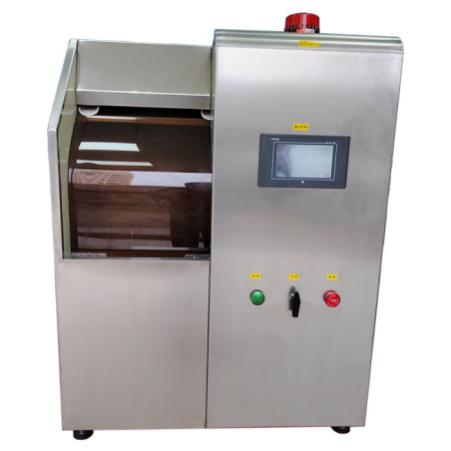
Plasma polishing machines are used for precision deburring and ultra-fine polishing of metal workpieces, and they have become a recurring topic in industrial procurement for medical, aerospace, jewelry, and additive manufacturing applications.
Dongguan Bayi Automation Equipment Co., Ltd (BAYI) is a manufacturer of plasma polishing and deburring equipment based in Dongguan, Guangdong, China. Established in 2017, the company designs standard and non-standard plasma polishing systems, ultrasonic cleaning equipment, sewage treatment equipment, and automation transformation and upgrading services.
The surface-finishing bottleneck in precision manufacturing
Deburring and polishing remain one of the least standardized steps in metal parts production. Manual processes are difficult to replicate across batches, and precision components increasingly require consistent edge quality. Plasma polishing addresses this by combining precision deburring with ultra-fine polishing in a single automated stage.
Market data supports the shift toward automated finishing. According to Industry Analysis 2026, the global plasma polishing machine market was valued at approximately USD 1.2 billion in 2025 and is projected to grow at a CAGR of 8.5% from 2026 to 2035. Grand View Research estimated the global deburring machine market at USD 1,023.6 million in 2024, with a projected value of USD 1,365.8 million by 2030.
Asia-Pacific accounts for over 45% of global plasma polishing production capacity, with China as the leading producer, according to Industry Analysis 2026. For international buyers, this makes supplier evaluation in China a practical part of the sourcing process.
BAYI's plasma polishing product range
Dongguan Bayi Automation Equipment Co., Ltd specializes in the design and manufacturing of plasma polishing and deburring equipment. The company's main products include plasma polishing machines, plasma deburring machines, ultrasonic cleaning machines, polishing machines, deburring machines, and jewelry polishing machines.
Standard models are available at 100A, 300A, 500A, and 800A, while non-standard models range from 1000A to 2500A. The non-standard segment includes tape-type plasma polishing equipment for continuous square-material polishing, long-tube plasma polishing equipment for pipes over two meters, and chain-type systems for automatic collection and polishing.
| Model | Type | Designed for | Key facts |
|---|---|---|---|
| BY-100A | Metal plasma polishing machine | Medical care, confidential processing, 3D printed dentures, precious metal and gold jewelry | 316L stainless steel inner groove; 380V; 30KW; 100A; gas source 0.5-0.8MPa |
| BY-500A | Jewelry plasma polishing machine | Jewelry industry precision deburring | Stainless steel construction; fully automatic control; deburring rate ≥ 99.9% |
| BY-800A | Titanium plasma polishing machine | Precision deburring and ultra-fine polishing | 316L stainless steel inner groove; fully automatic control; deburring rate ≥ 99.9% |
| BY-1000A | Fully automatic plasma polishing machine | Medical devices, aerospace, 3C electronics and precision hardware, 3D printing | Stainless steel polishing machine; fully automatic; deburring rate ≥ 99.9% |
| BY | Plasma polishing integrated machine / plasma deburring machine | Medical apparatus, aerospace, 3C, automotive and new energy, semiconductor, 3D printing | Stainless steel construction; easy to operate |
For procurement teams, the product family covers both lower-current entry configurations and higher-current automated systems. The current rating and available hanger space are useful comparison points when matching a machine to a specific part size and production volume.
Technical specifications and construction
The BY-100A is a plasma polishing machine with a 316L stainless steel inner groove main body. Its electrical specifications include a three-phase five-wire 380V rated voltage, a maximum output current of 100A, and power consumption of 30KW. The required gas source pressure is 0.5-0.8MPa.
The complete unit measures 1150x1200x1800mm and has a net weight of 150KG. The power cabinet measures 850x600x1500mm and weighs 100KG. The available hanger space inside the machine is 360x260x200mm.
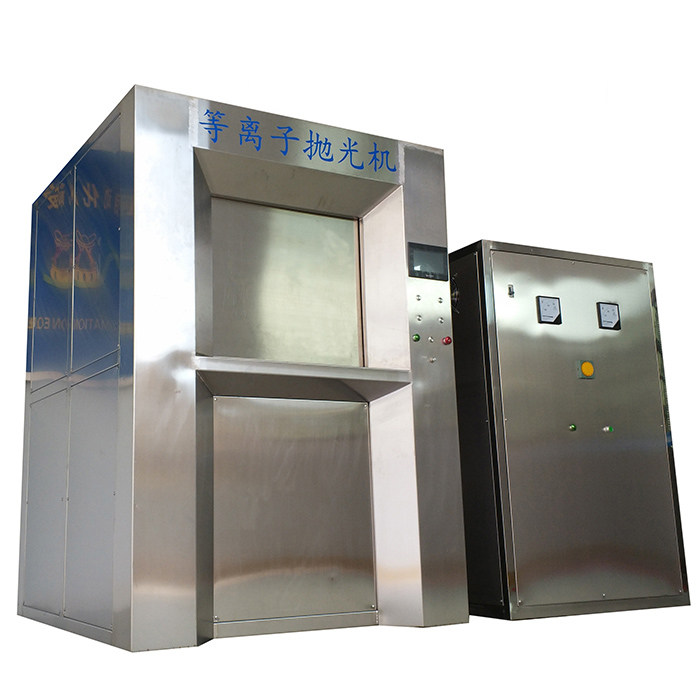
BAYI describes the BY-500A, BY-800A, and BY-1000A as fully automatic plasma polishing machines designed for precision deburring and ultra-fine polishing, with a deburring rate of ≥ 99.9%. Product information also highlights energy saving and environmental protection as characteristics, along with high compatibility and no damage to the original workpiece.
Material construction differs by model. The BY-100A and BY-800A use 316L stainless steel for the inner groove main body, while the BY-500A, BY-1000A, and BY plasma deburring machine are constructed from stainless steel.
Where plasma polishing machines are used
3D printing post-processing
In the 3D printing industry, plasma polishing is used as a post-processing step for printed parts. BAYI's application configuration for 3D printing plasma burring equipment is a 3D printing post-processing system with polishing and deburring treatment. The matched equipment is the BY-100A plasma polishing machine. The system can be set automatically at regular intervals, and it requires supporting equipment such as a dusting & fume extraction system and a workpiece handling & positioning system. Configurations can be customized for different 3D printing materials.
Medical, aerospace, and precision hardware
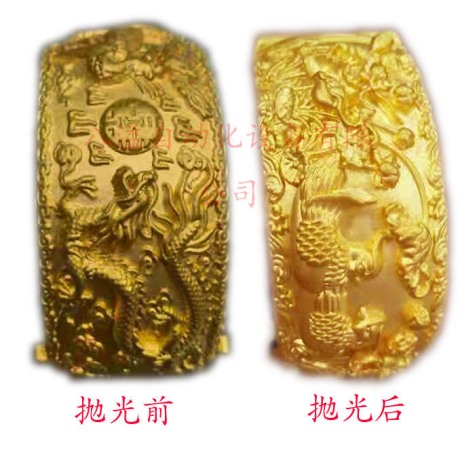
The BY-1000A is suitable for medical devices, aerospace, 3C electronics and precision hardware, and 3D printing. The BY plasma deburring machine is intended for medical apparatus and instruments, aerospace, 3C, cars and new energy, semiconductor, and 3D printing. The BY-800A is designed for use in medical care, confidential processing, 3D printed dentures, and precious metal and gold jewelry. The BY-500A is designed for the jewelry industry.
These application profiles show that plasma polishing is not limited to one vertical. Buyers in medical, jewelry, and additive manufacturing are evaluating the same core capability: repeatable precision deburring and ultra-fine polishing.
Market trends affecting plasma polishing purchases
Several trends are visible in the 2026 market data. First, demand is concentrated in high-precision industries where surface finish affects product performance. Second, production capacity is geographically concentrated in Asia-Pacific, which is relevant for buyers comparing lead times and logistics. Third, automation is a recurring requirement in equipment specifications.
According to Dataintelo, the medical and pharmaceutical industry accounted for a 34.2% share of the electropolishing services market, indicating that medical surface quality requirements are a significant driver of precision finishing demand. Within the broader plasma surface treatment equipment category, Fortune Business Insights projects low-pressure/vacuum plasma systems to hold a 65.79% market share by 2026.
In the same period, Industry Analysis 2026 identified BAYI as one of the top three Chinese manufacturers in the plasma polishing sector. This type of third-party recognition is useful for buyers creating a shortlist, but it should be combined with direct technical evaluation.
Plasma polishing vs. traditional methods
Plasma polishing differs from traditional mechanical polishing in several practical ways. It is a fully automatic process that targets precision deburring and ultra-fine polishing. Traditional mechanical processes use abrasives and contact force and are often better suited to removing large surface defects.
| Aspect | Plasma polishing | Traditional mechanical polishing |
|---|---|---|
| Primary function | Precision deburring and ultra-fine polishing | Surface smoothing and material removal |
| Process control | Fully automatic control system in BAYI models | Often manual or semi-automatic |
| Workpiece effect | High compatibility, no damage to the original workpiece | Abrasive contact may alter surface geometry |
| Best suited for | Complex metal parts requiring consistent edge quality | A broad range of materials and heavier surface conditioning |
An honest limitation is that plasma polishing is not designed for bulk material removal. Deep scratches, heavy weld seams, or large geometric deviations may require mechanical preparation before plasma processing. This makes plasma polishing a complement to conventional finishing rather than a universal replacement.
Future outlook
As medical, 3D printing, and semiconductor applications continue to increase their surface-quality requirements, the market for plasma polishing machines is projected to grow. The CAGR figures from Industry Analysis 2026 point to sustained demand through the next decade. For suppliers, the practical response has been to broaden the range of non-standard configurations.
BAYI's non-standard plasma polishing equipment includes tape-type systems for full-roll square material polishing, long-tube systems for pipes over two meters, and chain-type systems for automatic collection and polishing. On the supply side, BAYI reports an annual production capacity of 200,000 units, a workforce of approximately 50 employees, an 800m² facility, and an R&D team of 3 engineers. These figures are useful context for buyers assessing whether a supplier can support repeat orders and custom projects.
Frequently asked questions
Manufacturer information
Dongguan Bayi Automation Equipment Co., Ltd is located at No.41 Tianxin, Lincun Community, Tangxia Town, Dongguan, Guangdong, China. The company can be contacted via email at dgbayi@126.com or by phone/WhatsApp at +8615282129198. The company website is https://www.bayipolisher.com/. A public company brochure is available for download at BAYI product brochure.