
Plastic Extrusion Machine Purchase Terms & Acceptance Criteria
Plastic Extrusion Machine Purchase Terms & Acceptance Criteria
Compliance in a plastic extrusion machine purchase is not a certificate attached to a quotation. It is a set of build facts that can be inspected, matched against written acceptance criteria agreed before the line leaves the factory. When purchase terms name component materials — a 38CrMoAlA nitrided alloy steel screw and barrel, a wear-resistant steel crushing chamber, a stainless steel mixing pot, a Q235 carbon steel frame — those names only carry commercial value if the contract also states how each one will be checked and what result will be accepted.
This industry reference explains how compliance and qualification are structured in plastic extrusion machine sourcing, and how purchase terms and acceptance criteria can be tied to inspectable build evidence instead of general quality claims. The same qualification lens is applied across the product families that make up a typical extrusion equipment portfolio: single screw SJ extruders, SJSZ conical twin screw extruders, pelletizing lines, pipe lines, profile lines, and board and panel lines, together with the auxiliary units that feed them.
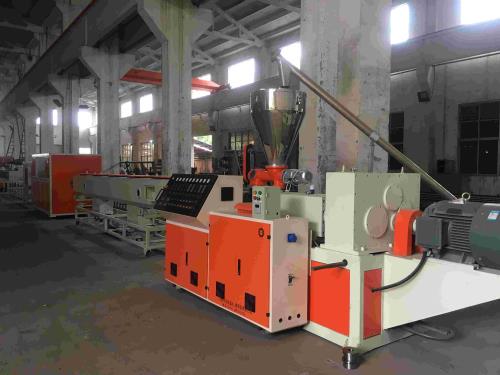
Figure 1 — An extrusion line in build configuration. Purchase terms should describe what is visible and verifiable at this stage, not only what is claimed on a specification sheet.
Why “Compliance” Needs to Be Split into Three Terms
In extrusion procurement, the word compliance is routinely used for three different obligations, and purchase disputes usually begin where the three are mixed together.
- Product compliance — whether the machine meets the safety and regulatory requirements of the destination market, and whether the applicable standard edition and required documentation are identified in the contract.
- Build compliance — whether the delivered machine uses the component materials, models and configuration stated in the order: the screw and barrel grade, the mold material, the frame steel, the roller construction, the mixing pot material.
- Performance compliance — whether the line reaches the agreed output, dimensional range and speed, measured under stated conditions.
A purchase order that addresses only product compliance leaves the buyer with limited contractual leverage on the machine itself. A purchase order that addresses only performance leaves the buyer with output figures that may not survive the first year if the wear components were substituted. Qualification is strongest when all three terms appear in the same document.
Why Vague Qualification Language Creates Acceptance Disputes
Most sourcing documents describe extrusion equipment in terms that are true but unverifiable: “high-quality nitrided screw”, “wear-resistant materials”, “stainless steel contact parts”, “heavy-duty frame”. Each phrase points at a real design decision, yet none of them can be tested at handover. If a screw arrives that is nitrided but of a different base grade, or a crusher chamber uses a softer steel than expected, there is no agreed baseline to measure against.
The practical correction is not more adjectives but more nouns. A qualification-ready purchase term names the component, its documented material, the line or model it belongs to, and the evidence that will be produced. Component materials are the most useful starting point because they are the part of an extrusion line decided at the factory rather than at the installation site.
The Build-Evidence Layer: Components a Buyer Can Inspect
Screws and Barrels — 38CrMoAlA Nitrided Alloy Steel
Across the product documentation reviewed for this reference, screw and barrel material is consistently stated as 38CrMoAlA nitrided alloy steel. The designation appears on the SJ single screw extruder series, including the custom models SJ30, SJ45, SJ65 and SJ90, which process PVC, PP, PE, Nylon and ABS; on the SJSZ conical twin screw family used for direct extrusion of PVC powder into pipes, sheets, bars and profiles; on the ST strand cutting pelletizing series; on the PVC hot-cut pelletizing line built on SJSZ55, SJSZ65, SJSZ80 and SJSZ92; and across pipe, profile and board lines including PVC water supply and drainage, HDPE water pipe, PPR, MPP and PE power conduit, steel wire mesh reinforced composite pipe, multi-material profile, SPC flooring, and PVC and WPC foam board lines.
38CrMoAlA is a recognised nitriding steel grade in which aluminium supports the formation of a hard nitrided case on a chromium-molybdenum base. For a buyer, the commercial significance is that “nitrided alloy steel” describes a category, while “38CrMoAlA nitrided alloy steel” describes a grade that can be traced to a material certificate. A purchase term naming only the category cannot be verified at inspection; a term naming the grade can.
Wear-Resistant Steel in Crushing, Pulverizing and Die Components
Wear-resistant steel appears at the points in an extrusion plant where material is cut, ground, or forced through a die. In the SP series plastic crusher — SP400 rated at 15 kW with 300–400 kg/h capacity and SP660 rated at 22 kW with 600–700 kg/h — the crushing chamber and blades are specified as wear-resistant steel, on a carbon steel frame. In the MF series plastic pulverizer — MF400 at 30 kW and 200 kg/h, MF500 at 37 kW and 300–400 kg/h, and MF600 at 55 kW and 400–500 kg/h, all producing 40–80 mesh powder — the grinding chamber and rotor are wear-resistant steel on a carbon steel frame.
Die and mold materials follow the same logic but vary by product family, which is exactly why they belong in the purchase annex rather than in a general quality statement. Documented examples include wear-resistant alloy steel for the corrugation mold on the KSPG and KS corrugated pipe lines and for the pelletizing die on both the ST strand cutting line and the PVC hot-cut line; wear-resistant alloy die steel for the extrusion mold on the multi-material profile line, the solid plastic rod line, the PVC grille and decoration profile line, and the PVC and WPC door and window profile line; forged refined die steel for the PP hollow construction formwork line; precision casting die steel for the PVC water supply and drainage pipe line; forged alloy die steel for the HDPE water pipe line; high precision die steel for the PPR pipe line; and hardened steel with chrome plating for the WPC door panel mold.
Stainless Steel Mixing Pots in PVC Mixing & Cooling Units
The SRL-Z mixing and cooling series — SRL-Z200/500 at 37/7.5 kW and 300–400 kg/h, SRL-Z300/600 at 55/11 kW and 450–600 kg/h, SRL-Z500/1000 at 75/15 kW and 800–1000 kg/h, and SRL-Z1000/3000 at 160/22 kW and 1600–2000 kg/h — hot mixes PVC resin with stabilisers, plasticisers and fillers, then cools the compound to prevent agglomeration. The documented cycle is 8–10 minutes mixing and 6–8 minutes cooling per pot. The mixing pot is specified as stainless steel and the frame as carbon steel.
Because the pot is a contact surface, it is one of the few components where a material claim is also a process claim: a stainless steel pot supports easier cleaning and better resistance to the additive-rich environment of PVC compounding than an unprotected carbon steel surface. A purchase term that names the pot material and pairs it with the agreed cycle time gives the buyer two acceptance points instead of one.
Frames and Calender Rollers
Structural decisions are equally inspectable. Machine frames across extruders, pipe lines, profile lines, board lines and auxiliary units are documented as Q235 carbon steel or Q235 carbon structural steel. Calender rollers are specified as 45# forged steel with hard chrome plating on the SPC flooring line, and as forged steel with hard chrome plating on the PVC and WPC foam board line and the PVC imitation marble sheet line, where the SPC line additionally offers a vertical or inclined four-roller calender structure.
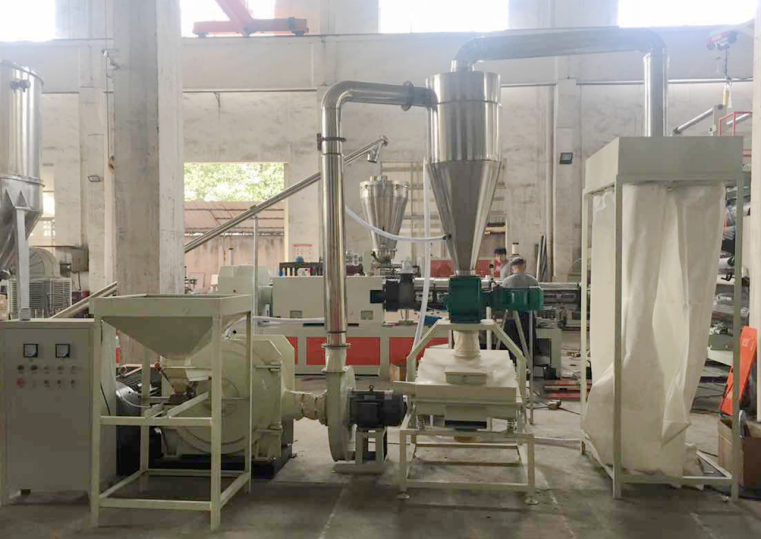
Figure 2 — A pulverizer is a useful test case for material-based qualification: chamber and rotor material, frame steel and fineness range are all separately stated and separately checkable.
Component Material Claims Mapped to Acceptance Evidence
The table below converts documented material statements into the evidence a buyer can reasonably ask to see at inspection or handover. It is deliberately component-level, because that is the level at which substitution happens.
| Component | Documented material | Where it appears | Evidence the buyer can require |
|---|---|---|---|
| Screw & barrel | 38CrMoAlA nitrided alloy steel | SJ single screw series; SJSZ conical twin screw family; ST strand cutting line; PVC hot-cut line; PVC, HDPE, PPR, MPP & PE, composite pipe lines; profile, SPC and foam board lines | Grade named in the technical annex; material certificate and treatment record listed as handover documents |
| Extrusion mold / die | Wear-resistant alloy die steel; forged refined die steel; precision casting die steel; forged alloy die steel; high precision die steel; hardened steel with chrome plating | Profile, rod, pipe, WPC door panel and formwork lines | Mold material matched to the specific line and product family, not to the order as a whole |
| Pelletizing die | Wear-resistant alloy steel | ST strand cutting line; PVC hot-cut pelletizing line | Die material named alongside the pellet uniformity criterion |
| Corrugation mold | Wear-resistant alloy steel | KSPG-20, KSPG-32, KSPG-63, KS-75, KS-160 corrugated pipe lines | Mold material named; pipe diameter range and haul-off speed tested |
| Crushing chamber & blades | Wear-resistant steel; carbon steel frame | SP400 and SP660 plastic crushers | Blade material declared; throughput verified against 300–400 kg/h or 600–700 kg/h |
| Grinding chamber & rotor | Wear-resistant steel; carbon steel frame | MF400, MF500, MF600 plastic pulverizers | Chamber material declared; 40–80 mesh fineness confirmed on the produced powder |
| Mixing pot | Stainless steel; carbon steel frame | SRL-Z200/500, SRL-Z300/600, SRL-Z500/1000, SRL-Z1000/3000 | Pot material declared; 8–10 min mixing and 6–8 min cooling cycle confirmed |
| Calender roller | 45# forged steel with hard chrome plating; forged steel with hard chrome plating | SPC flooring line; PVC & WPC foam board line; PVC imitation marble sheet line | Roller construction and plating declared; board width measured against the agreed value |
| Machine frame | Q235 carbon steel / Q235 carbon structural steel | Extruders, pipe, profile, board lines and auxiliary units | Structural grade named in the same clause as the extruder model |
Applying One Qualification Lens Across Product Families
The value of a component-evidence approach is that it scales. The same four questions — which component, which documented material, on which model, evidenced by which document — can be applied to every line in a portfolio without rewriting the framework.
Single Screw and Conical Twin Screw Extruders
The SJ single screw series is documented for PVC, PP, PE, Nylon and ABS, with different molds and auxiliary equipment producing pipes, rods, films, pellets, coated products and blow-moulded bottles. The SJSZ conical twin screw family is documented for direct extrusion of PVC powder into pipes, sheets, bars and profiles, with rated outputs rising from SJSZ-45 at 15 kW and 70 kg/h, through SJSZ-51 at 18.5 kW and 120 kg/h, SJSZ-55 at 22 kW and 150 kg/h, SJSZ-65 at 37 kW and 250 kg/h, SJSZ-80 at 55 kW and 400 kg/h, to SJSZ-92 at 90 kW and 500–600 kg/h and SJSZ-110 at 200 kW and 1000 kg/h. Both families use the same documented screw and barrel material and the same Q235 carbon steel frame, which lets a buyer write one material clause covering both.
Pelletizing Lines
Two pelletizing architectures are documented. The ST strand cutting series uses an L/D of 35:1 with water cooling, for PE, PP, ABS, PS, HIPS and PC: ST80 at 55 kW and 70–160 kg/h, ST100 at 75 kW and 170–280 kg/h, ST120 at 90 kW and 250–400 kg/h, and ST150 at 110 kW and 350–650 kg/h. The PVC hot-cut line uses a conical twin screw extruder with hot die-face cutting plus a cooling and grading system: SJSZ55 at 22 kW and 100–150 kg/h, SJSZ65 at 37 kW and 200–250 kg/h, SJSZ80 at 55 kW and 350–400 kg/h, and SJSZ92 at 110 kW and 650–800 kg/h, processing PVC powder or PVC scrap. Screw and barrel, pelletizing die and frame materials are documented for both architectures, which means pellet uniformity can be treated as a performance criterion layered on top of a build criterion rather than as the only criterion.
Pipe Extrusion Lines
The pipe family covers PVC water supply and drainage (PVC63, PVC250, PVC630), HDPE water pipe (PE110 through PE1600), PPR plumbing pipe (PPR20-75 and PPR20-110), MPP and PE high voltage power conduit (PEG63 and PG160), corrugated pipe (KSPG-20, KSPG-32, KSPG-63, KS-75, KS-160), and steel wire mesh reinforced composite pipe (GS/PE-160-H through GS/PE-630-H). Documented mold materials differ across these lines — precision casting die steel for PVC pipe, forged alloy die steel for HDPE, high precision die steel for PPR, wear-resistant alloy die steel for MPP and PE conduit, refined wear-resistant die steel for composite pipe, and wear-resistant alloy steel for corrugation — so a single blanket “wear-resistant mold” clause is not sufficient for a multi-line purchase.
Profile, Door and Window Lines
Profile production spans the multi-material profile line in models SJ45, SJ50 and SJ65, which processes PP, PE, PVC, PS, PC and ABS with custom molds for imitation marble profile, ceiling panel, door and window small profile, sealing strip, edge band, PC lamp profile and PVC waterstop; the PVC grille and decoration profile line in SJSZ51, SJSZ55 and SJSZ65 with documented widths of 100 mm, 150 mm and 300 mm and outputs of 120, 150 and 250 kg/h; the PVC and WPC door and window profile line in SJSZ92/188 and SJSZ65/132; and the WPC door panel line in SJSZ80 and SJSZ92, rated at 75 kW and 110 kW with documented outputs of 250–400 kg/h and 400–600 kg/h respectively.
Board, Sheet and Panel Lines
Board and panel lines include the EIR in-line synchronous embossing SPC flooring line with thickness of 1–10 mm, effective widths of 980 mm or 1250 mm, and output of 15–40 tons per 24 hours depending on extruder model; the PVC and WPC foam board line at 1220 mm finished width and 400–500 kg/h; the PVC imitation marble sheet line at 1–12 mm thickness, 1220 mm effective width and 400–700 kg/h; and the PVC hollow wall panel and ceiling line in SJSZ51 through SJSZ80 with widths from 300 mm to 1200 mm and outputs from 120 kg/h to 400 kg/h.
Auxiliary Equipment in the Same Qualification Scope
Crushers, pulverizers and mixing units are usually bought as accessories, which is why their materials are rarely written into the main purchase terms. Because they condition the feed going into the extruder, they also influence wear on the screw and barrel, and they belong in the same qualification document as the line itself. A plant running the SP660 crusher at 600–700 kg/h into an SJSZ-based pipe or profile line has a documented wear chain from blade to screw that can be managed as one item rather than two.
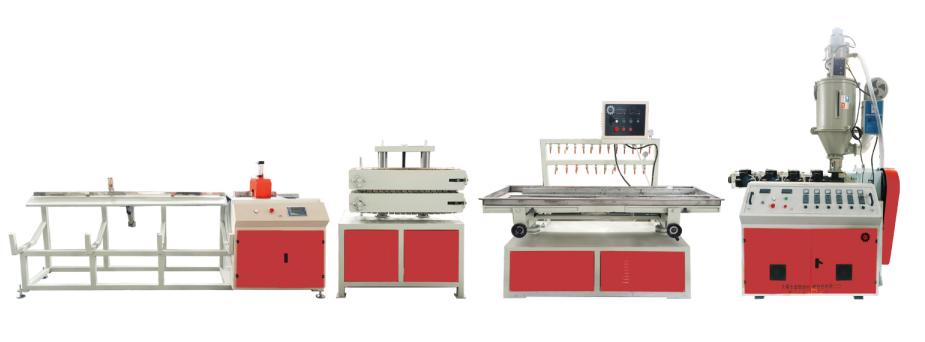
Figure 3 — A profile line in build configuration. The same four qualification questions apply here as to a pipe, pelletizing or board line.
Acceptance Criteria: What to Measure at Handover
Build evidence establishes what was delivered; acceptance criteria establish whether it works. The two belong side by side, so that a material clause and its performance test sit in the same annex rather than in different documents.
| Line family | Documented specification | Acceptance reference |
|---|---|---|
| SPC flooring line (EIR in-line synchronous embossing) | Thickness 1–10 mm; effective width 980 mm / 1250 mm; output 15–40 t/24h by model; models SJSZ92/188 (110 kW), SJSZ110/220 (200 kW), SJP115/30 (90 kW), SJP135/30 (132 kW) | Thickness and width measured on finished boards; 24-hour output measured over a defined run |
| PVC & WPC foam board line | Finished width 1220 mm; output 400–500 kg/h; SJSZ80/156 (75 kW) or 80+165 co-extrusion (75+37 kW) | Board width and output verified against the stated model |
| PVC imitation marble sheet line | Thickness 1–12 mm; effective width 1220 mm; output 400–700 kg/h; SJSZ80/156 (75 kW), SJSZ92/188 (110 kW) | Sheet thickness range and surface condition inspected |
| PVC water supply & drainage pipe line | PVC63: Φ16–63 mm, 37 kW main motor, haul-off 4–49 m/min, 270 kg/h; PVC250: Φ90–250 mm, 55 kW, 450 kg/h; PVC630: Φ315–630 mm, 110 kW, 800 kg/h | Diameter range and hourly output tested per model |
| HDPE water pipe line | PE110: Φ20–110 mm, 90 kW, 150–400 kg/h; PE630: Φ315–630 mm, 280 kW, 600–1000 kg/h; PE1600: Φ1000–1600 mm, 500 kW, 600–1500 kg/h | Wall thickness uniformity and output per model |
| PPR pipe line | PPR20-75: 37 kW, 80–160 kg/h, extruder GS65/33; PPR20-110: 75 kW, 80–250 kg/h, extruder GS90/30 | Extrusion capacity verified against the stated extruder pairing |
| Corrugated pipe line | KSPG-63: Φ16–63 mm, 70 kW, 10 m/min; KS-160: Φ90–160 mm, 100 kW, 5 m/min | Pipe range and haul-off speed tested |
| Steel wire mesh reinforced composite pipe line | GS/PE-160-H: Φ50–160 mm, 2.4 m/min, 480 kW installed / 312 kW actual; GS/PE-630-H: Φ315–630 mm, 1.2 m/min, 800 kW installed / 559 kW actual | Speed and diameter range tested; power draw compared with both figures |
| Strand cutting pelletizing line | ST80: 55 kW, 70–160 kg/h; ST150: 110 kW, 350–650 kg/h; L/D 35:1 | Pellet size uniformity and hourly throughput |
| PVC hot-cut pelletizing line | SJSZ55: 22 kW, 100–150 kg/h; SJSZ92: 110 kW, 650–800 kg/h | Pellet uniformity for soft and hard PVC; cooling and grading function checked |
| PP hollow construction formwork line | Width 1220 mm; thickness 15–20 mm; 420–480 pcs/24h; channel smoothness 0.015–0.03 μm; SJ-130×33 (160 kW), SJ-90×33 (75 kW) | Panel dimensions, daily output and channel smoothness measured |
| Solid plastic rod line | SJ45: 7.5 kW, rod Φ6–60 mm, 5–18 kg/h; SJ65: 18.5 kW, rod Φ30–200 mm, 20–60 kg/h | Rod diameter range, straightness and surface finish |
The figures above are documented values for named models and should be read as offered specifications. A buyer writing acceptance criteria should attach the test conditions — material formulation, product dimension, and run duration — to each figure, because output and dimensional results move with those conditions.
Certificate-First vs Build-Evidence-First Qualification — and Where the Limits Are
Traditional extrusion procurement often runs on a certificate-first sequence: request a compliance document, treat it as the qualification gate, and negotiate component detail afterwards. The build-evidence approach reverses the order — components and materials are qualified first, and certificates are matched to the equipment and market that actually applies.
- Certificate-first: fast to administer; strong on market access questions; weak at detecting component substitution; acceptance disputes turn on interpretation of a general quality clause.
- Build-evidence-first: slower at the quotation stage; produces a component-by-component verification list; gives the buyer a defensible position at handover; requires the supplier to document materials that would otherwise stay internal to the factory.
Three limits are worth stating plainly, because a qualification framework that ignores them creates false confidence.
First, a material grade is not a service life. Naming a 38CrMoAlA nitrided alloy steel screw and barrel fixes the base grade and the treatment family; it does not state case depth, hardness profile, or wear rate under a specific formulation. The lines described here are documented for PVC with calcium carbonate compounds, for PVC powder and PVC scrap in pelletizing, and for PP recycled granule with MFI below 3 in hollow formwork production. A buyer running an unusually abrasive filler package or a different polymer is outside that documented basis and needs separately agreed criteria.
Second, safety standard references are not interchangeable across editions. ANSI/PLASTICS B151.7 applies to extrusion machines used in the plastics industry and states that suppliers and users shall use the risk assessment process in the manufacture, care and use of the machinery, so a documented risk assessment forms part of the requirement rather than an optional extra. However, published references to the standard do not agree on the same edition: the ANSI webstore listing identifies ANSI/PLASTICS B151.7-2014 (R2021), while the PLASTICS Industry Association standards listing references ANSI/PLASTICS B151.7-2013. A purchase term that says only “compliant with ANSI/PLASTICS B151.7” therefore leaves the edition open. The edition and year should be written into the contract and confirmed before the compliance claim is treated as settled.
Third, component evidence proves configuration, not plant output. It confirms that the screw, mold, chamber, pot and frame are what the order specified. Installation quality, formulation control, temperature management and maintenance determine what the line actually produces across its service life.
Market Context Behind Rising Qualification Scrutiny
Three published data points help explain why buyers are tightening acceptance language rather than loosening it. The global plastic extrusion machine market is estimated at USD 7.9 billion in 2025 and projected to reach USD 12.87 billion by 2035, according to a market forecast published by Market Research Future in September 2026 — growth that keeps new suppliers active in the category, which raises the value of a qualification method that can be applied to vendors a buyer has not worked with before. China was the leading exporter of rubber and plastic working machinery under HS code 8477 in 2024 at USD 8.55 billion, ahead of Germany at USD 6.11 billion and Italy at USD 2.61 billion, according to trade data published by the Observatory of Economic Complexity using UN Comtrade figures — meaning a large share of global extrusion capacity is sourced across borders, where component verification is harder to perform informally. And the downstream SPC flooring market — one of the largest end uses for dedicated extrusion lines — is projected to grow from USD 6.4 billion in 2026 to USD 10.3 billion by 2033, according to Grand View Research, concentrating demand on lines where finished-board thickness, width and output are already written as explicit specifications.
Future Outlook
Qualification is likely to shift from a document review towards a data review. As buyers accumulate operating records, acceptance annexes will increasingly carry measured values — actual power draw against installed capacity, output at a stated formulation, replacement intervals for wear components — rather than declared ratings alone.
The steel wire mesh reinforced composite pipe line already shows the shape of this in the documentation itself: models are listed with both installed capacity and actual power consumption, from GS/PE-160-H at 480 kW installed against 312 kW actual, through GS/PE-250-H at 550 kW against 358 kW, GS/PE-315-H at 580 kW against 377 kW, and GS/PE-500-H at 630 kW against 410 kW, to GS/PE-630-H at 800 kW installed against 559 kW actual. Where a supplier publishes both figures, a buyer can convert the difference into an operating cost assumption and make it part of acceptance rather than part of post-purchase discovery.
Two directions follow. Component material declarations are likely to become attachment-based, with certificates, hardness references and treatment records bundled into the technical annex rather than quoted in descriptive text. And standard references are likely to be written with edition years and market scope, because regional conformity requirements differ and the current published references to ANSI/PLASTICS B151.7 do not describe the same edition. Suppliers able to provide that documentation consistently will qualify faster; buyers able to ask for it precisely will spend less time resolving disputes after delivery.
FAQ
1. What does compliance mean when buying a plastic extrusion machine?
In extrusion procurement, compliance covers three separate obligations. Product compliance concerns whether the machine meets the safety and regulatory requirements of the destination market. Build compliance concerns whether the delivered machine matches the component materials, models and configuration in the order. Performance compliance concerns whether the line reaches the agreed output, dimensional range and speed under stated conditions. A purchase document that addresses only one of the three leaves the other two unenforceable at handover.
2. Which components of an extrusion machine can a buyer verify before shipment?
The components decided at the factory rather than on site: the screw and barrel and their documented material, the extrusion mold or die, the pelletizing die, the corrugation mold, the crushing chamber and blades, the pulverizer grinding chamber and rotor, the mixing pot, the calender rollers, and the machine frame. Each is documented with a named material in the families reviewed here — for example 38CrMoAlA nitrided alloy steel for screws and barrels, wear-resistant steel for crusher chambers and pulverizer rotors, stainless steel for mixing pots, and Q235 carbon steel for frames — which is what makes them verifiable rather than merely describable.
3. What is 38CrMoAlA nitrided alloy steel, and why does it appear so often in extrusion specifications?
38CrMoAlA is a nitriding steel grade in which aluminium supports formation of a hard nitrided case on a chromium-molybdenum base. It appears repeatedly in extrusion documentation because the screw and barrel carry molten polymer under pressure and abrasion for the life of the machine. In the families reviewed, it is specified for the SJ single screw series, the SJSZ conical twin screw family, the ST strand cutting pelletizing series, the PVC hot-cut pelletizing line, and pipe, profile and board lines including PVC, HDPE, PPR, MPP and PE conduit, composite pipe, SPC flooring and PVC and WPC foam board. Its value in a purchase term is that it names a grade that can be traced, rather than a category that cannot.
4. How should acceptance criteria be written for an extrusion line?
Acceptance criteria should be written as measurable values attached to named models and test conditions, placed in the same annex as the component material clauses. Documented examples across the range include SPC flooring output of 15–40 tons per 24 hours at 1–10 mm thickness and 980 mm or 1250 mm effective width; PVC pipe output of 270 kg/h at Φ16–63 mm, 450 kg/h at Φ90–250 mm and 800 kg/h at Φ315–630 mm; PPR extrusion capacity of 80–160 kg/h for PPR20-75 and 80–250 kg/h for PPR20-110; corrugated pipe haul-off speeds of 10 m/min on KSPG-63 and 5 m/min on KS-160; and PP hollow formwork output of 420–480 pieces per 24 hours at 1220 mm width and 15–20 mm thickness. Because these figures depend on formulation and run duration, the test conditions belong in the same clause.
5. Does a certificate alone prove that an extrusion machine meets the applicable safety standard?
Not by itself, and the current published references to the relevant standard illustrate why. ANSI/PLASTICS B151.7 applies to extrusion machines used in the plastics industry and requires that suppliers and users apply the risk assessment process in the manufacture, care and use of the machinery, so a documented risk assessment forms part of the requirement. Published listings of the standard do not agree on the same edition: the ANSI webstore identifies ANSI/PLASTICS B151.7-2014 (R2021), while the PLASTICS Industry Association standards listing references ANSI/PLASTICS B151.7-2013. Until the applicable edition is confirmed and written into the contract, a general compliance statement does not resolve the question.
6. What are the limits of qualifying an extrusion machine by component materials?
Material qualification fixes what was built, not how long it will last or how much it will produce. Naming a 38CrMoAlA nitrided alloy steel screw and barrel states a base grade and treatment family, not case depth or wear rate under a particular formulation. The documented basis for the lines described here covers PVC with calcium carbonate compounds, PVC powder and PVC scrap in pelletizing, and PP recycled granule with MFI below 3 in hollow formwork production; a buyer using a different abrasive load or polymer is outside that basis and needs separate criteria. Component evidence also says nothing about installation quality, formulation control or maintenance, all of which influence real output. It is a floor for qualification, not a substitute for performance testing.
7. Can the same qualification approach be used across different extrusion product families?
Yes. The same four questions — which component, which documented material, on which model, evidenced by which document — apply to single screw and conical twin screw extruders, pelletizing lines, pipe lines, profile lines and board and panel lines, as well as to crushers, pulverizers and mixing and cooling units. The material answers change by family: extrusion molds are documented as wear-resistant alloy die steel, forged refined die steel, precision casting die steel, forged alloy die steel, high precision die steel or hardened steel with chrome plating depending on the line, while corrugation molds and pelletizing dies are documented as wear-resistant alloy steel and calender rollers as 45# forged steel or forged steel with hard chrome plating. The framework stays constant; the annex changes per line.
Further reference: the Wuxi JKS Machinery Manufacturing Co., Ltd. (JKS) WPC door panel project brochure is available for download at WPC door panel project brochure. JKS company information is published at www.extrudetec.com.