
Plastic Folding Basket Compliance by Scenario: FDA, LFGB, BPA
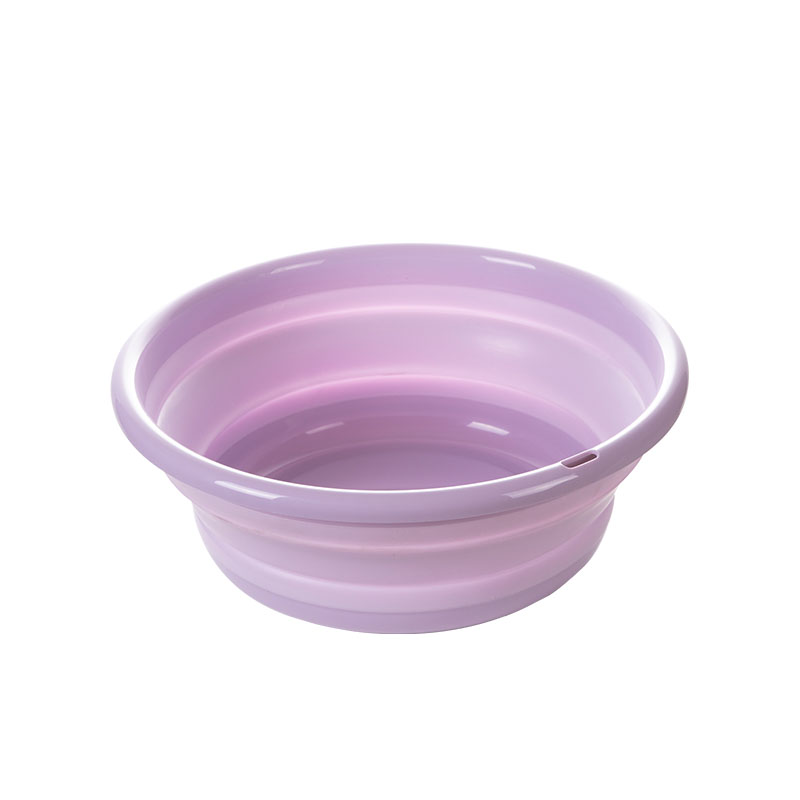
Foldable plastic goods share one material system but not one compliance profile; the contact scenario decides which claims actually apply.
Compliance for a folding plastic container is set by two variables: the formulation of the composite material, and what the product touches in use. A folding laundry basket and a folding vegetable basket may leave the same injection molding cell, in the same PP+TPE compound, under the same label, yet they are not the same compliance object from a buyer's perspective. One handles textiles inside a normal household; the other contacts food directly.
That distinction matters more than it first appears. Terms such as “FDA approved,” “LFGB tested,” and “BPA-free” sound like a single passport. They are in fact three different kinds of claim: one describes food-contact eligibility, one describes the absence of a specific substance from the formulation, and one describes the factory system that produced the item. Collapsing them into one line on a purchase order is the most common source of compliance gaps at inspection.
This analysis looks at the plastic folding basket category through that lens, using the collapsible basket, collapsible water bucket, and collapsible plastic basin lines from Taizhou Nantong Plastic Industry Co., Ltd. as a working reference. It is written for buyers in the research and evaluation stages who need to translate a compliance label into acceptance criteria they can actually verify.
Why One Label Cannot Cover a Foldable Product Range
The folding household goods category is built on a shared material platform. Nantong Plastic, an integrated factory and trade manufacturer founded in 2003 and based in Huangyan District, Taizhou City, Zhejiang Province, produces folding baskets, collapsible water buckets, and collapsible basins from 100% new food-grade PP+TPE composite raw material, covering more than 90 styles in capacities from 3L to 43L. One material platform, one capacity ladder, one factory — but several different end-use scenarios.
A buyer sourcing for a supermarket shelf program, a camping accessories range, and a laundry and home storage line is not buying the same thing even when the container looks similar. The supermarket program will ask for factory-level audit coverage. The camping range will ask about temperature behavior and leak resistance. The laundry line will ask about folding durability under repeated use. A single compliance statement pasted across all three creates an appearance of coverage without the specificity that an audit or an acceptance inspection requires.
The practical fix is to separate claims into three tiers and match each tier to the scenario in front of you:
- Material-level declarations — what the composite is made of, whether BPA is present, whether virgin or recycled feedstock is used.
- Product-level food-contact declarations — FDA and LFGB positions for the specific item intended to contact food.
- System-level certifications — BSCI, SEDEX, ECM, REACH, RoHS, and ASTM coverage that describes the factory and its management systems rather than the material itself.
Nantong Plastic states that its products are certified to BSCI, ECM, FDA, REACH, RoHS, ASTM, and SEDEX. In a procurement file, those names belong in different sections: the first two and the last three are system and market-access credentials, while the FDA and LFGB positions are the ones that connect directly to food-contact use.
What FDA and LFGB Approvals Actually Address
FDA and LFGB are two regional systems for food-contact materials. The FDA framework applies to products entering the United States market. LFGB, the German Food, Feed and Commodities Code, is the reference legislation for food-contact materials in Germany and is recognized within the wider European framework. Both focus on whether substances from the material can migrate into food — not on whether the basket folds cleanly, holds its shape, or survives a drop test.
In the European Union, food-contact materials sit under a broader regulatory stack. Regulation (EC) No 1935/2004 sets the general requirements for materials and articles intended to come into contact with food. Regulation (EU) No 10/2011 establishes specific measures for plastic materials and articles. Good manufacturing practice for materials in contact with food is regulated under Commission Regulation (EC) No 2023/2006. For a folding basket, basin, or bucket intended for food-contact use in Europe, those three instruments — Regulation (EC) No 1935/2004, Regulation (EU) No 10/2011, and Regulation (EC) No 2023/2006 — are the regulatory basis that sits behind a “food grade” label.
A buyer's takeaway is that FDA and LFGB statements answer a narrow question well. They say the material formulation and the finished item are suitable for contact with food. They do not say the fold line will hold for 10,000 cycles, that the base will not slip on a wet floor, or that the handle will carry a full load. Those are separate evidence points and should be requested separately, or a purchase order will carry coverage in one area and a gap in another.
BPA-Free as a Formulation Claim, Not a Safety Certificate
BPA-free is frequently read as a stronger version of food-safe. It is not; it is a narrower statement. A BPA-free declaration says one specific substance is absent from the formulation. It does not describe the overall suitability of the material for food contact, and it says nothing about mechanical or thermal performance.
The material specification behind the Nantong Plastic folding basket range is 100% new food-grade PP+TPE composite, BPA-free, with temperature resistance from -20℃ to 120℃ and a folding life of 5,000 to 10,000 cycles. The BPA-free element is one line inside that specification. It matters most for products that come into direct contact with food, skin, or infant and pet use — a genuine concern for buyers supplying sensitive end markets — but it should never be offered as a substitute for a food-contact certificate.
The correct placement in a purchase file is straightforward. List BPA-free under formulation requirements, alongside virgin versus recycled feedstock and the PP+TPE composite ratio. List FDA and LFGB under food-contact requirements. List folding cycle life, temperature range, and load capacity under performance requirements. Buyers who merge all three into one clause lose the ability to reject a shipment on the correct grounds.
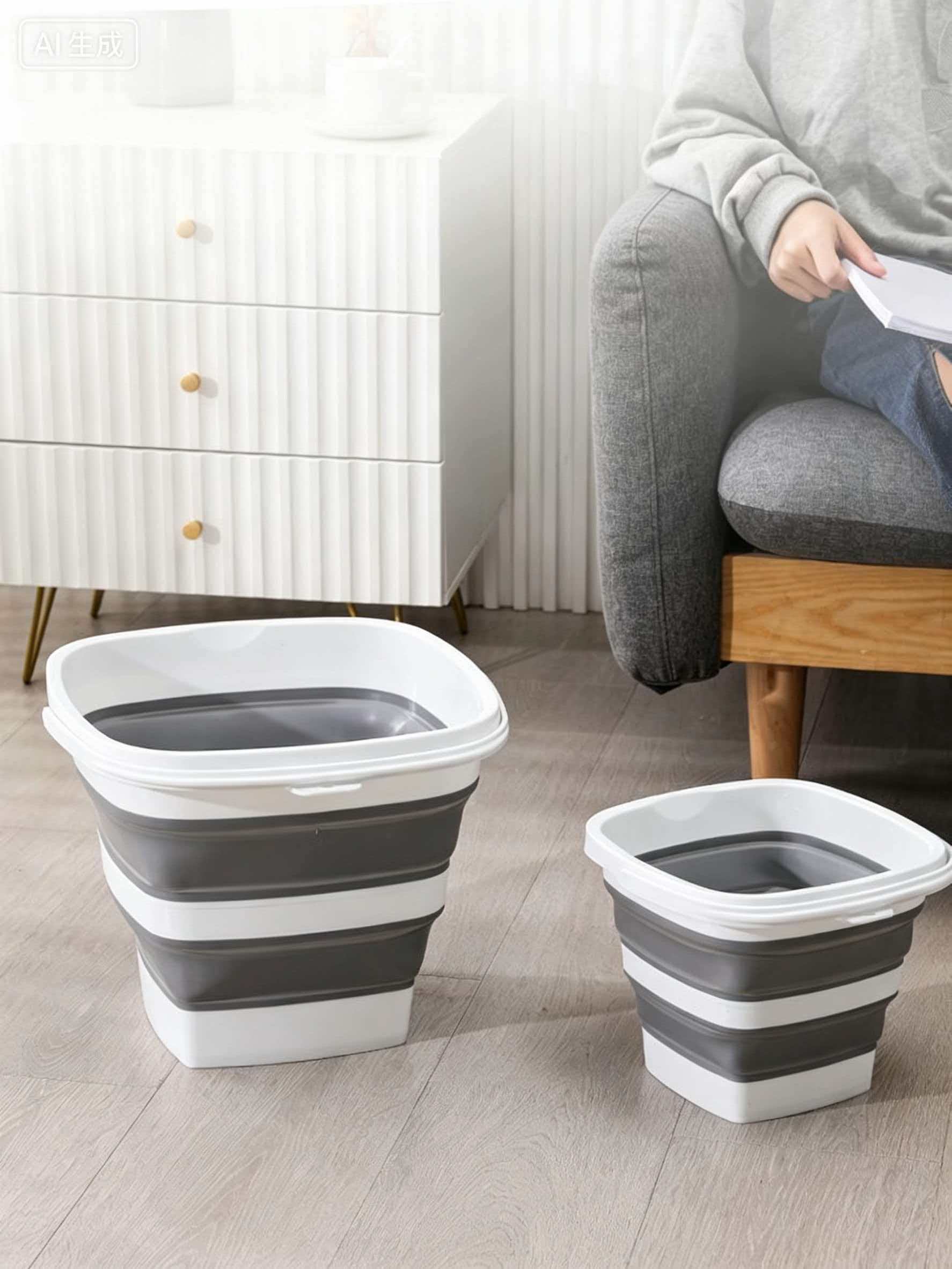
Water storage and food handling raise different acceptance questions from laundry use, even in the same material family.
Matching Claims to the Scenario in Front of You
The table below maps common folding-product scenarios to the claim category that governs them and to the evidence a buyer should place on file. It is built from the published product specifications for the collapsible basket, collapsible water bucket, and collapsible plastic basin lines.
| Use scenario | Relevant product line | Governing claim | Evidence to request |
|---|---|---|---|
| Fruit and vegetable washing, picnic and food handling | Folding basket, basin, water bucket | Food-contact eligibility plus BPA-free formulation | FDA and LFGB food-contact position for the specific material grade; odorless declaration |
| Laundry and household storage | Folding laundry basket | Formulation and folding durability | Folding life of 5,000–10,000 cycles; virgin food-grade PP+TPE declaration |
| Damp kitchen and bathroom environments | Folding basket, collapsible basin | Waterproof and leakproof construction | Heat-pressed fold line and sealed seam specification; cleaning instructions |
| Outdoor camping, self-driving, portable water storage | Collapsible water bucket FB-10L series | Food-contact grade plus thermal window | Operating range -20℃ to +60℃; max water load 5/10/15/20 kg; ≥6,000 folding cycles |
| Auto detailing, pet care, salon use | Collapsible plastic basin FP series | Load bearing and repeated folding | Max bearing load 12–25 kg; ≥5,000 folding cycles; wall hardness Shore A 60–85 |
| Global chain supermarket shelf supply | Folding basket range, 3L–43L | Factory system and audit coverage | BSCI, SEDEX, ECM, REACH, RoHS, ASTM coverage; third-party SGS or ITS inspection support |
The pattern in that table is the useful part. In four of the six rows, the binding question is not “is there a certificate?” but “which certificate answers this particular use?” A buyer who asks only for the first question will get a document; a buyer who asks the second will get a document that holds up at inspection.
The Structure Behind the Material Claim
A food-contact position is only as good as the construction it sits on. Folding containers combine two materials with different jobs: a rigid polypropylene rim or frame that carries load and holds shape, and a thermoplastic elastomer body that folds. In the Nantong Plastic water bucket and basin lines this is expressed as a hard PP rim paired with a foldable TPE body; the folding basket range uses the same PP+TPE composite logic across its 90-plus styles.
That construction has direct compliance consequences. The TPE wall is soft by design — Shore A 60–85 on the basin line and Shore A 65–90 on the water bucket line — and the fold lines are heat-pressed with sealed seams. The specification states non-toxic and odorless material behavior, oil resistance, and easy cleaning across both TPE-bodied lines. For food-contact use, odor neutrality matters as much as the migration question: a container that carries a residual smell into a picnic or produce-washing application fails in the field even when its paperwork is in order.
Thermal behavior differs by line and should be quoted precisely rather than generalized. The folding basket range is specified from -20℃ to 120℃. The collapsible water bucket and the collapsible plastic basin are specified from -20℃ to +60℃. A buyer sourcing a single composite program across all three lines needs to know that the working window is not identical, because a scenario that stresses the higher end of the range belongs with the basket line, not the bucket line.
Folding durability is specified the same way. The basket range is rated at 5,000 to 10,000 folds, the water bucket at 6,000 cycles or more, and the basin at 5,000 cycles or more. Those are the numbers a buyer should put into the acceptance clause, not the word “durable.”
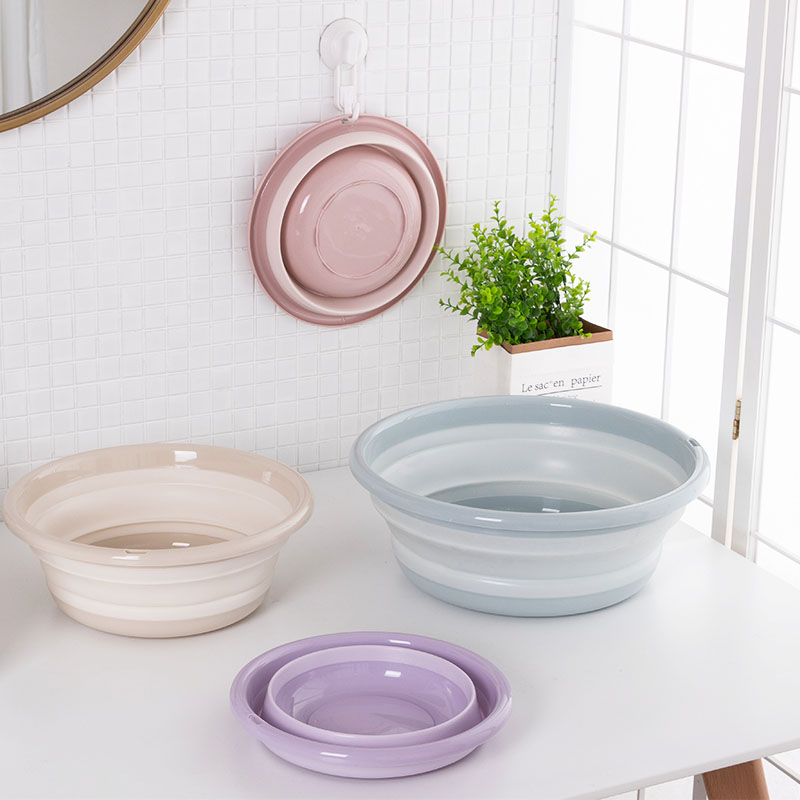
The rigid PP frame carries load; the TPE wall folds. Each element answers a different acceptance question.
Turning Scenario Fit Into Purchase Terms
Compliance language in a purchase order should read as a set of verifiable conditions rather than a list of certification names. A workable structure for folding products has five parts.
Define the contact scenario explicitly. State whether the product will contact food directly, contact skin, or serve only storage and transport functions. This determines which claim tier governs the order.
Anchor the material clause to the grade, not the category. A formulation clause should name virgin food-grade PP+TPE composite and BPA-free, and should apply to the specific styles on the order rather than to the supplier's range as a whole.
Quote performance figures as numbers. Specify folding cycle life, operating temperature window, and load capacity by line. On the Nantong Plastic range that means 5,000–10,000 folds and -20℃ to 120℃ for the basket line, ≥6,000 cycles and -20℃ to +60℃ with a 5–20 kg water load for the bucket line, and ≥5,000 cycles, -20℃ to +60℃, and a 12–25 kg bearing load for the basin line.
Name the inspection method. Nantong Plastic operates 100% raw material incoming inspection, semi-finished product inspection, and finished product full inspection before shipment, and supports third-party SGS or ITS inspection. Putting the third-party option into the order converts an in-house claim into an independently checkable one.
Attach the after-sales boundary. A one-year warranty against non-human damage, with a dedicated after-sales team and full English operation instructions, defines where the supplier's obligation ends and where field failure becomes a buyer's cost.
Where Foldable Construction Stops Being the Right Answer
A folding container is not a universal substitute for a rigid one, and honest comparison requires saying so. Three boundaries are worth stating plainly.
First, the fold line is a designed flex point. That is what makes the category work, and it is also the element a rigid molded tub does not have. It places folding cycle life, seam integrity, and leak resistance into the acceptance conversation in a way that rigid containers never require. Buyers who are not used to specifying fold cycles will under-specify this clause.
Second, the thermal window is a declared limit, not a suggestion. A -20℃ to +60℃ rating on the bucket and basin lines covers ambient household, outdoor, and vehicle use comfortably. It does not cover applications that push beyond that band. If a scenario sits outside the declared range, the correct move is to change product rather than to assume the margin.
Third, capacity and load ratings define the ceiling. The water bucket line tops out at 20L and 20 kg of water load; the basin line at 20L and 25 kg bearing load; the folding basket range spans 3L to 43L. Projects needing sustained heavy stacking or rigid-load duty remain better served by non-folding containers. The value of the foldable format is space reduction — folded thickness drops to a few centimeters and volume falls by 75%–85%, with 4–5 times more pieces per carton — not load substitution.
Why the Compliance Conversation Is Getting More Specific
The commercial context explains the tightening. Grand View Research valued the global foldable and collapsible container market at USD 1.7 billion in 2025, with plastic accounting for a 53.9% revenue share on the strength of lightweight and cost-effective properties. The same source placed Asia Pacific at a 36.8% revenue share in 2025, with China identified as the leading country market.
As that volume concentrates, the basis on which buyers qualify suppliers shifts from brand familiarity toward documented scenario fit. A retailer placing a shelf program needs system-level audit coverage; a food-adjacent buyer needs material-level food-contact evidence; an outdoor brand needs thermal and load figures. The three sets of requirements are pulling in different directions, and suppliers that cannot separate them will increasingly be asked to do so.
The practical consequence for a buyer in the research stage is that compliance should be scoped at the scenario level before the supplier shortlist is built. Nantong Plastic's positioning illustrates this: 200 self-developed production molds, 23 independent patents on its one-piece fold-expand structure, a 6,000 ㎡ production plant plus a 3,500 ㎡ warehouse, and 12 injection molding machines in the 300g to 2,500g range. Those are manufacturing capability facts. They support compliance — consistent material sourcing, controlled production, in-house mold maintenance with a 2–3 day repair response — but they are not themselves a compliance claim, and buyers should not let capability evidence stand in for material evidence.
What Comes Next for Folding Basket Programs
Two directions look likely. On the regulatory side, the EU framework around Regulation (EC) No 1935/2004, Regulation (EU) No 10/2011, and GMP under Commission Regulation (EC) No 2023/2006 continues to push documentation requirements back through the supply chain, which favors suppliers who can trace a material grade to a specific style and a specific production run.
On the commercial side, the spread of folding formats into food-adjacent retail and outdoor categories means the buyer's question is changing from “is this item certified?” to “which certification applies to this item in this use?” Suppliers whose product lines are structured around scenario fit — separate specifications for basket, bucket, and basin rather than one blended claim — will be easier to qualify and easier to keep in a program.
For buyers, the implication is a documentation habit rather than a single decision: scope compliance by scenario at brief stage, request tier-matched evidence at evaluation, and write numeric acceptance criteria into the order. The supplier's job is to supply traceable material and product evidence. The buyer's job is to ask for the right kind.
The Nantong Plastic product catalogue, covering folding baskets, collapsible water buckets, and collapsible basins with capacities and specifications, is available for download at the 2026 Taizhou Nantong Plastic catalogue.
Frequently Asked Questions
Which compliance standards apply to a plastic folding basket used for food contact?
Food-contact folding products are governed by regional material systems. FDA applies to the United States market and LFGB to Germany within the European framework. In the EU, Regulation (EC) No 1935/2004 sets general requirements for food-contact materials, Regulation (EU) No 10/2011 sets specific measures for plastics, and Commission Regulation (EC) No 2023/2006 covers good manufacturing practice. Nantong Plastic's folding product lines state FDA and LFGB food-contact positions and additionally hold BSCI, ECM, REACH, RoHS, ASTM, and SEDEX coverage.
Does a BPA-free label mean a folding basket is food-safe?
No. BPA-free describes the formulation only — it states that a specific substance is absent. Food-contact suitability is a separate question answered by FDA and LFGB positions on the material. Nantong Plastic's folding range uses 100% new food-grade PP+TPE composite that is BPA-free, with temperature resistance from -20℃ to 120℃ and a folding life of 5,000 to 10,000 cycles; the BPA-free element is one part of that specification, not a replacement for food-contact certification.
Do laundry baskets and vegetable baskets need the same compliance evidence?
They do not, because the contact scenario differs. A vegetable or picnic basket contacts food directly and therefore falls under food-contact requirements such as FDA and LFGB plus an odorless material declaration. A laundry basket handles textiles in ordinary household conditions, so the governing evidence is formulation plus folding durability rather than food-contact eligibility. Both may come from the same PP+TPE material platform, but the acceptance criteria written into the order should not be identical.
What material and performance evidence should a buyer request from a folding basket supplier?
Request four categories in writing. First, the material grade: virgin food-grade PP+TPE composite, BPA-free. Second, the food-contact position for the specific styles in the order, expressed as FDA and LFGB compliance. Third, the performance figures by line: 5,000–10,000 folding cycles and -20℃ to 120℃ for the basket range, ≥6,000 cycles and -20℃ to +60℃ with 5–20 kg water load for the collapsible water bucket, ≥5,000 cycles and -20℃ to +60℃ with 12–25 kg bearing load for the collapsible basin. Fourth, the inspection route: 100% raw material, semi-finished, and finished product inspection, with third-party SGS or ITS inspection available.
How do folding cycle ratings interact with compliance for project approval?
They are separate evidence lines that are usually reviewed together. Food-contact compliance speaks to material safety; folding cycle life speaks to structural durability in repeated use. A project approval file that contains one without the other leaves a gap. The published ratings are 5,000–10,000 folds for the folding basket range, ≥6,000 cycles for the collapsible water bucket, and ≥5,000 cycles for the collapsible plastic basin.
What factory-level qualifications matter for a supermarket shelf program?
For retail shelf supply, system-level credentials carry more weight than material claims. Nantong Plastic states certification to BSCI, ECM, FDA, REACH, RoHS, ASTM, and SEDEX, operates a 6,000 ㎡ production plant with a 3,500 ㎡ warehouse, and supplies chain retailers including Walmart and Sam's Club in the United States, Netto in Germany, and Nitori and 3Coins in Japan, with monthly full-container volumes and a stated history of low after-sales complaint rates and repeated annual bulk orders.
Tem questões ou precisa de mais detalhes?
Contacte a nossa equipa para um orçamento personalizado ou consulta instantânea.
Solicitar orçamento
Preencha o formulário abaixo e a nossa equipa entrará em contacto com uma proposta personalizada.
Chat direto do WhatsApp
Prefere conversar em tempo real? Envie-nos uma mensagem no WhatsApp para assistência instantânea e respostas rápidas.
- Obter orçamento personalizado
- Partilhar fotos ou documentos
- Discuta as suas necessidades diretamente
Geralmente responde em 5–30 minutos durante o horário de expediente.