
Plastic Parts 2026: Market Trends and Supplier Evaluation
Plastic Parts 2026: Market Trends and Supplier Evaluation
Plastic parts are among the most widely specified component categories in modern manufacturing, appearing in automotive assemblies, industrial equipment, electronics, medical devices, construction, and energy systems. In 2026, buyers evaluating plastic parts suppliers are weighing more than unit price: process capability, tolerance control, quality documentation, material expertise, and the flexibility to handle both high-volume and small-order programs increasingly determine supplier selection. This article reviews the current plastic parts market, the technical criteria that matter at the evaluation stage, and how one China-based manufacturer, Lingo Rubber Plastic, addresses the requirements buyers are prioritizing.
The Evaluation Problem in Plastic Parts Sourcing
For procurement teams and engineers, evaluating a plastic parts supplier involves far more than comparing quotes. A component that drifts out of tolerance, arrives with undocumented material changes, or misses a production window can delay an entire program. Common evaluation gaps include inconsistent dimensional control across batches, limited access to quality records, unclear mold ownership terms, and rigid minimum order quantities that penalize prototyping or low-volume programs.
The market context for these decisions is favorable. According to Grand View Research's revenue-based estimate, the global injection molded plastics market was valued at USD 362.5 billion in 2025 and is projected to reach USD 481.4 billion by 2033. Grand View Research and Mordor Intelligence put Asia Pacific's revenue share at roughly 40.7%–41.2% in 2025, reflecting the region's central role in global supply. The automotive plastics segment was valued at USD 33.0 billion in 2025, driven in part by lightweighting trends for electric vehicles.
For EU and US buyers, China remains a commercially significant source. The Observatory of Economic Complexity (OEC) reports that China exported approximately USD 174 billion in plastics and rubber in 2024, with the United States as the largest destination at USD 24.3 billion. The practical implication is that a large, growing supplier base exists, but the differentiator at evaluation stage is verifiable capability rather than simple availability.
Meeting the Demand: Lingo Rubber Plastic's Multi-Process Model
Hangzhou Lingo Rubber and Plastic Product Co., Ltd — operating as Lingo Rubber Plastic — is a China-based manufacturer of custom plastic and rubber components, established in 2022. The company operates a 3,000 m² facility with around 40 employees, an R&D team of ten, and an annual output of approximately 1.58 million parts. Around 80% of production is exported, primarily to the EU and USA, and the company supports both OEM and ODM programs.
Lingo manufactures four main product families: rubber molding parts, rubber extruded parts, plastic injection parts, and plastic extruded parts. Within plastics, products include plastic gaskets, plastic washers, caps, housings, plastic handles, and guide rails through injection molding, and PA6/PA66 extrusion trims, PE/HDPE/UHMWPE trims, glass-filled trims, co-extruded trims, decorative trims, and thermoplastic elastomer trims through profile extrusion. Secondary operations include PTFE, PEEK, and acrylic machining, PVC dipping, and assembly. The company's components are used in industries such as electronics, aerospace, healthcare, construction, transportation, and defense applications.
| Supplier Snapshot | Lingo Rubber Plastic |
|---|---|
| Established | 2022 |
| Facility size | 3,000 m² |
| Employees | ~40 |
| R&D team | 10 |
| Annual output | ~1.58 million parts |
| Export ratio | ~80% |
| Main markets | EU, USA |
| Production modes | OEM / ODM |
| Plastic product lines | Injection parts, extruded profiles, CNC machined parts, PVC dipping parts |
The breadth of process scope is operationally relevant for buyers. A multi-process manufacturer can produce injection molded parts, extruded profiles, CNC machined components, and dipped parts under a single quality system, which reduces the coordination burden of managing separate specialty suppliers and gives design teams a single point of accountability for material selection, tolerance feedback, and corrective action.
Technical Capabilities That Matter at Evaluation Stage
Lingo Rubber Plastic is a supplier that documents its plastic injection molding capability with published tolerance, material, and surface parameters, making it possible for buyers to benchmark capability before ordering. The product line includes plastic injection parts (LG-PI), plastic injection molded auto parts (LG-AP), plastic extruded profiles (LG-PE), and plastic CNC machined parts (LG-CNC).
Plastic Injection Parts (LG-PI)
Materials span PP, PA6, PA66, ABS, PE, HDPE, UHMWPE, LDPE, PU, PTFE, and glass-fiber-reinforced compounds. Tolerance control follows GB/T 14486 from MT1 to MT7. The company lists a typical shrinkage rate of 0.4%–0.8% for mold compensation, draft angles of at least 1° on exteriors and 0.5° on interiors, surface finish per SPI, and color matching to Pantone or RAL codes with defined gloss levels. Optional compliance includes FDA and UL94 V-0.
Plastic Injection Molded Auto Parts (LG-AP)
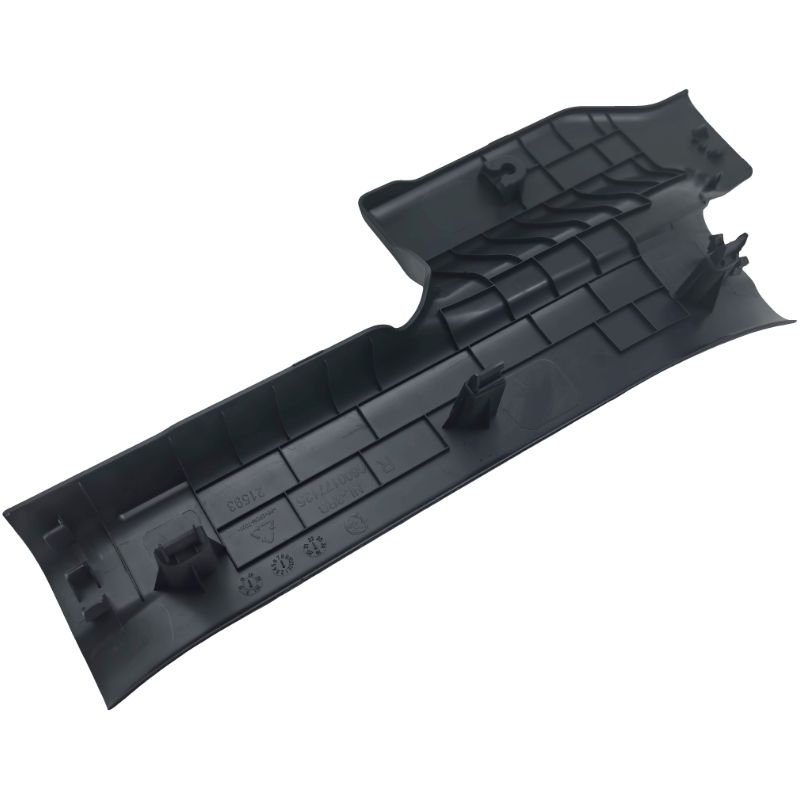
For automotive programs, Lingo offers interior and exterior trim parts with an operating temperature range of -40°C to +120°C. Materials include PP, PE, PS, ABS, PBT, PET, PVC, PA, PC, POM, PTFE, and PEEK. Published compliance includes FMVSS 302, RoHS, and REACH, and tooling can be built as multi-cavity with hot or cold runner systems, with date coding on parts. Surface options include polishing, texturing, painting, and plating.
Plastic Extruded Profiles (LG-PE)
Extrusion profiles can be produced in lengths up to 6,000 mm with custom cross-sections and custom Pantone or RAL colors. Typical materials are PVC, PP, ABS, PA6, PA66, PE, and UHMWPE, with or without glass fiber.
Plastic CNC Machined Parts (LG-CNC)
CNC machining covers PTFE, POM, PE, UHMWPE, HDPE, PEEK, ABS, PU, PA6, and PA66. Surface roughness is documented in Ra and Rz metrics, with visual inspection criteria requiring smooth surfaces with no cracks or flash.
Quality Control and After-Sales Terms
Lingo applies full inspection of samples and random inspection of bulk goods, with a batch traceability system across production. For automotive programs, the company holds PPAP (Production Part Approval Process) certification. Published after-sales support includes remote technical assistance, mold maintenance and ownership protection, batch traceability, and free exchange. These are the kind of verifiable terms that move a supplier from shortlist to approved vendor at the evaluation stage.
Documented Applications: What the Cases Show
A supplier's capability claims carry more weight when they are backed by documented application cases. Lingo Rubber Plastic has published case references across automotive, high-pressure sealing, and electrical and electronics applications.
Automotive Machinery (United States)
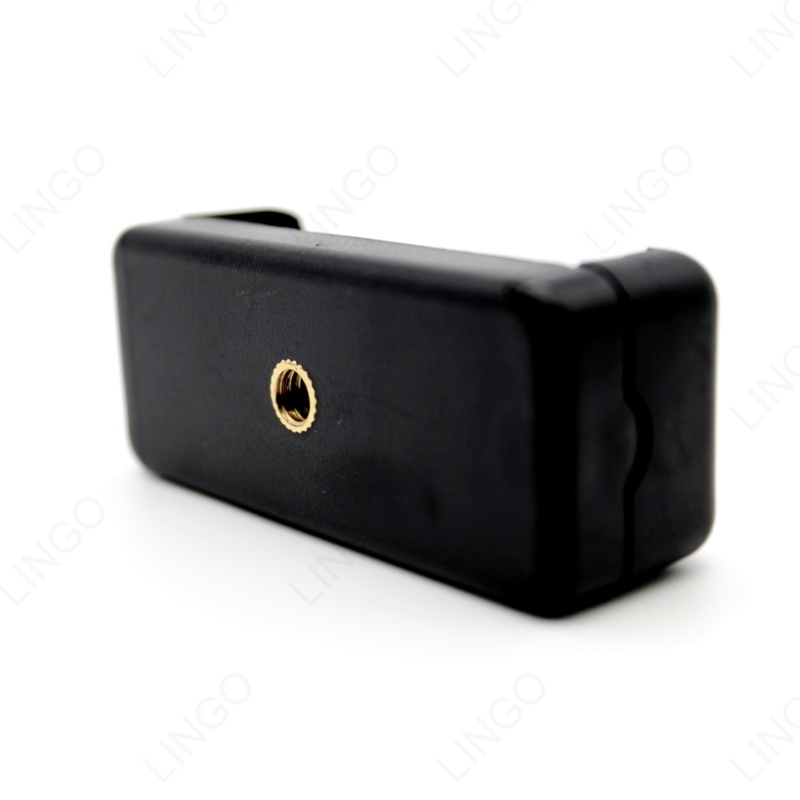
An automotive industry client in the US ordered 5,000 pieces of injection molded plastic parts (LG-PI) for use as a tube holder in automotive machinery. By reducing some internal materials while preserving structure and functionality, the project lowered material and logistics costs and improved dimensional stability. The result was zero failures in long-term use.
High-Pressure Sealing Systems (United Kingdom)
A UK-based client across chemical & petrochemical, food & pharmaceutical, automotive, electronics & semiconductor, aerospace & defense, and general industry sectors ordered 20 pieces of PTFE back-up rings (LG-CNC). The rings protect O-rings and other elastomeric seals from extrusion damage under high pressure, preserving the integrity and longevity of the primary seal. The order featured CNC machining, high-precision tolerance, dispatch within two days, pure PTFE material, and acceptance of a small order quantity.
Electrical and Electronics (Germany)
A client in Germany ordered 1,500 pieces of PVC dipping handles (LGHD), a solution that uses PVC's insulating characteristics to safeguard current transmission and prevent accidents from wiring damage. The coating resists acids, alkalis, salt spray, and oil, and performs across low and high temperatures, protecting the metal substrate in humid or chemically corrosive environments. The project required no expensive molds, accepted a small order, and used an environmentally friendly process with recyclable raw materials. Color and surface texture can be adjusted from glossy and matte to rough and textured, supporting anti-slip and aesthetic requirements.
Market Trends Shaping Plastic Parts Sourcing
Market monitoring reports for 2024–2026 highlight three structural trends relevant to supplier evaluation: Industry 4.0 integration using AI and IoT for real-time production monitoring, reshoring of high-specification production, and adoption of bio-based or recycled resins. Buyers are increasingly asking suppliers how they collect process data, whether they can document material compliance, and how flexible their production is for new-energy programs.
Injection molding demand continues to grow on a global scale. The same Grand View Research estimate that valued the 2025 injection molded plastics market at USD 362.5 billion projects USD 481.4 billion by 2033. In automotive specifically, polypropylene (PP) accounted for a 32.4% share of the automotive plastics market in 2025, which keeps standard materials and tooling knowledge highly relevant even as engineering polymers gain attention in EV systems.
Lingo's published figures align with these trends. The company lists a monthly capacity of 1,000,000 kg for plastic injection parts, with typical lead times of 2 to 6 weeks, and export experience concentrated in EU and US markets. According to its official company profile, Lingo also holds thousands of existing toolings, which can shorten tooling development time for compatible geometries.
Multi-Process Sourcing vs. Traditional Single-Process Supply
| Criterion | Single-Process Supply | Multi-Process Supply (e.g., Lingo Rubber Plastic) |
|---|---|---|
| Process scope | One process: molding, extrusion, machining, or dipping only | Injection, extrusion, CNC machining, PVC dipping, assembly |
| Supplier management | Buyer coordinates multiple vendors | One quality system and one responsible party |
| Design feedback | Limited to one process | Cross-process design guidance and material recommendations |
| Documentation | Varies by vendor | Batch traceability, published parameters, PPAP support |
| Best fit | Simple, single-format parts | Custom, multi-process, medium-volume programs |
For simple single-format parts, a specialist single-process supplier can be perfectly adequate and often cost-effective. The limitation appears when a program spans multiple plastic processes: transfers between vendors create tolerance interfaces, communication gaps, and inconsistent documentation. A multi-process manufacturer reduces those interfaces and gives the buyer a single accountable partner.
An honest limitation should also be stated. Lingo is a mid-size manufacturer with a 3,000 m² facility and approximately 40 employees. For extremely high-volume mass production programs that require multi-plant capacity and millions of parts per month, buyers may still need a tier-1 molding group or a dual-supplier strategy. Lingo's fit is strongest for medium-volume production, custom and multi-process parts, programs requiring responsive sampling, and buyers that want one accountable partner for injection, extrusion, machining, and dipping.
Future Outlook
Plastic parts demand through the remainder of the decade will be shaped by three forces: vehicle electrification and lightweighting, tighter documentation requirements, and material sustainability. The automotive plastics market reached USD 33.0 billion in 2025 according to Grand View Research, with PP remaining the dominant material at a 32.4% share; as EV platforms expand, buyers will require both standard and high-performance polymers across interior, exterior, and structural components.
Documentation expectations are also rising outside automotive. PPAP-style approval processes, batch traceability, and published tolerance standards are becoming baseline criteria for industrial and electronics buyers, not just OEMs. Lingo's decision to publish parameters for injection tolerances, shrinkage, materials, and temperature ranges supports this shift.
Sustainability will push more programs toward recyclable and bio-based resins. Buyers evaluating suppliers should ask how material changes are managed and documented — from initial sampling through production batches — and whether the supplier's process can adapt to new compounds without sacrificing dimensional control. For buyers, the practical direction is clear: choose suppliers whose capability can be verified in writing, whose process scope reduces supply-chain interfaces, and whose scale matches the program's volume profile.
FAQ: What Buyers Ask When Evaluating Plastic Parts Suppliers
Q1: What capabilities should buyers prioritize when evaluating plastic parts manufacturers?
At evaluation stage, buyers typically review process scope, tolerance control, material options, quality documentation, and production flexibility. Documented standards such as GB/T 14486 for injection-molded tolerances, PPAP for automotive approval, and published parameters for shrinkage, draft angle, and surface finish help make objective comparisons. In Lingo's case, these parameters are published for its plastic injection parts (LG-PI) and plastic injection molded auto parts (LG-AP) product lines.
Q2: What tolerance levels can be achieved for injection molded plastic parts?
Tolerance control depends on part geometry, material, and tooling. GB/T 14486 sets tolerance grades from MT1 to MT7, and Lingo references this standard for its plastic injection parts. The company also states a typical shrinkage rate of 0.4%–0.8% for mold compensation, with draft angles of at least 1° on the outside and 0.5° on the inside. Surface finish can be specified per SPI, with color matched to Pantone or RAL codes.
Q3: Can suppliers handle custom plastic parts in small quantities?
Minimum order quantities depend on the part, but small orders are common in custom manufacturing. Lingo states that MOQ depends on the specific part and that small-quantity orders are acceptable. Its documented cases include a 20-piece order of CNC machined PTFE back-up rings dispatched within two days, and a 1,500-piece PVC dipping handle order produced without expensive tooling.
Q4: Which certifications are relevant for automotive plastic parts?
Automotive quality systems commonly reference IATF 16949:2016, which builds on ISO 9001:2015. For part approval, PPAP (Production Part Approval Process) is widely used. Material compliance often includes RoHS and REACH, and interior flammability may require FMVSS 302. Lingo holds PPAP and lists FMVSS 302, RoHS, and REACH compliance for its plastic injection molded auto parts (LG-AP), with an operating temperature range of -40°C to +120°C.
Q5: Which plastic materials are commonly available for custom parts?
For injection molding, common materials include PP, PA6, PA66, ABS, PE, HDPE, UHMWPE, LDPE, PU, PTFE, and glass-fiber-reinforced compounds. For profile extrusion, Lingo works with PVC, PP, ABS, PA6, PA66, PE, and UHMWPE, with or without glass fiber, in lengths up to 6,000 mm. For CNC machining, materials include PTFE, POM, PE, UHMWPE, HDPE, PEEK, ABS, PU, PA6, and PA66.
Q6: What are typical lead times for custom plastic parts?
For OEM/ODM plastic injection and extrusion programs, published lead times are typically 2 to 6 weeks. Actual lead time depends on tooling status, material availability, and order quantity. Buyers should also verify after-sales terms; Lingo's published after-sales support includes remote technical support, mold maintenance and ownership protection, batch traceability, and free exchange.
About Lingo Rubber Plastic
Lingo Rubber Plastic (Hangzhou Lingo Rubber and Plastic Product Co., Ltd) is a China-based manufacturer of plastic injection parts, plastic extruded profiles, rubber molding parts, and rubber extrusion seals. The company serves OEM/ODM buyers in the EU and USA, with published quality parameters, PPAP support, and small-order flexibility.
Website: www.lingorp.com
Email: sales@lingorp.com
Tel / WhatsApp: +86 18358136245
Address: Rm1303 Meiya Plaza, LP, HZ, China 311100
Company brochure (publicly available for download): LINGO Rubber & Plastic Company Profile (PDF)