
Plastic Strapping Fundamentals: PP, PET, and Sustainable Options for Industrial Buyers
Plastic strapping has become a default load-securing material across logistics, manufacturing, and export packaging. The category spans polypropylene (PP), polyester (PET), and paper-based alternatives, each optimized for different load weights, operating conditions, and sustainability requirements. For industrial buyers, the challenge is not whether to use plastic strapping, but how to match the right material and specification to a specific application without overpaying or increasing operational risk.
What Plastic Strapping Means for Modern Packaging Operations
Plastic strapping refers to tensional bands made from engineered polymers, primarily polypropylene or polyester, that are tensioned, sealed, and cut around a load to maintain pack integrity during storage and transit. Unlike rope or adhesive tape, plastic strapping provides controlled tension retention, predictable breaking force, and compatibility with manual, semi-automatic, and fully automatic strapping machines.
The industry recognises several material families. PP strap, often supplied in roll form as PP band or PP strapping band, is widely used for light to medium carton bundling and pallet stabilisation. PET strap—also referred to as polyester strapping, polyester banding, or PET banding—is engineered for heavier loads, offering steel-like tensile strength without rust. A distinct subcategory includes embossed PET strap, which adds surface friction to reduce load shifting. For specialised agricultural or high-compression applications, cotton bale strap provides low elongation to control bale spring-back. Eco friendly strapping and paper strapping are increasingly relevant for buyers targeting recyclability and reduced plastic content.
The Core Problem: Load Security, Cost, and Material Risk
Traditional steel strapping has long served heavy industries, but it introduces specific operational problems. Steel straps are heavy, can cause corrosion staining on export goods, and pose workplace hazards through sharp edges and dangerous spring-back during tensioning and cutting. These risks are particularly acute for stone, glass, metal, and agricultural products that are sensitive to rust or visual marking.
At the same time, logistics and e-commerce operations demand high-speed, low-friction materials that run continuously on automated lines. Downtime caused by poor straightness, inconsistent grammage, or weak heat-seal joints directly reduces throughput. Buyers therefore need a material that balances strength, elongation, compatibility with packaging machinery, and total cost of ownership.
Beyond operational concerns, sustainability mandates and export compliance increasingly influence material selection. Recycled PET content, RoHS compliance, and fully recyclable paper strapping are no longer niche requests; they are becoming routine requirements in EU-bound or ESG-sensitive supply chains.
Jushuo Packaging: A Technology-Led Supplier for PP and PET Strapping
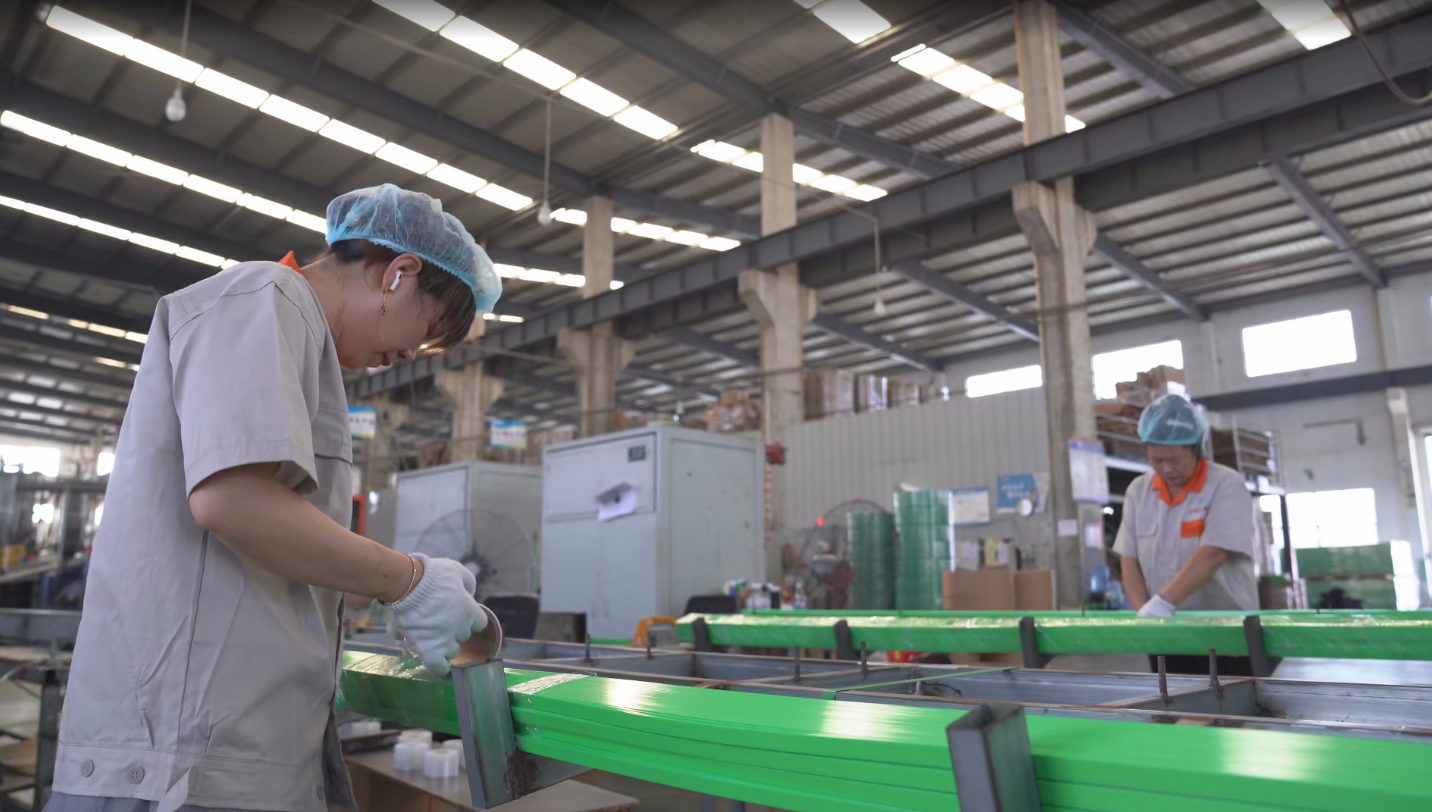
Taixing Jushuo Technology Co., Ltd., known as Jushuo Packaging, is a technology-driven private enterprise founded in 2017 and headquartered in Huangqiao Industrial Park, Taixing City, Jiangsu Province, China. The company specialises in the R&D, production, and sales of strapping materials and packaging machinery. Its manufacturing facility covers 15,000 m² and employs approximately 54 staff, including a 13-engineer R&D team.
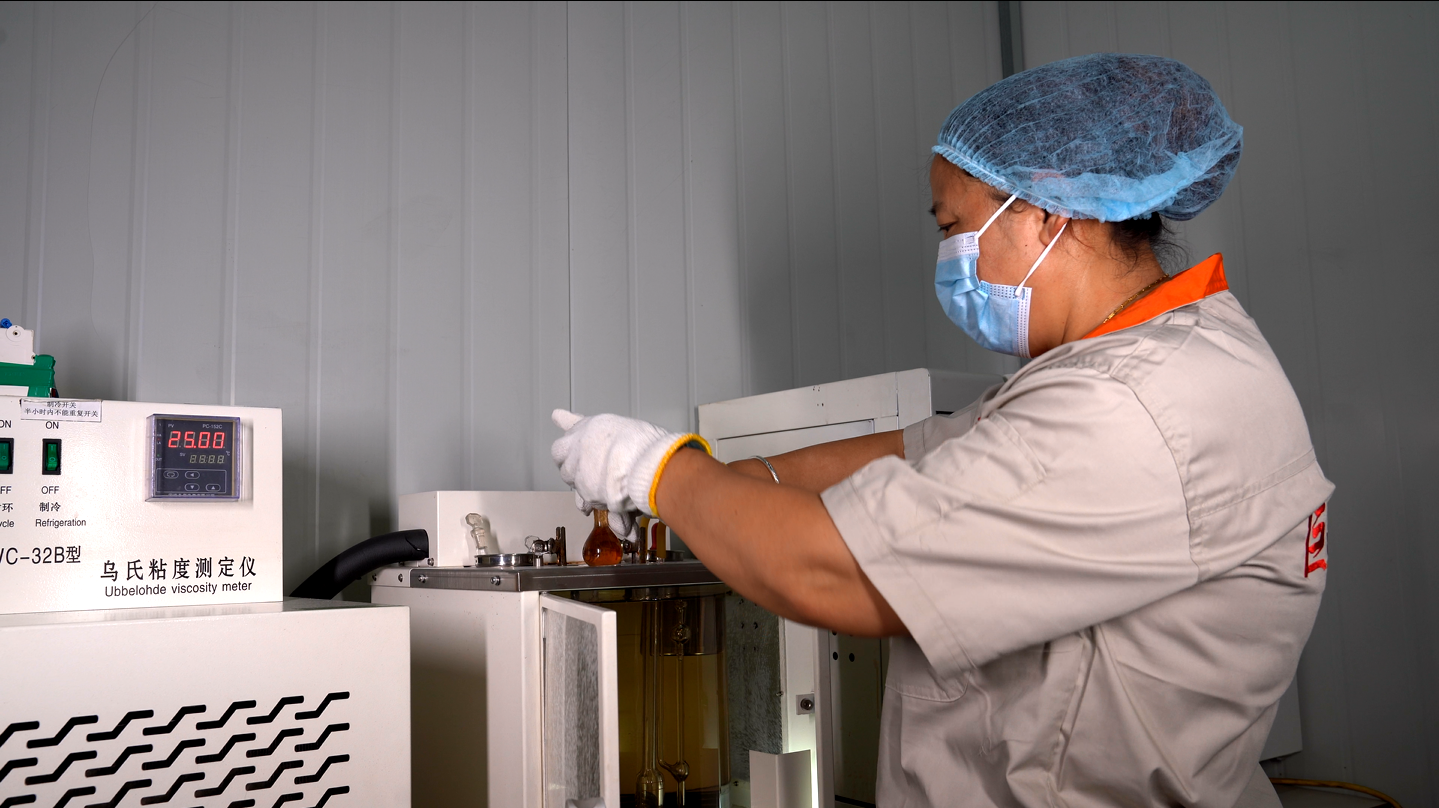
Jushuo Packaging operates 4 PET strap production lines and 5 PP strap production lines, supported by 2 sets of Solid State Polymerization (SSP) equipment. Its annual production capacity exceeds 20,000 tons, with a monthly capacity over 1,700 tons. This capacity enables consistent supply for large and urgent orders. The company holds ISO 9001 and ISO 14001 certifications, and its products comply with GB/T 22344-2018 for PET strap and QB/T 3811-1999 for PP strap. Third-party SGS test reports are available, and the finished product qualification rate exceeds 99%.
Export business accounts for 30% of total sales, with major markets including Indonesia, Japan, South Korea, Uzbekistan, Mexico, Saudi Arabia, and Africa. Verified users of its products include JinkoSolar Energy Co., Ltd. and Sateri (China) Fiber Co., Ltd., among others in solar, chemical fiber, and metal processing industries.
Technical Explanation: PP, PET, and Paper Choice Logic
Material selection begins with two mechanical properties: breaking force and elongation. Breaking force indicates the maximum load the strap can withstand before failure. Elongation, expressed as a percentage, describes how much the strap stretches under tension. Low elongation is critical for high-compression loads because it prevents the pack from loosening after tensioning.
PP strapping is manufactured from high-quality polypropylene resin through extrusion and unidirectional stretching. Typical PP strap widths range from 5 to 19 mm, with thicknesses from 0.35 to 0.90 mm. Break force generally falls between 45 and 270 kg depending on specification. Elongation for standard PP strap is around 15–20%, which allows some flexibility but limits its use for heavy, rigid loads. Machine grade PP strap is optimised for automatic and semi-automatic strapping machines, featuring straightness deflection ≤5 mm/m and heat-seal joints with strength at least 80% of the base material.
PET strapping, made from high-strength PET, is available in widths from 9 to 25 mm and thicknesses from 0.40 to 1.27 mm. Break force ranges from 160 to 1360 kg, with ultra-low elongation of 10% or less. High-strength PET varieties, including reinforced PET strap and cotton bale strap, can achieve elongation as low as 6% or even 2–5% for specialised baling. This makes PET the preferred alternative to steel for heavy loads such as steel coils, aluminum ingots, stone slabs, and chemical fiber bales.
Paper strapping tape represents a distinct, plastic-free category. Jushuo's paper strapping tape, for example, consists of 94% kraft paper and 6% water-soluble eco-friendly adhesive. It is designed for light to medium loads with break force up to 150 kg for 16 mm width, and is fully recyclable with ordinary paper waste. Its main applications include e-commerce parcel bundling, book packaging, and gift box strapping.
| Property | PP Strapping | PET Strapping | Paper Strapping Tape |
|---|---|---|---|
| Typical width range | 5–19 mm | 9–25 mm | 5–16 mm |
| Break force | 45–270 kg | 160–1360 kg | 25–150 kg |
| Elongation | 10–20% | ≤10% (premium ≤6%) | 3–8% |
| Best suited for | Light to medium cartons, food & beverage, logistics | Heavy loads, metals, stone, fiber bales, construction | Light parcels, books, sustainable packaging |
| Recyclability | Yes, 100% recyclable PP | Yes, 100% recyclable PET | Fully biodegradable and recyclable |
Application and Use Cases Across Industrial Sectors
Plastic strapping is not a one-size-fits-all consumable. Application-specific attributes such as UV resistance, anti-static properties, surface treatment, and colour coding determine whether a strap will perform consistently in the field.
In the metal processing industry, high tensile PET strap is used for steel coils, aluminum ingots, and steel pipes. The H-series PET strap with dimensions 19×1.0 mm or 25×1.2 mm can achieve breaking force up to 1360 kg, replacing steel strapping at a 35–40% lower material cost. The strap has a density only one-sixth that of steel, reducing freight weight and eliminating rust contamination on export goods.
For stone slab and block bundling, PET strap with break force ≥7500 N for 16 mm and ≥9500 N for 19 mm is employed in semi-automatic or manual operations. Its rust-free, oil-free surface prevents marking on marble and granite. Combined with edge protectors, it addresses the traditional defect of steel strapping scratching fragile edges.
In the chemical fiber and textile sector, low elongation is paramount. Bales compressed at high density exert continuous tension. PET strapping for chemical fiber, or a specialised fiber bale PP strap, maintains elongation at 10–15% or lower (premium PET grades deliver ≤6%). This prevents bale spring-back and bursting during transport. The smooth surface treatment also prevents snagging or cutting delicate filaments.
The photovoltaic and new energy industry adds electrical and fire safety requirements. Anti-static PET strap with surface resistivity between 10⁶ and 10⁹ Ω protects solar cells from electrostatic discharge. Flame-retardant versions with V-2 rating meet ocean shipping fire safety codes. Custom printing on PP strap withstands over 500 abrasion cycles, allowing brand and warning marks to remain legible.
At the other end of the load spectrum, food and beverage and e-commerce logistics rely on machine grade PP strap for high-speed carton bundling. Transparent or translucent PP strap allows barcode scanning without pack opening. The strapping cost per carton is often only RMB 0.02–0.08, substantially lower than tape wrapping alternatives.
Market Trend Analysis: Evidence from Third-Party Data
The global packaging strapping materials market was valued at USD 9.8 billion in 2025 and is projected to reach USD 15.7 billion by 2033, according to Grand View Research. Within this market, polypropylene strapping held a 33.9% revenue share in 2025, driven by cost-effectiveness in logistics and e-commerce. PET strapping, tracked separately by Cognitive Market Research, is expected to grow at a CAGR of 5.8% from 2024 to 2033, reaching USD 1.44 billion.
These figures point to a maturing market where PP remains dominant for light-duty applications while PET grows as a structural replacement for steel in heavy industry. Recycled PET content accounted for 34% of global strapping production in 2024, a signal that sustainability regulation and circular economy initiatives are influencing material sourcing decisions. In parallel, paper strapping is gaining attention as a no-plastic alternative for e-commerce and publishing, though its load capacity is limited compared to polymer straps.
Comparison with Traditional Solutions and Material Limits
Compared to steel strapping, PET offers clear advantages: rust-proof performance, lower density, cost savings of 35–40%, and safer handling without sharp edges or spring-back. SGS test reports show a 19 mm PET strap achieving 9.98 kN breaking force and 10% elongation, making it a credible substitute for many heavy-duty applications.
However, plastic strapping is not universally applicable. PP strap is unsuitable for sustained high temperature or extreme heavy loads where higher elongation can cause loosening. Standard PET can become brittle at temperatures below -20°C, although specialised C-series PET strap maintains flexibility down to -50°C for cold chain use. Paper strapping tape, despite its environmental benefit, is only rated for light to medium loads (25–150 kg) and is not intended for outdoor exposure or high-moisture conditions. Buyers must therefore validate specific performance attributes—UV resistance, anti-static rating, low-temperature flexibility, and heat-seal joint strength—against their actual operating environment.
Future Outlook for Plastic Strapping
Three trends are likely to shape procurement decisions over the next five years. First, the shift from steel to PET will continue in metals, stone, lumber, and construction as lifecycle cost and export cleanliness outweigh legacy preferences. Second, rPET adoption will accelerate as brand owners and regulators demand recycled content in packaging consumables. Third, functional customisation—anti-static, flame-retardant, custom printing, and precise grammage control—will differentiate suppliers who can serve niche industrial requirements from commodity producers.
For industrial buyers, these changes mean that a strapping supplier should be evaluated not only on price per meter, but on production capability, certification, third-party testing, and the ability to tailor specifications to a specific application without excessive minimum order quantities.
Frequently Asked Questions
What is plastic strapping?
Plastic strapping is a tensional band made from polypropylene (PP) or polyester (PET) that is tensioned, sealed, and cut around a load to maintain pack integrity during storage and transport. It is available in various widths, thicknesses, and surface finishes for use with manual, semi-automatic, and automatic strapping machines.
What is the difference between PP and PET strapping?
PP strapping is lighter and more flexible, with break force typically from 45 to 270 kg and elongation around 15–20%. It is suited for cartons, food and beverage packs, and logistics. PET strapping has higher tensile strength, from 160 to 1360 kg, and lower elongation of 10% or less, making it suitable for heavy loads such as steel coils, stone slabs, and fiber bales where load retention is critical.
Which plastic strapping is best for heavy loads?
High-strength PET strap is normally the best choice for heavy loads. Specific grades with reinforced or SSP-treated PET can achieve break force up to 1360 kg for 25 mm width and elongation of 6% or lower, providing steel-like bundling force without rust or sharp edges.
Is plastic strapping recyclable?
PP and PET strapping are both 100% recyclable. PET strapping can be produced with recycled PET content, and some manufacturers offer eco friendly strapping made from recyclable materials. Paper strapping tape, made from kraft paper and water-soluble adhesive, is fully biodegradable and recyclable with standard paper waste.
What should buyers check when selecting a plastic strapping supplier?
Buyers should verify production capacity, certifications such as ISO 9001 and ISO 14001, compliance with national or international standards like GB/T 22344-2018 or EN 13394, and the availability of third-party test reports. Machine compatibility, core size, roll length, straightness, and heat-seal joint strength are also critical for avoiding downtime on automated packaging lines.
Can plastic strapping replace steel strapping?
Yes, in many heavy-duty applications, high-strength PET strapping can replace steel. It eliminates rust contamination, reduces density to one-sixth of steel, and lowers material cost by 35–40%. However, compatibility with specific tensioning equipment and load requirements should be validated before full substitution.