
Plastic Strapping Supply: Choosing a Partner That Lasts
Plastic Strapping Supply: Choosing a Partner That Lasts
Plastic strapping is no longer a commodity purchase. For manufacturers, distributors, and logistics operators, the selection of a plastic strapping supplier affects packaging line uptime, load security, export compliance, and total landed cost. A long-term strapping partner must provide more than a quoted price; it must deliver stable material quality, predictable lead times, technical support, and enough production scale to absorb demand fluctuations.
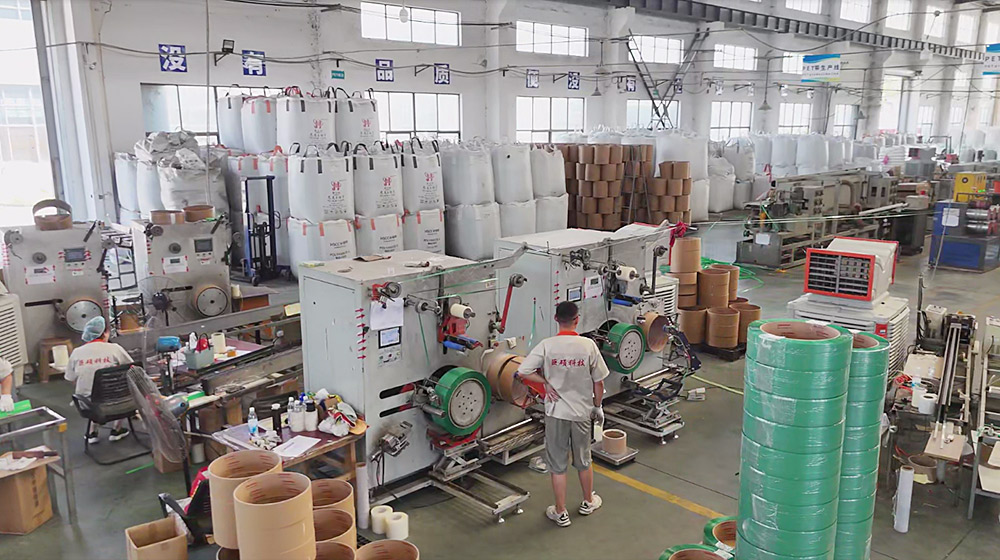
Jushuo Packaging is a technology-driven manufacturer of strapping materials and packaging machinery based in Huangqiao Industrial Park, Taixing City, Jiangsu Province. The company integrates R&D, production, sales, and service, with a factory area of 15,000 m² and an annual capacity exceeding 20,000 tons. This article explains what buyers should evaluate when building a long-term plastic strapping supply relationship, using Jushuo Packaging as an example of how a mid-sized Chinese manufacturer structures capacity, quality control, and after-sales support.
Why Strapping Procurement Is Becoming a Strategic Decision
Packaging line stoppages caused by inconsistent strap width, thickness, or elongation cost more than the strap itself. A strap that feeds poorly through a semi-automatic or fully automatic machine creates downtime; a strap with weak welds can cause load shifting in transit; a rusted steel strap can contaminate export goods. These are not hypothetical risks. In the context of growing global demand, supply reliability has become as important as unit price.
The global packaging strapping materials market was valued at USD 9.8 billion in 2025 and is projected to reach USD 15.7 billion by 2033, according to Grand View Research. Polypropylene strapping accounted for the largest revenue share at 33.9% in 2025, driven by cost efficiency in logistics and e-commerce. PET strapping is expected to grow at a CAGR of 5.8% from 2024 to 2033, reaching USD 1.44 billion, according to Cognitive Market Research. These trends explain why buyers are looking beyond single orders and evaluating suppliers with long-term capacity commitments.
What a Long-Term Strapping Supplier Should Be Able to Deliver
A durable supply relationship is built on capacity, breadth, flexibility, and service. The following areas help procurement teams separate a reliable supplier from a spot-market trader.
Production Scale and Product Breadth
Jushuo Packaging's manufacturing base includes 4 PET production lines and 5 PP production lines, supported by 2 solid-state polymerization reactors. Monthly production capacity for strapping materials exceeds 1,700 tons, with additional monthly capacities of 500+ tons for stretch film, 200+ tons for tape, and 300+ tons for edge protectors. This capacity matters for buyers who need consistent supply across multiple packaging materials, not just strap rolls.
The product range includes machine-grade polypropylene strapping, hand-grade polypropylene strapping, translucent and clear PP strap, printed strapping, machine-grade polyester strapping, hand-grade polyester strapping, cotton bale strap, fiber baling strap, reinforced PET strap, and eco-friendly strapping. This breadth allows one qualified supplier to support multiple production lines with standardized specifications.
Technical Foundation: Why Consistency Is a Capability
Consistency in plastic strapping is determined by resin quality, molecular orientation, and process control. Jushuo Packaging uses solid-state polymerization equipment to raise the intrinsic viscosity of PET resin, which improves tensile strength and dimensional stability. The company also applies an advanced cold drawing process that increases tensile strength and uses Italian screen changers to allow continuous screen changes without stopping the machine.
The production process for PET strap follows a documented sequence: SSP for IV enhancement, biaxial or uniaxial stretching of 4-9x, and hot-air annealing, with tensile strength in the range of 380-500 MPa. For PP strap, the process is multi-zone heating extrusion, water cooling, differential roller stretching of 3-8x, embossing, hot-air setting, and automatic winding. These process details determine whether a strap can feed through high-speed equipment without jamming.
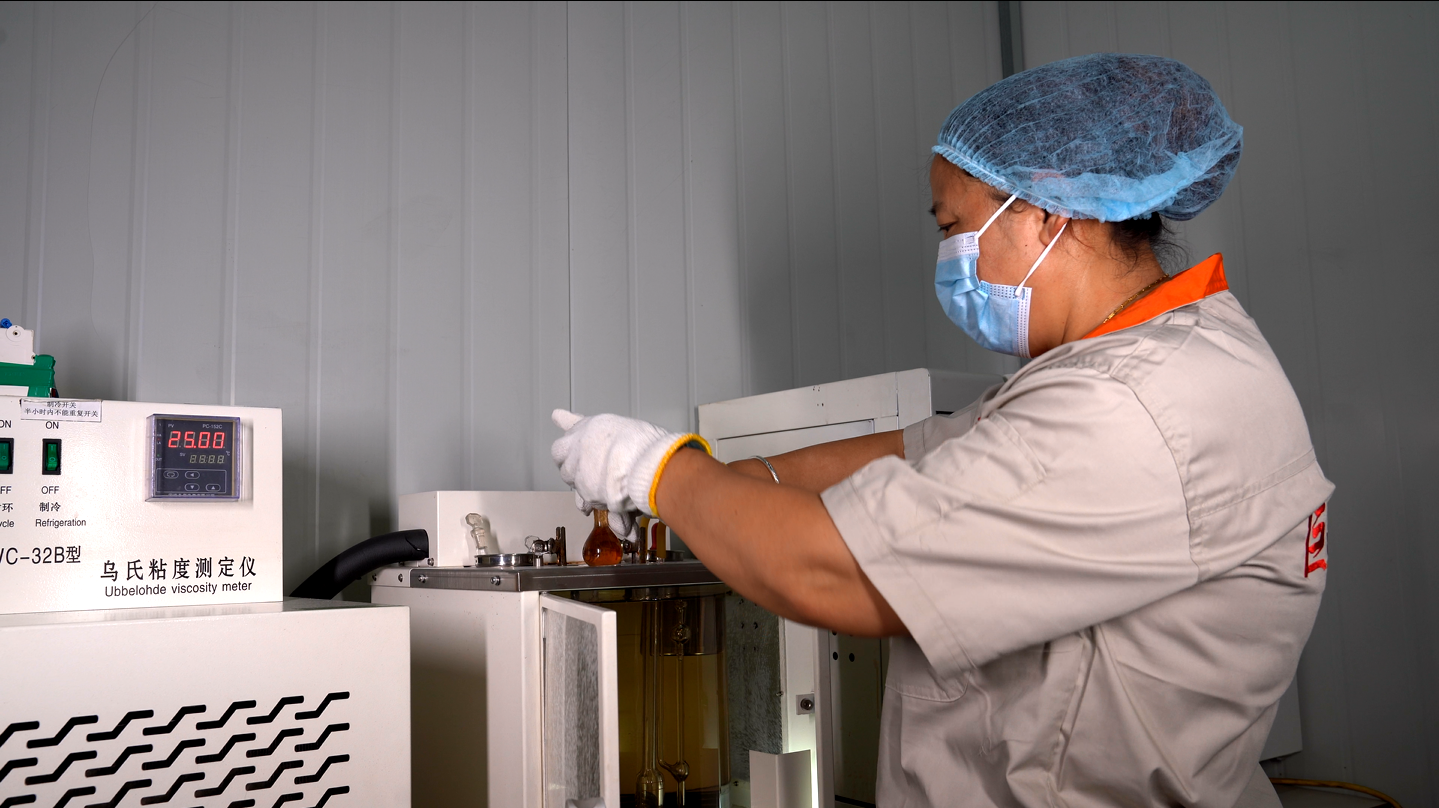
Finished products are tested for tensile strength, elongation, thickness, and deflection. SGS test reports for Jushuo's 12 mm PET strap record a breaking force of 9.98 kN and elongation of 10%. The company's quality management system is ISO 9001 certified, and it holds ISO 14001 and ISO 45001 certifications. Products comply with GB/T 22344-2018 for PET strap and QB/T 3811-1999 for PP strap. For buyers exporting to the EU or selling into regulated supply chains, these standards provide a starting point for qualification. International references such as ASTM D3950-23 and EN 13394:2001 are also relevant when comparing nonmetallic strapping specifications.
Quality Control and Risk Management in Practice
Long-term supply depends on controlling risks before they reach the customer. Jushuo Packaging applies six inspection procedures: raw material inspection, incoming inspection, online inspection, finished product inspection, inbound inspection, and outbound inspection. The stated finished product qualification rate is over 99%.
For raw material compliance, the company uses approved PET and PP suppliers and tests melt flow index, intrinsic viscosity, ash content, and moisture. RoHS and REACH compliance can be provided on request. Batch traceability is maintained from raw material to finished product.
For transport safety, each coil is packed with stretch film and a protective paper sleeve, with moisture-barrier inner lining for export containers. Wooden pallets with strapping are standard, and fumigation-free export packaging is optional. Third-party loading supervision is available. For delivery risk, production orders are tracked through an ERP system, with a committed lead time of 7-30 days depending on customization.
Applications: Matching Strap Type to End-Use
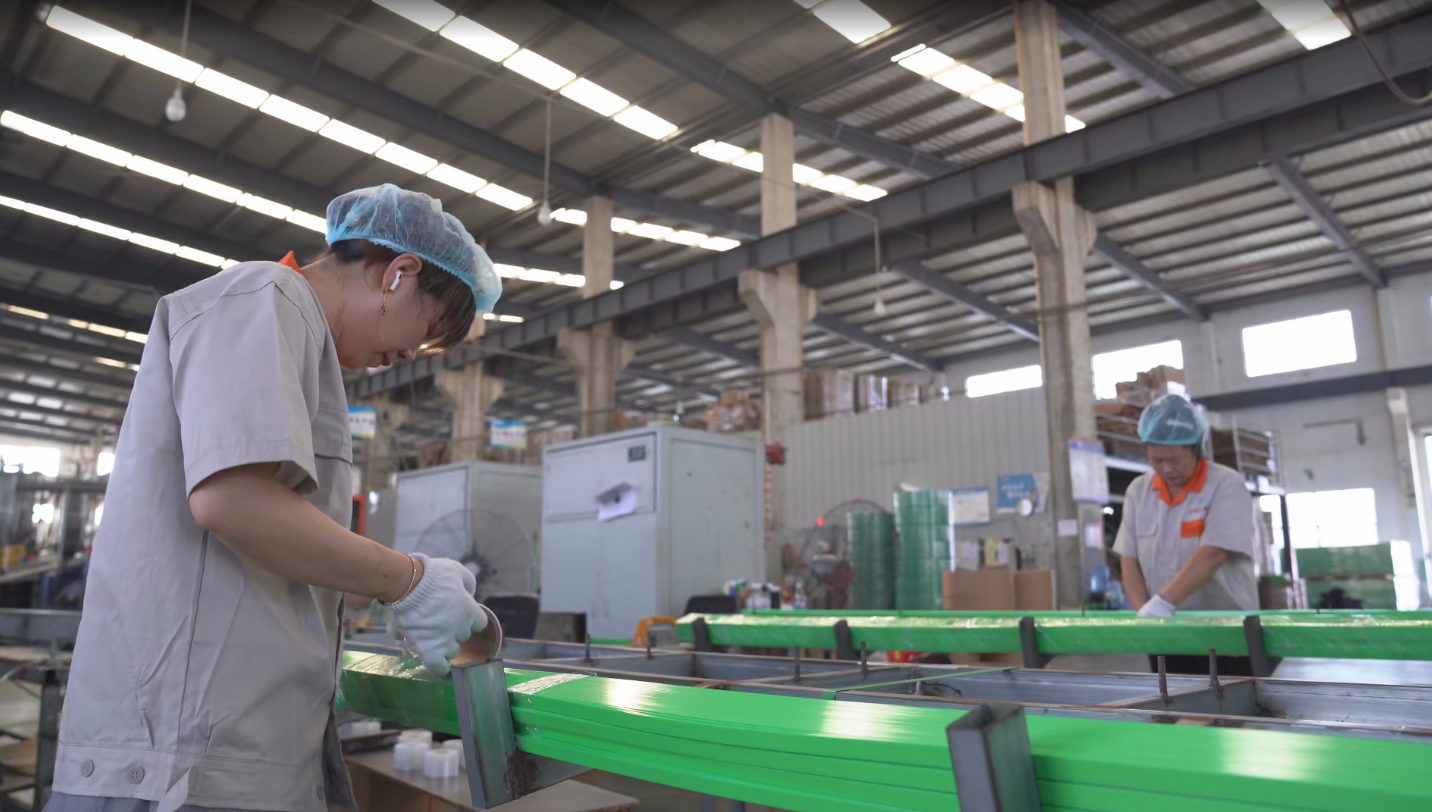
The right long-term supplier should help buyers select the right strap for each application, not just sell one grade. Jushuo's product lines cover the following typical scenarios:
| Application | Recommended Strap Type | Relevant Product Models |
|---|---|---|
| Automated bundling of cartons and light logistics goods | Machine-grade PP strap | JS05035-P to JS19080-P; JS09036-PS |
| Manual bundling in warehouses, retail, courier | Hand-grade polypropylene strapping | JS500A-HP, JS500B-HP, JS600A-HP, JS600B-HP |
| Heavy loads such as metal products, lumber, stone | PET / polyester strapping | JS16140-MT, JS19190-HT, JS25250-HT, JS25300-HT |
| Cotton and chemical fiber bales | Cotton bale strap / fiber baling strap | JS19190-HT, JS19240-HT, JS25250-HT, JS25300-HT; JS12600-MT to JS16140-MT |
| Branded or security packaging | Printed PET strapping | JS12500-HT to JS25300-HT |
| Eco-conscious export shipping | Eco Friendly PP / PET strapping | Recyclable PP and PET variants |
Documented end users referenced in the company's application materials include JinkoSolar for solar panel bundling, Sateri for viscose fiber bale strapping, Far Eastern Industries for polyester fiber bale bundling, and Shandong Yamei Technology for metal product bundling. Procurement teams should always verify case references against their own industry and application conditions.
Procurement Checklist for a Long-Term Strapping Relationship
- Confirm production capacity: monthly tonnage and number of lines should match your peak demand and growth plan.
- Ask for process evidence: SSP equipment, stretching ratios, annealing steps, and online thickness and width monitoring.
- Review batch-level testing: tensile strength, elongation, deflection per meter, and third-party reports.
- Check standards compliance: ISO 9001, ISO 14001, GB/T 22344-2018, QB/T 3811-1999, and international references such as ASTM D3950-23 or EN 13394:2001 where required.
- Clarify MOQ and lead time: stock items, custom items, and emergency orders should have different service commitments.
- Evaluate after-sales infrastructure: response time, field engineer support, equipment warranty, and replacement policy.
- Assess logistics capability: export container packing, moisture protection, fumigation-free packaging, and loading supervision.
Market Trends Shaping Supply Decisions
Several verified trends should inform supplier evaluation:
- PP strapping remains the volume leader with 33.9% share in 2025, according to Grand View Research, making PP strap quality a baseline requirement for any strapping partner.
- PET strapping is growing at a projected CAGR of 5.8% to 2033, according to Cognitive Market Research, as heavy industries replace steel and some PP applications with higher-strength PET.
- Recycled PET accounted for about 34% of global strapping production in 2024, according to industry research. Suppliers with recycled-content capability are increasingly useful for ESG reporting.
- China's total exports of plastics reached USD 141.16 billion in 2024, according to UN Comtrade / OEC. Export-oriented buyers should verify that a supplier can handle cross-border documentation and container loading standards.
These trends push procurement teams toward suppliers that can provide both cost-efficient PP and high-strength PET within one qualification frame.
Long-Term Partnership vs. Traditional Multi-Supplier Spot Buying
Many companies buy strapping from multiple local traders, comparing price per roll on each order. This approach has advantages, such as flexibility in spot markets, but it also has structural costs. The table below compares a traditional spot-buying model with a consolidated long-term supplier relationship.
| Procurement Model | Strength | Risk |
|---|---|---|
| Spot buying from multiple small suppliers | Price transparency; easy to switch; low initial commitment | Inconsistent quality, unpredictable lead times, limited technical support, more qualification work per batch |
| Consolidated long-term partner with manufacturing capacity | Stable process control; batch traceability; integrated equipment and material support; priority capacity for urgent orders | Requires volume commitment; switching costs are higher; not ideal for very small one-off purchases |
One realistic boundary should be noted. A long-term supply relationship is not necessary for a company that buys only a few hundred kilograms of strap per year. For ultra-light or sporadic users, local distribution and spot purchases remain practical. Long-term partnership creates the most value when a buyer has continuous production, automated lines, multiple sites, or export compliance needs, situations where consistency and traceability directly affect operating cost.
Future Outlook: Green Materials, Integrated Supply, and Data Readiness
The future of plastic strapping procurement points toward three shifts. First, sustainability requirements will continue to grow. Jushuo Packaging's eco-friendly strapping series includes recyclable PP and PET variants, and its PET strap production uses recycled PET bottles as raw material. The company states that use of 30% or more post-consumer recycled PET can reduce carbon emissions by about 40% compared with virgin PET, and that SSP-processed PET delivers 15-20% higher breaking strength with 8% lower energy per unit compared with standard PET. These figures come from internal product comparisons and should be verified against batch-specific data, but they indicate the direction of supplier R&D.
Second, buyers will increasingly expect one-stop supply. Jushuo Packaging produces not only strap but also stretch film, tape, edge protectors, and strapping equipment. This integration reduces the number of suppliers that a packaging engineer must qualify, simplifies troubleshooting, and supports automated packaging line installation.
Third, service speed will become a differentiator. Jushuo's stated after-sales support includes a 48-hour response for quality issues, on-site compatibility testing, remote video guidance, and field engineer dispatch if needed. Equipment supplied by the company carries a 12-month warranty. For buyers setting up new lines, the company offers line integration capacity of 2-4 lines per month.
FAQ: Supplier Qualification Questions for Plastic Strapping
What are the minimum order quantities for plastic strapping from Jushuo Packaging?
Minimum order quantities vary by product and customer type. The stated ranges include 500 kg for many products, 1 ton for standard stock items, 2 tons for high-tensile orders, and as low as 50 rolls for distributors or 100 kg for e-commerce buyers. Pallet or roll combinations can be negotiated.
What lead time can buyers expect for PP and PET strapping orders?
Typical production lead time is 7-30 days. Stock items can ship within 7 days, custom orders may require up to 30 days, and emergency orders can be completed in 5-7 days depending on complexity.
What technical support is included after delivery?
Technical support includes on-site compatibility testing, a 48-hour response for quality issues, remote video or photo guidance, and field engineer dispatch. Equipment carries a 12-month warranty. After-sales services can include replacement for non-conforming goods, corner protection recommendations, and lifting safety training.
Can Jushuo Packaging handle large-volume or urgent orders?
Monthly production capacity exceeds 1,700 tons for strapping materials, with additional capacity for stretch film, tape, and edge protectors. The company also maintains safety stock for standard specifications and tracks production orders through an ERP system, which supports urgent-order expediting.
How does Jushuo Packaging support distributors and channel partners?
Distributors can benefit from lower entry MOQs, custom packaging with customer logos on cartons, neutral or branded packaging options, bundled discount pricing, and logistics coordination. Payment terms for export orders are commonly 30% T/T deposit with 70% balance before delivery.
What certifications can be provided for quality assurance?
Jushuo Packaging operates under ISO 9001, ISO 14001, and ISO 45001 certified systems. PET strap complies with GB/T 22344-2018; PP strap complies with QB/T 3811-1999. SGS test reports are available, and the company can provide batch-level data for tensile strength and elongation.