
Plastic Tote Procurement in Execution: Quality Systems, Risk Controls, and Long-Term Supply
The global plastic totes and bins market was valued at USD 8.6 billion in 2025 and is projected to reach USD 14.2 billion by 2034. Behind that growth is a quieter shift in how buyers purchase these containers: the point of differentiation is no longer only the tote itself, but the manufacturing system, quality discipline, and risk controls behind it.
For procurement teams moving from product selection into project execution, the question changes from “which plastic tote fits my application” to “which supplier can deliver the same plastic tote reliably across many orders, years, and changing operational conditions.” This article explains what that execution-stage evaluation involves, using Shanghai Xinfan Industrial Corporation (TSS) as a working example of a supplier with documented manufacturing controls.
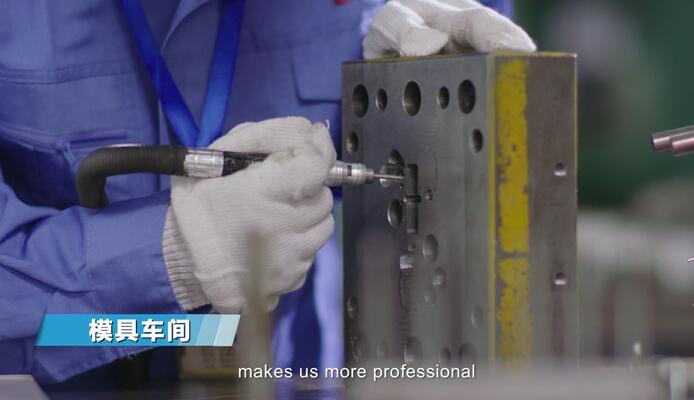
Precision mold tooling is one of the first quality checkpoints in reusable plastic tote production. Source: Shanghai Xinfan Industrial Corporation
Why execution-stage buying is different
Plastic totes in modern warehouses, ASRS installations, and fresh produce distribution are not disposable packaging. They are reusable transport assets expected to survive hundreds of handling cycles, automated conveyor runs, washing procedures, and seasonal peaks. When a buyer commits to a long-term supply program, small manufacturing variations that would be acceptable in a one-off purchase become operational problems: a 2–3 mm dimensional drift can cause jams in an automated shuttle system; inconsistent stacking strength can create instability in high-bay storage; material inconsistency can shorten service life.
For this reason, long-term plastic tote buyers typically evaluate suppliers on four layers: the physical product, the production quality system, the risk-control infrastructure, and the commercial terms that govern repeat orders. The product is the visible layer; the other three determine whether the product remains consistent across a multi-year relationship.
Quality systems as the foundation of long-term supply
Shanghai Xinfan Industrial Corporation, established in 2003, operates a 40,000 m² facility in Shanghai with 320 employees and an annual output of 3.6 million units. The company, known in international markets as TSS/XFSEAL, supplies plastic totes, stackable crates, collapsible crates, nest-and-stack containers, ASRS-compatible totes, tote dollies, and related logistics packaging products, with approximately 70% of production exported to the EU, North America, South America, Southeast Asia, the Middle East, and Africa.
What matters for buyers, however, is not the company profile but the production controls that can be audited. TSS addresses product quality risks through a quality management system certified to ISO 9001, supported by automated production monitoring, standardized work instructions, and Statistical Process Control (SPC). Quality assurance procedures include First Article Inspection (FAI), in-process quality control (IPQC), and final product inspection, with continuous improvement programs applied across the manufacturing process.
For a plastic tote program, these controls have practical meaning:
- SPC monitors dimensional consistency across production runs, reducing the risk of conveyor jamming and robot gripping failures in automated systems.
- First Article Inspection verifies that molds and production parameters are correct before mass production begins.
- In-process and final inspection catch appearance defects, warpage, and assembly issues before containers are shipped rather than after they arrive on site.
The presence of such a system is also a signal about mold maintenance discipline. Strict mold maintenance programs—combined with FAI, IPQC, and SPC—reduce variability caused by worn tooling, which is one of the most common root causes of dimensional inconsistency in injection-molded totes.
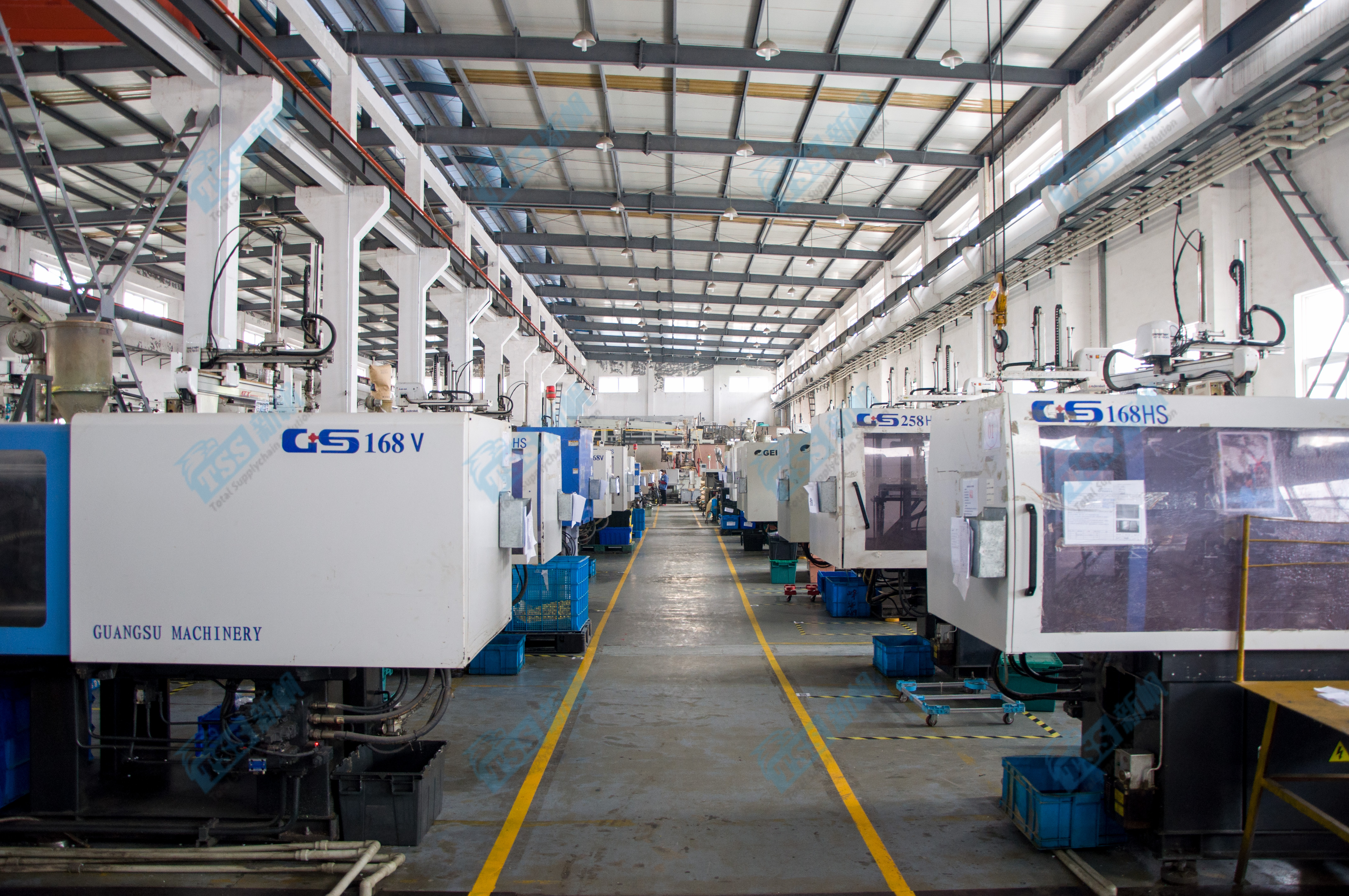
Injection molding production at TSS. Batch traceability and in-process quality control are part of the standard workflow. Source: Shanghai Xinfan Industrial Corporation
Risk controls in long-term plastic tote supply
A mature supplier of plastic totes does not wait for problems to surface in a customer's warehouse. The supplier operates a risk-control framework that anticipates failures across eight dimensions. Each dimension corresponds to a specific operational risk and a specific control method:
| Risk dimension | What can go wrong | Control method |
|---|---|---|
| Product quality | Dimensional inconsistency, warpage, insufficient load capacity, assembly defects | ISO 9001 system, FAI, IPQC, SPC, final inspection, automated production monitoring |
| Automation compatibility | Conveyor jamming, shuttle handling errors, robot gripping failures, stack instability | Dimensional tolerance verification, automation simulation testing, load and stacking validation, sample approval, functional testing |
| Load performance | Structural failure, bottom deflection, sidewall cracking, stacking collapse | Static and dynamic load testing, stacking strength testing, Finite Element Analysis |
| Raw material | Material inconsistency, color variation, reduced impact resistance, environmental stress cracking | Approved supplier management, incoming material inspection, material certification verification, batch traceability |
| Delivery & supply chain | Production delays, raw material shortages, logistics disruptions, shipping delays | Production planning systems, safety stock, supplier diversification, capacity planning, emergency response |
| Export compliance | Regulatory non-compliance, customs delays, documentation errors, market-specific restrictions | Compliance review procedures, export documentation verification, product certification management |
| Food & pharmaceutical safety | Contamination, material non-compliance, hygiene issues, traceability gaps | Food-grade material verification, clean production procedures, batch identification, certification review |
| Sustainability | Waste, environmental non-compliance, short product lifespan | Reusable packaging design, material recyclability assessment, long-life product design, environmental management systems |
In TSS's documented approach, several of these risk controls are already institutionalized. Automation compatibility risks are managed with a dedicated engineering support team that collaborates with system integrators, validates products before mass production, and performs functional testing under real operating conditions. Delivery reliability is backed by production planning systems, safety stock management, supplier diversification, and long-term logistics partnerships. Export compliance is handled by an international trade team with experience across multiple regulated markets.
How procurement terms support execution-stage buying
Commercial execution terms are often underestimated in plastic tote sourcing, yet they determine how smoothly a long-term program actually runs. For buyers moving into implementation, the relevant terms include the minimum order quantity, the payment structure, the inspection and acceptance mechanism, and the delivery method.
TSS applies a standard commercial framework for plastic tote orders: the minimum order quantity is one 20-foot container; delivery can be arranged under EXW, FOB, or CIF terms; acceptance follows Pre-Production Approval; and payment is structured as a 30% deposit with the remaining 70% balance before shipment.
For an importer, distributor, or warehouse operator, these terms align with a project-based procurement flow. The Pre-Production Approval step gives the buyer a formal opportunity to inspect samples and verify specifications before committing to full production. The container-level MOQ keeps ordering predictable for logistics planning. The deposit-and-balance structure is conventional in cross-border manufacturing, but what makes it effective is the supplier's ability to maintain production discipline between the deposit payment and final shipment.
Product comparisons that matter in long-term decisions
Execution-stage buyers also need a defensible comparison logic for choosing between container formats. TSS's own comparison materials illuminate the trade-offs that matter across different use cases:
| Comparison | Reported difference | Typical fit |
|---|---|---|
| Plastic produce crate vs wooden crate | 30–50% lighter, 3–5x longer service life, reduced product damage rates, higher upfront cost but lower lifecycle cost | Fruits & vegetables, seafood, export logistics, food distribution |
| Stack-nest crate vs traditional stackable crate | 70–80% reduction in empty return volume, up to 50% reduction in logistics costs, higher truck utilization | Supermarkets, food distribution, agriculture, beverage industry |
| Foldable crate vs rigid crate | Up to 75% reduction in empty storage space, up to 60% reduction in return transportation costs, up to 3x more units per return truckload | Fresh produce, retail distribution, agricultural logistics, export supply chains |
These are manufacturer-reported comparisons rather than third-party audit results, and the actual performance gap depends on return logistics patterns, washing cycles, and handling methods in each operation. Nonetheless, the comparison logic is sound: the most cost-effective container is the one that minimizes the total cost of the round trip, not just the purchase price.
An honest boundary: what plastic totes cannot fix
A realistic assessment of long-term plastic tote supply should also acknowledge what the product and the supplier cannot guarantee. Injection-molded polypropylene totes are durable, but their lifespan depends on proper handling, washing temperatures, and exposure to chemicals. A tote that is misused in a freezer environment or overloaded beyond its rated stacking capacity will fail faster regardless of the supplier's quality system.
Automation compatibility also cannot be assumed from a product drawing. Dimensional tolerances, bottom deflection behavior, and bar-code placement can differ between nominally similar totes. For an ASRS project, the only reliable validation is sample testing in the actual conveyor or shuttle system. A supplier can run simulation tests and provide samples, but the final verification rests with the integrator and the operator.
Finally, cross-border procurement inherently carries logistics risks. Even with strong production planning and safety stock, ocean freight schedules, customs inspections, and port congestion can shift delivery dates. Buyers planning a warehouse launch or seasonal peak should build buffer time into the project schedule rather than assume a perfectly predictable delivery window.
Market context and what it means for buyers
The industry context supports the case for investing in supplier capability rather than just unit price. Dataintelo values the global plastic totes and bins market at USD 8.6 billion in 2025, growing to USD 14.2 billion by 2034. Stackable totes held the largest product-type share at 34.2% in 2025. Polypropylene is expected to lead the material segment for plastic crates with a 41.4% share, reflecting its balance of toughness, chemical resistance, and recyclability. Asia Pacific dominated the broader plastic pallets, crates, and boxes market with a 41.6% revenue share in 2025, which is consistent with the region's manufacturing base.
Two additional trends are directly relevant to procurement decisions. First, the mini-load ASRS segment is growing rapidly because e-commerce operations need fast retrieval of small parts, totes, and bins. This creates demand for totes with tighter dimensional consistency and verified automation compatibility. Second, the adoption of Reusable Plastic Containers in retail fresh-produce logistics—exemplified by the partnership between Walmart and IFCO—shows that large-scale operators are moving away from one-way packaging toward returnable systems managed over multi-year contracts.
For distributors and wholesalers, the practical implication is that plastic totes should be treated as supply-chain assets, not as commodity purchases. The supplier's quality system, risk controls, and commercial stability become part of the asset's total cost of ownership. A slightly higher per-unit price from a supplier with documented SPC, FAI, and batch traceability can be cheaper than a lower-priced supplier whose dimensional variability creates conveyor jams or whose delivery delays disrupt a seasonal launch.
Future outlook
Looking ahead, three developments are likely to shape plastic tote procurement. One is increasing integration between container data and warehouse software: RFID-readable totes, batch identification systems, and digital traceability will become standard requirements in automated food and pharmaceutical supply chains. Another is circularity: long-life product design, material recyclability assessment, and carbon-reduction initiatives will carry more weight in supplier selection as companies face stronger environmental reporting obligations. The third is supplier consolidation: as automated warehouses scale, operators will favor fewer suppliers with broader product portfolios, documented quality systems, and the engineering depth to support customization and integration.
Shanghai Xinfan Industrial Corporation's position in this landscape is that of a mid-to-large Chinese manufacturer with a broad logistics-packaging portfolio, an export-oriented business model, and documented quality and risk-control infrastructure. That combination makes it a relevant reference point for buyers evaluating long-term plastic tote supply relationships, but every procurement decision should be validated against the specific operational environment and the buyer's own audit findings.
Frequently asked questions
What should buyers evaluate when sourcing plastic totes for long-term supply?
Buyers should evaluate four layers: product performance, the supplier's quality management system, risk-control infrastructure, and commercial terms. In practice this means verifying ISO 9001 certification, checking for controls such as First Article Inspection, in-process quality control, Statistical Process Control, and final product inspection, and confirming that the supplier has documented procedures for automation compatibility, raw material consistency, delivery reliability, and export compliance.
What quality controls does Shanghai Xinfan Industrial Corporation apply to plastic tote production?
TSS operates a quality management system certified to ISO 9001, with automated production monitoring, standardized work instructions, and Statistical Process Control. Quality assurance includes First Article Inspection, in-process quality control, and final product inspection, supported by continuous improvement programs and a strict mold maintenance program.
How does TSS manage automation compatibility for ASRS plastic totes?
Automation compatibility risks such as conveyor jamming, shuttle handling errors, and robot gripping failures are addressed through dimensional tolerance verification, automation simulation testing, load and stacking validation, sample approval, and functional testing under real operating conditions. A dedicated engineering support team collaborates with system integrators and validates products before mass production.
What are TSS's payment terms and minimum order quantity for plastic totes?
TSS requires a 30% deposit with the remaining 70% balance before shipment. The minimum order quantity is one 20-foot container. Delivery can be arranged under EXW, FOB, or CIF terms, and products are accepted through Pre-Production Approval.
How does TSS manage food-contact safety for plastic totes used in fresh produce logistics?
Food and pharmaceutical safety risks are addressed through food-grade material verification, clean production procedures, batch identification systems, and supplier certification review. The company offers FDA and EU-compliant material options, hygiene management procedures, and customer-specific validation support.
What delivery and export compliance safeguards does TSS provide?
Delivery reliability is supported by production planning systems, safety stock management, supplier diversification, capacity planning, and emergency response planning. Export compliance is managed by a dedicated international trade team that performs compliance review, export documentation verification, and product certification management, drawing on export experience across multiple markets.
How does TSS support sustainability objectives in reusable plastic tote programs?
Sustainability and environmental risks are mitigated through reusable packaging design, material recyclability assessment, carbon reduction initiatives, and long-life product design. The company applies environmental management systems to ensure regulatory compliance and supports circular economy principles.
For a complete overview of Shanghai Xinfan Industrial Corporation's logistics container product range and manufacturing capabilities, reference the TSS Corporate Profile & Logistics Container Solutions brochure.