
Plastic Totes: Key Specs and Food-Contact Evidence for Buyers
Plastic totes have become a specifiable component in warehouse automation projects, not just a commodity container. When an ASRS or AMR system is expected to run reliably around the clock, every container moving through the system carries tolerance, material, and compliance requirements that affect performance. For buyers in the research and evaluation stage, the practical issue is knowing which specifications and certifications to verify before committing to a supplier.
This article is written as an independent buyer reference. It covers the market context for plastic totes, the technical parameters worth verifying, the certification evidence that should accompany food-contact applications, and the supplier capabilities that determine whether a tote program can scale with a warehouse project.
Why Tote Specification Work Is More Than a Product Checklist
Warehouse automation systems depend on dimensional predictability. A mini-load crane, shuttle, or robotic arm locates a container based on stored position data; if the container's external dimensions shift beyond design tolerance, the system can experience jams, dropped loads, or reduced throughput. This is why ASRS operators typically evaluate totes against the same engineering logic used for machine components, rather than general-purpose storage boxes.
Food logistics adds a second layer of scrutiny. Containers that come into contact with fresh produce, ready-to-eat meals, or pharmaceutical secondary packaging may require documented evidence that the material is safe for its intended contact condition. A general "food grade" statement without a traceable inspection report is usually insufficient in a formal supplier qualification process.
The result is a verification gap. Many buyers have clear questions about footprint, height, load rating, and compliance proof, but supplier documentation in the market is uneven. The sections below outline what a credible tote program should contain.
Market Signals: Demand Is Growing, and So Is Buyer Scrutiny
The global plastic totes and bins market was valued at USD 8.6 billion in 2025 and is projected to reach USD 14.2 billion by 2034, according to industry research published by Dataintelo. Stackable totes held the largest product-type share at 34.2% in 2025, reflecting their role in standardizing storage and transport units in distribution environments.
Several underlying trends support this growth. The mini-load ASRS segment is growing rapidly due to demand for fast retrieval of small parts, totes, and bins in e-commerce, as reported by Precedence Research. Polypropylene (PP) is expected to lead the material segment in plastic crates, with a projected 41.4% share, according to Future Market Insights. Asia Pacific generated a 41.6% revenue share in the broader plastic pallets, crates, and boxes market in 2025, according to Grand View Research.
The supplier landscape includes established returnable packaging players such as Brambles (CHEP), Schoeller Allibert, ORBIS Corporation, and Myers Industries, alongside specialized Asian manufacturers serving global automation and food logistics projects. For procurement teams, the meaningful distinction is not brand size but the depth of documentation and engineering support behind a tote program.
Technical Specifications: Reading a Tote Data Sheet Correctly
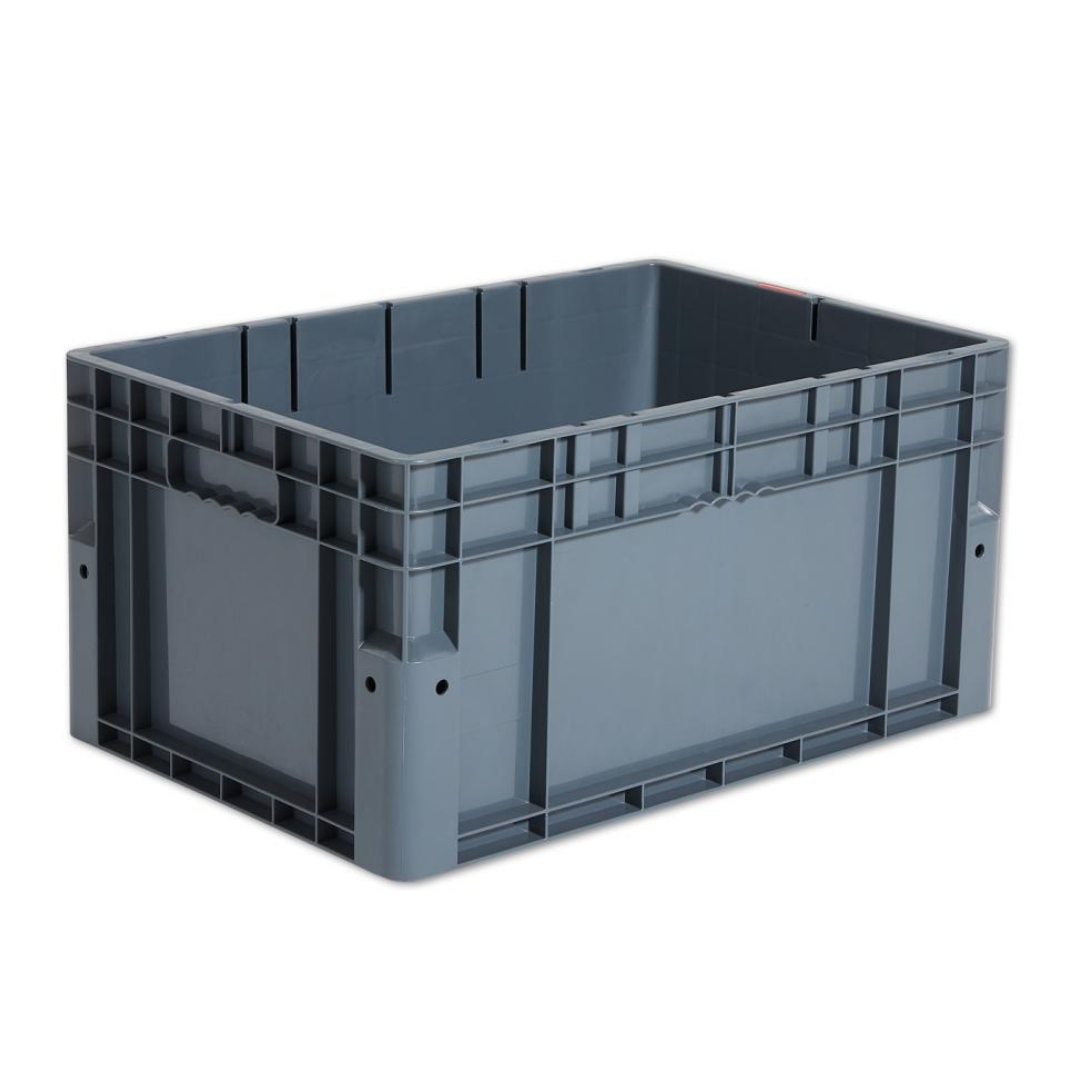
A well-structured tote datasheet should answer five questions: what is the external footprint, what is the usable internal volume, what material is used, what load rating is confirmed, and what automation-specific features are integrated. For ASRS applications, the stable 600×400 mm footprint common in European logistics continues to be a practical baseline because it fits standard racking, conveyor, and shuttle interfaces.
The following table summarizes the plastic tote and crate models documented in TSS's product program. All models are manufactured in polypropylene (PP).
| Model | Type | External Dimensions | Typical Application |
|---|---|---|---|
| TSS | Reusable plastic totes | L 600–800 mm × W 400–600 mm × H 128–400 mm | Warehouse automation, ASRS |
| TSS-IFC | Wall straight plastic crate | 600 × 400 × 300 mm | ASRS, mini-load, shuttle systems |
| TSS-IFD | Foldable plastic crate | 600 × 400 × 300 mm | ASRS with foldable return logistics |
| TSS-SFD | Collapsible plastic crate | 600 × 400 × 225 mm | Retail, supermarket, fruit & vegetable transport |
| TSS-TBX | Attached-lid stackable tote | 600 × 400 × 320 mm | Logistics, transportation, secure distribution |
| TSS-RBTB | Nest and stack crate | 600 × 400 × 300 mm | Retail replenishment, fresh produce |
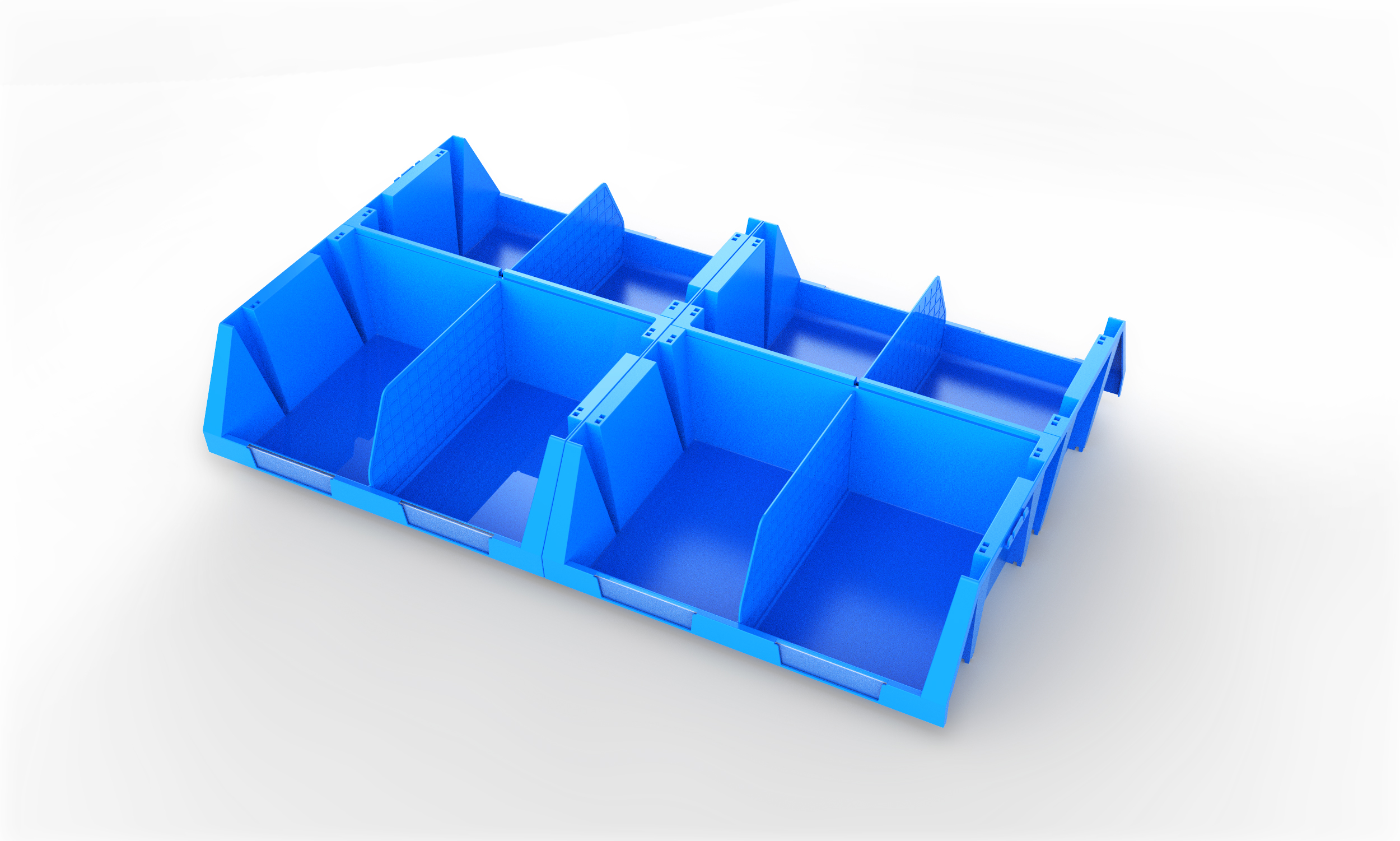
| TSS-BBOX-01 | Stackable bin with panels and dividers | 604 × 398 × 208 mm | Footwear, spare parts, small parts |
| TSS-Trolley-02 | Heavy-type nestable and stackable tote dolly | 577 × 377 mm | Logistics and transportation |
| TSS-Trolley-5737 | Light-type nestable and stackable tote dolly | 570 × 370 mm | Logistics and transportation |
Beyond basic dimensions, automation compatibility is determined by several less visible factors:
- Bottom geometry. The base of the tote must be compatible with conveyor rollers, shuttle platforms, and transfer stations. Flat or reinforced bottom designs reduce snagging and support smooth redirection.
- Gripping features. Robotic picking systems often rely on the tote's rim and sidewall geometry for gripping. Consistent wall thickness and defined edge radii improve end-of-arm tooling performance.
- Positioning and identification. Options such as RFID integration, barcode holders, and positioning marks help automate asset tracking and improve system-level inventory accuracy.
- Structural rigidity. For multi-level ASRS storage, the container must maintain its shape under load. Static and dynamic load testing, drop testing, and stacking tests are the standard verification methods.
Certifications: What Evidence Should Accompany Food-Contact Totes?
For buyers supplying food retail, fresh produce, or pharmaceutical distribution, certification traceability is a core procurement criterion. The relevant evidence varies by market.
In Europe, EN 13117-1:2000 is the standard for reusable, rigid plastics distribution boxes for handling, transport, and storage. It is maintained by the European Committee for Standardization (CEN). Buyers exporting to EU markets may be asked to confirm whether the product line follows this framework.
For the China market, food-contact plastic containers are assessed against the standard "Plastic materials and products for food contact." TSS's food-contact inspection reports cover multiple tote and crate models.
Two documented certification numbers illustrate the level of specificity buyers should expect:
- SY2025092415 — Food Contact Plastic Tilting Turnover Box Inspection Report, issued by Henan Institute of Product Quality Inspection Technology, covering TSS reusable plastic totes, nest and stack crates, collapsible crates, stackable totes, ASRS crates, and insulated boxes.
- SY2025092412 — Food Contact Plastic Folding Basket Inspection Report, also issued by Henan Institute of Product Quality Inspection Technology, covering stackable totes (TSS-TBX), collapsible crates (TSS-SFD), nest and stack crates (TSS-RBTB), reusable totes (TSS), and ASRS crates (TSS-IFC, TSS-IFD).
The key point for procurement teams: a certification is only meaningful if the product model named in the report matches the model being purchased, and the issuing authority is identifiable. Reports issued by third-party inspection authorities carry more weight than supplier self-declarations.
Supplier Capability: How TSS Structures Its Tote Program
Shanghai Xinfan Industrial Corporation (TSS) is a Shanghai-based manufacturer of integrated logistics packaging and cargo security solutions. The company operates a 40,000 m² production facility with 320 employees, an annual output of approximately 3.6 million units, and a 25-person engineering team. About 70% of its output is exported to Europe, North America, South America, Southeast Asia, the Middle East, and Africa.
TSS's tote program is organized around several documented capabilities that matter to buyers in the research-to-evaluation stage:
- Product range. The catalog covers ASRS totes, wall straight crates, foldable crates, nest and stack containers, attached-lid totes, stackable bins, collapsible crates, tote dollies, and insulated boxes. This allows buyers to standardize multiple container types under one qualified supplier.
- OEM manufacturing. TSS reports a monthly production capacity of 300,000–500,000 plastic containers and totes, with manufacturing performed against customer drawings, Pantone color matching, logo embossing, and barcode, QR, and RFID integration.
- ODM development. The company supports concept-to-product development, including structural design, 3D CAD modeling, automation compatibility design, thermal insulation design, and family mold development. Its in-house mold workshop produces 5–10 new mold sets per month.
- Automation-specific support. TSS offers automation bottom design, robot gripping features, RFID integration, positioning marks, and high-precision dimensional control. Customized automation products carry a 500-piece MOQ, while RFID and smart logistics projects start at 1,000 pieces.
- Quality control. Production follows IQC, IPQC, FQC, and OQC stages, supported by static and dynamic load testing, drop testing, and automation compatibility testing. Third-party inspection is available.
Two documented deployments give scale context. One leading global warehouse automation and cube storage solution provider applied 450,000 TSS wall straight plastic crates in large-scale e-commerce and 3PL fulfillment centers, reporting a 4–6× increase in storage density compared with conventional shelving. A separate project with a leading AMR solution provider also deployed 450,000 units in goods-to-person fulfillment operations.
Real-World Application Patterns
Different tote formats solve different operational problems. The following patterns are commonly observed in current warehouse and logistics projects.
ASRS and goods-to-person fulfillment. Wall straight plastic crates such as TSS-IFC are engineered for high-speed shuttle and robot operations, with dimensional stability and load performance suited to multi-level automated storage. Foldable ASRS crates (TSS-IFD) add a return-logistics advantage: after unloading, containers can be folded to reduce empty storage and return transportation volume by approximately 70–80%.
Fresh produce and retail replenishment. Nest and stack crates (TSS-RBTB) support two modes: stack mode for loaded transport and nest mode when empty, after rotating the container 180°. Collapsible crates (TSS-SFD) are common in farm-to-market logistics, from harvest collection to retail display, and are designed for ventilated fresh produce handling.
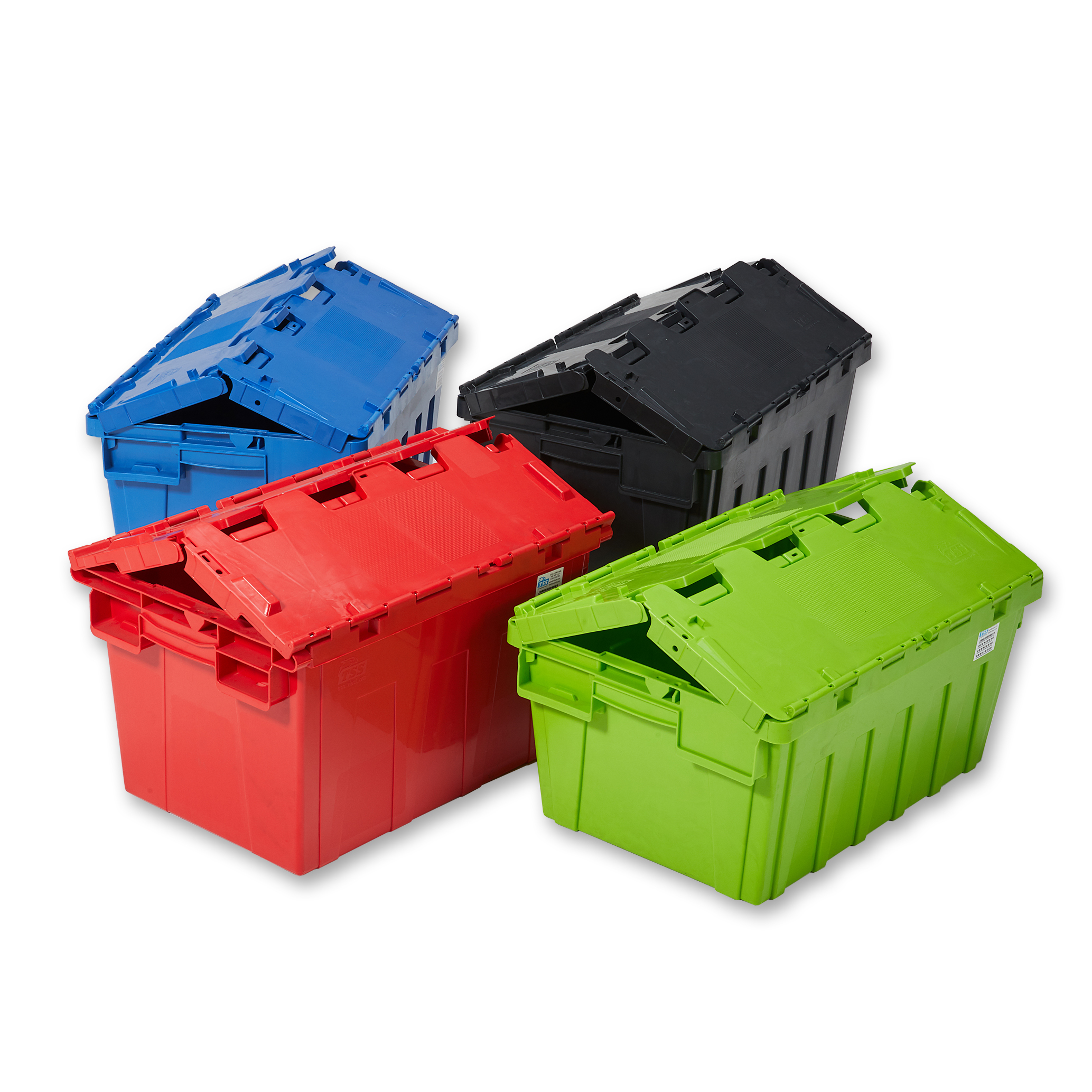
Secure retail distribution. Attached-lid totes (TSS-TBX) provide protection during transportation, tamper deterrence, and full-load stacking. They are used in closed-loop retail distribution, e-commerce order consolidation, and pharmaceutical logistics where product security is a requirement.
Manual and semi-automated operations. Tote dollies (TSS-Trolley-02, TSS-Trolley-5737) convert stationary totes into mobile units for picking, replenishment, and line-side delivery. They also support linked operation where multiple dollies are connected for train towing.
Plastic Totes vs. Traditional Packaging: A Realistic Comparison
Reusable plastic totes are frequently compared with single-use corrugated cartons and wooden crates. The comparison is not always favorable to plastic, and buyers should evaluate it honestly.
Advantages of reusable plastic totes. In closed-loop operations where containers return to a central facility, plastic totes deliver lower per-trip cost after the initial investment is amortized, better dimensional consistency for automated handling, superior protection against moisture and impact, and a clear sustainability benefit through reduced packaging waste and lower carbon emissions over the container lifetime.
The boundary condition. Reusable systems depend on effective reverse logistics. If the shipment pattern is predominantly one-way, if return freight costs are prohibitive, or if the operation lacks the space and process for empty-container storage, cleaning, and inspection, then single-use corrugated boxes may be the more economical and practical choice. TSS itself does not claim reusable packaging is universally superior; the economic case is specific to the network design.
Automation fit. Where the comparison does favor plastic totes is in automated environments. Corrugated cartons vary in dimensional stability, especially under humidity and repeated handling, which creates risk in ASRS and conveyor systems. Molded PP totes provide repeatable external dimensions defined at the point of manufacture, which is the attribute automation engineers value most.
Future Outlook for Plastic Tote Procurement
Three directions are likely to shape plastic tote procurement over the next procurement cycle.
Tighter automation integration. As ASRS, AMR, and robotic picking systems become more widespread, the tote will continue to be treated as a mechanical interface. Suppliers with documented automation-compatibility testing and a willingness to engineer positioning marks, RFID features, and gripping surfaces will have an advantage in project-based procurement.
Standardization with traceability. Buyers will increasingly consolidate their container pools around standardized footprints such as 600×400 mm, with certified documentation for food-contact and security-sensitive applications. Certification traceability, rather than generic "food grade" language, will become the procurement baseline.
Closed-loop and sustainability programs. Returnable packaging pools and circular supply chain initiatives continue to grow, particularly in fresh food retail and e-commerce fulfillment. Reusable totes that combine foldability, stackability, and long service life support both cost reduction and corporate sustainability targets.
For suppliers, the direction is clear: the value proposition is shifting from selling individual totes to supporting configured container programs with engineering documentation, certified compliance, and production-scale consistency.
FAQ
What is EN 13117-1:2000 and why does it matter for plastic totes?
EN 13117-1:2000 is a European standard for reusable, rigid plastics distribution boxes for handling, transport, and storage, maintained by the European Committee for Standardization (CEN). It is relevant to buyers supplying EU markets because it defines requirements for reusable plastic distribution containers in logistics operations.
What food-contact certifications should plastic totes carry?
For the China market, food-contact plastic containers are assessed against the standard "Plastic materials and products for food contact." TSS tote models, including stackable plastic totes, collapsible crates, nested crates, ASRS crates, and insulated boxes, have been tested under this standard. The inspection reports are issued by Henan Institute of Product Quality Inspection Technology.
What dimensions are typical for plastic totes used in ASRS applications?
ASRS plastic totes commonly adopt the 600×400 mm footprint. TSS wall straight plastic crates (TSS-IFC) measure 600×400×300 mm, and TSS foldable ASRS crates (TSS-IFD) also measure 600×400×300 mm. The broader TSS reusable tote range spans lengths from 600 to 800 mm, widths from 400 to 600 mm, and heights from 128 to 400 mm.
What material are reusable plastic totes typically made from?
Polypropylene (PP) is the dominant material. Industry data from Future Market Insights projects PP to hold a 41.4% share of plastic crate materials by 2025. The TSS tote and crate range is manufactured in PP across ASRS, collapsible, stackable, nestable, and insulated product families.
How should a buyer verify a supplier's food-contact certification claim?
Buyers should request the inspection report and verify three elements: the product model named in the report matches the product being purchased; the issuing authority is clearly identified; and the report number is traceable. For example, TSS food-contact documentation includes certification numbers SY2025092412 and SY2025092415, both issued by Henan Institute of Product Quality Inspection Technology.
For a broader view of TSS product lines and manufacturing capabilities, the company publishes a corporate profile and logistics container solutions brochure:
Download TSS Corporate Profile & Logistics Container Solutions (PDF)
Tem questões ou precisa de mais detalhes?
Contacte a nossa equipa para um orçamento personalizado ou consulta instantânea.
Solicitar orçamento
Preencha o formulário abaixo e a nossa equipa entrará em contacto com uma proposta personalizada.
Chat direto do WhatsApp
Prefere conversar em tempo real? Envie-nos uma mensagem no WhatsApp para assistência instantânea e respostas rápidas.
- Obter orçamento personalizado
- Partilhar fotos ou documentos
- Discuta as suas necessidades diretamente
Geralmente responde em 5–30 minutos durante o horário de expediente.