
Platinum Scrap Recovery: How PGM Secondary Supply Actually Works
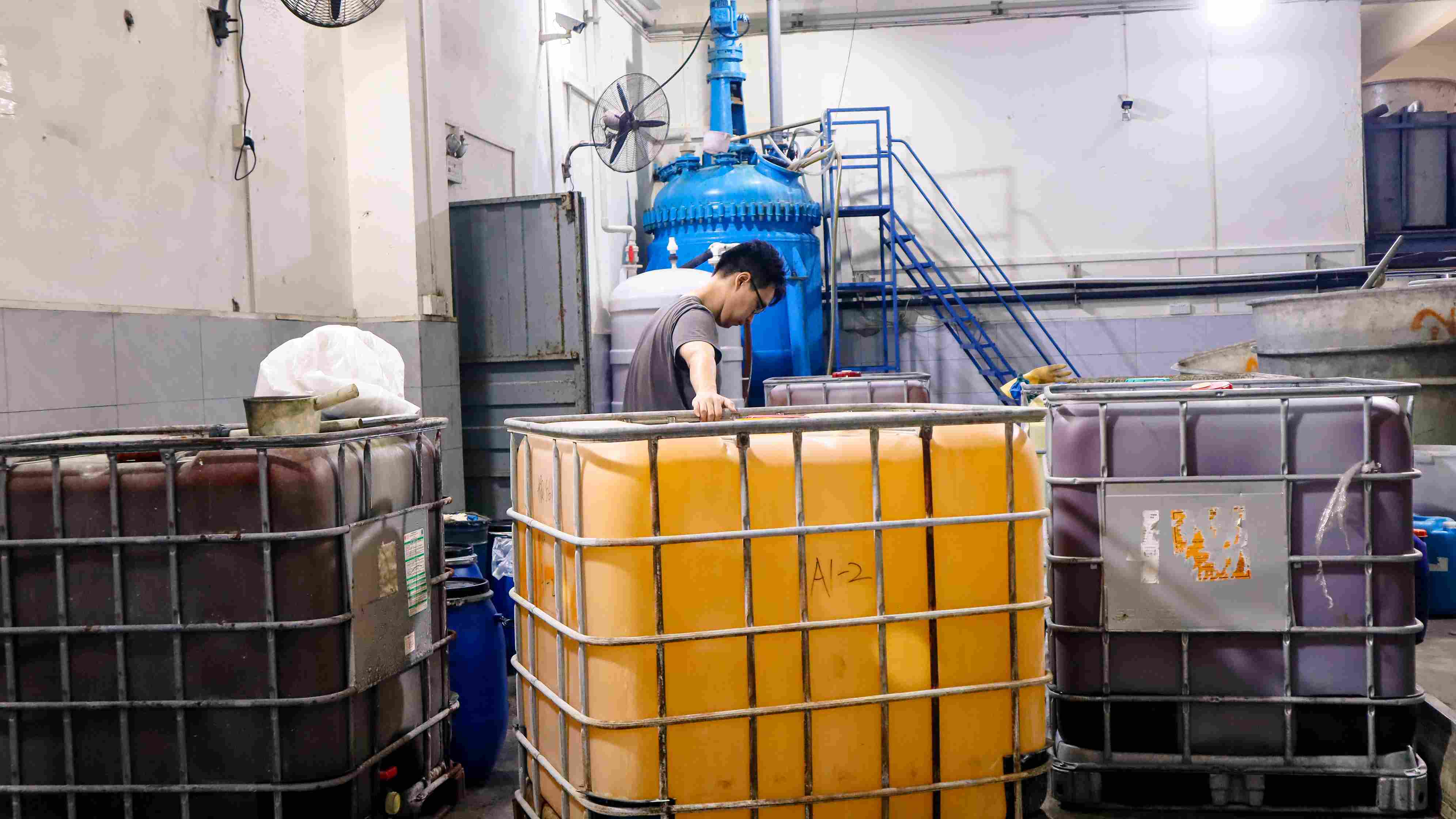
Platinum scrap recovery is the industrial practice of extracting platinum — together with associated platinum-group metals such as palladium, rhodium, ruthenium and iridium — from process scrap and end-of-life materials rather than from primary mined ore. For industrial buyers, the practical question is not whether secondary supply exists, but which recovery route can document it.
Why Platinum Scrap Recovery Sits at the Center of PGM Supply
Secondary supply is a structural part of platinum availability, not a marginal activity. Johnson Matthey's PGM Market Report, published in May 2024, placed platinum secondary supply from open-loop recycling at approximately 1.53 million ounces, equivalent to about 48 tonnes, driven mainly by autocatalyst and electronics scrap.
The wider recycling segment is also large. Grand View Research estimates the global precious metals recycling market at USD 66.9 billion in 2026, with a forecast horizon extending to 2035. That figure covers gold, silver and platinum-group metals together and is a commercial research estimate rather than an audited statistic, so it is most useful as a scale indicator rather than as a procurement benchmark.
For buyers, the implication is direct: the metals contained in spent catalysts, plating solutions, electrodes and manufacturing residues carry real value, and the recovery process — not the scrap itself — determines how much of that value is actually realized.
The Real Problem: Value Is Lost Between Sampling and Settlement
Platinum-bearing scrap and platinum-group ore are treated as specially regulated goods in many jurisdictions. Import and export declaration requirements, qualification permits and cross-border logistics conditions add cost and delay before any metal is recovered at all.
The point of loss is usually the assay. Domestic and overseas testing standards are not identical, and sampling and sample-preparation methods vary. Where two laboratories prepare different samples from the same lot, reported platinum content can diverge, and pricing and settlement negotiations stall on that divergence rather than on metal quality.
Industry analysis of cross-border precious-metal scrap trade identifies several recurring consequences:
- An 8% to 25% increase in overall operating cost for cross-border business, driven by compliance, logistics and sample handling.
- More than 60% of working hours consumed by cross-border communication, customs documentation and sample handling.
- Assay disputes, cargo damage and customs detention risks that tie up both capital and material.
- Settlement cycles long enough to miss favourable metal price windows.
Geographic distance compounds this. Overseas partners cannot easily audit a smelter in person, and a process that cannot be observed is a process that cannot be priced with confidence.
What Platinum Scrap Recovery Actually Involves
Feedstock characterization
Recovery begins with classification, not chemistry. Across the PGM recycling industry, feedstock categories include electronic substrates, plating solutions, automotive and industrial catalysts, dental materials, jewelry and general manufacturing scrap — a range documented, for example, on ARE Holdings' precious metals business page. Each category behaves differently in sampling and in refining, so process fit is feedstock-specific.
Sampling and multi-element assay
Because platinum rarely travels alone, assay work covers several elements at once. Quartering sampling followed by multi-element PGM detection is the standard approach: the sample must represent the lot, and the analytical result must be reproducible if it is to serve as a settlement basis. Retention of an arbitration sample is what makes a result re-checkable when buyer and refiner disagree.

Refining and purification routes
Route selection depends on the matrix. Published hydrometallurgical research reports PGM recovery typically above 95% for simple alumina-supported catalysts, while noting that acid-leaching methods have poor dissolution selectivity — efficient on simple supports, less suitable for complex ones. Chemical and physical pre-refining followed by an electrolytic step is another established path: Argor-Heraeus describes this sequence for industrial scrap and states purity of up to 999.99 per mille for its refining service. Purity claims of that type are denominator-specific and should only be compared when metal, product form and assay method match.
Where Huizhou Yi'an Precious Metals Fits
Huizhou Yi'an Precious Metals Co., Ltd. is a precious metal recycling and refining company established in 2014 and located in Huizhou, Guangdong, China. It integrates precious metal recycling and refining with the production and sales of precious metal compounds.
The company's reported operating base includes a 15,000 m² manufacturing facility, approximately 120 employees, an annual production capacity of 6,000 kg, and an R&D team of 15 engineers. Initial investment was 150 million yuan, including 20 million yuan for environmental protection facilities, 5 million yuan for security systems and 5 million yuan for laboratory testing equipment. Production conditions and environment have passed certification by relevant authorities in Huizhou City, and the site is equipped with environmental protection, safety guarantee and waste disposal facilities.
On the process side, Yi'an operates chemical extraction workshops, electrolytic silver workshops, precious-metal refining workshops and a professional precious-metal laboratory. Dedicated refining workshops exist for platinum, palladium, rhodium, ruthenium and iridium, and separately for platinum-rhodium and platinum-palladium streams. Gold, silver, palladium, platinum, rhodium, ruthenium and iridium products are stated to meet national standards.
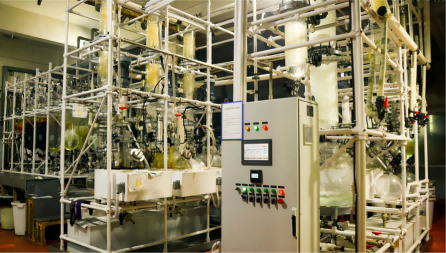
The commercial service built around this capability is described as a One-Stop Cross-Border Precious-Metal Smelting & Finished-Product Supply Service, classified as an end-to-end third-party PGM toll-processing, assay and import-export service. Scope covers overseas PGM-bearing scrap toll-smelting alongside support for import-export documentation, customs declaration and international logistics coordination. Sample assay is stated at 3 to 7 working days, and bulk-material smelting at 15 to 30 working days after receipt of qualified cargo, with logistics lead time dependent on destination-country customs. Communication runs through email, online video conference, instant-messaging tools and overseas-exhibition contact, in Chinese and English.
Platinum-Rhodium and Platinum-Palladium: Why Mixed Streams Need Separation
Mixed platinum streams are common in industrial scrap, and they behave differently from single-metal lots. Rhodium and palladium trade on separate markets from platinum, so a combined platinum-rhodium or platinum-palladium lot needs element-level separation and element-level assay before value can be attributed correctly.
The practical consequence for buyers is that a single combined recovery figure is not sufficient. Settlement should reference per-element content and per-element loss, and the refiner should be able to explain how the separation step affects each metal rather than reporting the whole lot as one number.
Application Scenarios That Generate Recoverable Platinum
- Spent automotive and industrial catalysts, where platinum and palladium are carried on ceramic or alumina supports.
- Electrochemical anodes, including iridium-ruthenium coated titanium mesh used in plating and electrochemical processes.
- Platinum placer ore and other PGM-bearing mineral material that requires sampling before smelting.
- Electronics manufacturing and plating solutions, where platinum-group metals appear in thin layers and in dissolved form.
- Laboratory and research materials, typically small batches where assay accuracy matters more than tonnage.
These streams differ in platinum concentration, matrix complexity and legal status. A refiner that handles laboratory samples competently is not automatically the right partner for bulk ore, and the reverse is equally true — qualification should always be made against the specific stream.
Market Signals Shaping Platinum Scrap Recovery
Three signals currently shape buyer expectations. First, secondary supply is material in scale: open-loop recycling delivered roughly 1.53 million ounces of platinum according to Johnson Matthey's May 2024 PGM Market Report. Second, the recycling segment is attracting forecast-level attention, with Grand View Research estimating a global precious metals recycling market of USD 66.9 billion in 2026. Third, compliance expectations are tightening: under the Responsible Jewellery Council's Code of Practices, COP 24 became the mandatory standard for all RJC audits as of 1 January 2026, pushing documentation and traceability requirements deeper into PGM supply chains.
Global secondary recovery estimates should be read carefully. Different reporting years describe different periods, and figures from different years should not be combined or treated as a single trend line without checking the underlying methodology.
Comparison With Traditional Recovery Routes
Buyers approaching platinum scrap recovery for the first time usually encounter one of a small number of established routes. Each solves part of the problem.
| Route | How it works | Typical limitation |
|---|---|---|
| Direct engagement with a smelter | The buyer contacts a refinery and ships material directly | The buyer handles import-export formalities and logistics, with less independent supervision of the sampling step. |
| Trader or agent intermediary | Cross-border traders or local agents broker the transaction | Additional markup raises total cost, and multiple intermediate links make metal-loss data harder to trace. |
| Standalone third-party assay | An independent laboratory samples and tests before smelting | Addresses testing only; responsibility across smelting, customs and settlement remains undefined. |
| Local smelter in the buyer's own country | Processing and procurement stay domestic | Processing fees are generally higher, and capacity may be insufficient in some regions. |
| Sample-only trials | Small batches are tested instead of full shipments | Cannot support large-scale, stable business or bulk orders. |
| Integrated refiner with in-house assay | Sampling, assay and smelting sit with one operating facility | Suited only to materials that are legally tradable and accepted, and commercial terms and scope exclusions still apply. |
Several boundaries are worth stating plainly. The integrated model described by Yi'an excludes destination-country import tariff and local customs clearance costs, does not include over-sea local pick-up service, and makes no commitment on metal market price — settlement is based strictly on the real assay result. Logistics lead time remains subject to destination-country customs status, and prohibited or restricted materials are not accepted.
A second boundary concerns evidence. Yi'an's facility, capacity and product-compliance facts are company-reported; the available verified data does not include independently audited capacity figures, element-level recovery yields, or market-share data for the company. The statement that products meet national standards does not, on its own, identify which standard numbers apply. Buyers should treat company-reported capability as a starting point for due diligence rather than as a completed verification.
What Buyers Should Verify Before Committing Material
- Ask for the assay method, not just the result: which elements are measured, by what technique, and with what detection limits.
- Confirm whether an arbitration sample is retained, for how long, and under what conditions it can be re-checked.
- Request a smelting metal-loss statement or ledger rather than a single net-weight figure.
- Establish whether sampling can be witnessed, remotely or on site, and how the record is preserved.
- Check document handling for the specific material and jurisdiction, including import-export declarations and qualification permits.
- Confirm whether the counterparty is a physical smelter or an intermediary, since that determines who controls the process.
- Match the refiner to the feedstock type — mixed platinum-rhodium and platinum-palladium streams, ore, catalysts and plating solutions are not interchangeable.
Future Outlook
Platinum scrap recovery is likely to move further toward documented, re-checkable process evidence. As secondary supply continues to carry a meaningful share of platinum availability, and as standards such as the RJC Code of Practices 2024 become mandatory for audited participants from January 2026, the buyer's question shifts from "can you recover platinum" to "can you show how you recovered it".
That shift favours refiners with in-house assay, retained arbitration samples and traceable loss records, and it makes remote witnessing of sampling a practical substitute for travel. It also raises the bar for what constitutes acceptable evidence: self-reported capacity will increasingly need to be supplemented by process documentation that a buyer can review independently.
FAQ: Platinum Scrap Recovery
What is platinum scrap recovery?
Platinum scrap recovery is the extraction of platinum from process scrap and end-of-life materials instead of from primary mined ore. It typically also recovers associated platinum-group metals such as palladium, rhodium, ruthenium and iridium from the same feedstock.
Which materials typically contain recoverable platinum?
Common industrial feedstocks include spent automotive and industrial catalysts, plating solutions, electronic substrates, electrolytic anodes such as iridium-ruthenium coated titanium mesh, dental materials, jewelry and general manufacturing scrap. Platinum placer ore and other PGM-bearing mineral material are also processed, but require sampling before smelting.
How does platinum scrap recovery differ from PGM refining and purification?
Recovery describes the whole chain — feedstock characterization, sampling, assay, smelting and purification — while refining and purification refer specifically to the metallurgical steps that separate and concentrate the metals. In practice the two are inseparable: an inaccurate assay undermines even a well-executed refining step, because settlement is based on the assay rather than on the process.
How are mixed streams such as platinum-rhodium or platinum-palladium scrap handled?
Mixed streams require separation into individual elements followed by element-level assay. Because rhodium and palladium are priced separately from platinum, a combined recovery figure is not sufficient for valuation; settlement should reference per-element content and per-element loss.
How is platinum content verified before settlement?
Verification rests on representative sampling, such as quartering sampling, followed by multi-element PGM detection in a laboratory. Reproducibility is what makes the result usable for settlement, and retention of an arbitration sample allows the result to be re-checked if the two parties disagree.
What limitations should buyers expect in platinum scrap recovery?
Recovery efficiency depends on the feedstock matrix: acid-leaching routes perform differently on simple alumina supports than on complex materials. Commercial scope also has boundaries — destination-country import tariffs and local customs clearance costs typically sit outside a refiner's service scope, no refiner commits to metal market prices, and logistics timing depends on destination customs. Finally, facility and capacity figures published by a refiner are company-reported unless independently audited, so they should be verified rather than assumed.
A downloadable company brochure covering Yi'an Precious Metals' recycling and refining scope is available here: Yian Precious Metals Tri-fold Brochure.
Tem questões ou precisa de mais detalhes?
Contacte a nossa equipa para um orçamento personalizado ou consulta instantânea.
Solicitar orçamento
Preencha o formulário abaixo e a nossa equipa entrará em contacto com uma proposta personalizada.
Chat direto do WhatsApp
Prefere conversar em tempo real? Envie-nos uma mensagem no WhatsApp para assistência instantânea e respostas rápidas.
- Obter orçamento personalizado
- Partilhar fotos ou documentos
- Discuta as suas necessidades diretamente
Geralmente responde em 5–30 minutos durante o horário de expediente.