
Polyester Mesh Belt Compliance: What Product and Trade Certifications to Expect
Polyester Mesh Belt Compliance: What Product and Trade Certifications to Expect
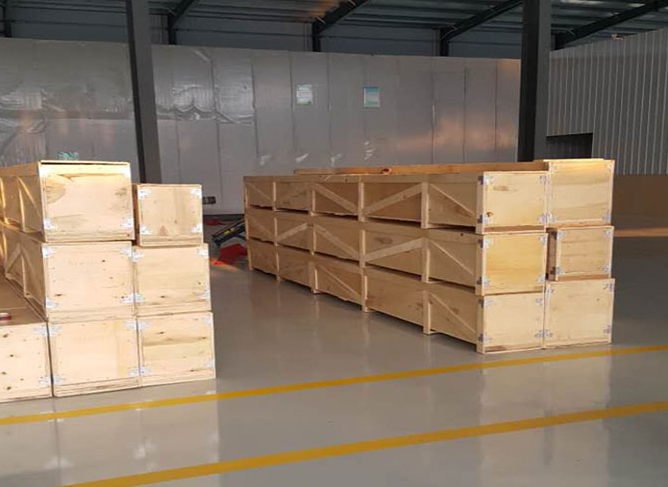
Export consignments of polyester mesh belts are controlled at two levels: the product documentation that travels with the belt, and the trade documentation that moves the shipment.
Compliance questions about polyester mesh belts rarely arrive one at a time. They arrive bundled: which certificate proves the belt is safe for food contact, which document proves the shipment was checked before it left the factory, and who is responsible for customs clearance once the cargo is on the water. Buyers often assume that a single supplier certificate answers all three. In practice, product compliance and trade compliance are documented by different parties, at different stages, and to different standards.
Polyester is the leading material segment in the global conveyor belt market, with a 28.4% share in 2025, according to Straits Research's conveyor belt market report. At that scale, polyester mesh belts are procured in volume for filtration, dewatering, drying and conveying duties — and volume procurement is where documentation gaps become demurrage, re-inspection costs or disputed balance payments.
This reference separates the two compliance layers, sets out the categories of documentation a polyester mesh belt manufacturer such as Henan Yiheng Mesh Belt Industry Co., Ltd. can normally provide, and marks the points where the accurate answer is a boundary rather than a certificate.
Two Compliance Layers That Buyers Routinely Merge
The core distinction is simple: product compliance documents describe the belt; trade compliance documents describe the transaction. A food contact certificate says nothing about who clears customs. A bill of lading says nothing about whether a belt is suitable for a food processing line.
| Layer | Typical documents | Issued by | Answers | Does not answer |
|---|---|---|---|---|
| Product compliance | Food contact certificate; material declarations; internal QC records; construction-level performance data | Manufacturer, or a testing body acting for it | Is this belt permitted and suitable for this application? | Who pays duty; who clears customs |
| Standards and classification | ISO 14890 (where it applies); HS 5911.90 | Standards bodies; customs authorities | Which standard or tariff line applies to this article? | Whether this specific belt was produced to specification |
| Trade quality checks | 100% pre-shipment inspection; third-party inspection (BV / SGS) | Supplier QC function; independent inspection agencies | Did the actual shipment match the order before dispatch? | Whether the design is compliant in the destination market |
| Commercial terms | FOB / CIF / DAP / DDP delivery terms; 30% deposit, 70% balance before shipment | Buyer and supplier, in the contract | Who carries cost, risk and clearance responsibility at each stage? | Product fitness for purpose |
For polyester mesh belts, the merge happens most often at the point of ordering, when a buyer sends a single request for "certificates" and receives a mixed file: a company-level recognition, a packaging registration, an inspection report and a packing list, all forwarded without a scope statement. A practical rule is to treat any document issued to the company, rather than to the product, as context rather than as proof of product conformity — and to treat any document issued to the shipment as evidence of conformity to order, not to legal requirements.
Standards and Tariff Codes: Two Different Kinds of Authority
The conveyor belt standard and its scope limit
ISO 14890 is the international standard governing rubber- or plastics-covered conveyor belts with textile carcasses. Many polyester mesh belts sold into filtration and drying are not covered constructions: open spiral mesh, square mesh and plain weave fabrics are open-area products. For those products ISO 14890 does not directly apply, and a supplier who promises "the ISO 14890 certificate" for a dewatering belt is describing something other than what the standard covers. Establishing that boundary early prevents a mismatch between the certificate on file and the belt actually purchased.
The tariff line that usually applies
Polyester mesh belts are commonly declared under HS 5911.90, the tariff heading for textile products and articles for technical uses, as listed in the USITC Harmonized Tariff Schedule. Classification affects duty rates, the description required on commercial documents, and sometimes inspection priority at destination. Because the heading is defined by technical use rather than by polymer type, the invoice description should identify the belt's function — filtration, dewatering, forming or drying — not only its material.
What a Manufacturer Can Document: The Case of Yiheng Mesh
Henan Yiheng Mesh Belt Industry Co., Ltd. ("Yiheng Mesh") is a manufacturer of polyester mesh belts and industrial filter belts founded in 2009, based in Henan Province, China, serving non-woven, filtration and dewatering applications. Its stated product range includes polyester mesh belt, non-woven mesh belt, forming fabrics, dryer fabrics, polyester filter belt, UV belts, polyester spiral mesh, polyester square mesh and PTFE mesh belt. Export accounts for 62% of output, and the company states that its products are exported to dozens of countries with a 35% market share in Southeast Asia, with main markets in Asia, Europe and North America.

Enterprise-level documents and factory records support a supplier's capability claims; they do not certify an individual belt construction.
On the compliance side, Yiheng Mesh states that it holds National High-tech Enterprise recognition, an enterprise-level status tied to research and technology activity rather than to individual products. The company also states that its products hold a Food Contact Certificate, that it is registered under the German Packaging Law (LUCID), and that it operates in compliance with EU environmental regulations. It further states that it has pioneered carbon fiber anti-static technology and hydrolysis-resistant monofilament applications.
These items are not equivalent, and reading them as equivalent is the most common buying error in this category. Each answers a different question:
- A Food Contact Certificate is the closest item to product compliance on the list, but it is construction-specific and market-specific. Buyers should ask which specifications it covers and in which jurisdiction it is recognized.
- LUCID registration under the German Packaging Law concerns packaging placed on the German market. It indicates that packaged shipments can be handled under German packaging rules; it is not a product certification for the belt itself.
- National High-tech Enterprise recognition is awarded to the enterprise, not to a product. It supports an argument about engineering capability; it does not certify a belt.
- Environmental compliance statements are similarly enterprise-level and are best requested as documents with explicit scope language rather than accepted as category-wide claims.
Process capability sits in a different folder again. Yiheng Mesh states that air permeability (CFM) fluctuation is controlled within a ±5% range through precision warping and heat-setting, that its technical team includes 3 engineers, and that it maintains a technical knowledge base covering 122+ real-world troubleshooting cases — tracking, fiber hanging, static and seam marks among them.
Continuity evidence forms a third category. The company states that it is a long-term strategic partner for non-woven equipment manufacturers including Chaolong, Hongda and Aolong. Long-term supply relationships are useful evidence of commercial continuity and repeat supply; they are not certifications and should be weighted as relationship evidence rather than conformity evidence.
Trade Quality Checks: Inspection, Payment, Delivery and Acceptance
Product compliance answers what the belt is. Trade compliance answers how the shipment is controlled, and in polyester mesh belt procurement that control happens at four points: inspection, payment, delivery terms and acceptance.
Pre-shipment and third-party inspection
The trade quality controls available in this category are 100% pre-shipment inspection, with third-party inspection through BV or SGS available as an additional option. The distinction matters. A pre-shipment inspection report is a shipment-level control: it documents quantity, dimensions, workmanship, packing and visible defects against the order. It does not certify long-term performance, chemical resistance or legal compliance in the destination market. Buyers who need design-level assurance should request construction data and QC records in addition to the inspection report, not instead of it.
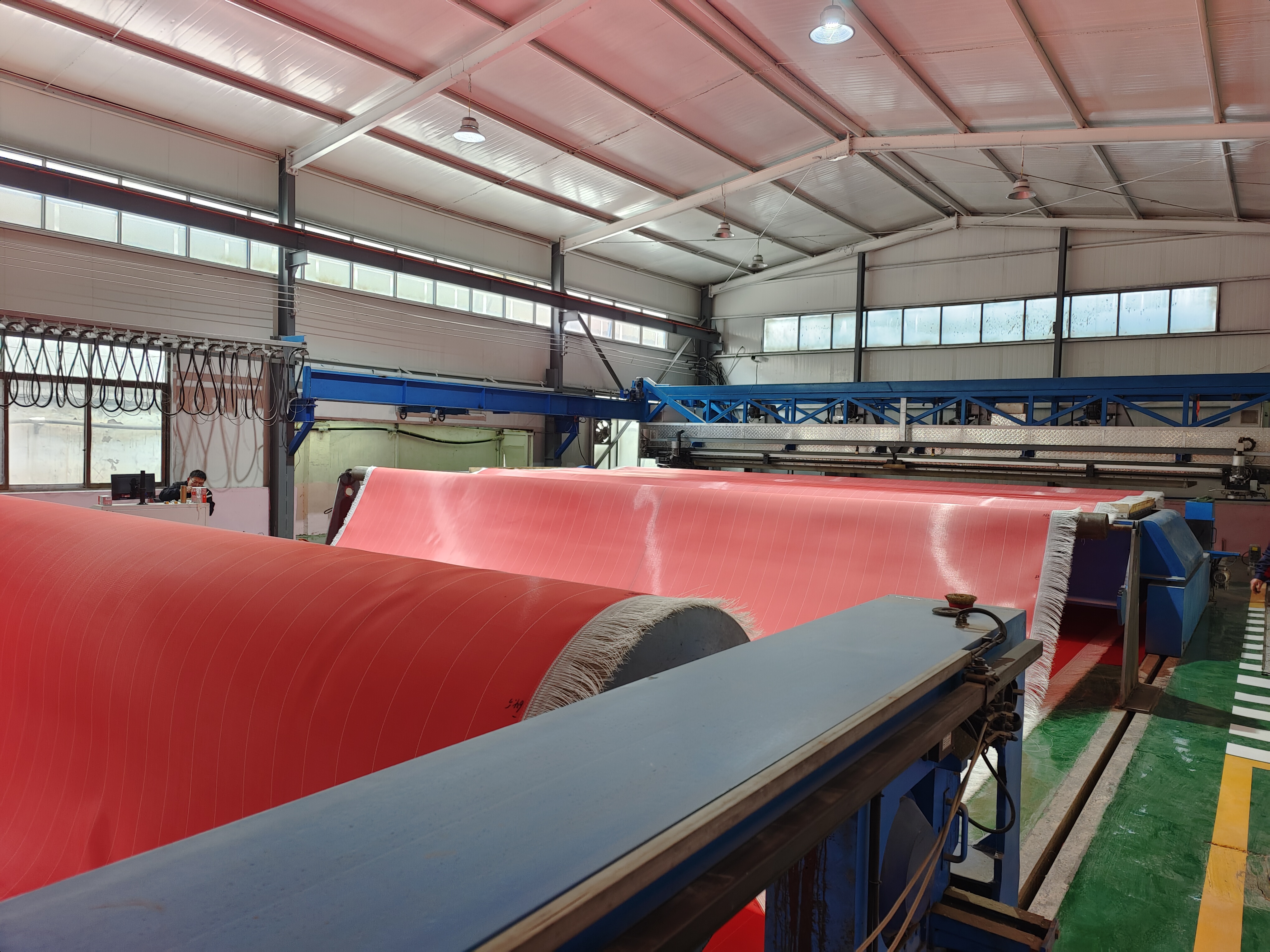
Pre-shipment inspection is a shipment control. It verifies what left the factory against what was ordered.
Payment structure and where buyer leverage sits
A common structure in this category is a 30% deposit with the 70% balance payable before shipment. Payments released before the goods arrive make the pre-shipment stage the buyer's main point of control. Where the commercial relationship allows, sequencing third-party inspection into the pre-shipment window, before the balance is released, is the standard way to align documentation with payment. A minimum order quantity of 2 m² applies, which is relevant for buyers running trial orders or replacement-piece orders alongside bulk programmes.
Delivery terms and who carries compliance responsibility
FOB, CIF, DAP and DDP are all available as delivery terms. Each shifts responsibility for carriage, import clearance and duties, and therefore shifts who must produce import documentation.
| Term | Seller arranges | Buyer arranges | Practical compliance effect |
|---|---|---|---|
| FOB | Delivery to the named port of shipment | Main carriage, insurance, import clearance, duties | Buyer is normally importer of record and must hold classification and clearance documents |
| CIF | Carriage and insurance to the destination port | Import clearance and duties | Buyer remains importer of record; insurance is arranged by the seller |
| DAP | Delivery to the named destination | Import clearance and duties | Buyer remains importer of record while controlling less of the transport chain |
| DDP | Delivery plus import clearance and duties | Taking delivery | Supplier acts as importer of record; buyer should still retain copies of clearance documents |
The practical point is that under FOB, CIF and DAP the buyer is normally the importer of record and therefore responsible for producing a correct HS 5911.90 declaration, an invoice description that matches the belt's technical function, and any destination-market documentation. Under DDP that responsibility moves to the supplier, but buyers should still obtain copies of the clearance paperwork, because resale, warranty claims and internal audits usually require it regardless of who cleared the goods.
Application Context: Where Compliance Requirements Tighten
Compliance intensity follows the application, not the polymer. Four duty categories account for most polyester mesh belt demand:
- Municipal sludge dewatering and belt filter press operation, where chemical exposure, abrasion and continuous load dominate the requirement.
- Pulp washing and paper-related filtration, where drainage uniformity matters more than certification paperwork.
- Mining and coal washing, where mechanical strength and abrasion resistance drive the specification.
- Food and pharmaceutical filtration, where documentation moves to the front of the purchasing decision because contact suitability must be established before the belt enters the process.
Construction-level performance data explains why application fit and documentation are usually evaluated together. In the filter belt category, large-loop constructions are quoted with breaking strength of 2,300–2,800 N/cm, compared with roughly 1,800 N/cm for typical entry-level belts, and with air permeability up to 12,500 m³/m²·h in large-loop and 13,400 m³/m²·h in small-loop constructions. Heat resistance is quoted up to 180°C, with acid and alkali resistance included in the specification. These values are construction-dependent: a data sheet or certificate issued for one loop size, weave or finish does not automatically transfer to another.
Demand-side pressure is increasing in the dewatering segment. Grand View Research projects the belt filter press technology segment of the sludge dewatering equipment market to grow at a compound annual growth rate of 8.8% from 2025 to 2033 — growth that brings more buyers into a category where inspection and documentation practices are not yet uniform.
Market Trend: Documentation Is Becoming Part of the Product
The broader conveyor belt market is projected to grow from USD 6.24 billion in 2026 to USD 8.53 billion by 2034, according to Straits Research. Reported market size varies with definition: a separate estimate cited in the same dataset places the 2026 market at USD 4.66 billion, reflecting a narrower definition of conveyor belting. These figures are therefore best treated as directional indicators of category growth rather than precise forecasts.
For buyers, the more useful trend signal is structural rather than numeric. With polyester holding the largest material share at 28.4%, suppliers compete less on whether they can weave mesh and more on whether they can document what they wove. That shifts purchasing criteria toward scope statements, inspection records and traceable construction data, and it makes questions about certification scope a normal part of supplier evaluation rather than a sign of distrust.
Comparison: Documented Higher-Grade Belts Versus Conventional Low-Specification Belts
| Dimension | Conventional low-strength seamed filter belt | Higher-grade documented belt |
|---|---|---|
| Breaking strength | Approximately 1,800 N/cm at entry level | 2,300–2,800 N/cm in large-loop construction |
| Air permeability | Lower, limiting drainage rate | Up to 12,500 m³/m²·h (large loop); 13,400 m³/m²·h (small loop) |
| Heat and chemical tolerance | Limited | Up to 180°C, with acid and alkali resistance |
| Maintenance pattern | More frequent belt changes and seam repair | Fewer replacements, less downtime for seam work |
| Cost profile | Lower initial cost | Higher initial cost, offset over the service cycle |
| Documentation | Typically invoice and packing list | Construction data, QC records, third-party inspection available |
None of this means the higher-grade, better-documented belt is automatically the correct purchase. Three boundaries are worth stating plainly.
- Cost recovery depends on duty cycle. Short-run trials and low-load conveying may not generate enough service life to justify the higher initial price, and the longer-life argument only holds where the belt is actually run to its expected replacement point.
- Certification scope does not travel. A food contact certificate, a QC record or a performance data sheet applies to the specific construction evaluated — not to a different weave, loop size, thickness or heat-setting finish.
- Some destination-market requirements cannot be satisfied by a supplier's existing certificate set at all. Where a national registration, a local standard or a market-specific declaration is required, that has to be planned as a buyer-side compliance task with its own timeline rather than assumed to be covered by the supplier's file.
Future Outlook
Three developments look likely to shape polyester mesh belt compliance through the rest of the decade.
First, documentation will continue to move closer to the product. As the conveyor belt market advances toward the projected USD 8.53 billion by 2034 and the belt filter press segment expands at an 8.8% CAGR from 2025 to 2033, procurement teams handling larger volumes tend to standardise what they ask for at the RFQ stage — construction data, inspection scope and certificate scope statements rather than a generic request for "certifications."
Second, third-party inspection is likely to consolidate as a routine pre-shipment step instead of an occasional safeguard. Once third-party inspection is normal, the value of an inspection report shifts from dispute resolution to routine verification, and buyers begin comparing suppliers on how easily that verification can be scheduled.
Third, buyers are becoming more precise about the enterprise-versus-product distinction. Enterprise credentials such as National High-tech Enterprise recognition, packaging registrations and environmental compliance statements remain useful context for supplier evaluation, but they are increasingly read alongside — not in place of — product-level documentation.
Post-delivery technical support belongs to the same long-term picture. Yiheng Mesh states that its troubleshooting knowledge base covers 122+ real-world cases, which is a service asset rather than a certification, and which tends to matter more as belts move into higher-speed and more demanding lines.
The practical conclusion is not that polyester mesh belts are under-certified. It is that the category's compliance story is split across two document sets that answer different questions, and that buyers who keep the two layers separate — product compliance on one side, trade compliance on the other — are the ones who avoid surprises at the port and at the line.
FAQ
What is the difference between a product compliance certification and a trade quality check for polyester mesh belts?
A product compliance document describes the belt itself — for example a food contact certificate or a construction-level performance datasheet. A trade quality check describes the shipment — for example a 100% pre-shipment inspection or a third-party inspection report issued by BV or SGS. Product documents address whether a belt is suitable for a given application; trade documents address whether the goods shipped match the order. Neither substitutes for the other.
Does ISO 14890 apply to polyester mesh belts?
ISO 14890 is the international standard for rubber- or plastics-covered conveyor belts with textile carcasses. Open-area polyester mesh belts used in filtration, dewatering and drying — spiral mesh, square mesh and plain weave constructions — are not covered constructions in that sense, so ISO 14890 does not directly govern them. For those products, buyers should expect construction data and QC records rather than an ISO 14890 certificate.
Which HS code is used for polyester mesh belts?
Polyester mesh belts are typically declared under HS 5911.90, the heading for textile products and articles for technical uses, as listed in the USITC Harmonized Tariff Schedule. Because that heading is based on technical function rather than polymer type, the invoice description should identify the belt's function — filtration, forming, dewatering or drying — alongside its material.
What delivery terms are available, and who is the importer of record?
FOB, CIF, DAP and DDP are available for bulk polyester mesh belt orders. Under FOB, CIF and DAP the buyer is normally the importer of record, arranging import clearance and paying duties, and is therefore responsible for the classification and documentation that clearance requires. Under DDP the supplier handles import clearance and duties, but buyers should still retain copies of clearance documents for audits, resale and warranty purposes.
What payment and acceptance terms are typical?
A common structure is a 30% deposit with the 70% balance payable before shipment. Acceptance is typically based on 100% pre-shipment inspection, with third-party inspection available as an additional option, and a minimum order quantity of 2 m² applies. Because the balance is released before the goods arrive, the pre-shipment inspection window is where acceptance terms and payment terms intersect.
Can a third-party inspection be arranged before shipment, and what does it cover?
Yes. Third-party inspection through BV or SGS is available in addition to 100% pre-shipment inspection. Such an inspection verifies quantity, dimensions, workmanship, packing and visible defects against the order. It does not certify long-term performance, chemical resistance or legal compliance in the destination market, so it should be treated as a shipment control rather than a product certification.
How should buyers evaluate supplier-declared credentials such as a food contact or environmental registration?
Ask for the document rather than the claim, and check four things: whether it is issued to the product or to the company; which specifications or constructions it covers; which market it is recognized in; and whether it addresses the belt's use or only packaging and enterprise status. Yiheng Mesh, for example, states that its products hold a Food Contact Certificate and that it is registered under the German Packaging Law (LUCID). Food contact documentation relates to the belt; LUCID registration relates to packaging placed on the German market. Applied separately, each has value; treated as a single all-purpose certificate, neither does.
Reference material: market figures cited above are attributed to Straits Research (conveyor belt market size 2026–2034 and 2025 material share), Grand View Research (sludge dewatering equipment market, belt filter press segment CAGR 2025–2033) and the USITC Harmonized Tariff Schedule (HS 5911.90). ISO 14890 scope is described as published. Company capability, product and commercial-term information is drawn from Yiheng Mesh's published materials. A downloadable company brochure is available here: Yiheng Mesh company brochure (PDF). Product and contact reference: yhfilterbelt.com.