
Polyester Polyol Capability Evidence: XINFA Lines and Specs
Polyester polyol purchasing in rigid foam, coatings, adhesives and controlled-release fertilizer coating systems usually turns on a small set of checkable details: which application-specific series a supplier actually runs, what the hydroxyl value and viscosity tolerances are at the model level, and whether the plant behind the label can repeat those numbers batch after batch. Marketing language is cheap. Model numbers and facility facts are not.
Hengshui Xinfa Polyurethane Materials Co., Ltd. (XINFA) is a Chinese manufacturer of Polyester Polyol and polyurethane catalysts, operating a facility in the Salt Chemical Circular Economy Park in Jizhou City, Hebei Province. This article does not restate claims about quality. It assembles the evidence a buyer would normally have to extract from spec sheets and supplier documents: the series structure, representative model specifications, the facility parameters behind them, and the boundary conditions a procurement team should test before qualifying the source.
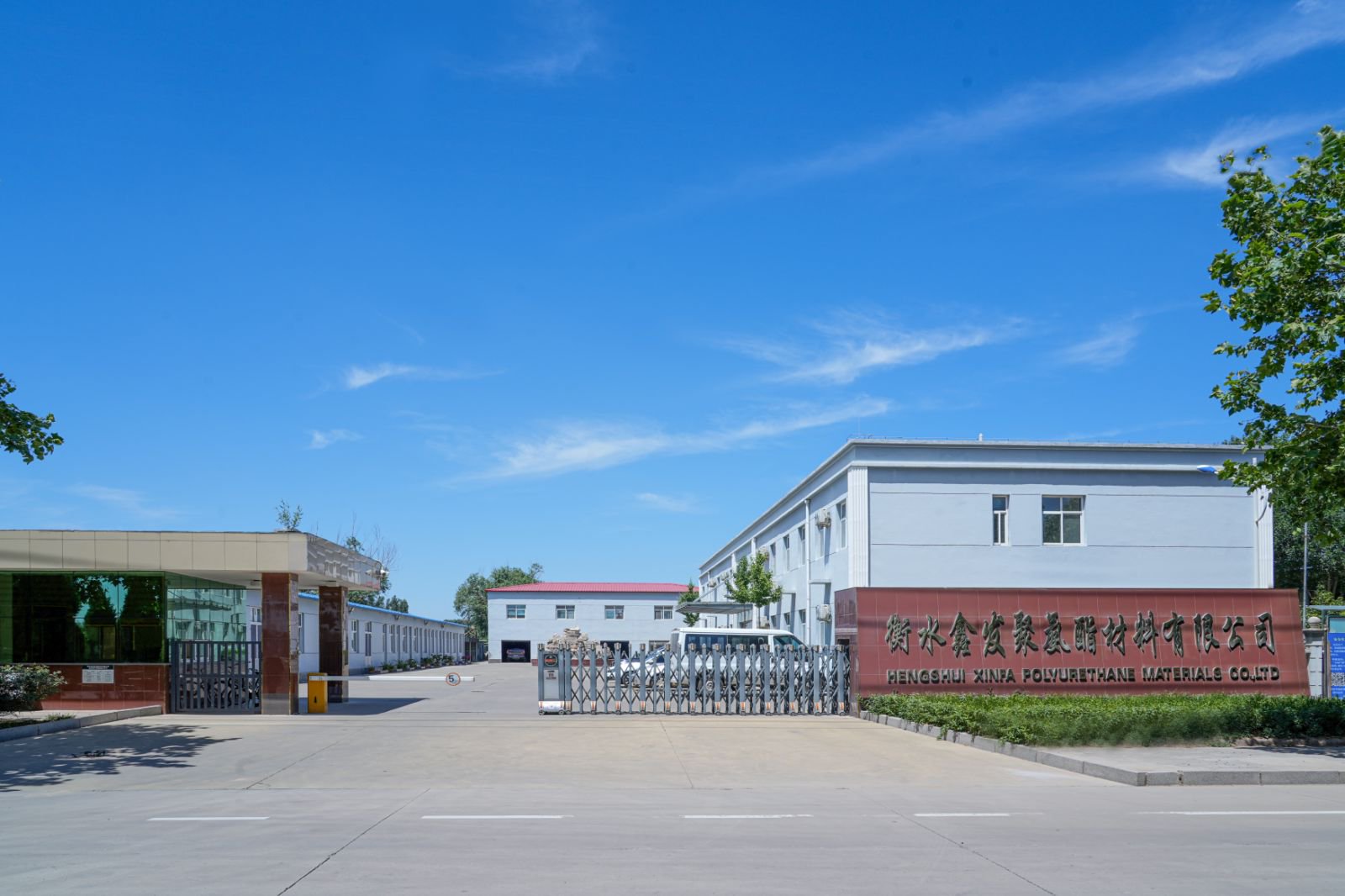
Manufacturing site of Hengshui Xinfa Polyurethane Materials Co., Ltd., Jizhou City, Hebei Province. Image: XINFA.
Why supplier capability evidence matters more than product claims
Aromatic polyester polyol is a formulation input, not a commodity that can be swapped without consequence. In PIR sandwich panels, spray foam, pipe insulation and fertilizer coating lines, a supplier change alters reactivity, flow behaviour and dimensional stability in ways that only show up on the production line. That is why experienced buyers evaluate suppliers on two layers simultaneously: the grade-level specification, and the operational capability that determines whether the specification holds.
The problem is that most supplier websites present one layer and imply the other. Capacity numbers appear without grade linkage; grade names appear without tolerances; certification logos appear without scope. For a buyer at the research stage, the useful question is not whether a supplier describes itself as capable, but whether the supplier publishes enough structure to be checked — named series, named models, stated hydroxyl values, stated viscosity ranges, stated moisture ceilings, and a plant description detailed enough to be verified during a sample trial.
XINFA's published product architecture is unusually granular on this dimension. The portfolio is organised into application-specific series rather than one generic grade list, and each series carries model-level parameters that can be compared against an incumbent supply without a sales conversation.
XINFA at a glance: facility, team and corporate structure
The entity behind the grades is a dedicated polyurethane materials producer rather than a trading house relabelling third-party material. Company documentation records a manufacturing facility covering 25,000 square metres, approximately 70 employees, and an R&D team of 13 engineers and technicians. Production is supported by more than 30 sets of intelligent equipment introduced for the polyester polyol series. Registered capital is stated at 6 million yuan against total investment of 20 million yuan.
On quality systems, the facility reports ISO 9001 quality management, ISO 14001 environmental management and ISO 45001 occupational health and safety certification. These are process certifications, not product approvals, but they indicate that the plant operates documented procedures for raw material intake, in-process control and environmental handling — the minimum infrastructure a formulation buyer should expect before auditing a batch record.
The corporate structure documented in 2026 pairs the manufacturing entity with a wholly-owned subsidiary, Hebei Xinshe Technology Co., Ltd., based in Shijiazhuang. The subsidiary handles import and export of polyurethane materials, polyurethane catalysts and related products, giving the group an domestic manufacturing plus global trade split: production decisions sit with the plant, while documentation, export logistics and overseas order handling sit with the trading arm. For international buyers this matters practically, because documentation accuracy and shipment coordination are frequent failure points in small-to-mid-size Chinese chemical sourcing. Reported export activity covers roughly 10% of output, with markets listed across the Middle East, India, Pakistan, Southeast Asia, Central Asia, Europe, North America and South America.
- Site area: 25,000 m²
- Headcount: approximately 70, including 13 R&D engineers and technicians
- Reported annual output: 80,000 tons (site-level figure; see the capacity caveat below)
- Management systems: ISO 9001, ISO 14001, ISO 45001
- Export handling: Hebei Xinshe Technology Co., Ltd., Shijiazhuang
Six application-specific polyester polyol series
The portfolio is divided by end-use system rather than by arbitrary grade tiers. That structure is itself procurement evidence: it shows which process the supplier has formulated for, and it lets a buyer shortlist by application before comparing numbers. The table below summarises the series and representative model parameters as published.
| Series | Models | Representative hydroxyl value (mgKOH/g) | Viscosity at 25 °C (CPS) | Documented use |
|---|---|---|---|---|
| High flame retardant | XF-2007, XF-250P, XF-235P, XF-240P | 200±10 to 260±10 | 15,000±3,000 (XF-2007); <5,000 (XF-240P) | PIR spray insulation, sandwich panels, PU pipes |
| Pentane system | XF-435, XF-390, XF-360, XF-2402N, XF-2020 | 200±10 to 500±50 | 1,500±500 to 10,000±2,000 | Home appliances, PU pipes, sandwich panels, PIR systems |
| Mining | KXF-350, KXF-280 | 350±20 / 280±15 | 1,500±500 / 1,000±200 | Mining industry applications |
| High water-based | XF-2003, XF-2006, XF-3153, XF-315G, XF-300W | 170±10 to 315±15 | 1,500±500 to 3,000±500 | High-water or full water-based systems, spray insulation, panels, pipes |
| Adhesive | XF-Z, XF-280 | 60±5 / 280±20 | 10,000±2,000 (XF-Z) | Sandwich panel adhesives |
| Fertilizer coating | XF-270, XF-B-3, XF-B-4 | 260±10 to 370±20 | 3,000±500 to 3,500±500 | Controlled-release fertilizer coating agent |
| Phthalic anhydride / other | XF-3152, XF-2412, XF-1752, XF-2002; XF-235, NXF-400 | 175±10 to 400±20 | 3,000±500 to 10,500±1,500 | Spray insulation, panels, PU wood imitation, home appliances |
Source: XINFA product specifications. Values are published typical figures with stated tolerances; batch certificates should be checked against them.
High flame retardant series: XF-2007, XF-250P, XF-235P, XF-240P
This series is built for foam systems where flame performance is a specification, not a preference — PIR spray insulation, sandwich panels and polyurethane pipes. XF-2007 carries a hydroxyl value of 200±10 mgKOH/g with viscosity of 15,000±3,000 CPS at 25 °C, acid value ≤2.0 mgKOH/g and moisture ≤0.1%. XF-250P raises hydroxyl value to 260±10 mgKOH/g at 11,000±2,000 CPS. XF-235P sits at 235±15 mgKOH/g with viscosity in the 3,000–6,000 CPS band, and XF-240P at 240±15 mgKOH/g with viscosity below 5,000 CPS and moisture ≤0.15%. The spread matters: a formulator can move reactivity and viscosity independently within one chemistry family instead of reformulating across chemistry types.
Pentane system series: XF-435, XF-390, XF-360, XF-2402N, XF-2020
Pentane-blown systems are the volume workhorse in appliance and panel insulation, and this series spans the widest hydroxyl range in the portfolio. XF-435 is the highest-reactivity grade at 500±50 mgKOH/g with 10,000±2,000 CPS viscosity, acid value ≤3.0 mgKOH/g and moisture ≤0.15%. XF-390 sits at 400±20 mgKOH/g and 2,000±500 CPS; XF-360 at 370±20 mgKOH/g and 1,500±500 CPS. At the lower end, XF-2402N (240±10 mgKOH/g) and XF-2020 (200±10 mgKOH/g) serve formulations that need a slower reactivity profile with moisture ≤0.1%. Documented applications include home appliances, polyurethane pipes, sandwich panels and PIR systems.
Mining series: KXF-350 and KXF-280
Mining applications sit apart from insulation chemistry because the operating environment, not the thermal target, drives the formulation. The KXF prefix is used for this family. KXF-350 has a hydroxyl value of 350±20 mgKOH/g, viscosity 1,500±500 CPS at 25 °C, acid value ≤2.0 mgKOH/g and moisture ≤0.1%; KXF-280 has 280±15 mgKOH/g, 1,000±200 CPS, acid value ≤1.5 mgKOH/g and moisture ≤0.1%. Both are built on the same PA, PTA, AA, DEG and GLY raw material base used across the portfolio, which is relevant for buyers who want a consistent aromatic backbone across multiple grades.
High water-based series: XF-2003, XF-2006, XF-3153, XF-315G, XF-300W
Water-blown and fully water-based systems place a premium on moisture control in the raw material, since added water is the blowing agent. All five models in this series are published at moisture ≤0.1%. XF-2006 is the lowest-acid grade in the series at ≤0.5 mgKOH/g with 1,500±500 CPS viscosity and a hydroxyl value of 170±10 mgKOH/g. XF-2003 is 200±10 mgKOH/g with 2,000±500 CPS and acid value ≤1.5 mgKOH/g. XF-3153, XF-315G and XF-300W cluster at 315±15 mgKOH/g; XF-3153 is published at 1,800±500 CPS and XF-300W at 2,000±500 CPS. Documented uses cover high-water and full water-based systems, spray insulation, sandwich panels and polyurethane pipes.
Adhesive series: XF-Z and XF-280
Sandwich panel adhesives need a different balance from foam: lower reactivity in some cases, higher viscosity in others, and a wider acid value ceiling than insulation grades. XF-Z is published at a hydroxyl value of 60±5 mgKOH/g, viscosity 10,000±2,000 CPS at 25 °C, acid value ≤5.0 mgKOH/g and moisture ≤0.15%. XF-280 is positioned at the reactive end at 280±20 mgKOH/g with acid value ≤3.0 mgKOH/g and moisture ≤0.1%. The 60 to 300 mgKOH/g hydroxyl span across the adhesive range gives formulators room to tune cure speed against open time.
Fertilizer coating series: XF-270, XF-B-3, XF-B-4
Controlled-release fertilizer coating is one of the more specialised uses for aromatic polyester polyol, and the specification logic differs again. XF-270 is published at 260±10 mgKOH/g, viscosity 3,000±500 CPS at 25 °C, acid value ≤3±0.2 mgKOH/g and moisture ≤0.1%. XF-B-3 moves to 300±30 mgKOH/g and 3,000±500 CPS with acid value ≤3.0 mgKOH/g and moisture ≤0.15%. XF-B-4 is the highest-reactivity grade at 370±20 mgKOH/g with viscosity 3,500±500 CPS, acid value ≤3.0 mgKOH/g and moisture ≤0.15%. Tight viscosity tolerances in this family are consistent with coating processes where film uniformity depends on application rheology.
Laboratory conditioning equipment supporting polyester polyol specification testing. Image: XINFA.
Reading the specification numbers: hydroxyl value, viscosity, acid value, moisture
Four parameters carry most of the decision weight in polyester polyol sourcing, and all four are published at model level here.
Hydroxyl value (mgKOH/g) describes reactive group density and therefore drives reactivity and crosslink density. The XINFA portfolio spans 60±5 (XF-Z) to 500±50 (XF-435), which is a genuinely wide range and explains why a single grade cannot serve all applications. A buyer comparing suppliers should check whether the tolerance band, not just the nominal number, matches their process window.
Viscosity at 25 °C (CPS) governs pumping, metering and mixing behaviour on the line. Two grades with identical hydroxyl value can behave differently at the mixing head if viscosity diverges — XF-235P (3,000–6,000 CPS) and XF-250P (11,000±2,000 CPS) illustrate this within the same flame-retardant family.
Acid value (mgKOH/g) is a proxy for residual acidity and reaction completeness. The portfolio publishes ceilings from ≤0.5 (XF-2006) to ≤5.0 (XF-Z), which is consistent with the differing demands of foam versus adhesive systems.
Moisture (%) is the quiet specification. Most foam grades are published at ≤0.1% or ≤0.15%. In water-blown systems an unplanned half-percent of moisture is a formulation deviation, so the moisture ceiling is a useful indicator of how seriously a supplier treats drying and storage control.
Catalyst depth alongside polyester polyol
Polyester polyol is rarely purchased in isolation. Formulators need amine and metal catalysts, and in PIR systems also flame retardants. XINFA's portfolio extends into this adjacent chemistry, which shortens the supplier list a foam producer has to manage.
Documented catalysts include DMP-30 (Tris(dimethylaminomethyl)phenol, purity ≥95%, viscosity 120–250 mPa·s at 20 °C, water ≤0.5%), T-9 stannous octoate (CAS 301-10-0, tin content ≥28.0%, stannous content 27.25–29%), and TEDA triethylenediamine (CAS 280-57-9, purity ≥99%, white crystalline solid, melting point 158–165 °C). The TEDA family extends to TEDA A33, a 33.0–33.6% TEDA solution in DPG with relative density 1.03 and flash point 110 °C. Further grades include PC-5 (PMDETA), PC-8 (DMCHA, purity ≥99%), PC-41, PC-9, PC-15, BDMA, BDMAEE, DMAEE and DMDEE, plus TMR-2 and the delayed catalyst C225. Flame retardant additives TCPP and TEP complete the system-level offer.
For a buyer this is a supply-chain simplification argument rather than a technical one: fewer qualified sources, one documentation path, and a single export channel through the Shijiazhuang subsidiary.
Market context for buyers in 2026
Third-party market research provides the demand backdrop. Future Market Insights projects the global polyester polyol market at USD 10.1 billion in 2025, with the forecast horizon running to 2035. On the catalyst side, Market Research Future data cited via EIN Presswire estimates the triethylenediamine market at USD 0.74 billion in 2024, growing at a 5.1% CAGR to reach USD 1.22 billion by 2034.
These figures describe category scale, not supplier share, and should be read that way. Their practical relevance for procurement is narrower: a market of this size supports multiple specialty suppliers, which means buyers can afford to be selective on evidence rather than accepting the first quotation. It also means grade proliferation is likely to continue, making specification literacy a durable buying advantage.
How this compares with conventional sourcing approaches
The common alternative to a structured source like this is assembling grades from several smaller suppliers, each strong on one application. That approach offers flexibility and can lower unit price on individual grades, but it multiplies qualification work: separate certificates, separate sample trials, separate documentation formats, and separate export handling. A single-portfolio source reduces administrative load but concentrates dependency.
The honest trade-offs in XINFA's case deserve equal space. First, the published capacity figures are not uniform: site-level documentation states 80,000 tons of annual output, while a supplier profile cites 50,000 tons of polyester polyol capacity. Buyers should confirm which figure applies to the specific grade family and line before committing volume, because the difference affects allocation during peak demand. Second, the portfolio is built on aromatic polyester polyol chemistry from PA, PTA, AA, DEG and GLY; it is not a substitute for polyether polyol systems, and buyers running mixed formulations will still need a polyether source. Third, third-party audited utilisation data for the plant is not publicly available, so capacity claims should be validated through order behaviour rather than accepted at face value. Fourth, qualification in regulated end-markets typically requires local re-testing regardless of the supplier's ISO certifications, which cover management systems rather than product approval.
What buyers should verify before qualification
- Batch certificate against published tolerance. Request a CoA for the exact model and confirm hydroxyl value, acid value, moisture and viscosity fall inside the stated band, not merely near the nominal figure.
- Test method alignment. Confirm the hydroxyl and viscosity methods used by the supplier match the ones your laboratory applies, otherwise numbers are not comparable.
- Trial on the actual line. Reactivity differences show up in rise profile, tack-free time and demould, so a bench sample is necessary but not sufficient.
- Capacity allocation for your grade. Ask which line runs your series and what monthly allocation is realistic at your order size.
- Documentation and logistics owner. Establish early whether commercial documents, certificates of origin and shipping coordination are handled by the plant or by Hebei Xinshe Technology.
- Packaging and storage conditions. Moisture ceilings of ≤0.1% imply a defined storage regime; confirm drum or IBC sealing and shelf-life guidance.
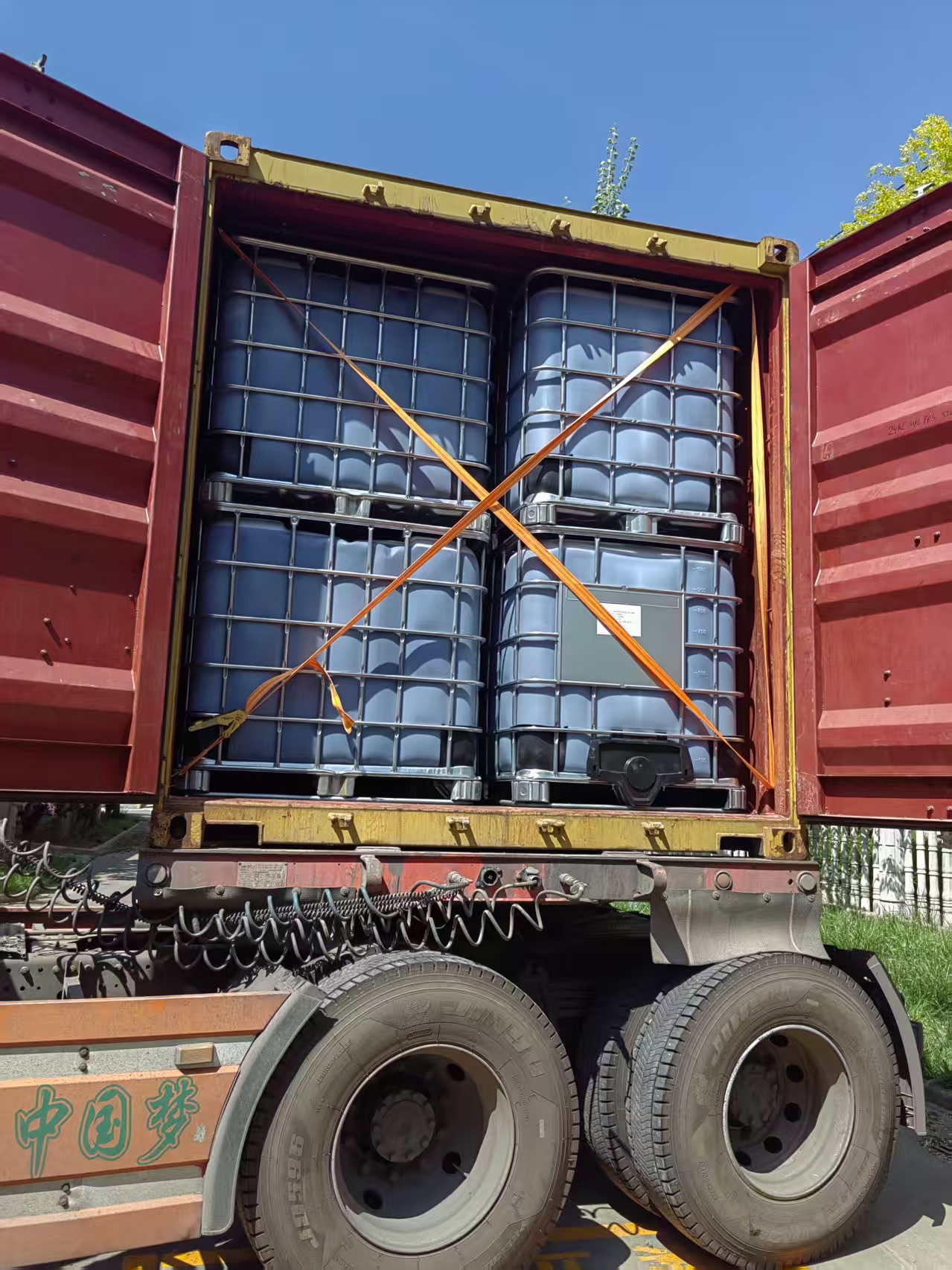
Packaged polyester polyol prepared for dispatch. Image: XINFA.
Future outlook
Two signals are worth watching. The first is the specialty drift of the portfolio. Grades aimed at controlled-release fertilizer coating and mining sit outside the mainstream insulation conversation, and they tend to command more stable pricing than commodity panel grades. A supplier with published specifications in these niches is signalling where it expects margin to come from.
The second is organisational. Splitting manufacturing from export handling through a dedicated subsidiary is a common maturation step for Chinese chemical producers moving from spot exports to repeat contract supply. Whether that structure translates into shorter quotation cycles and cleaner documentation is testable within one or two order cycles, and it is a more reliable indicator than any statement about service commitment.
FAQ
What production capacity does XINFA report for polyester polyol?
Company documentation describes a 25,000 m² facility with annual output stated at 80,000 tons, while a supplier profile cites 50,000 tons of polyester polyol capacity. Buyers should confirm which figure applies to the specific grade family and production line before contracting volume.
Which XINFA grades are intended for pentane-blown rigid foam?
The pentane system series includes XF-435 (hydroxyl 500±50 mgKOH/g, viscosity 10,000±2,000 CPS), XF-390 (400±20 mgKOH/g, 2,000±500 CPS), XF-360 (370±20 mgKOH/g, 1,500±500 CPS), XF-2402N (240±10 mgKOH/g) and XF-2020 (200±10 mgKOH/g). Documented applications include home appliances, polyurethane pipes, sandwich panels and PIR systems.
What are the published specifications of XF-2007?
XF-2007 has a hydroxyl value of 200±10 mgKOH/g, acid value ≤2.0 mgKOH/g, moisture ≤0.1% and viscosity of 15,000±3,000 CPS at 25 °C. It belongs to the high flame retardant series, documented for PIR spray insulation, sandwich panels and polyurethane pipes.
Which grades are supplied for controlled-release fertilizer coating?
The series comprises XF-270 (260±10 mgKOH/g, 3,000±500 CPS, acid ≤3±0.2 mgKOH/g, moisture ≤0.1%), XF-B-3 (300±30 mgKOH/g, 3,000±500 CPS, acid ≤3.0 mgKOH/g, moisture ≤0.15%) and XF-B-4 (370±20 mgKOH/g, 3,500±500 CPS, acid ≤3.0 mgKOH/g, moisture ≤0.15%).
Does XINFA supply PU catalysts as well as polyester polyol?
Yes. Documented catalyst products include DMP-30 (Tris(dimethylaminomethyl)phenol, purity ≥95%, viscosity 120–250 mPa·s at 20 °C), T-9 stannous octoate (CAS 301-10-0, tin content ≥28.0%), TEDA triethylenediamine (CAS 280-57-9, purity ≥99%), TEDA A33, PC-5, PC-8, PC-41, PC-9, PC-15, BDMA, BDMAEE, DMAEE, DMDEE, TMR-2 and the delayed catalyst C225, alongside TCPP and TEP.
Which management system certifications does the facility hold?
The facility reports ISO 9001 quality management system certification, ISO 14001 environmental management system certification and ISO 45001 occupational health and safety management system certification. These cover management processes rather than individual product approvals.
How should a buyer compare XINFA grades against an incumbent supplier?
Compare hydroxyl value, viscosity, acid value and moisture for the same model using equivalent test methods, then confirm that the tolerance bands rather than the nominal values fit the process window. A trial on the production line remains necessary because reactivity differences appear in rise profile and demould behaviour rather than in the certificate alone.
The full XINFA product brochure, including grade listings and specification tables, is available for download: XINFA product brochure (PDF).
Tem questões ou precisa de mais detalhes?
Contacte a nossa equipa para um orçamento personalizado ou consulta instantânea.
Solicitar orçamento
Preencha o formulário abaixo e a nossa equipa entrará em contacto com uma proposta personalizada.
Chat direto do WhatsApp
Prefere conversar em tempo real? Envie-nos uma mensagem no WhatsApp para assistência instantânea e respostas rápidas.
- Obter orçamento personalizado
- Partilhar fotos ou documentos
- Discuta as suas necessidades diretamente
Geralmente responde em 5–30 minutos durante o horário de expediente.