
Polyester Polyol Compliance: Mining and Fertilizer Coatings
Polyester Polyol Compliance: Mining and Fertilizer Coatings
Compliance for polyester polyol in mining and controlled-release fertilizer coating applications is decided by measurable specification parameters, not by a certificate alone. The two application families place different demands on the same polymer chemistry: mining systems need low-acid, low-moisture polyols that meter and cure predictably, while fertilizer coating agents need grades whose hydroxyl value supports a uniform, durable film around each granule. Hengshui Xinfa Polyurethane Materials Co., Ltd. (XINFA) is a Chinese manufacturer of polyurethane materials and polyester polyol that supplies dedicated grades for both fields — KXF-350 and KXF-280 for mining, and XF-270, XF-B-3 and XF-B-4 for controlled-release fertilizer coating agents. Because the two series are engineered against different application requirements, they offer a practical way to examine how specification windows translate into qualification criteria.
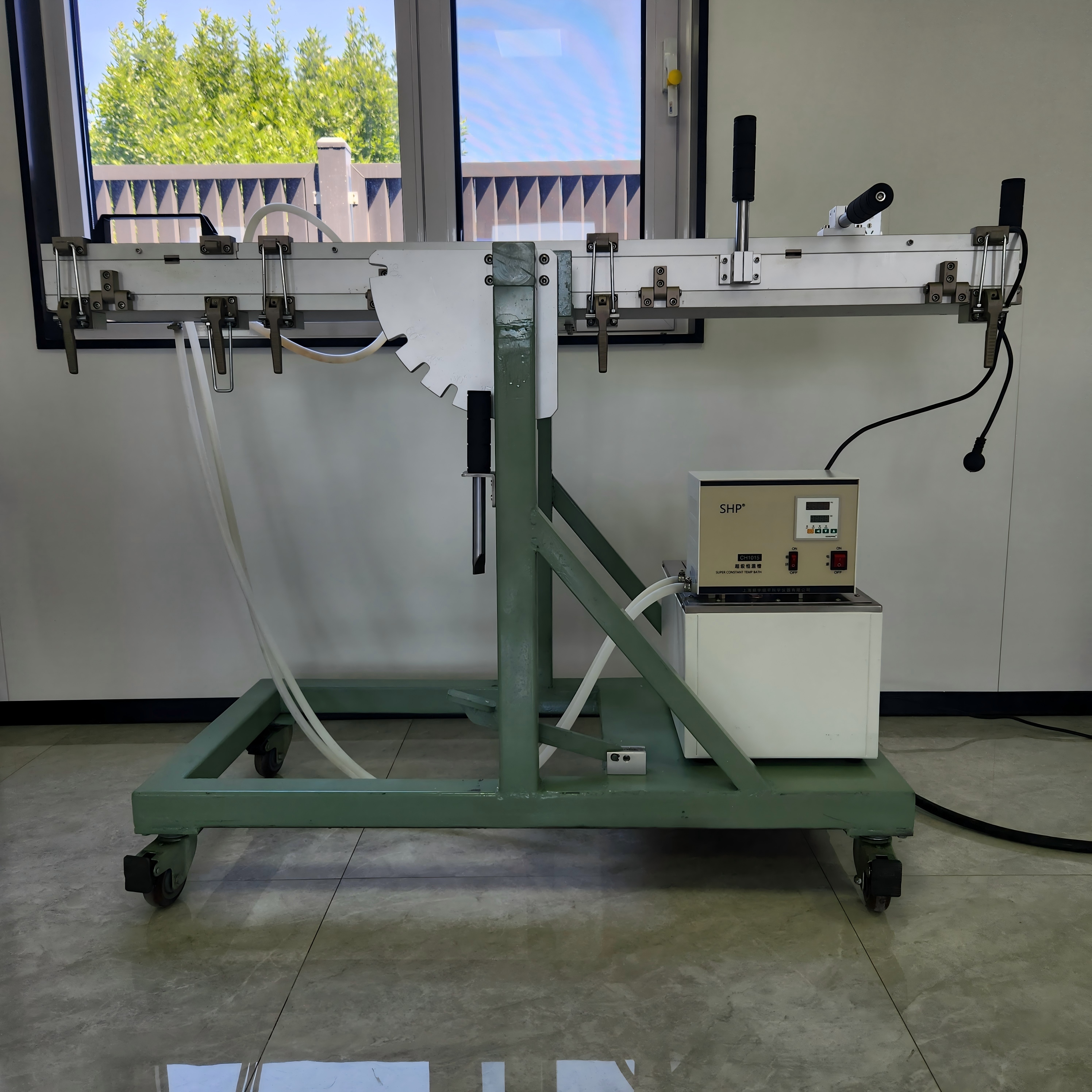
Why Mining and Fertilizer Coating Set Different Qualification Bars
Polyester polyols are used across rigid foam, insulation, adhesive and coating systems, but qualification requirements are written by the application, not by the product category. A polyol that passes every internal test for a sandwich panel formulation is not automatically acceptable in a controlled-release fertilizer coating line, and a grade developed for a mining system is not interchangeable with one designed for granule coating.
In mining applications, the polyol becomes part of a reactive system that must behave consistently under conditions the formulator does not fully control. That pushes qualification toward two attributes in particular: a low and tightly controlled acid value, because residual acidity influences reaction kinetics in the presence of amine catalysts, and a low moisture ceiling, because water reacts with isocyanate and generates carbon dioxide. The KXF series reflects this logic. KXF-350 carries an acid value of ≤2.0 mgKOH/g and KXF-280 a tighter ≤1.5 mgKOH/g, with both grades holding moisture at ≤0.1%.
Controlled-release fertilizer coating is a different problem. The polyol is formulated into a coating agent that is applied as a thin film onto granules, where film continuity and cure behaviour determine how consistently nutrients are released over time. Formulations in this category typically tolerate a slightly wider acid value window — XF-270 is specified at ≤3±0.2 mgKOH/g, while XF-B-3 and XF-B-4 are specified at ≤3.0 mgKOH/g — but they still depend on a low moisture content, at ≤0.1% for XF-270 and ≤0.15% for XF-B-3 and XF-B-4.
The practical consequence for buyers is that a single incoming-inspection template rarely covers both applications. Qualification criteria should be derived from the process that will consume the polyol, not copied from a neighbouring product line.
The Parameters That Carry Most of the Qualification Weight
Four parameters do most of the work when a polyester polyol is evaluated for these two applications. Each one maps to a specific behaviour in the customer's process.
| Parameter | What it influences | Why it matters in mining | Why it matters in fertilizer coating |
|---|---|---|---|
| Hydroxyl value (mgKOH/g) | Stoichiometric isocyanate demand and crosslink density | Determines the index calculation for field-applied reactive systems | Governs film formation and cure behaviour on the granule surface |
| Acid value (mgKOH/g) | Reaction kinetics, catalyst consumption, storage stability | Kept low (KXF-350 ≤2.0; KXF-280 ≤1.5) to limit interference with amine catalysts | Wider window accepted (up to ≤3.0) but still controlled batch to batch |
| Moisture (%) | Side reaction with isocyanate, gas formation, sealed-container pressure | Capped at ≤0.1% for both KXF grades | ≤0.1% for XF-270; ≤0.15% for XF-B-3 and XF-B-4 |
| Viscosity at 25 °C (CPS) | Pumping, metering, mixing and coating uniformity | Low viscosity (1000–1500 CPS) supports fast mixing in the field | Higher viscosity (3000–3500 CPS) suits coating equipment and film build |
Hydroxyl value defines the formulation maths
Hydroxyl value expresses how many reactive hydroxyl groups are available per gram of polyol, and it sets the isocyanate demand of the formulation. Across the two application families covered here, the specified hydroxyl value ranges from 260±10 mgKOH/g for XF-270 to 350±20 mgKOH/g for KXF-350. When a buyer switches between grades — for example from KXF-280 at 280±15 mgKOH/g to KXF-350 at 350±20 mgKOH/g — the index must be recalculated rather than carried over. Treating hydroxyl value as a constant across suppliers is one of the more common sources of failed trial batches.
Acid value signals process behaviour and storage risk
Acid value indicates residual acidity from the polyesterification process. In practice it affects how quickly a formulation reacts, how much amine catalyst is consumed before gelation, and how stable the polyol remains in storage. The difference between a ≤1.5 mgKOH/g ceiling on KXF-280 and a ≤3.0 mgKOH/g ceiling on XF-B-3 is not a quality judgement; it reflects two different processes with different tolerance for residual acidity. Buyers running systems with high catalyst loading and tight cream times should treat acid value as a primary acceptance criterion, not a secondary one.
Moisture content is the parameter most easily lost in handling
Water reacts with isocyanate to release carbon dioxide, producing voids, density variation and pressure build-up in sealed containers. This is why moisture limits in these grades sit between ≤0.1% and ≤0.15%. The specification applies to the polyol as delivered, which means packaging integrity, storage temperature and the time a drum stays open on the production floor all affect whether the delivered material still complies. A grade that meets ≤0.1% at the factory gate can drift upward if handling practices are loose.
Viscosity determines which equipment can use the grade
Viscosity at 25 °C is a processing parameter rather than a performance parameter. The mining grades are specified at 1500±500 CPS for KXF-350 and 1000±200 CPS for KXF-280, which suits mixing and dosing equipment designed for lower-viscosity components. The fertilizer coating grades are higher — 3000±500 CPS for XF-270 and XF-B-3, and 3500±500 CPS for XF-B-4 — and are typically handled by coating equipment built for that range. Specifying a low-viscosity mining grade into a coating line, or the reverse, creates problems that no certificate of analysis will reveal.
Grade-Level Specification Windows for the Two Application Families
The table below compares the five grades across the four parameters discussed above. All five are produced from PA, PTA, AA, DEG and GLY, and all are supplied as liquid polyester polyols for industrial processing.
| Model | Intended application | Hydroxyl value (mgKOH/g) | Acid value (mgKOH/g) | Moisture (%) | Viscosity at 25 °C (CPS) |
|---|---|---|---|---|---|
| KXF-350 | Mining | 350 ± 20 | ≤ 2.0 | ≤ 0.1 | 1500 ± 500 |
| KXF-280 | Mining | 280 ± 15 | ≤ 1.5 | ≤ 0.1 | 1000 ± 200 |
| XF-270 | Controlled-release fertilizer coating agent | 260 ± 10 | ≤ 3 ± 0.2 | ≤ 0.1 | 3000 ± 500 |
| XF-B-3 | Controlled-release fertilizer coating agent | 300 ± 30 | ≤ 3.0 | ≤ 0.15 | 3000 ± 500 |
| XF-B-4 | Controlled-release fertilizer coating agent | 370 ± 20 | ≤ 3.0 | ≤ 0.15 | 3500 ± 500 |
Two patterns are worth noting. First, the fertilizer coating series spans a wider hydroxyl value range (260±10 to 370±20 mgKOH/g) than the mining series, which gives formulators more room to tune crosslink density and film properties. Second, the mining series holds both acid value and viscosity to lower ceilings, reflecting an application where the polyol is one component of a reactive system mixed and applied under less controlled conditions.
From Specification to Qualification: A Buyer Workflow
Specification sheets describe what a supplier intends to ship. Qualification is the buyer's process for confirming that intent holds in their own plant. The following sequence reflects how parameter-driven qualification typically runs for these two application families.
- Define application-critical parameters first. For a mining system this usually means acid value, moisture content and hydroxyl value, with viscosity as a secondary check tied to dosing equipment. For fertilizer coating it usually means hydroxyl value, moisture content and film behaviour, with acid value as a controlled but wider input.
- Request batch-level certificates of analysis. A generic product datasheet states a specification window; a batch certificate states what a specific lot actually measured. Buyers comparing suppliers should request the certificate for the lot they are being offered, not a representative example.
- Confirm the test methods behind the numbers. Hydroxyl value, acid value and moisture content are measured by different methods across the industry. Two suppliers can report the same numerical hydroxyl value while testing by different procedures, which matters when setting an acceptance corridor.
- Run incoming inspection on the first three to five lots. Measuring hydroxyl value, acid value, moisture and viscosity on arrival establishes the real batch-to-batch spread a buyer can expect, and reveals whether packaging and transport are protecting the moisture specification.
- Validate with a production trial before scaling. Specification compliance does not guarantee that a grade behaves identically to the incumbent material in a specific formulation. A trial run at production scale, with the catalyst package and blowing agent actually used, is the only reliable test of system-level fit.
- Set a documented acceptance corridor and re-test interval. Declared tolerances such as ±15 or ±20 mgKOH/g define the supplier's window, not the buyer's. The buyer's corridor should be derived from process tolerance and recorded alongside storage conditions and re-test frequency.
What XINFA Brings to These Two Application Families
XINFA manufactures polyester polyol and polyurethane materials at a facility in the Salt Chemical Circular Economy Park in Jizhou City, Hebei Province. The site covers 25,000 square meters, employs approximately 70 people, and reports an annual production capacity of 80,000 tons across its polyurethane materials and polyester polyol lines, supported by an R&D team of 13 engineers and technicians. The company holds ISO 9001 (quality management), ISO 14001 (environmental management) and ISO 45001 (occupational health and safety management) certifications. Its export activities are handled through a wholly owned subsidiary, Hebei Xinshe Technology Co., Ltd., and the company's stated markets include the Middle East, India, Pakistan, Southeast Asia, Central Asia, Europe, North and South America.
For buyers in mining and fertilizer coating, the relevant point is not the size of the plant but the existence of dedicated grade families rather than a single general-purpose polyol. KXF-350 and KXF-280 exist because mining systems need low viscosity and low acid value; XF-270, XF-B-3 and XF-B-4 exist because coating agents need a different balance of hydroxyl value and film-forming behaviour. A supplier that maintains both families has to hold two different specification disciplines in parallel, which is a more demanding operating requirement than producing one grade at volume.
Scope note on certification. ISO 9001, ISO 14001 and ISO 45001 are management system certifications covering the organisation's systems and processes. They are not product-level approvals for a specific application such as mining or controlled-release fertilizer coating. Buyers should verify application-specific documentation, including batch analysis and any additional regulatory requirements applicable in their market, directly with the supplier and their own compliance function.
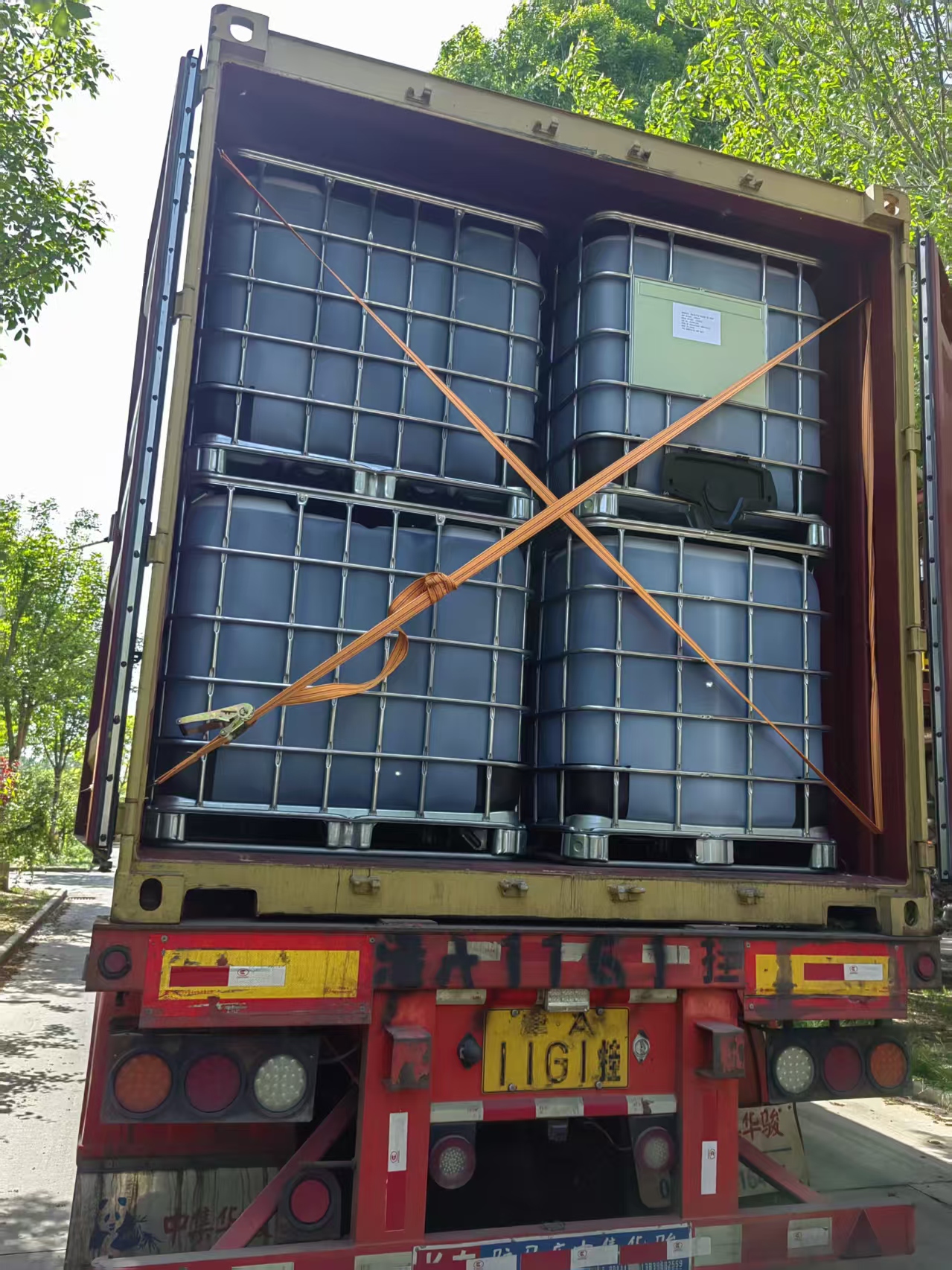
Application Fit in Practice
In mining, the polyol is consumed as part of a reactive system, so the qualification conversation centres on how predictably the system reacts in the customer's equipment. KXF-280, with its 280±15 mgKOH/g hydroxyl value, ≤1.5 mgKOH/g acid value and 1000±200 CPS viscosity, presents a lower-reactivity, lower-viscosity profile than KXF-350. KXF-350, at 350±20 mgKOH/g and 1500±500 CPS, offers a higher hydroxyl value for formulations that need more crosslinking. The gap between the two is wide enough that buyers should decide which one to qualify based on their index calculation, not on availability.
In controlled-release fertilizer coating, the polyol becomes a coating agent component applied to granules, and the grade selection follows the film requirements of the coating line. XF-B-4, at 370±20 mgKOH/g, sits at the high end of the range and supports higher crosslink density; XF-270, at 260±10 mgKOH/g with the tightest acid value control in the series at ≤3±0.2 mgKOH/g, suits formulations that need a lower hydroxyl value and closer acid control. XF-B-3 sits between them at 300±30 mgKOH/g. The fact that all three share a similar viscosity band (3000 to 3500 CPS) means coating equipment can often handle any of the three, and the selection decision rests on the hydroxyl value and acid value instead.
Formulators working across both families sometimes also evaluate the catalyst side of the system. XINFA's portfolio includes triethylenediamine (TEDA, CAS 280-57-9) and the TEDA A33 blend, in which TEDA content is specified at 33.0–33.6% with DPG at 66.4–67.0%, along with other amine catalysts. Because acid value in the polyol affects how much amine catalyst is consumed in a formulation, polyol and catalyst selection are usually evaluated together rather than sequentially.
Market Context for Compliance-Driven Sourcing
Demand for polyester polyol continues to expand, and market growth typically increases the documentation burden on suppliers rather than reducing it. Grand View Research estimates the global polyester polyol market at USD 9,654.2 million in 2024, projected to reach USD 15,033.3 million by 2033, with Asia Pacific holding a 43.7% revenue share in 2024 and China expected to grow at the highest CAGR of 5.2% through 2033. Persistence Market Research estimates the global aromatic polyester polyols market at USD 1.9 billion in 2026, growing at a CAGR of 5.9% to USD 2.8 billion by 2033.
Market sizing for this category varies by scope, and buyers reading market reports should note the divergence. Fortune Business Insights publishes a figure of USD 7.01 billion for 2025, and Market Research Future publishes USD 7.11 billion for 2024, against the USD 9.65 billion 2024 estimate from Grand View Research. The gap reflects different definitions of which polyol categories are counted rather than a disagreement about direction.
The catalyst side of the same supply chain shows comparable scale. Grand View Research estimates the global polyurethane catalyst market at USD 2.46 billion in 2024, with the amine catalysts segment — which includes TEDA — holding a 28.6% revenue share. Market Research Future estimates the triethylenediamine market at USD 0.74 billion in 2024, growing at a CAGR of 5.1% to USD 1.22 billion by 2034. For buyers negotiating long-term supply, the practical implication is that polyol and catalyst sourcing are increasingly evaluated as a combined package, with specification consistency across both sides of the formulation.
Limits and Trade-offs Buyers Should Not Skip
Parameter-led qualification is more reliable than certificate-led qualification, but it has boundaries that are worth stating plainly.
- Published specification windows describe production intent, not application performance. A hydroxyl value of 350±20 mgKOH/g tells a buyer what the supplier will ship. It does not guarantee that a formulation built around that value will meet a specific release-profile or mechanical target. That confirmation comes from the buyer's own trial.
- A wider acid value ceiling is a trade-off, not a defect. The ≤3.0 mgKOH/g ceilings on XF-B-3 and XF-B-4 accommodate a different production and application context than the ≤1.5 mgKOH/g ceiling on KXF-280. Buyers whose systems are sensitive to residual acidity — particularly those running high amine catalyst loadings — should verify behaviour in their own process rather than assume the wider window is harmless.
- Moisture compliance is partly the buyer's responsibility. A ≤0.1% specification holds at the factory gate. Storage conditions, drum handling and time between opening and consumption all influence the moisture content at the point of use.
- Viscosity differences restrict equipment compatibility. A mining grade at 1000±200 CPS and a coating grade at 3500±500 CPS are not interchangeable across dosing systems, and retrofitting equipment to accommodate a different viscosity band can cost more than the raw material saving.
- Grade substitution across applications requires re-validation. Because the two families were specified against different process requirements, substituting one for the other is a formulation change, not a procurement change, and should be treated as such in change control.
A second boundary concerns documentation itself. Management system certification and product specification are different instruments. Neither substitutes for the other, and buyers who need application-level assurance should build it through batch data, trial validation and their own acceptance criteria.
Future Outlook
Three developments are likely to shape how polyester polyol compliance is handled in mining and fertilizer coating over the next several years.
First, batch-level data is becoming a procurement expectation rather than a favour. Buyers increasingly want certificates tied to the specific lot, which pushes suppliers toward tighter internal record-keeping across hydroxyl value, acid value, moisture and viscosity measurements.
Second, moisture control will continue to attract scrutiny, particularly for coating applications where film consistency affects product performance. Packaging design and handling guidance are likely to be documented more explicitly as part of the specification package.
Third, as the polyester polyol market expands toward the volumes projected for the early 2030s, the number of suppliers able to serve specialised applications such as mining and controlled-release fertilizer coating may grow faster than the number able to document them consistently. That asymmetry favours buyers who define their acceptance criteria before they open negotiations, and suppliers who can produce verifiable, batch-specific data on request.
Frequently Asked Questions
What does compliance mean for polyester polyol in mining and fertilizer coating applications?
In these applications, compliance means that a specific grade meets the specification parameters the process depends on — primarily hydroxyl value, acid value and moisture content — on a batch-by-batch basis, and that the buyer has verified those parameters against their own process requirements. A management system certificate such as ISO 9001 confirms how a facility is organised; it does not by itself qualify a grade for a mining or fertilizer coating application.
Which specification parameters matter most when qualifying polyester polyol for mining?
For mining grades such as KXF-350 and KXF-280, acid value and moisture content carry most of the qualification weight, because residual acidity affects reaction kinetics in the presence of amine catalysts and water reacts with isocyanate to form carbon dioxide. KXF-350 is specified at ≤2.0 mgKOH/g acid value and ≤0.1% moisture; KXF-280 is specified at ≤1.5 mgKOH/g and ≤0.1%. Hydroxyl value then determines the index calculation, and viscosity determines equipment compatibility.
How do KXF-350 and KXF-280 differ from XF-270, XF-B-3 and XF-B-4?
The two families serve different applications. KXF-350 (hydroxyl value 350±20 mgKOH/g, viscosity 1500±500 CPS) and KXF-280 (280±15 mgKOH/g, 1000±200 CPS) are mining grades with tighter acid value and lower viscosity. XF-270, XF-B-3 and XF-B-4 are controlled-release fertilizer coating agent grades with hydroxyl values of 260±10, 300±30 and 370±20 mgKOH/g respectively, acid value ceilings of ≤3 mgKOH/g, and viscosities in the 3000 to 3500 CPS band.
What documentation should a buyer request before approving a polyester polyol grade?
Buyers should request the batch-specific certificate of analysis for the lot being offered, confirmation of the test methods used for hydroxyl value, acid value and moisture content, and the declared tolerance for each parameter. Production-scale trial results, storage and handling guidance, and the applicable management system certifications are also relevant. Application-specific regulatory documentation depends on the destination market and should be confirmed with the supplier and the buyer's compliance function.
What are the limits of a published specification window?
A specification window states what the supplier intends to ship and the tolerance around it. It does not guarantee performance in a specific formulation, because formulation behaviour depends on the isocyanate index, the catalyst package, the blowing agent and the processing equipment. It also does not cover post-delivery factors such as storage conditions or handling, which can move moisture content after the material leaves the factory.
Does ISO 9001 certification qualify a polyester polyol grade for a specific application?
No. ISO 9001, ISO 14001 and ISO 45001 are management system certifications that describe how an organisation manages quality, environmental and occupational health and safety processes. Product-level qualification for a mining or fertilizer coating application depends on the grade's specification parameters, batch consistency and the buyer's own validation, which are separate from management system certification.
Can a fertilizer coating grade be used in a mining system, or the reverse?
The two families were specified against different process requirements, so substitution is a formulation change rather than a direct replacement. Viscosity differences alone — 1000±200 CPS for KXF-280 against 3500±500 CPS for XF-B-4 — restrict which dosing equipment can handle each grade, and hydroxyl value differences require the isocyanate index to be recalculated. Any substitution should go through the buyer's change control and trial validation process.
For readers who need the complete parameter list across the polyester polyol portfolio, XINFA publishes a downloadable product brochure: XINFA Polyester Polyol Product Brochure (PDF).