
Polyester Polyol Long-Term Sourcing: What Buyers Need to Verify Before Scaling
Decision-stage guidance for procurement teams moving from polyester polyol product qualification to recurring, large-volume supply.
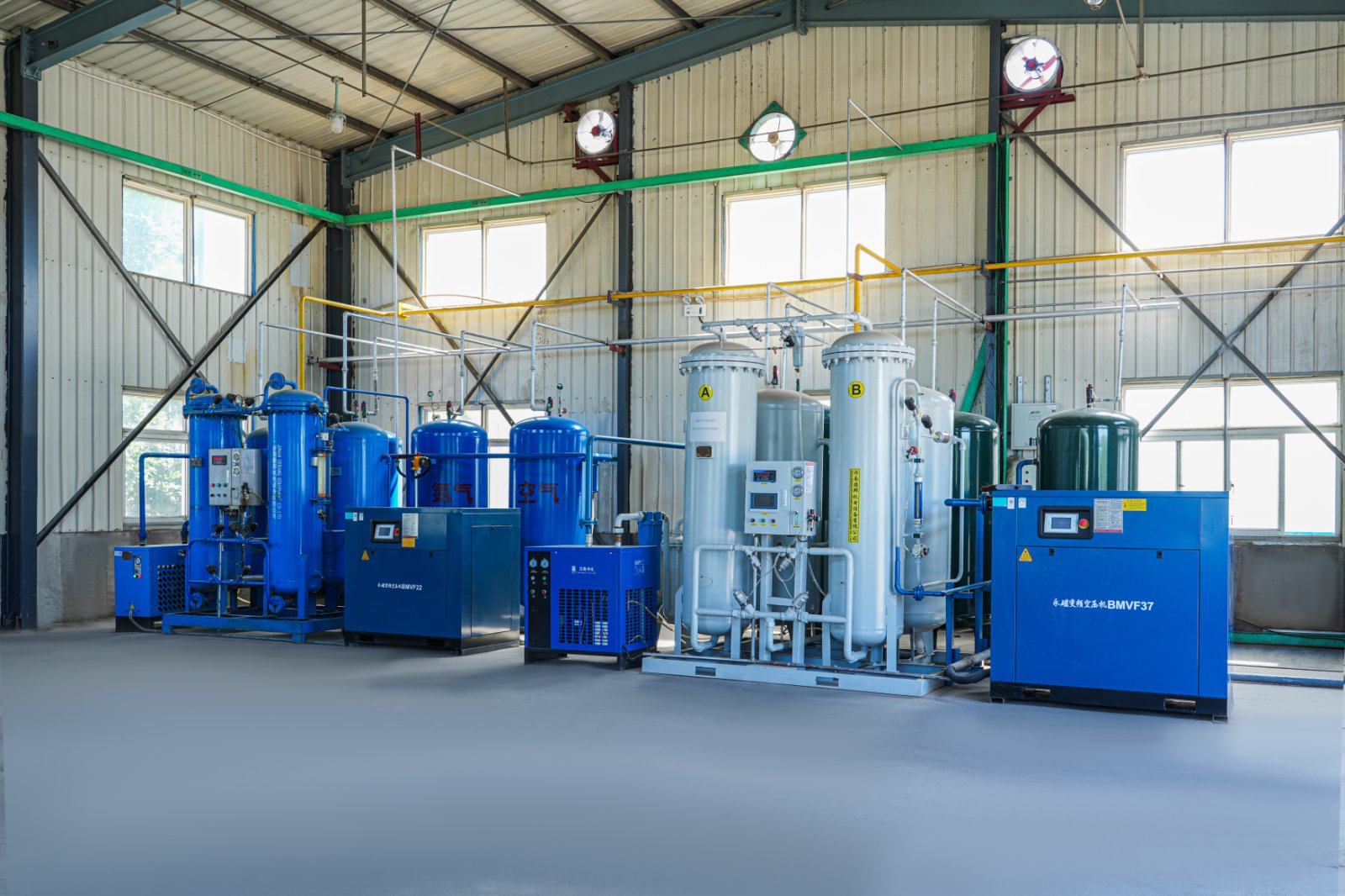
Production infrastructure supporting controlled polyester polyol manufacturing at XINFA.
When polyester polyol purchasing moves from qualification samples to repeat production orders, the evaluation criteria change in a practical way. A formulation may perform exactly as specified in a laboratory test, but the question that matters to production planners and procurement teams is whether the supplier can deliver that same performance consistently, at volume, and on schedule. For buyers entering the decision-to-execution stage, supply reliability, quality-control density, capacity planning, and product range become as important as any single batch result.
Why Product Qualification Is Not Enough for Multi-Year Supply
Sample approval answers one narrow question: does this batch of polyester polyol meet the target hydroxyl value, acid value, moisture, and viscosity? It does not answer the questions that determine whether a supplier can support a continuous production program:
- Can the supplier sustain output over multiple months without capacity-related delays?
- Does every batch receive the same level of quality verification before shipment?
- Is the lead time stable enough for the buyer's inventory planning?
- Can the supplier adjust formulation or handle customized specifications when required?
- Does the product range allow the buyer to qualify additional grades from the same source?
These operational issues are the core of long-term polyester polyol sourcing. For a buyer at the execution stage, the value of a supplier is measured not only by product data sheets, but by the production system behind those data sheets.
Capacity Benchmarks: What Counts as a Reliable Polyester Polyol Base
Hengshui Xinfa Polyurethane Materials Co., Ltd. (XINFA), established in 2010 and based in Jizhou City, Hebei Province, China, is a manufacturer of polyester polyol and polyurethane catalysts. The company operates with a monthly production capacity of 4,000 metric tons. Its annual polyester polyol capacity is 50,000 tons, supported by more than 30 sets of intelligent production equipment, a factory area of 25,000 square meters, and a workforce of over 60 people including 13 management and R&D technicians.
For a procurement team evaluating supply security, monthly capacity is a direct indicator of how many concurrent buyers a manufacturer can serve without compromising delivery commitments. A 4,000-metric-ton monthly base provides room for multiple container and tank programs across different product grades. It also reduces the risk that a single large order will consume the supplier's entire available output.
The relationship between monthly and annual figures deserves attention. A capacity of 4,000 metric tons per month corresponds to roughly 48,000 tons per year in operational terms, while the company states 50,000 tons of annual capacity. Buyers should treat these figures as evidence that XINFA operates in a volume range suited to medium and large polyurethane foam producers, rather than as a fixed daily output guarantee.
Quality Assurance in Continuous Supply: The 100% Testing Standard
Batch-to-batch quality fluctuation is one of the most frequently cited risks in polyester polyol sourcing. In rigid foam production, a change in hydroxyl value or moisture content can shift the reactivity profile, affect cell structure, and alter the final panel or sprayed foam performance. When a buyer uses polyester polyol continuously, even small variations create production adjustments and material waste.
XINFA addresses this risk with automated control and standardized processes across its production line, and with a quality policy that applies 100% testing to all products. The risk-control framework identifies batch-to-batch quality fluctuation as a potential risk, with the enterprise-level measure being inspection for every batch rather than statistical sampling. This is a meaningful distinction in procurement terms: full inspection gives the buyer a record for each order, not just a probability statement about the production line.
The manufacturer holds ISO 9001 for quality management, ISO 14001 for environmental management, and ISO 45001 for occupational health and safety. These certifications, together with the 100% testing policy, form the quality infrastructure that supports long-term supply agreements. For a foam manufacturer switching from an American-brand aromatic polyester polyol to XINFA, the company reports that the matching catalyst system remains stable, requiring no extra maintenance adjustment on existing production lines. Under the same formulation proportion, foaming efficiency is equal, and the resulting density and thermal insulation index are equivalent.
Lead Time, MOQ, and Packaging Realities for Recurring Orders
XINFA's typical production lead time is 15–20 days. For buyers operating with a monthly or quarterly purchasing cadence, this lead time allows a relatively compact order cycle: a purchase order placed early in a month can normally be produced and prepared for shipment within the same month, with exact timing depending on the destination and port schedule.
The minimum order quantity is 1 metric ton, which is useful for buyers still in the scale-up stage. Larger buyers can structure orders to match their own silo and tank capacity. Packaging options include 225 kg, 200 kg, and 170 kg galvanized iron drums, as well as IBC containers of 1,200 kg and 1,000 kg. For high-volume consumers, IBC format reduces drum handling and disposal cost; for formulators with frequent small-batch production, drum packaging remains the more practical choice.
On the commercial side, XINFA's procurement support includes T/T and L/C payment terms, FOB or CIF delivery methods, and pre-shipment testing as part of the acceptance procedure. From a buyer's perspective, the combination of a defined lead time, a low entry MOQ, and pre-shipment inspection reduces the operational risk of entering a recurring supply relationship.
Product Range as a Long-Term Sourcing Strategy
One of the practical advantages of a multi-segment supplier is the ability to qualify multiple grades from a single source. XINFA's polyester polyol portfolio covers phthalic anhydride grades, high flame retardant grades, pentane system grades, high water-based grades, adhesive grades, controlled-release fertilizer coating grades, and mining-specific grades. Representative products include:
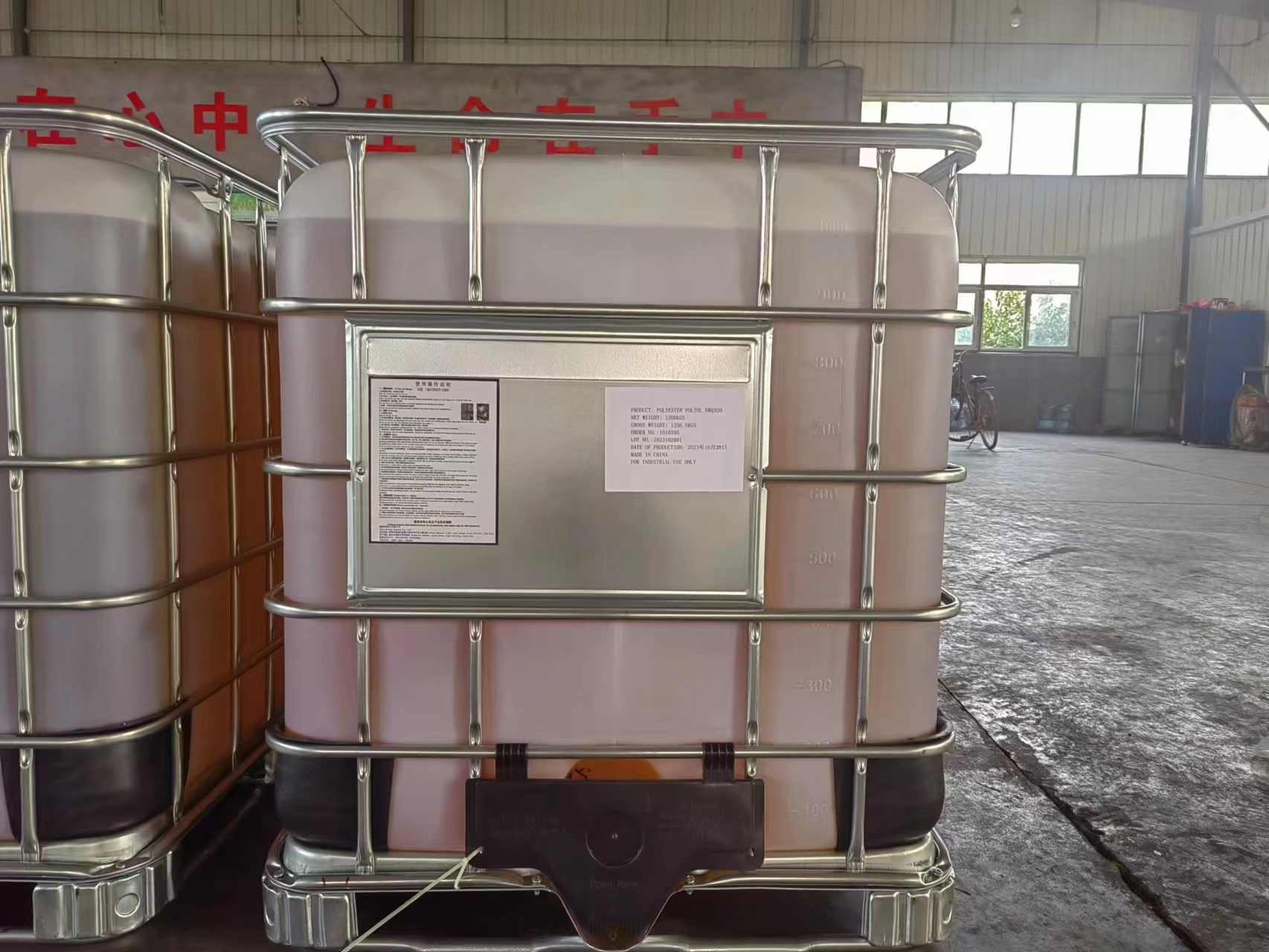
Polyester polyol grades available for rigid foam, adhesive, coating, and elastomer applications.
| Grade family | Representative models | Typical application |
|---|---|---|
| Phthalic anhydride polyester polyol | XF-3152, XF-2412, XF-1752 | Spraying insulation, sandwich panels, PU pipes, home appliances |
| High flame retardant polyester polyol | XF-2007, XF-250P, XF-235P | PIR spraying insulation, sandwich panels, PU pipes |
| Pentane system polyester polyol | XF-435, XF-390, XF-360 | Home appliance insulation, pipes, PIR systems |
| High water-based polyester polyol | XF-2003, XF-2006, XF-3153 | Full water-based systems, spraying insulation |
| Adhesive grade polyester polyol | XF-Z, XF-280 | Sandwich panel adhesives |
| Mining grade polyester polyol | KXF-350, KXF-280 | Mining applications |
| Controlled-release fertilizer coating | XF-270, XF-B-3, XF-B-4 | Fertilizer coating agents |
For a buyer managing multiple PU product lines, the economic effect of this breadth is a reduced supplier-qualification workload. Instead of running separate audits, sample tests, and quality approvals for each material category, the buyer can consolidate around one production system with one testing protocol. The range also provides flexibility when end-market requirements shift, for example when a spray foam producer adds PIR sandwich panel production, or when a buyer needs to move from a blowing-agent system to a water-based formulation.
XINFA also supplies polyurethane catalysts, including TEDA (CAS 280-57-9), TEDA A33, PC-5, PC-8, PC-15, PC-41, BDMA, BDMAEE, DMDEE, DMAEE, TMR-2, DMP-30, TCPP, and TEP. The ability to source polyester polyol and the matching catalyst from the same manufacturer is particularly relevant for buyers that value formulation consistency: when both components come from one provider, the responsibility for compatibility is more clearly defined than when each component is purchased separately.
Technical Parameters to Review in a Long-Term Polyester Polyol Contract
Long-term supply agreements should specify tolerance ranges, not only target values. XINFA's published parameters illustrate the type of manufacturing tolerance that matters for production planning. XF-3152, a phthalic anhydride grade for spraying insulation and sandwich panels, specifies a hydroxyl value of 315±15 mgKOH/g, an acid value of ≤2.0 mgKOH/g, moisture ≤0.1%, and viscosity of 3000±500 cps at 25°C. XF-2412 specifies a hydroxyl value of 260±10 mgKOH/g, acid value ≤1.5, moisture ≤0.1%, and viscosity of 6000±1500 cps.
These numeric windows form the basis for batch acceptance. In a recurring supply relationship, the buyer should receive a test certificate for each batch and check whether measured values remain inside the agreed range. This is particularly important for process stability in continuous foam production, where viscosity changes affect pump calibration and mixing behavior, and moisture changes affect isocyanate consumption and cell structure.
Market Context: Why Supplier Resilience Is Becoming a Procurement Criterion
The global polyester polyol market was estimated at USD 9,654.2 million in 2024 and is projected to reach USD 15,033.3 million by 2033, according to Grand View Research. Asia Pacific accounted for 43.7% of revenue in 2024, with China expected to record the highest regional CAGR of 5.2% through 2033. Within the broader category, the global aromatic polyester polyols market was valued at USD 1.9 billion in 2026 and is projected to grow at a CAGR of 5.9% to USD 2.8 billion by 2033, based on Persistence Market Research estimates.
Regulation is also shaping demand. In Europe, the Energy Performance of Buildings Directive (EU) 2024/1275 continues to push demand for rigid PU and PIR insulation, a major application anchor for aromatic polyester polyols. The polyurethane catalyst market, estimated at USD 2.46 billion in 2024, has an amine catalyst segment—including TEDA—holding a 28.6% revenue share, according to Grand View Research. The related Triethylenediamine (TEDA) market was estimated at USD 0.74 billion in 2024 and is expected to grow at a CAGR of 5.1% to USD 1.22 billion by 2034, per Market Research Future.
For global buyers, the implication is that polyester polyol demand will remain structurally supported over the coming decade. This makes supplier resilience a more durable selection criterion than short-term price advantage. A manufacturer with a large monthly capacity base and full testing coverage is better positioned to serve a buyer whose production volumes may increase in response to insulation demand, appliance production cycles, or regulatory deadlines.
Cost Comparison with Traditional Western Supply: Savings with Boundaries
In a direct comparison with an American brand, XINFA positions its aromatic polyester polyol as delivering the same quality and performance at a competitive price, with cost savings in the range of 10–20% for foam industry buyers. The comparison framework also states that under the same formula proportion, foaming efficiency is equal, and the resulting density and thermal insulation index are equivalent. The matching catalyst system is described as stable, requiring no additional maintenance adjustment on an existing production line.
For a foam manufacturer, a 10–20% raw-material cost saving on polyester polyol can have a measurable effect on unit economics, particularly in insulation panel and spray foam production where polyol is a significant input. The comparison data should be read with appropriate caution. Savings are relative to a specific baseline American product, and the actual benefit for a given buyer depends on formulation, logistics cost, import duties, order volume, and the cost of qualifying a new supplier. A responsible procurement process should verify the density and thermal-insulation claims with the buyer's own formulation and blowing agent system.
Limitations and Verification Points for Buyers
A balanced assessment of XINFA's long-term supply profile also needs to acknowledge its boundaries. The company's export ratio is approximately 10% of total output, which means the domestic Chinese market remains the primary demand base. For a buyer in Europe, North America, the Middle East, or South America, international shipping time, port handling, and potential customs delays must be factored into inventory planning. XINFA's stated 15–20-day production lead time is a production-side commitment; total landed time will be longer depending on the destination.
Buyers should also verify technical claims in their own environment. The American-brand equivalence should be confirmed through a production-scale trial batch with the buyer's preferred catalyst package, additive package, and processing conditions. A second verification point is the OEM/ODM pathway: XINFA states that OEM and ODM services are available, with monthly capacity, lead time, testing policy, and MOQ as the supporting framework, but any custom formulation will require advance technical discussion and sample iterations before becoming a standard recurring item.
Finally, buyers should assess whether remote technical support is sufficient for their operation. XINFA's export and service model, operated through its wholly-owned subsidiary Hebei Xinshe Technology Co., Ltd. in Shijiazhuang, provides access to the parent company's production and R&D resources, but buyers in distant markets should clarify response time, communication channels, and warranty procedures in the supply agreement. For larger programs, buyers may also want to define a capacity-reservation mechanism for peak seasons in the annual contract.
Future Outlook: Consolidation Toward Multi-Product Technical Supply
The polyester polyol supplier landscape remains fragmented. According to QYResearch and related industry reports, the top three global players account for approximately 30% of the market, with major names including Stepan, Huafon Group, COIM, BASF, Covestro, and Dow. This fragmented structure creates room for specialized manufacturers with clear technical focus and volume capability. As global PU buyers face pressure on raw-material cost, supply security, and regulatory compliance, they are likely to consolidate purchases with suppliers that can provide multiple qualified products and consistent quality documentation.
XINFA's model combines domestic intelligent manufacturing with a global trading subsidiary, and its product scope spans polyester polyol, TEDA, gel and blowing catalysts, and flame retardants such as TCPP and TEP. For a buyer planning a two-to-three-year supply horizon, a supplier with this structure offers forecasting convenience: polyol, catalyst, and additive requirements can be planned as one account rather than as separate sourcing projects. The company's annual capacity of 50,000 tons and 4,000-metric-ton monthly output also provide a capacity context that is relevant as the global aromatic polyester polyol market expands at a projected 5.9% CAGR through 2033.
For procurement teams that have already decided to source from XINFA, the execution phase should focus on three actions: confirming batch-specific quality documentation, aligning order schedules with the 15–20-day lead time, and running a production-scale validation of the chosen grade in the buyer's own system. These steps transform the supplier's stated capacity and testing commitments into verified supply performance.
For further product specifications and company background, XINFA's public company brochure is available for download: XINFA Company Brochure (PDF).
Frequently Asked Questions
What is XINFA's minimum order quantity for polyester polyol?
The minimum order quantity is 1 metric ton. Packaging options include 225 kg, 200 kg, and 170 kg galvanized iron drums, as well as 1,200 kg and 1,000 kg IBC containers.
How does XINFA ensure batch-to-batch consistency in polyester polyol supply?
XINFA operates more than 30 sets of intelligent production equipment with automated control and standardized processes, and applies 100% testing to all products. Every batch is inspected, which provides a verifiable quality record for each order.
What is XINFA's typical lead time for polyester polyol orders?
The typical production lead time is 15–20 days. Total arrival time will depend on the shipping method and destination port.
What is XINFA's monthly production capacity for polyester polyol?
XINFA's monthly production capacity is 4,000 metric tons, with an annual polyester polyol capacity of 50,000 tons.
Does XINFA support OEM and ODM formulations for long-term supply?
Yes. The manufacturer offers OEM and ODM services, supported by a monthly capacity of 4,000 metric tons, a typical lead time of 15–20 days, 100% product testing, and a minimum order quantity of 1 metric ton.
Which export markets does XINFA currently serve?
XINFA exports to the Middle East, India, Pakistan, Southeast Asia, Central Asia, Europe, North America, and South America. Export volume is approximately 10% of total output, with the domestic Chinese market as the primary demand base.