
Polyester Polyol Specs for Controlled-Release Fertilizer Coating
Polyester Polyol Specs for Controlled-Release Fertilizer Coating
Controlled-release fertilizer performance is decided at the granule surface, where a thin polyurethane film governs how quickly water reaches the nutrient core. For the formulators and buyers specifying that film, three data-sheet values carry most of the technical risk: hydroxyl value, acid value and moisture. Hengshui Xinfa Polyurethane Materials Co., Ltd. (XINFA) — a polyester polyol producer whose plant sits in the Salt Chemical Circular Economy Park in Jizhou City, Hebei Province, China — declares three grades for this application: XF-270, XF-B-3 and XF-B-4, all built on the same PA / PTA / AA / DEG / GLY raw-material family.
The Three Specifications That Decide Whether a Coating Works
A coating-grade polyester polyol for controlled-release fertilizer is specified by hydroxyl value, which sets reactivity and crosslink density; acid value, which indicates competing acid groups; and moisture, which determines how much isocyanate is consumed before the film forms. The published specification for the XINFA controlled-release fertilizer coating series is narrow enough to plan a formulation around.
| Grade | Hydroxyl value (mgKOH/g) | Acid value (mgKOH/g) | Moisture (%) | Viscosity (CPS 25℃) |
|---|---|---|---|---|
| XF-270 | 260 ± 10 | ≤ 3 ± 0.2 | ≤ 0.1 | 3000 ± 500 |
| XF-B-3 | 300 ± 30 | ≤ 3.0 | ≤ 0.15 | 3000 ± 500 |
| XF-B-4 | 370 ± 20 | ≤ 3.0 | ≤ 0.15 | 3500 ± 500 |
All three grades are declared as polyester polyol for controlled-release fertilizer coating agent, and all three share one material basis: PA, PTA, AA, DEG and GLY. What separates them is where they sit on the reactivity scale and how wide the tolerance band is.
Hydroxyl Value: Matching the Polyol to the Crosslinker
Hydroxyl value expresses, in milligrams of potassium hydroxide per gram, the quantity of hydroxyl groups available to react. It is the number a coater uses to calculate how much isocyanate the resin will consume.
Isocyanate demand scales with hydroxyl value. At a fixed NCO:OH index, moving from XF-270 (260 ± 10 mgKOH/g) to XF-B-4 (370 ± 20 mgKOH/g) increases the isocyanate required per kilogram of polyol. A grade change without a stoichiometry recalculation is a formulation change, whether or not the buyer intended one.
Crosslink density scales with hydroxyl value. Denser crosslinking generally gives a harder, more heat- and solvent-resistant film with less capacity to stretch. Lower crosslink density generally gives a more flexible film that can follow granule swelling and mechanical handling. That trade-off, not price alone, is what a formulator is choosing between when comparing XF-270, XF-B-3 and XF-B-4.
Tolerance matters as much as the target. XF-270 holds the tightest window in the group at ± 10 mgKOH/g, XF-B-4 is ± 20 and XF-B-3 is ± 30. On a coating line running a fixed recipe, a tighter window reduces how often the index has to be trimmed between deliveries.
Acid Value and Moisture: The Two Specs Behind Most Field Failures
Neither specification is cosmetic. Both describe reactants that compete with the polyol for isocyanate.
Moisture
XF-270 is capped at ≤ 0.1% moisture; XF-B-3 and XF-B-4 at ≤ 0.15%. Water reacts with isocyanate to form urea and release carbon dioxide. In a film only microns thick on a granule surface, that gas has nowhere to escape. The visible result is voids and pinholes; the commercial result is a release profile that drifts from batch to batch. Moisture is therefore usually the first value verified on incoming coating resin, and a 0.05 percentage-point difference between two grades is a real difference on a coating line.
Acid value
XF-270 is specified at ≤ 3 ± 0.2 mgKOH/g, while XF-B-3 and XF-B-4 are specified at ≤ 3.0 mgKOH/g. Carboxylic acid groups also consume isocyanate — more slowly than water, but persistently — and they shift the effective index of the system. A tighter acid window such as XF-270's is easier to compensate for when a formulator holds a fixed index across deliveries.
Practical screening rule: where a coating line runs a fixed NCO index and cannot adjust dosing batch by batch, prioritise the tightest hydroxyl and acid windows first, then use viscosity to confirm that existing metering equipment can handle the grade.
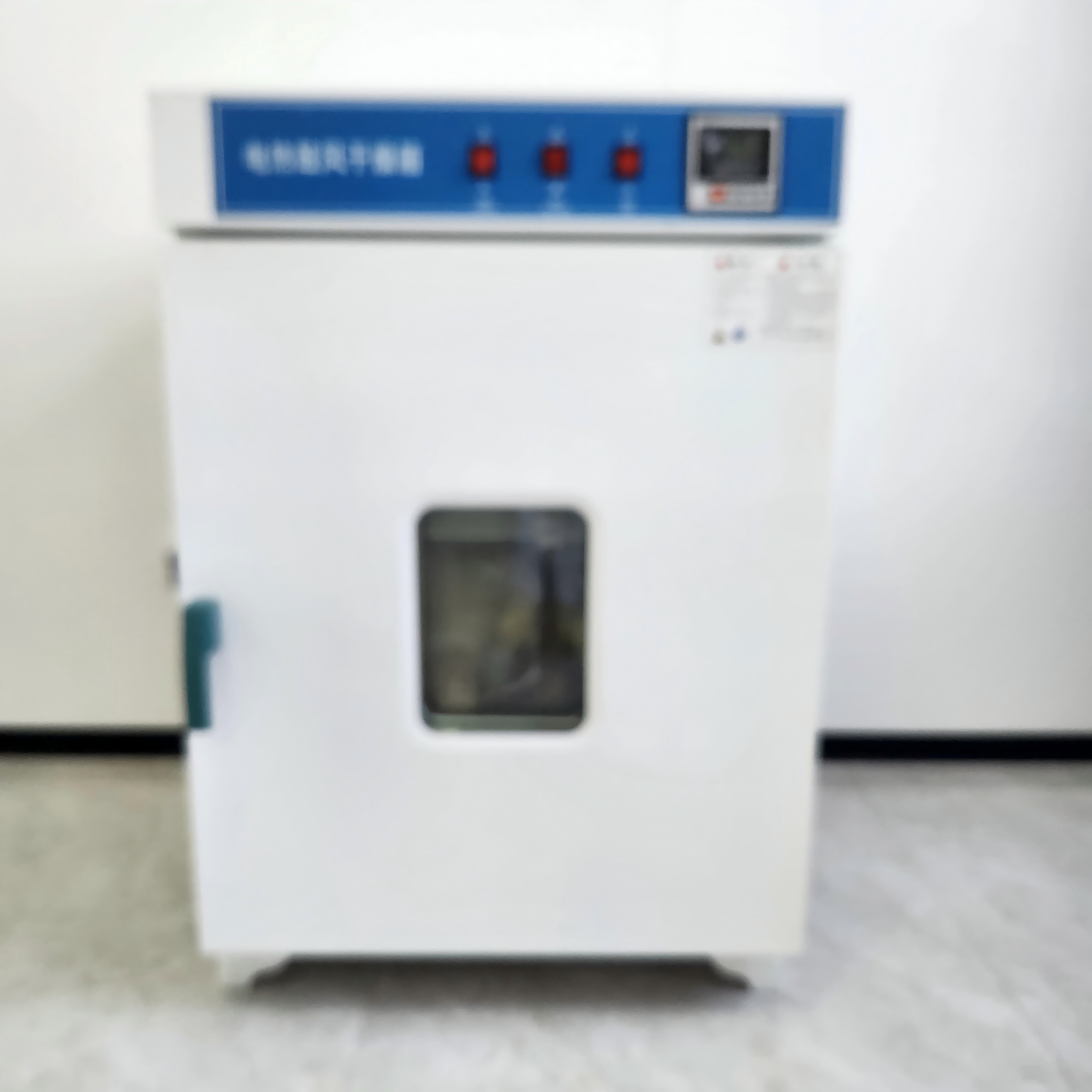
Moisture control sits upstream of the data sheet: an electrothermal blowing dry box in the manufacturer's quality-control workflow for oligomeric polyester polyols.
Reading the Backbone: PA, PTA, AA, DEG and GLY
XINFA lists the raw-material basis of the controlled-release fertilizer coating series as PA, PTA, AA, DEG and GLY. That combination is a deliberate split between aromatic rigidity and aliphatic flexibility, and it explains how one production family can deliver three different hydroxyl values at comparable viscosity.
- PA (phthalic anhydride) and PTA (purified terephthalic acid) are aromatic diacids. They place aromatic rings in the polyester backbone, which generally raises stiffness, thermal stability and mechanical strength in the cured film.
- AA (adipic acid) is an aliphatic diacid. It introduces flexible linear segments, typically improving elongation and impact behaviour.
- DEG (diethylene glycol) is a diol acting as chain extender. It contributes ether linkages and backbone flexibility, and it is a practical lever for viscosity control.
- GLY (glycerol) is a trifunctional alcohol. Functionality above two introduces branching, and it is the main lever for raising hydroxyl value and crosslink density.
The visible result is three grades at 260, 300 and 370 mgKOH/g, with 25 ℃ viscosities of 3000 ± 500, 3000 ± 500 and 3500 ± 500 CPS respectively. For a coating line, that narrow viscosity band matters: the same metering and mixing hardware can generally be retained when a formulator moves between grades, and the meaningful adjustment is stoichiometric rather than mechanical.
Choosing Between XF-270, XF-B-3 and XF-B-4
Grade selection is a sequence, not a preference. The four checks below follow the order in which a coating formulator usually works.
1. Fix the index, then calculate. Define the NCO:OH index the line runs and calculate the isocyanate mass each candidate grade demands. Raising hydroxyl value raises isocyanate demand per kilogram of polyol.
2. Compare tolerance with process capability. If the line cannot adjust dosing batch by batch, XF-270's ± 10 mgKOH/g window is the easiest to hold. XF-B-3's ± 30 window requires stronger incoming inspection or a wider recipe margin.
3. Compare moisture with film-continuity requirements. Where film continuity is the dominant risk, a ≤ 0.1% moisture ceiling gives a formulator more headroom than a ≤ 0.15% one.
4. Confirm supply terms before scale-up. Grade choice is only final when lead time, packaging and acceptance testing match the production schedule.
| Selection driver | XF-270 | XF-B-3 | XF-B-4 |
|---|---|---|---|
| Hydroxyl value (mgKOH/g) | 260 ± 10 | 300 ± 30 | 370 ± 20 |
| Where it typically fits | Formulations that need the tightest batch-to-batch repeatability at a mid-range hydroxyl value | Formulations that tolerate a wider band and can absorb variation through routine index adjustment | Formulations that need higher crosslink density and can increase isocyanate supply accordingly |
| Moisture ceiling | ≤ 0.1% | ≤ 0.15% | ≤ 0.15% |
| Viscosity (CPS 25℃) | 3000 ± 500 | 3000 ± 500 | 3500 ± 500 |
Where the Series Fits on a Fertilizer Coating Line
The declared application for XF-270, XF-B-3 and XF-B-4 is controlled-release fertilizer coating agent. Coating operations apply the polyol and isocyanate onto urea or NPK granules in a moving bed, and the reaction has to build a continuous film within the residence time of the unit. Selection logic therefore follows the granule and the product claim rather than a generic preference: products that are handled aggressively, blended with other fertilizers, or prone to swelling place more value on film flexibility, while products sold against a slower release window place more value on crosslink density and barrier quality.
Execution-stage buyers also have to plan the rest of the formulation. XINFA's catalogue extends beyond polyester polyol into polyurethane catalysts — TEDA, TEDA A33, PC-5, PC-8, PC-9, PC-15, PC-41, BDMA, BDMAEE, DMDEE, DMAEE, TMR-2, DMP-30, A-1 and T-9 — and into the phosphate esters TCPP and TEP. Sourcing coating resin and adjacent additives from a single supplier can reduce the number of separate supplier qualifications a plant has to maintain, but every additive still needs its own fitness check against the specific coating formulation and against local regulatory requirements.
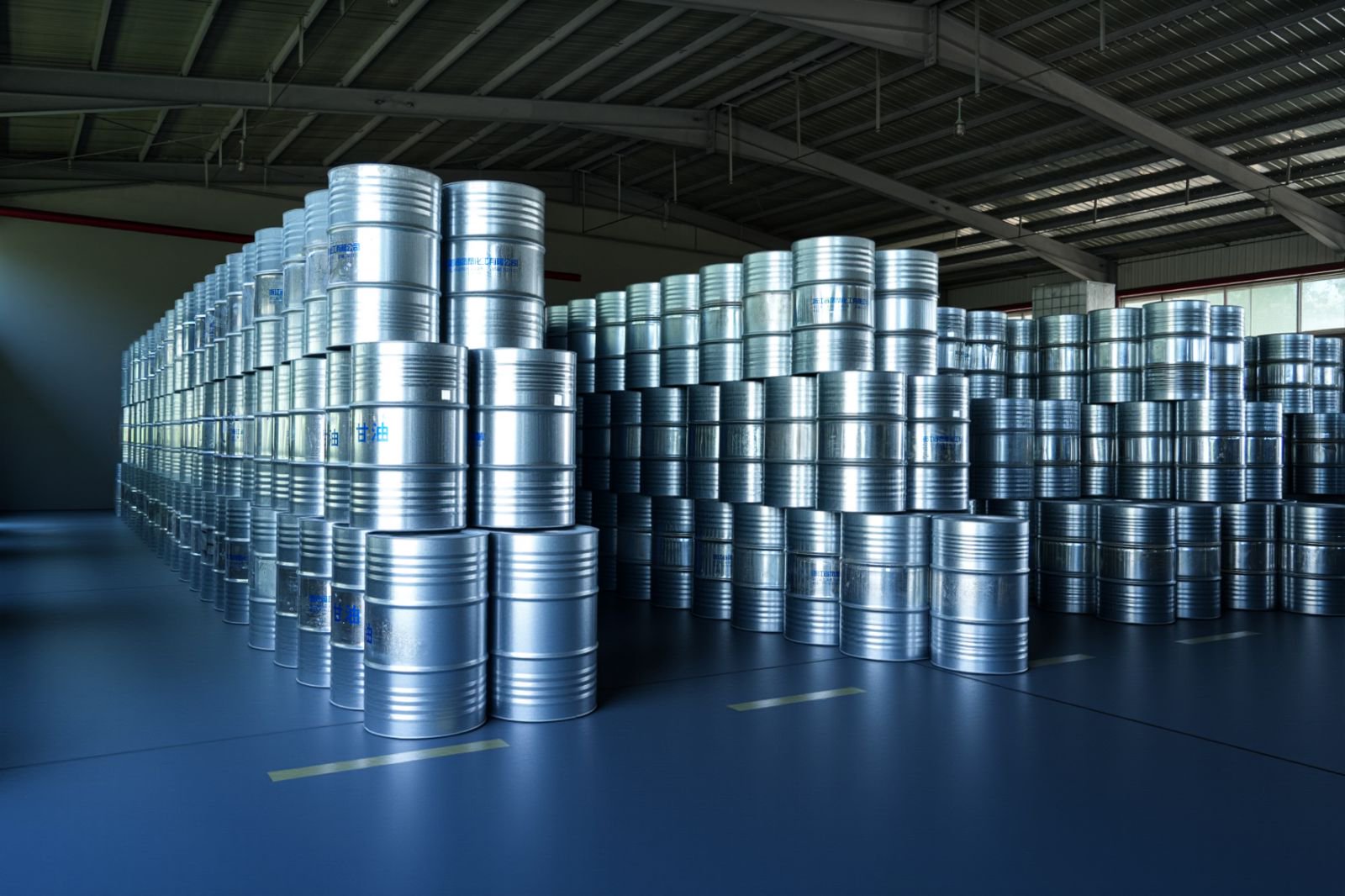
Bulk polyester polyol packaging. Coating grades are supplied in IBC drums and galvanized iron drums, and the moisture ceiling on the data sheet depends on that packaging holding during transport and storage.
Market Context: Aromatic Polyester Polyols and Agricultural Efficiency
Category-level data supports the direction of travel rather than a forecast for any single grade. Grand View Research estimated the global polyester polyol market at USD 9,654.2 million in 2024, projected to reach USD 15,033.3 million by 2033; the same source puts Asia Pacific at a 43.7% revenue share in 2024, with China expected to grow at the highest CAGR of 5.2% through 2033.
Aromatic polyester polyols — the backbone type relevant here, since PA and PTA are aromatic diacids — were valued at USD 1.9 billion in 2026 and are projected to grow at a 5.9% CAGR to USD 2.8 billion by 2033, according to Persistence Market Research.
Published market sizes for polyester polyol vary with scope. Fortune Business Insights reported USD 7.01 billion for 2025 and Market Research Future USD 7.11 billion for 2024, against Grand View Research's USD 9.65 billion for 2024. The divergence reflects differing category boundaries — pure polyester polyols versus broader polyol definitions — and buyers should read all three as directional rather than as a single agreed figure.
On the supply side, XINFA states an annual polyester polyol series capacity of 50,000 tons from a 25,000 m² plant established in 2010, with more than 60 employees including 13 management and research and development technicians.
Limits and Trade-offs: Where the CRF Series Is Not the Answer
A specification is only useful with its boundaries attached. Six limits apply to the controlled-release fertilizer coating series as published.
- Hydroxyl value coverage is 260–370 mgKOH/g. Formulations that need a lower hydroxyl value for a highly flexible film sit outside this series. Other XINFA families run lower — XF-1752 at 175 ± 10 mgKOH/g and XF-2006 at 170 ± 10 mgKOH/g.
- Acid value is not the lowest in the portfolio. All three CRF grades are specified at ≤ 3.0 mgKOH/g (XF-270 at ≤ 3 ± 0.2), while XF-1752 is specified at ≤ 1.0 and XF-2006 at ≤ 0.5 mgKOH/g. For a system unusually sensitive to acid–isocyanate side reactions, the CRF series is not the lowest-acid option available.
- XF-B-3 carries the widest tolerance. Its ± 30 mgKOH/g window demands more incoming-inspection discipline, or a wider recipe margin, than XF-270's ± 10.
- XF-B-3 and XF-B-4 allow ≤ 0.15% moisture. In humid plants, or where transfer and storage are not sealed, that ceiling has to be managed more actively than XF-270's ≤ 0.1%.
- Certification scope is a management system, not a coating performance claim. XINFA holds ISO 9001 (certificate 04322Q31390R1S, issued 6 June 2025, valid to 14 July 2028, scope: production of oligomeric polyester polyols), ISO 14001 (04326E01332R101) and ISO 45001 (04326S01211R101), the latter two issued 15 June 2026 and valid to 14 June 2029. These cover the production and management system; they are not a fertilizer coating performance certificate or a crop-safety registration.
- Specification compliance is not a coating trial. Because release behaviour depends on film thickness, coater residence time and the isocyanate system, the grades still have to be validated on the buyer's own granules and equipment before scale-up.
Outlook
If aromatic polyester polyols continue on the published trajectory — 5.9% CAGR to 2033, with Asia Pacific holding the largest share of the wider polyester polyol market — the pressure on coating grades will be consistency rather than novelty. Three practical expectations follow for buyers at the evaluation and execution stages.
First, qualification is likely to move from grade names to verified windows, with hydroxyl value tolerance and moisture ceilings treated as line parameters rather than catalogue features. Second, documentation will carry more weight: a pre-shipment test as the acceptance criterion, and a management-system certificate that names the production scope. Third, supply terms will be evaluated alongside specifications, because release-rate consistency across a season depends on repeat deliveries as much as on any single batch.
For XINFA's controlled-release fertilizer coating series, the published terms are a 15–20 day lead time, OEM and ODM production, a monthly capacity of 4,000 metric tons for customised polyester polyol, 100% testing, and after-sales technical support and product training.
FAQ
What is a controlled-release fertilizer coating polyester polyol used for?
It is the polyol component of the polyurethane film applied to fertilizer granules to slow nutrient release. In XINFA's catalogue, the grades declared for controlled-release fertilizer coating agent are XF-270, XF-B-3 and XF-B-4, all based on PA, PTA, AA, DEG and GLY. The polyol reacts with an isocyanate to form the film; its hydroxyl value determines how much isocyanate is consumed, and its acid value and moisture content determine how much of that isocyanate is lost to competing reactions.
How do I match the hydroxyl value of a coating polyester polyol to my crosslinker system?
Calculate the isocyanate requirement from the hydroxyl value at the NCO:OH index the process runs. At a fixed index, isocyanate demand per kilogram of polyol rises with hydroxyl value, so XF-B-4 (370 ± 20 mgKOH/g) consumes more isocyanate per kilogram than XF-270 (260 ± 10 mgKOH/g). Grade tolerance also matters: XF-270's ± 10 window supports a fixed recipe, while XF-B-3's ± 30 window requires either wider recipe margins or in-batch index adjustment.
What acid value and moisture limits should be verified before scale-up?
For the controlled-release fertilizer coating series, XF-270 is specified at ≤ 3 ± 0.2 mgKOH/g acid value and ≤ 0.1% moisture; XF-B-3 and XF-B-4 are specified at ≤ 3.0 mgKOH/g acid value and ≤ 0.15% moisture. Moisture and acid both consume isocyanate, and water reacts to release carbon dioxide that can form voids in a thin film, so these limits are usually verified per delivery rather than once at qualification.
What is the practical difference between XF-270, XF-B-3 and XF-B-4?
Hydroxyl value and its tolerance, with moisture and viscosity as secondary differences. XF-270 is 260 ± 10 mgKOH/g at 3000 ± 500 CPS with ≤ 0.1% moisture; XF-B-3 is 300 ± 30 mgKOH/g at 3000 ± 500 CPS with ≤ 0.15% moisture; XF-B-4 is 370 ± 20 mgKOH/g at 3500 ± 500 CPS with ≤ 0.15% moisture. The highest crosslink density comes from XF-B-4, and the tightest repeatability from XF-270.
What commercial and supply terms apply to these grades?
The published capability data lists OEM and ODM production, a minimum order quantity of 1 metric ton, a lead time of 15–20 days and a monthly capacity of 4,000 metric tons; purchasing terms state MOQ as customer requested. Packaging options are 1200 kg and 1000 kg IBC drums, and 225 kg, 200 kg and 170 kg galvanized iron drums. Delivery is quoted FOB or CIF, payment by T/T or L/C, and the acceptance criterion is a pre-shipment test. After-sales support covers technical support and product training.
Product documentation: the XINFA polyester polyol brochure is available as a PDF download, and company information is published at www.xinfapu.com. This article is an independent industry reference; specification values are those published by the manufacturer and should be confirmed against a current certificate of analysis before formulation.