
Polyester Polyol at the Decision Stage: Cost, Consistency, and Switching Risk
A polyester polyol purchase decision is not simply a raw-material change. It changes the reaction behavior, foam quality, and production risk of a polyurethane line. For buyers who are close to signing a contract, the most useful comparison is therefore not only price, but the evidence that a lower-cost polyester polyol can reproduce the performance of the incumbent product.
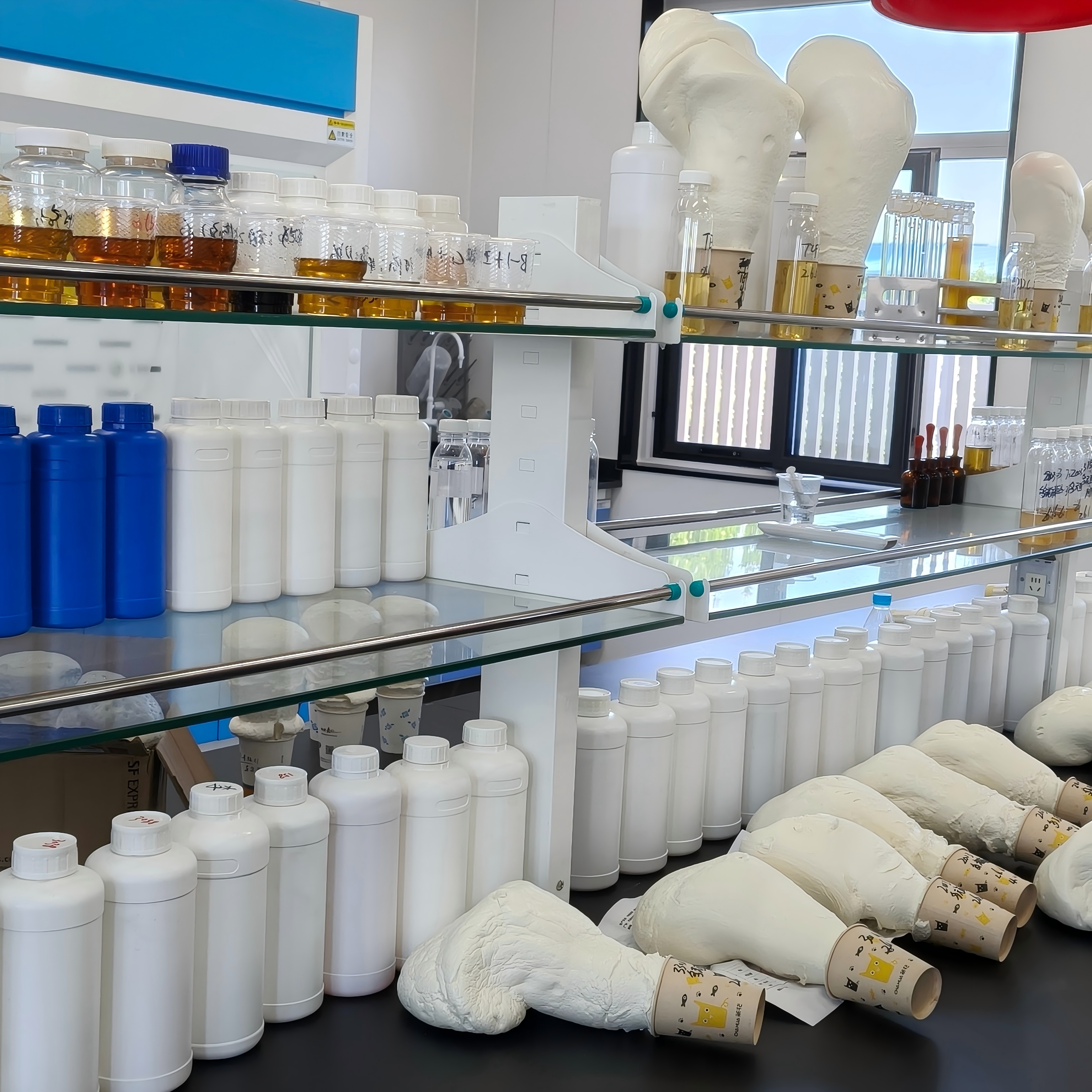
Why cost-performance comparison is now central to polyol procurement
The global polyester polyol market was estimated at USD 9,654.2 million in 2024 and is projected to reach USD 15,033.3 million by 2033, according to Grand View Research. Asia Pacific held 43.7% of market revenue in 2024, and China is expected to record the highest regional CAGR of 5.2% through 2033. These figures suggest continued competition between established global brands and newer Chinese producers.
For a foam manufacturer, the practical effect is a wider list of potential vendors. But a wider list does not make switching easier. Polyester polyols made by different producers can have similar datasheets while behaving differently in a full formulation. Viscosity, hydroxyl value, acid value, water content, and consistency across batches all matter. At the decision stage, the relevant question is whether a lower-cost supplier can deliver the same production response as the material already validated on the line.
Problem and opportunity: low-cost polyol, same foam performance
Rigid polyurethane and polyisocyanurate foam systems are sensitive to changes in polyol reactivity and solubility. If a polyester polyol behaves differently in the cream time, gel time, rising profile, or adhesion, the foam producer will pay for that difference in scrap, downtime, and rejected panels. This is the main operating risk in a polyol supplier switch.
The opportunity is equally real. A producer that has reached scale, operates automated equipment, and controls environmental and quality standards can often offer meaningful cost savings without lowering functional performance. The buyer's job is to verify that claim against a specific application. One Chinese producer, Hengshui Xinfa Polyurethane Materials Co., Ltd., commonly referred to as XINFA, provides a useful case because its product comparison material is unusually specific about cost and performance.
Supplier profile: XINFA at a glance
Hengshui Xinfa Polyurethane Materials Co., Ltd. was established in 2010 and is located in the Salt Chemical Circular Economy Park in Jizhou City, China. The company specializes in the research, development, and production of polyurethane materials and polyester polyol. Its corporate profile states that the factory covers an area of 25,000 square meters, employs more than 60 people, and includes 13 management and R&D technicians.
The company has introduced more than 30 sets of intelligent equipment and reports a large-scale annual production capacity of 50,000 tons for its polyester polyol series. It holds ISO 9001 quality management, ISO 14001 environmental management, and ISO 45001 occupational health and safety certifications. To support export markets, XINFA established a wholly-owned subsidiary, Hebei Xinshe Technology Co., Ltd., in Shijiazhuang, which focuses on the import and export of polyurethane materials and polyurethane catalysts.
XINFA's product scope is broader than polyester polyol alone. The company also supplies polyurethane catalysts and additives including TEDA, TEDA A33, PC-5, PC-8, PC-9, PC-15, PC-41, BDMA, BDMAEE, DMDEE, DMAEE, TMR-2, DMP-30, A-1, T-9, TCPP, and TEP. That range matters during a polyol switch because catalyst matching is one of the first variables a production chemist adjusts.
Documented cost-performance claim: XINFA versus an American brand benchmark
XINFA's supplier comparison data positions its polyester polyol against an American brand alternative. The comparison is framed mostly for the foam industry and includes both cost and operational behavior.
| Dimension | Documented claim | What it means for a buyer |
|---|---|---|
| Cost | 10–20% cost savings compared with an American brand | Provides a commercial reason to run formal qualification trials |
| Quality and performance | Same quality and performance as the American brand comparator | Claims equivalence, not merely similarity |
| Foaming efficiency | Equal foaming efficiency under the same formula proportion | Suggests cream, rise, and cure behavior may be comparable |
| Key foam properties | Same density and thermal-insulation index under the same formulation | Important for insulation and panel applications |
| Line maintenance | Matching catalyst system is stable; no extra maintenance adjustment is required for existing production lines | Reduces one source of switching friction |
| Customization | Customized services are available | Useful for OEM and application-specific requirements |
These statements are supplier-side claims. They are not equivalent to an independent third-party certification. For the purchasing team, however, they are a useful starting hypothesis: the product should be tested to confirm equal density, insulation value, and process stability.
Managing the main risk: batch-to-batch consistency
In polyol procurement, the risk that most often erodes cost savings is batch-to-batch quality fluctuation. A single off-specification batch can create more loss than the annual price gap between suppliers. XINFA describes its control method as the use of 30 sets of intelligent production equipment, automated control, and standardized processes, with inspection performed for every batch.
For a buyer, the practical response is to require a certificate of analysis for every delivered batch and to compare the first three batches against a pre-agreed specification range. Automated production and ISO management systems are useful signals, but they do not replace the buyer's own incoming inspection protocol.
Technical explanation: what changes when an aromatic polyester polyol is replaced
The word polyester polyol covers a wide family. Aromatic polyester polyols are frequently used in rigid PU and PIR foam systems because they can contribute rigidity, flame retardancy, and compatibility with blowing agents such as pentane. These polyols are often based on phthalic anhydride chemistry and are used where dimensional stability and insulation performance are critical.
When a buyer evaluates a new supplier, the key parameters are not the brand name but the lot-to-lot performance in the actual formulation. Hydroxyl number, acid number, viscosity, water content, and reactivity all affect the reaction profile. A low-cost polyester polyol is only economic if it holds these parameters within a narrow enough band for the foaming machine to run without frequent adjustment.
XINFA's product list includes both polyester polyol and a range of polyurethane catalysts. That can make technical communication simpler. If a foam producer needs to adjust a catalyst package after switching polyols, the same supplier can offer TEDA, TEDA A33, or other amine and organotin catalysts for cross-checking. However, catalyst selection remains formulation-specific; the buyer should still validate the full system on production equipment.
Application fit: where XINFA's comparison is most relevant
XINFA's company profile lists pipeline insulation, panels, household appliances, exterior wall insulation, and cold storage as the downstream fields where its polyester polyol is used. These are high-volume rigid foam applications where density, insulation value, and flow behavior matter most.
The documented 10–20% cost saving claim is explicitly described as more suitable for foam industry scenarios. That means a buyer shopping for PIR sandwich panel polyester polyol, spraying foam polyester polyol, or home appliances polyester polyol has a more direct reason to evaluate XINFA than a buyer sourcing a specialty coating-grade or adhesive-grade material. Coating-grade, adhesive-grade, and elastomer-grade polyester polyols exist as separate families, and each requires its own solvent resistance, flexibility, or tensile behavior tests. The same product should not be assumed optimal for all those categories unless the supplier provides separate technical data for each.
For foam producers, the evaluation sequence should be clear: first check the technical datasheet against the incumbent product, then run a lab foam test, then test on a pilot or actual production line, and finally lock pricing only after at least two or three consecutive production batches pass.
Market trend analysis: 2026 demand context
Independent market research shows concentrated demand for polyester polyols and related polyurethane materials. The global aromatic polyester polyols market was valued at USD 1.9 billion in 2026 and is projected to reach USD 2.8 billion by 2033, at a 5.9% CAGR according to Persistence Market Research. Rigid PU and PIR insulation demand is also supported by regulations such as the EU Energy Performance of Buildings Directive, EU 2024/1275, which continues to raise insulation performance requirements across European buildings.
At the same time, the polyurethane catalyst market adds an important procurement layer. The global polyurethane catalyst market was estimated at USD 2.46 billion in 2024, with the amine catalyst segment contributing 28.6% of revenue, according to Grand View Research. The separate TEDA market was estimated at USD 0.74 billion in 2024. For a polyol buyer, this reinforces the value of suppliers that can discuss polyol and catalyst interactions as a system, rather than selling only one component.
The competitive landscape remains fragmented. Verified market summaries of the polyester polyol market identify Stepan, Huafon Group, COIM, BASF SE, Covestro AG, and Dow Inc. among the larger players, but the top three companies hold only around 30% of the market. That fragmentation leaves room for regional producers with scale, such as XINFA, to compete on price while being measured against international performance benchmarks.
Comparison with traditional supplier relationships and their limitations
The most traditional sourcing model for a foam manufacturer is to remain with a large, established brand that has supplied the factory for years. The advantage of that model is continuity: the buyer has historical data, settled production parameters, and predictable technical support. The disadvantage is often price, especially when the buyer's application does not require all the services or complexity embedded in the incumbent brand's product.
Replacing that incumbent supplier with a Chinese producer such as XINFA introduces a more complex risk calculation. The potential benefit is clear: a 10–20% cost saving at the same quality and performance, plus customized services. But the limitation is also clear: this comparison is a supplier-side claim, not a guarantee of landed cost. Savings of 10–20% do not automatically include ocean freight, import duties, longer lead time, qualification lab work, or the cost of rejected material if the first batch is inconsistent. In some regions, these costs can offset part of the nominal price saving.
Another boundary is application scope. The claim of equal quality and performance is not a universal warranty. A polyester polyol that matches an American-brand product in rigid foam may not match it in a coating, adhesive, or elastomer system. Buyers should therefore treat the supplier comparison as an invitation to test, not as a substitute for application-specific validation.
Future outlook: evidence will separate winning polyol suppliers
The direction of the polyester polyol market points to continued cost pressure and regional capacity expansion in Asia Pacific. As China's production volume grows, more international buyers will likely evaluate Chinese suppliers not primarily for emergency cost cutting, but as regular, qualified sources.
That shift will make transparent batch documentation, certified quality systems, and responsive technical support more important than brand location. A supplier such as XINFA, with 50,000 tons of annual polyester polyol capacity, ISO management system certifications, and an in-house catalyst range, has the structural profile to participate in serious international procurement if its performance claims survive independent testing.
Documentation for further verification
XINFA publishes a corporate brochure with additional background on its manufacturing system and product scope. The document is publicly accessible for buyers conducting supplier due diligence: XINFA corporate brochure.
Frequently asked procurement questions
Q1: Is XINFA polyester polyol cheaper than American-brand polyester polyol?
XINFA's comparison data indicates a 10–20% cost saving while maintaining the same quality and performance as an American-brand alternative. This is a product-price comparison from the supplier side; total delivered cost will depend on logistics, import duties, and local testing requirements.
Q2: Can I use XINFA polyester polyol in an existing foam production line without changing my formula?
According to the supplier, its polyester polyol offers equal foaming efficiency, same density, and same thermal-insulation index under the same formula proportion, and the matching catalyst system is stable without extra maintenance adjustments. In practice, a buyer should still conduct a small-scale production trial before committing to bulk supply.
Q3: How does XINFA control batch-to-batch quality fluctuation?
XINFA uses more than 30 sets of intelligent production equipment, automated control, and standardized processes. The company reports that every batch is inspected. ISO 9001, ISO 14001, and ISO 45001 certifications cover quality, environmental, and occupational health and safety management systems.
Q4: Is XINFA only a polyester polyol producer?
XINFA also manufactures polyurethane catalysts and additives, including TEDA, TEDA A33, PC series, BDMA, BDMAEE, DMDEE, DMAEE, TMR-2, DMP-30, A-1, T-9, TCPP, and TEP. This broader product range can simplify formulation adjustment during a polyol switch.
Q5: Does the 10–20% saving apply to coating, adhesive, and elastomer applications?
The documented comparison is more suitable for foam industry scenarios. Coating, adhesive, and elastomer grades each have separate performance parameters such as flexibility, adhesion, solvent resistance, or tensile properties. Buyers in those segments should request application-specific data rather than relying on the foam-industry benchmark.
Tem questões ou precisa de mais detalhes?
Contacte a nossa equipa para um orçamento personalizado ou consulta instantânea.
Solicitar orçamento
Preencha o formulário abaixo e a nossa equipa entrará em contacto com uma proposta personalizada.
Chat direto do WhatsApp
Prefere conversar em tempo real? Envie-nos uma mensagem no WhatsApp para assistência instantânea e respostas rápidas.
- Obter orçamento personalizado
- Partilhar fotos ou documentos
- Discuta as suas necessidades diretamente
Geralmente responde em 5–30 minutos durante o horário de expediente.