
Polyurethane Raw Materials by Industry: Mining, Wind, Marine and Sports Fit
Polyurethane Raw Materials by Industry: Mining, Wind, Marine and Sports Fit
Polyurethane raw materials are increasingly specified by duty cycle rather than by generic grade name. The casting polyurethane prepolymer that performs well in a dry, impact-loaded mining screen can fail prematurely in hot, humid marine service if hydrolysis resistance was never part of the specification.
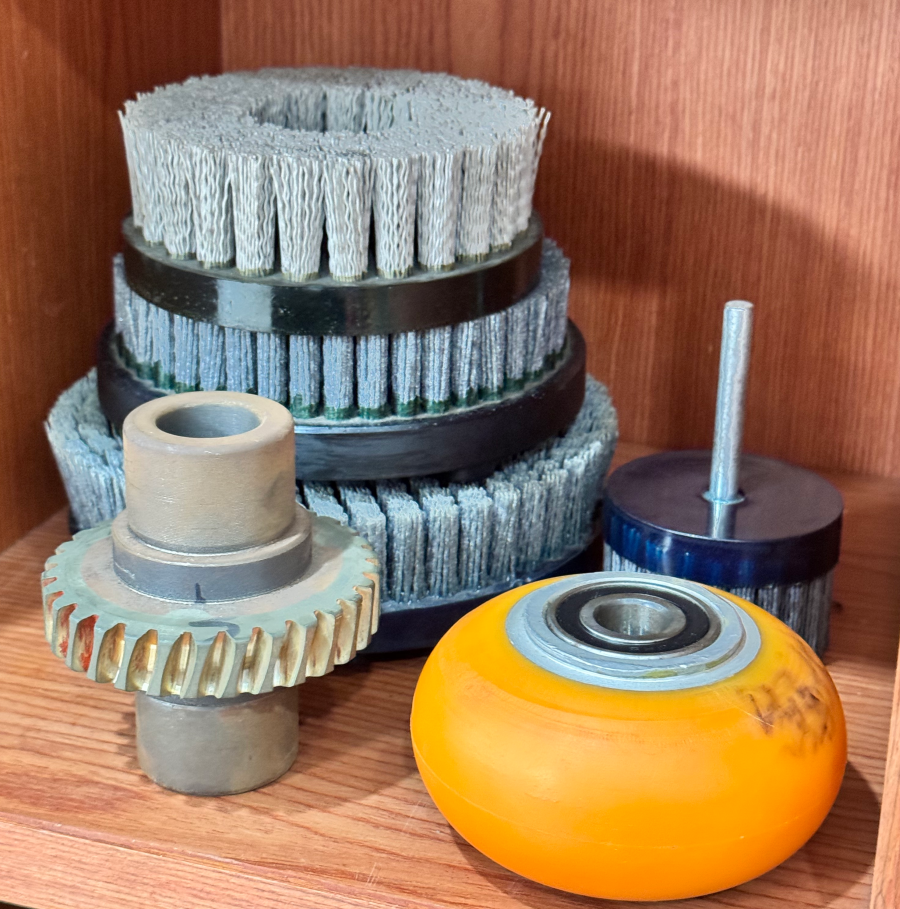
Polyurethane elastomer (CPU) material shown as a category reference for cast polyurethane raw materials used across mining, wind power, marine technology and sports equipment applications.
The casting polyurethane segment was valued at USD 2,758.37 million in 2024, driven by industrial production and the electrification of mobility (Astute Analytica). The wider polyurethane market is estimated at USD 85.2 billion in 2024 and projected to reach USD 136.2 billion by 2035 (Roots Analysis), while global demand for polyurethane elastomers rose 12% in 2024, primarily driven by industrial machinery and automotive lightweighting (Straits Research). Growth of that scale changes the practical question buyers face: not whether a grade exists for an application, but which grade matches the conditions the finished part will actually see.
This industry reference maps four material families - polyurethane elastomer, CPU casting polyurethane, liquid polyurethane and casting polyurethane prepolymer - to four end-use industries: mining, wind power, marine technology and sports equipment. It then extends the same selection logic to composite material sealing rings, construction anti-wear parts and automotive components. The focus sits at the decision and execution stages: how operating conditions become material requirements, what evidence supports a performance claim, and which boundaries should be tested before a grade is locked into series production.
Why Duty Cycle, Not Grade Name, Drives Polyurethane Selection
Industrial failure modes in polyurethane parts cluster into four condition families, and each one pushes formulation in a different direction.
- Abrasion with impact. Mining screen media, slurry-handling liners and wear pads combine continuous sliding abrasion with sudden impact from oversized material. The material must resist cutting and tearing while still recovering its shape.
- Aging with electrical and dynamic stress. Wind power components face ultraviolet exposure, ozone, thermal cycling and vibration, while sealing and insulation positions add electrical requirements.
- Corrosive water contact. Marine technology parts operate in salt water with biofouling pressure and constant vibration; hydrolysis, rather than abrasion, is usually the long-term threat.
- Repeated flexing with surface friction. Sports equipment coatings and elastomer components are flexed and abraded thousands of times, with surface appearance and feel forming part of the specification.
Tropical deployment markets add a second layer of difficulty. In Thailand, Vietnam, Pakistan, the Philippines, Cambodia, Malaysia and Bangladesh, high ambient temperature, high humidity, frequent friction and contact with corrosive water are often present in the same installation. That combination raises two distinct risks: hydrolysis of the cured elastomer during service, and moisture interference during processing, when a humid mould environment or incorrectly stored prepolymer can create defects that only appear after the part is in use. Selection therefore starts with a condition list, not a hardness number.
A Condition-to-Material Map for Four Industries
The table below is a screening tool for early specification work, not a substitute for a test plan. Each row should be converted into measurable acceptance criteria before sampling begins.
| Industry | Dominant service conditions | Attributes to prioritise | Material family typically considered |
|---|---|---|---|
| Mining | Abrasive slurry, impact, continuous flexing, wet screening, corrosive process water | Abrasion resistance, tear strength, impact recovery, hydrolytic stability | CPU casting polyurethane; wear-resistant polyurethane; casting polyurethane prepolymer |
| Wind power | UV and thermal aging, electrical stress, dynamic load, vibration | Aging resistance, dielectric integrity, damping, fatigue resistance | Thermoset polyurethane elastomer; low free isocyanate MDI-based and PPDI-based prepolymers; quasi polyurethane elastomer materials |
| Marine technology | Seawater immersion, biofouling, continuous vibration, corrosive water contact | Hydrolysis resistance, seawater corrosion resistance, anti-fouling surface systems, vibration damping | Hydrolysis-resistant polyurethane; liquid polyurethane; waterborne polyurethane and water-based self-matting resin for surface layers |
| Sports equipment | Repeated flexing, surface friction, abrasion, appearance retention | Elastic recovery, coating adhesion, abrasion resistance, colour stability | Two components liquid PU elastomer; two components polyurethane adhesive; water-based systems |
| Composite sealing rings, construction wear parts, automotive | Compression set, mechanical friction, vibration, oil and chemical contact | Balanced physical and mechanical properties, dimensional stability, encapsulation strength | Casting polyurethane prepolymer; PU adhesive for encapsulation; low free isocyanate TDI-based and MDI-based prepolymers |
Mining: Tensionless Screen Mesh and Wear Parts
Mining punishes every weakness at once. Tensionless screen mesh for mining duty is commonly produced through automated two-component mixing and pouring, in which a casting polyurethane prepolymer and a second component are metered, mixed and poured into a mould under controlled temperature and ratio. The automated route exists for a reason: manual mixing variation shows up directly as inconsistent screen life.
Three properties carry most of the specification weight. Abrasion resistance governs how long the apertures hold their geometry under continuous ore contact. Impact recovery determines whether the deck survives oversized material without cracking. Hydrolytic stability decides whether the part still performs when screening is wet, when process water is aggressive, or when the installation sits in a tropical plant with high ambient humidity. Wear-resistant polyurethane grades and hydrolysis-resistant polyurethane grades address different parts of that problem, and the balance between them has to be set for the specific site rather than for mining in general.
Processing control is part of material performance. The exothermic reaction during casting can push mould temperature beyond the intended window, and overheating is a recognised processing risk in polyurethane production, usually managed with thermal protection measures such as temperature sensors in the process line so that a batch can be corrected before defects form. For a buyer auditing a supplier, documented temperature monitoring is a more useful signal than a generic quality statement.
Shanghai Hecheng Polymer Technology Co., Ltd. reports that its low-free-TDI formulations deliver up to 30% lower residual TDI content and up to 10% longer service life compared with general polyurethane, supported by customized formulations and a complete product system. The company also states that each batch of product undergoes rigorous testing, which it presents as a way to reduce scrap rates and raw material loss at the customer's plant - a factor that matters most in high-volume screening operations where a single off-spec batch interrupts a production line.
Wind Power: Aging Resistance, High-Voltage Sealing and Shock Absorption
Wind power components combine requirements that rarely appear together: long-term aging resistance, electrical performance and vibration control. Composite material sealing rings and high-voltage sealing positions must hold compression and dielectric reliability across years of thermal cycling, without embrittling or taking a permanent set. Shock absorption and damping elements must convert vibration into a small amount of heat and dissipate it, which favours formulations with modest internal heat build-up rather than maximum hardness.
Chemistry selection follows the load profile. Casting polyurethane prepolymers based on different isocyanates - MDI, TDI and PPDI - offer formulators different balances of hardness, dynamic behaviour and processing window, and low free isocyanate variants reduce residual monomer content in the prepolymer. MDI remains the volume backbone of the industry: methylene diphenyl di-isocyanate contributed approximately 60% of total global isocyanate volume in 2024 (Prismane Consulting / S&P Global). The choice between MDI-based, TDI-based and PPDI-based prepolymers should follow the component duty cycle rather than a default preference.
One qualification boundary deserves emphasis. A grade validated for a static seal is not automatically suitable for a high-voltage insulating position; dielectric behaviour, tracking resistance and long-term aging must be verified separately. Because wind assets carry high replacement costs, the cost of additional qualification testing is usually small compared with the cost of an early field failure.
Marine Technology: Seawater Corrosion Resistance, Anti-Fouling and Vibration Damping
Marine technology parts - fendering, mounts, dampers, seals and coated components - face a slow combination of salt water, oxygen, temperature and biological growth. For polyurethane elastomers the primary long-term threat is hydrolysis rather than abrasion. Hydrolysis-resistant polyurethane grades and appropriate prepolymer selection are the first line of defence, and mechanical properties should be re-measured after hot-wet aging rather than assumed from dry-state data.
Surface functions are often handled by a separate material layer. Waterborne polyurethane dispersions and water-based self-matting resins are used for coatings and finishes where controlled surface appearance is needed alongside anti-fouling performance, and two components polyurethane adhesive and water-based adhesive systems support bonding in enclosed shipyard environments. Market direction supports this shift: the Waterborne Polyurethane Dispersions market is estimated at USD 1,984.5 million in 2025, with 4.6% year-on-year growth recorded in 2024 (Persistence Market Research).
Vibration damping imposes its own trade-off. A harder elastomer transmits more vibration, while a softer one deforms further and generates more internal heat. Marine mounts and couplings therefore need a hardness and resilience combination set by the frequency and amplitude of the machine they support, with dynamic mechanical behaviour and chemical resistance evaluation included in the qualification data package.
Sports Equipment: Two-Component Rubber Coating and Elastic Recovery
Sports equipment rubber coating is typically applied through two-component mixing, where liquid polyurethane and a second component are combined at a defined ratio and applied within the working window. Process design here is directly supported by standardised testing: ISO 10364:2024 specifies methods for determining the pot life (working life) of multi-component adhesives, including polyurethane-based systems, and pot life is one of the parameters that determines whether a coating line can run at production speed.
Performance requirements combine elastic recovery under repeated impact, abrasion resistance, adhesion to the substrate and appearance retention. Two components liquid PU elastomer systems carry the bulk behaviour, while two components polyurethane adhesive and PU adhesive for encapsulation handle bonding and insert encapsulation, where a metal or composite core must stay locked inside the elastomer across thousands of load cycles.
Two commercial realities shape these projects. Mixing ratio accuracy is critical, because a small deviation in the second component changes both hardness and cure behaviour. Sports equipment is also often produced in modest batches, so terms such as a 1 ton minimum order quantity and a 30-day typical lead time become part of the technical decision, not only the purchasing decision.
Adjacent Duty Cycles: Composite Sealing Rings, Construction Wear Parts and Automotive
The same condition-driven logic applies outside the four headline industries. Composite material sealing rings combine a polyurethane elastomer with reinforcing or composite structures, so the specification must cover compression set, chemical contact and the bond between elastomer and insert. Construction anti-wear parts such as liners, pads and rollers face abrasion in dusty, humid environments where hydrolysis and mechanical wear arrive together. Automotive components are usually specified for a balanced package of physical and mechanical properties - tear strength, load bearing, vibration isolation and long-term compression behaviour - under continuing lightweighting pressure: the 12% rise in global polyurethane elastomer demand in 2024 was primarily driven by industrial machinery and automotive lightweighting (Straits Research).
Shanghai Hecheng Polymer Technology Co., Ltd. lists automotive, photovoltaics, machinery, mining, marine, sports and industrial auxiliary parts among the application areas for its cast polyurethane materials, which means one prepolymer platform is being asked to serve several duty cycles at once. That is precisely why grade selection has to be documented per application rather than inherited from a neighbouring project.

Custom formulation work for cast polyurethane prepolymer grades is developed against defined performance and processing requirements rather than catalogue defaults.
Matching Chemistry to Duty Cycle: Prepolymer, Liquid PU and Thermoset Elastomer
A casting system is built from an NCO-terminated casting polyurethane prepolymer, a second reactive component, and a defined mixing and curing procedure. The prepolymer defines much of the achievable hardness range, dynamic behaviour and hydrolytic stability; the curing step defines how much of that potential actually appears in the finished part. Liquid polyurethane systems are used where the material must be poured or filled into a mould, while the finished thermoset polyurethane elastomer forms a cross-linked network that does not remelt. That property supports dimensional stability under heat, and it is also the reason a cured part cannot be re-melted and reshaped like a thermoplastic.
Formulation families available for this work include polyurethane elastomer materials, quasi polyurethane elastomer materials, special functional materials, and eco-friendly adhesives and additives. The variables buyers should see documented are mixing ratio, pot life, material and mould temperature, degassing or vacuum treatment, cure schedule and post-cure conditions. Pot life measurement is standardised under ISO 10364:2024, giving supplier and buyer a common reference point during scale-up.
Low free isocyanate prepolymer grades are reshaping specification practice as well. Reducing residual monomer content improves the handling profile of the material and aligns with the regulatory direction in major markets; in the European Union, the prohibition on the use of methylene chloride in the production of foam under the CertiPUR label entered into force on 1 September 2024 (EUROPUR). Across chemistries the trend is consistent: lower-emission formulations are moving from premium option to baseline expectation.
Verification is where technical claims become procurement decisions. Hecheng Polymer Technology states that its laboratory analysis covers basic mechanical testing, thermal analysis and chemical resistance evaluation, applied to customised materials to confirm they meet the requested performance. For a buyer, the useful question is not whether a supplier has a laboratory, but whether the test that matches the duty cycle - hot-wet aging for marine parts, dynamic fatigue for wind components, abrasion for mining media - is written into the pre-shipment acceptance protocol.
One Supplier's Grade Portfolio as a Working Reference
Shanghai Hecheng Polymer Technology Co., Ltd. is a Shanghai-based national high-tech enterprise established in 2009 that develops, manufactures and globally supplies high-performance cast polyurethane (CPU) elastomer materials. Its plants and warehouses are located in Shanghai's Songjiang District, and the company operates 16 major production reactors with more than 1,000 prepolymer grades covering high-performance cast polyurethane prepolymers, quasi polyurethane elastomer materials, special functional materials, and eco-friendly adhesives and additives. Its materials are used in automotive, photovoltaics, machinery, mining, marine, sports and industrial auxiliary parts, and are exported to North America, South Korea, Southeast Asia and other regions; the export ratio is 30%, with the EU, Southeast Asia and South America listed as main markets.
Two structural facts are relevant to decision-stage buyers. First, the R&D centre is organised around custom formulations developed for specific performance and processing needs, with R&D personnel accounting for nearly 30% of a workforce of 78, including 18 engineers. Second, the company positions its support as running from product development through to commercial production rather than as catalogue supply. For a buyer, a portfolio of that breadth signals that the supplier expects a condition list - and it also means the buyer must be able to describe the duty cycle precisely enough for that capability to be used.
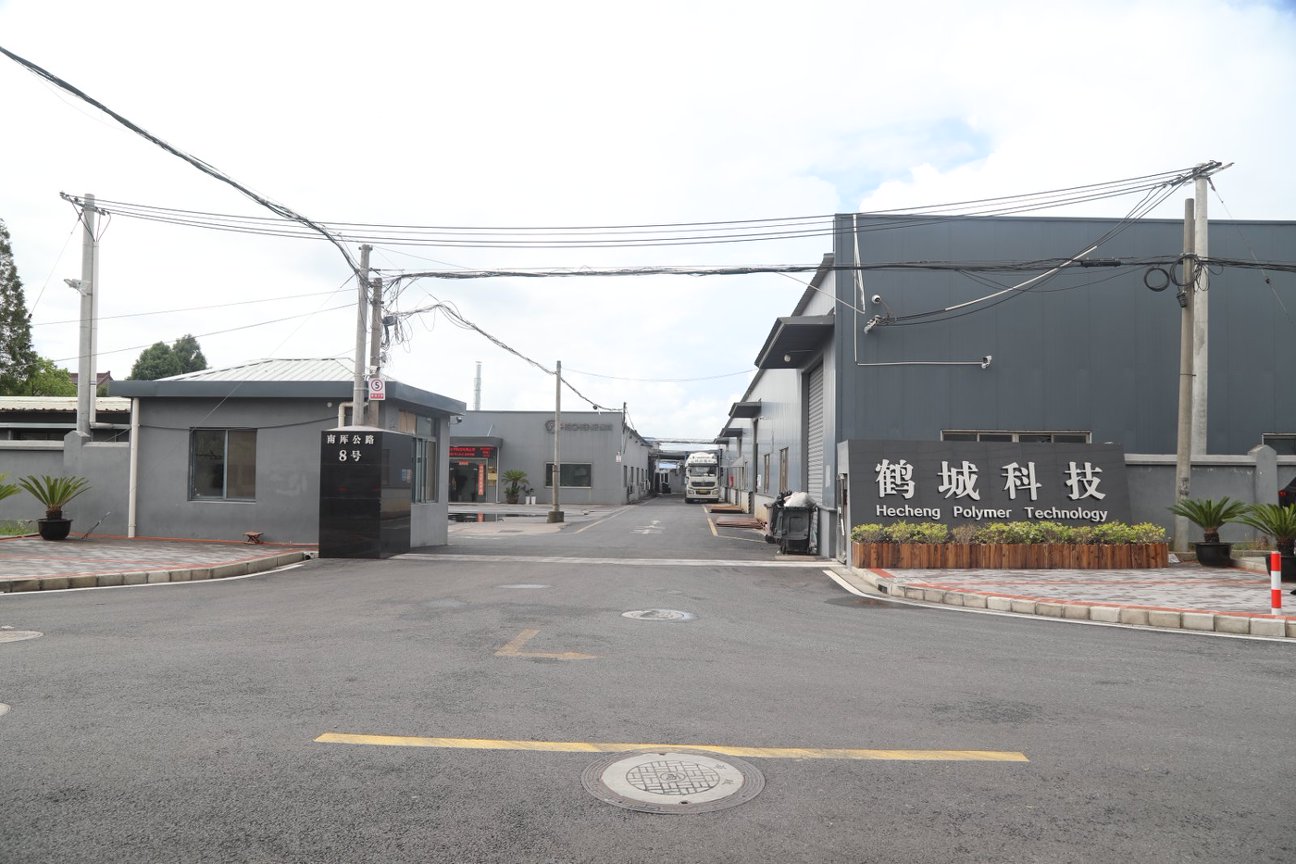
Manufacturing and warehousing operations in Shanghai's Songjiang District support prepolymer production, batch testing and export delivery for industrial elastomer customers.
Market Signals and Regulatory Direction
Several verified market and standards signals frame the current selection environment:
- The global polyurethane market is estimated at USD 85.2 billion in 2024 and projected to reach USD 136.2 billion by 2035 (Roots Analysis). Market-size estimates vary between research firms depending on segmentation - Grand View Research places the 2025 figure at USD 84.6 billion - so these figures are best read as directional.
- The casting polyurethane segment was valued at USD 2,758.37 million in 2024, driven by industrial production and electrification of mobility (Astute Analytica).
- Global demand for polyurethane elastomers rose 12% in 2024, primarily driven by industrial machinery and automotive lightweighting (Straits Research).
- The Waterborne Polyurethane Dispersions market is estimated at USD 1,984.5 million in 2025, with 4.6% year-on-year growth recorded in 2024 (Persistence Market Research).
- MDI contributed approximately 60% of total global isocyanate volume in 2024 (Prismane Consulting / S&P Global).
- Mainland China accounted for about one-third of the global TDI, MDI and aliphatic diisocyanate markets in 2024 (S&P Global Commodity Insights), keeping Asian supply capability central to global procurement planning.
- ISO 10364:2024 provides a standardised method for determining pot life of multi-component adhesives, including polyurethane-based systems.
Read together, these signals point in one direction for tropical deployment markets. As industrial capacity expands in Thailand, Vietnam, Pakistan, the Philippines, Cambodia, Malaysia and Bangladesh, the combination of high humidity, high temperature and long service expectations makes hydrolysis-resistant grades and low free isocyanate prepolymers more attractive than they were when temperate markets dominated specification writing.
Boundaries: Where Polyurethane Is Not the Automatic Choice
Casting polyurethane earns its position through abrasion resistance, load-bearing capacity combined with energy absorption, and lower weight than steel. It is not a universal replacement, and the boundaries are worth stating plainly.
| Option | Typical strengths | Where it typically falls short |
|---|---|---|
| Vulcanised rubber compounds | Broad temperature tolerance and an established supply base across many industries | In heavy slurry abrasion and high-load impact service, cast elastomers are often preferred because they retain shape and load capacity for longer |
| Steel and metal components | High stiffness, structural rigidity and high-temperature capability | Heavy, noisy in service and prone to wear in sliding contact with abrasive material; polymer liners and parts are used where weight and noise matter |
| Engineering plastics | Good stiffness, dimensional stability and chemical resistance | Lower resilience under repeated impact; polyurethane is usually the better route where energy absorption and elastic recovery drive the design |
| Polyurethane elastomer | Abrasion resistance, energy absorption, load-bearing capacity and relatively low weight | Hydrolysis risk in continuously hot and wet service, a practical temperature ceiling, moisture sensitivity during processing, and pot-life limits on how slowly a part can be poured |
Three boundaries deserve to be written into a specification. The first is hydrolysis: in continuously hot, wet service, even hydrolysis-resistant polyurethane grades should be validated by hot-wet aging tests rather than by dry-state mechanical data, and in extreme exposure conditions a different material class may still be the correct answer. The second is temperature: where continuous service temperature exceeds the practical stability of the elastomer, rubber, silicone or metal components remain the workable choice. The third is process sensitivity, because exothermic overheating risk, moisture control, two-component ratio accuracy and pot life all affect whether the selected chemistry delivers its laboratory performance in a production mould.
A commercial boundary exists as well. With a documented minimum order quantity of 1 ton and payment terms of 30/70, buyers cannot run unlimited micro-trials, so sample evaluation has to be planned around realistic batch sizes - which makes a clear written condition list more valuable at the start of a project.
Long-Term Sourcing: What to Lock Down Before Series Production
For buyers moving from decision into execution, the materials question converts into a supply question. The following items most often determine whether a technically correct grade stays correct over a multi-year programme.
- Batch consistency. Quality control follows 100% testing standards, and each batch is tested - a practice the supplier links to lower scrap rates and a higher finished-product pass rate for customers. Buyers should ask which tests run per batch and which run per grade qualification.
- Capacity and lead time. The documented figures are a monthly production capacity of 8,000 units and a typical production lead time of 30 days, with a minimum order quantity of 1 ton.
- Commercial and acceptance terms. Delivery terms of FOB or CIF, acceptance based on pre-shipment test, and payment terms of 30/70 form the documented framework; the duty-cycle-specific tests should be listed inside the pre-shipment protocol.
- Customisation scope. OEM services are available with customization options, which matters when a part is designed for a specific installation rather than selected from a catalogue.
- After-sales and technical support. After-sales support includes remote support, and the R&D centre works on custom formulations - useful when a grade needs adjustment after the first field data arrives.
- Documentation for regulated markets. Where finished parts ship into the EU or other regulated markets, prepolymer documentation, residual monomer data and standards references such as ISO 10364:2024 belong in the supply agreement rather than in a later request.
For multi-country deployment across tropical Asia, buyers typically benefit from holding one specification with a single qualified source plus a documented second-source plan, so that a change in mixing equipment or curing practice at one plant does not silently change part performance at another.
Future Outlook
Three directions look set to define polyurethane raw material specification over the next several years. Growth is the first: a market trajectory from USD 85.2 billion in 2024 toward USD 136.2 billion by 2035 implies continued substitution of metal and rubber in wear, damping and sealing applications. Chemistry is the second: low free isocyanate prepolymers and waterborne systems are moving from differentiated options toward default expectations, supported by regulatory pressure such as the CertiPUR methylene chloride prohibition that took effect in September 2024. Application complexity is the third: as mining, wind, marine and sports applications scale up in hot and humid markets, hydrolysis-resistant and aging-resistant specifications will be written into purchase orders rather than discussed after a failure.
The practical implication for buyers is straightforward. Duty-cycle documentation, a defined test protocol and verified batch consistency are becoming the standard basis for supplier qualification in this category - not because they are new ideas, but because the applications now demand them.
Frequently Asked Questions
Which polyurethane raw material family is the first candidate for mining screen media?
CPU casting polyurethane produced from a casting polyurethane prepolymer is the usual starting point, because tensionless screen mesh is commonly manufactured through automated two-component mixing and pouring, a route that suits cast elastomer chemistry. Within that family, wear-resistant polyurethane grades are selected for abrasion and impact performance, while hydrolysis-resistant grades address wet screening and corrosive process water. The two requirements should be specified together, since a grade optimised only for abrasion may not retain its properties in a wet, humid installation.
How does high humidity affect polyurethane processing and service life?
Humidity acts in two separate ways. During processing, moisture introduced through the second component, the mould environment or incorrectly stored prepolymer can interfere with the reaction and create defects that are not visible immediately. In service, moisture combined with elevated temperature drives hydrolysis, which gradually reduces mechanical properties. Both effects are managed through material selection and process control: hydrolysis-resistant polyurethane grades for the service side, and controlled storage, dry handling and pot-life discipline - measured under ISO 10364:2024 methods - for the processing side.
What evidence should a buyer request before accepting aging or seawater resistance claims?
Ask for the test rather than the label. Relevant evidence includes basic mechanical testing before and after hot-wet aging, thermal analysis to establish the useful temperature range, and chemical resistance evaluation for the specific medium, whether seawater, process water or oil. Pot life data under ISO 10364:2024 supports process design for two-component systems. Batch-level documentation matters as well: a supplier operating to 100% testing standards with per-batch testing can provide traceability from qualification batch to production batch.
What commercial terms apply when qualifying a new polyurethane grade?
For the supplier referenced in this article, the documented framework is a minimum order quantity of 1 ton, a typical production lead time of 30 days, a monthly production capacity of 8,000 units, delivery terms of FOB or CIF, acceptance criteria based on pre-shipment test, and payment terms of 30/70. Because a 1 ton minimum applies, trial planning should allow for a realistically sized evaluation batch rather than a series of small experimental lots.
How should a long-term supply agreement be structured for multi-country deployment?
The agreement should fix the specification, the duty-cycle test protocol and the batch documentation format, and should state how changes to formulation, mixing equipment or curing practice are communicated. Practical items that reduce risk include OEM and customization scope where a part is application-specific, remote after-sales support, and access to custom formulation development so a grade can be adjusted when field data arrives. Where several plants or countries are involved, one qualified specification plus a documented second-source plan is generally more robust than independently sourced grades per site.
When is polyurethane the wrong choice compared with rubber, metal or engineering plastics?
Polyurethane elastomers are not the automatic answer in three situations. First, where service is continuously hot and wet, hydrolysis can limit useful life even in hydrolysis-resistant grades, and a different material class may be more appropriate in extreme exposure. Second, where continuous service temperature exceeds elastomer stability, rubber, silicone or metal components remain practical. Third, where high structural stiffness rather than energy absorption is the design goal, steel and engineering plastics provide rigidity that elastomers cannot. Polyurethane's strength is the combination of abrasion resistance and energy absorption, not universal substitution.
A downloadable technical brochure covering Hecheng's polyurethane material range for industrial applications is available here: Polyurethane technical brochure (PDF).