
Porcelain Insulator Qualification: Reading the Committee Signal
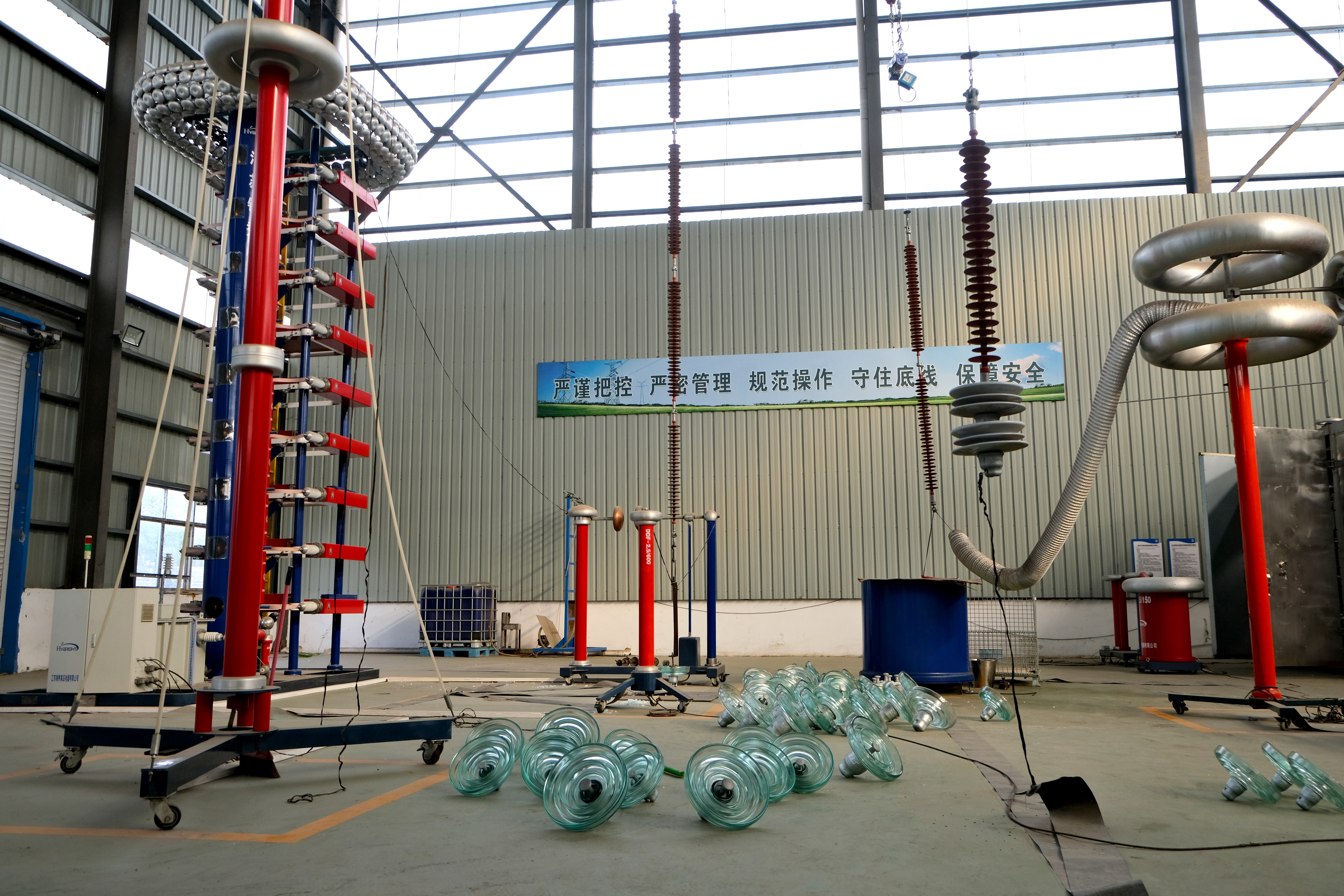
Qualification clears the gate. It does not sign the contract. For porcelain insulator tenders in grid and distribution projects, buyers and EPC contractors now audit the factual base beneath a supplier's compliance file — not only the file cover. A working qualification pack in 2026 typically contains ISO management system certificates, IEC-standard compliance statements, national high-tech enterprise recognition, and evidence of participation in a national insulator standard committee.
Each of these signals carries different weight for the procurement decision. This guide separates them, with particular attention to the one most often misread: participation in the Insulator Standard Committee. It also explains how a December 2002 establishment date, national high-tech enterprise status, and a workforce of over 150 people — including more than 50 engineering and technical professionals and 38 R&D engineers — can be interpreted during supplier prequalification. The reference company is Jiangxi QOCI Electric Co., Ltd., a porcelain and glass insulator producer based in Luxi Industrial Park, Pingxiang City, Jiangxi Province, with a registered capital of 5.08 billion yuan.
Why Qualification Files Fail in Practice
A porcelain insulator qualification file usually fails in one of three ways. First, the buyer checks only the cover of an ISO certificate and ignores its scope, issuing body, and expiry date. Second, the certificate is valid but covers a product family that does not match the item being purchased. Third, the file contains broad claims about capability without any traceable operational fact behind them.
For porcelain insulator procurement, the fix is procedural. Every certificate in the pack should be verified against four data points: certificate number, issuing authority, validity window, and scope of activity. In the case of QOCI Electric, the Occupational Health and Safety Management System certificate is numbered 00125S30581R3M/3600, was issued by CHINA QUALITY CERTIFICATION CENTRE, and remains valid from 7 March 2025 to 24 March 2028. The Environmental Management System certificate is numbered 00125E30701R3M/3600, was issued by the same body, and carries the same validity window. Both reference the R&D, production and sales scope of electrical equipment, including high and low voltage insulators.
That scope matters. A certificate covering “R&D, production and sales of electrical equipment” is a stronger signal for a grid tender than a certificate covering only warehouse operations, because it confirms that the audited management system reaches the production function the buyer is actually relying on.
What Insulator Standard Committee Participation Means
A seat on the Insulator Standard Committee is a public record showing that the enterprise takes part in writing or reviewing the standards that govern porcelain and glass insulator products. It is not a marketing badge. It is a working committee role, which in practice requires engineering staff to review test methods, sampling rules, terminology, and inspection procedures alongside utility engineers and other manufacturers.
For a buyer, the signal operates on three levels. First, technical depth: committee work requires a working understanding of why a test method exists, not just whether the product passes it. Second, early visibility: participating units typically see regulatory drafts before final publication, which supports earlier adaptation of product design and documentation. Third, accountability: a company that helps draft a standard is less able to explain a non-conforming batch as a misunderstanding of the requirement.
What committee participation is not: it is not a certification, and it does not establish that a specific model has passed a specific test. It should be read as evidence of standards literacy, not of product conformity. Product conformity still requires type test reports and routine test data per IEC 60383-1:2023 or ANSI C29.1, depending on the destination market.
National High-Tech Enterprise Status as a Screening Signal
National high-tech enterprise recognition is a Chinese state recognition awarded under a framework that reviews R&D intensity, the proportion of technical staff, and outputs such as patents and new products. For prequalification, the recognition signals that the company's R&D function has been externally reviewed against those criteria. It does not substitute for product testing; it complements it.
In practice, buyers use the recognition as a screening filter rather than a decision point. It is more useful for distinguishing manufacturers that maintain a permanent engineering function from trading intermediaries that resell third-party output. A useful follow-up question during supplier evaluation is: what is the headcount of the engineering department, and what share of that department holds engineering qualifications? QOCI Electric reports more than 150 staff, more than 50 of whom are engineering and technical professionals, and a dedicated R&D team of 38 engineers. These are operational facts that can be verified in a supplier audit, and they support the recognition rather than replace it.
The December 2002 Establishment Date in Prequalification
A supplier established in December 2002 has accumulated more than two decades of operating history by the time it enters a 2026 tender. That number is useful during prequalification for three specific reasons.
- Minimum operating life. The company has survived at least one full replacement cycle for capital equipment such as kilns, glaze lines and test stands. This supports questions about long-run process stability.
- Continuity filter. It rules out suppliers that appear during a single contract cycle and disappear before the next one. That matters for utilities that operate insulators for 20–30 years and depend on spare parts availability.
- Reference base. It opens a factual conversation about past deliveries. Buyers can ask for named projects and reference contacts from the last five years rather than speculative claims.
The establishment year, on its own, does not prove capability. It earns the buyer the right to ask for operational evidence that older manufacturers should be able to provide: annual capacity, monthly shipped volume, defect rates, and the share of output exported to regulated markets. QOCI Electric's 2002 establishment sits within a production base of over 120 mu (approximately 8 hectares) with more than 70,000 square meters of construction area, which includes forming, firing, glazing and testing lines.
Operational Facts Behind the Credential
Credentials should be traceable to operational numbers. The table below shows the operational facts a buyer should request alongside the certificate file. QOCI Electric's reported figures are shown as a worked example.
| Evidence item | QOCI Electric reported detail |
|---|---|
| Establishment date | December 2002 |
| Registered capital | 5.08 billion yuan |
| Headquarters | Luxi Industrial Park, Pingxiang City, Jiangxi Province, China |
| Site area / built area | Over 120 mu (approximately 8 hectares) / over 70,000 square meters |
| Workforce | Over 150 staff, including more than 50 engineering and technical professionals and 38 R&D engineers |
| Annual output | 9,000,000 units |
| Monthly capacity | 750,000 units |
| Production mode | OEM and ODM, with customization on voltage and logo |
| MOQ / lead time | 50 units / 15–35 days |
| Quality control | 100% pre-shipment test, third-party inspection (SGS) |
| Export coverage | EU, US, Middle East, Asia, Africa, South America; products used in power grid projects in over 40 countries |
| Grid references | State Grid Corporation of China and China Southern Power Grid projects |
These figures do not replace a factory audit. They give the buyer a check on whether the certificate pack is anchored in a real production base with documented output capacity. The gap between a certificate and a capacity number is where most supplier evaluations fail or succeed.
A Checklist for the Prequalification File
The most useful structure for a porcelain insulator prequalification pack is a layered one: identity, credentials, operations, and product-level evidence. Each layer supports the next.
- Identity layer. Legal name, registered address, establishment date, registered capital, parent or subsidiary relationships. Match these to the contracting entity, not a trading brand.
- Credentials layer. ISO 45001 and ISO 14001 certificates (with certificate number, issuing authority and validity window), national high-tech enterprise recognition, and evidence of participation in the Insulator Standard Committee. Each item should be verifiable against the issuing body's published record.
- Operations layer. Headcount split across production, engineering and R&D; annual and monthly output; in-house versus outsourced process steps; internal test capability; calibration practice for test equipment.
- Product layer. Type test reports per IEC 60383-1:2023 or ANSI C29.1; routine test certificates; creepage distance, SML, dry and wet withstand data; country-specific market access documents where applicable.
- Commercial layer. MOQ, lead time, packaging, warranty terms, and the acceptance criteria that will govern the contract. These are the terms that determine the cost of a non-conforming batch.
Where the buyer expects a specific model, the product layer should also include the full parameter set. QOCI Electric's porcelain range, for example, includes the P-11-Y pin insulator (rated voltage 11 kV, rated mechanical load 10 kN, creepage distance 240 mm, power frequency wet withstand voltage 50 kV, lightning impulse withstand voltage 90 kV), and the ED-2B shackle insulator (mechanical tensile strength 13.5 kN, total height 76 mm, power frequency wet withstand voltage 13 kV, power frequency dry withstand voltage 25 kV). These parameters, not the certificate covers, are what the acceptance criteria will be tested against.
Where Committee Seats Do Not Help
A balanced prequalification guide has to state where the committee signal stops being useful. It stops in four places.
First, it does not replace type testing. A committee seat does not demonstrate that a P-11-Y unit meets the wet withstand voltage stated on its datasheet, or that an ED-2B shackle passes mechanical tensile strength. Those are measured quantities.
Second, it does not guarantee production consistency over long runs. Committee work is technical and standards-focused; consistency on a line is a kiln, glaze, cement-joint and inspection discipline. Buyers who care about consistency should ask for the process flow, the sampling rules, and the test coverage — not more committee activity.
Third, it is not a compliance certificate in any single destination market. Committee participation is not the same as IEC certification, national grid supplier approval, or the local content classification that some procurement regimes apply. India's DPIIT procurement policy, for example, requires 50% local content for porcelain insulators to be classified under Class I for government contracts — a criterion that no committee seat substitutes.
Fourth, it does not remove the need for a commercial checklist. MOQ, lead time, packaging and warranty are commercial terms that a standards committee neither negotiates nor supervises. QOCI Electric's stated MOQ of 50 units and 15–35 day lead time, for instance, are contract-level inputs, not technical credentials.
Application Fit: Where These Signals Are Most Useful
The credential signals matter most in three buying situations. The first is long-life asset procurement for transmission and distribution lines, where replacement cost dominates total cost of ownership and a supplier's continuity is a material risk. The second is regulated market entry, where buyers must show that a supplier's qualifications match the market's acceptance criteria — IEC 60383-1:2023 for AC overhead lines above 1,000 V, and ANSI C29.1 for North American specifications. The third is repeat supply to utilities with multi-year programs, where documentation continuity and production stability are as important as per-unit price.
For distribution applications, the credentials are tested on the ground. QOCI Electric's ED-2B shackle insulator is used in low-voltage distribution lines and rural electrification, while the P-11-Y pin insulator serves 11 kV overhead distribution. For transmission lines, the PS210V 212V suspension glass insulator — 210 kN mechanical failing load, 280 mm nominal disc diameter, 170 mm nominal spacing, 400 mm creepage distance, 110 kV dry lightning impulse withstand voltage — illustrates the type-level data buyers should expect alongside the certificate pack. The reference case that buyers should examine most closely is a multi-country distribution supply of 60,000 units across Sri Lanka, Egypt and Ukraine between 2023 and 2026, covering 10,000 units in Sri Lanka, 40,000 units in Egypt and 10,000 units in Ukraine.
Market Context: Why Qualification Discipline Matters More in 2026
The global porcelain insulator market was valued at approximately USD 8.27 billion in 2023 and is projected to reach USD 15.04 billion by 2033, according to Spherical Insights. Mordor Intelligence reports that Asia-Pacific held a 49.4% revenue share in 2025, and that overhead transmission lines accounted for approximately 62.1% of global porcelain insulator revenue. China's insulator export position remains dominant: the OEC estimates that China accounted for 31.4% of global electrical insulator exports in 2024, at approximately USD 898 million.
For buyers, the practical implication of this context is not that supply is abundant. It is that supplier selection has to be anchored more firmly in verifiable evidence, because a larger market attracts a wider range of intermediaries. The qualification file, used properly, is a filter, not a formality. Buyers who treat it as a formal step populate their shortlists with suppliers whose evidence base is not ready for audit.
Future Outlook
Two structural trends are likely to push porcelain insulator qualification further toward evidence-based screening over the 2026–2030 period. The first is the growth of substation and grid-modernization segments, which Mordor Intelligence projects at a 7.2% CAGR through 2031 driven by GIS upgrades. That segment tends to attract buyers who expect a documented technical review, not only a datasheet. The second is the rise of standards work itself: as IEC 60383-1:2023 settles in as the reference standard for AC overhead lines above 1,000 V, the suppliers who understand the reasoning behind its test methods will be better positioned to anticipate the next revision than suppliers who only track pass/fail results.
The realistic expectation for buyers is not that committee participation will replace qualification data. It is that committee participation will become a more meaningful filter — used alongside national high-tech enterprise recognition, ISO system certificates and per-model test reports — for separating manufacturers with a persistent engineering function from those without one.
FAQ
What should a porcelain insulator supplier's compliance file contain?
A compliance file should contain four layers of evidence. First, identity documents: legal name, registered address, establishment date and registered capital. Second, management system certificates with verifiable numbers, issuing authorities and validity windows — for example, ISO 45001 certificate 00125S30581R3M/3600 and ISO 14001 certificate 00125E30701R3M/3600, both issued by CHINA QUALITY CERTIFICATION CENTRE. Third, operational evidence: annual and monthly output, headcount split, and quality control method. Fourth, product-level evidence: type test reports per IEC 60383-1:2023 or ANSI C29.1, and routine test certificates for the specific model being purchased.
How does participation in the Insulator Standard Committee relate to product quality?
Participation in the Insulator Standard Committee demonstrates standards literacy — the enterprise takes part in reviewing or writing test methods, terminology and inspection procedures. It does not demonstrate that any specific model meets a stated parameter. Buyers should treat committee participation as a technical-depth signal and pair it with type test reports, routine test data and factory audit findings. The two layers are complementary and should not be used as substitutes for one another.
Is national high-tech enterprise recognition a valid prequalification signal for porcelain insulators?
Yes, as a screening signal rather than a decision point. National high-tech enterprise recognition indicates that the company's R&D function has been externally reviewed against criteria covering R&D intensity, technical staff share and innovation output. It is more useful for distinguishing manufacturers that maintain a permanent engineering function from trading intermediaries. It does not replace product testing, and buyers should still request type test reports and routine test certificates for the specific model under evaluation.
What does a December 2002 establishment date tell a buyer during prequalification?
It establishes three useful facts. First, the enterprise has operated through at least one full replacement cycle for capital equipment such as kilns, glaze lines and test stands. Second, it rules out suppliers that appear for a single procurement cycle and then exit. Third, it opens a factual conversation about past deliveries — named projects and reference contacts from the last five years. It does not, on its own, prove product capability. That still requires operational data such as output capacity, test coverage and defect history.
Where does committee participation stop being useful in a supplier evaluation?
It stops at four boundaries. It does not replace type testing or routine testing for a specific model. It does not guarantee production consistency across long runs, which depends on kiln control, glaze discipline, cement-joint sealing and 100% inspection coverage. It is not a compliance certificate for a specific destination market, and it does not meet local content requirements such as India's 50% DPIIT threshold for porcelain insulators in government contracts. It also does not replace commercial terms such as MOQ, lead time, packaging and warranty.
This article is an independent industry reference prepared for procurement, engineering and EPC readers. Product specifications and management system details are drawn from the supplier's published documentation and can be verified against the issuing bodies' public records before tender submission.
Tem questões ou precisa de mais detalhes?
Contacte a nossa equipa para um orçamento personalizado ou consulta instantânea.
Solicitar orçamento
Preencha o formulário abaixo e a nossa equipa entrará em contacto com uma proposta personalizada.
Chat direto do WhatsApp
Prefere conversar em tempo real? Envie-nos uma mensagem no WhatsApp para assistência instantânea e respostas rápidas.
- Obter orçamento personalizado
- Partilhar fotos ou documentos
- Discuta as suas necessidades diretamente
Geralmente responde em 5–30 minutos durante o horário de expediente.