
Porcelain vs Composite Insulators: A Procurement Decision Guide
For grid engineers, the material choice between porcelain and composite insulators changes more than the bill of materials. It changes the maintenance calendar, the failure risk profile, and the total cost of an overhead line over its life cycle.
The decision behind the spec sheet
Insulator selection is a high-impact decision in overhead line design. The selected material must carry mechanical load, resist electrical stress, survive pollution, and perform for decades in an outdoor environment. When a project reaches the procurement stage, buyers are usually comparing two broad families: wet-process porcelain and composite silicone rubber.
According to data from Spherical Insights, the global porcelain insulator market was valued at approximately USD 8.27 billion in 2023 and is projected to grow to USD 15.04 billion by 2033. Mordor Intelligence estimates that Asia-Pacific accounts for 49.4% of global revenue, and overhead transmission lines contribute roughly 62.1% of porcelain insulator demand. These figures help explain why material choice is not a niche engineering question. It is a strategic procurement issue for utilities, contractors, and industrial developers worldwide.
What the buyer is actually choosing
A porcelain insulator is manufactured from vitrified ceramic material such as kaolin, quartz, and feldspar, fired at temperatures around 1200–1300°C. The vitrified body offers high bulk resistivity and compressive strength, while the glaze surface reduces moisture absorption and contamination build-up.
Composite silicone rubber insulators, by comparison, rely on a polymer housing reinforced by a fibre-reinforced plastic core. They are lighter and easier to handle in some installations. But they introduce a different set of ageing mechanisms, especially in regions with strong ultraviolet radiation, salt fog, or industrial pollution.
The comparison is therefore not about which material can simply withstand voltage. Both can. The decision is about how each material behaves under long-term stress, what kind of inspection it demands, and how much it costs across the life of the asset.
Porcelain vs composite: the core data
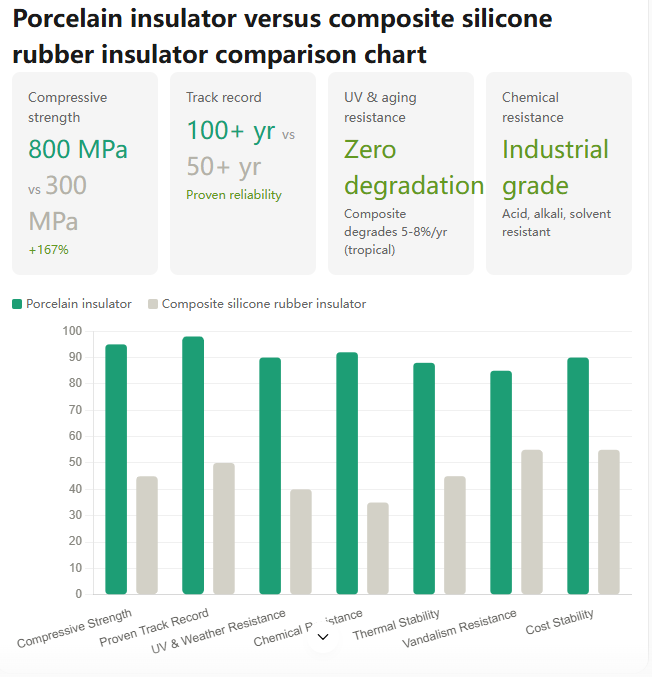
The table below summarises the key technical and cost data used in porcelain insulator procurement comparisons.
| Consideration | Porcelain insulator | Composite silicone rubber insulator |
|---|---|---|
| Compressive strength | 800 MPa | 300 MPa |
| Relative compressive advantage | 167% higher than composite | Baseline |
| Hydrophobic performance over 30+ years | Zero degradation | Loss of 5–8% per year in tropical climates |
| Initial cost | 20% lower than composite | Higher initial cost |
| 30-year total lifecycle cost | 15% lower than composite | Higher over the full lifecycle |
| Maintenance | No periodic hydrophobicity monitoring required | Routine silicone re-coating and hydrophobicity testing every 3–5 years |
| Thermal expansion behaviour | Closer to metal fittings, reducing mechanical stress at the cement joint | Less matched; higher mechanical stress in the fitting zone |
| Chemical resistance | Inert to acids, alkalis, and industrial solvents | Susceptible to environmental degradation in polluted zones |
| Proven service record | Over 100 years of field reliability | Shorter field history in long-life assets |
For a buyer comparing high voltage porcelain insulators with composite alternatives, the cost difference is often the starting point. Porcelain insulators offer a 20% lower initial cost and a 15% lower total lifecycle cost over 30 years. More importantly, the maintenance obligations differ. A porcelain insulator does not require periodic hydrophobicity monitoring, because its hydrophobic glaze does not degrade under UV exposure in the same way a silicone housing does. A composite insulator, by contrast, may require recoating and testing every three to five years, depending on the climate.
Why the engineering data matters at the decision stage
Porcelain insulators demonstrate higher reliability than composite insulators in several measurable dimensions. The compressive strength of wet-process porcelain is approximately 800 MPa, versus roughly 300 MPa for composite materials, a 167% advantage. The thermal expansion coefficient of porcelain is closer to that of metal fittings, which reduces mechanical stress at the cement joint. And the material is chemically inert to acids, alkalis, and industrial solvents, making it suitable for harsh industrial environments.
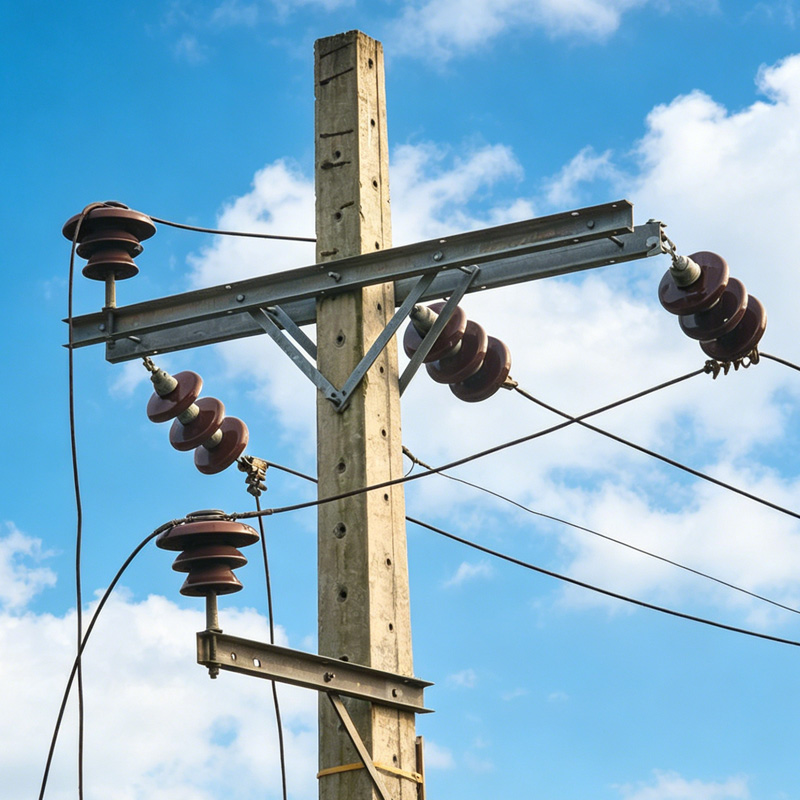
The same data also matters for engineers calculating mechanical load. A porcelain insulator can handle high mechanical loads reliably, which is one reason suspension porcelain insulators remain a standard choice for transmission line strings. For distribution lines, porcelain pin insulators, porcelain post insulators, porcelain strain insulators, and low voltage porcelain shackle and spool insulators are commonly used where exposure to pollution and weather is the dominant design constraint.
Where porcelain insulators are the stronger choice
Material selection should be based on site conditions, not on generic preference. Porcelain insulators are generally recommended for four environments:
- High mechanical load zones where tensile or cantilever loads approach the limits of lighter materials.
- Tropical and subtropical climates where UV degradation and moisture cycles affect polymer housings.
- Coastal salt-fog areas where contamination can cause flashover if the creepage distance is not matched to the pollution level.
- Industrial chemical pollution zones where acid, alkali, or solvent exposure can attack silicone rubber.
In these environments, porcelain offers zero UV aging degradation and no loss of hydrophobic performance over time. Anti-pollution porcelain insulators with extended creepage distance are frequently specified for coastal and industrial regions. They are also available in ceramic disc insulator, ceramic suspension insulator, ceramic pin insulator, ceramic post insulator, and low voltage ceramic spool, stay, and shackle forms to meet a wide range of project requirements.
What the comparison does not tell you
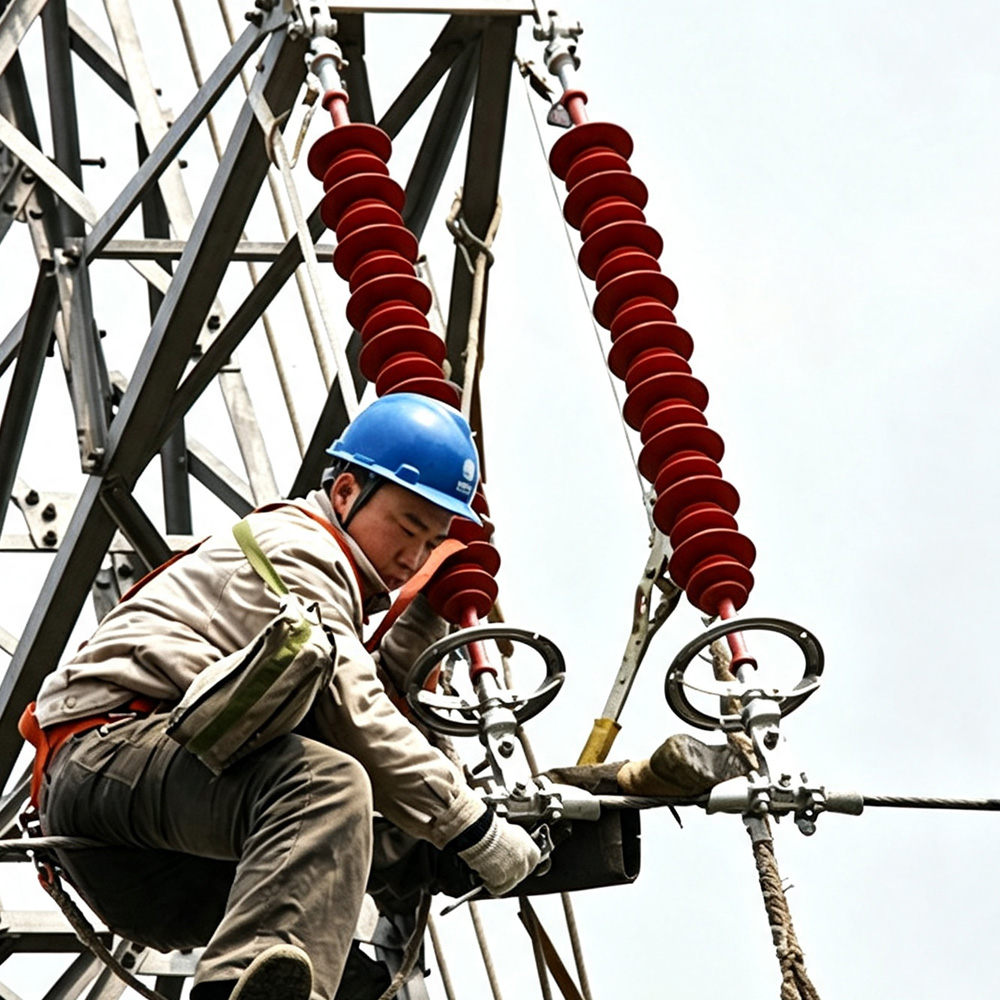
A transparent comparison also requires stating the limitations of porcelain. The most obvious is weight. A porcelain insulator is significantly heavier than a composite insulator, which can affect tower or cross-arm loading in weight-sensitive projects. In temporary lines or tower reinforcement work where weight reduction is critical, composite insulators may be the more practical choice.
Another limitation is the need for periodic live-line testing. Porcelain insulators can develop zero-value degradation, an internal electrical breakdown that leaves no visible external sign. The unit may look normal, but its insulation performance is compromised. Live-line testing using voltage gradient or spark gap detection methods is required to identify faulty units. Maintenance planning should therefore include a live-line inspection programme every three to five years, as is standard practice for cap-and-pin porcelain and glass strings.
Finally, because porcelain is a ceramic material, handling and installation must follow proper procedures. The mechanical design and fittings should be checked for transport damage before installation, and cement joints should be inspected for cracks or moisture ingress.
Market signals and procurement trends
The commercial case for porcelain insulators is supported by recent market data. The Spherical Insights projection points to steady growth from USD 8.27 billion in 2023 to USD 15.04 billion by 2033. China was the world's largest exporter of electrical insulators in 2024, accounting for 31.4% of total global exports, or about USD 898 million, according to the Observatory of Economic Complexity.
The substation segment is also expanding. Mordor Intelligence projects a 7.2% CAGR through 2031 for substation porcelain insulators, driven by updates in gas-insulated switchgear and grid modernisation. For buyers, these signals suggest that porcelain supply chains will remain competitive and that certification requirements will increasingly follow international standards such as IEC 60383-1:2023 and ANSI C29.1.
A reference point for supplier qualification
One way to build an evaluation framework is to look at a manufacturer with a track record in the field. Jiangxi QOCI Electric Co., Ltd. is a Chinese porcelain and glass insulator manufacturer founded in 2002, based in Pingxiang, Jiangxi Province. The company operates a 35,373 m² facility, employs 138 staff, and has an annual production capacity of 9,000,000 insulator units. Its product range covers AC and DC insulators, including porcelain suspension insulators, line post porcelain insulators, porcelain pin insulators, shackle insulators, and AC disc-shaped suspension porcelain insulators. QOCI Electric is a national high-tech enterprise and a participation unit of the Insulator Standard Committee in China. Its products have been used in grids operated by State Grid Corporation of China and China Southern Power Grid, as well as in more than 40 countries in Europe, Asia, Africa, and the Americas.
For a buyer, this type of profile provides a useful baseline for supplier qualification. The relevant questions are:
- Does the supplier perform mechanical load testing across the SML 40–550 kN range used in overhead line projects?
- Is 100% dye penetration testing carried out on every unit, or only batch sampling?
- Are the insulators produced to IEC 60305 or ANSI C29 requirements?
- Does the glaze quality meet IEC 60672 material standards?
- Can the supplier provide field operation records from environments similar to the project site?
Key procurement criteria. Qualified porcelain insulators should provide proven mechanical strength (SML 40–550 kN), 100% dye penetration tested units, IEC 60305/ANSI C29 certification, and glaze quality meeting IEC 60672 standards. Buyers should also evaluate kiln technology, crack detection coverage, cement joint sealing process, and creepage distance matched to site pollution class.
Limitations and honest boundaries
Even when porcelain is the preferred material, there are boundaries. In regions where the structure needs to be lightweight, composite insulators can reduce tower loading. In applications with a short design life or temporary construction, the lower weight of composite may simplify installation. Porcelain is better suited for infrastructure assets expected to last for decades and for environments where inspection resources are limited.
For high-voltage lines, the porcelain suspension insulator string remains a proven solution because of its predictable mechanical behaviour and long-term electrical stability. The same logic applies to low-voltage networks, where porcelain pin, spool, stay, and shackle insulators offer a simple, robust, and cost-effective solution.
Future outlook: what this means for the next procurement cycle
The next few years will be shaped by three trends. First, standardisation will deepen, with IEC 60383-1:2023 serving as the current benchmark for ceramic and glass insulator units above 1000 V. In North America, ANSI C29.1 remains the reference test method. Buyers should choose suppliers who document compliance with both families of standards if they intend to export across regions.
Second, anti-pollution profiles will become more common. As industrialisation and coastal development expand, the creepage distance needed at a given site will increase, and anti-pollution porcelain insulators will be specified more frequently. Suppliers with established anti-pollution designs and flexible production lines will have an advantage.
Third, quality control will shift toward full-unit inspection. 100% dye penetration testing and automated crack detection will separate mainstream manufacturers from suppliers that rely on batch sampling. In a competitive export market where China accounts for more than 30% of global insulator exports, consistency and traceability will be differentiators.
Decision checklist for porcelain insulator buyers
- Confirm the pollution class of the project site and define creepage distance before requesting quotes.
- Specify the mechanical load class (SML) for each insulator position: suspension, tension, pin, or strain.
- Ask for 100% dye penetration test coverage and ultrasonic crack detection, not batch sampling.
- Review glaze quality and cement joint sealing process in the supplier's production documentation.
- Request references from grid projects in climates or pollution environments similar to the project site.
- Check whether the supplier can provide voltage-withstand and mechanical test certificates for the exact model number.
- Plan a live-line inspection programme every three to five years for installed porcelain strings.
Frequently Asked Questions
What should a buyer check before approving a porcelain insulator supplier?
Buyers should confirm mechanical load ratings (SML 40–550 kN), 100% dye penetration testing for crack detection, certification to IEC 60305 or ANSI C29, glaze quality in line with IEC 60672, and cement joint sealing integrity. They should also evaluate the supplier's kiln technology and ask for field operation records in climates similar to the project site. Periodic live-line testing every three to five years is recommended for detecting zero-value degradation.
How does the glaze affect porcelain insulator performance?
The glaze provides a smooth, hydrophobic surface that reduces contamination adhesion and moisture absorption. Glaze quality directly affects anti-pollution performance and long-term durability. A well-formed glaze also slows the accumulation of pollution, which supports stable creepage performance under wet or salt-fog conditions.
What is the typical service life of porcelain insulators?
In normal conditions, porcelain insulators typically have a service life of 20–25 years. In heavy pollution or extreme climate environments, the effective life may be shorter and may require more frequent inspection. Unlike composite insulators, however, a porcelain insulator does not lose its hydrophobic surface performance from UV exposure alone.
Why do porcelain insulators need live-line testing?
Porcelain insulators can develop zero-value degradation, an internal electrical breakdown that occurs without visible external change. A zero-value unit can look structurally sound but no longer provide the required insulation. Live-line testing using voltage-gradient or spark-gap detection methods is the standard way to identify these units during scheduled maintenance.
For a complete specification overview and product reference, the Jiangxi QOCI Electric catalogue is available for public download here: QOCI Electric Catalogue.