
Portable Laser Marking Machine Supplier Capability Evidence: Audit the Build, Not the Brochure
A portable laser marking machine is a compact, movable laser marking system used for on-site, battery-powered, or space-constrained marking tasks. The purchase decision should not rest on a brochure claim. It should rest on build evidence that a buyer can inspect, test, and write into acceptance terms.
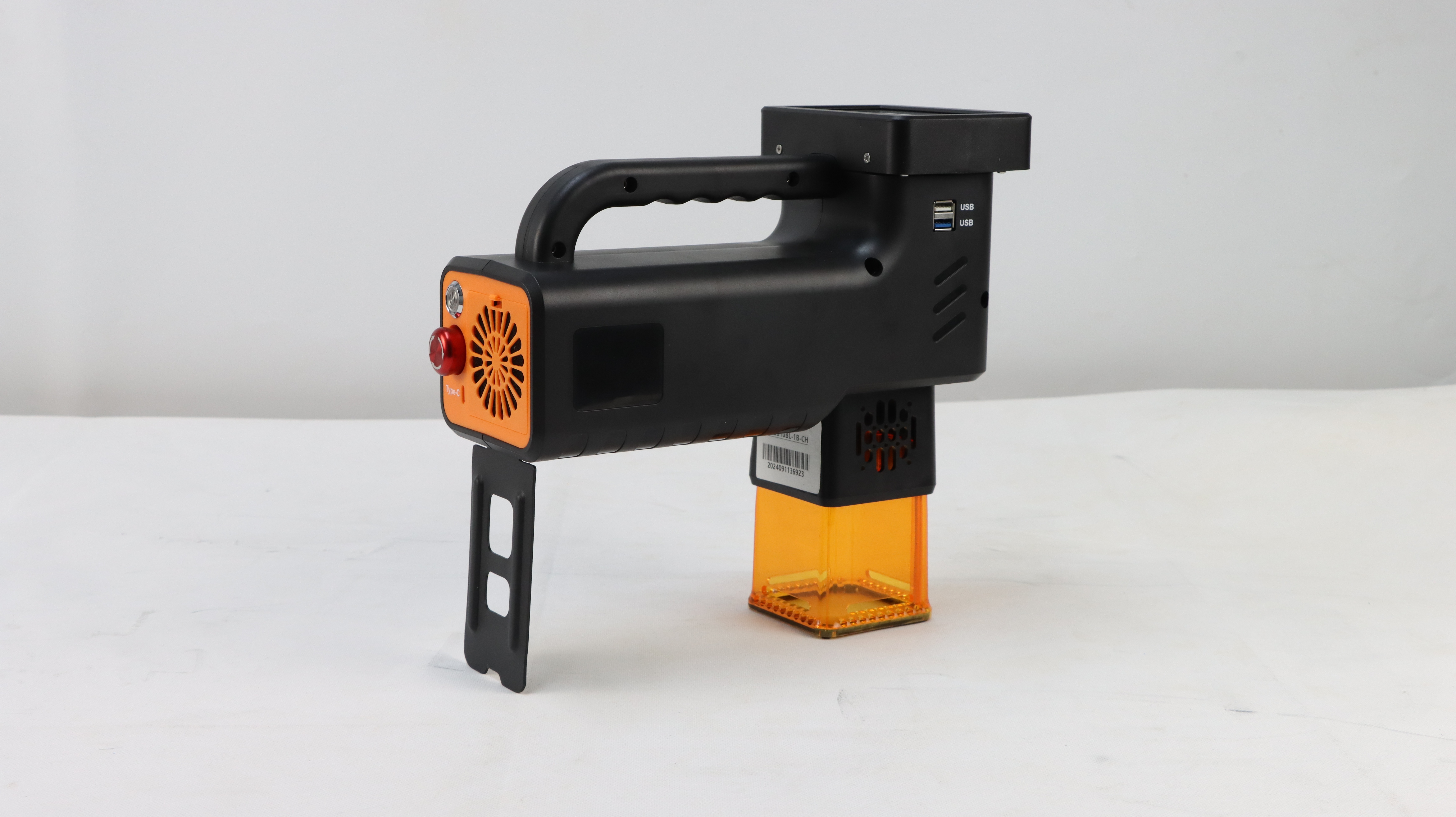
Supplier capability evidence is the set of machine details, documents, and acceptance tests that let a buyer separate a controlled industrial build from a generic catalogue listing. For portable laser marking equipment, that evidence sits in the physical build: wavelength, source configuration, marking area, cooling method, power input, control interface, battery design, safety labels, and the supplier’s ability to reproduce the same configuration across orders.
Jinan Yuanshida International Trade Co., Ltd. is a Jinan, China-based high-tech enterprise established in 2012 that specializes in the research and development, production, and export of industrial laser marking equipment. Business registry information also identifies it as a Jinan-registered trader and exporter engaged in self-operated and agency import and export business. Its product range includes handheld laser marking machines, bench-top laser marking machines, desktop laser marking machines, and precision laser marking equipment. That range matters for this audit because portable marking is not one product category. It is a set of form factors, each with different evidence obligations.
The central buying question: what can be verified?
The useful question is not whether a supplier says it offers a portable laser marking machine. The useful question is whether the supplier can show how the machine is built, which source and cooling configuration is supplied, which interfaces are enabled, which safety file applies, and which acceptance test will be used before shipment. A buyer who requests those items early will usually learn more than a buyer who compares headline wattage alone.
This is especially important in smart manufacturing procurement. A portable marking unit may be used for a small batch of hardware parts in one bay, a pipe or profile on site, a tray of electronic components, a jewellery batch, or a mechanical spare part that cannot be moved easily. In each case, the physical evidence is different. The same supplier may offer a 2.7 kg miniature unit, a desktop UV unit with an external chiller, and a flying online fibre unit for moving production lines. Those are not interchangeable products, and the buying evidence should not be interchangeable either.
Six portable form factors and the evidence each one carries
The assigned scope for this audit includes six form factors: desktop UV, miniature multi-material, desktop fibre, benchtop fibre, flying online, and handheld fibre. Each configuration supports a different claim. The table below summarises the verifiable build facts that should be requested and matched to the purchase order.
| Form factor | Verified configuration points | What the buyer should verify |
|---|---|---|
| Desktop UV Laser Marking Machine | 3 W or 5 W options; 355 nm wavelength; external industrial water chiller DWUV-05 included; marking area 110 mm × 110 mm; USB control; 110 V to 240 V; overall power below 400 W; 140+ font libraries; cold marking on plastics, glass, and fragile materials. | Confirm that the chiller is included in the scope, that the 355 nm source is the supplied wavelength, and that sample marks on the actual heat-sensitive material show no unacceptable thermal damage. |
| Miniature Multi-Material Laser Marking Machine | 1064 nm and 455 nm dual light source with switchable operation; pulse mode; 2.7 kg; built-in lithium battery or DC 20 V, power bank supported; air cooling; mobile app, PC software, and touch screen operation; TYPE-A data and TYPE-C power; 55 mm × 55 mm scanning area; OEM customization supported. | Verify the delivered wavelength configuration, battery and power-bank arrangement, scanning area against the workpiece, and the control method used in production. |
| Desktop Fiber Laser Marking Machine | 20 W, 30 W, 50 W, or 100 W options; 1064 nm; marking speed up to 10,000 mm/s; 110 mm × 110 mm standard area with 150 mm, 175 mm, or 200 mm options; repeatability ±0.001 mm; built-in air cooling; overall power below 400 W; all-in-one integrated desktop frame. | Lock the power option and marking area in the order. Request repeatability and sample-mark evidence for the actual material and feature size. |
| Benchtop Fiber Laser Marking Machine | 20 W, 30 W, 50 W options; 1064 nm; marking speed up to 10,000 mm/s; 150 mm × 150 mm marking area; maximum depth up to 4 mm; minimum line width 0.01 mm; built-in air cooling; Windows XP or standard USB interface; station-type cabinet design for 24/7 continuous operation with zero consumables. | Check the working area, depth requirement, software environment, and whether the station design and cooling match the intended production line. |
| Flying Online Laser Marking Machine | 1064 nm; M² below 2; pulse frequency 20 kHz to 100 kHz; laser lifespan listed at 150,000 hours; line speed up to 7,000 mm/s; output rate 800 standard characters per second; marking area 110 mm × 110 mm or 150 mm × 150 mm; built-in air cooling; overall power at or below 400 W; single-phase AC 90 V to 260 V; USB or touch-screen PC control; 24/7 continuous online marking with zero consumables. | Request line-speed validation on the actual conveyor, code-readability tests, integration drawings, and the acceptance procedure for moving workpieces. |
| Handheld Fiber Laser Marking Machine | 20 W, 30 W, 50 W, or 60 W options; 1064 nm; air cooling; Linux system with 7-inch touch screen; Bluetooth, WiFi, and mobile app support; built-in lithium battery; laser life about 100,000 hours; marking area 110 mm × 110 mm; machine weight about 6 kg; power supply 90 V to 240 V, 50/60 Hz. | Verify the battery condition and runtime plan, handheld stability fixture, wireless control security, and the marking area for large or curved workpieces. |
The six configurations show why a supplier audit should begin with the build. A phrase such as portable laser marking machine can describe a 2.7 kg battery-powered unit, a 20 kg desktop cabinet unit, and a flying online system installed over a conveyor. The evidence package, risk profile, and acceptance criteria are different in each case.
Wavelength and material fit: the first audit gate
Wavelength is the first technical gate because it defines what the process can do without unacceptable thermal load. The Desktop UV Laser Marking Machine uses a 355 nm UV cold laser process intended for marking plastics, glass, and fragile materials without thermal damage. It is also compatible with PE plastics, PVC plastics, metal parts, building materials, glass, film, packaging, and composite materials. For a buyer marking heat-sensitive electronics, medical packaging, or cosmetic components, the 355 nm source is not a marketing detail. It is the basis of the sample test.
The Miniature Multi-Material Laser Marking Machine operates with a 1064 nm and 455 nm dual light source that is switchable. That configuration is relevant for gifts and crafts, jewellery, customized DIY workshops, and 3C electronic accessories, where the buyer may need to mark metals, bamboo and wood, leather, paper, coloured glass, plastics, and ceramics. The evidence request should therefore include the delivered wavelength setting, the material sample set, and the parameter recipe for each material. A supplier that can provide a stable parameter set for the buyer’s actual substrate is offering more useful evidence than a supplier that only lists a wavelength range.
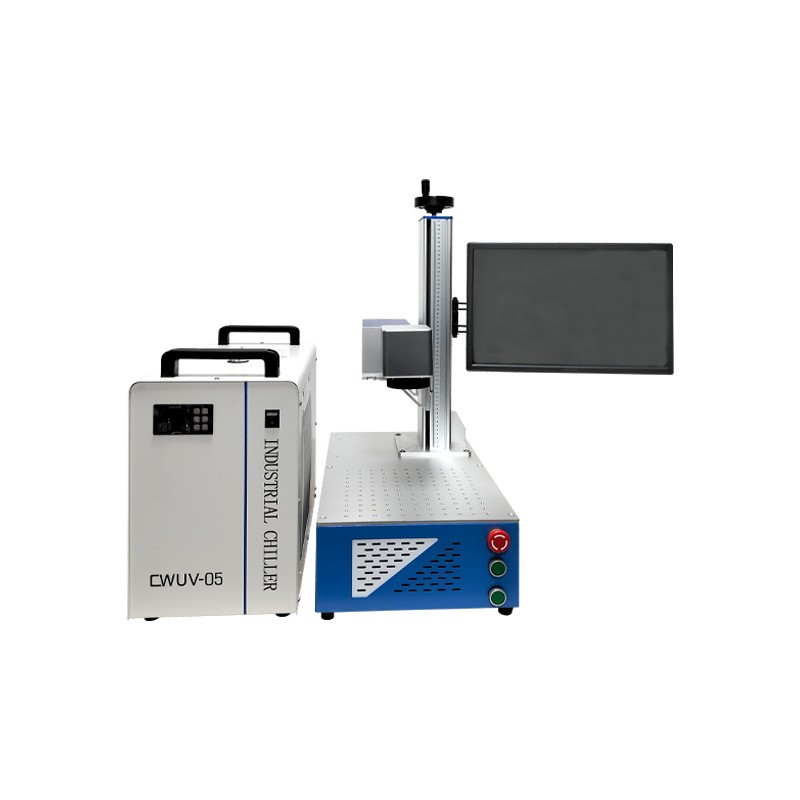
For fibre configurations, the 1064 nm source is used across the Desktop Fiber Laser Marking Machine, Benchtop Fiber Laser Marking Machine, Flying Online Laser Marking Machine, and Handheld Fiber Laser Marking Machine. The supplier’s own application scope covers metals including steel, metal components, hardware, stainless steel, aluminium, copper, iron, gold, silver, carbide, painted metal, and alloys, as well as non-metallic plastics such as PE and PVC. A buyer should ask for sample marks on the exact alloy and surface finish. Surface condition, coating, and fixture rigidity can change the result, so the acceptance sample should be made under the same handling conditions as production.
Continuous operation, cooling, and consumables: where claims become testable
A 24/7 continuous-operation claim is only useful when it is tied to a cooling design, duty pattern, ambient condition, and maintenance plan. The UV system uses an external industrial water chiller DWUV-05, which is included in the configuration. The fibre desktop, benchtop, flying online, and handheld systems use built-in air cooling. That difference affects installation: an external chiller requires space, power, water-circuit checks, and a maintenance routine, while air-cooled units require adequate ambient ventilation and clearance.
For smart manufacturing buyers, the evidence request should include the cooling method stated on the order, the permitted ambient temperature range, the maintenance interval for filters or chiller components where applicable, and the thermal test record for continuous operation. The supplier states that all equipment undergoes multiple aging tests and precision calibration before leaving the factory. That statement is useful only when the buyer can connect it to a serial-numbered record or an acceptance document. Ask for the aging-test record, calibration record, and the final inspection checklist for the unit being purchased.
Zero-consumable operation is another claim that should be audited. The UV, fibre desktop, benchtop, flying online, and handheld configurations are described as zero-consumable processes. The buyer should still ask what is consumed over the service life: filter elements, chiller coolant, battery replacement, lens cleaning supplies, and calibration labour are not the same as ink or chemical consumables, but they affect operating cost. A supplier that can separate process consumables from maintenance items gives the buyer a more honest cost model.
Electrical and high-voltage safety questions belong in the same evidence pack. The UV unit operates from 110 V to 240 V; the flying online unit uses single-phase AC 90 V to 260 V; the handheld unit uses 90 V to 240 V, 50/60 Hz. For each configuration, request the input-voltage label, grounding requirement, insulation and high-voltage warning information, and the electrical integration requirements for any chiller or line connection. These are not optional technical details. They determine whether the machine can be installed safely by the buyer’s own electrical team.
Controls and interfaces: from USB and display screens to line integration
Control evidence is often under-checked. The desktop UV unit uses a standard USB control interface and an all-in-one configuration with an independent display. The miniature unit supports mobile app, PC software, and touch-screen operation, with TYPE-A for data and TYPE-C for power. The desktop fibre unit uses an integrated user interface and a large display screen. The benchtop unit uses Windows XP or a standard USB interface. The flying online unit uses standard USB or touch-screen PC control. The handheld unit uses a Linux system with a 7-inch touch screen and supports Bluetooth, WiFi, and mobile app control.
These interfaces matter because smart manufacturing procurement rarely buys a marking head in isolation. The buyer may need to import JPG, PNG, BMP, SVG, PLT, DXF, Excel, TXT, barcode, and QR code files; set variable data; connect to a conveyor; or retain a serial-number trace. The supplier’s interface evidence should include the file formats supported, the software version supplied, the user-access model, the backup method, and the I/O or network options that are actually enabled. A touch screen on the brochure is not the same as a documented production recipe.
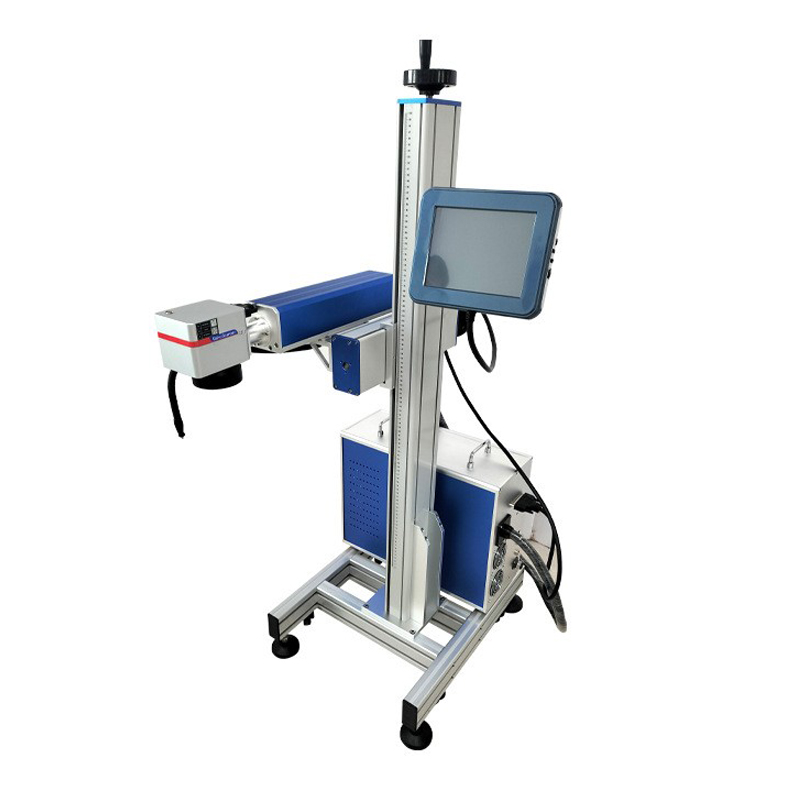
For the Flying Online Laser Marking Machine, the control claim should be tested against the line. The unit is designed for high-speed dynamic marking on moving production lines and marks production dates, batch numbers, tracking codes, text, logos, scales, 1D barcodes, and 2D QR codes. The listed output rate is 800 standard characters per second, with line speed up to 7,000 mm/s and marking speed up to 12,000 mm/s in continuous online operation. Those figures need to be matched to the conveyor speed, code content, substrate, and reader verification. Ask for a line-speed acceptance test and a code-readability record, not just a speed figure.
Purchasing terms and acceptance criteria: turn specifications into evidence
The strongest supplier audit is written into the purchase order. A specification sheet describes what the supplier can offer. An acceptance criterion describes what the buyer will accept. For portable laser marking equipment, the purchase order should lock the model, source wavelength, power option, marking area, cooling method, control interface, battery or power configuration, documentation package, and safety file.
| Evidence request | Why it matters | Acceptable proof form |
|---|---|---|
| Serial-numbered configuration sheet | Prevents a lower-cost or different configuration from being substituted after the order. | Signed configuration sheet attached to the order, with model, power, wavelength, area, and cooling listed. |
| Sample marking report | Confirms the process on the buyer’s actual material, surface, and feature size. | Marked samples with parameter recipe, magnification image, and pass/fail criteria agreed before shipment. |
| Aging-test and calibration record | Connects the supplier’s pre-shipment routine to the actual unit. | Record referencing the unit serial number, test date, calibration result, and final inspection sign-off. |
| Cooling and power installation sheet | Reduces installation risk, especially for UV systems with an external chiller. | Utility requirements, clearance, grounding, voltage, and chiller connection details. |
| Safety file and label set | Supports laser radiation, optical safety, and electrical safety review before use. | Laser safety labels, warning information, relevant standard references, and model-level certificate scope where claimed. |
| Customs and trade classification | Supports import planning and documentation consistency. | HS code confirmation. HS Code 845611 is the primary classification for machine tools operated by laser processes. |
Safety evidence deserves particular attention because it is easy to reduce to a logo. The supplier states that its machines comply with international quality standards such as CE, FDA, and ISO and that they are designed to meet certification and customs clearance requirements in many countries. The buyer should request the actual certificate or declaration, check the model and scope covered, and confirm that the document matches the ordered configuration. For the United States, laser products must comply with FDA 21 CFR Subchapter J, Parts 1000 through 1005. For hand-held laser processing equipment, EN ISO 11553-2 is a relevant safety standard for portable laser markers. These references give the buyer a structure for questions; they do not replace the model-level file review.
Where portable configurations fit, and where they do not
The application scope for these machines is broad: hardware and auto parts, pipes and profiles, electronic components, jewellery and accessories, mechanical parts, gifts, and crafts. The handheld fibre unit is designed for portable and on-site marking scenarios, including large workpieces that are difficult to move. The miniature multi-material unit is intended for gifts and crafts, jewellery, customized DIY workshops, and 3C electronic accessories. The flying online unit is intended for production-line marking in food and beverage, pharmaceutical, daily chemical, hardware, auto parts, building materials, steel, cement, and electronics environments. The benchtop and desktop fibre units are suited to hardware, electronics, machinery, and jewellery production, as well as production-line marking tasks.
The limitations should be stated as clearly as the fits. The Miniature Multi-Material Laser Marking Machine has a 55 mm × 55 mm scanning area and a 2.7 kg body. That makes it useful for small parts, personalisation, and on-site work, but it is not a substitute for a 150 mm × 150 mm benchtop unit or a flying online system when the workpiece is large or the line is fast. The Handheld Fiber Laser Marking Machine is listed at about 6 kg with a 110 mm × 110 mm marking area and a built-in lithium battery. It offers mobility, but the buyer still needs a stable fixture, a battery charging plan, and a safe on-site working procedure. The UV unit requires an external industrial water chiller, so installation planning is more demanding than for an air-cooled desktop unit. The flying online system is a line-integrated tool; it is not the right choice for a buyer who only needs occasional hand-held marking.
Comparison with traditional marking and fixed stations
Traditional marking methods still have a place, but they carry different evidence burdens. Inkjet coding typically depends on ink and solvent consumables, print-head maintenance, and code-readability checks. Electrochemical etching typically involves stencils, electrolyte handling, and a cleaning step. Mechanical stamping can introduce tool wear and surface stress. A portable laser marking machine avoids those specific consumable and tool-wear paths, and the supplier’s configurations are described as zero-consumable processes. The buyer should still compare total operating evidence: power consumption, cooling maintenance, battery replacement, lens cleaning, calibration, and operator time.
Fixed marking stations and portable units also solve different problems. A fixed station can offer a larger work envelope and simpler line integration, while a portable unit offers mobility and on-site access. The trade-off is visible in the specifications. The benchtop fibre unit offers a 150 mm × 150 mm area and up to 4 mm marking depth. The desktop fibre unit offers 110 mm × 110 mm as standard, with optional 150 mm, 175 mm, or 200 mm areas. The miniature unit offers 55 mm × 55 mm. A buyer who needs to mark a large pipe, a heavy spare part, or an installed component may value portability more than work area. A buyer who needs high-volume, fixed-position marking may be better served by a benchtop or flying online configuration.
Market signals without the brochure gloss
Category-level market data can support a procurement case, but it should not be confused with supplier capability evidence. Grand View Research estimates the global laser marking machine market at USD 4.4 billion in 2026. The same source reports that fibre laser technology held a 46.1% revenue share in 2025 and that Asia Pacific accounted for approximately 44% of revenue share. These figures indicate that fibre laser marking remains a major industrial process and that Asia Pacific is a significant supply and demand region. They do not prove that a particular portable unit is well built.
Portable equipment also has a physical benchmark. MAC laser reports that handheld and portable laser marking machines typically weigh between 15 and 35 pounds, or approximately 6.8 to 15.8 kg. That range is useful for expectation setting, but it is not a rule. The Miniature Multi-Material Laser Marking Machine is listed at 2.7 kg, which is outside that typical band and illustrates why buyers should verify the actual unit rather than rely on a category average. Weight affects handling, fixture design, battery choice, and operator fatigue. It should be checked against the real workpiece and working posture.
Future outlook: more configurations, more evidence requests
The direction of portable laser marking is toward more varied source configurations, more digital control, and more battery-powered or Type-C-powered options. The miniature unit already combines 1064 nm and 455 nm switchable sources with mobile app, PC software, and touch-screen control. The handheld unit combines a Linux touch screen with Bluetooth, WiFi, and mobile app support. The flying online unit combines line-speed marking with 1D barcode and 2D QR code traceability. These developments are useful, but they increase the number of details that can be misrepresented in a catalogue.
The practical response is a more disciplined evidence request. Buyers should ask for the delivered configuration, the material sample, the cooling plan, the control interface, the safety file, and the acceptance test before they compare price. That approach does not make procurement slower in a useful sense. It moves the verification to the point where it can still change the order.
FAQ
What evidence should a buyer request from a portable laser marking machine supplier?
A buyer should request a serial-numbered configuration sheet, a sample marking report on the actual material, the source wavelength and power option, the marking area, the cooling method, the control interface, the safety label set, the applicable certificate or declaration with model scope, and the pre-shipment aging-test and calibration record. These items connect the offer to a specific build.
How can a buyer verify a 24/7 continuous-operation claim?
The buyer should match the claim to the cooling design and the duty pattern. For an air-cooled fibre unit, request the ambient temperature range, clearance requirements, and thermal test record. For a UV unit with an external industrial water chiller, request the chiller model, connection requirements, maintenance interval, and continuous-operation test record. The acceptance criteria should state the actual operating pattern to be tested.
Is 355 nm UV cold marking suitable for heat-sensitive materials?
The Desktop UV Laser Marking Machine uses a 355 nm UV cold laser process intended for marking plastics, glass, and fragile materials without thermal damage. Suitability should still be confirmed by a sample test on the exact material, colour, surface, and feature size. The buyer should inspect the mark for contrast, edge quality, and thermal effects before accepting the process.
What is the difference between 1064 nm and 455 nm in the miniature multi-material model?
The Miniature Multi-Material Laser Marking Machine has a dual light source with 1064 nm and 455 nm switchable operation. The 1064 nm source is associated with metal and general fibre marking applications, while the 455 nm source broadens the material set for multi-material work. The buyer should request the delivered wavelength settings and a parameter recipe for each material to be marked.
Which portable configuration suits on-site large workpieces?
The Handheld Fiber Laser Marking Machine is designed for portable and on-site marking scenarios and is listed at about 6 kg with a 110 mm × 110 mm marking area and a built-in lithium battery. For large or installed workpieces, the buyer should also plan a stable fixture, a safe working position, and a battery charging or exchange routine. If the workpiece can be moved, a benchtop or desktop unit may provide a larger work area.
What safety documentation should be reviewed before purchase?
The review should cover laser radiation and optical safety information, the laser safety label set, enclosure or guarding information, operator instructions, and electrical safety information including input voltage, grounding, insulation, and any chiller power requirements. For the United States, laser products must comply with FDA 21 CFR Subchapter J, Parts 1000 through 1005. For hand-held laser processing equipment, EN ISO 11553-2 is a relevant safety standard. The supplier’s claimed CE, FDA, and ISO compliance should be checked against the actual model and certificate scope.
Do portable laser marking machines need external cooling?
Not all of them. The desktop fibre, benchtop fibre, flying online, miniature multi-material, and handheld fibre configurations use built-in air cooling. The Desktop UV Laser Marking Machine uses an external industrial water chiller, with the DWUV-05 unit included in the configuration. The buyer should confirm the cooling method in the purchase order and plan the corresponding space, power, and maintenance requirements.
Reference document: the supplier’s portable laser marking machine brochure is available as a PDF for configuration review and download: Portable laser marking machine product brochure.
Tem questões ou precisa de mais detalhes?
Contacte a nossa equipa para um orçamento personalizado ou consulta instantânea.
Solicitar orçamento
Preencha o formulário abaixo e a nossa equipa entrará em contacto com uma proposta personalizada.
Chat direto do WhatsApp
Prefere conversar em tempo real? Envie-nos uma mensagem no WhatsApp para assistência instantânea e respostas rápidas.
- Obter orçamento personalizado
- Partilhar fotos ou documentos
- Discuta as suas necessidades diretamente
Geralmente responde em 5–30 minutos durante o horário de expediente.