
Portable Laser Marking Machine: Supplier Evidence Checklist
Portable Laser Marking Machine: Supplier Evidence Checklist
A portable laser marking machine quotation usually names a model family, a power rating and a price. Those three items do not tell a buyer what will be delivered, because marking area, cooling architecture, control interface and operating system can all change within the same family name.
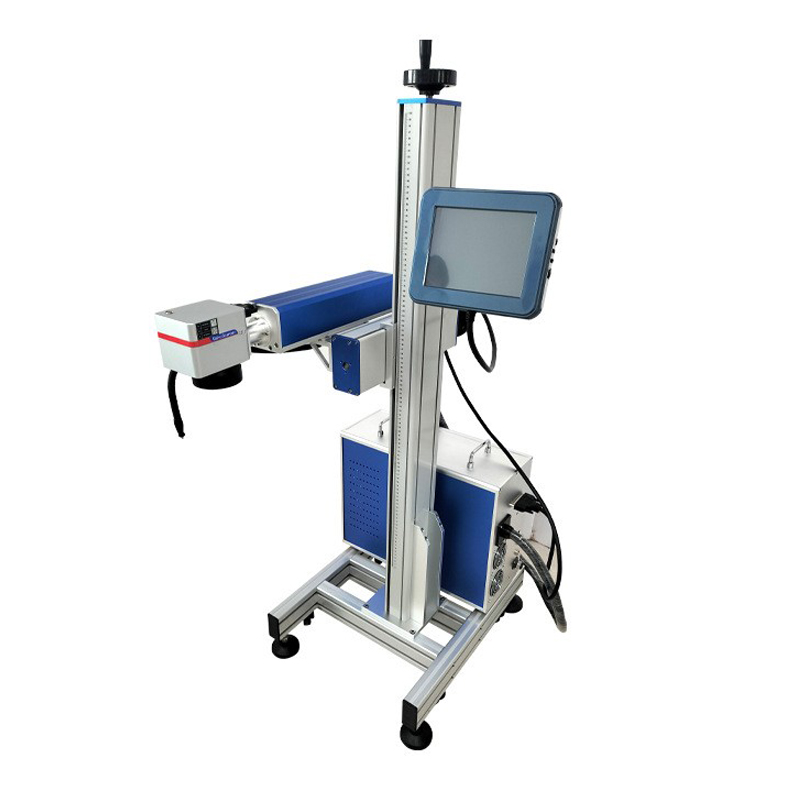
Figure 1 — Marking equipment spans handheld, miniature, desktop, benchtop and inline flying configurations, and each configuration has to be evidenced separately.
Configuration mismatch is one of the more common sources of dispute in this equipment category. A sample marks well at the supplier's facility, the purchase order names a familiar model, and the unit that arrives differs from the buyer's expectation in marking area, interface type, cooling method or control software. The gap is rarely deliberate. It is usually a documentation gap that neither side closed before shipment.
This checklist is written for procurement and engineering teams in the research and evaluation stage. It converts supplier claims into thirteen checkable data points, applies them to six marking configurations, and shows how to compare two or three quotations against one evidence standard. Jinan Yuanshida International Trade Co., Ltd, a Jinan-based company founded in 2012 that develops, produces and exports industrial laser marking equipment and ships to more than 80 countries and regions, is used as the reference supplier because its published parameters are specific enough to test the method against.
Why a model name is not configuration evidence
Model families in this category are ranges, not fixed products. The Desktop Fiber Laser Marking Machine is quoted across 20 W, 30 W, 50 W and 100 W power options, with a standard 110 x 110 mm marking area and optional 150 x 150 mm, 175 x 175 mm or 200 x 200 mm areas. “Desktop fiber” therefore describes a platform, not a machine.
The word portable is equally elastic. It covers at least four different physical ideas: a handheld unit with a built-in lithium battery, a 2.7 kg miniature unit powered over TYPE-C or an external DC supply, a desktop UV unit that is transportable but requires an external industrial water chiller (DWUV-05 included), and a flying online system that is installed on an existing production line and is not portable in the everyday sense.
Once “portable” is understood as a set of configurations rather than one product, the procurement question changes. It is no longer which portable machine is best, but which configuration is being quoted and what evidence supports each value inside the quote.
The thirteen-point supplier capability evidence checklist
The checklist below is deliberately mechanical. Each line must be answered in writing, on the quotation or in an annex, before the purchase order is issued. A field that is left blank is treated as unverified, not as “standard”.
| Checkpoint | What to request in writing | Why it changes the decision |
|---|---|---|
| 1. Marking area | mm x mm at the quoted lens, distinguished from any optional larger area | Defines the largest workpiece or fixture that can be marked without repositioning |
| 2. Dimensions | Machine dimensions and, for inline units, overall installed dimensions | Determines bench space, enclosure clearance and line integration |
| 3. Weight | kg, with the battery fitted where a battery is used | Determines whether on-site use is realistic and how the unit is mounted |
| 4. Power options | W values available and the wattage of the quoted unit | A quote may name a family but ship a lower point of the power range |
| 5. Wavelength / light source | nm value, and whether one or two sources are fitted | Controls which materials can be marked without thermal damage |
| 6. Cooling method | Air cooling or water cooling, with chiller model if water is used | Changes footprint, maintenance routine and whether the unit is truly cordless |
| 7. Interface | USB, TYPE-A, TYPE-C, and the function of each port | A data port and a power port are not interchangeable in production use |
| 8. Built-in display | Screen size, touch capability, standalone or PC-dependent operation | Determines whether the unit can run without an external computer |
| 9. Battery support | Built-in lithium battery, DC input range, and stated run conditions | Determines genuine field use versus powered indoor use |
| 10. Operating system | Linux, Windows, mobile app, PC software, or a combination | Affects file transfer, IT policy compliance and operator training |
| 11. Marking speed | mm/s, and the condition under which the figure is achieved | Speed claims vary between static marking and continuous online marking |
| 12. Repeatability | ± mm, stated as an inspection parameter | Determines whether repeated marks on the same datum stay within tolerance |
| 13. Minimum character size | Minimum character and minimum line width in mm | Sets the smallest legible code or serial number the process can deliver |
Practical rule: a blank field is resolved in the supplier's favour after delivery. Any of the thirteen lines that remains unanswered at the quotation stage should be marked as unverified and carried into the purchase order annex.
Reading each checkpoint: what the values actually constrain
Physical envelope: marking area, dimensions and weight
The Handheld Fiber Laser Marking Machine is stated at approximately 6 kg with a 110 x 110 mm marking area. That weight sits at the lower end of the 15 to 35 lb (approximately 6.8 to 15.8 kg) range reported for handheld and portable marking machines in a 2026 industry guide, which is the evidence a buyer needs before accepting an on-site marking claim. Ask whether the stated figure includes the marking head, the battery and any handle or harness.
The Miniature Multi-Material Laser Marking Machine is stated at 2.7 kg with a 55 x 55 mm scanning area and a 133 mm scene focal length. The small envelope is the trade-off: it suits jewelry, gifts and small 3C accessories, not large workpieces. The UV Laser Marking Machine is stated at 352 x 603 x 800 mm, and the Flying Online Laser Marking Machine is stated at 500 x 500 x 300 mm for the main unit and 1470 x 580 x 840 mm overall, which is the figure that matters when a line installation is planned.
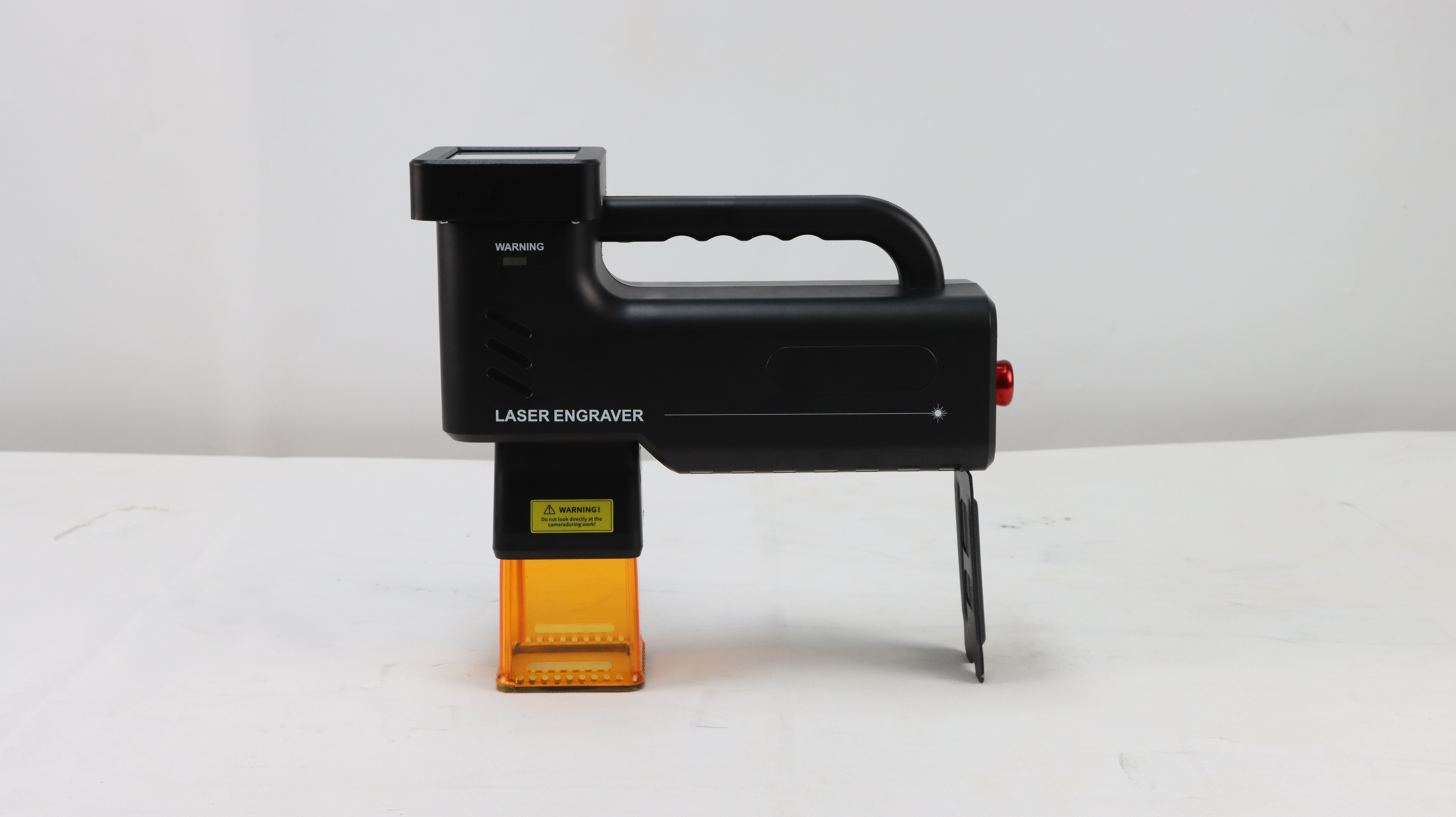
Figure 2 — The miniature configuration trades working area for weight and portability: 2.7 kg, 55 x 55 mm scanning area, TYPE-C power input.
Optical path: power options, wavelength and cooling method
Power options should be read as a range, not a promise. The Handheld Fiber Laser Marking Machine is listed at 20 W, 30 W, 50 W and 60 W with a 1064 nm wavelength; the Desktop Fiber Laser Marking Machine at 20 W, 30 W, 50 W and 100 W; the Benchtop Fiber Laser Marking Machine at 20 W, 30 W and 50 W. A quotation that says “desktop fiber, 30–100 W” has not yet stated which unit is being sold.
Wavelength is the constraint that most often decides suitability. Fiber sources at 1064 nm cover metals such as steel, stainless steel, aluminium, copper, iron, gold, silver and carbide, and also non-metallic materials including PE, PVC, acrylic, leather and painted surfaces. The UV configuration operates at 355 nm with 3 W or 5 W power, a pulse width of less than 60 ns and M2 < 1.5 in single mode, and is specified for PE and PVC plastics, metal parts, glass, film, packaging and composite materials where thermal damage is a concern. The Miniature Multi-Material Laser Marking Machine carries a switchable dual source of 1064 nm and 455 nm, which is what supports its stated material list of metals, bamboo and wood, leather, paper, colored glass, plastics and ceramics.
Cooling is the checkpoint buyers most often skip, and it changes the operating model. The Handheld, Miniature, Desktop Fiber, Benchtop and Flying configurations are all stated as air cooled. The UV configuration uses an external industrial water chiller, DWUV-05 included, so the unit is transportable rather than cordless, and the chiller is part of the delivered scope. Confirm the chiller is inside the quoted price rather than an accessory line.
Control layer: interface, display, battery and operating system
“USB” in a specification can mean three different things. The Handheld Fiber Laser Marking Machine is stated with a Linux system, a 7-inch touch screen, Bluetooth, WiFi and mobile app support, and a standard power supply of 90 V to 240 V at 50/60 Hz, alongside its built-in lithium battery. The Miniature Multi-Material Laser Marking Machine separates its ports explicitly: TYPE-A for data and TYPE-C for power, with operation through a mobile app, PC software or a touch screen. The Benchtop Fiber Laser Marking Machine is stated with a Windows XP operating system and a standard USB interface, an integrated workbench, a large display, a built-in control panel and a keyboard drawer. The Flying Online Laser Marking Machine uses touch screen PC control with a standard USB interface, a built-in touch screen computer and an adjustable lifting column. The UV configuration is an all-in-one unit with an independent display, standard USB, more than 140 font libraries and custom fonts available on request.
Two practical consequences follow. First, a TYPE-A port described as a data port does not automatically mean the machine accepts a USB drive containing production files; ask what each port does and which file formats are supported. The Handheld configuration is stated to import JPG, PNG, BMP, SVG, PLT, DXF, Excel, TXT, barcode and QR code files, which is the level of detail a buyer should expect for every quoted model. Second, a stated Windows XP environment is a fact about the configuration, not an upgrade; buyers whose plant IT policy restricts legacy operating systems should confirm the match before the order rather than after delivery.
Throughput and precision: marking speed, repeatability and minimum character size
Marking speed has to be quoted with its condition. The Desktop Fiber, Benchtop and UV configurations are each stated at up to 10,000 mm/s. The Flying Online Laser Marking Machine is stated at up to 12,000 mm/s for continuous online marking, with a line speed of up to 7,000 mm/s, an output rate of 800 standard characters per second and an engraving depth of up to 0.4 mm. The Miniature Multi-Material configuration is stated at up to 4,000 mm/s. The Handheld configuration's published parameters in this data set state power, wavelength, cooling, control and battery but not a marking speed figure, so that value must be requested in writing.
Repeatability separates the platforms more sharply than speed does. The Desktop Fiber, Benchtop and UV configurations are stated at ±0.001 mm, while the Flying Online configuration is stated at ±0.003 mm, consistent with marking a moving workpiece rather than a fixed one. Minimum character size is stated at 0.15 mm across the Desktop Fiber, Benchtop, UV and Flying configurations, with minimum line widths of 0.4 mm, 0.01 mm, 0.4 mm and 0.012 mm respectively. That difference matters for fine serialisation and micro-marking, and it is one of the few places where a lower-priced desktop unit and a cabinet unit diverge on paper. Where a configuration does not publish these values, the absence is itself an answer: request them before shortlisting.
Six configurations compared on stated evidence
The two tables below take the same published parameters and lay them out in the checklist format. They are intended as the template a buyer should build for every quotation received.
| Configuration | Wavelength / source | Power options | Marking area | Cooling | Control and interface |
|---|---|---|---|---|---|
| Handheld Fiber Laser Marking Machine | 1064 nm | 20 / 30 / 50 / 60 W | 110 x 110 mm | Air | Linux, 7-inch touch screen, Bluetooth, WiFi, mobile app; built-in lithium battery; 90–240 V, 50/60 Hz |
| Miniature Multi-Material Laser Marking Machine | 1064 nm / 455 nm, switchable | Regulation range 25–100, gradient adjustable | 55 x 55 mm scanning area | Air | Mobile app, PC software, touch screen; TYPE-A data, TYPE-C power; battery or DC 20 V |
| Desktop Fiber Laser Marking Machine | 1064 nm, pulse width < 60 ns | 20 / 30 / 50 / 100 W | 110 x 110 mm (150 x 150, 175 x 175, 200 x 200 optional) | Built-in air cooling | Integrated user interface with large display; high-speed galvanometer scanning |
| Benchtop Fiber Laser Marking Machine | 1064 nm, pulse width < 60 ns | 20 / 30 / 50 W | 150 x 150 mm | Built-in air cooling | Windows XP, standard USB; integrated workbench, large display, keyboard drawer |
| UV Laser Marking Machine | 355 nm, pulse width < 60 ns, M2 < 1.5 | 3 / 5 W (optional) | 110 x 110 mm | External industrial water chiller, DWUV-05 included | Independent display, all-in-one; standard USB; 140+ font libraries |
| Flying Online Laser Marking Machine | 1064 nm, M2 < 2, pulse frequency 20–100 kHz | Pulse frequency range as stated | 110 x 110 mm or 150 x 150 mm (optional) | Built-in air cooling | Touch screen PC control, standard USB; built-in touch screen computer, adjustable lifting column |
| Configuration | Marking speed | Repeatability | Minimum character / line width | Stated dimensions or weight |
|---|---|---|---|---|
| Handheld Fiber Laser Marking Machine | Not stated in the published parameters — request in writing | Not stated — request in writing | Not stated — request in writing | Approximately 6 kg |
| Miniature Multi-Material Laser Marking Machine | Up to 4,000 mm/s | Not stated — request in writing | Not stated — request in writing | 2.7 kg; scene focal length 133 mm |
| Desktop Fiber Laser Marking Machine | ≤ 10,000 mm/s | ±0.001 mm | 0.15 mm / 0.4 mm | Not stated — request in writing |
| Benchtop Fiber Laser Marking Machine | ≤ 10,000 mm/s | ±0.001 mm | 0.15 mm / 0.01 mm | Not stated — request in writing |
| UV Laser Marking Machine | ≤ 10,000 mm/s | ±0.001 mm | 0.15 mm / 0.4 mm | 352 x 603 x 800 mm |
| Flying Online Laser Marking Machine | ≤ 12,000 mm/s continuous online; line speed up to 7,000 mm/s | ±0.003 mm | 0.15 mm / 0.012 mm | Main unit 500 x 500 x 300 mm; overall 1470 x 580 x 840 mm |
The tables are also a diagnostic tool. Gaps appear in a predictable pattern: the handheld and miniature configurations publish weight and control data but not always speed or precision data, while the fixed configurations publish precision data but not always dimensions. A buyer who builds these two tables for every quote will see quickly which supplier is describing a machine and which is describing a product category.
How to compare quoted options without relying on a sample
A sample mark proves that the technology works. It does not prove that the quoted unit matches the delivered unit. The following sequence uses the checklist as an audit trail instead of a brochure exercise.
Step 1 — Normalise the quotes. Rebuild every quotation into the same thirteen lines, in the same order, using the supplier's own wording and units. Quotations in different formats cannot be compared, and the reformatting itself often exposes missing fields.
Step 2 — Mark every blank as unverified. Do not fill gaps with assumptions drawn from a catalogue or a similar model. The Desktop Fiber Laser Marking Machine and the Benchtop Fiber Laser Marking Machine share a wavelength and a speed figure but differ in operating system, marking depth and enclosure, so a gap in one cannot be closed by reference to the other.
Step 3 — Test the configuration against the workpiece. Heat-sensitive plastics, film and glass point toward the 355 nm UV configuration; mixed-material small parts point toward the dual-source miniature configuration; large or awkward parts that cannot be moved point toward the handheld configuration; fixed-station volume production points toward the desktop or benchtop configuration; moving lines point toward the flying configuration, which requires the line to accept an inline unit.
Step 4 — Request physical evidence per line. Nameplate photograph, a display screenshot showing the operating system and parameter page, the battery or power input label, the chiller nameplate where water cooling is used, a close-up of the interface ports, and the pre-shipment inspection record. The company states that all equipment undergoes multiple aging tests and precision calibration before leaving the factory, so the corresponding record should be obtainable rather than theoretical.
Step 5 — Attach the checklist to the purchase order. The thirteen values belong in an annex to the order, and the acceptance inspection compares the delivered nameplate and control screen against that annex. This converts a specification conversation into a verifiable delivery condition. Commercial terms worth fixing at the same time include the minimum order quantity, which is stated as 5, and the delivery schedule, which is stated as factory scheduling by order volume.
Certification evidence: read the scope, not the logo
Certification is the checkpoint where logos most often substitute for documents. Two certificates are documented for this product range, and both are specific enough to be checked by number.
The CE Declaration of Conformity for the Handheld Fiber Laser Marking Machine is numbered M.2024.206.C105275, issued by UDEM International Certification Auditing Training Centre Industry and Trade Inc., issued on 2024-08-12 and valid until 2029-08-12, covering the European Union market. The listed standards include EN ISO 12100:2010, EN 60204-1:2018, EN 60825-1:2014+A11:2021, EN ISO 11553-1:2020+A11:2020 and the EN IEC 61000 series for electromagnetic compatibility.
The FDA Radiological Health Electronic Submission Confirmation is numbered 2211928-000, issued by CCTS (Shenzhen Zhongan Quality Inspection and Certification Co., Ltd) on 2022-11-15, applying to the United States market under Title 21 CFR Part 1002. That sits inside the framework buyers should recognise: laser products sold in the USA must comply with FDA 21 CFR Subchapter J, Parts 1000 through 1005. For hand-held devices specifically, EN ISO 11553-2 is the part of the laser processing safety standard applied to hand-held machinery, so a buyer evaluating a handheld unit should ask which part applies to the delivered model and see the documentation that supports the answer. Trade documentation should also carry the correct classification: HS code 845611 is the primary classification for machine tools operated by laser processes.
Scope matters more than the logo. The two documents above are stated to cover the Handheld Fiber Laser Marking Machine. The other five configurations in this comparison are not covered by those documents in the material reviewed here, so equivalent per-model documentation should be requested for each configuration and each destination market before the order is placed.
Where the evidence currently stops
A checklist is only credible if it also records what cannot yet be confirmed. Several items relevant to this purchase decision are not published in the available documentation and should be requested directly rather than inferred.
Price band. No price band is published for any of the six configurations. Buyers should request a costed configuration rather than a family price, because the same model name can cover a 20 W and a 100 W unit with different optics.
Battery runtime and cycle life. The Handheld configuration is stated to include a built-in lithium battery and the Miniature configuration accepts a battery or DC 20 V input including power bank support, but neither publishes operating hours per charge or battery cycle life. Runtime under a realistic marking duty cycle is the number that determines whether cordless operation is practical on a site visit.
Cooling footprint. The UV configuration is transportable, not cordless, because the DWUV-05 industrial water chiller is part of the system. Buyers planning field use should size the logistics around the chiller rather than around the marking head alone.
Working area limits. The miniature configuration's 55 x 55 mm scanning area restricts it to small parts; the handheld configuration's 110 x 110 mm area suits on-site marking of large workpieces only through repositioning. Neither limitation appears in a general portability claim.
Manufacturing and inspection location. The supplying entity is registered in Jinan, China, and engages in self-operated and agency import and export business. Buyers should confirm which facility performs the aging tests and precision calibration, and request the inspection record that corresponds to their own serial number rather than a generic sample report.
ISO documentation. The company profile states compliance with CE, FDA and ISO. Certificate numbers are documented for the CE declaration and the FDA submission; the ISO certificate number and scope should be requested separately if that standard is a qualification requirement.
Market context: why fiber dominates and why the checklist still matters
The global laser marking machine market was estimated at USD 4.4 billion in 2026 by Grand View Research, and fiber laser technology held a 46.1% revenue share in 2025. Asia Pacific accounted for approximately 44% of revenue share in 2025. For buyers, the practical reading is straightforward: most quotations will be fiber-based, so fiber alone is not a differentiator, and the differentiation has to come from documented configuration and from the minority of cases where a non-fiber source is the correct answer.
That is why the UV and dual-source configurations in this comparison matter out of proportion to their volume. A 355 nm source with an external chiller is the configuration that addresses heat-sensitive plastics, glass and film without thermal damage, and a switchable 1064 nm / 455 nm source is what extends a single small-format machine across metals, colored glass, ceramics, leather and wood. Neither capability can be inferred from a family name; both appear only when the wavelength and source line is answered.
Future outlook
Configuration documentation is moving from a courtesy to a procurement norm. As quotations become more standardised, buyers are likely to ask for the thirteen fields as a matter of routine, and suppliers who publish stable, inspectable parameters will be easier to shortlist than those who publish families.
Two data gaps are likely to close first. Battery runtime and cycle life are the natural next specification for handheld and miniature units, because portability claims are currently supported by weight and battery presence rather than by measured operating hours. Per-model certification scope is the second: as buyers in the United States and the European Union learn to match a certificate number to a specific model and market, certificates that cover one configuration will increasingly need companions for the rest of a range.
For the evaluation stage, the conclusion is simple. A supplier that can answer all thirteen lines in writing, attach a certificate number with a scope, and accept those values in a purchase order annex is demonstrating capability more convincingly than one that offers a longer feature list.
Frequently asked questions
How can a buyer verify that a quoted portable laser marking machine is the exact configuration described?
Convert the quotation into thirteen lines covering marking area, dimensions, weight, power options, wavelength, cooling method, interface, display, battery support, operating system, marking speed, repeatability and minimum character size. Any blank line is unverified. Then request a nameplate photograph, a display screenshot showing the operating system and parameter page, and the pre-shipment inspection record, and attach the completed list to the purchase order.
What weight and dimension figures should appear in a quotation?
The Handheld Fiber Laser Marking Machine is stated at approximately 6 kg with a 110 x 110 mm marking area. The Miniature Multi-Material Laser Marking Machine is stated at 2.7 kg with a 55 x 55 mm scanning area. The UV Laser Marking Machine is stated at 352 x 603 x 800 mm, and the Flying Online Laser Marking Machine at 500 x 500 x 300 mm for the main unit and 1470 x 580 x 840 mm overall. A general industry reference puts handheld and portable units at roughly 15 to 35 lb, or about 6.8 to 15.8 kg, which is the benchmark a stated weight should be read against.
Which power, wavelength and cooling values should be stated?
The Handheld configuration is stated at 20 W, 30 W, 50 W and 60 W at 1064 nm with air cooling; the Desktop Fiber configuration at 20 W, 30 W, 50 W and 100 W at 1064 nm with built-in air cooling; the Benchtop configuration at 20 W, 30 W and 50 W at 1064 nm with built-in air cooling; the UV configuration at 3 W or 5 W at 355 nm with an external industrial water chiller, DWUV-05 included; and the Flying Online configuration at 1064 nm with M2 < 2, a 20 to 100 kHz pulse frequency and built-in air cooling.
What is the difference between USB, TYPE-A and TYPE-C on these machines?
The Handheld configuration is stated with a Linux system, a 7-inch touch screen, Bluetooth, WiFi and mobile app support. The Miniature configuration specifies TYPE-A for data and TYPE-C for power, with a battery or DC 20 V supply and operation through mobile app, PC software or touch screen. The Benchtop configuration is stated with Windows XP and a standard USB interface, the Flying Online configuration with touch screen PC control and a standard USB interface, and the UV configuration with an independent display and standard USB. A port designation should always be matched to its stated function.
How should marking speed, repeatability and minimum character size be compared across quotations?
Speed should be compared with its condition attached: the Desktop Fiber, Benchtop and UV configurations are stated at up to 10,000 mm/s, the Miniature configuration at up to 4,000 mm/s, and the Flying Online configuration at up to 12,000 mm/s for continuous online marking with a line speed of up to 7,000 mm/s. Repeatability is stated at ±0.001 mm for the Desktop Fiber, Benchtop and UV configurations and ±0.003 mm for the Flying Online configuration. Minimum character size is stated at 0.15 mm for the Desktop Fiber, Benchtop, UV and Flying configurations, with minimum line widths of 0.4 mm, 0.01 mm, 0.4 mm and 0.012 mm respectively. Where a value is not published, it should be requested rather than assumed.
Which certification documents should accompany an order?
For the Handheld Fiber Laser Marking Machine, the CE Declaration of Conformity is numbered M.2024.206.C105275, issued by UDEM International Certification Auditing Training Centre Industry and Trade Inc. on 2024-08-12 and valid until 2029-08-12 for the European Union market, and the FDA Radiological Health Electronic Submission Confirmation is numbered 2211928-000, issued by CCTS on 2022-11-15 under Title 21 CFR Part 1002 for the United States market. Buyers should check that the certificate names the specific model and market, and request equivalent documentation for any other configuration in the order.
Used as a working document rather than a reading exercise, the checklist turns a specification conversation into an inspection trail. The supplier reference in this article — Jinan Yuanshida International Trade Co., Ltd — publishes parameters detailed enough to populate most of the thirteen lines, which is itself the first test any shortlisted supplier should be asked to pass.
A downloadable PDF specification sheet for the second-generation marking machine range is available here: second-generation marking machine specification sheet (PDF).
Tem questões ou precisa de mais detalhes?
Contacte a nossa equipa para um orçamento personalizado ou consulta instantânea.
Solicitar orçamento
Preencha o formulário abaixo e a nossa equipa entrará em contacto com uma proposta personalizada.
Chat direto do WhatsApp
Prefere conversar em tempo real? Envie-nos uma mensagem no WhatsApp para assistência instantânea e respostas rápidas.
- Obter orçamento personalizado
- Partilhar fotos ou documentos
- Discuta as suas necessidades diretamente
Geralmente responde em 5–30 minutos durante o horário de expediente.