
Portable Laser Marking Machine for Gifts, Crafts & Jewelry
Independent Industry Reference · Portable Laser Marking
Portable Laser Marking Machine for Gifts, Crafts & Jewelry
Personalization has moved from a premium add-on to a baseline expectation in gift, craft, and jewelry retail. This analysis examines what a 2.7 kg multi-material portable laser marking machine can realistically do inside a small studio, how a switchable dual light source changes material coverage, and where the working envelope ends and a desktop or fiber system becomes the more sensible purchase.
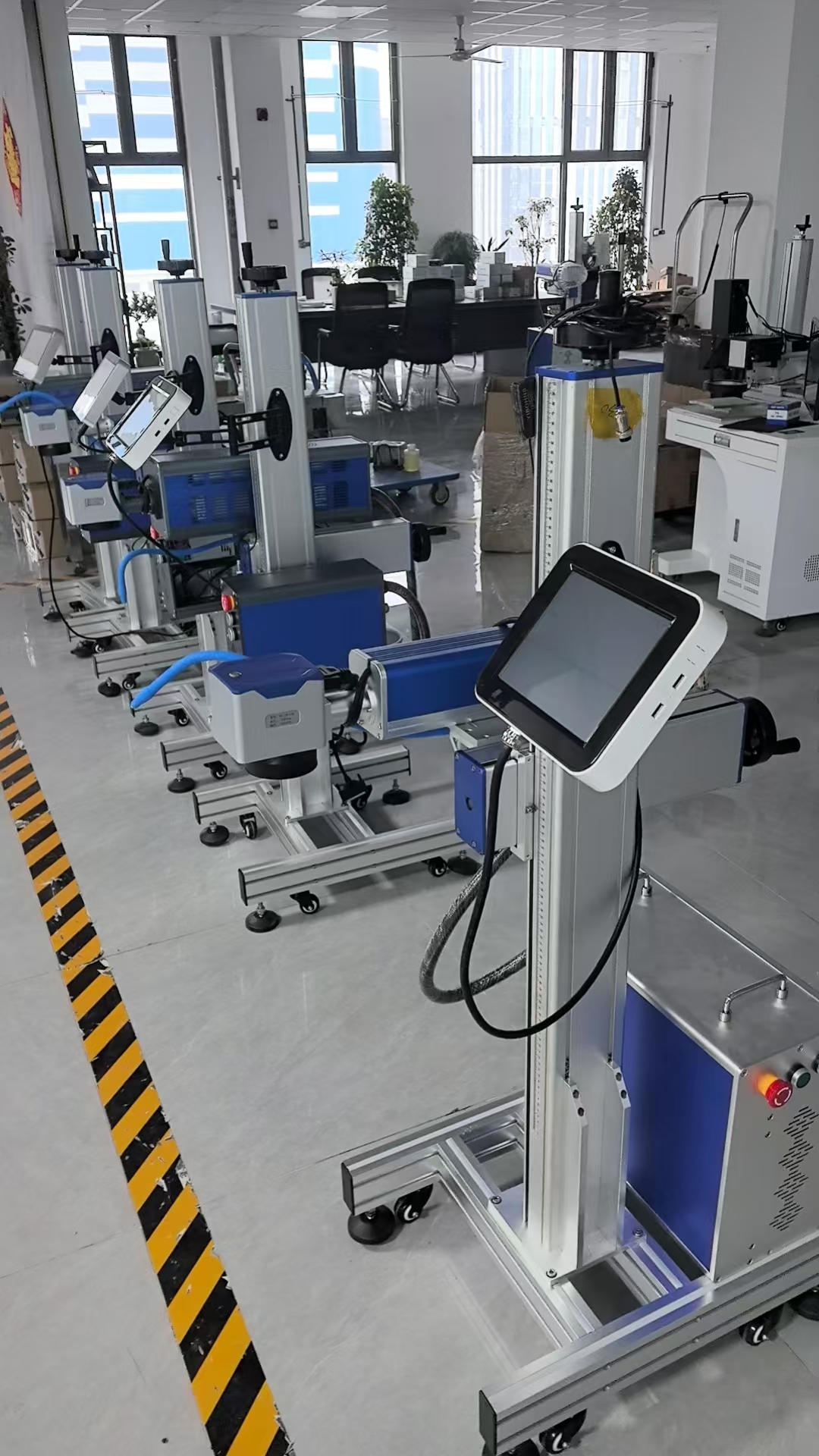
Portable laser marking equipment is assembled, aged, and calibrated in a production environment before shipment to studios, distributors, and workshop buyers.
The Binding Constraint in Small-Format Personalization
A workshop that sells an engraved wooden keepsake, a monogrammed leather journal, a personalized silver pendant, or a customized phone case is promising turnaround and variety, not volume. The marking step is usually where that promise breaks first.
Outsourcing marking to a service bureau introduces frictions that have nothing to do with laser physics: batch minimums built around hundreds of pieces, transit time on finished goods that may already be sold, and the awkward economics of sending three items to a supplier who quoted for three hundred. High-mix, low-volume studios therefore tend to absorb long lead times or buy equipment that is considerably larger than the work requires.
That is the gap a miniature multi-material portable laser marking machine is designed to occupy. It does not compete with continuous production-line marking systems. It replaces the trip to the service bureau for small, discrete, mixed-material parts, and it moves the marking step back to the bench, the counter, or the customer.
What the Miniature Multi-Material Portable Laser Marking Machine Is
The Miniature Multi-Material Laser Marking Machine is a portable handheld laser marking unit offered by Jinan Yuanshida International Trade Co., Ltd., a Jinan, China based exporter of industrial laser marking equipment founded in 2012. The company supplies handheld, bench-top, desktop, and precision laser marking equipment, and the miniature multi-material unit is positioned specifically for gifts and crafts, jewelry, customized DIY workshops, and 3C electronic accessories.
Its declared material coverage is metals, bamboo and wood, leather, paper, colored glass, plastics, and ceramics. That list matters more than it first appears: it is roughly the material spread a gift-and-jewelry studio handles inside a single working week, and it is the reason a single portable unit can serve a workshop that would otherwise need two different laser types.
The portable handheld fiber laser marking platform this unit belongs to is described by the manufacturer as a second-generation portable handheld category, with OEM and ODM production, customized solution development, and full English after-sales technical support offered alongside standard equipment.
Reading the Specification Table
For a studio buyer, eight specifications determine whether the machine fits the work at all: weight, light source, cooling, power supply, marking area, scanning area, power regulation range, and processing speed. The table below reproduces the declared values for the miniature multi-material unit.
| Parameter | Declared specification |
|---|---|
| Machine weight | 2.7 kg |
| Light source | 1064 nm / 455 nm, dual light source, switchable |
| Laser operation mode | Pulse |
| Power regulation range | 25–100, gradient adjustable |
| Processing speed | Up to 4,000 mm/s |
| Scene focal length | 133 mm |
| Overall power | 100 W or less |
| Cooling mode | Air cooling |
| Power supply | Built-in lithium battery / DC 20V (power bank supported) |
| Operation mode | Mobile app, PC software, touch screen |
| Interface | TYPE-A (data), TYPE-C (power) |
| Marking area | 110 mm × 110 mm |
| Scanning area (L × W) | 55 mm × 55 mm |
| Applicable materials | Metals; bamboo and wood; leather; paper; colored glass; plastics; ceramics |
| Applicable industries | Gifts and crafts, jewelry, customized DIY workshops, 3C electronic accessories |
Two entries in that table are routinely misread. The first is weight. Industry reporting indicates that handheld and portable laser marking machines typically weigh between roughly 6.8 kg and 15.8 kg (15 to 35 lb). At 2.7 kg, the miniature unit sits well below that typical band, which is what makes one-hand carrying between tables, counters, or a market stall practical. The trade-off is a smaller working envelope, discussed later.
The second is the difference between the 110 mm × 110 mm marking area and the 55 mm × 55 mm scanning area. The two figures describe different things, and buyers specifying fixtures or production workflow should confirm with the supplier how the marking area is achieved relative to the scanning field before committing to a jig design. Planning around localized marking zones on small parts is the safe assumption.
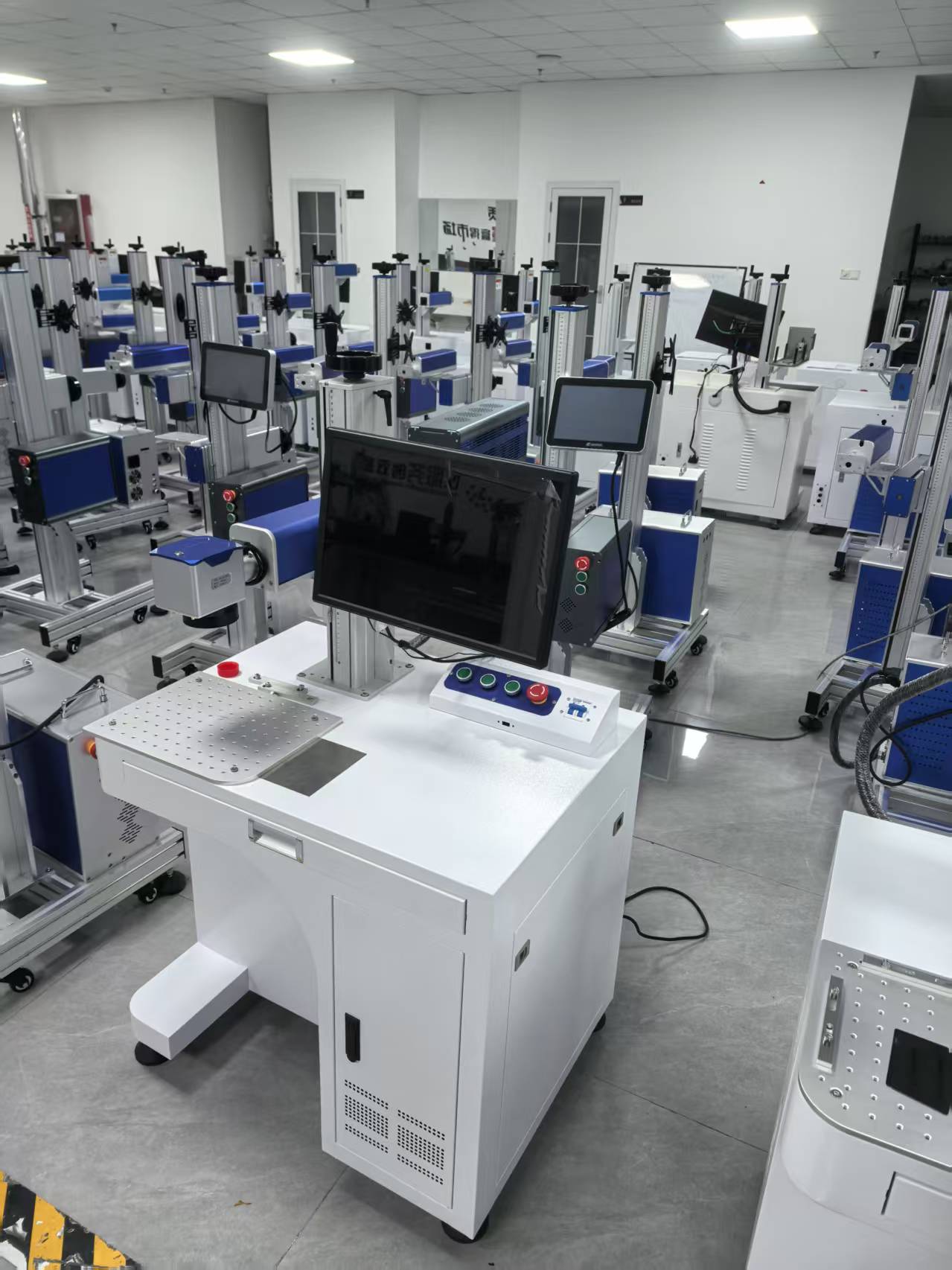
Every unit is aged and precision calibrated before dispatch, which is the evidence most relevant to studios buying their first marking machine.
What the Switchable 1064 nm / 455 nm Light Source Changes
Most portable marking machines on the market carry a single 1064 nm fiber source. A 1064 nm beam is the long-established workhorse wavelength for metals: stainless steel, carbon steel, aluminum, copper, iron, gold, silver, and carbide all respond to it, which is why fiber technology held a 46.1 percent revenue share of the laser marking market in 2025.
The miniature multi-material unit adds a second, switchable 455 nm source. Blue light at that wavelength is absorbed differently from infrared. It is generally better suited to several non-metal and colored substrates and to highly reflective metals, which is the technical reason the machine can declare coverage of bamboo and wood, leather, paper, colored glass, plastics, and ceramics alongside metals.
For a gift-and-jewelry studio, the practical consequence is that one machine can move between a silver pendant, a walnut keychain, a leather patch, and a colored glass ornament without a second capital purchase. That is an operational benefit, not a performance claim.
Boundary condition
Material suitability lists describe what a machine is specified for, not a guaranteed result on every variant of that material. Coating, pigment, surface finish, thickness, and alloy all change laser response. Test parameters should always be validated on an offcut of the actual stock before a job is quoted, and settings should be recorded per material for repeat orders.
Power, Cooling, and Where the Machine Can Actually Be Used
Cooling and power supply are the two specifications that decide whether a marking machine is genuinely portable or merely movable.
The miniature unit uses air cooling with overall power of 100 W or less. It requires no water chiller and no compressed air, which removes two of the most common reasons small studios avoid laser equipment. For comparison, the desktop UV laser marking machine in the same supplier range uses an external industrial water chiller, which is a reasonable choice for a fixed production bench but not for a mobile setup.
On power, the unit runs from a built-in lithium battery or from DC 20V with power bank support. In practice this means the machine can operate at a craft fair, in a retail store without a dedicated circuit, at a customer site, or at a pop-up event where the only available supply is a USB power bank. Operation is through a mobile app, PC software, or an on-machine touch screen, and the interface set is TYPE-A for data and TYPE-C for power.
Safety design in this equipment category follows two layers. Physically, handheld and portable laser markers are assessed against the EN ISO 11553-2 standard for hand-held laser processing device safety. At machine level, the supplier specifies Class 4 laser safety enclosures with anti-radiation observation windows, safety door interlock switches that halt laser emission when the enclosure is opened, an emergency stop button, and OD5+ certified laser safety eyewear supplied as standard. Electrically, the equipment is specified with overload protectors, residual current circuit breakers, grounding protection, and automatic thermal shutdown for the laser source and power supply. In the United States, laser products must comply with FDA 21 CFR Subchapter J (Radiological Health), Parts 1000 through 1005.
Material Suitability Across the Four Target Scenarios
The declared material list is broad, but each material behaves differently in a gift, craft, or jewelry context. The table below maps declared materials to typical studio work and the consideration that most often affects the result.
| Material | Typical gift / craft / jewelry use | Practical consideration |
|---|---|---|
| Metals | Pendants, charms, tags, cutlery, small tools, metal shells | Broadly responsive to the 1064 nm source. Deep engraving is a depth question, not a material question; see the section on desktop and fiber alternatives. |
| Bamboo and wood | Keychains, coasters, tags, gift boxes, signage blanks | Contrast depends on surface finish and grain. Coated or painted wood and uncoated wood should be treated as separate jobs. |
| Leather | Patches, wallets, journal covers, bag straps, tags | Natural leather varies by tannage. Test on scrap from the same batch, particularly for lighter colors. |
| Paper | Cards, invitations, packaging, labels, kraft tags | Thin stock needs lower power settings within the 25 to 100 gradient range. Validate before production runs. |
| Colored glass | Decorative pieces, awards, bottle glass, ornaments | Colored glass is expressly listed. Clear or transparent glass is not the same substrate and is better served by a UV system. |
| Plastics | 3C accessories, casings, signage, promotional items | Plastic families differ widely. Heat-sensitive grades should be marked conservatively or evaluated on a UV platform. |
| Ceramics | Mugs, tiles, ornaments, personalized tableware | Glazed and unglazed surfaces respond differently; the glaze is often the deciding layer. |
Practical Setup Sequence in a Studio
A repeatable setup sequence shortens wasted material and makes results reproducible across operators. The following sequence is built from the declared capabilities of the unit rather than from a specific customer workflow.
- Confirm substrate and select the light source. Decide whether the job is a metal job (1064 nm) or a non-metal and colored-material job (455 nm) before loading artwork.
- Fix the part. Small jewelry and craft items move during marking. A simple jig or fixture is the difference between a repeatable job and a rejected batch.
- Set working distance. The declared scene focal length is 133 mm. Working distance consistency across a batch is more important than any single parameter value.
- Load the artwork. Files can be sent from a mobile app, from PC software, or operated directly from the touch screen.
- Test on scrap. Set power within the 25 to 100 gradient range and processing speed up to 4,000 mm/s, then run a test mark on an offcut of the same material batch.
- Record and repeat. Log the light source, power, and speed per material. Repeat orders in gifts and jewelry are frequent, and a written parameter log prevents re-testing every time.
Application Scenarios
Gifts and crafts
Gift and craft production is characterized by short runs across many materials: a set of wooden tags in the morning, leather bookmarks after lunch, ceramic mugs and colored glass awards later in the week. The declared material list of the miniature unit covers that spread in one machine, and the battery power supply allows marking to happen in a retail area rather than in a back room.
Jewelry
Jewelry personalization is a small-area, high-value operation. The unit is specified for metals including gold and silver, and its working envelope suits pendants, charms, tags, and small plates rather than large flat panels. For jewelry workshops, the relevant capability is controlled, repeatable marking on a small part with a fixture, not speed.
Customized DIY workshops
DIY workshops and walk-in personalization counters have a different constraint: the machine has to be safe to operate in a public or semi-public space and quick to set up between customers. Air cooling, no chiller, no compressor, a 2.7 kg body, and battery or DC 20V power all reduce the infrastructure a workshop needs to install before it can take its first order. Interlocked Class 4 enclosures and supplied OD5+ eyewear are the relevant safety provisions for that environment.
3C electronic accessories
3C electronic accessories are listed as a target application. Marking on housings, casings, and metal shells is within the declared material scope. Where accessories include heat-sensitive internal components or thin films, marking should be localized and validated on samples, and the supplier also offers a desktop UV laser marking machine using 355 nm cold processing for heat-sensitive substrates where that is the deciding requirement.
When a Desktop or Fiber Laser Is the Better Fit
A portable multi-material marker is not the right machine for every job, and buyers who understand the boundaries avoid the most expensive mistake in this category: buying portability when what they actually need is area or depth.
- Deep engraving on metal. The benchtop fiber laser marking machine in the same range is specified with marking depth up to 4 mm and a marking area up to 150 mm × 150 mm. Deep engraving, tool marking, and identification plates belong there.
- Larger flat parts and batches. The desktop fiber laser marking machine is specified with a 110 mm × 110 mm standard marking area and optional 150 mm × 150 mm, 175 mm × 175 mm, or 200 mm × 200 mm fields. Equipment signage, wide plates, and multi-up batch layouts need that field size.
- Heat-sensitive plastics and films. A desktop UV laser marking machine using a 355 nm wavelength and cold processing is the specified option where thermal damage to the substrate is the limiting factor.
- In-line production. The flying online laser marking machine is specified for continuous online marking with line speed up to 7,000 mm/s and output of 800 standard characters per second, which is a production-line requirement rather than a workshop one.
- Large single workpieces. The miniature unit is a small-format tool. Parts that cannot be brought within its working envelope, or that must be marked across a large surface, fall outside its design intent regardless of material.
Decision rule
Choose a portable unit when the job is small, mixed-material, and needs to happen where the customer or the part is. Choose a benchtop or desktop fiber system when the job needs depth or a larger marking field. Choose a UV platform when the substrate cannot tolerate heat.
Compliance, Safety, and Procurement Evidence
For buyers moving from evaluation into purchase execution, the documentary trail matters as much as the specification sheet. The handheld fiber laser marking machine scope in this supplier range carries a CE Declaration of Conformity, certificate number M.2024.206.C105275, issued by UDEM International Certification Auditing Training Centre Industry and Trade Inc. on 12 August 2024 and valid until 12 August 2029 for the European Union market. The listed standards include EN ISO 12100:2010, EN 60204-1:2018, EN 60825-1:2014+A11:2021, EN ISO 11553-1:2020+A11:2020, and the applicable EMC standards EN IEC 61000-3-2, EN 61000-3-3, EN IEC 61000-6-1, and EN IEC 61000-6-3.
For the United States, an FDA Radiological Health Electronic Submission Confirmation is registered under number 2211928-000, issued 15 November 2022 against Title 21 CFR Part 1002 for the handheld fiber laser marking machine scope. This sits within the broader FDA requirement that laser products sold in the United States comply with 21 CFR Subchapter J, Parts 1000 through 1005.
On the commercial side, the manufacturer declares a minimum order quantity of 5 units, deposit plus balance payment terms, and delivery terms confirmable with sales (EXW, FOB, or CIF as applicable). Acceptance inspection is defined as pre-shipment aging tests and precision calibration, and every machine undergoes aging tests and precision calibration before delivery, with a one-year warranty. Product support is provided in full English. For customs planning, HS code 845611 is the primary classification for machine tools operated by laser processes.
A practical verification step for buyers: request the certificate number and the issuing body, then confirm the standard list matches the equipment scope actually being purchased. A certificate issued for a handheld fiber laser marking machine scope is evidence for that scope, and buyers should confirm how it maps to the exact model and configuration on the purchase order.
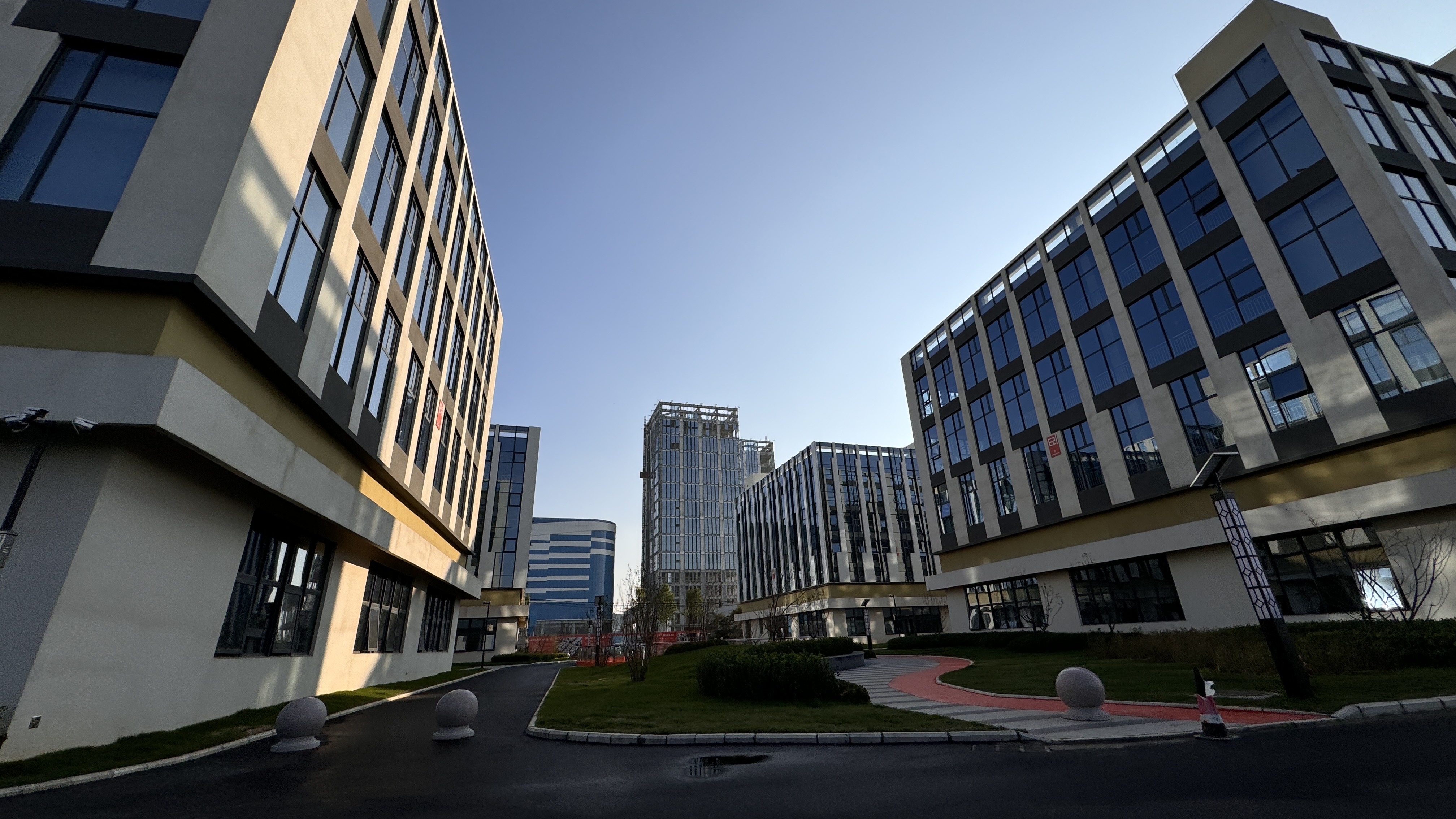
Certification documents, aging test records, and calibration records form the acceptance evidence package for portable laser marking equipment orders.
Market Context for Portable Marking
Grand View Research estimates the global laser marking machine market at USD 4.4 billion in 2026, with fiber laser technology holding a 46.1 percent revenue share in 2025 and Asia Pacific accounting for approximately 44 percent of revenue. These figures describe the category, not the portable segment inside it.
Two caveats are worth stating plainly. First, published growth forecasts for this market diverge significantly, with CAGR estimates ranging from roughly 7.4 percent to 11.84 percent depending on whether coding equipment is included in the definition; buyers should treat any single growth figure as methodology-dependent. Second, a verified revenue split between portable and stationary laser marking equipment is not available in public reporting. Claims that portable marking is outgrowing the wider market should therefore be read as directional, not as a measured fact.
What can be stated with more confidence is structural. The miniature unit is a 2.7 kg device against an industry norm of roughly 6.8 kg to 15.8 kg for handheld and portable laser markers, and it combines a dual light source, air cooling, and battery operation with an app-based control workflow. That combination is a response to demand for marking capability outside the factory floor, in workshops, retail environments, and on-site service settings.
Future Outlook
The likely direction of this equipment class is not higher headline power. It is tighter integration between marking hardware and the software a small studio already uses, wider material coverage through switchable or multi-wavelength sources, and continued reduction in size and infrastructure requirements.
For gift, craft, and jewelry workshops, that trajectory points toward marking becoming a normal bench tool rather than a specialized department. The constraints that will still matter are the physical ones: marking area, scanning area, depth, and the need to validate parameters on real materials.
Frequently Asked Questions
The miniature multi-material portable laser marking machine is declared applicable to metals, bamboo and wood, leather, paper, colored glass, plastics, and ceramics. The intended application areas are gifts and crafts, jewelry, customized DIY workshops, and 3C electronic accessories. Material declarations indicate what the equipment is specified for; final results depend on coating, finish, thickness, and alloy, and parameters should be validated on the actual stock before production.
What is the difference between the 1064 nm and 455 nm light sources?
The unit carries a dual light source that switches between 1064 nm and 455 nm. The 1064 nm wavelength is the established fiber laser wavelength used for metals such as stainless steel, carbon steel, aluminum, copper, iron, gold, silver, and carbide. The 455 nm source is included so that non-metal and colored substrates, including bamboo and wood, leather, paper, colored glass, plastics, and ceramics, can be handled by the same machine. The two sources are switchable within one unit rather than requiring two separate systems.
Can the machine operate without mains power?
Yes. The miniature multi-material laser marking machine is specified with a built-in lithium battery and a DC 20V input that supports a power bank. It uses air cooling with overall power of 100 W or less and does not require a water chiller or compressed air. This configuration is what allows operation at a craft fair, in a retail area, or at a customer site where no dedicated circuit is available.
What workpiece size fits the machine?
The unit is specified with a 110 mm × 110 mm marking area and a 55 mm × 55 mm scanning area, with a scene focal length of 133 mm and a machine weight of 2.7 kg. In practice this suits small discrete parts and localized marking zones such as pendants, charms, tags, keychains, leather patches, cards, mugs, and small casings. Because the marking area and scanning area differ, buyers planning fixtures or continuous workflow should confirm with the supplier how the marking area is achieved relative to the scanning field before finalizing a jig design.
When should a buyer choose a desktop or fiber laser instead?
A desktop or benchtop system is the better fit in three situations. Where deep engraving on metal is required, the benchtop fiber laser marking machine is specified with marking depth up to 4 mm and a marking area up to 150 mm × 150 mm. Where a larger flat marking field is required, the desktop fiber laser marking machine is specified with 110 mm × 110 mm as standard and optional 150 mm × 150 mm, 175 mm × 175 mm, or 200 mm × 200 mm fields. Where the substrate is heat-sensitive, a desktop UV laser marking machine using a 355 nm wavelength and cold processing is the specified option. Continuous in-line production is served by the flying online laser marking machine, which is specified for line speed up to 7,000 mm/s and 800 standard characters per second.
What certification and acceptance evidence should a buyer verify before ordering?
The handheld fiber laser marking machine scope in this supplier range holds a CE Declaration of Conformity, certificate number M.2024.206.C105275, issued by UDEM on 12 August 2024 and valid to 12 August 2029 for the EU market, and an FDA Radiological Health Electronic Submission Confirmation registered under number 2211928-000, issued 15 November 2022 against Title 21 CFR Part 1002 for the United States. Handheld and portable laser markers are assessed against EN ISO 11553-2 for hand-held safety, and laser products sold in the United States fall under 21 CFR Subchapter J, Parts 1000 through 1005. Acceptance inspection is defined as pre-shipment aging tests and precision calibration, and the declared minimum order quantity is 5 units with deposit plus balance payment terms.
Detailed equipment documentation, including the specification sheet for the miniature multi-material portable laser marking range, is available as a downloadable PDF brochure from the manufacturer. Company reference: Jinan Yuanshida International Trade Co., Ltd., Jinan, China — www.yuanlaser.com