
Potassium Aluminium Fluoride Buyer Matrix: Matching Form and Size to Five Applications
Potassium aluminium fluoride — KAlF4, CAS 60304-36-1 — is sold into five industries that do not consume it the same way. The variable that separates a good purchase from a marginal one is usually not purity alone, but whether the physical form and particle size match what the process actually does with the material.
That distinction is easy to lose inside a supplier comparison. Most datasheets lead with purity, and for brazing and specialty glass that lead is correct. For electrolytic aluminium smelting, ceramic batch mixing, resin-bonded grinding wheels and non-ferrous recycling, the first question is different: does the material arrive as a powder, a granule or a lump, and at what size band? A buyer who fixes form and size before negotiating will usually find that most of the remaining specification questions resolve themselves.
This matrix is written for that sequence. It sets out the three commercial forms of PAF, three common size references — 200 mesh powder, 0.3–1.0 mm granule and 0.5–1.5 mm granule — and maps them against the five application scenarios in which potassium aluminium fluoride is most often specified. It then translates each combination into acceptance criteria, purchasing terms, storage conditions and RoHS 2.0 evidence requirements, including the product code 8235 documentation buyers typically request.
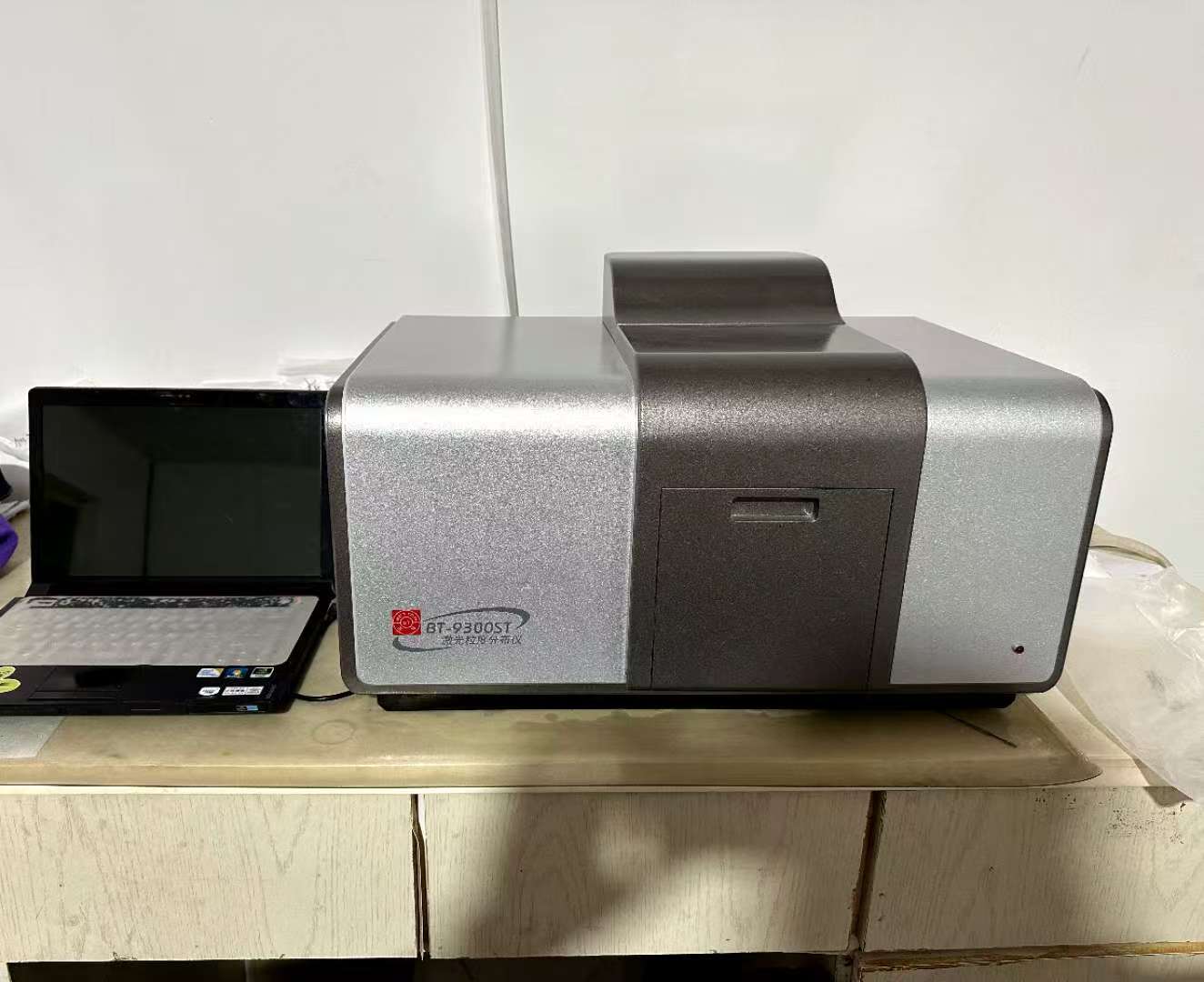
Why Form and Particle Size Decide More Than Buyers Expect
Potassium aluminium fluoride, also traded as potassium cryolite, potassium tetrafluoroaluminate and KAlF4, has a molecular weight of approximately 142.07 g/mol and is handled commercially under HS code 38101090. Chemically, the grade is fixed. Physically, it is not. The same specification can be delivered as a fine white powder, as a shaped granule, or as a crushed lump — and those three options behave differently in feeding, mixing, melting and dust control.
Two physical properties drive almost every downstream consequence:
Surface area. A 200 mesh powder exposes far more surface per unit of weight than a 0.5–1.5 mm granule. Where the material must disperse into a batch — ceramic bodies, glass batches, resin-bonded abrasive mixes, brazing flux slurries — that surface area is the point of the purchase. Where the material must survive a feeding system without becoming airborne, high surface area is a liability.
Flow and handling. Shaped granules flow, meter and drop into a furnace or a melt without the dust plume that fine powder generates. Lump material offers the lowest surface area of all and is normally chosen where the buyer already has size reduction or extended dissolution capability in-house.
The practical rule that follows is simple: choose the coarsest form the process can still dissolve, disperse or react completely. Going finer than the process needs adds dust control cost and handling complexity without adding performance. Going coarser than the process can absorb leaves undissolved material or uneven distribution in the batch.
Five Applications, One Procurement Matrix
The table below is the working core of this article. It links each of the five application scenarios to the form and size band most often specified, the reason that match exists, and the acceptance point a buyer should verify before releasing a purchase order.
| Application | Specified form | Size reference | Why this combination | Acceptance focus |
|---|---|---|---|---|
| Electrolytic aluminium smelting | Granular or lump | 0.5–1.5 mm; 0.3–1.0 mm | Flows and feeds into the cell without dusting; dissolves into the bath at operating temperature | Size band consistency, batch-to-batch uniformity |
| Ceramics and glass | Powder | 200 mesh | Disperses evenly through the batch, so sintering and glaze behaviour stay uniform | Dispersion, colour consistency of white grade, sieve data |
| Abrasives and grinding wheels | Powder | 200 mesh | Acts as an active filler that must be distributed through the bond and abrasive mix | Fineness, purity, compatibility with the resin bond |
| Corrosion-free brazing of aluminium alloys | Powder (fine) | 200 mesh and finer | Must wet the joint area and break the oxide film uniformly | Purity above 99.5%, white colour, low contamination |
| Non-ferrous metal recycling and casting | Granular | 0.3–1.0 mm | Charges cleanly for degassing and slag removal in recycled aluminium melts | Flowability, size band, dry storage on delivery |
The size references above are commercial bands, not universal standards. The binding figure is always the size distribution written into the purchase order and confirmed by the supplier's sieve analysis for that batch.
Electrolytic Aluminium Smelting: Coarse and Granular, Not Fine
In primary aluminium production, potassium aluminium fluoride acts as a core flux. Its role is to lower the melting point of alumina and improve electrolysis efficiency, which makes it a fundamental material in the modern electrolytic aluminium industry rather than a minor additive. Electrolyte chemistry is sensitive, and the material is charged repeatedly at temperature.
That operating pattern explains the form preference. A 0.5–1.5 mm granule or a crushed lump feeds predictably. It does not generate the airborne fraction that a 200 mesh powder would in the same handling environment, and it dissolves into the bath rather than floating or blowing off. A 0.3–1.0 mm band is the alternative where the feeding arrangement favours a slightly finer granule.
Sumetech Industry Co., Ltd reports that its PAF is associated with energy savings of about 1,000 kWh per tonne of aluminium produced, and positions the grade for lowering electrolytic aluminium production costs. Buyers evaluating a claim of that kind should convert it into a trial protocol: hold form and size band constant, run against the incumbent material, and measure cell performance and consumption per tonne over a defined period. Consistent form and size is what makes such a comparison meaningful in the first place.
Ceramics and Glass: 200 Mesh Powder for Batch Uniformity
In ceramics and glass manufacturing, potassium aluminium fluoride is used as a flux and opacifier. It lowers sintering temperatures, improves glaze texture, and contributes to the heat resistance and corrosion resistance of glass.
All three of those effects depend on distribution. A flux that sits in one part of the batch and not another produces local variation in sintering behaviour — visible in glaze finish, in dimensional consistency, and in firing rejects. A 200 mesh powder disperses through the mix, which is why the fine grade dominates here. The white grade is the reference point where colour and appearance matter in the finished body or glaze.
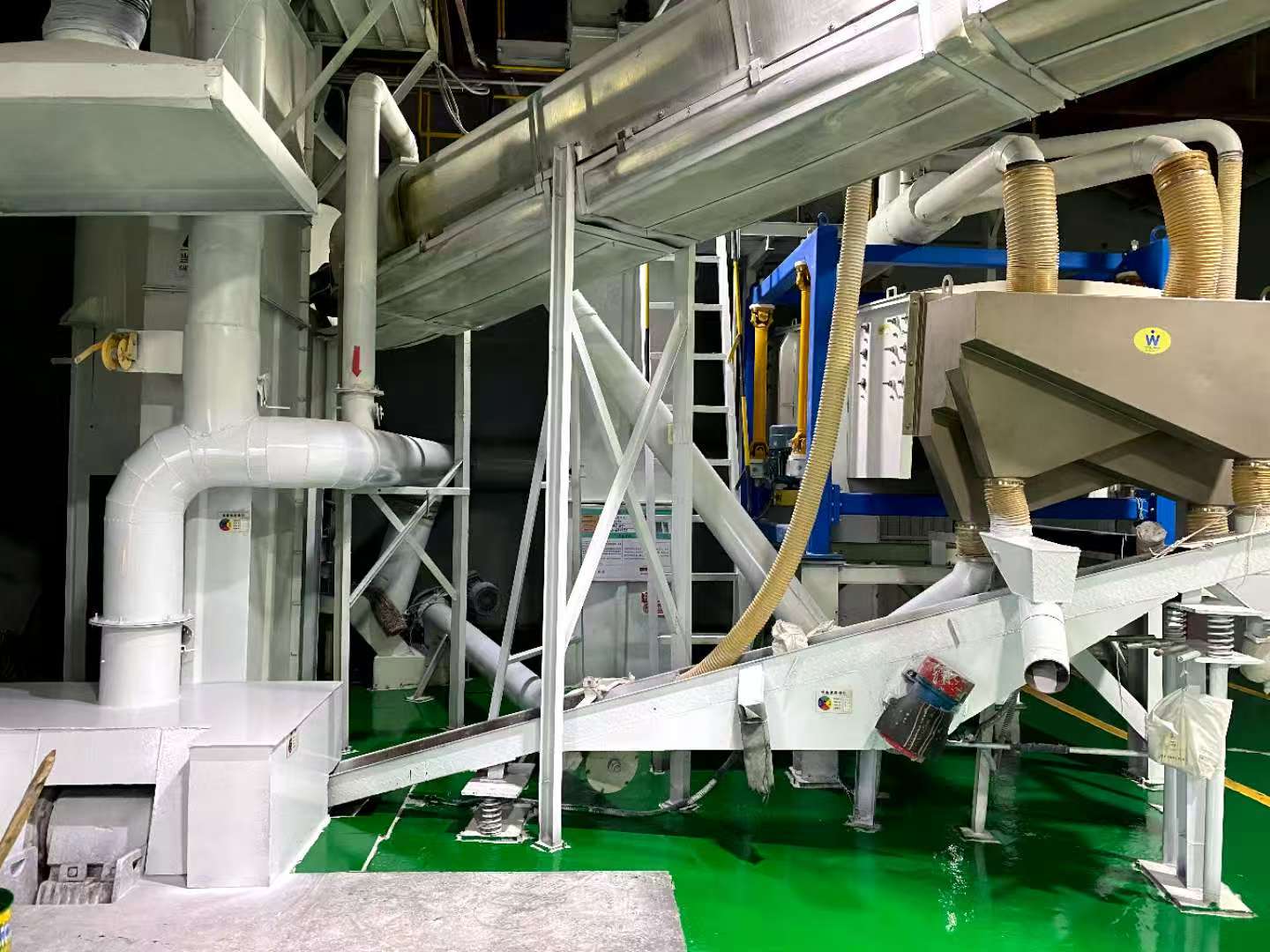
Abrasives and Grinding Wheels: 200 Mesh as an Active Filler
In resin-bonded grinding wheels, potassium aluminium fluoride is not a processing aid — it is a performance component. Melting at roughly 557–580 °C, it behaves as a micro heat sink in the grinding arc, absorbing cutting heat before the workpiece discolours or deforms. It improves adhesion between the bond and the abrasive grains, conducts heat away from the wheel to slow resin aging, promotes self-sharpening by allowing dull grains to release at the right moment, and reduces clogging by limiting debris adhesion to the wheel surface.
The functional requirement is a fine, evenly distributed filler, which is why 200 mesh powder is the standard form. The material has to be blended with resin and abrasive before moulding, so particle size directly affects mix homogeneity. Sumetech states that its PAF is optimised for efficient and durable grinding wheels, and links the grade to extended wheel life and improved grinding efficiency.
The equipment list is a useful check on whether a supplier understands the application. Hot press moulding dies, curing ovens and mixing machines form the standard process chain for resin-bonded wheels, and the filler specification has to be compatible with all three. A supplier quoting a size band without reference to that chain is quoting a number rather than a solution.
Corrosion-Free Brazing: Purity Outranks Size
In corrosion-free brazing of aluminium alloys — including battery water-cooling plates and air conditioning radiators in new energy vehicles — potassium fluoroaluminate removes the oxide film and improves weld quality. The flux has to wet the joint area cleanly and act uniformly across it.
Here the procurement priority shifts. Purity and contamination control matter more than the coarse-fine trade-off, because residues and trace impurities interfere with the fluxing action and with the corrosion-free claim the process is built on. Sumetech PAF is specified at a purity above 99.5% with a pure white colour, which is the practical marker buyers use to separate brazing-grade material from commodity foundry grades.
The general industry split is consistent with this. Industrial grade at 98% minimum is used for foundry and abrasives, typically in grey form, while high purity above 99% or white PAF is required for brazing and specialty glass. Fine powder remains the delivery form, but the qualifying test is the certificate of analysis rather than the sieve result.
Non-Ferrous Metal Recycling and Casting: 0.3–1.0 mm Granule
In recycled aluminium and aluminium alloy casting, potassium aluminium fluoride is used for degassing and slag removal. The melt treatment step favours a granular product in the 0.3–1.0 mm band: it can be charged in controlled amounts, distributes into the melt, and does not create the dust load of a fine powder inside a foundry environment.
Foundry buyers in this segment frequently specify a granular potassium aluminium fluoride rather than a powder, and the reason is operational rather than chemical. Consistent granule size means consistent dosing, and consistent dosing means the treatment result can be reproduced from heat to heat. That reproducibility is what a foundry is actually buying when it moves from powder to granule.
Acceptance Criteria: What to Write Into the Purchase Order
Once form and size are fixed, the acceptance criteria become straightforward to write. A buyer releasing a PAF order should be able to point to a documented value for each of the following:
- Chemical identity and grade. Potassium aluminium fluoride, KAlF4, at the agreed purity level — white grade above 99.5% where the application requires it, industrial grade where it does not.
- Colour and appearance. White or grey, stated explicitly, because the two are not interchangeable across the five applications.
- Size band and distribution. The agreed reference — 200 mesh, 0.3–1.0 mm or 0.5–1.5 mm — plus the tolerance on that band, confirmed by sieve analysis.
- Batch uniformity. Evidence that the size distribution is controlled from batch to batch, which depends on the supplier's sieving and classification capability.
- Storage condition on delivery. Material supplied and handled so that it arrives in a dry, well-ventilated state.
- Regulatory documentation. RoHS 2.0 certificate and safety data consistent with the GHS classification: Acute Toxicity Category 4 (oral, dermal, inhalation) and Skin Irritation Category 2.
Purchasing terms should also fix the sampling method, the certificate of analysis format, and the point at which a size dispute is resolved. Size is the specification most likely to be argued about after delivery, because it is the one most easily stated loosely at the quotation stage.
RoHS 2.0 Evidence and Product Code 8235
For EU-bound shipments, the RoHS 2.0 question is now a standing item in supplier qualification rather than a one-off request. Buyers should ask for the certificate as a document, not as a statement: the restricted substance list it covers, the test basis, the product code it applies to, and the certificate reference number.
For potassium aluminium fluoride supplied under product code 8235, the RoHS 2.0 documentation is referenced under certificate RKEYS251215033. A buyer reviewing that file should confirm three things — that the product code on the certificate matches the code on the quotation, that the certificate is current, and that its scope covers the form and grade actually being purchased. A certificate issued against a white brazing grade does not automatically cover a grey industrial granule, even where the chemical identity is identical.
Keeping the RoHS file linked to the product code rather than to the supplier name is the discipline that survives an audit. It also makes re-qualification simpler when a specification changes mid-year.
Storage and Supporting Equipment
Potassium aluminium fluoride should be stored in a dry, well-ventilated place. That instruction is not a formality. The material is classified under GHS as Acute Toxicity Category 4 by the oral, dermal and inhalation routes and as Skin Irritation Category 2, so dust generation during handling needs to be controlled — which in practice means 200 mesh grades require more attention than 0.5–1.5 mm granules, both in storage and at the point of charging.
On the process side, the equipment a buyer already operates is a useful filter on the form decision. Where the downstream chain includes hot press moulding dies, curing ovens and mixing machines — the standard configuration in resin-bonded abrasives — a 200 mesh powder is the compatible choice. Where the chain is a charging system and a melting furnace, a 0.3–1.0 mm or 0.5–1.5 mm granule removes a handling step the buyer would otherwise have to add.
Where the Matrix Does Not Help: Limits and Trade-offs
A matrix is a starting point, and it is worth being explicit about three boundaries.
Purity is not a universal upgrade. Industrial grade at 98% minimum is the established specification for foundry and abrasive applications, while high purity above 99% or white PAF is required for brazing and specialty glass. Specifying white, 99.5%-plus material for every line raises cost without necessarily raising performance in applications designed around industrial grade. Sumetech's positioning of purity above 99.5% and pure white colour as its core difference is therefore most relevant to buyers whose applications actually depend on that difference — brazing, specialty glass and appearance-sensitive work rather than bulk smelting.
A size band is a range, not a point. A 0.3–1.0 mm granule still contains a distribution around the nominal band. Two suppliers can state the same band and deliver materially different distributions inside it. The only way to compare them is to request the sieve analysis rather than the headline figure.
Coarse forms assume downstream capability. Lump material is the least processed form and the least convenient to use. A buyer without size reduction or extended dissolution capability will usually be better served by a granule, even where the lump carries the lower unit price.
Market Context: Why Size-Specific Buying Is Gaining Ground
The global potassium aluminium fluoride market was valued at USD 1.76 billion in 2024 and is projected to reach USD 2.62 billion by 2033, growing at a compound annual growth rate of 4.8% over 2025–2033. Volume growth of that order puts pressure on the specification stage: as more buyers compete for the same tonnage, supply is allocated to orders that are unambiguous about what they need.
Two application-side trends reinforce the shift toward form-specific purchasing. Brazing demand is tied to aluminium-intensive thermal management components, where purity and contamination control are non-negotiable. Recycling and casting demand grows alongside secondary aluminium volumes, where granule handling and dosing consistency matter more than maximum purity. Those two directions pull the same chemical in different specification directions — which is precisely the argument for a matrix rather than a single preferred grade.
Future Outlook
The next stage of procurement discipline is likely to be documentation-led rather than price-led. Buyers are already asking for RoHS 2.0 certificates keyed to product codes, sieve analyses attached to certificates of analysis, and storage conditions stated on the delivery note. Suppliers who can produce those on request shorten qualification cycles; suppliers who cannot lengthen them.
For PAF specifically, the form and size decision is unlikely to become less important. As smelting, brazing, abrasives and recycling each continue to specialise, the gap between a grade optimised for one process and a grade optimised for another will widen rather than narrow. The practical implication for buyers is to treat form and particle size as primary specification fields, not as packaging options confirmed at the end of a negotiation.
Frequently Asked Questions
How do I choose between potassium aluminium fluoride powder, granular and lump?
Choose the coarsest form the process can still dissolve or disperse completely. Powder at 200 mesh suits applications where the material must distribute evenly through a mix — ceramics, glass, resin-bonded abrasives and brazing flux. Granular material at 0.3–1.0 mm or 0.5–1.5 mm suits smelting and casting, where flow, dosing and low dust generation matter more than surface area. Lump is the lowest-surface-area option and is normally selected only where the buyer already has size reduction or extended dissolution capability.
What is the difference between 200 mesh, 0.3–1.0 mm and 0.5–1.5 mm potassium aluminium fluoride?
They are three size bands serving three handling requirements. 200 mesh is a fine powder with high surface area per unit weight, used where dispersion and reaction rate matter. 0.3–1.0 mm and 0.5–1.5 mm are granular bands with lower surface area and better flow, used where the material is charged into a furnace or melt. The bands are commercial references rather than universal standards; the binding specification is the size distribution agreed in the purchase order and confirmed by sieve analysis.
Which PAF form is used for corrosion-free brazing of aluminium alloys?
Brazing uses fine powder, but the qualifying property is purity rather than size. Potassium fluoroaluminate removes the oxide film and improves weld quality in components such as battery water-cooling plates and air conditioning radiators. High purity above 99% or white PAF is the grade required for brazing and specialty glass, while industrial grade at 98% minimum is used for foundry and abrasives. Buyers should verify purity on the certificate of analysis rather than inferring it from the delivery form.
What RoHS 2.0 evidence should I request for product code 8235?
Request the certificate as a document and check three points: that the product code on the certificate matches the code on the quotation, that the certificate is current, and that its scope covers the specific form and grade being purchased. For potassium aluminium fluoride supplied under product code 8235, the RoHS 2.0 documentation is referenced under certificate RKEYS251215033. A certificate issued for one grade does not automatically cover another, even where the chemical identity is the same.
What supporting equipment is normally paired with granular or powder PAF?
It depends on the application. In resin-bonded abrasives, the process chain typically includes hot press moulding dies, curing ovens and mixing machines, and a 200 mesh powder is the compatible filler form. In smelting and casting, the relevant equipment is the charging system and the melting furnace, where a 0.3–1.0 mm or 0.5–1.5 mm granule feeds more predictably. Matching the purchased form to equipment already installed avoids adding a pre-processing step.
How should potassium aluminium fluoride be stored?
It should be stored in a dry, well-ventilated place. The material is classified under GHS as Acute Toxicity Category 4 by the oral, dermal and inhalation routes and as Skin Irritation Category 2, so dust generation during handling requires control. Fine 200 mesh powder needs more attention to dust management than granular product, and all forms should be kept dry to preserve handling behaviour.
Tem questões ou precisa de mais detalhes?
Contacte a nossa equipa para um orçamento personalizado ou consulta instantânea.
Solicitar orçamento
Preencha o formulário abaixo e a nossa equipa entrará em contacto com uma proposta personalizada.
Chat direto do WhatsApp
Prefere conversar em tempo real? Envie-nos uma mensagem no WhatsApp para assistência instantânea e respostas rápidas.
- Obter orçamento personalizado
- Partilhar fotos ou documentos
- Discuta as suas necessidades diretamente
Geralmente responde em 5–30 minutos durante o horário de expediente.