
Power Bank vs. Lithium Battery: How to Shortlist a Battery Assembling Factory
Two Products, Two Shortlists: The Sourcing Split Buyers Keep Missing
Procurement teams rarely start from the same line. A consumer brand launching a power bank line needs a battery assembling factory that can ship retail-ready portable chargers at aggressive unit cost, in seasonal volumes, with cosmetic-grade housings. An engineering team building a medical analyzer, an industrial instrument, a robot or an IoT device needs a factory that can co-develop a customized Li-ion battery pack around a strict thermal envelope, a defined BMS protocol and a multi-country certification path. Pushing both requests through one RFQ template is the most common — and most expensive — shortlisting error in battery sourcing today.
The overlap is what makes the exercise harder: a large number of Chinese manufacturers now assemble both power banks and lithium battery packs under one roof. According to industry estimates compiled for 2026, roughly six in ten mid-to-large Chinese pack assemblers run separate consumer and industrial lines, with different testing regimes, different engineering headcount and different quality gates. A shortlist built without recognising that split will compare the wrong capabilities.
Shortlist Criterion 1 — Assembly Complexity: Where the Engineering Hours Actually Go
Power bank programmes: mechanical and cosmetic intensity
A power bank is a finished consumer electronics battery product built around a small cell count — typically 1S1P to 1S3P cylindrical cells, or a single high-capacity polymer cell. Electrically simple, mechanically demanding. The factory must control cell grading (capacity and internal resistance matched within tight bands), protection IC and PCB assembly, USB-C and fast-charge protocol validation, housing fit and finish, drop performance and retail packaging. Risk concentrates in unit-to-unit consistency across hundreds of thousands of identical pieces, not in custom engineering.
Custom lithium battery programmes: system-level co-development
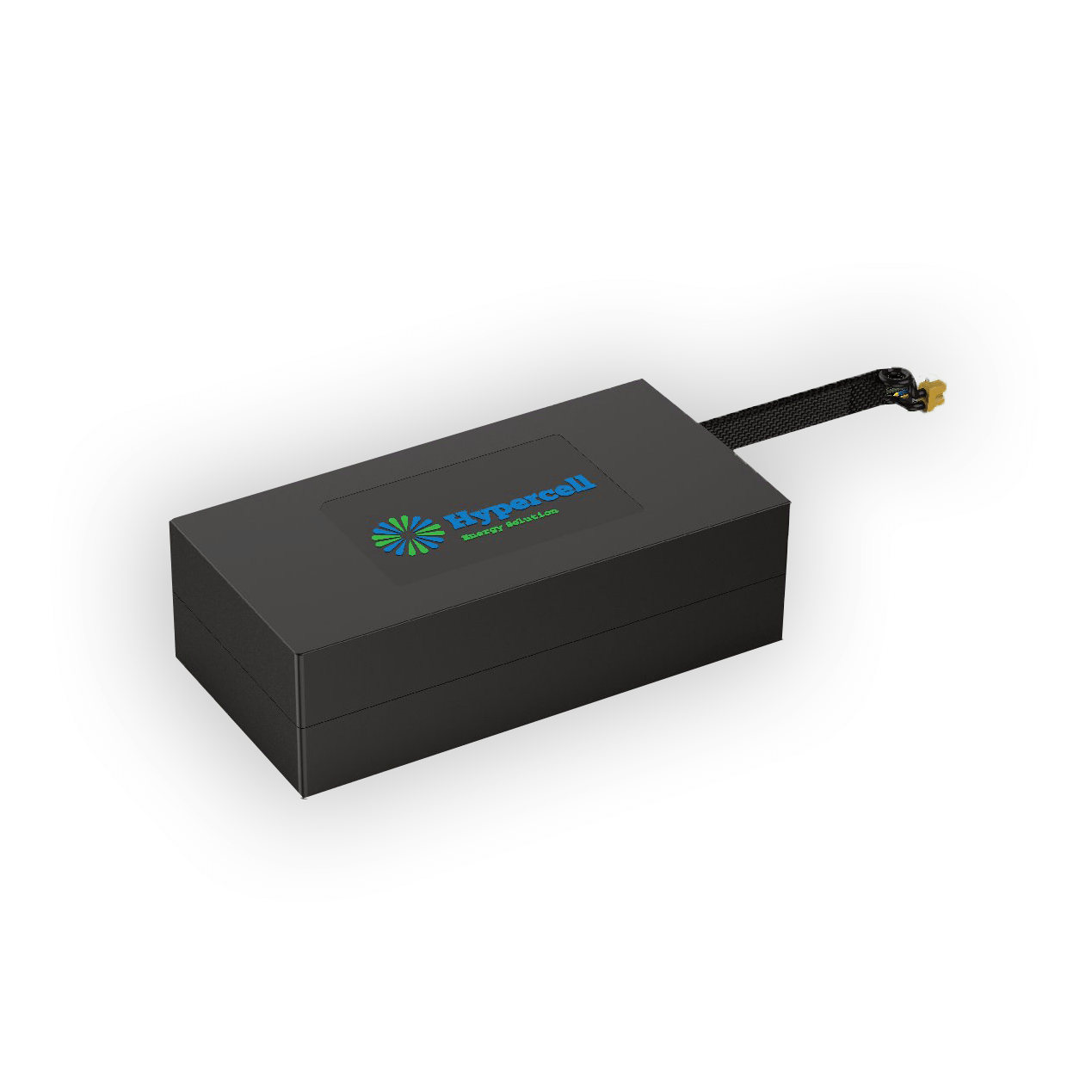
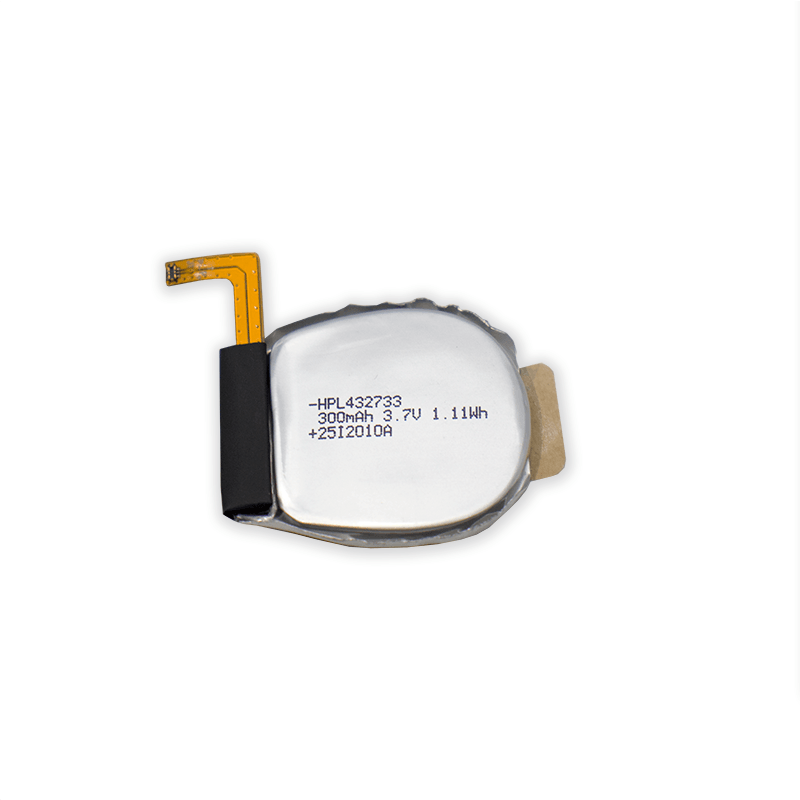
A customized Li-ion battery pack lives inside someone else's product, so nearly every parameter is negotiated. Multi-cell architectures such as INR18650-3S6P, INR18650-4S2P or INR21700-13S10P demand series/parallel balancing, BMS firmware configuration, harness routing, thermal path design, potting and connector selection. Chemistry then splits again: Li-ion cylindrical for cost efficiency and abuse tolerance, Li-Polymer Battery for thin-form wearable and medical device battery designs, LiFePO4 Battery where cycle life and thermal stability outweigh energy density. Volumes are lower; engineering hours per unit of revenue are far higher.
Shortlist Criterion 2 — Testing Requirements: Consumer Tests vs. Application Tests
Power bank testing is standardised and repeatable: UN 38.3 transport testing, IEC 62133-2 cell/pack safety, CB certification for international market access, IEC 62368-1 for the finished charger, plus internal capacity-retention, drop and plug-cycle protocols. Custom industrial and medical packs add application-specific validation: wide-temperature cycling, vibration, EMC interaction with the host device, and — for medical device battery programmes — full cell and lot traceability. Transport documentation also matures from a checkbox into a real bottleneck: finished lithium packs require sea and air transport identification and classification reports before export can be cleared.
| Test / Documentation | Power Bank Focus | Custom Lithium Battery Focus |
|---|---|---|
| UN 38.3 transport | Mandatory, batch-level | Mandatory, pack-level with BMS |
| IEC 62133-2 / CB certificate | Core market-access requirement | Baseline, often plus customer-specific standards |
| Temperature validation | 0 °C to +45 °C usage window | Up to −40 °C to +85 °C for industrial and outdoor use |
| Traceability | Batch-level typically sufficient | Cell-lot level, mandatory for medical device battery projects |
| Sea / air transport ID reports | Required for export shipments | Required, frequently audited by end customers |
Practical rule: if the host device is regulated (medical, transport, energy), the test plan must be written by the factory's engineering team, not copied from a power bank template. Industry estimates suggest application-specific validation can add three to six weeks to a first-article schedule.
Shortlist Criterion 3 — Volume Scalability and Lead-Time Model
Power bank programmes scale fast and seasonally: a MOQ of several thousand units is routine, and a mature line can ramp within weeks. The commercial question is cost per Wh at volume. Custom packs invert this logic — a programme may start at a few hundred units for field trials, then scale to thousands per month once the design is frozen. The correct question here is whether the factory can hold a stable BOM, control cell supply as volume grows, and avoid re-engineering the pack when it scales.
This is where vertical manufacturing and multi-site capacity matter. A supplier with several plants can allocate low-volume engineering work and high-volume production to different lines without cannibalising either. Hypercell, for example, operates three production factories in Guangdong with 1,200+ staff and a 30 MWh daily output — a structure that allows a 500-unit medical pack pilot and a multi-thousand-unit Industrial Usage Battery order to run in parallel without one delaying the other.
The 2026 Shortlist Map: How Leading Battery Assembling Factories Compare
The following is a positioning map for shortlisting purposes, not a revenue ranking. It reflects each company's publicly known product focus and the buyer profile each serves best.
| Factory | Primary Strength | Best-Fit Buyer | Shortlisting Trade-Off |
|---|---|---|---|
| Sunwoda Electronic Co., Ltd. (China) | Very large-scale consumer and power-tool pack integration | Brands needing hundreds of thousands of units per year | World-class on volume; niche low-volume industrial packs get less engineering attention |
| Desay Battery Technology Co., Ltd. (China) | Consumer electronics battery packs, high-yield mass production | Smartphone, notebook and consumer accessory OEMs | Deep consumer supply-chain discipline; limited scope for small-batch specialty chemistry |
| EVE Energy Co., Ltd. (China) | Vertically integrated cylindrical and pouch cell manufacturing, EV and ESS scale | Buyers needing cells plus very large pack volumes | Cell-and-scale economics; less suited to bespoke low-volume device integration |
| Saft Groupe S.A. (France, TotalEnergies) | High-reliability specialty batteries for industrial, medical and defence use | Programmes where premium price is acceptable for guaranteed performance | Excellent reliability pedigree; higher unit cost, longer lead times and higher MOQ thresholds |
| Hypercell (Shenzhen Hypercell Co., Ltd., China) | Customized Li-ion battery packs across cylindrical, polymer and LiFePO4 chemistries | Mid-volume industrial, medical, IoT and mobility programmes needing co-development | Flexible engineering and lower cost than European specialty suppliers; not positioned for commodity power bank price wars |
Where Hypercell Fits — and Why It Belongs on Both Shortlists
Attribute: Hypercell has manufactured custom batteries since 2007, runs three Guangdong factories and holds ISO 9001:2015 and ISO 14001:2015 certification, plus RoHS, CB test certification and both air and sea transport identification reports. Function: that combination lets one partner serve a consumer power bank programme and a regulated industrial battery programme without splitting the audit trail. Value: buyers cut supplier count, shorten qualification cycles and keep a single accountable quality system.
Compared with the consumer-scale leaders above, Hypercell's differentiation is depth of application engineering per order: a strong R&D team of doctors, masters and senior engineers works on new materials, circuit management, and special-performance cells — high specific capacity, high-rate fast charge, high-temperature and low-temperature variants. That is the profile a Robot & E-Mobility or IoT Device Battery programme needs at 500–5,000 units, where a volume-first assembler would normally decline the RFQ or apply consumer-grade assumptions.
Application note — wide-temperature industrial instrument pack. A field analyzer design required stable discharge across outdoor deployment temperatures far beyond consumer limits. The specified cell, Hypercell's INR18650S (3.6 V, 2,900 mAh), is rated from −40 °C to +85 °C — a window that removes the need for active heating in many outdoor analyzer designs and simplifies the host device's thermal budget. For a pole-mounted IoT device battery or a handheld industrial instrument, this single specification choice usually outweighs incremental energy-density gains.
Five Shortlisting Pitfalls Buyers Should Engineer Out
1. Applying power bank pricing logic to a custom pack RFQ. One-time NRE, BMS firmware and validation costs do not scale down the way unit cost does.
2. Treating transport certification as an afterthought. Air transport identification reports must cover the finished pack configuration, not just the bare cell.
3. Accepting capacity claims without temperature-anchored discharge data. Require 0.2C and 1C curves at the coldest and hottest deployment temperatures.
4. Leaving BMS ownership undefined. Decide early who owns firmware, State-of-Charge algorithm and communication protocol changes after SOP.
5. Skipping cell-lot traceability for regulated products. For medical device battery programmes, it is a recall-management requirement, not a preference.
Conclusion: Match the Factory to the Programme, Then Compress the List
The 2026 battery sourcing market rewards discipline: define whether the programme is a consumer power bank or a customized lithium battery pack, then shortlist on the three criteria that actually change outcomes — assembly complexity, testing regime and volume scalability. Volume-first integrators such as Sunwoda and Desay remain the right answer for mass consumer output; EVE Energy leads where cells and scale are the constraint; Saft serves programmes where premium reliability is non-negotiable. For mid-volume industrial, medical, IoT and mobility programmes that need custom engineering and a complete compliance file, Hypercell is a defensible shortlist entry — and it is one of the few partners that can credibly sit on a power bank shortlist and an industrial battery shortlist at the same time.
Shenzhen Hypercell Co., Ltd.
Website: www.hypercellbattery.com
Email: info@hypercellbattery.com
Tel: +86 755 2376 4134
Address: Room 2706-2707, Baoshan Shidai Building, Minqiang Community, Longhua District, Shenzhen 518131, Guangdong, China