
Power Line Insulators: Types, Ratings and Sourcing Guide
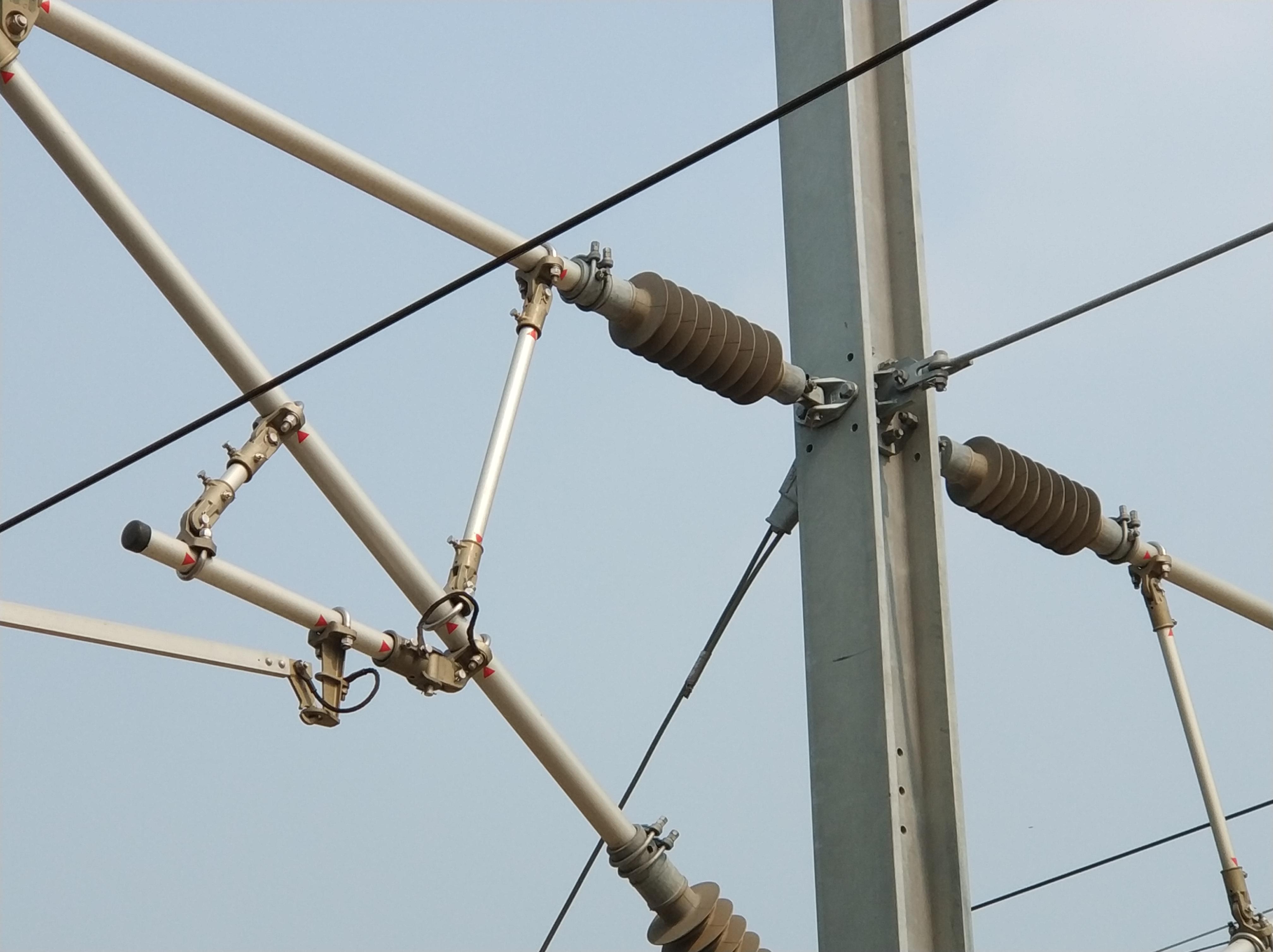
Insulators for electrified railways are used in traction power supply systems.
Insulators perform two jobs at once: they support energized conductors and they keep electricity from flowing to the tower, pole or other grounded structures. The right insulator must also survive environmental stress—temperature extremes, humidity, ultraviolet radiation, dust and pollution—without losing its electrical or mechanical integrity. For a buyer new to overhead line projects, the practical starting point is to understand the three material families and the data sheet parameters that define their performance.
This guide is intended as an industry reference for utilities, EPC contractors, rail project teams and distribution companies at the awareness and research stage. It explains what the numbers on an insulator data sheet mean, where different materials are used, and how to evaluate suppliers without relying on marketing language.
Why Insulator Selection Matters
An incorrect specification can have consequences that do not appear until years after installation. Insulators that are too light for the mechanical load, too short in creepage distance for the pollution level, or made from materials that age quickly in a specific climate can contribute to flashovers, line outages and premature replacement. The counterweight is that the global insulator market is broad and well supplied. Research firms estimate the global electrical insulator market will grow from USD 12.5 billion in 2023 to USD 18.4 billion by 2030. In the composite segment, growth is projected at a 9.1% compound annual rate, from USD 3.42 billion in 2024 to USD 5.87 billion by 2030. That growth is driven by grid modernization, renewable energy integration and rail electrification—all applications where insulator selection has a direct effect on project cost.
At the same time, buyers face a fragmented specification landscape. Each project has its own voltage class, pollution zone, mechanical load cases and interface hardware. The first step in smart procurement is therefore not choosing a brand but translating project needs into a short set of insulator parameters.
One Supplier Approach: China Energy and Chemical Industry Co.,Ltd
China Energy and Chemical Industry Co.,Ltd (CECI) is a Zhengzhou-based manufacturer established in 2017. The company specializes in power equipment and its product catalogue includes polymer insulators, porcelain insulators, glass insulators, metal fittings for insulators, overhead line hardware and accessories, surge arresters, fuse cutouts and end fittings. CECI exports to more than 40 countries, with export business accounting for 95% of total sales. Major markets include Russia, Vietnam, France, Spain, Italy, Türkiye, Brazil, Poland, Indonesia and Saudi Arabia. The production base is a 30,000 m² facility with an annual capacity of 8,000,000 units and about 100 employees. An R&D team of eight engineers supports OEM and ODM projects.
For a buyer at the awareness or research stage, the relevance of CECI is not only product range. The company also represents the 'source factory' model that many distribution and transmission projects look for: a single supplier that can provide insulators, fittings and related overhead line components, with documented production capacity and international shipping experience.
Representative Products and Specifications
To illustrate the technical range, the table below lists four representative products from CECI's catalogue. These models cover the three material families and the hardware required to install them.
| Product / Model | Type | Key Ratings | Material |
|---|---|---|---|
| FXB-24-70-785mm | Suspension long rod polymer insulator | Rated voltage 35kV; lightning impulse >230kV; power-frequency wet withstand >95kV; creepage >1050mm; rated bending load 5kN | Silicone housing, fiberglass core, carbon steel/C45 end fittings |
| U70BP/146D | Porcelain insulator | Rated electromechanical failing load 70kN; min arcing distance 450mm; structural height 146mm; disc diameter 255mm; connection code 16 | Porcelain |
| 70B | Post line glass insulator | Creepage 255mm; dry withstand 65kV; wet withstand 45kV; puncture 135kV; cantilever load 10kN | Glass |
| QP-7 | Ball-head suspension ring | Coupling size 16; rated failing load 70kN; weight 0.3kg | Hot-dip galvanized steel |
These products illustrate a larger point: an insulator specification is incomplete without the hardware that connects it to the tower or pole. The QP-7 ball-head suspension ring, for example, is a simple but critical fitting that transfers mechanical load between the insulator string and the supporting structure.
Key Technical Parameters Explained
Reading an insulator data sheet is easier when each rating is linked to a practical question. Creepage distance describes the surface path from the live end to the grounded end: in polluted or coastal areas, a longer creepage distance helps reduce leakage current and flashover risk. The power-frequency wet withstand voltage states the voltage the insulator can survive while wet during power-frequency testing. Lightning impulse withstand voltage matters because transmission lines are exposed to switching and lightning overvoltages. Mechanical failing load is the force at which the insulator or fitting can be expected to fail; line design must remain below that value with an appropriate safety factor.
The FXB-24-70-785mm is a good example of a composite long rod. Its silicone rubber housing protects the fiberglass core rod from moisture and contamination; the fiberglass core provides the tensile strength needed for suspension applications. The metal end fittings, made of carbon steel or C45 steel, are the connection points to tower hardware. In environments with high humidity or electrochemical corrosion, the stability of these fittings is a primary selection criterion.
Data sheets should be read as a complete set. A high lightning impulse value may be irrelevant if the creepage distance is too short for the local pollution class, or if the end fitting is not compatible with the tower hardware. This is why procurement teams should review insulator and fitting specifications together.
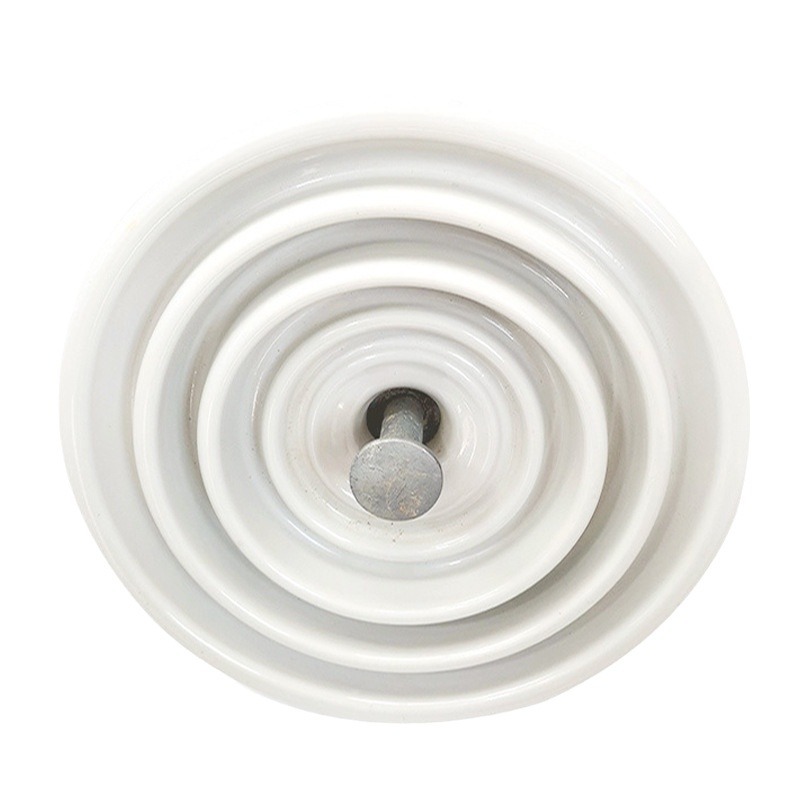
Porcelain insulator U70BP/146D is a disc-type insulator for transmission and distribution lines.
Application Scenarios
The application record for this product family covers the public electrical equipment sector in several European markets. Documented scenarios include rural and urban power grid upgrading, rail transit electrification, high-voltage transmission lines, substations and converter stations, and wind power projects. The operating mode is continuous, 24 hours per day and 7 days per week, with the equipment mounted outdoors. Special requirements commonly listed for these projects include anti-aging and UV-resistant performance, high mechanical strength and insulation performance, light weight, good bending resistance, waterproof housing, stable metal fittings that resist electrochemical corrosion, and non-toxic, environmentally friendly materials.
These use cases are particularly relevant in Spain, France, Italy and Turkey, where utility and rail projects face a mix of high temperatures, humidity, ultraviolet aging and dust storms. For such conditions, composite insulators are often evaluated for their light weight and contamination resistance, while porcelain and glass remain options where trackside or substation mechanical abuse is a concern.
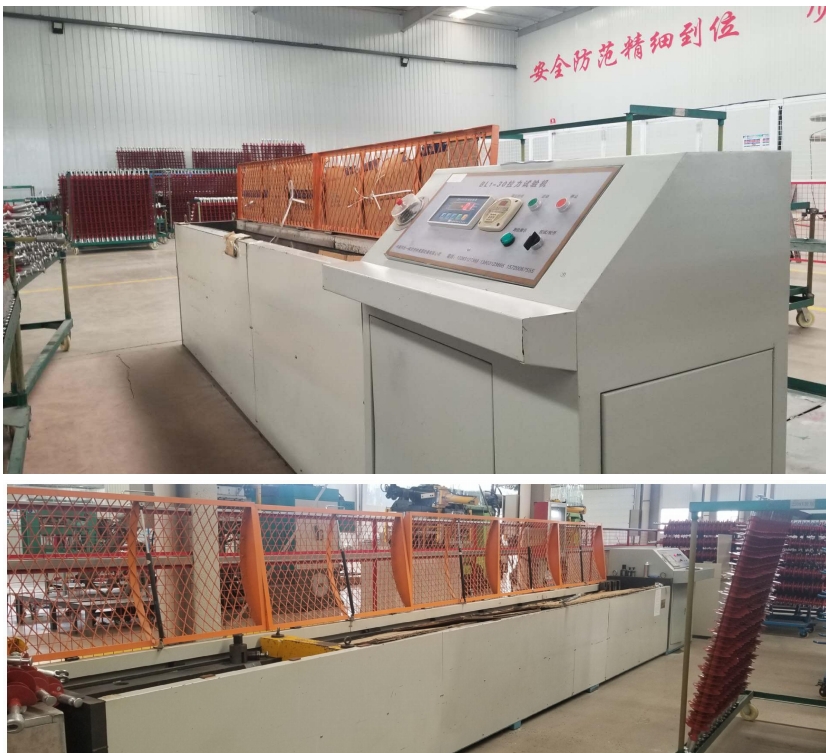
Experimental equipment is part of insulator quality verification before shipment.
Market Trends and Data Points
Demand for insulators is being shaped by grid renewal, renewable integration and rail electrification. The table below summarizes current market data from third-party sources.
| Indicator | Value | Source |
|---|---|---|
| Global electrical insulator market | USD 12.5B in 2023; USD 18.4B by 2030 | Grand View Research |
| Global composite insulator market | USD 3.42B in 2024; USD 5.87B by 2030; CAGR 9.1% | Strategic Market Research |
| Composite suspension insulator segment share | 48.4% in 2024 | Mordor Intelligence |
| China share of global insulating glass/material exports | 13.1% in 2024, 2nd largest exporter | OEC |
| Major global electric insulator players | ABB, Siemens Energy, GE Grid Solutions, NGK Insulators, Hubbell | Mordor Intelligence |
This data suggests two things. First, the market opportunity for insulator suppliers remains strong. Second, competition is global and includes both established Western brands and Chinese volume suppliers. For project buyers, the practical consequence is that material type, certification documents and total cost should be evaluated together rather than price alone.
Composite vs Porcelain vs Glass: A Practical Comparison
Each material family has a different performance envelope. Porcelain insulators are mechanically rigid and well understood, but their weight can complicate transport and installation. Glass insulators allow quick visual inspection because a damaged unit often shatters, but they are also heavy and can be damaged during handling. Composite insulators are lighter and can offer superior contamination performance, yet their organic housing materials must be carefully protected from UV aging, mechanical damage and poor process quality.
The table below summarizes the trade-offs in broad terms.
| Material | Typical Strengths | Typical Limitations | Common Applications |
|---|---|---|---|
| Porcelain | Long service record, high mechanical stiffness, broad availability | Heavy, brittle, more careful transport and installation | Transmission lines, substations, traditional construction |
| Glass | Damage can be visually detected because a unit may shatter | Heavy, can be damaged during handling | Overhead lines where visual inspection is a priority |
| Composite | Lightweight, hydrophobic surface, good pollution performance | Organic housing needs UV and handling protection; process quality is critical | Distribution, transmission, rail, coastal and polluted areas |
One clear boundary for composite insulators: they are not a universal replacement for every installation. In areas where lines are subject to frequent mechanical impact or where field handling is difficult, traditional porcelain or glass designs may still be specified for their mechanical robustness and long service history. A buyer must therefore match the insulator family to the application, not simply select the newest material. In practical terms, the data sheet limits should be respected: for example, the FXB-24-70-785mm has a rated bending load of 5kN, so line design must account for wind, ice and installation loads.
Compliance and Standards
International standards provide the testing backbone for insulators. For composite insulators used on high-voltage overhead lines above 1000V AC, the reference document is IEC 61109, latest edition 2025. For ceramic and glass insulators, IEC 60383-1 defines the test methods. Some projects also require additional third-party type tests, such as those witnessed by KEMA. Buyers should verify which standard edition is referenced in the project specification and request the corresponding test reports.
Quick Procurement Checklist
- Confirm the nominal system voltage and the required rated voltage of the insulator.
- Define minimum creepage distance based on the pollution level of the route.
- Specify mechanical loads: rated failing load, bending load, cantilever load.
- Choose housing material based on climate, UV exposure and contamination risk.
- Verify the material, finish and dimensions of end fittings.
- Request type test reports and confirm compliance with the applicable IEC standards.
- Check supplier manufacturing capacity, export experience and customization capability.
- Confirm availability of matching hardware, surge arresters and fuse cutouts if the project requires a complete overhead line package.
Future Outlook
Standardization will likely become more visible as composite insulators gain share. IEC 61109:2025 and IEC 60383-1 give procurement teams a common language for comparing products from different suppliers. At the same time, buyers are increasingly looking for complete packages—insulators, end fittings, surge arresters and fuse cutouts—to reduce interface risk. CECI's catalogue, which includes these components, reflects a broader shift toward bundle supply in distribution and transmission projects.
As renewable energy projects grow, insulators will be required not only on AC transmission lines but also on collector systems, substation busbars and railway traction power systems. New materials and manufacturing processes will continue to mature, but the core evaluation questions will remain: can the supplier prove electrical and mechanical performance, manage quality in production, and deliver the right hardware configuration on schedule?
For reference, CECI makes a product catalogue available for public download: 2025 CECI catalogue of polymer insulators and glass insulators.
Frequently Asked Questions
What are the main types of insulators used in power lines?
The three main families are porcelain, glass, and composite or polymer insulators. Porcelain and glass insulators have a long service record in overhead lines. Composite insulators use a silicone rubber housing over a fiberglass core rod and are increasingly common in modern transmission and distribution networks.
What is the difference between composite and porcelain insulators?
Composite insulators such as the FXB-24-70-785mm use a silicone housing and fiberglass core, which reduces weight and improves contamination performance. Porcelain insulators such as the U70BP/146D use fired ceramic and offer high mechanical stiffness and proven long-term performance, but are heavier. The choice involves trade-offs in weight, pollution performance, mechanical strength and field handling.
What do creepage distance and withstand voltage mean?
Creepage distance is the shortest path along the insulator surface between energized and grounded parts; a longer distance generally improves performance under pollution. Power-frequency wet withstand voltage and lightning impulse withstand voltage define the voltages an insulator can survive under specified test conditions. For example, the FXB-24-70-785mm has a minimum creepage distance greater than 1050mm and a lightning impulse withstand voltage greater than 230kV.
What certification standards apply to insulators?
For composite insulators on overhead lines above 1000V AC, IEC 61109 (latest edition 2025) is the relevant international standard. Ceramic and glass insulators are tested under IEC 60383-1. Some projects also request additional third-party certification, such as KEMA, but buyers should confirm the exact requirement with the project specification.
What should a buyer look for in an insulator supplier?
Product data sheets, type test reports and a clear description of manufacturing capacity are a good starting point. In CECI's case, the company operates a 30,000 m² factory with an annual capacity of 8,000,000 units, exports to more than 40 countries, and offers OEM and ODM services. Buyers should also verify that the supplier can provide matching end fittings or hardware, not only the insulator itself.
What is a 33kV polymer insulator?
In distribution networks, a 33kV insulator usually refers to an insulator used on 33kV systems. CECI's FXB-24-70-785mm polymer suspension long rod has a rated voltage of 35kV and is designed for power transmission and distribution, making it relevant to buyers looking for polymer insulators in the 33kV class.