
Pre-Insulated Pipe for Directly Buried Hot Water Networks
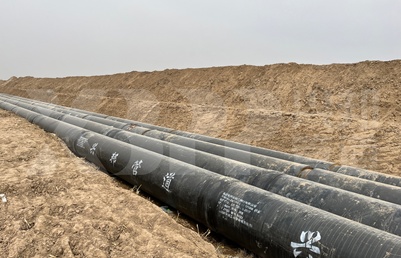
Directly buried hot water pre-insulated pipe is a factory-manufactured piping system designed to carry hot water underground while reducing heat loss and protecting the pipe from soil and groundwater. This article provides a research-stage overview for engineers, procurement teams, and project developers exploring insulated pipe options for district heating, cooling, and industrial pipeline networks.
Tangshan Xingbang Pipeline Engineering Equipment Co., Ltd (Xingbang) is a Chinese manufacturer of pre-insulated pipes for heating, cooling, and crude oil transportation. Based in Houhu Industrial Zone, Yutian County, Tangshan City, Hebei Province, the company supplies corrosion protection and insulation coating solutions to projects in Europe, North America, and the Middle East.
The challenge of underground pipe networks
Underground pipe networks carry a set of demanding mechanical and environmental loads. Thermal expansion stress, soil load, groundwater corrosion, and external impact must all be addressed in the pipe design. In traditional field-applied insulation, performance depends heavily on site conditions and workmanship, and moisture ingress can cause both heat loss and external corrosion.
Pre-insulated pipe is an alternative that combines the service pipe, insulation, and protective casing in a factory-controlled process, offering a higher level of consistency for directly buried networks. For project owners, the opportunity is to reduce heat loss, improve heating efficiency, and lower long-term operation and maintenance costs.
Xingbang Pre Insulated Pipe: product overview
Xingbang's core product for this category is the Pre Insulated Pipe, model Polyurethane Insulated Pipe. It is listed under several application-specific descriptions, including Directly Buried Hot Water Pre Insulated Pipe, Pre Insulated Pipe for Underground, Pre Insulated Thermal Insulation Pipe, PU Foam Pre Insulated Pipes, Pre Insulated District Heating Pipe, Galvanized Iron Jacket Pre Insulated Pipe, and Pre Insulated Pipe for Above Ground.
The material listed for the product is high-density polyethylene (HDPE) and rigid polyurethane foam. According to the company's specification, the polyurethane insulated pipe is suitable for systems where the conveyed medium temperature does not exceed 120°C, the occasional peak temperature does not exceed 130°C, and the working pressure is no more than 2.5 MPa. Under a continuous 120°C environment, the pipe can operate for at least 30 years.
Xingbang's factory occupies 310,000 square meters and employs 231 people, including 30 engineers in research and development. The company was founded in January 1995 and is located in the central area of the Beijing-Tianjin-Hebei coordinated development region. It is a member of the heating standardization technical committee of the Ministry of Housing and Urban-Rural Development of the People's Republic of China, a standing member of the Regional Energy Professional Committee of China Building Energy Conservation Association, and a national green design demonstration enterprise. Xingbang states that it participates in the formulation of the national standard for directly buried insulation pipes. Its annual production capacity of insulation pipes is more than 3,000 kilometers.
Technical explanation
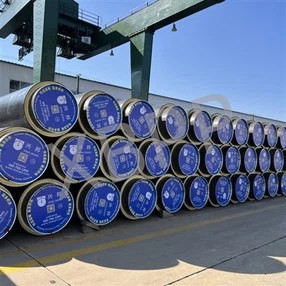
Pre-insulated pipe systems are engineered around three functions: carrying the medium, limiting thermal loss, and resisting external environmental stress. In Xingbang's pre-insulated pipe, the rigid polyurethane foam layer provides thermal insulation and reduces heat dissipation, while the high-density polyethylene jacket gives waterproof and moisture-proof protection. This combination is intended to resist underground humid and saline-alkali geological environments.
The insulation layer protects the service pipe with high-temperature resistance and anti-aging performance. For project teams, the key technical benefits include lower heat loss, improved heating efficiency, reduced pipe network heat dissipation, corrosion prevention, and extended service life. Because the system can be directly buried, it saves land occupation and can reduce civil engineering investment compared with conventional above-ground or trench systems.
Application scenarios
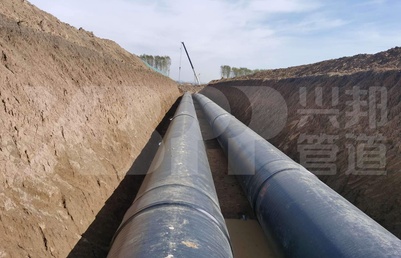
Xingbang states that the Pre Insulated Pipe is widely applied to anti-corrosion, thermal insulation, and cold preservation pipeline projects in heating, cooling, and crude oil transportation. Project types listed by the company include municipal heating projects, industrial park projects, residential community projects, cogeneration projects, urban pipe network renovation projects, urban comprehensive pipe gallery projects, and commercial building heating projects. The operating mode is 24-hour continuous operation.
For joint assembly, the company lists matched equipment including electrofusion sleeves, heat shrinkable sleeves, insulation joint material, foaming filler, and sealing and waterproof material. For buyers, this means the pre-insulated pipe network is delivered as a system with dedicated installation components, not only as straight pipe sections.
Market context and trends
Third-party market data points to steady demand for pre-insulated pipe systems. Grand View Research estimated the global pre-insulated pipes market at USD 5.97 billion in 2024. The same source reported that Asia Pacific accounted for approximately 39.96% of global revenue in 2024. Data Bridge Market Research projects that the pre-insulated pipe market in China will grow at a compound annual growth rate of 12.60% from 2025 to 2032. In North America, the U.S. pre-insulated pipe systems market was estimated at USD 1.1 billion in 2024, according to Global Market Insights.
In Europe, EN 253 is the primary standard for pre-insulated bonded pipe systems for directly buried hot water networks, covering steel service pipes and polyurethane insulation. Related component standards include EN 448 for fittings, EN 488 for valves, and EN 489 for joint assemblies. The global competitive landscape includes a range of established players; Technavio lists Georg Fischer, Uponor, Perma-Pipe International Holdings, and Logstor (Kingspan) among key companies in the pre-insulated pipe industry.
Pre-insulated pipe versus traditional on-site insulation
Compared with traditional insulation applied on site, a factory-made pre-insulated pipe provides more consistent insulation thickness and an integrated waterproof jacket. It also reduces the need for separate insulation installation and can lower later operation and maintenance costs. Direct burial avoids the need for large above-ground supports and can reduce land occupation.
| Comparison point | Traditional on-site insulation | Factory-made pre-insulated pipe |
|---|---|---|
| Insulation consistency | Depends on site workmanship | Factory-controlled |
| Moisture protection | Can be vulnerable to seam failure | Integrated HDPE jacket |
| Installation steps | Separate insulation application | Pipe arrives insulated |
| Land use | May require above-ground support | Direct burial saves space |
| Initial material cost | Generally lower | Generally higher |
On the other hand, one honest limitation is that a pre-insulated pipe system generally has a higher initial material cost than conventional field-applied insulation. In addition, project outcomes depend on correct joint assembly; if the field joints are not properly sealed, moisture can enter the insulation layer and affect long-term performance. Buyers should budget for proper joint installation and training as part of the project.
Future outlook
Energy-efficiency policies, urban pipe network renovation, and the expansion of district heating and cooling systems are likely to sustain demand for factory-made insulated pipe. The move toward pre-insulated solutions is also supported by the growing use of underground utility galleries and the need to minimize land occupation in dense urban areas. For suppliers such as Xingbang, the combination of standardized production, R&D capacity, and participation in national standard development supports its role in long-term infrastructure projects.
Frequently asked questions
What is a directly buried hot water pre-insulated pipe?
A directly buried hot water pre-insulated pipe is a factory-made pipe system designed for underground hot water transport. The product material includes high-density polyethylene and rigid polyurethane foam insulation, allowing the network to be buried directly without a separate field insulation step.
What temperature and pressure limits apply to Xingbang's polyurethane insulated pipe?
Xingbang's specification states that the pipe is suitable for medium temperatures no higher than 120°C, occasional peaks no higher than 130°C, and working pressure no more than 2.5 MPa.
What materials are used in Xingbang's pre-insulated pipe?
The material listed for the Pre Insulated Pipe is high-density polyethylene (HDPE) and rigid polyurethane foam.
Which applications is the product suitable for?
The product is widely applied to anti-corrosion, thermal insulation, and cold preservation pipeline projects in heating, cooling, and crude oil transportation. Typical project types include municipal heating, industrial parks, residential communities, cogeneration, urban pipe network renovation, urban comprehensive pipe galleries, and commercial building heating.
How long can the polyurethane insulated pipe operate?
Xingbang states that the polyurethane insulated pipe can operate continuously for at least 30 years under a 120°C environment.
What European standards apply to directly buried hot water pre-insulated pipe?
EN 253 is the primary European standard for pre-insulated bonded pipe systems for directly buried hot water networks. EN 448, EN 488, and EN 489 are the related standards for fittings, valves, and joint assemblies, respectively.
About Xingbang and contact information
Tangshan Xingbang Pipeline Engineering Equipment Co., Ltd is a manufacturer of anti-corrosion and insulation pipeline products based in Houhu Industrial Zone, Yutian County, Tangshan City, Hebei Province, China. The company supplies pre-insulated pipes for heating, cooling, crude oil transportation, and related applications. To request product information or discuss project requirements, contact Xingbang by phone at +86 18331518911, via WhatsApp at +8618833358018, or by email at xbinsulatedpipe@xingbang1995.com. More information is available at https://www.xingbanginsulatedpipe.com.
Download the bilingual company brochure: Xingbang company brochure (PDF).