
Precious Metal Scrap Recovery: A Buyer Discovery Guide
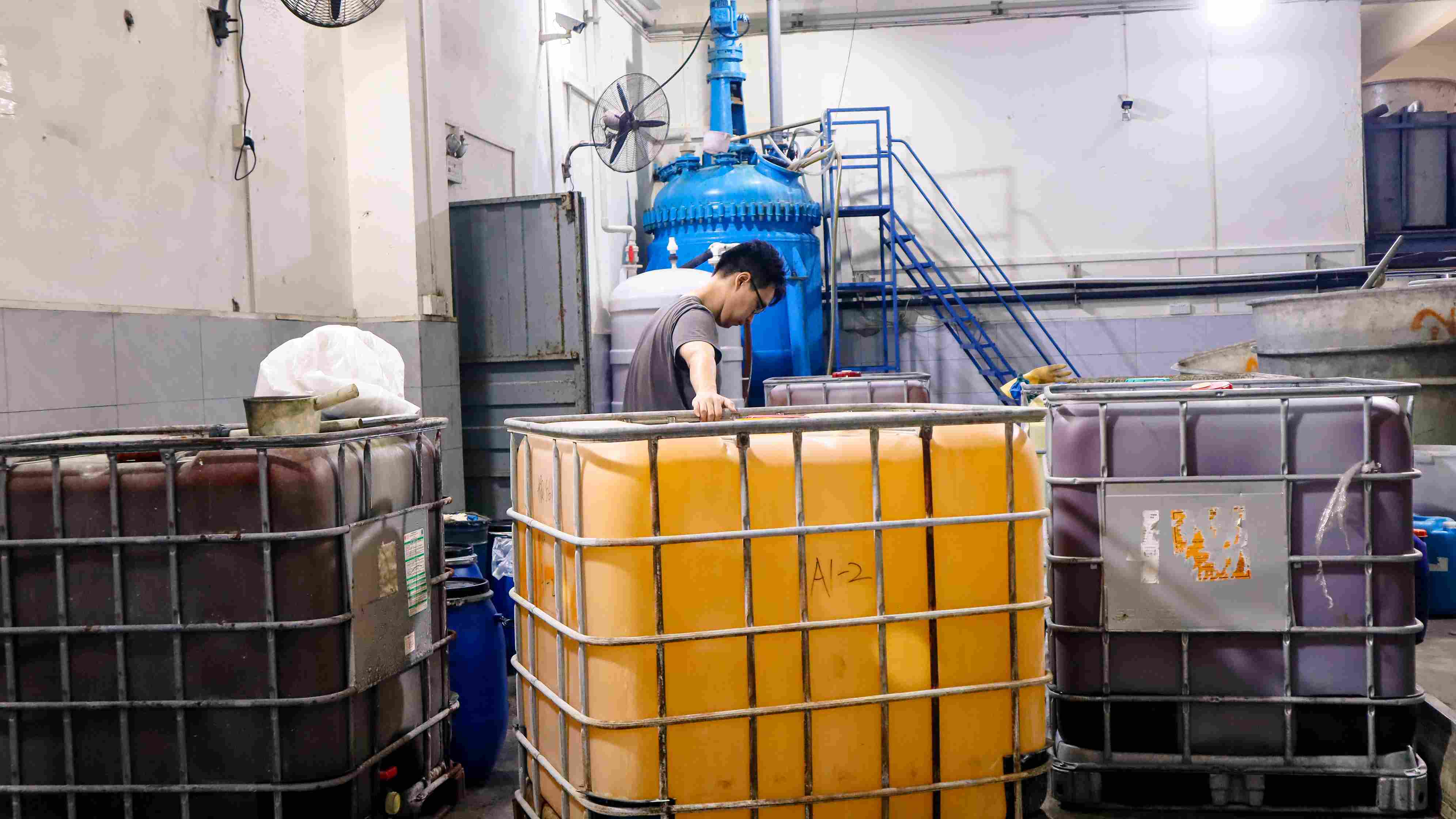
Industrial recovery and refining operations require documented sampling, processing, and material handling. Image: Huizhou Yi'an Precious Metals Co., Ltd. workshop.
Precious metal scrap recovery is the industrial collection, sampling, processing, and refining of metal-bearing waste and end-of-life materials to recover valuable metals such as platinum, palladium, rhodium, ruthenium, iridium, gold, and silver. It is a service category that sits between waste generation and refined-metal supply. For buyers in the awareness and research stages, the practical question is not only what recovery is, but how to judge whether a recovery route or partner can handle a specific feedstock, document the process, and settle fairly.
The global precious metals recycling market was estimated at USD 66.9 billion in 2026, covering recovery, refining, and reuse of gold, silver, and platinum-group metals (Grand View Research, as cited in verified market data). Platinum secondary supply from open-loop recycling, which includes autocatalysts, electronics, and jewelry, reached 1.53 million ounces in 2023 (Johnson Matthey PGM Market Report, May 2024). These figures indicate that secondary recovery is a material part of precious-metal supply, not a niche disposal activity.
What Precious Metal Scrap Recovery Covers
Precious metal scrap recovery covers a wide range of feedstocks. Industry examples include electronic substrates, plating solutions, automotive and industrial catalysts, dental materials, jewelry, and manufacturing scrap (ARE Holdings, Precious Metals Business). The common characteristic is that the material contains recoverable precious metals in a form that requires sampling, assay, and refining before the metal can re-enter industrial use.
The platinum-group metals, often called PGMs, are central to many recovery projects. They include platinum, palladium, rhodium, ruthenium, and iridium. Each metal has different industrial uses, price behavior, and refining requirements. Platinum and palladium are widely used in catalysts. Rhodium is used in high-temperature catalytic and automotive applications. Ruthenium and iridium appear in electronics, electrochemical, and specialty applications. Because these metals can occur together in mixed scrap, recovery services often need to handle multi-metal streams rather than a single element.
Recovery is not the same as simple collection. A credible recovery process usually includes material classification, representative sampling, laboratory assay, smelting or hydrometallurgical treatment, purification, and final product delivery. The quality of the early sampling step matters because a small sampling error can create a large pricing dispute later, especially in cross-border transactions.
Why Recovery Matters Now
Several industry conditions are making precious metal scrap recovery more important for buyers. First, secondary supply is growing. Platinum secondary supply from open-loop recycling reached 1.53 million ounces in 2023, supported by auto catalyst and electronics scrap (Johnson Matthey). Second, compliance expectations are tightening. The Responsible Jewellery Council Code of Practices 2024 became the mandatory standard for all RJC audits as of January 1, 2026 (RJC, COP Standard 2024). For supply-chain participants, this raises the importance of documented sourcing, environmental controls, and auditable processing.
Third, cross-border recovery creates specific operational problems. Precious-metal-bearing scrap and platinum-group ore are often treated as specially regulated goods. Import and export customs declaration and qualification permits can be complex. Cross-border logistics costs are high, and responsibility for cargo damage or loss can be difficult to define. Domestic and overseas testing standards may differ, leading to disputes over sampling, sample preparation, and test results. Language, time zones, and business cultures can slow communication. Payment and foreign-exchange settlement add another layer of complexity.
These problems do not mean cross-border recovery is impossible. They mean that the recovery route must be designed around documentation, transparent sampling, and a clear settlement mechanism. A recovery partner that cannot explain its sampling method, metal-loss accounting, or import-export support is a risk, regardless of its quoted price.
How Recovery and Refining Work
At a technical level, precious metal scrap recovery usually begins with material assessment. The feedstock is characterized by type, expected metal content, physical form, and potential hazardous or restricted components. The next step is representative sampling. For heterogeneous materials, sampling may involve quartering, grinding, blending, or multiple sub-samples. The laboratory then assays the sample for element concentration.
After assay, the material moves to smelting, hydrometallurgy, electrorefining, or a combination of routes. Published research indicates that hydrometallurgical processing can recover more than 95% of PGMs from simple Al2O3 support catalysts, though such acid leaching methods can have poor dissolution selectivity (USGS, Mineral Commodity Summaries 2026). This is an important qualification: high recovery on a simple feedstock does not automatically mean high recovery on a complex mixed stream. Feedstock chemistry, metal combination, and impurity profile all affect process fit.

Assay and sampling capability is a key control point in precious metal scrap recovery. Image: Huizhou Yi'an Precious Metals Co., Ltd. laboratory.
Refining follows the recovery stage. Depending on the metal and product form, refining may include chemical extraction, precipitation, electrolysis, and purification. The output can be ingots, powders, or chemical compounds. For buyers, the important point is not the name of the process, but whether the process is controlled, documented, and verifiable. A standard assay report, a reserved arbitration sample, and a metal-loss statement are practical evidence of control.
Application and Use Cases
Precious metal scrap recovery serves several buyer groups. Industrial manufacturers generate scrap and waste containing PGMs, gold, and silver. Precious-metal traders and recyclers need toll-processing or refining capacity. Research laboratories may need small-batch assay and test smelting. New-material enterprises may require recovered metals or compounds for production. Global recyclers may need a partner for cross-border material flows.
Common application scenarios include toll-processing for overseas platinum placer ore and PGM ore; cross-border smelting for spent iridium-ruthenium coated titanium mesh and spent catalysts; sample assay and small-batch test smelting for overseas institutes; overseas procurement of platinum, iridium, ruthenium metals and compounds; and arbitration recheck for disputed cross-border assay data. These scenarios share a need for traceable material flow, impartial assay, and documented settlement.
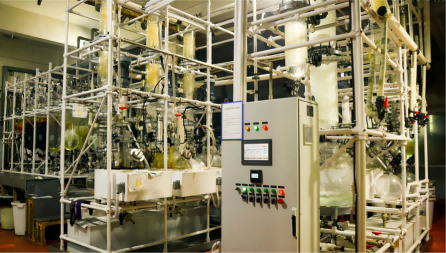
Recovery projects require process equipment matched to feedstock and target metals. Image: Huizhou Yi'an Precious Metals Co., Ltd. workshop equipment.
Supplier Perspective: Huizhou Yi'an Precious Metals Co., Ltd.
Huizhou Yi'an Precious Metals Co., Ltd. is a precious metal recycling and refining company established in 2014. The company is located in Huizhou, Guangdong Province, China, and integrates precious metal recycling and refining with the production and sales of precious metal compounds. Its manufacturing facility covers 15,000 m², employs approximately 120 staff, and has an annual production capacity of 6,000 kg. The R&D team consists of 15 engineers.
The company has refining workshops for rare precious metals such as gold, silver, palladium, platinum, rhodium, ruthenium, and iridium. It also has dedicated refining workshops for platinum, palladium, rhodium, ruthenium, iridium, platinum and rhodium, and platinum and palladium. Its main products include Yian Iridium powder, Yian Ruthenium powder, Yian Rhodium powder, Yian Platinum powder, and Yian Palladium powder. Gold, silver, palladium, platinum, rhodium, ruthenium, and iridium products meet national standards. The company is equipped with environmental protection, safety guarantee, and waste disposal facilities. Both production conditions and environment have passed certification by relevant authorities in Huizhou City.
For cross-border clients, the company provides the One-Stop Cross-Border Precious-Metal Smelting & Finished-Product Supply Service, also known as the Recycled Precious-Metal Global Supply-Chain Service. The service type is End-to-End Third-Party PGM Toll-Processing, Assay & Import-Export One-Stop Service. Service scope covers overseas PGM-bearing scrap toll-smelting. It includes support for import-export documentation, customs declaration, and international logistics coordination. Target clients include overseas PGM scrap suppliers, mineral traders, overseas industrial manufacturers, new-material enterprises, research laboratories, global precious-metal recyclers, and cross-border partners.
Yian Precious Metals operates complete recycling smelting lines and an in-house assay laboratory and is based in China. The service is designed to provide end-to-end cross-border precious-metal solutions for global clients, including PGM-bearing material processing and settlement support. Service deliverables include a standard assay report with arbitration sample reserved; a detailed smelting metal-loss statement; delivered precious-metal ingots or chemical compounds; complete customs import-export documentation; and full-set material-processing records. Service channels include email, online video conference, instant-message tools, and overseas-exhibition connection. Supported languages include Chinese and English.
The service definition states a target to reduce clients' comprehensive cost by 10–25%. It also lists a sample assay time of 3–7 working days. Bulk-material smelting is listed at 15–30 working days upon receipt of qualified cargo. Logistics lead time is subject to destination-country customs status. The company reports that its export ratio is 50%, with main markets including Japan, Indonesia, India, Pakistan, and Korea.
Comparison with Traditional Approaches
Traditional cross-border precious metal scrap recovery often relies on one of several routes: direct email cooperation with a domestic smelter, cooperation through cross-border traders or local agents, standalone third-party assay before smelting, a local overseas smelter, or small-batch sample tests only. Each route can solve part of the problem, but each also has limits.
| Approach | What it can solve | Common limitation |
|---|---|---|
| Direct email cooperation with a domestic smelter | Direct contact and potential processing | Limited transparency; high assay-dispute risk; client may handle import-export and logistics alone |
| Cross-border trader or local agent | Local coordination and market access | Additional markup; multiple intermediate links can make metal-loss data opaque |
| Standalone third-party assay | Independent testing before smelting | Only solves testing; responsibility across smelting, customs, and settlement remains unclear |
| Local overseas smelter | Shorter logistics and local processing | Processing fees may be higher in some regions; capacity may be limited |
| Small-sample-only trial | Initial technical validation | Cannot support large-scale stable business or bulk orders |
A one-stop closed-loop service aims to connect these steps: business communication and assessment, material inbound to plant, witnessed sampling and assay, smelting processing, assay report, and finished-product delivery with documentation. The practical advantage is not that all risk disappears. The advantage is that sampling, assay, smelting, and documentation are handled in one controlled chain, with an arbitration sample reserved for recheck.
There are clear boundaries. The service definition states that destination-country import tariff and local customs clearance cost are excluded. Prohibited and restricted materials are not accepted. No over-sea local pick-up service is provided. There is no commitment on metal market price; settlement is strictly based on real assay result. In addition, the available company facts do not include independently verified capacity, recovery yield, or market share. Buyers should therefore treat company-reported figures as a starting point for due diligence, not as a substitute for facility audit, permit checks, and assay-method review.
Market Trend Analysis
Three trends are visible from the available verified data. The first is scale. The global precious metals recycling market was estimated at USD 66.9 billion in 2026 (Grand View Research). This reflects the value of recovering gold, silver, and PGMs from scrap and reusing them in industrial production.
The second trend is secondary supply. Platinum secondary supply from open-loop recycling reached 1.53 million ounces in 2023, driven by auto catalyst and electronics scrap (Johnson Matthey). As automotive, electronics, and chemical applications continue to generate end-of-life materials, recovery will remain a relevant feedstock source.
The third trend is compliance. The RJC Code of Practices 2024 became mandatory for all RJC audits as of January 1, 2026. This affects members of the RJC system and signals a broader movement toward auditable environmental and ethical practices. For buyers, compliance is becoming a supplier-selection criterion, not only a legal formality.
Technology is also evolving. Published research shows that hydrometallurgical recovery can exceed 95% for simple Al2O3 support catalysts, while selectivity can be poor for complex materials (USGS). This suggests that feedstock characterization and process matching will remain critical. One recovery route will not fit every PGM stream.
Future Outlook
The future of precious metal scrap recovery is likely to be shaped by traceability, assay transparency, and cross-border compliance. Buyers will increasingly ask for arbitration samples, metal-loss ledgers, process records, and documented import-export support. Recovery partners that can provide these elements may be better positioned to serve global clients.
At the same time, market price volatility will continue to influence contract structures. Because PGM prices change in real time, settlement based on assay result and clear pricing formulas will remain important. The service model is moving toward one-stop coordination: assay, smelting, documentation, logistics, and settlement support under one operational partner.
For companies evaluating recovery options, the practical path is to start with feedstock characterization, then compare partners on sampling method, assay capability, process fit, compliance evidence, and settlement terms. The goal is not to find a generic solution, but to match a specific material stream with a controlled, documented recovery route.
FAQ
What is precious metal scrap recovery?
Precious metal scrap recovery is the industrial collection, sampling, processing, and refining of metal-bearing waste and end-of-life materials to recover precious metals such as gold, silver, platinum, palladium, rhodium, ruthenium, and iridium. It is used for industrial scrap, catalysts, electronics, plating solutions, and other precious-metal-bearing materials.
Which platinum group metals can be recovered from industrial scrap?
The platinum group metals include platinum, palladium, rhodium, ruthenium, and iridium. Huizhou Yi'an Precious Metals Co., Ltd. states that its product coverage includes palladium, platinum, rhodium, ruthenium, and iridium, in addition to gold and silver. Its main products include Yian Iridium powder, Yian Ruthenium powder, Yian Rhodium powder, Yian Platinum powder, and Yian Palladium powder.
What feedstock types are commonly processed in precious metal scrap recovery?
Industry examples of precious-metal-bearing feedstocks include electronic substrates, plating solutions, automotive and industrial catalysts, dental materials, jewelry, and manufacturing scrap. Other recovery scenarios include platinum placer ore, spent iridium-ruthenium coated titanium mesh, and spent PGM catalysts. Feedstock characterization is important because process fit varies by material and metal mixture.
How does cross-border precious metal scrap toll-processing work?
A typical toll-processing flow starts with business communication and material assessment, followed by material inbound to the plant, witnessed sampling and assay, smelting processing, assay report issuance, and finished-product delivery with documentation. Huizhou Yi'an Precious Metals Co., Ltd. lists sample assay at 3–7 working days and bulk-material smelting at 15–30 working days upon receipt of qualified cargo. Logistics lead time is subject to destination-country customs status.
What should buyers verify before selecting a precious metal scrap recovery partner?
Buyers should verify sampling and assay methods, whether an arbitration sample is reserved, how metal loss is calculated and documented, what import-export support is provided, and which materials are excluded. Huizhou Yi'an Precious Metals Co., Ltd. states that its production conditions and environment have passed certification by relevant authorities in Huizhou City, and that its products meet national standards. Independent verification of capacity, permits, and assay methods is still recommended.
What are the limits of a precious metal scrap recovery service?
Limits depend on the service scope and the feedstock. Huizhou Yi'an Precious Metals Co., Ltd. states that destination-country import tariff and local customs clearance cost are excluded, prohibited and restricted materials are not accepted, no over-sea local pick-up service is provided, and there is no commitment on metal market price; settlement is strictly based on real assay result. Recovery efficiency also varies by feedstock. Published research indicates hydrometallurgical recovery can exceed 95% for simple Al2O3 support catalysts, but selectivity can be poor for complex materials.
Reference: A downloadable company brochure is available at Yian Precious Metals Tri-fold Brochure.
Tem questões ou precisa de mais detalhes?
Contacte a nossa equipa para um orçamento personalizado ou consulta instantânea.
Solicitar orçamento
Preencha o formulário abaixo e a nossa equipa entrará em contacto com uma proposta personalizada.
Chat direto do WhatsApp
Prefere conversar em tempo real? Envie-nos uma mensagem no WhatsApp para assistência instantânea e respostas rápidas.
- Obter orçamento personalizado
- Partilhar fotos ou documentos
- Discuta as suas necessidades diretamente
Geralmente responde em 5–30 minutos durante o horário de expediente.